
 简体中文
简体中文 English
Website review
This review may include AI-generated content and is not individually verified. Domain, certificate and other facts come from the observed data on this page.
What is Texas Christian University?
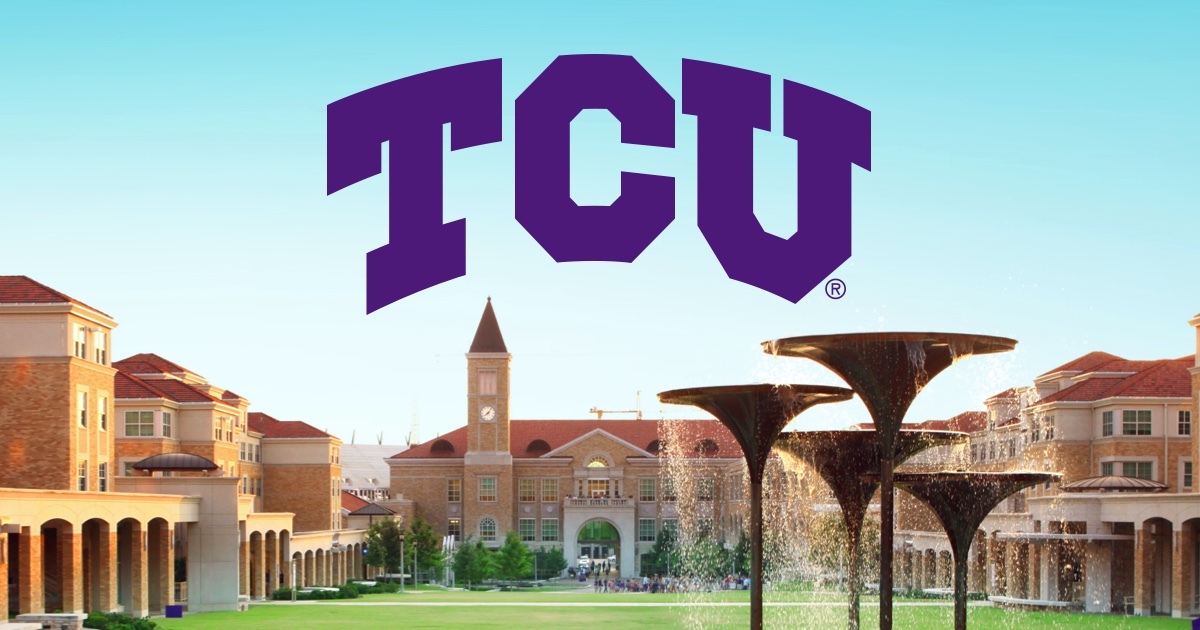
Texas Christian University (TCU) is a private university in Fort Worth, Texas, known for combining nationally ranked academics with big-time Big 12 athletics and a close-knit campus culture. Its own site describes it as a place where "championship-caliber Big 12 athletics and a tight-knit, nationally-ranked academic community blend seamlessly," with the location offering a classic college-town feel about five miles from a major urban center.
What stands out
- Academics: TCU presents itself as a top national university with small classes—half have fewer than 30 students—and says 98% of faculty teach undergraduates, so students are taught by professors rather than mainly graduate assistants.
- Location: The Fort Worth campus sits near one of the country's fastest-growing job markets and a large metro area, which matters for internships and early-career opportunities.
- Community: More than 300 student organizations and a lively campus life scene support the social side of college.
- Athletics: Students attend on-campus sporting events at no cost, and TCU competes in the Big 12, with 27 conference championships since joining in 2012.
Who it suits
It fits students who want a mid-sized private university experience: personal attention in class, a strong school spirit, and a city with internship options. It may be less suited to someone seeking a large public research university or a purely urban campus without a traditional college feel.
Next step
If you are considering TCU, start with the academic program list to see whether your intended major is offered, then check financial aid options and visit campus—Fort Worth's atmosphere is a real part of the decision. You can explore the university directly at Texas Christian University.
Is TCU a good fit for students who want big-time college athletics without attending a huge university?
Yes. TCU is explicitly built around that combination: Big 12 athletics with a student body small enough that the same campus hosts your classes and your game-day traditions.
Where the fit is strong
- Scale contrast is the point. The athletics page evidence describes a scene "typically only found at schools three times our size," while academics emphasize individual attention — 98% of faculty teaching undergraduates and about half of classes under 30 students. You get major-conference sports without the anonymity of a 40,000-student campus.
- Cost of fandom is low. Students attend on-campus sporting events at no cost, so following football, basketball and baseball doesn't add a ticket line to your budget.
- Sustained success, not just hype. The university cites 27 Big 12 championships since joining the league in 2012, which matters if you want to arrive during a genuinely competitive era rather than a rebuilding one.
- Fort Worth location supports the balance. A tree-lined campus five miles from a major urban center means internships and city life are reachable without living in a sprawling metropolis.
Where it may not fit
If your ideal is a Power-conference program inside a massive state school — huge lecture halls, a stadium that dwarfs the campus, a different friend group every semester — TCU's tight-knit community is the opposite trade-off. The page also leans on values and community language, so a student who wants a purely secular or strictly pre-professional environment should check the culture directly.
How to decide
Ask one question: do you want to be a recognizable regular at games and in class, or do you want the anonymity and sheer scale of a large public flagship? TCU answers the first. To test it, visit on a football weekend and sit in on a class the same trip — the contrast between a packed stadium and a small seminar is the whole pitch in one day. You can also compare against a large Big 12 public option like University of Kansas or a smaller private peer such as Baylor University to see how much scale you actually want.
How do TCU's academics compare with other nationally ranked private universities?
TCU presents itself as a nationally ranked private university that pairs challenging academics with small classes and close faculty contact. On its own terms, the distinguishing claim is balance: rigorous coursework plus individual attention, rather than one at the expense of the other. Prospective students comparing TCU with peer private universities should test that claim against the specifics of their intended major, not against a single overall ranking.
What TCU emphasizes academically
- Faculty contact: 98% of faculty teach undergraduates, and about half of classes enroll fewer than 30 students, according to the university.
- Scale and setting: a residential campus in Fort Worth, roughly five miles from a major urban center, which the university links to internships and jobs.
- Campus life as part of the package: more than 300 student organizations and a Big 12 athletics scene, with free student admission to on-campus sporting events.
How to compare it with other private universities
National rankings compress very different institutions into one number. A more useful comparison looks at the department you plan to study, class sizes in that major, research access for undergraduates, and where graduates land.
| Dimension | What to check | Why it matters |
|---|---|---|
| Academic fit | Strength of your intended department, honors options, advising model | A university-wide ranking says little about your field |
| Class experience | Typical class size in your major, share of courses taught by full-time faculty | Small introductory classes are not the same as small upper-level seminars |
| Cost and aid | Net price after institutional aid, merit vs. need-based awards | Sticker price and actual cost can diverge sharply at private universities |
| Location and outcomes | Internship and employer networks in the surrounding metro area | Fort Worth and the wider Dallas–Fort Worth region offer a distinct job market |
| Campus culture | Athletics, traditions, religious affiliation, residential requirements | Fit affects retention and day-to-day satisfaction |
A practical next step
Pick three to five private universities of similar selectivity, then compare them on the same four data points: net price from each school's aid calculator, class size in your intended major, undergraduate research or internship access, and four-year graduation rates. Visit or attend a virtual session for the department itself, and ask current students in your field how accessible professors actually are. TCU's own materials are a reasonable starting point for its academic and campus offerings at Texas Christian University, but the comparison only becomes meaningful once you apply the same criteria across every school on your list.
What internship and job opportunities does TCU's Fort Worth location provide?
TCU’s Fort Worth location puts internships and jobs within a major metropolitan job market rather than in an isolated college town. The university describes its campus as five miles from a lively urban center and cites the Dallas–Fort Worth area as the fourth-largest U.S. metro and the nation’s fastest-growing job market (U.S. Department of Labor, 2024). For students, that means employers, alumni and internship sites are reachable without relocating for the summer or a semester.
What that looks like in practice
- Local internships during the academic year. A student in marketing, finance, health care or engineering can pursue a part-time internship in Fort Worth or Dallas while still living on or near campus. The five-mile distance keeps commuting realistic.
- Big-city industries close by. DFW is a hub for aviation, logistics, energy, health care, financial services and technology. Internships and entry-level roles in those sectors are concentrated in the metro rather than spread across a rural region.
- Career exploration without a permanent move. Students can test a field through a semester internship, then decide whether to stay in Texas after graduation or use the experience to apply elsewhere.
How it compares
| Factor | TCU in Fort Worth | Typical small-college town |
|---|---|---|
| Internship access | Metro employers within a short drive | Often requires a summer move |
| Part-time work during term | Large local job market | Limited to campus and nearby businesses |
| Post-graduation options | Stays in a top-10 U.S. city | Often relocates to a metro |
A practical next step
If internships are a priority, ask TCU’s career services which employers recruit on campus, whether academic credit is available for internships, and how students typically balance a part-time internship with coursework. Also check whether your intended major has established pipelines into DFW employers, since access varies by field. For a broader look at the university, see Texas Christian University.
What is student life like at TCU for someone who wants an active social scene and traditions?
TCU is a strong fit for a student who wants a social life built around campus traditions, organized involvement and game-day energy. The university’s own description emphasizes a “welcoming community,” fun traditions, 300+ student organizations, and a lively campus scene where “there’s always something to do.” For a socially active student, that combination matters more than any single club: it means the social calendar is not limited to Greek life or one dominant scene.
What the social scene is built around
- Traditions and school spirit: TCU presents itself as a place where traditions are central, including the “Riff, Ram, Bah, Zoo” chant and a high-spirited athletics culture. A student who enjoys shared rituals, pep rallies and game days will find those easy to plug into.
- Big-time athletics without a huge-school feel: The page describes championship-caliber Big 12 athletics and says students attend on-campus sporting events at no cost. Football, basketball and baseball are natural social anchors, especially for someone who wants a ready-made weekend routine.
- Clubs and involvement: With 300+ organizations, a new student can sample interests — club sports, cultural groups, service, media, academic societies — rather than committing immediately to one social circle.
- A residential campus culture: “Living On Campus” is highlighted as part of student life, which tends to make spontaneous social plans easier, particularly in the first year.
The trade-off to weigh
TCU’s social scene is often described as friendly and highly involved, but that can also mean a busy, high-energy environment where students who prefer a quieter or more independent social life may need to be intentional about finding their people. The university’s own framing — “no compromise,” big athletics and a tight-knit community — suggests school spirit is a major part of the experience, not a side feature.
A practical next step
If you are comparing TCU with other schools, ask current students two specific questions: how easy it was to make friends outside their first-year residence hall, and how much of their weekend revolves around athletics versus other social options. That will tell you whether TCU’s tradition-heavy, spirited culture matches your version of an active social scene. You can explore student perspectives and campus visit options through Texas Christian University.
How affordable is TCU after financial aid for prospective students?
Affordability at TCU is less about a single sticker price than about how much need-based and merit aid a given family receives. The university's own page points prospective students to a Financial Aid section and describes a nationally ranked private education with small classes, so the practical way to judge cost is to run TCU's net price calculator with real family income and assets, then compare the resulting out-of-pocket figure against in-state public options and other private schools.
What drives the final number
- Need-based aid: For many families, the largest lever. It depends on household income, assets, family size and number of children in college.
- Merit scholarships: Awarded for academics, leadership or talent; these can reduce cost regardless of need, but amounts vary and are not guaranteed.
- Room and board: Living on campus is part of the experience and part of the bill, so compare aid packages that include housing and meals, not tuition alone.
- Indirect costs: Books, travel to Fort Worth, and personal expenses still matter even when tuition is heavily discounted.
How to compare offers
Use each school's net price calculator, then build a simple table of total cost of attendance minus grants and scholarships (not loans) for four years. Treat loans and work-study as part of the financing plan, not as discounts. Ask the financial aid office how need-based awards change if a sibling graduates or family income shifts, since private-school aid can be adjusted annually.
A concrete next step
A prospective student from a middle-income family might find that TCU's aid brings the net price close to a flagship public university, while a higher-income family with strong academics might rely more on merit awards. Request an early financial aid pre-read if TCU offers one, and ask directly whether awards are renewable for four years and what GPA or credit requirements apply. For context on how other private universities structure aid, you can compare with Rice University or Boston University, but always verify figures through TCU's own financial aid office and net price calculator.

User reviews (0)