
 简体中文
 English
Website review
This review may include AI-generated content and is not individually verified. Domain, certificate and other facts come from the observed data on this page.
What is The Dusty Raven?
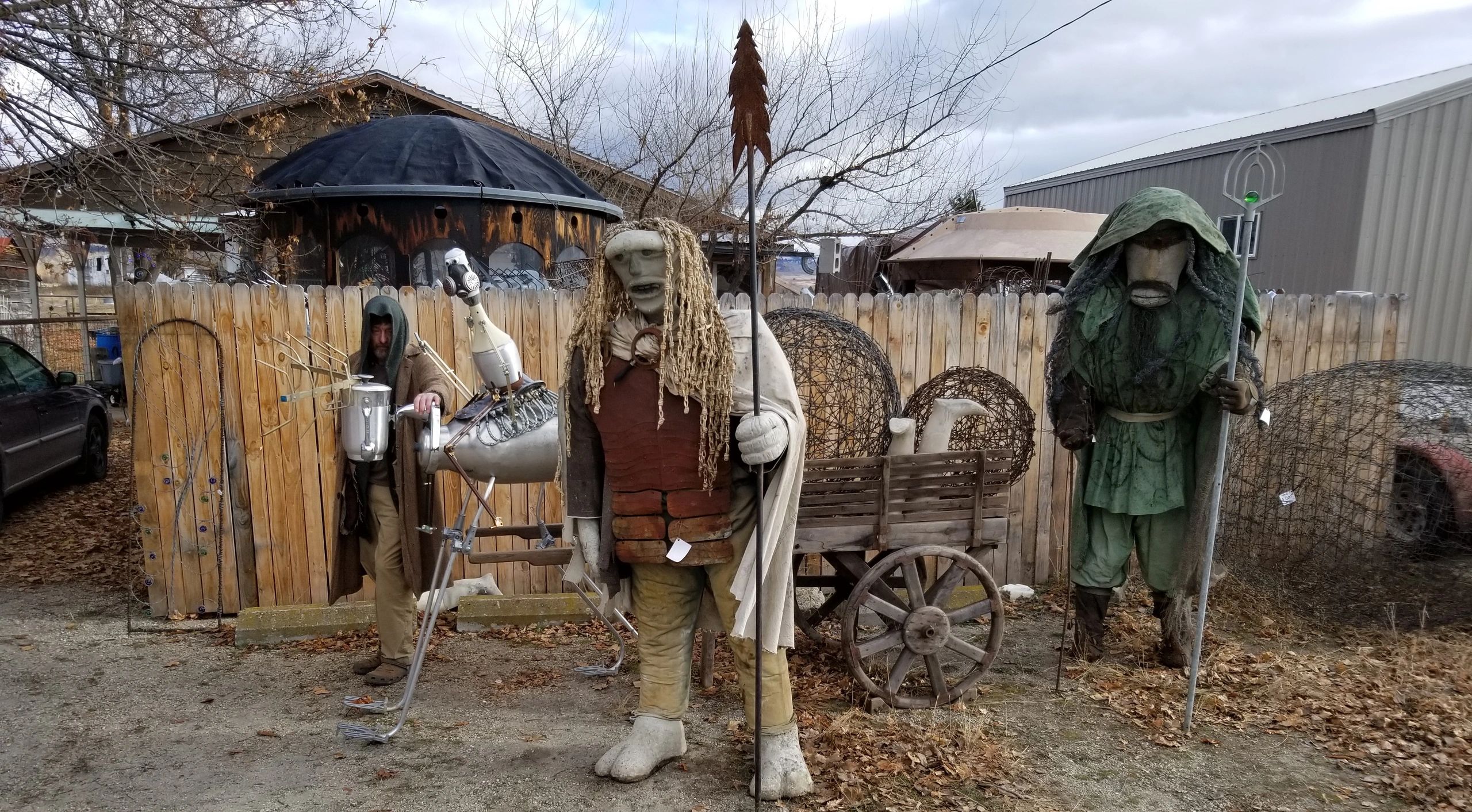
The Dusty Raven is a small upcycled-art practice that turns discarded and forgotten objects into sculptures and other creations. Its own description frames the work as gathering cast-off items—from junk stores and yard sales to ravines and forest—and transforming them into pieces "they were always meant to be." Barbed wire is described as a primary material appearing in many sculptures.
What you'll find there
- A gallery-style section labeled "A few creations," showing finished work rather than a conventional product catalog.
- An explanation of the maker's process: sourcing repurposed materials, then drawing inspiration from the objects themselves.
- A brief note about the workshop and "the crew," giving the project a personal, behind-the-scenes character.
- A link out to an Etsy shop, where pieces appear to be sold.
Who it suits
Someone looking for one-of-a-kind, rustic or industrial-flavored art made from salvaged materials will find the appeal obvious. It is less suited to buyers who want consistent, repeatable items, standardized sizing or a large inventory to browse—this reads as the work of an individual maker, so selection and availability are likely to shift over time.
A practical next step
If a specific piece catches your eye, treat it as you would any handmade purchase from a small studio: check the dimensions and materials before buying, and ask about care if the piece includes barbed wire or other weathered metal. For broader context on upcycled and folk-art traditions, Etsy hosts many comparable makers, and American Folk Art Museum is a useful reference point for self-taught and reclaimed-material art.
How can I buy one of the upcycled sculptures?
You can buy The Dusty Raven's upcycled sculptures through the Etsy shop linked from the site. The homepage does not present a direct checkout of its own; the "Etsy Shop" button is the route to current pieces, and the site also points to social channels where new work tends to be announced.
A practical way to shop:
- Open The Dusty Raven and follow the Etsy Shop link to see what is currently available.
- Check the shop's sold or past-work section to understand the style — barbed wire features heavily in the sculptures, alongside other salvaged materials.
- If you want something specific, use Etsy messaging to ask about commissions, dimensions, shipping and materials before buying.
- Follow the site's social links for new pieces, since one-off upcycled art rarely comes in repeat sizes or editions.
For a collector, the main trade-off is uniqueness versus predictability: each piece is made from found objects, so you cannot order an exact duplicate, and availability depends on what has been gathered and completed. If you need a piece for a particular space, ask about size and mounting first. If you simply want an original, browse the Etsy shop and buy what is listed.
What materials are typically used in the artwork?
The Dusty Raven describes its work as giving "unexpected new life to discarded and forgotten objects." The site names barbed wire as one of the primary materials, saying it "plays a part in many of my sculptures." Beyond that, the maker describes gathering "random bits of this and that" from junk stores, yard sales, ravines and forests — so the material list is deliberately open-ended rather than a fixed catalog of supplies.
A useful way to think about it: the source material is whatever has been cast off and can be reworked into a sculpture, with barbed wire as the recurring structural element. If you want to see how that plays out in finished pieces, browse the creations gallery at The Dusty Raven and look at which objects recur across sculptures — that will tell you more about the material mix than any general description can.
Can I commission a custom piece from discarded objects?
Yes—commissioning is the natural fit for a maker like this, since the work is built from found objects rather than catalog designs. The page describes an artist who gathers materials from junk stores, yard sales, ravines and forests, and who draws inspiration from the objects themselves, with barbed wire as a primary material in many sculptures. That means a custom piece would likely be shaped by what turns up, not by a fixed menu.
H3 What to expect from a commission
- Your role: supply the story, theme, size range, and any sentimental objects you want included.
- The artist's role: source additional discarded materials, propose a direction, and build the piece.
- The main trade-off: you get something one-of-a-kind, but you give up exact control over materials and timeline. Found-object work depends on availability.
H3 A practical next step Before writing, gather these in one message:
- Rough dimensions and where the piece will live (wall, shelf, garden).
- Two or three reference images of styles you like.
- Any objects you want incorporated, and whether they can be cut, drilled or welded.
- Your budget range and a date you need it by.
If you have nothing specific in mind, ask what materials are currently in the workshop and commission around those—that usually produces the strongest result and the fastest answer. The site links to an Etsy shop, which is typically where you would send the first message; note that Etsy's own policies govern custom orders, deposits and returns, so confirm those before paying.
For broader inspiration on upcycled and found-object work while you wait, Etsy hosts many makers in this space, and Pinterest is useful for collecting reference images to share with the artist.
How should I care for a barbed wire sculpture?
Barbed wire sculpture is more forgiving than its reputation suggests, but it needs handling rules that treat it as both art and sharp object. The Dusty Raven works primarily in barbed wire and repurposed materials, so a piece from The Dusty Raven will likely share the traits that matter here: exposed points, possible rust patina, and a structure that may be welded, twisted, or wrapped rather than cast in one piece.
Practical care routine
- Dust, don't scrub. A soft brush, a dry paintbrush, or a can of compressed air reaches between barbs. Cloths snag and leave fibers behind.
- Keep it dry indoors. Humidity drives rust. If the piece already has a deliberate rust finish, you are preserving that look, not fighting it; you just want to avoid new flaking.
- Handle with cut-resistant gloves at the base or a welded arm, never by a single strand. Lift from below with both hands and support the heaviest section.
- Stabilize the display. A felt or cork pad under the base prevents scratches and stops sliding. Keep it out of walkways, off low coffee tables, and away from where children or pets reach.
- Skip wet cleaners and most polishes. Water accelerates corrosion at the twists where moisture lingers. If the maker sealed it, follow their finish instructions instead of improvising.
When to leave it alone
If the sculpture is intentionally rusted and sealed, the surface is the artwork. Spot-treating rust or applying oil can create a patchy, uneven sheen that is hard to reverse. In that case, limit yourself to dusting and climate control.
A concrete scenario
Say you buy a small barbed wire figure and place it on a windowsill. Morning condensation, direct sun, and a radiator below will do more damage in a year than handling ever would. Move it to a shaded shelf away from vents, and it will hold its appearance far longer.
Next step: photograph the piece and ask the maker directly about finish, sealant, and whether the rust is intentional. That one answer determines whether your job is preservation or gentle maintenance.
Does The Dusty Raven sell at in-person markets or craft fairs?
The Dusty Raven does not present itself as a craft-fair or in-person market seller. Its own site points shoppers to an Etsy shop as the buying route, and the page copy is written as a studio practice: gathering discarded materials from junk stores, yard sales, ravines and forest, then working in a workshop. There is no schedule of markets, fairs, pop-ups or stall locations listed.
That distinction matters if you are deciding how to buy:
- If you want to purchase: use the linked Etsy shop rather than expecting a fair stall.
- If you want to meet the maker or see pieces in person: nothing on the page promises that; you would need to ask directly.
- If you are organising a market: the maker might still be open to it, but the site gives no indication either way.
A practical next step is to message the shop through Etsy and ask two specific questions: whether any in-person events are planned, and whether local pickup or studio visits are possible. If you are browsing because you like the barbed-wire-led sculpture style, look at the "A few creations" gallery first, then check the shop for current availability. For a wider sense of how upcycled-art sellers usually operate, you can compare with marketplaces such as Etsy or Artfinder, but treat those as general venues, not as confirmation of this maker's plans.
 GoDaddy
 Amazon.com, Inc.

User reviews (0)