
 treasurestonebeads.com
No paid content found
treasurestonebeads.com
No paid content found
Categories: Education & Learning
Wholesale Beads and Jewelry making Supplies | TreasureStone Beads : - Gemstone Beads Metal Beads, spacers, findings Crystal Glass Beads Magnetic Beads, spacers & clasps Magnetic Jewelry MOP, Shell Beads Findings Gift Certificates ----------- Cabochons Stringing Materials & Tools Metal Charm, Pendant, Connector Necklace, bracelet Chains Pearls Clasps Clay Beads Porcelain Beads Gift Bags & gifts Acrylic Beads, clasps OX Bone Beads, pendants Glass Beads Special order Crystals & Healing Stones Gifts ideas Wood Beads Tassels Halloween Christmas Beads, charms,pendants Prayer Beads Pave Beads, charms, pendant Gemstone Pendant, Charm Gemstone Link, Connectors Seed Beads ---------- Stainless Steel Glass, Other Pendants, charms Polymer Clay, Vinyl Sterling Silver Useful Videos Finished Jewellery Beading Kits Clearance/ Trunk Sale Edmonton Oilers Christmas Canada Day wholesale, beads, gemstones, charms, pearls, magnetic beads, crystal beads, jewelry making, Jewellery making, Bead store, Bead shop, Edmonton, Alberta, Canada
 Visit website
 Updated: 2026-09-28 11:26
 Language: English (default)
 Access: Normal
 Profile views 0
 Outbound visits 0
Related questions
More questions →Miyuki Delica vs Regular Seed Beads: Which Should You Use for Your Project?
If you want a flat, grid-like, gap-free surface in bead weaving, choose Miyuki Delica beads. If you want rounder, more organic texture, softer drape, or a lower cost per gram for simple stringing and fringe, choose regular seed beads. The two are not interchangeable in every stitch: Delicas are cylindrical with a wide hole and very tight size consistency, while standard seed beads are rounder (or donut-shaped) with more size variation. That single structural difference drives almost every practical choice you will make.
The core difference: shape and consistency
Delica beads are short cylinders. Their walls are thin, the hole is relatively large, and the sides are straight. Because they are machine-sorted to a tight tolerance, a size 11 Delica from one lot behaves almost identically to the next. When you stack them side by side, they line up like tiles.
Regular seed beads (often called "round seed beads" or "rocaille") are rounded, slightly irregular, and sold in the same size numbers (8/0, 11/0, 15/0) but with looser tolerances. Two beads from the same tube can differ enough in width and height that your work develops small gaps or uneven edges.
| Feature | Miyuki Delica | Regular seed beads |
|---|---|---|
| Shape | Cylinder, straight sides | Round or donut, curved sides |
| Size consistency | Very tight | Moderate to loose |
| Hole size | Large relative to bead | Smaller, varies |
| Surface when woven | Flat, grid-like, minimal gaps | Textured, slightly bumpy |
| Drape | Stiffer, more structured | Softer, more fluid |
| Thread passes | Easy, multiple passes possible | Can be tight; fewer passes |
| Typical best use | Peyote, brick, loom, geometric patterns | Stringing, fringe, embroidery, organic looks |
| Cost per bead | Usually higher | Usually lower |
How the cylinder shape changes specific stitches
Peyote stitch
This is where Delicas shine. Even-count and odd-count flat peyote both rely on beads locking together in an offset grid. Because Delicas are uniform, the columns stay straight and the surface reads as a clean plane. With regular seed beads, the same stitch works, but the rounded sides create a slightly pebbled surface and the edges can wobble. If you are following a color chart or a pixel-style pattern, Delicas make the pattern legible; round beads blur it.
Brick stitch
Brick stitch builds rows that sit between the beads of the previous row. Delicas give you predictable spacing, so increases and decreases stay crisp and the piece holds a shape. Round seed beads produce a softer, more hand-made look and can be more forgiving if your tension varies, but the outline will be less precise.
Loom work
Loomed pieces are essentially a woven grid. Delicas produce a fabric-like, flat band with straight edges. Regular seed beads on a loom tend to look more like a beaded rope with visible texture. If you want a bracelet that looks like a printed ribbon, use Delicas.
Tubular and three-dimensional work
Here the answer flips. Round seed beads bend and curve more naturally, so tubular peyote, beaded beads, and sculptural shapes often look better with them. Delicas resist curving; forcing them into tight tubes can cause thread strain and visible gaps on the outside of the curve.
When a uniform, gap-free look matters
Choose Delicas when:
- You are reproducing a charted pattern where each bead equals one pixel.
- You want sharp geometric shapes, straight edges, or precise color blocking.
- The piece will be photographed or viewed up close, where gaps are distracting.
- You need to pass thread through a bead several times for structural strength.
- You are matching beads across multiple tubes or restocking a long-term project.
Choose regular seed beads when:
- You want a soft, rounded, vintage, or organic texture.
- The project is stringing, simple fringe, bead embroidery, or bead soup.
- You need the piece to drape and flow rather than hold a rigid form.
- You are working a large area where cost matters more than precision.
- You want subtle irregularity as part of the design.
Finish, color range, and durability
Both bead types come in a wide range of finishes: opaque, transparent, color-lined, silver-lined, matte, metallic, and galvanized. Two practical cautions apply to both:
- Color-lined and silver-lined beads have dye or coating inside the hole. Over time, and with friction from thread, the lining can fade or wear. They are fine for earrings and low-wear pieces, less ideal for bracelets that rub against skin daily.
- Metallic and galvanized finishes can chip at the edges, especially where beads rub together. Delicas have thin walls, so a chipped edge is more noticeable on them.
Delicas generally offer a very broad, well-documented color range, which is a real advantage when you need to match a specific shade across a large project. Regular seed beads vary more between manufacturers, so buy enough from one lot for the whole piece.
A simple way to test before committing
You do not need to guess. Do a small sample first:
- Pick one stitch you plan to use, such as a 10-by-10 square of flat peyote.
- Make the same swatch twice: once in Delicas, once in regular seed beads of the same nominal size.
- Compare three things: edge straightness, surface flatness, and how the piece feels in your hand.
- Check your thread path. If you need to pass through a bead three or four times, note whether the regular seed bead hole is large enough.
- Wash your hands and rub each swatch gently to see how the finish holds up.
This takes maybe twenty minutes and prevents a costly mistake on a large project.
Practical buying notes
- Size numbers are not identical across types. A size 11 Delica is not the same physical size as a size 11 round seed bead. Always compare actual measurements, not just the number.
- Buy extra. If you are working a charted pattern, running out mid-project and buying a different lot can introduce a visible shade shift.
- Match your needle and thread to the hole. Delicas accept thicker thread and larger needles; round seed beads often require a finer needle.
- Store by type and lot. Keeping Delicas and regular seed beads in separate, labeled containers saves time and prevents accidental mixing.
The short answer
Use Delicas for structure, precision, and pattern work. Use regular seed beads for softness, drape, texture, and budget-friendly volume. If you are unsure, swatch both in the exact stitch you plan to use, and let the sample decide.
What Is Ecumenism in Canada and How Does It Work in Practice?
Ecumenism in Canada is the work of Christian churches seeking unity and practical cooperation across denominational lines. It is distinct from interfaith dialogue, which involves conversation between different religions. In Canada, ecumenism operates through national and regional councils, shared social justice initiatives, and theological dialogue among Catholic, Protestant, Orthodox, and other traditions. If you are trying to understand the landscape, the most useful starting point is the network of councils and coalitions that coordinate this work.
Defining Ecumenism vs. Interfaith Dialogue
The two terms are often confused, but they describe different relationships:
- Ecumenism concerns relationships among Christian traditions — for example, Catholic, Anglican, United Church, Lutheran, Presbyterian, Orthodox, and evangelical communities working toward unity or cooperating on shared goals.
- Interfaith dialogue concerns relationships between different religions — for example, Christian-Muslim, Christian-Jewish, or multi-faith conversations.
The distinction matters because the institutions, funding, and goals differ. Ecumenical bodies typically focus on doctrine, shared worship, and joint mission. Interfaith bodies focus on mutual understanding and civic coexistence.
Main Canadian Ecumenical Bodies and Initiatives
Canada has a layered ecumenical structure. The most visible national bodies include:
| Body | Scope | Typical Work |
|---|---|---|
| Canadian Council of Churches | National, multi-denominational | Dialogue, social policy, refugee sponsorship, justice advocacy |
| Regional/ local councils of churches | Provincial or municipal | Shared worship, food banks, community services |
| Bilateral dialogues | Two denominations at a time | Theological agreement, mutual recognition |
| Ecumenical coalitions | Issue-focused | Poverty, climate, Indigenous relations, peace |
The Canadian Council of Churches is the broadest national expression, bringing together a range of Christian traditions. Bilateral dialogues (for example, Anglican-Catholic or Lutheran-Anglican) produce formal statements and agreements that shape how churches recognize each other's ministries.
How Canadian Churches Cooperate on Shared Social Issues
In practice, much Canadian ecumenism is issue-driven rather than purely doctrinal. Churches cooperate when they share a concrete concern:
- Refugee sponsorship — congregations from multiple denominations jointly sponsor and settle refugees.
- Poverty and housing — ecumenical coalitions advocate for policy change and run direct services.
- Indigenous relations — churches have worked together on reconciliation following the Truth and Reconciliation Commission.
- Climate and environment — joint statements and campaigns on ecological stewardship.
- Peace and disarmament — shared advocacy on international issues.
This pattern means that even churches that disagree theologically may cooperate closely on social action. For someone wanting to get involved, issue-based coalitions are often the most accessible entry point.
Key Historical Developments Shaping Canadian Ecumenism
Canadian ecumenism has been shaped by several developments:
- Early 20th century mission cooperation — Protestant churches coordinated missionary work, which laid groundwork for later union discussions.
- Church union movements — most notably the formation of The United Church of Canada in 1925, a union of Methodist, Presbyterian, and Congregationalist traditions.
- Post-1960s ecumenical councils — the Canadian Council of Churches and related bodies expanded dialogue and social engagement.
- Second Vatican Council (1962–1965) — opened the Catholic Church to formal ecumenical participation, transforming the Canadian landscape.
- Truth and Reconciliation Commission (2008–2015) — pushed churches toward joint work on Indigenous relations and accountability.
These developments explain why Canadian ecumenism tends to be both institutionally structured and socially engaged.
Resources for Learning About or Joining Ecumenical Work
If you want to explore further or participate:
- Start with a national council — the Canadian Council of Churches provides directories and statements that map the field.
- Check your local council of churches — many cities have one that coordinates shared services and worship.
- Look for issue-based coalitions — these are often the easiest to join through a local congregation.
- Read bilateral dialogue documents — they show what agreement actually looks like in practice.
- Attend an ecumenical service or event — direct participation is the clearest way to understand how it works.
The website Ecumenism in Canada / Œcuménisme au Canada (ecumenism.net) serves as a reference point for this landscape, gathering information on Canadian ecumenical activity.
What to Keep in Mind
Ecumenism in Canada is not a single organization but a web of relationships, councils, and coalitions. It operates on two tracks: theological dialogue aimed at unity, and practical cooperation on social issues. The Canadian context adds specific emphases — church union history, strong social justice traditions, and Indigenous reconciliation work. For anyone trying to understand or join this work, the practical entry points are local councils and issue-based coalitions, while the national bodies provide the broader framework and formal dialogue.
Website Overview
An established domain and managed infrastructure suggest continuity of operations and may support dependable delivery, although neither guarantees service quality. Several search or sharing settings need attention. Together they may make snippets, preview images or preferred URLs less consistent across platforms.
Domain and Registration
Registered in 2013, this domain has about 13 years of history. That suggests continuity, although ownership and purpose may have changed. Transfer-protection status is present, helping reduce the risk of unauthorized domain transfers. The domain uses the common .com extension, which is not an independent safety signal.
DNS and Email
Nameservers are provided by ui-dns.biz, indicating managed DNS hosting. MX records point to the IONOS Mail email service. No CNAME was found; the observed records resolve directly to addresses. SPF and DMARC are configured. DKIM status is unknown. DNSSEC signatures were not detected, so this additional DNS authenticity protection is not confirmed.
TLS and Certificates
The certificate issuer is Sectigo Limited, a commercial certificate authority. The certificate uses an RSA 2048-bit public key, offering broad client compatibility. The server supplied a complete certificate chain. No organization name is present in the certificate; the available fields are consistent with domain validation. The certificate is valid for about 194 days in total, with 113 days remaining.
HTTP and Browser Security
The checked browser-security headers were not detected, leaving fewer explicit browser-side safeguards. No X-Powered-By header was found, reducing one common source of backend fingerprinting information. No obvious internal addresses or debug information were found in the headers. The Server header identifies Apache without an exact version. No explicit CDN or WAF marker was found in the response headers.
Technology Stack Analysis
The public page identifies shopping cart program by Zen Cart®, http://www.zen-cart.com eCommerce, Apache without precise versions, leaving fewer clues for version-specific scanning.
Search and Social Sharing
The title has 126 characters and may be truncated in search results. The meta description has 1028 characters and may be shortened in search results. The Generator tag identifies shopping cart program by Zen Cart®, http://www.zen-cart.com eCommerce, making the publishing system easier to fingerprint. No viewport meta tag was detected, which may affect mobile layout behavior. No homepage canonical URL was detected. If duplicate URLs exist, consolidation may be less explicit.
 Hosting and Email
 Hosting
 IONOS SE
 Location
 United States
 Pages, Search and Sharing
| Meta description | Wholesale Beads and Jewelry making Supplies | TreasureStone Beads : - Gemstone Beads Metal Beads, spacers, findings Crystal Glass Beads Magnetic Beads, spacers & clasps Magnetic Jewelry MOP, Shell Beads Findings Gift Certificates ----------- Cabochons Stringing Materials & Tools Metal Charm, Pendant, Connector Necklace, bracelet Chains Pearls Clasps Clay Beads Porcelain Beads Gift Bags & gifts Acrylic Beads, clasps OX Bone Beads, pendants Glass Beads Special order Crystals & Healing Stones Gifts ideas Wood Beads Tassels Halloween Christmas Beads, charms,pendants Prayer Beads Pave Beads, charms, pendant Gemstone Pendant, Charm Gemstone Link, Connectors Seed Beads ---------- Stainless Steel Glass, Other Pendants, charms Polymer Clay, Vinyl Sterling Silver Useful Videos Finished Jewellery Beading Kits Clearance/ Trunk Sale Edmonton Oilers Christmas Canada Day wholesale, beads, gemstones, charms, pearls, magnetic beads, crystal beads, jewelry making, Jewellery making, Bead store, Bead shop, Edmonton, Alberta, Canada |
|---|---|
| Canonical URL | Not detected |
| Language | English (default) |
| Twitter Card | Bead Market Edmonton |
Social Sharing Preview
6 fields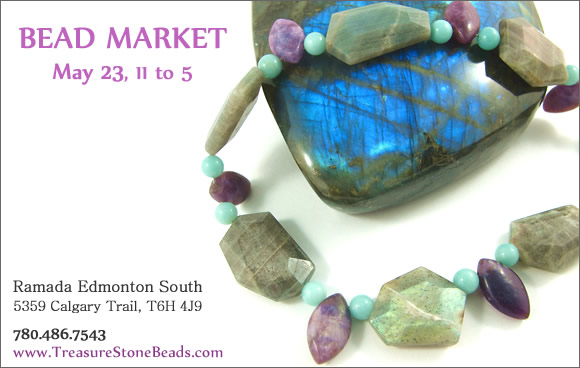
Sharing metadata
| twitter:card | Bead Market Edmonton |
|---|---|
| twitter:site | @linda_beads |
| twitter:image | http://www.treasurestonebeads.com/twitter_card_treasurestonebeads.jpg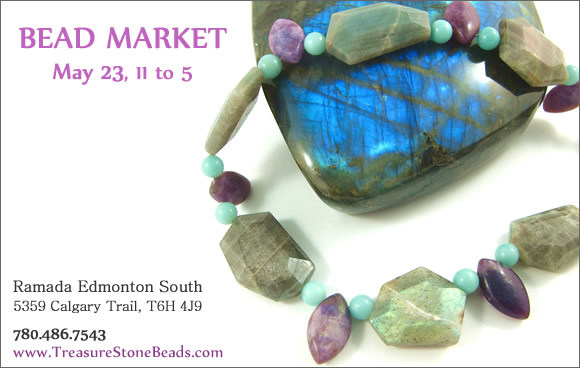 |
| twitter:title | Bead Market Edmonton |
| twitter:creator | @linda_beads |
| twitter:description | Best Beads, Gemstones, Charms, Pearls, Crystals, Jewelry-making supplies in Edmonton |
robots.txt (opens in a new tab)
HTTP 404
No robots.txt found
Sitemaps
0No sitemaps found
 Registration details RDAP / WHOIS
| Registrar | IONOS SE |
|---|---|
| Registered | 2013-01-09 |
| Expires | 2027-01-09 |
| Domain status | client transfer prohibited |
| Nameservers | ns1081.ui-dns.biz、ns1081.ui-dns.com、ns1081.ui-dns.de、ns1081.ui-dns.org |
| DNSSEC | unsigned |
 DNS records
| Type | Name | Value | TTL | Priority |
|---|---|---|---|---|
| A | treasurestonebeads.com | 74.208.236.59 | 3600 | — |
| AAAA | treasurestonebeads.com | 2607:f1c0:100f:f000::2f2 | 3600 | — |
| MX | treasurestonebeads.com | mx00.ionos.com | 3600 | 10 |
| MX | treasurestonebeads.com | mx01.ionos.com | 3600 | 10 |
| NS | treasurestonebeads.com | ns1081.ui-dns.biz | 172800 | — |
| NS | treasurestonebeads.com | ns1081.ui-dns.com | 172800 | — |
| NS | treasurestonebeads.com | ns1081.ui-dns.de | 172800 | — |
| NS | treasurestonebeads.com | ns1081.ui-dns.org | 172800 | — |
| TXT | treasurestonebeads.com | v=spf1 include:_spf-us.ionos.com ~all | 3600 | — |
| DMARC | dmarc.ionos.com | v=DMARC1; p=none; | 86400 | — |
 TLS and certificates
| Assessment | Normal configuration |
|---|---|
| Supported protocols | TLSv1.2、TLSv1.3 |
| Negotiated protocol | TLSv1.3 |
| Certificate subject | *.treasurestonebeads.com |
| Issuer | Sectigo Limited |
| Valid until | 2027-01-19T23:59 · Remaining when checked: 113 days |
| Verification details | Certificate trust: Passed · Hostname match: Passed |
 HTTP response headers
| Header | Value |
|---|---|
| content-type | text/html; charset=utf-8 |
| server | Apache |
 Identified technologies
User reviews (0)