
 简体中文
 English

Website review
This review may include AI-generated content and is not individually verified. Domain, certificate and other facts come from the observed data on this page.
What is Yew Chung International School of Chongqing?
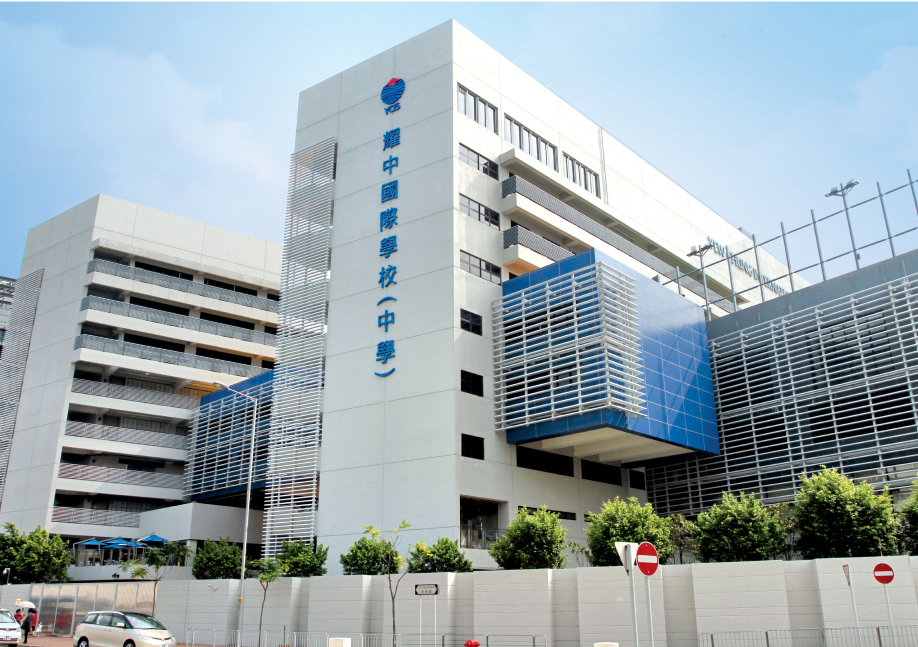
Yew Chung International School of Chongqing (YCIS Chongqing) is an international school in Chongqing, China, for expatriate children aged 3 to 18 (K3 to Year 13). It was founded in 2001 and describes itself as the first international school in Chongqing registered with China's Ministry of Education. The campus is in the International School Garden in Liangjiang New Area, and teaching runs from early childhood through upper secondary, including the IB Diploma Programme.
What it offers, by stage
- Early childhood (ages 2–6): a bilingual environment with Chinese and Western teachers working alongside parents, focused on whole-child development, character and values.
- Primary and secondary: a through-train pathway leading to IGCSE and the IB Diploma Programme.
- Beyond the classroom: more than 50 co-curricular activities, a school-wide student-teacher ratio of 5:1, and a student body of over 26 nationalities.
Who it suits
The school is designed for expatriate families living in Chongqing who want one continuous curriculum rather than moving between schools at each stage, and who value a bilingual early-years start. The published university acceptances—including Peking, Tsinghua, Oxford, Cambridge, Stanford and UC Berkeley—suggest a university-oriented upper secondary track.
A practical next step
If you are considering it, check the two things that matter most for your family: whether your child's age and visa status fit the expatriate admissions criteria, and how the IB pathway in Years 12–13 aligns with university plans in your home country. The school's admissions enquiry line is listed as +86 23 8879 1600, and a campus VR tour is offered on the site. For comparison, other Yew Chung schools in the network include Yew Chung International School of Beijing and Yew Chung International School of Shanghai.
Who is eligible to enroll at YCIS Chongqing, and does my child need a foreign passport?
YCIS Chongqing is an international school for expatriate children aged 3 to 18 (K3 to Year 13), so the deciding factor is your child's expatriate status rather than academic level. The school was founded in 2001 and is registered with China's Ministry of Education, which matters because registration is tied to enrolling foreign passport holders rather than local Chinese families.
The passport question
Yes—in practice, your child needs a foreign passport. The school describes itself explicitly as being for expatriate students, and that framing is standard for Ministry-registered international schools in mainland China. So a child holding only a Chinese passport would normally not be eligible through this route, even if the family has lived abroad.
The usual nuance: children with dual nationality or a foreign passport plus Chinese residency status are typically assessed case by case, and families where one parent is Chinese and the other foreign often have a pathway. Because rules on this shift with local education-bureau policy, confirm your specific family situation directly with admissions rather than relying on the general description.
Who it suits
- Relocating families arriving in Chongqing for work, who need a through-train from early childhood to Year 13 without changing schools at each stage.
- Families planning for university abroad, given the IGCSE and IB Diploma pathway and the listed acceptances at UK, US and Chinese universities.
- Parents wanting a bilingual environment—the early years are described as having Chinese and Western teachers working together.
- Mobile or internationally minded households: the student body covers over 26 nationalities, which helps a child who has already attended school in another country.
Who it may not suit
- Chinese nationals without a foreign passport, who will generally need a local or bilingual school instead.
- Families seeking a Chinese national curriculum or gaokao preparation—this is an international pathway aimed at overseas university entry.
- Families wanting a small, single-track school: with 50+ co-curricular activities and a school-wide 5:1 student-teacher ratio, it is a structured, well-resourced environment rather than a minimalist one.
Next step
Before applying, gather your child's passport, visa/residence permits, previous school records and immunization records, then call admissions at +86 23 8879 1600 to confirm your child's eligibility category. Ask specifically: "Does my child's passport combination qualify as an expatriate student under current Chongqing regulations?" That one question resolves most uncertainty. If you are comparing options across the region, the school's own network includes Yew Chung International School of Chongqing and sister campuses in Shanghai, Beijing and Hong Kong.
How much does tuition cost at YCIS Chongqing, and what fees are included?
The published page does not list tuition figures or a fee breakdown, so no reliable amount can be given from it. Use the school's Tuition & Fees page (linked in the site navigation) or call admissions at +86 23 8879 1600 to get the current schedule for your child's year group.
What the page does establish
- The school serves expatriate students aged 3 to 18 (K3 to Year 13), from Early Childhood through Upper Secondary.
- It was founded in 2001 and describes itself as the first international school in Chongqing registered with the Ministry of Education.
- The campus is in the International School Garden, Liangjiang New Area.
- It reports a 5:1 student-teacher ratio school-wide, over 50 co-curricular activities, students from 26+ nationalities, and a 100% IBDP pass rate.
What to ask about when you request fees
Tuition headlines rarely equal the annual outlay. Ask admissions to confirm, in writing, which of these are bundled and which are separate:
| Item | Why it matters |
|---|---|
| Application and assessment fee | Usually one-off and non-refundable |
| Enrolment or capital levy | Sometimes annual or one-time; can be the largest hidden cost |
| Annual tuition by year level | Rises steeply from Early Childhood to IBDP years |
| Bus transport | Route-dependent in Liangjiang and across Chongqing |
| Lunch and uniform | Often billed separately |
| Co-curricular activities | Some of the 50+ may carry extra charges |
| IBDP exam and subject fees | Typically charged in the final two years |
| English language support | May be a separate programme fee |
| Sibling or early-payment discounts | Worth asking about explicitly |
A practical next step
Email admissions with your child's date of birth and intended entry year, and ask for the full fee schedule for that year plus a sample total annual cost including transport and meals. Comparing that all-in figure against other schools is more useful than comparing headline tuition. Families also weighing options in the region can check YCIS Chongqing directly alongside other established international schools in China, such as Yew Chung Education Foundation for the wider network.
How does the IB Diploma Programme at YCIS Chongqing prepare students for university admissions abroad?
YCIS Chongqing presents the IB Diploma Programme as the final stage of a through-train education for expatriate students aged 3–18, so IBDP preparation builds on earlier IGCSE work rather than starting from scratch in Years 12–13. The school reports a 100% IBDP pass rate and lists recent acceptances at universities including Oxford, Cambridge, LSE, UCL, Stanford, UC Berkeley, UCLA, Cornell and the National University of Singapore, alongside Peking and Tsinghua. It also maintains a Careers and University Guidance Office, which is the practical link between the diploma and applications abroad.
What this means for a mobile family
For parents relocating to Chongqing, the main appeal is continuity: one campus from early childhood through Year 13, a school-wide 5:1 student-teacher ratio, and a peer group spanning more than 26 nationalities. That environment suits families who expect to apply to universities in several countries and want a curriculum recognised across them.
How to test the fit
Ask the admissions team and the guidance office concrete questions: which IB subjects and levels are actually offered, how predicted grades are handled, how much one-to-one time students get with university counsellors, and where recent graduates enrolled by course rather than just by university name. A 100% pass rate is encouraging, but score distribution and subject breadth tell you more about competitiveness for selective courses. Start with the school's own site at YCIS Chongqing and request a guidance-office conversation before committing.
What is the admissions process and timeline for applying to YCIS Chongqing?
The school's own site does not publish a step-by-step admissions process or application deadlines. What it does show is the starting point: an admissions enquiry form and phone line (+86 23 8879 1600) on Yew Chung International School of Chongqing, plus a virtual tour and campus visit option. Applications are aimed at expatriate families with children aged 3–18 (K3 to Year 13).
What the site confirms
- Who it's for: children of expatriate families, Early Childhood through Upper Secondary.
- Entry points: K3 to Year 13, so families relocating mid-schooling can ask about year-level placement.
- First step: submit an admissions enquiry or call, then arrange a visit or virtual tour before applying.
A realistic timeline to plan around
Treat these as general advice for international schools, not as YCIS Chongqing's stated deadlines:
| Stage | Typical timing | What to prepare |
|---|---|---|
| Enquiry and tour | 6–12 months before entry | Child's age, year level, preferred start date |
| Application submission | 6–9 months before | Past school reports, passport/visa copies, immunization records |
| Assessment and interview | 3–6 months before | Age-appropriate readiness or placement checks |
| Offer and enrolment | 2–4 months before | Deposit, fee agreement, uniform and transport arrangements |
Mid-year moves are common in Chongqing's expat community, so ask directly whether rolling entry is possible for your child's year group. For comparison, other Yew Chung campuses such as YCIS Shanghai and YCIS Qingdao publish their own admissions pages, which can help you see how the network typically structures applications.
Next step: call the admissions line with your child's date of birth, current curriculum and intended start date, and ask for the document checklist and assessment format in writing.
How does YCIS Chongqing's bilingual Early Childhood programme differ from its Primary and Secondary stages?
YCIS Chongqing's Early Childhood stage is the only one the school describes as explicitly bilingual, with Chinese and Western teachers working together in the same classroom. The Primary and Secondary stages are presented as an international through-train toward IGCSE and the IB Diploma Programme, without that same co-teaching, dual-language framing.
What the school says about each stage
| Stage | Ages (as stated) | Emphasis in the school's description |
|---|---|---|
| Early Childhood | 2–6 | Bilingual environment; Chinese and Western teachers co-working with parents; whole-child development, character and values |
| Primary | Not specified | Listed as a stage on the "Your Child's Journey" path; no separate detail given |
| Secondary | Through Year 13 | IGCSE and IBDP results; university guidance and acceptances |
The site's "at a glance" figures apply school-wide, not to one stage: a 5:1 student-teacher ratio, a 100% IBDP pass rate, more than 26 nationalities and over 50 co-curricular activities.
What this means in practice
If your family is weighing a bilingual start against an English-dominant international path, the Early Childhood years are where YCIS Chongqing puts its dual-language resources. A parent moving to Chongqing with a four-year-old who speaks mostly Mandarin at home would find that fit most directly. A family arriving with a ten-year-old should ask how much Chinese-medium support continues into Primary, because the school's own stage description doesn't say.
The trade-off is continuity versus immersion. A strongly bilingual early start can ease the transition for children new to English, but families should confirm how that support tapers as students move into IGCSE coursework, where exam preparation in English becomes central.
For a second opinion on how bilingual early-years models compare across international schools, IBO explains the Primary Years Programme framework that many such schools, including this one's IB pathway, build on.
Next step: book a campus visit and ask specifically how teacher pairing and language balance change between Early Childhood and Primary, and what Chinese language provision remains in Secondary.
 Alibaba Cloud DNS

User reviews (0)