Website profiles · Technology insights · Alternatives

brametric.com

How to measure your actual bra size: a comprehensive guide, measurement charts and online calculator. Look at the tables for converting sizes and read advice on the proper way to choose a bra that fits well.

No paid content found Multilingual
Visit website
Profile views 4 Outbound visits 0 Normal
Bra Size Calculator Online Full homepage screenshot

At a glance

Category
Resources & Utilities
Language
English
Paid-content signal
No paid content foundObserved
Registered
2021
Hosting
Hostinger International LimitedInferred
HTTPS certificate trusted
PassedObserved
Last updated

Website review

This review may include AI-generated content and is not individually verified. Domain, certificate and other facts come from the observed data on this page.

What is Bra Size Calculator Online?

Bra Size Calculator Online is a measurement guide and size-conversion tool for finding a bra size yourself at home. It combines an online calculator with written instructions, band and cup charts, and conversion between sizing systems such as US and UK. You supply two measurements — a snug underbust and a standing bust — in inches or centimeters, and the site works out a suggested band and cup size.

H3 What you actually do on the site

  • Take a snug underbust measurement with the tape level and firm but not pressing into the skin.
  • Take a standing bust measurement without compressing the breasts.
  • Enter both numbers and your unit preference into the calculator.
  • Read the resulting size, then check the band and cup charts to convert it to other systems.

H3 How it differs from guessing or a single chart A plain chart only maps numbers you already have. This site also explains two common calculation methods, Underbust+4 and Underbust+0, which produce different band results. The +4 method rounds the underbust to the nearest even number and adds four inches, and the page notes it is widespread in the US and UK, including on marketplaces and brands like Natori and Calvin Klein. Knowing which method a brand uses matters, because the same body can land on two different band sizes.

H3 Who it suits

  • First-time self-measurers who want step-by-step instructions rather than a bare table.
  • Shoppers buying from international brands who need to convert a known size.
  • Anyone whose size has drifted and who wants a fresh starting point.

It is less useful if you already know your size in a specific brand and just want that brand's own chart, since fit varies by cut and style regardless of the calculated number.

H3 A practical next step Measure once with a soft tape, write both numbers down, and run the calculator with each method to see how far apart the results are. If they differ by a full band size, treat the smaller as a starting point for brands with stretchy bands and the larger for firmer ones. For a second opinion on method differences, Reddit communities discuss brand-specific fit, and for general sizing background, Wikipedia covers how bra sizing systems vary by country.

How do I measure my bra size at home using the simple method?

Use the simple two-measurement method: take a snug underbust measurement and a standing bust measurement, then compare the difference to find your cup size. Bra Size Calculator Online lays out exactly this approach, along with a calculator that converts your numbers into US, UK and other sizing systems.

Take the two measurements

  • Snug underbust: Wrap the tape comfortably under your bust, keeping it perfectly horizontal. It should sit firmly against your ribs without pressing into the skin — roughly the tightness you would want from a bra band.
  • Standing bust: Measure around the fullest part of your bust while standing or sitting up straight, with the tape parallel to the floor. Don't compress the tissue and don't let the tape sag.

Turn measurements into a size

Band size comes from the underbust number; cup size comes from the difference between bust and underbust. The site notes that there are two common conventions for the band, and they give different results:

Method Band calculation Where it's common
Underbust + 4 Round snug underbust to nearest even number, add 4 US and UK retail, many online marketplaces
Underbust + 0 Use the underbust measurement directly Brands using a "true band" approach

The site's own example: a snug underbust of 29 inches rounds to 30, and adding 4 gives a 34 band under the +4 method.

A practical scenario: If your underbust is 30 inches and your standing bust is 36 inches, that's a 6-inch difference. Under +4 you'd start around a 34 band; under +0 you'd start around a 30. Try both if you're between conventions, since the same body can legitimately map to different labels depending on the brand.

Next step: Measure once, write both numbers down, and run them through the calculator on Bra Size Calculator Online rather than doing the arithmetic in your head — it also cross-references the band and cup charts on the same page. If the result feels off, re-measure the underbust first; it's the measurement most often taken too loose, and it shifts the whole size.

What is the difference between the Underbust+4 and Underbust+0 methods?

The two methods differ in how they turn your underbust measurement into a band size. Underbust+4 adds 4 inches to a rounded, even underbust number before selecting the band; Underbust+0 uses the underbust measurement as-is, so the band matches your actual ribcage measurement more closely. Both start from the same snug underbust tape reading described on Bra Size Calculator Online.

Practical differences

Point Underbust+4 Underbust+0
Band calculation Snug underbust in inches, rounded to nearest even number, plus 4 Snug underbust used directly (or rounded per the sizing system)
Typical use Common in the US and UK, including many online marketplaces and brands Common in systems where the band equals the measured underbust
Effect on cup A larger band usually pairs with a smaller cup letter for the same bust measurement A smaller band usually pairs with a larger cup letter
Fit feel Looser band; may suit those who prefer less compression Snugger band; relies on the band for support

Which to choose

Start with the method used by the brand you are buying from, because the same body measurement can produce different labeled sizes. If a brand's chart follows Underbust+4, use that; if it follows Underbust+0, use that. As a tie-breaker, try both and judge by fit: the band should stay level and firm without digging in, and the center front should lie flat against your sternum.

Example: if your snug underbust is 29 inches, Underbust+4 rounds to 30 and adds 4, giving a 34 band; Underbust+0 would point you toward a 30 band, with a correspondingly larger cup letter.

How can I convert my bra size between US and UK sizing systems?

Converting US to UK Bra Sizes

The key difference between US and UK bra sizing is the cup progression, not the band number. Band sizes are generally the same in both systems (a 34 band is a 34 band), but cup letters diverge after DD. UK sizing continues with E, F, FF, G, GG, H, HH, and so on, while US sizing typically skips straight to DDD, then often G, H, I — with no double letters.

The practical rule: find your US cup, then count up the UK alphabet from DD. A US DDD is usually a UK E; a US G is usually a UK F; a US H is roughly a UK FF. Double letters like FF and GG exist only in UK sizing, so if you see them on a tag, you are looking at a UK-branded bra.

Quick reference

US cup UK cup
DD DD
DDD / E E
DDDD / F F
G FF
H G
I GG

Treat this as a starting point, not a guarantee. Brands differ in how they grade cups, and a "sister size" swap (going down a band and up a cup, or vice versa) can matter more than the letter conversion itself.

A concrete example

Suppose you measure a 34 band and your US size comes out as 34DDD. In UK sizing you would typically look for a 34E. If the 34E feels tight in the band but right in the cup, try a 36DD — the sister size — before assuming the conversion is wrong.

Useful next step

Use a calculator that lets you enter your measurements and outputs both US and UK results side by side, so you can compare before buying. Bra Size Calculator Online provides an online calculator with US, UK and other size systems, plus band and cup charts. Measure your snug underbust and standing bust first, then check the result against both systems.

When shopping, filter by the sizing system the brand actually uses — many UK brands (such as those sold on Bravissimo) list UK sizes only, so convert before you order. If you are between sizes, prioritize band fit: the band provides most of the support, and a cup that is one letter off is easier to adjust than a band that rides up.

What are the signs that my bra doesn't fit properly?

The clearest signs are usually in three places: the band, the cups and the straps. A bra that fits well stays put when you move, so most problems show up as slipping, digging, gaping or spilling.

Band problems

  • The band rides up at the back during the day; it should sit level all the way around.
  • You can pull the band several inches away from your ribs; it should feel snug but not tight.
  • Red marks or sore spots under the band, or the band twisting and rolling.

Cup problems

  • Spilling over the top or sides, or the centre gore (the piece between the cups) floating away from your chest.
  • Wrinkling, gaping or empty space at the top or bottom of the cup.
  • The underwire sits on breast tissue instead of flat against your ribcage, or pokes under the arm.

Strap and overall problems

  • Straps dig into your shoulders or fall down constantly; straps should carry only a small share of the support, with the band doing most of the work.
  • The back of the bra climbs up while the front drops, which usually means the band is too loose.
  • You find yourself tugging, adjusting or re-hooking the bra repeatedly through the day.

One practical test: put the bra on the loosest hook, scoop your breast tissue into the cups, then raise your arms and bend forward. If the band lifts, the cups overflow or the gore pulls away, the size or style is off.

A useful next step is to take two measurements — a snug underbust and a standing bust — and compare them against a size chart before buying. Bra Size Calculator Online walks through both a simple two-measurement method and a more detailed one, and includes band and cup charts plus conversion between US, UK and other size systems. That matters because the same body can be labelled differently depending on the brand's system, so knowing your measurement in more than one convention reduces the guesswork when you shop.

Keep in mind that a correct measurement does not guarantee a correct fit on its own. Cup shape, wire width and fabric stretch vary between styles, so treat any calculated size as a starting point and judge the actual bra by how it behaves when you move.

How do I use the bra band and cup size charts to find my size?

Use the band chart first, then the cup chart, then confirm the result against the calculator's output. On Bra Size Calculator Online, the intended flow is: take a snug underbust measurement and a standing bust measurement, enter them in the online calculator with your chosen units (inches or centimeters), and use the band and cup charts to interpret or cross-check what it returns.

Step by step

  1. Measure your snug underbust: tape level and horizontal, firm against the skin but not digging in.
  2. Measure your standing bust: stand or sit upright, tape parallel to the floor, not compressing the breasts.
  3. Find your band on the Bra Band Size Chart using the underbust figure.
  4. Find your cup on the Bra Cup Size Chart using the difference between bust and band.
  5. Run both numbers through the calculator and compare with the chart result; if they disagree, re-measure before assuming either is wrong.

The one decision that changes your answer

The site presents two common systems, and they give different band numbers from the same body:

Method Band calculation Where it's typical
Underbust + 4 Round snug underbust to the nearest even number, add 4 Common in the US and UK, including many online marketplaces and brands
Underbust + 0 Use the underbust measurement directly as the band Often used where bands are sold in finer increments

The page describes the +4 approach as widespread on US and UK virtual marketplaces and among brands such as Natori and Calvin Klein. That matters practically: a 29-inch snug underbust becomes a 34 band under +4, but a 30 band under +0. If you shop mostly one retailer, use the method that retailer's own size chart assumes, or you'll order a band that's several inches off.

A realistic scenario

Suppose your snug underbust is 29 inches and your standing bust is 34 inches. Under +4 you'd land on a 34 band; the 5-inch difference points to a cup around DD in US sizing. Under +0 you'd start at a 30 band with roughly the same cup letter, but a 30-band bra in that cup will feel tighter around the ribcage and sit differently. Neither is "wrong" — they describe the same body in two sizing conventions. Try the sister size if one feels off: going down a band means going up a cup (or the reverse) to keep roughly the same cup volume.

How to tell it worked

Check these after trying a bra in your calculated size:

  • The band sits level all the way around and stays put when you raise your arms.
  • The center panel lies flat against your sternum.
  • The wires sit on your ribcage, not on breast tissue.
  • No spillage at the top or sides, and no gaping when you move.

If the band rides up at the back, the band is too large; if it digs in painfully, it's too small or the cup is too small. The site's "How to Fit a Bra" section covers this fitting check in more detail.

Next step

Measure twice — once standing for the bust and once for the snug underbust — and write both numbers down before touching the calculator. Re-measure on a different day if your result sits between two sizes, since band and cup boundaries are where the +4 versus +0 choice has the biggest effect. For a second opinion on sizing conventions, Reddit communities discuss brand-specific fit, though individual experiences vary.

Related questions

More questions →
How to Measure Your Bra Size at Home According to Bra Size Calculator Online

You can get a working bra size at home with two measurements: a snug underbust and a standing bust. Take both with a soft tape held level, then either run them through the calculator on brametric.com or apply the site's Underbust+4 or Underbust+0 formula by hand. The method works for anyone who can hold a tape measure steady; the only real requirement is that the tape stays horizontal and neither digs in nor hangs loose.

What you need before you start

  • A soft measuring tape (or a string plus a ruler)
  • A mirror, so you can check the tape is level at the back
  • A well-fitting, unpadded bra or no bra at all
  • Your measurements in inches or centimeters — the site's calculator accepts either, but you must specify the unit you used

The two measurements

Standing bust

Measure around the fullest part of your breasts while standing or sitting fully upright. Keep the tape parallel to the floor. Don't compress the breast tissue with the tape, and don't let it sag away from your body either — it should just rest against you.

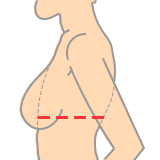
Snug underbust

Place the tape directly under your bust, in a perfectly horizontal line. It should sit firmly against your ribcage, the way a bra band would feel when it's comfortable — snug, but not pressing into the skin.

Write both numbers down before doing any math.

Turning measurements into a size

The site describes two systems, and they give different band sizes from the same underbust measurement.

Underbust+4 method

Common in the US and UK, and used by many online retailers and brands. Take your snug underbust in inches, round it to the nearest even number, then add 4. For example, a 29" underbust rounds to 30", and adding 4 gives a 34 band.

Underbust+0 method

Use the underbust measurement as-is (rounded to the nearest even number) without adding anything. This is the more direct of the two and is what many modern calculators default to.

Cup size comes from the difference between your bust and band measurements. The site publishes separate band and cup charts, plus a converter that translates your result into US, UK, and other sizing systems — useful because a 34D in one system is not a 34D in another.

Using the online calculator

  1. Take the two measurements as described above.
  2. Enter them into the corresponding fields on the calculator.
  3. Specify whether your numbers are in inches or centimeters.
  4. Read the result, then check the band and cup charts to confirm, and use the converter if you're shopping a brand that sizes differently.

The calculator page requires JavaScript to run, so if the fields don't respond, check that scripts are enabled in your browser.

How to fit a bra once you have a size

A calculated size is a starting point, not a guarantee. The site's fitting guidance covers the checks worth doing before you commit to a style:

  • The band should do most of the support work and sit level all the way around — if it rides up at the back, the band is too loose.
  • The center of the bra should lie flat against your sternum.
  • The cups should contain all breast tissue without gaping or cutting in.
  • Straps should stay put without leaving deep marks.

If the band is right but the cups aren't, adjust cup size rather than band size, and re-check against the cup chart.

Common sticking points

  • Rounding the underbust. Both methods round to the nearest even number, so a 31" underbust becomes 32" before you add anything.
  • Measuring over a padded bra. This inflates the bust measurement and skews the cup calculation.
  • A tape that isn't level. Even a slight tilt at the back changes the number, which is why the mirror matters.
  • Assuming one size fits all brands. The converter exists precisely because sizing systems differ; treat your calculated size as brand-specific once you start shopping.

Once you have a size that passes the fit checks, the site's own next step is to use it to find and buy the style you want — but confirm against each brand's chart before ordering.

How to Use Ahrefs for Your First SEO Audit: A Step-by-Step Tutorial

If you're new to Ahrefs and want to run your first SEO audit, the fastest path is: open Site Explorer, enter your target URL, review the Overview for a health snapshot, then dig into Organic Keywords, Top Pages, and Site Audit to find specific problems. From there, build a short prioritized to-do list instead of trying to fix everything at once.

This tutorial walks through that workflow using a realistic starting scenario, explains what the numbers mean, and shows how to turn findings into actions.

Before You Start: Pick a Narrow Scope

A common beginner mistake is auditing an entire large website on day one. The reports become overwhelming, and you can't tell which issues matter.

Instead, choose one of these starting points:

  • A single important page (your homepage or a key product/service page)
  • A small site (under ~50 pages, e.g., a personal blog or small business site)
  • One section of a bigger site (e.g., /blog/)

For this tutorial, assume you're auditing a small business site with about 30 pages. The same steps scale up later.

You'll need an Ahrefs account to follow along. Ahrefs offers paid plans, and pricing and feature limits change over time, so check the current Pricing page for what's included in each tier before committing.

Step 1: Enter Your Target in Site Explorer

Site Explorer is Ahrefs' core tool for analyzing any website or URL.

  1. Open Site Explorer from the top navigation.
  2. In the search box, paste your domain (e.g., example.com).
  3. Choose the Exact URL or Domain mode depending on scope. For a full-site view, use Domain or Prefix; for a single page, use Exact URL.
  4. Press Enter.

You'll land on the Overview report. Don't try to absorb everything — focus on four numbers first.

Reading the Overview Snapshot

Metric What it tells you How to use it
Ahrefs Rank (AR) Relative strength of the site's backlink profile vs. others in the database Useful for comparing against competitors, not as a standalone goal
Organic traffic Estimated monthly visits from search A rough trend indicator, not exact analytics
Organic keywords Estimated number of keywords the site ranks for Shows breadth of visibility
Backlinks / Referring domains Total links and unique sites linking to you Referring domains matter more than raw backlink count

Important caveat: Ahrefs' traffic and keyword numbers are estimates based on its own data. They won't match Google Search Console or your analytics exactly. Treat them as directional, not absolute.

Step 2: See What You Already Rank For

Go to Organic Keywords in the left sidebar. This shows queries where your site appears in search results.

Sort by Traffic (descending) to see which pages bring the most estimated visitors. Then look for:

  • Keywords ranking in positions 4–15 — these are often the easiest wins. A small content or on-page improvement can push them onto page one.
  • Keywords with high volume but low position — potential opportunities if the topic is relevant.
  • Irrelevant keywords — if you rank for something off-topic, it may signal thin or mismatched content.

Write down 5–10 of the position 4–15 keywords. These become your first optimization targets.

Step 3: Find Your Best and Weakest Pages

Open Top Pages. This ranks your URLs by estimated organic traffic.

Look for two things:

  1. Your top performers — understand what topics and formats work. Can you create more content like this?
  2. Pages with traffic but poor rankings — these may need on-page fixes (title, headings, internal links).

If a page gets zero traffic and targets a topic you care about, it's a candidate for a rewrite or consolidation.

Step 4: Run a Technical Site Audit

Now move to Site Audit. This crawls your site and flags technical and on-page issues.

  1. Click Site Audit → New project.
  2. Enter your domain and set crawl settings (default is usually fine for a small site).
  3. Start the crawl and wait for it to finish.

Once complete, you'll see a Health Score and a list of issues grouped by category.

Which Issues to Fix First

Not all issues are equal. Prioritize in this order:

Priority Issue type Why it matters
1 Broken links (404s) Bad for users and crawl efficiency
2 Pages blocked from indexing They can't rank at all
3 Missing or duplicate title tags Directly affects click-through and relevance
4 Slow-loading pages Affects experience and rankings
5 Thin content Low value to users and search engines

Ignore low-impact warnings (like minor meta description length) until the big items are handled.

Step 5: Turn Findings Into a To-Do List

You now have raw data. Convert it into a short, actionable list. Example:

  1. Fix 3 broken links found in Site Audit.
  2. Rewrite title tags on 5 pages with duplicate titles.
  3. Improve 4 pages ranking in positions 6–12 by adding missing subtopics and internal links.
  4. Remove or update 2 thin pages with no traffic.

Keep the list to 5–10 items max for your first audit. Finishing a short list beats starting a long one.

Common Beginner Mistakes

  • Chasing every red flag. Site Audit flags many minor issues. Fix what affects rankings and users first.
  • Trusting estimates as exact numbers. Ahrefs data is modeled, not measured from your analytics.
  • Auditing a huge site too early. Start small to learn the interface.
  • Ignoring search intent. A page can be technically perfect but still fail if it doesn't match what searchers want.
  • Forgetting to re-crawl. After fixes, run Site Audit again to confirm improvements.

Where to Go Next

Once your first audit is done:

  • Compare with competitors using Site Explorer's Competing Domains and Content Gap reports.
  • Track keyword rankings over time with Rank Tracker.
  • Explore backlink opportunities in the Backlinks and Link Intersect reports.
  • Set up recurring Site Audit crawls so new issues surface automatically.

Your first audit isn't about perfection — it's about building a repeatable habit: enter a target, read the key reports, pick the highest-impact fixes, and act. Do that once a month and your site's health compounds.

How Bra Size Calculator Online Converts Bra Sizes Between Countries

Bra Size Calculator Online converts your measurements into different national sizing systems by first calculating your band and cup size in one base system, then applying the conversion logic built into its calculator and charts. You enter your snug underbust and standing bust measurements, specify inches or centimeters, and the tool adjusts the result for systems such as US, UK, and others. This is useful when you shop across brands that label sizes differently, but the accuracy depends entirely on taking correct measurements.

What the site actually provides

According to the site's own description, Bra Size Calculator Online offers three connected tools:

  • An online calculator that works out your band and cup size from your measurements
  • Measurement charts for band size and cup size
  • A converter that adjusts calculations to different size systems, including US and UK

The site also notes that you must take measurements strictly according to its instructions and enter them with the correct unit (inches or centimeters). The calculator requires JavaScript to run.

How the conversion process works

The conversion happens in two stages.

Stage 1: Your measurements become a base size

You take two essential measurements:

  • Snug underbust — the tape sits comfortably under your bust, perfectly horizontal, firm but not pressing into the skin
  • Standing bust — measured standing or sitting fully upright, tape parallel to the ground, not squeezing and not loose

These two numbers are the only inputs the simple method needs.

Stage 2: The base size is mapped to a national system

The site describes two measurement systems used to turn those numbers into a size:

Method How the band is found Where it's common
Underbust + 4 Take snug underbust in inches, round to the nearest even number, add 4 US and UK, including marketplaces like Amazon and brands such as Natori and Calvin Klein
Underbust + 0 Uses the underbust measurement directly (no +4 adjustment) Alternative system offered by the site

Because the +4 and +0 methods produce different band numbers from the same body, the same person can land on different labeled sizes depending on which system a brand uses. That difference is exactly what the converter is meant to reconcile.

For example, the site's own illustration: a snug underbust of 29 inches rounds to the nearest even number and, under the +4 method, produces a band size of 33 — which then maps to a standard labeled band.

Why the same body gets different numbers in different countries

The core reason is that sizing systems disagree on two things:

  1. Whether to add inches to the underbust (+4 vs +0)
  2. How cup letters are assigned relative to the band

The site provides separate Bra Band Size Chart and Bra Cup Size Chart sections precisely because band and cup are converted on different scales. A US cup letter does not always correspond to the same UK letter, and band numbers are labeled differently across regions. The converter's job is to take your base calculation and express it in the target system so you can match a brand's own size chart.

How to use it for cross-country shopping

  1. Measure your snug underbust and standing bust according to the site's instructions.
  2. Enter both values into the calculator and select inches or centimeters.
  3. Note your result in the base system.
  4. Use the converter to view the equivalent in the system the brand uses (US, UK, etc.).
  5. Cross-check against that brand's own size chart before buying, since individual brands can vary within the same national system.

Limits to keep in mind

  • The site states that results depend on taking measurements strictly per its instructions — a loose or tight tape changes the output.
  • The +4 and +0 methods give different answers, so you need to know which convention a given brand follows.
  • The page does not state that the calculator or charts are free, nor does it describe any login requirement; treat access terms as unconfirmed unless you see them on the site.
  • Conversion gives you a starting size, not a guarantee of fit across every brand.
What Is Bra Size Calculator Online?

Bra Size Calculator Online (brametric.com) is a free web tool that turns two body measurements into a bra size. You enter a snug underbust and a standing bust measurement, and the site calculates your band and cup size and converts the result across sizing systems such as US and UK. It suits anyone who wants to check their size at home before buying, but it needs JavaScript enabled to run, and its accuracy depends entirely on how carefully you measure.

What the site actually offers

The page bundles four things in one place:

  • An online calculator at the top of the page that takes your measurements and outputs a size.
  • A measurement guide covering a simple two-measurement method and a more advanced multi-measurement method.
  • A band size chart and a cup size chart for looking up or cross-checking results.
  • A size converter that adjusts the calculation to different national systems, including US and UK.

You can enter measurements in either inches or centimeters, so you are not locked into one unit system.

How the measurement methods differ

The site describes two do-it-yourself approaches, and the choice between them changes your result.

The simple way

You take two measurements:

  1. Standing bust — measure around the fullest part of your bust while standing or sitting fully upright. Keep the tape parallel to the floor, snug but not compressing, and not hanging loose.
  2. Snug underbust — place the tape directly under your bust, perfectly horizontal. It should sit firmly against your ribcage without pressing into the skin, matching the comfort level you would want in a worn bra.

From these two numbers, the site applies one of two sizing systems:

Method Band size rule Where it is common
Underbust + 4 Measure snug underbust in inches, round to the nearest even number, add 4 US and UK, including marketplaces like Amazon and brands such as Natori and Calvin Klein
Underbust + 0 Use the underbust measurement directly as the band size Alternative system, generally used outside the +4 convention

The example the site gives: a snug underbust of 29 inches rounds to the nearest even number and then has 4 added under the +4 method.

The advanced way

The advanced calculator path uses additional measurements beyond the two basics. The page references a "Bra Measurement Guide for the Advanced Calculator" but the excerpt does not detail those extra steps, so treat the advanced route as a more thorough option you would follow directly on the site rather than something to reconstruct from the summary here.

How to fit a bra once you have a size

A calculated size is a starting point, not a guarantee. The site includes a "How to Fit a Bra" section, and the practical checks that matter when you try a bra on are:

  • The band should do most of the support work and sit level all the way around, not ride up at the back.
  • The center gore (the piece between the cups) should sit flat against your chest.
  • The cups should contain your breast tissue without gaping or cutting in.
  • Straps should stay put without digging in; if you need them very tight to feel supported, the band is likely too loose.

If a bra fails these checks, adjust the band size first, then the cup, because band and cup are linked — changing one shifts the other.

What to watch out for

  • JavaScript is required. The page states you need JavaScript enabled to run the calculator, so the tool will not work with scripts blocked.
  • Measurement error dominates the result. The site stresses taking measurements strictly according to the instructions. A tape that is tilted, too tight, or too loose will produce a wrong size no matter which method you pick.
  • The +4 vs +0 choice matters. These two systems can give you different band sizes from the same body, so know which convention the brand you are buying from uses before you order.
  • No pricing or account details are indicated on the page, so there is nothing to suggest paid tiers or login requirements from the material available.

Who this is useful for

Use brametric.com if you want a quick calculation plus reference charts in one place, especially if you shop across US and UK brands and need to convert. If you already know your size and just need a chart, the band and cup tables alone will do. If you are between sizes or have had fitting problems before, work through the "How to Fit a Bra" checks after calculating rather than trusting the number on its own.

Underbust+4 vs Underbust+0: Which Bra Sizing Method Should You Use?

Bra Size Calculator Online supports two different ways to turn a snug underbust measurement into a band size: the Underbust+4 method and the Underbust+0 method. The difference is exactly what the names suggest. Underbust+4 rounds your snug underbust measurement to the nearest even number and adds 4 inches to get the band size. Underbust+0 uses the underbust measurement itself, rounded to the nearest even number, as the band size. Both methods then compare that band size to your standing bust measurement to determine the cup size. Which one gives you the right fit depends on where you shop and how the brand builds its bras.

The two methods side by side

Underbust+4 Underbust+0
Band size calculation Snug underbust (inches) → round to nearest even number → add 4 Snug underbust (inches) → round to nearest even number
Example: 29" underbust 29 → 30 → 34 band 29 → 30 band
Cup size Difference between standing bust and the +4 band Difference between standing bust and the +0 band
Common where US and UK, especially online marketplaces like Amazon and brands such as Natori and Calvin Klein Brands and regions that size bras closer to the actual body measurement

The two measurements you need are the same for both methods: a snug underbust (tape comfortably under your bust, perfectly horizontal, firm but not pressing into the skin) and a standing bust (tape parallel to the ground while standing or sitting upright, not squeezing and not hanging loose). Only the band calculation changes.

Why the same body can produce two different sizes

Take a 29-inch snug underbust. Under Underbust+4, you round 29 up to 30 and add 4, giving a 34 band. Under Underbust+0, you round 29 up to 30 and stop there, giving a 30 band. That is a two-band-size gap from identical measurements.

The cup size shifts with it. Cup size comes from the difference between your standing bust and the band size, so a smaller band number paired with the same bust measurement produces a larger cup letter. In practice, a 34B under one method can correspond to a 30D or similar under the other — the same body, described two ways.

Which method should you actually use?

Use the method that matches the brand you are buying from, not the one that sounds more modern or more accurate.

  • Shopping on Amazon or from US/UK brands like Natori and Calvin Klein: start with Underbust+4, since that is the system these sellers commonly use to label their sizes.
  • Shopping from a brand that sizes close to the body: use Underbust+0.
  • Not sure which system a brand uses: calculate both, then check the brand's own size chart before ordering. The band chart and cup chart on Bra Size Calculator Online exist precisely so you can convert between systems rather than guess.

A useful sanity check: the band should feel snug on the loosest hook without riding up, and the center of the bra should sit flat against your chest. If a 34 band rides up but a 32 feels tight, you may be a +0 size being sold a +4 label, or the reverse.

Common mistakes that break both methods

  • Measuring the underbust too loose or too tight. The tape should feel the way you want the bra to feel — firm, horizontal, not digging in. A loose measurement inflates the band; an over-tight one shrinks it.
  • Measuring the bust while leaning or with a padded bra on. Use a standing or seated upright position and no bra, or a thin unpadded one.
  • Mixing units. The calculator accepts inches or centimeters, but you must specify which. Entering centimeters as inches will throw off both methods.
  • Assuming one method is "correct." Neither is wrong; they are conventions. The right one is the one the brand uses.

FAQ

Does Underbust+4 always add exactly 4? Yes — the method rounds the snug underbust to the nearest even number first, then adds 4. So 29" becomes 34, and 30" becomes 34 as well.

Can I use Underbust+0 if I normally wear a +4 size? You can calculate it, but expect a smaller band and a larger cup letter. Whether it fits depends on the brand's construction, so try before committing if possible.

Which method does Bra Size Calculator Online recommend? The site presents both and lets you choose, because the correct one depends on the sizing system of the brand you are buying from. Use the band and cup charts to convert between them.

Website Overview

Identifiable technologies and additional version or configuration signals make the service easier to fingerprint, which may help targeted scanners narrow their checks.

Domain and Registration

Transfer-protection status is present, helping reduce the risk of unauthorized domain transfers. The domain has about 4 years of registration history; its current configuration provides more context than age alone. The domain uses the common .com extension, which is not an independent safety signal.

DNS and Email

The lowest TTL is 60 seconds, supporting rapid record changes at the cost of more frequent lookups. Nameservers are provided by dns-parking.com, indicating managed DNS hosting. MX records point to the Hostinger Email email service. No CNAME was found; the observed records resolve directly to addresses. SPF and DMARC are configured. DKIM status is unknown.

TLS and Certificates

The public key uses EC with 256 bits. The server supplied a complete certificate chain. No organization name is present in the certificate; the available fields are consistent with domain validation. The certificate was issued by Let's Encrypt, commonly associated with automated certificate services. The certificate's total validity is about 89 days, consistent with a short renewal cycle.

HTTP and Browser Security

X-Powered-By exposes backend information: PHP/7.4.33. The response lacks these common security headers: HSTS, X-Content-Type-Options, Referrer-Policy, Permissions-Policy, clickjacking protection. No obvious internal addresses or debug information were found in the headers. The Server header contains the custom value hcdn. Cookie security attributes are unknown.

Technology Stack Analysis

The public page identifies WordPress 6.7.9, PHP, with exact versions exposed for 1 technologies. These details can narrow vulnerability checks, although exposure alone is not a vulnerability.

Search and Social Sharing

The meta description has 207 characters and may be shortened in search results. The Generator tag identifies WordPress 6.7.9, making the publishing system easier to fingerprint. Twitter Card metadata is configured. JSON-LD includes Organization data, helping describe the organization as an entity. The page declares 3 language or regional alternatives using hreflang.

Hosting and Email

DNSdns-parking.com
HostingHostinger International Limited
EmailHostinger Email
Approximate IP geolocation (inferred; a CDN or proxy may differ from the origin server) United States flagAsheville, North Carolina, United States Inferred 195.35.60.59

Registration details

RDAP / WHOIS

RegistrarRegistrar of Domain Names REG.RU LLC
Registered2021-11-12
Expires2026-11-12
Domain statusclient transfer prohibited
Nameserversns1.dns-parking.com、ns2.dns-parking.com
DNSSECunsigned

DNS records

DNS

TypeNameValueTTLPriority
Abrametric.com195.35.60.5960—
Abrametric.com212.1.212.4660—
AAAAbrametric.com2a02:4780:84:3319:a1d3:e1fe:e0b4:f82160—
AAAAbrametric.com2a02:4780:84:a30b:21dc:d1ea:3315:8c2e60—
MXbrametric.commx1.hostinger.com144005
MXbrametric.commx2.hostinger.com1440010
NSbrametric.comns1.dns-parking.com86400—
NSbrametric.comns2.dns-parking.com86400—
TXTbrametric.comv=spf1 include:_spf.mail.hostinger.com ~all3600—
DMARC_dmarc.brametric.comv=DMARC1; p=none3600—

TLS and certificates

TLS / SSL

AssessmentNormal configuration
Supported protocolsTLSv1.2、TLSv1.3
Negotiated protocolTLSv1.3
Certificate subjectbrametric.com
IssuerLet's Encrypt
Valid until2026-12-16T13:08 · Remaining when checked: 77 days
Verification detailsCertificate trust: Passed · Hostname match: Passed

HTTP response headers

HTTP

HeaderValue
content-typetext/html; charset=UTF-8
serverhcdn
content-security-policyupgrade-insecure-requests
set-cookieRedacted

Identified technologies

WordPress 6.7.9PHP

Pages, Search and Sharing

Meta descriptionHow to measure your actual bra size: a comprehensive guide, measurement charts and online calculator. Look at the tables for converting sizes and read advice on the proper way to choose a bra that fits well.
Canonical URLhttps://brametric.com/
LanguageEnglish (default) · Multilingual
Twitter Cardsummary_large_image
All bots 0 allowed · 1 disallowed
  • Disallow/kg/

User reviews (0)

  • No reviews yet.