
 简体中文
简体中文 English
Website review
This review may include AI-generated content and is not individually verified. Domain, certificate and other facts come from the observed data on this page.
What is Broadsign?
Broadsign is a software platform for out-of-home (OOH) advertising — the billboards, transit screens, airport displays, malls, urban panels and grocery screens people see while moving through the physical world. The site describes it as the place "where media owners and buyers come together to plan, manage, and transact out-of-home advertising," covering both traditional digital signage and programmatic DOOH (pDOOH), where ad space is bought and sold automatically rather than through manual negotiations.
Its scope is broad on both sides of the market. Media owners use it to sell inventory, run their screen networks and manage day-to-day operations; agencies and brands use it to build and execute targeted, contextual pDOOH campaigns. A buyer can browse an inventory catalog spanning billboards, transit hubs, international airports and retail locations, while a seller can plug their own screens into that demand.
Who it fits
- Media owners and network operators — anyone running a fleet of digital screens who needs scheduling, sales and network management in one place.
- Agencies and brands — teams wanting to reach audiences in high-traffic physical environments, especially those already buying digital media programmatically.
- Retailers and venues — locations such as malls or grocery chains that host screens and want to monetize them.
Trade-offs to weigh
A platform like this earns its keep when you have meaningful screen volume or recurring campaign activity; for a single small screen, the operational overhead may outweigh the benefit. Programmatic buying adds efficiency and reach but reduces direct control over exactly which placements run. And because OOH is measured in physical-world exposure, you should check how impression and lift reporting maps to the metrics your team already uses.
If you're evaluating it, start by identifying which side of the market you're on — buyer or seller — then look at the plans page and request a walkthrough of the inventory catalog relevant to your region. For context on the wider programmatic ecosystem mentioned in its case studies, Place Exchange is one example of the exchange layer involved.
How do I plan and launch a programmatic DOOH campaign using Broadsign?
Planning a programmatic DOOH campaign on Broadsign means working through two sides of the same platform: the buyer side, where you build and target a campaign, and the seller side, where inventory is packaged and made available. Your exact workflow depends on whether you are an agency/brand or a media owner.
If you are an agency or brand
Broadsign positions itself as a place to create and execute contextual, targeted pDOOH campaigns, and to reach inventory programmatically through what it describes as the world's largest DOOH network. A practical sequence looks like this:
- Define the objective and audience. Decide whether you need mass reach, street-level visibility in specific neighborhoods, or a lift in visits or consideration. The page's case examples show different goals: San Diego Tourism targeted young professionals in high-density metro hubs to drive travel, while Crumbl aimed for social buzz in iconic, high-traffic pedestrian and commuter zones.
- Choose environments that match the goal. Broadsign's inventory catalog spans billboards, transit hubs, international airports, retail, malls, urban panels, grocery and airport screens. For a commuter audience, transit and urban panels usually make sense; for broad awareness, large-format spectaculars do more work.
- Set up targeting and context. pDOOH lets you apply audience and contextual targeting rather than buying screens purely by location. This is where the "programmatic" part earns its keep: you can adjust placements by market, time and audience segment.
- Launch, then measure against the original objective. The San Diego Tourism example reported 38 million target impressions and a 49.8% net lift in physical visits within 120 days; the Silbö Telecom example reported a +263% lift in consideration with transit ads. Use metrics that match your goal rather than defaulting to impressions alone.
If you are a media owner
The platform is also built for selling inventory and managing an OOH network. In that role, the work is less about audience targeting and more about making your screens discoverable and transactable: packaging inventory, connecting it to programmatic demand, and tracking network performance and profitability.
A quick way to decide
| Your situation | Start here |
|---|---|
| You have a defined audience and a measurable outcome | Buyer workflow: objective → environment → targeting → measurement |
| You want broad awareness fast | Large-format billboards and high-traffic spectaculars |
| You want a specific commuter or shopper audience | Transit hubs, urban panels, retail and grocery screens |
| You own screens and want more demand | Seller workflow: inventory packaging and programmatic connection |
Useful next step
Before committing budget, write a one-page brief with your objective, target audience, priority markets and success metric. Then match each market to an inventory type and confirm how you will measure the result. If you need pricing or plan tiers, check Broadsign directly, since plan details are not specified here.
What are the pricing plans and costs for media owners or advertisers on Broadsign?
Broadsign does not publish a simple rate card on its main site. The platform is positioned as an end-to-end solution for both media owners and advertisers, and the pricing page is framed as "Our Plans" rather than a public price list: Broadsign. That means the cost depends on which side of the marketplace you are on and what you need the software to do.
What the page evidence supports
- For media owners, Broadsign is described as software to "sell your inventory, manage your OOH network, and boost profitability." This is typically a platform/licensing relationship, not a per-ad price.
- For agencies and brands, it is described as a way to "create and execute contextual and targeted pDOOH campaigns" and to reach inventory through "the world's largest DOOH network." Here, costs usually come from the media inventory you buy plus any platform or campaign fees.
- The page references "Our Plans" and a "media kit," but does not list dollar amounts or tier names in the supplied evidence.
How to think about the cost
| Buyer type | What you are likely paying for | What to ask before committing |
|---|---|---|
| Media owner | Software to manage screens, inventory, scheduling and programmatic sales | Is pricing based on number of screens, ad volume, or revenue share? Are there setup or integration fees? |
| Agency or brand | Access to DOOH inventory plus campaign planning/execution tools | Is the platform fee separate from media spend? Are there minimum campaign spends or market restrictions? |
| Smaller operator | A lighter plan or entry tier | Can you start with a subset of screens or a single market? What support is included? |
A practical next step
If you are a media owner, ask Broadsign for a quote based on your screen count and whether you want to sell programmatically. If you are an advertiser, ask for a media kit and clarify whether pricing is tied to impressions, locations, or a flat platform fee. The case studies on the page — San Diego Tourism, Crumbl and Silbö Telecom — show campaign outcomes, but not what those campaigns cost, so they are useful for judging fit rather than budget.
How can media owners manage and sell their digital out-of-home inventory through Broadsign?
Media owners use Broadsign as an end-to-end system for running a digital out-of-home (DOOH) network and selling its screen time. According to the site, the platform is aimed at media owners who want to "sell your inventory, manage your OOH network, and boost profitability," while buyers and agencies use the same ecosystem to plan and transact campaigns. Broadsign also states it connects buyers and sellers across formats including malls, urban panels, transit, billboards, grocery and airports.
Managing inventory
For a media owner, the practical workflow is to bring screens and locations into one system, then control what runs where and when. Broadsign's page describes the platform as powering OOH across many environments and serving billions of ads monthly, which implies centralised scheduling and delivery rather than managing each screen separately. A typical operator might use this to organise a transit network or a set of retail screens by venue type, audience and time of day, then schedule campaigns against those rules.
Selling inventory
Broadsign positions itself as a meeting point for media owners and buyers, with programmatic DOOH as the main sales channel. The site says buyers can "reach audiences at scale through the world's largest DOOH network" using an inventory catalog, and that media owners can make their inventory available to that demand. In practice, a media owner would list available placements, set availability and pricing rules, and let agencies or brands book directly or programmatically. The page cites campaigns such as San Diego Tourism, which used high-density inventory through Place Exchange and reported a 49.8% lift in visitation, and Crumbl, which activated large-format spectaculars in major metropolitan hubs — examples of how sold inventory can be packaged for brand campaigns.
Who it suits
- Independent and mid-sized network operators wanting one platform for scheduling, delivery and programmatic sales rather than stitching together separate tools.
- Large media owners with mixed formats (billboards, transit, retail) who need to manage many screens and sell to both direct and programmatic buyers.
- Agencies and brands are the counterpart audience; media owners benefit from being present where those buyers already plan campaigns.
Trade-offs to weigh
A single platform can simplify operations and open access to programmatic demand, but it also means your inventory and workflow depend on that vendor's ecosystem. Media owners with unusual formats, strict local sales relationships or existing custom systems should check how much control they keep over direct deals, data and pricing. The site does not detail contract terms or technical requirements, so those are questions for a demo or sales conversation rather than assumptions from the marketing page.
Next step
Start with the inventory catalog and plans pages to see whether your screen types and markets match the demand Broadsign describes, then request a walkthrough focused on how your direct sales and programmatic sales would coexist. Useful context on the wider programmatic side is available from Place Exchange, and for a media-owner perspective on OOH operations, OAAA is a relevant industry body.
What types of DOOH inventory and placements are available in Broadsign's catalog?
Broadsign's catalog is organized around the environments where digital out-of-home screens actually exist, not around ad formats alone. Based on the page, the inventory spans malls, urban panels, transit, billboards, grocery, and airport locations — so buyers can select placements by venue type and audience context.
What that means in practice
- Billboards and large-format spectaculars — high-impact, high-traffic roadside and pedestrian sites, suited to mass reach and attention-grabbing creative.
- Transit hubs and urban panels — commuter and street-level environments, useful for reaching people in motion and in dense metropolitan areas.
- Airports — international travel audiences, typically longer dwell times and premium contexts.
- Malls and grocery — retail environments where audiences are already in a shopping mindset.
- Programmatic DOOH network — the page describes access to "the world's largest programmatic DOOH network," meaning placements can be bought programmatically rather than only through direct deals.
How to choose
If your goal is broad awareness in high-density markets, billboards and urban panels are the natural starting point. If you need to align with purchase behavior, grocery and mall placements fit better. For travel or premium brand contexts, airports. The San Diego Tourism example on the page shows a reach-and-visit-lift objective using high-impact inventory in high-density markets, while the Silbö Telecom example used transit ads for a consideration lift — a useful reminder that placement type should follow the campaign objective, not the other way around.
Next step: Use the inventory catalog to filter by environment and market, then match the shortlist to your objective — reach, consideration, or footfall — before committing budget.
How do I measure the performance and ROI of DOOH campaigns run on Broadsign?
Broadsign itself provides the delivery and network layer—campaign scheduling, playback, and proof-of-play reporting—while performance and ROI are usually measured by combining that delivery data with independent measurement sources. The platform's own case studies show how this works in practice: San Diego Tourism measured a 49.8% net lift in physical visits within 120 days, and Silbö Telecom reported a +263% lift in consideration from transit ads. Those are advertiser-reported outcomes from campaigns run through Broadsign's ecosystem, not metrics the platform generates on its own.
A practical measurement stack
- Delivery metrics (from the platform): impressions served, plays, proof-of-play, screen uptime, and audience estimates by location. These confirm the campaign ran as booked.
- Attention and reach (third-party): audience measurement vendors, mobile location data, or programmatic DOOH exchanges that tie exposure to real-world movement.
- Outcome metrics (your own or a partner's): store visits, website lift, search volume, app installs, or brand-lift surveys. These are what turn delivery into ROI.
- ROI calculation: compare incremental revenue or conversions against total cost—media, production, and measurement fees. Without a control or holdout group, lift is hard to attribute cleanly.
Decision criteria
If your goal is brand awareness, weight reach, frequency, and viewability. If it's foot traffic or sales, insist on a geo-control group and a defined attribution window. If it's consideration or sentiment, budget for a brand-lift study before launch.
Next step
Ask your Broadsign representative which measurement partners are integrated with your specific inventory, and confirm whether the platform's reporting can be exported to your analytics stack. For broader context on how DOOH measurement fits with other channels, OAAA and DPAA publish category-level guidance.
 Amazon Route 53
 Netlify
 Google Workspace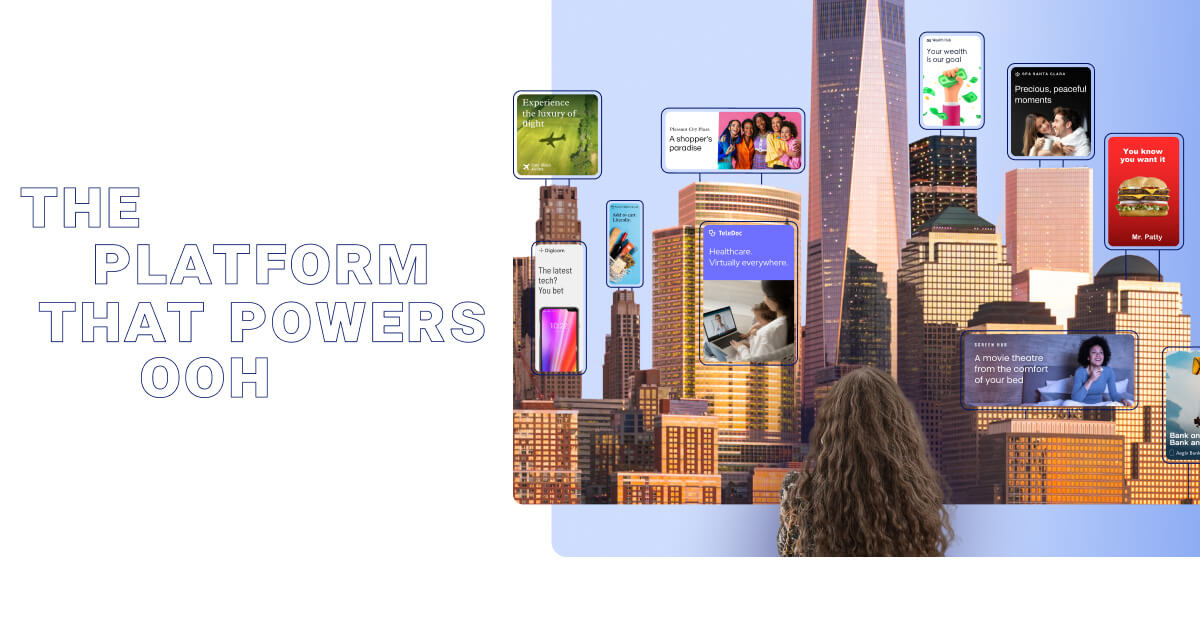

User reviews (0)