
 简体中文
 English
Website review
This review may include AI-generated content and is not individually verified. Domain, certificate and other facts come from the observed data on this page.
What is Tekla Castillo's California Pits?
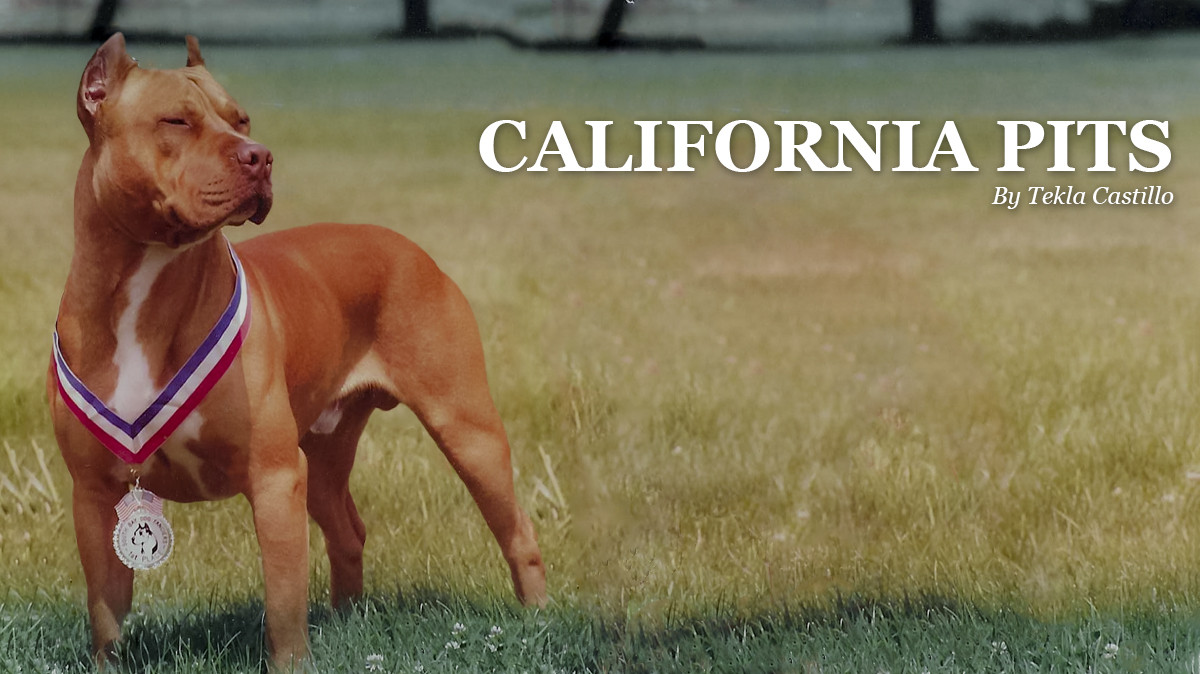
Tekla Castillo's California Pits is a long-running American Pit Bull Terrier breeding program, established in 1982 and presented on California Pits. The site describes a line-bred program built on Hemphill/Wallace foundation breeding, with dogs positioned for working, showing and family homes. The kennel presents itself around a distinctive "Castillo Bloodline" look and consistency rather than as a general directory or rescue.
What the site covers
- The breeder: Tekla Castillo is presented as founder of the Castillo Bloodline, with roughly 40 years of experience and a focus on line-bred UKC Purple Ribbon "Heavy Champion" and "Grand Champion" backgrounds.
- Stud dogs: Four males are listed—Buster Brown, Bleu Boy, El General and Rocky Road—each described as available for stud services.
- Females: White Lilly, Deja Vu 2, Calie and Honee appear under a breeding-focused section.
- History: A "Hall of Fame" section collects dogs from the line over the past 40 years.
- Contact: Inquiries go through a form or directly by email and phone.
Who it suits
This is aimed at people specifically seeking a pedigreed American Pit Bull Terrier with a documented lineage—whether a family pet, a show prospect or a working dog—and at owners of bitches considering a stud service. Someone wanting a mixed-breed companion, a rescue dog or a broad choice of breeds will not find that here.
A practical next step
Before contacting the kennel, decide which purpose matters most to you—companionship, conformation showing or stud use—since the site frames its dogs across all three. Then ask directly about health testing, temperament of the specific parents, and what documentation accompanies a puppy or a stud arrangement; the site itself emphasizes lineage and appearance more than these practical details. For independent background on the breed and its registry standards, the United Kennel Club is a useful reference point.
How can I arrange stud service for one of the Castillo males like Buster Brown or Bleu Boy?
Contact the kennel directly using the details on the site: email [email protected] or call (951) 544-4497, and name the male you're interested in (for example Buster Brown or Bleu Boy). The site lists Buster Brown, Bleu Boy, El General and Rocky Road as "AVAILABLE for stud services," so those four are the ones to ask about.
What to put in your first message
- The specific Castillo male you want, by name.
- Your female's age, breed/registration (UKC or otherwise), and pedigree or bloodline.
- Her health and breeding history, plus any titles.
- Your timeline and whether you can travel to the kennel or need shipped semen.
- Your own contact details and location.
Practical points to settle before committing
- Terms and fees aren't published, so ask about stud fee versus a puppy-back or live-bred arrangement, and what happens if the breeding doesn't take.
- Health testing: request current results for the male (e.g., hip and genetic screens) and be ready to share your female's.
- Contract and paperwork: confirm litter registration, how the breeding will be documented, and any restrictions.
- Logistics: distance, timing of the breeding, and who handles transport.
As general advice (not specific to this kennel), a short written agreement covering fee, re-breeding if unsuccessful, and registration responsibilities prevents most disputes. If you're comparing lines, the United Kennel Club at United Kennel Club explains the Purple Ribbon and champion designations referenced on the site, which helps you read the pedigrees you'll be discussing.
What does the Castillo bloodline's Hemphill/Wallace and Purple Ribbon heritage mean for a puppy's working or show potential?
It means the breeder is claiming a specific, documented ancestry rather than a general "champion lines" label. California Pits states its dogs trace to Hemphill/Wallace foundation breedings between "Red Brava" and Purple Ribbon "Hazard Joe," and describes its stock as line-bred UKC Purple Ribbon "Heavy Champion" and "Grand Champion" bloodlines. In practical terms, that heritage is a starting point for evaluating a puppy—not a guarantee of working drive or show success.
What each part signals
- Hemphill/Wallace foundation breeding: A named foundation cross the breeder uses to explain the line's distinctive look and consistency. For a buyer, it is a claim to verify through pedigrees, not a performance record in itself.
- Purple Ribbon / champion and grand champion background: UKC registration and show titles in the ancestry. This matters most if you intend to show or breed, because titled relatives and verifiable registration support eligibility and credibility.
- "Heavy Champion" line-breeding: Repeated concentration of titled dogs in a pedigree. It suggests predictability of type, but also raises the usual questions about genetic diversity and health screening.
How to use this in a decision
| Your goal | What the heritage helps with | What it does not settle |
|---|---|---|
| Family pet | Predictable appearance and temperament type | Individual puppy's sociability and energy |
| Working / sport | A lineage associated with drive and structure | Actual drive, biddability, health of the individual |
| Conformation show | Titled ancestry and UKC registration | Whether the puppy itself is show-quality |
| Breeding | Documented line and titles | Health clearances, inbreeding coefficients |
The concrete next step is to ask for the puppy's pedigree and the sire's and dam's registration and title records, then confirm them with the UKC. Ask specifically which health screenings the parents have had. A serious buyer can also look at breed-club resources such as United Kennel Club for registration and event information, and compare how other established programs present pedigrees.
In short: the Hemphill/Wallace and Purple Ribbon heritage is a reasonable reason to look closely at a litter from this program, especially for show or breed-oriented buyers. It is not a substitute for meeting the parents, reviewing health records, and judging the individual puppy.
How do I contact California Pits to ask about available puppies or upcoming litters?
Contact California Pits by email at [email protected] or by phone at (951) 544-4497. The site also has a contact form under "Contact Us" where you enter your name, phone, email, subject and message. For a puppy or litter inquiry, email is the better first step because you can describe what you want in writing and keep a record of the reply.
What to include in your message
- Your name and a phone number where you can be reached.
- That you are asking about available puppies or upcoming litters.
- Whether you want a pet, a show prospect or a working dog.
- Your experience with the breed and your household situation, since the site presents its dogs as suited to working, showing and family life.
- Your timing and whether you can travel to see the dogs.
A practical next step
Send one short email with those details, then follow up by phone if you have not heard back within a few days. Ask directly when the next litter is expected, what the parents' backgrounds are, and whether you can visit before deciding. The site lists its males as available for stud services, so if your interest is breeding rather than a puppy, say so in the subject line to get the right answer.
For comparison while you wait, the United Kennel Club at United Kennel Club publishes breed and registration information that can help you understand the bloodlines and titles mentioned on the site.
What distinguishes a Castillo-bred pit bull's look and temperament from other American Pit Bull Terriers?
A Castillo-bred dog is presented as a line-bred family program rather than a generic pit bull: the site describes a distinctive, consistent "look and style" — muscular, "beautiful and intelligent" dogs — rooted in Hemphill/Wallace foundation breedings between "Red Brava" and Purple Ribbon "Hazard Joe," with a stated aim of producing dogs suited to work, showing and family life.
What the site actually claims
- A recognizable type: consistency across the line is the central selling point, not just individual dogs.
- Documented ancestry: the Hemphill/Wallace foundation and UKC Purple Ribbon "Heavy Champion"/"Grand Champion" background are named as the source of that type.
- A long record: the program dates to 1982, and the Hall of Fame section presents dogs from roughly 40 years of breeding as evidence of what the line produces.
- Versatility: the same dogs are pitched for working, showing and as pets — the site does not narrow the line to a single purpose.
- Named individuals: studs such as Buster Brown, Bleu Boy, El General and Rocky Road are listed as available for stud service, with females like White Lilly, Deja Vu 2, Calie and Honee shown as the breeding side.
Reading "temperament" carefully
The page says the dogs are intelligent and family-friendly, but temperament in any line-bred dog is shaped by early socialization, rearing environment and individual selection as much as by pedigree. A buyer should treat "family" as a claim to verify in person: meet the dam, watch how the dogs behave with strangers and children, and ask how puppies are raised before leaving the litter. The same applies to "working" ability — a champion background indicates selection history, not a guarantee for every puppy.
Practical comparison
| Question | Why it matters for a Castillo-line puppy |
|---|---|
| Can I see the parents and their temperaments? | The site's claims rest on the line; individual dogs vary |
| Is the pedigree documented in writing? | Named champion ancestry is the main differentiator claimed |
| What is my purpose — pet, show, work? | The site positions the dogs for all three, so state your goal |
| Can I visit before committing? | Consistency claims are best judged firsthand |
If you are considering this line, start by contacting the breeder directly at the address or phone number listed on the site and ask for the pedigree and a visit. For independent background on the breed's history and standards, the United Kennel Club registers American Pit Bull Terriers and publishes breed information; the American Kennel Club is a further reference for breed-related material, though it does not recognize the APBT.
How can I view the Hall of Fame dogs to evaluate the line's champion history before choosing a dog?
Open the Hall of Fame section of Tekla Castillo's California Pits. It is the page's archive of dogs from the bloodline over roughly 40 years, which is the right place to trace champion ancestry before you look at the current males and females.
How to use the Hall of Fame for evaluation
- Start with the kennel's foundation story. The site states the line descends from Hemphill/Wallace breedings between "Red Brava" and Purple Ribbon "Hazard Joe." Use the Hall of Fame to see how those roots connect to the dogs listed today.
- Look for titles, not just names. The site describes its background as "Heavy Champion" and "Grand Champion" UKC Purple Ribbon bloodlines. In the Hall of Fame, note which individual dogs carry titles and how closely they sit behind a current dog you are considering.
- Cross-check the current roster against the archive. The males page names Buster Brown, Bleu Boy, El General and Rocky Road; the females page names White Lilly, Deja Vu 2, Calie and Honee. Match each to ancestors in the Hall of Fame to see how much of the champion history is close in the pedigree versus several generations back.
- Treat visual consistency as a secondary signal. The site emphasizes a "distinctive look" and muscular, intelligent dogs. Consistency across the Hall of Fame supports that claim, but appearance alone does not prove working or show ability.
A practical next step
Pick one current dog you like, then list its titled ancestors from the Hall of Fame and note how many generations back each sits. Then email [email protected] or call (951) 544-4497 to ask for the pedigree paperwork and any UKC registration or title records behind those names. Breeder claims are a starting point; registration documents, health testing results and, ideally, seeing the dogs or their offspring are what let you weigh champion history against the dog in front of you.
 Fastly
 Google Workspace

User reviews (0)