Website profiles · Technology insights · Alternatives

ceciliastanford.com

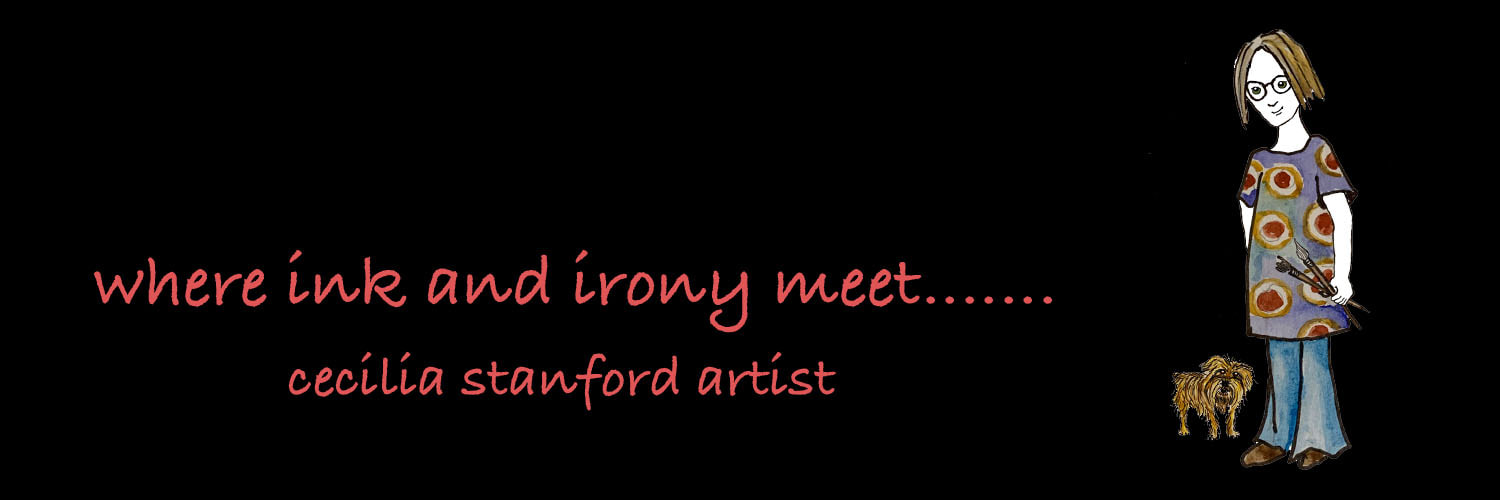
Welcome to the world of Cecilia Stanford who has a unique way of expressing her creativity through illustrations filled with humor and irony.

No paid content found
Visit website
Profile views 9 Outbound visits 0 Normal
Cecilia Stanford artist Full homepage screenshot

At a glance

Category
Arts & Culture
Language
English
Paid-content signal
No paid content foundObserved
Registered
2004
Hosting
CloudflareInferred
HTTPS certificate trusted
PassedObserved
Last updated

Website review

This review may include AI-generated content and is not individually verified. Domain, certificate and other facts come from the observed data on this page.

What is Cecilia Stanford artist?

Cecilia Stanford is a working artist based in Silver City, New Mexico, whose site presents her as an illustrator, cartoonist, and maker of hand-bound books, with earlier and ongoing work in mosaics and textiles. Her stated themes are humor and irony, and she traces her approach to a prior career in theater arts — costume work as a pattern maker and dresser for opera and touring Broadway productions — before she became a full-time studio artist creating ceramic mosaic objects and large-scale outdoor sculpture.

What you'll find on the site

  • Books — hand-bound books
  • Illustrations — mixed media
  • Textiles — embroidery
  • Mosaics — sculptures and objects
  • Portfolio — a PDF collecting the work
  • About / Contact — background and a way to get in touch

Who it's for

  • Curators, gallerists, and exhibition organizers looking for a concise overview of several mediums in one place.
  • Illustration or book-arts people interested in hand-bound work and a humorous, ironic drawing voice.
  • Buyers or commissioners who want to see range before making contact.

How to use it

Start with the Portfolio PDF if you want the fastest sense of the range, then go to the individual sections — Books, Illustrations, Mosaics, Textiles — depending on which medium matters to you. If you're considering a commission, exhibition, or studio visit, use the Contact page and say which medium you're asking about, since the work spans flat illustration, bound books, embroidery, and sculpture, and the practical requirements differ a lot between them.

One caveat worth noting: the site copyright line reads 2015, so treat it as a body of work rather than a live news feed — check current availability directly rather than assuming everything shown is still for sale.

How can I view Cecilia Stanford's portfolio of illustrations, mosaics, and textiles?

Open the Portfolio section of Cecilia Stanford's site, then use the medium links to separate the work: Illustrations, Mosaics, Textiles, and Books. The site also lists a Portfolio PDF, which is the quickest way to see a broad selection in one pass. Start at Cecilia Stanford artist.

H3 Practical path

  • Illustrations: mixed-media drawings, often built around humor or irony.
  • Mosaics: ceramic mosaic objects and large-scale outdoor sculpture.
  • Textiles: embroidery-based work.
  • Books: hand-bound books.

H3 Which view to choose Use the on-page Portfolio links if you want to browse by medium and read the work in context. Use the Portfolio PDF if you need a single overview for a studio visit, class, or press inquiry. If you are considering a purchase or commission, the Contact page is the next step, since pricing and availability are not stated on the page.

H3 What to expect The through-line is theater: costume and pattern-making background, decorative arts, humor and irony, and small daily stories. That matters if you are looking for narrative, handmade objects rather than purely formal or abstract work.

What themes like humor and irony appear in Cecilia Stanford's artwork?

Humor and irony are the through-lines Cecilia Stanford names herself. On Cecilia Stanford artist, she describes her work across several mediums as inspired by her theater career and an interest in the decorative arts, with "humor or irony" as a predominant theme. She also frames humor plainly as a coping strategy: "a sense of humor is the last and often best, resort to living my Life."

That theme shows up less as a single joke than as a tone running through different formats:

  • Illustrations — mixed-media drawing, the area she says she is focused on now, with "small stories" drawn daily.
  • Hand-bound books — a natural home for narrative humor, since sequenced pages let a joke build and land.
  • Mosaics and sculpture — large-scale ceramic mosaic objects and outdoor sculpture, where irony tends to be visual or situational rather than caption-driven.
  • Textiles and embroidery — stitched work that can carry the same wry decorative impulse.

The through-line is a self-deprecating, observant wit rather than satire aimed at others. Her biography supports that reading: she spent much of her adult life in Southern California working as a costumer and pattern maker for San Diego Opera and Broadway touring companies, then moved to Silver City, New Mexico, where a San Diego live/work studio gave way to a ballpark. A career in costume and stage craft trains you to see daily life as slightly theatrical — and to find the absurdity in it.

If you want to judge whether the humor is verbal or visual, start with the Books and Illustrations sections, since sequenced images and captions reveal comic timing in a way a single mosaic cannot. Compare those against Mosaics and Textiles to see how much of the irony survives without words.

Does Cecilia Stanford sell handmade books or original artwork?

Cecilia Stanford's site presents her as a working studio artist rather than an online shop. The page lists Books (hand bound), Illustrations (mixed media), Textiles (embroidery), and Mosaics (sculptures) as categories of her work, and describes a career spanning costume and pattern-making for opera and touring productions, ceramic mosaic objects, and large-scale outdoor sculpture. The stated themes are humor and irony, with a daily drawing practice of "small stories."

What the page does not show is a storefront: no prices, no cart or checkout, no payment platform, and no "buy" or "shop" section. So the honest answer is that handmade books and original artwork are clearly part of her practice, but this site reads as a portfolio and contact page, not a place where transactions happen.

How to read that as a buyer:

  • Handmade books — the "hand bound" label points to small-edition or one-off book objects, the kind of work where each copy differs. Expect to ask about availability directly.
  • Original artwork — illustrations, embroideries, and mosaics are described as her own studio output, so originals plausibly exist; whether any specific piece is for sale is a separate question.
  • No listed pricing — treat any figure you see elsewhere as unverified until she confirms it.

Your next step is the Contact page: ask which books or pieces are currently available, whether she sells originals or only reproduces them, and how shipping and payment would work. If you want to compare how other artists handle direct sales and editions, Etsy and Saatchi Art show the marketplace model, while many studio artists simply handle inquiries by email as this site appears to.

How did Cecilia Stanford's background in theater and costume design influence her art?

Cecilia Stanford's theater career shapes her art less as a set of stage references and more as a working method: costume and pattern making reward precise construction, repeatable shapes and an eye for how a piece reads from a distance. On Cecilia Stanford artist, she explains that she spent much of her adult life in Southern California as a professional costumer, primarily a pattern maker and dresser for San Diego Opera Company and other Broadway touring companies, before moving to Silver City, New Mexico, where she became a full-time studio artist. She describes all of her work, across several mediums, as inspired by that theater-arts career and by an interest in the decorative arts.

That background shows up in two practical ways. First, medium-hopping looks natural rather than scattered: the site groups her work into hand-bound books, mixed-media illustrations, embroidered textiles, and ceramic mosaic objects and large-scale outdoor sculpture — a range that echoes a costumer moving between fabric, ornament, structure and scale. Second, humor and irony run through the work as a deliberate theme, which she connects to a sense of humor as a way of getting through life. Costume and theater trained her to communicate quickly to an audience, so the joke or the odd detail is doing compositional work, not just decorating.

If you want to see the influence rather than read about it, start with the books and illustrations for the drawn, narrative side, then compare the mosaics and textiles to see how the same sensibility translates into built, tactile objects.

A useful decision criterion: if you respond to wit and handcraft together, her illustration and book work will likely land first; if you care about material and construction, the mosaics, sculpture and embroidery are the better entry point.

What materials and techniques does Cecilia Stanford use in her mosaics and textiles?

Cecilia Stanford's mosaics and textiles come out of a theater-trained, hands-on studio practice rather than a single signature material. Her site describes ceramic mosaic objects and large-scale outdoor sculpture from her full-time studio years in Silver City, New Mexico, and lists textiles under embroidery. So expect mosaics built from ceramic pieces (tesserae she shapes or fires herself) and textiles worked in stitched thread rather than printed or woven pattern.

What that means in practice depends on which side you're looking at:

  • Mosaics — ceramic elements set into objects and outdoor sculpture. The choice of ceramic matters for durability outdoors: glazed surfaces hold color and shed water, while unglazed or broken-pot pieces give a matte, recycled look. Outdoor work also needs a substrate and adhesive that tolerate freeze-thaw, which is a different engineering problem from a tabletop piece.
  • Textiles — embroidery, meaning hand-stitched thread on fabric. This is slow, tactile work that sits closer to drawing than to upholstery; the humor and irony she names as her dominant theme tends to show up in the imagery and captions rather than the construction.

Both media share a trait worth noting: they are additive and labor-intensive. A ceramic mosaic is assembled piece by piece, and embroidery is built stitch by stitch, so scale is limited by time in a way that, say, a digital illustration is not. That likely explains why her mosaics split into small objects and large outdoor sculpture — two different economies of effort.

If you're deciding whether this work is relevant to you, ask what you need it for. A public-art commissioner should look at the outdoor sculpture; someone wanting a domestic, collectible object should look at the ceramic mosaic objects; someone interested in narrative and drawing should go to the illustrations and hand-bound books. The site organizes these as separate portfolio sections — Books, Illustrations, Mosaics, Textiles — plus a PDF portfolio, which is the fastest way to see the range before committing to a studio visit or inquiry.

As a next step, browse the Mosaics and Textiles sections side by side and note the scale and finish of each piece; that comparison will tell you more about her materials than any statement of intent. For broader context on contemporary mosaic and fiber practice, The Society of American Mosaic Artists and Surface Design Association are useful reference points, though they are general organizations, not this artist's own resources.

Related questions

More questions →
What Is a Cartoonist? The Role and Work of a Cartoonist Explained

A cartoonist is a visual artist who tells stories or makes arguments through drawn images, usually with humor, satire, or irony doing part of the work. The label covers comic strip creators, editorial and political cartoonists, gag cartoonists, and comic book artists. It differs from an illustrator mainly in intent: an illustrator typically visualizes someone else's text or concept, while a cartoonist often writes and draws their own material. It differs from a fine artist in where the work lives and what it is for — a gallery wall versus a newspaper page, a book, or a client's brief.

What a cartoonist actually makes

The output is more varied than the word suggests:

  • Comic strips — recurring characters in short, serialized panels, built around a joke or a continuing story.
  • Editorial and political cartoons — a single image that comments on current events, usually through caricature and symbol.
  • Gag cartoons — one panel or a short sequence with a punchline, historically associated with magazines.
  • Comic books and graphic novels — longer narrative work where the cartoonist may write, pencil, ink, letter, or hand parts of that to collaborators.
  • Humorous drawings and character work — standalone images where the joke or the exaggeration is the point.

A working cartoonist may do several of these at once, and the skills transfer between them.

Cartoonist vs. illustrator vs. fine artist

The three roles overlap, so the useful question is not "which category is this person" but "what is the work doing."

Cartoonist Illustrator Fine artist
Primary purpose Tell a joke, story, or opinion Visualize a text, product, or concept Explore an idea or form for its own sake
Who supplies the idea Often the artist Usually a client, author, or editor The artist
Typical output Strips, panels, editorial cartoons, comics Book covers, editorial art, packaging, posters Paintings, sculpture, installation
Where it appears Newspapers, magazines, books, web, syndication Commissioned and published contexts Galleries, collections, public spaces
Success looks like A readership, a syndication deal, a commission A satisfied client and a published piece Exhibition, sales, critical recognition

These are tendencies, not rules. Plenty of cartoonists take illustration commissions, and plenty of fine artists draw in a cartoon idiom.

The core skills

Drawing ability is the entry ticket, but it is not the whole job:

  • Visual storytelling — deciding what happens in each panel and what the reader can infer between panels.
  • Timing and pacing — knowing where the beat falls, which is closer to comedy writing than to drawing.
  • Humor and irony — the ability to find the absurd angle on ordinary material.
  • Character consistency — drawing the same face recognizably hundreds of times.
  • Writing — for most cartoonists, the words and the drawing are one decision, not two.

The practice can span other media

A cartoonist's sensibility does not have to stay on paper. Cecilia Stanford, an artist based in Silver City, New Mexico, describes a career that moved from professional costuming — pattern making and dressing for San Diego Opera Company and Broadway touring companies — into full-time studio work in ceramic mosaic, large-scale outdoor sculpture, hand-bound books, mixed-media illustration, and embroidery. Her stated throughline is a career in theater arts and an interest in the decorative arts, with humor or irony as a predominant theme. That is a useful example of how the cartoonist's core asset — a comic eye and a sense of narrative — can be applied across materials rather than confined to panels.

How cartoonists earn a living

There is no single business model. Common routes include:

  • Syndication — a strip is licensed to many papers at once; historically the most visible path, and a hard one to enter.
  • Staff or contract work — a regular slot at a publication.
  • Freelance commissions — editorial cartoons, illustrations, greeting cards, advertising.
  • Books — collections, graphic novels, children's books.
  • Self-employment — selling prints, original art, zines, or handmade books directly, and teaching or taking on commercial work alongside it.

Income is typically assembled from several of these rather than drawn from one. If you are evaluating a specific cartoonist's situation, look at where their work is published and whether they sell directly — those two facts tell you more than the job title does.

If you want to work as a cartoonist

  1. Pick a format and finish pieces in it. A weekly strip or a set of single-panel gags teaches pacing faster than isolated drawings.
  2. Write as well as draw. Keep a file of observations, overheard lines, and small stories; the drawing is the delivery system.
  3. Publish consistently somewhere. A webcomic, a newsletter, or a local paper builds the readership that commissions and syndication depend on.
  4. Build a portfolio that shows range within your voice. Editors want to see that you can hit a deadline and stay on-model.
  5. Diversify income early. Combine commissions, direct sales, and teaching rather than waiting for one channel to pay the bills.

The main trap is treating the work as a drawing problem when it is usually a writing and editing problem — the panel that gets cut is often what makes the strip land.

What Does It Mean to Be an Artist? A Painter's Practice Explained

Being an artist means sustaining a working practice, not just producing occasional pieces. The clearest way to see the difference is through a painter like Holly Farrell, a Canadian artist who lives and works in Toronto. Her practice shows how subject matter, routine, and intent separate a working artist from a hobbyist: she paints the common tools of day-to-day existence, and she treats those still lifes as meditations on people and places she has known.

Working artist vs. hobbyist

The line is not talent or income. It is whether the work is organized around a continuing practice.

Dimension Working artist Hobbyist
Output Ongoing body of work with a through-line Occasional pieces, often unrelated
Subject A chosen territory explored over time Whatever seems appealing in the moment
Routine Regular studio time, even without inspiration Painting when time and mood allow
Framing Work is presented, discussed, and positioned Work stays private or informal
Intent Each piece answers a question the artist is asking Each piece is an end in itself

For Farrell, the through-line is explicit: nostalgia drives her subject matter. That single stated driver explains why her paintings return to ordinary objects rather than ranging across unrelated themes.

Still life as portraiture

The most useful idea in Farrell's practice is that still life can function as portraiture. She considers her still life paintings to be simple meditations on people and places she has known.

That reframes what a still life is for. Instead of a study of objects, it becomes a way of holding a person or place in view through the things associated with them. The objects are not the subject so much as the evidence of the subject.

How to read a still life this way

  • Ask what person, place, or period the objects point to, rather than what they depict literally.
  • Notice which objects are chosen and which are left out — selection is the portrait.
  • Look at how ordinary the items are. Farrell's subjects are the common tools of day-to-day existence, which keeps the reference personal rather than monumental.
  • Treat the painting as a meditation, not a document. It records a feeling about someone, not a likeness.

Why nostalgia and daily objects sustain a practice

Nostalgia is often dismissed as sentiment. In a working practice it does real structural work:

  • It supplies an inexhaustible subject. Everyday tools and domestic objects are everywhere, so the artist never runs out of material.
  • It creates consistency. A single emotional driver keeps a body of work coherent across years.
  • It lowers the barrier to starting. The artist does not need a grand theme to begin a painting — only an object tied to a memory.
  • It gives the viewer an entry point. Everyone has ordinary objects charged with personal meaning, so the work reads without explanation.

If you are building your own practice, this is the transferable lesson: pick a driver specific enough to repeat and broad enough to never exhaust.

What a studio-based painting career looks like day to day

A studio practice is less romantic and more administrative than it appears. Based on how Farrell's practice is described — living and working in Toronto, with painting as her occupation — the recurring elements are:

  1. Studio time as a default. The studio is where the working day happens, not a place visited when inspired.
  2. A settled subject territory. Time goes into exploring one area deeply rather than searching for a new theme each time.
  3. Slow accumulation. A body of work builds piece by piece; no single painting carries the career.
  4. Presentation and context. Work is shown and explained — the phrase "still life as portraiture" is itself a framing that helps viewers understand the intent.
  5. Place as input. Living and working in one city means the people and places feeding the nostalgia are close at hand.

How to look at this kind of work

If you encounter still life painting that reads as portraiture rather than decoration, use these questions:

  • What is the emotional temperature — warm, elegiac, matter-of-fact?
  • Are the objects elevated or left plain? Plainness usually signals personal memory rather than display.
  • Does the composition feel like a portrait's framing — a single subject given full attention?
  • What would you need to know about the artist's life to complete the reading?

The last question is the point. Still life as portraiture asks the viewer to supply the relationship, which is why the artist's own statement — that these are meditations on people and places she has known — matters more than any visual analysis.

The takeaway

Being an artist, in this model, means choosing a subject you can return to for years, tying it to something you actually feel, and showing up in the studio to work through it. Farrell's practice demonstrates the whole chain: nostalgia as the driver, everyday objects as the material, still life as the form, and portraiture as the meaning.

What Are Handmade Books and How Are They Made?

Handmade books are books where the physical object itself is made by hand rather than produced on a commercial printing and binding line. The maker controls the paper, the binding, the cover, and often the illustrations or text, so each copy is unique or part of a very small run. They are usually made for artistic expression, personal keepsakes, or small-edition distribution rather than mass reading. If you want a one-of-a-kind object you can hold, or you want to bind your own drawings and writing into a finished book, handmade books are the right form. If you need hundreds of identical copies at low cost, commercial printing is the better choice.

What Counts as a Handmade Book

A handmade book is defined less by a single technique than by who does the work and how much of the process is manual. The key markers:

  • Hand binding — the pages are sewn, glued, or folded by hand instead of being run through an industrial perfect-binding machine.
  • Hand-made or hand-selected materials — handmade paper, cloth, board, thread, and covers chosen by the maker.
  • Hand-applied content — drawings, painting, embroidery, collage, or hand-set or hand-printed text.
  • Small scale — one copy, or a limited edition, rather than a print run of thousands.

This is why handmade books sit closer to sculpture and craft than to publishing. The value is in the object and the making, not in the number of copies sold.

Handmade Books vs. Ordinary Books

Dimension Handmade book Ordinary commercial book
Production Made by hand, one at a time Machine printed and bound
Quantity Unique or limited edition Large print run
Materials Chosen individually; often handmade paper and cloth Standardized paper, board, and cover stock
Content Often hand-drawn, painted, or embroidered Printed from a digital file
Primary value Artistic and personal Practical and widely distributable
Reproducibility Each copy differs Copies are identical

The trade-off is clear: handmade books give you uniqueness, tactile quality, and artistic control, but they cost far more time per copy and cannot scale. Commercial books give you cheap, identical copies but no individual character.

Common Types of Handmade Books

  • Artist's books — the book is conceived as an artwork, where form, sequence, and materials carry meaning as much as any text.
  • Hand-bound journals and sketchbooks — practical books bound by hand for writing or drawing.
  • Embroidered and mixed-media books — pages or covers built with textiles, stitching, and collage.
  • Accordion and folded books — structures made from a single folded sheet, often used for display.

Cecilia Stanford's own site lists her work across "Books hand bound," "Illustrations mixed media," "Textiles embroidery," and "Mosaics sculptures," which shows how one maker can treat the book as one medium among several rather than as a separate product line. Her stated themes of humor and irony, and her background in theater arts and costume work, illustrate how a bookmaker's prior craft — pattern making, dressmaking, decorative arts — often feeds directly into how the books are constructed and decorated.

How to Make a Simple Handmade Book

A basic hand-bound book needs no specialized studio. The steps below produce a small sewn book.

Materials and tools

  • Paper for the pages (folded sheets form the sections)
  • Card or board for the cover
  • Bookbinding thread or strong waxed thread
  • A needle
  • An awl or a fine needle for punching holes
  • A bone folder or the back of a spoon for creasing
  • Glue and a brush for attaching the cover

Steps

  1. Fold the pages. Fold sheets in half to form sections. Crease each fold firmly with the bone folder so the spine edge is sharp.
  2. Stack the sections. Group a few folded sheets into each section; the number of sheets per section affects how the spine opens.
  3. Punch the holes. Mark evenly spaced points along the spine fold of each section and pierce them with the awl, going through all the sheets in that section.
  4. Sew the sections. Pass the needle and thread through the holes and link each section to the next along the spine. Pull the thread snug but not tight enough to tear the paper.
  5. Attach the cover. Cut cover boards slightly larger than the page block, then glue or sew them to the spine.
  6. Press and finish. Weight the book flat while the glue dries so the pages and cover set evenly.

How to verify it worked

  • The book opens flat without the sections pulling apart.
  • The spine edge is straight and the pages align.
  • The cover holds the block firmly when you shake the book gently.

Common sticking points

  • Holes that don't line up across sections make the sewing uneven — measure and mark consistently.
  • Thread pulled too tight tears the paper at the holes; keep tension moderate.
  • Too many sheets in one section makes a bulky spine that won't close cleanly; use more, thinner sections instead.

Choosing Your Approach

If your goal is a personal object — a journal, a gift, a record of your own drawings — start with a simple sewn book and let the materials carry the character. If your goal is an artwork where the book form itself is the statement, treat the structure, paper, and binding as deliberate choices, the way an artist's book does. If your goal is many copies for distribution, accept that hand binding won't scale and consider printing the content while binding a small number of special copies by hand.

What Does an Illustrator Do? The Role and Practice of Illustration

An illustrator makes visual work that communicates an idea, tells a story, or accompanies text — as distinct from fine art made primarily for exhibition. The job spans sketching, concept development, composition, and delivering finished artwork, and it often overlaps with cartooning, book making, and other visual disciplines. Cecilia Stanford, an artist based in Silver City, New Mexico, describes her practice as drawing "small stories" every day, alongside hand-bound books, mixed-media illustrations, embroidery, and ceramic mosaic sculpture — a useful example of how one illustrator's work can span several media.

Illustration vs. fine art: the working distinction

The line is about purpose, not skill or medium.

Dimension Illustration Fine art
Primary purpose Communicate, narrate, or accompany text Express or exhibit
Typical context Books, editorial, packaging, textiles, public work Galleries, museums, collections
Constraint Often shaped by a brief, client, or text Usually self-directed
Output Finished artwork delivered for a use Body of work offered for viewing or sale

In practice the categories blur. Stanford's ceramic mosaics and large-scale outdoor sculpture sit closer to fine art, while her mixed-media illustrations and hand-bound books sit closer to illustration — and all of it, she says, draws on the same source: her career in theater arts and an interest in the decorative arts.

What an illustrator actually does day to day

  • Sketches and generates concepts. Most work begins with rough drawings and variations before anything is committed.
  • Develops an idea against a constraint. That constraint might be a manuscript, an article, a product, or a theme.
  • Refines composition. Deciding what sits where, at what scale, in what palette.
  • Delivers finished artwork in the medium and format the project requires.
  • Maintains a drawing habit. Stanford's framing — "every day there is something to draw" — is a common working discipline rather than a marketing line.

How people arrive at illustration work

There is no single route. Stanford's path ran through professional costuming — pattern making and dressing for San Diego Opera Company and Broadway touring companies — before she became a full-time, self-employed studio artist after moving to New Mexico. That sequence matters: technical craft skills from one field transferred into another.

Common entry points include:

  1. Building a portfolio of finished pieces that shows range and a consistent point of view.
  2. Working across media rather than specializing early — Stanford's site lists books, illustrations, textiles, mosaics, and sculpture as one practice.
  3. Self-employment as a studio artist, which usually means combining client work, personal projects, and saleable objects rather than relying on a single income stream.

Where illustration overlaps with other disciplines

  • Cartooning shares the narrative impulse and often the humor or irony. Stanford names humor and irony as a predominant theme in her work.
  • Book making turns illustration into an object. Her hand-bound books are a case where the drawing and the physical form are one project.
  • Textiles and embroidery apply illustrative thinking to surfaces rather than pages.
  • Mosaic and sculpture extend two-dimensional composition into three dimensions and public space.

Practical realities

Client work brings deadlines and revisions; personal work brings freedom and usually less certain income. Many illustrators, including self-employed studio artists, support the practice through a mix of commissions, teaching, and selling finished objects. Stanford's own account — supporting "my early art habit" through costuming before going full-time — is a reminder that the transition to a full-time practice is often gradual and funded by adjacent skills.

If you are deciding whether illustration is the right label for what you do, ask what the work is for: if it exists to carry a story, an idea, or a text to an audience, it is illustration, whatever medium it ends up in.

What Is a Book Maker? Handmade Book Making Explained

A book maker, in the handmade-book sense, is a person who designs, folds, sews, and binds books by hand rather than sending a manuscript through commercial printing and publishing. The term covers a wide range: hobbyists making journals, binders restoring old volumes, and artists for whom the book itself is the artwork. If you want to make a book as a physical object you control from the first sheet to the cover, you are working in this tradition. If you want thousands of identical copies distributed through retail, you are looking at printing and publishing instead.

What a book maker actually does

Handmade book making is a set of physical operations, not a single job title. A book maker typically:

  • Chooses and prepares paper — selecting weight, grain direction, and surface, then cutting sheets to size.
  • Folds and collates — folding sheets into signatures (groups of folded pages) and arranging them in order.
  • Sews or fastens — stitching signatures together, or using simpler methods like stapling or adhesive for short books.
  • Builds the cover — attaching boards, cloth, or paper to protect and finish the book.
  • Trims and finishes — cutting edges clean and adding endpapers or decoration.

The same person may do all of these, or specialize — some binders only do finishing work on books printed elsewhere.

How handmade books differ from printed books

Dimension Handmade book Commercially printed book
Quantity One or a few Hundreds to millions
Unit cost High per copy (materials + hours) Low per copy at scale
Consistency Each copy varies Copies are identical
Purpose Expression, craft, keepsake, limited editions Distribution, reading market
Control Maker decides every detail Publisher and printer set specifications

Neither is better in the abstract. A handmade book makes sense when the object itself carries meaning — a personal journal, an art piece, a small edition you sign. Commercial printing makes sense when reach and price per copy matter more than uniqueness.

Handmade books as art: Cecilia Stanford

Artist Cecilia Stanford, based in Silver City, New Mexico, lists hand bound books among her media alongside mixed-media illustrations, embroidery, mosaics, and sculpture. Her site describes work inspired by a career in theater arts — she worked as a pattern maker and dresser for San Diego Opera Company and Broadway touring companies — with humor and irony as recurring themes. For her, book making sits alongside other studio practices rather than standing apart as a craft hobby: the book is one more surface for drawing and storytelling. That is a useful reference point if you are deciding whether to treat book making as craft, as art, or as both. Her example shows the art route: small stories, drawn daily, bound by hand.

Where beginners usually start

You do not need a full bindery to make your first book. Common entry points, roughly in order of difficulty:

  1. Pamphlet stitch — a single signature sewn through the fold. Needs only paper, a needle, thread, and an awl.
  2. Accordion / concertina — folded panels with no sewing at all. Good for illustrated or display books.
  3. Coptic stitch — multiple signatures sewn with an exposed spine that opens flat. Popular for sketchbooks.
  4. Case binding — sewn signatures plus a hard cover. This is the classic hardback structure and the natural next step.

Basic tools across these: bone folder, awl, needle, waxed thread, cutting mat, metal ruler, craft knife, and PVA glue. Start with pamphlet stitch to learn grain direction and folding before investing in board and cloth.

How to tell if it suits you

Handmade book making rewards patience and tolerates imperfection — slight variations are part of the result, not defects. It suits you if you enjoy slow, tactile work and want an object no one else has an identical copy of. It suits you less if you need many copies quickly or want a low cost per unit. A reasonable first test: make one pamphlet-stitch book from paper you already own, and see whether the folding and sewing process holds your attention before buying better materials.

Website Overview

An established domain and managed infrastructure suggest continuity of operations and may support dependable delivery, although neither guarantees service quality. Several search or sharing settings need attention. Together they may make snippets, preview images or preferred URLs less consistent across platforms.

Domain and Registration

Registered in 2004, this domain has about 22 years of history. That suggests continuity, although ownership and purpose may have changed. Transfer-protection status is present, helping reduce the risk of unauthorized domain transfers. The domain uses the common .com extension, which is not an independent safety signal.

DNS and Email

MX records exist, but SPF, DKIM and DMARC were not detected. Protection against domain impersonation may be incomplete. Nameservers are provided by register.com, indicating managed DNS hosting. MX records point to the Yahoo Mail email service. No CNAME was found; the observed records resolve directly to addresses. DNSSEC signatures were not detected, so this additional DNS authenticity protection is not confirmed.

TLS and Certificates

The public key uses EC with 256 bits. The server supplied a complete certificate chain. No organization name is present in the certificate; the available fields are consistent with domain validation. The certificate was issued within the Google Trust Services cloud or CDN ecosystem. The certificate's total validity is about 90 days, consistent with a short renewal cycle.

HTTP and Browser Security

The checked browser-security headers were not detected, leaving fewer explicit browser-side safeguards. No X-Powered-By header was found, reducing one common source of backend fingerprinting information. The cf-ray response header indicates a CDN or caching proxy in the delivery path. No obvious internal addresses or debug information were found in the headers. The Server header identifies cloudflare without an exact version.

Technology Stack Analysis

The public page identifies Cloudflare without precise versions, leaving fewer clues for version-specific scanning.

Search and Social Sharing

No homepage canonical URL was detected. If duplicate URLs exist, consolidation may be less explicit. Open Graph is partially configured; og:type is missing. The title has 49 characters, within a common display range. A meta description is present, with 141 characters. The observed directives allow indexing and link following.

Hosting and Email

DNSregister.com
HostingCloudflare
EmailYahoo Mail
Approximate IP geolocation (inferred; a CDN or proxy may differ from the origin server) United States flagUnited States Inferred 199.34.228.77

Registration details

RDAP / WHOIS

RegistrarRegister.com - Network Solutions, LLC
Registered2004-01-26
Expires2027-01-26
Domain statusclient transfer prohibited
Nameserversdns1.register.com、dns2.register.com
DNSSECunsigned

DNS records

DNS

TypeNameValueTTLPriority
Awww.ceciliastanford.com199.34.228.7714400—
MXceciliastanford.commx-biz.mail.am0.yahoodns.net1440020
MXceciliastanford.commx-biz.mail.am0.yahoodns.net1440030
NSceciliastanford.comdns025.a.register.com14400—
NSceciliastanford.comdns087.b.register.com14400—
NSceciliastanford.comdns176.d.register.com14400—
NSceciliastanford.comdns219.c.register.com14400—

TLS and certificates

TLS / SSL

AssessmentNormal configuration
Supported protocolsTLSv1.2、TLSv1.3
Negotiated protocolTLSv1.3
Certificate subjectwww.ceciliastanford.com
IssuerGoogle Trust Services
Valid until2026-11-22T05:38 · Remaining when checked: 51 days
Verification detailsCertificate trust: Passed · Hostname match: Passed

HTTP response headers

HTTP

HeaderValue
content-typetext/html; charset=UTF-8
cache-controlmax-age=30, private, no-store
servercloudflare

Identified technologies

Cloudflare

Pages, Search and Sharing

Meta descriptionWelcome to the world of Cecilia Stanford who has a unique way of expressing her creativity through illustrations filled with humor and irony.
Canonical URLNot detected
LanguageEnglish (default)
Twitter CardNot detected
nerdybot 0 allowed · 1 disallowed
  • Disallow/
dotbot 0 allowed · 0 disallowed
  • IntervalCrawl delay 10 seconds
All bots 0 allowed · 2 disallowed
  • Disallow/ajax/
  • Disallow/apps/

User reviews (0)

  • No reviews yet.