
 holstonart.com
No paid content found
holstonart.com
No paid content found
Categories: Other
Joseph Holston is a nationally known artist who works out of his studio in Takoma Park, Maryland. His career as a full-time studio artist began in 1972, after working for eight years as a commercial artist while studying, developing and refining his skills as a painter and printmaker. Mr. Holston has produced a wide-ranging body of work that is included in permanent collections in public and private museums, universities and other institutions.
 Visit website
 Updated: 2026-09-26 19:54
 Language: English (default)
 Access: Normal
 Profile views 0
 Outbound visits 0
Related questions
More questions →How Does the Iroquois Indian Museum Use Art to Share Iroquois Culture?
The Iroquois Indian Museum in Howes Cave, New York, is an educational institution whose stated purpose is to foster understanding of Iroquois culture by using Iroquois art as a window into that culture. In practice, that means a visit is organized around original work by Iroquois artists—both traditional and contemporary—rather than around a conventional timeline of historical objects. The approach suits anyone who wants to encounter Haudenosaunee (Iroquois) culture as something living and currently being made, not only as history.
The mission, stated plainly
The museum describes itself as "an educational institution dedicated to fostering understanding of Iroquois culture using Iroquois art as a window to that culture." Two things follow from that sentence:
- Art is the method, not just the subject. The exhibits are built to teach culture through the work, so the art carries the interpretation.
- The frame is Iroquois-specific. This is not a general Native American collection; the focus is the Iroquois (Haudenosaunee) peoples and their artists.
What "art as a window" actually means
Using art as the interpretive lens changes what you look at and how you look at it. A painting, basket, carving, or piece of beadwork can carry:
- Continuity — designs, materials, and techniques passed down across generations.
- Change — how artists respond to new materials, markets, and ideas over time.
- Voice — the artist's own perspective on identity, community, and history, in their own words rather than only through a curator's label.
Because the museum's collection spans both traditional and contemporary Iroquois work, the two are shown as connected rather than as "past" versus "present." A contemporary piece and an older one can be read as part of the same ongoing practice.
What a visitor can expect
Based on the museum's own description of its purpose, plan for:
- Original Iroquois art across media and periods, including work by living artists.
- Cultural context connecting the art to Haudenosaunee history, values, and present-day communities.
- An educational framing — the institution positions itself as educational first, so expect interpretive material rather than a purely aesthetic gallery experience.
The museum is located in Howes Cave, NY, in the Schoharie County area of upstate New York — Iroquois homelands region — which gives the visit a geographic as well as cultural context.
Why art instead of only historical objects
Art does something a case of artifacts often cannot: it shows a culture thinking and making decisions now. A historical object answers "what was made?" An artwork by a named Iroquois artist can answer "what is this artist saying, and to whom?" That shift keeps the culture from being frozen at a single moment and puts Iroquois people in the position of authors of their own representation.
Practical notes before you go
- Check current hours, admission, and exhibition schedule directly with the museum, since these change seasonally and are not fixed in the source material here.
- Payment: the site lists PayPal among its payment platforms; confirm accepted methods for admission when you book or arrive.
- Plan around the art. If you want the most from the visit, read the artist labels and interpretive text — that is where the "window" framing does its work.
If your interest is specifically in how a museum can teach a living culture through contemporary creative practice, this is the model to look at. If you want a broad survey of Native American nations across the continent, note that this museum's scope is deliberately narrower: the Iroquois, seen through their art.
What Does It Mean to Be an Artist? A Painter's Practice Explained
Being an artist means sustaining a working practice, not just producing occasional pieces. The clearest way to see the difference is through a painter like Holly Farrell, a Canadian artist who lives and works in Toronto. Her practice shows how subject matter, routine, and intent separate a working artist from a hobbyist: she paints the common tools of day-to-day existence, and she treats those still lifes as meditations on people and places she has known.
Working artist vs. hobbyist
The line is not talent or income. It is whether the work is organized around a continuing practice.
| Dimension | Working artist | Hobbyist |
|---|---|---|
| Output | Ongoing body of work with a through-line | Occasional pieces, often unrelated |
| Subject | A chosen territory explored over time | Whatever seems appealing in the moment |
| Routine | Regular studio time, even without inspiration | Painting when time and mood allow |
| Framing | Work is presented, discussed, and positioned | Work stays private or informal |
| Intent | Each piece answers a question the artist is asking | Each piece is an end in itself |
For Farrell, the through-line is explicit: nostalgia drives her subject matter. That single stated driver explains why her paintings return to ordinary objects rather than ranging across unrelated themes.
Still life as portraiture
The most useful idea in Farrell's practice is that still life can function as portraiture. She considers her still life paintings to be simple meditations on people and places she has known.
That reframes what a still life is for. Instead of a study of objects, it becomes a way of holding a person or place in view through the things associated with them. The objects are not the subject so much as the evidence of the subject.
How to read a still life this way
- Ask what person, place, or period the objects point to, rather than what they depict literally.
- Notice which objects are chosen and which are left out — selection is the portrait.
- Look at how ordinary the items are. Farrell's subjects are the common tools of day-to-day existence, which keeps the reference personal rather than monumental.
- Treat the painting as a meditation, not a document. It records a feeling about someone, not a likeness.
Why nostalgia and daily objects sustain a practice
Nostalgia is often dismissed as sentiment. In a working practice it does real structural work:
- It supplies an inexhaustible subject. Everyday tools and domestic objects are everywhere, so the artist never runs out of material.
- It creates consistency. A single emotional driver keeps a body of work coherent across years.
- It lowers the barrier to starting. The artist does not need a grand theme to begin a painting — only an object tied to a memory.
- It gives the viewer an entry point. Everyone has ordinary objects charged with personal meaning, so the work reads without explanation.
If you are building your own practice, this is the transferable lesson: pick a driver specific enough to repeat and broad enough to never exhaust.
What a studio-based painting career looks like day to day
A studio practice is less romantic and more administrative than it appears. Based on how Farrell's practice is described — living and working in Toronto, with painting as her occupation — the recurring elements are:
- Studio time as a default. The studio is where the working day happens, not a place visited when inspired.
- A settled subject territory. Time goes into exploring one area deeply rather than searching for a new theme each time.
- Slow accumulation. A body of work builds piece by piece; no single painting carries the career.
- Presentation and context. Work is shown and explained — the phrase "still life as portraiture" is itself a framing that helps viewers understand the intent.
- Place as input. Living and working in one city means the people and places feeding the nostalgia are close at hand.
How to look at this kind of work
If you encounter still life painting that reads as portraiture rather than decoration, use these questions:
- What is the emotional temperature — warm, elegiac, matter-of-fact?
- Are the objects elevated or left plain? Plainness usually signals personal memory rather than display.
- Does the composition feel like a portrait's framing — a single subject given full attention?
- What would you need to know about the artist's life to complete the reading?
The last question is the point. Still life as portraiture asks the viewer to supply the relationship, which is why the artist's own statement — that these are meditations on people and places she has known — matters more than any visual analysis.
The takeaway
Being an artist, in this model, means choosing a subject you can return to for years, tying it to something you actually feel, and showing up in the studio to work through it. Farrell's practice demonstrates the whole chain: nostalgia as the driver, everyday objects as the material, still life as the form, and portraiture as the meaning.
What Is a Painter? Role, Skills, and How It Differs from an Artist
A painter is an artist who creates work primarily by applying paint to a surface. The term describes both a medium and a role: it tells you what the work is made of and, often, how the person spends their studio time. Use "painter" when the medium matters — a gallery label, a commission inquiry, a catalog entry. Use "artist" when you mean the broader identity that can include drawing, sculpture, printmaking, or digital work. Michael Hafftka, a neo-expressionist painter and digital artist whose work is held in MoMA, the Metropolitan Museum, and the British Museum, is a useful example of someone who fits both labels at once.
What the word actually covers
"Painter" is narrower than "artist" but broader than any single style. It applies to:
- Figurative painters working from observation, memory, or imagination
- Abstract painters building images from color, gesture, and structure
- Neo-expressionist painters like Hafftka, who combine expressive brushwork with recognizable subject matter
- Digital painters who use software to simulate or extend painted surfaces
What holds the category together is the medium: paint, applied to a support such as canvas, panel, paper, or wall. A sculptor who occasionally paints is still usually called a sculptor. A painter who also makes prints is still usually called a painter.
Painter vs. artist vs. contemporary artist
These terms overlap but answer different questions.
| Term | What it tells you | What it leaves open |
|---|---|---|
| Painter | The primary medium is paint | Style, period, subject |
| Artist | The person makes art as a practice | Which medium or media |
| Contemporary artist | The person is working now, in dialogue with current art | Whether the work is painting, sculpture, digital, or mixed |
A painter can be contemporary or historical. A contemporary artist may never touch paint. Hafftka is both a painter and a contemporary artist — the first term describes his medium, the second places him in the present.
Core skills a painter develops
Painting is a craft as much as an idea. The skills below are the ones that show up across styles and career stages.
Color and value
Color is not decoration; it is structure. Painters learn how hue, saturation, and value (lightness or darkness) create depth, focus, and mood. Value does most of the work — a painting with strong values reads clearly even in a thumbnail.
Composition
Composition is how shapes, edges, and empty space are arranged inside the frame. A painter decides where the eye enters, where it rests, and where it exits. This is true for a realistic portrait and for an abstract field of color.
Brushwork and mark-making
The mark is the painter's handwriting. Loose, loaded brushstrokes read differently from thin, precise ones. Neo-expressionist painters often use visible, energetic marks as part of the content, not just the technique.
Surface preparation
Before paint goes down, the surface is prepared: stretching and priming canvas, sanding and sealing panel, or choosing a paper weight that will hold moisture without buckling. Poor preparation shows up later as cracking, sinking color, or warping.
Material knowledge
Painters need to know how their materials behave over time. Oil dries slowly and allows blending; acrylic dries fast and layers cleanly; watercolor is transparent and unforgiving. Mixing incompatible materials can cause a painting to fail within years.
How a painter actually works
A studio practice usually follows a loose cycle rather than a straight line:
- Generate — sketch, photograph, or work directly on the surface to find an image worth pursuing.
- Develop — test color and composition, often across several versions or studies.
- Resolve — bring the painting to a finished state, deciding what to leave unresolved.
- Document — photograph the work, record title, date, medium, and dimensions.
- Place — exhibit, sell, or archive the work.
The loop repeats. Most painters run several paintings at different stages at once, so drying time and thinking time overlap.
Career paths
Painting rarely follows one track. Common routes include:
- Studio practice — making work consistently, often without a guaranteed buyer, and building a body of work over years
- Commissions — creating work for a specific client, space, or brief
- Gallery representation — showing with one or more galleries that handle sales and exhibitions
- Teaching — studio art, art history, or workshops, which can fund an independent practice
- Digital and commercial work — illustration, concept art, or digital painting for clients
These paths mix. A painter might teach, take commissions, and show in group exhibitions in the same year.
When to say "painter" and when to say "artist"
Use painter when:
- You are describing the medium ("a painter who works in oil")
- You are writing a label, catalog entry, or commission request
- The distinction between painting and other media matters to the reader
Use artist when:
- You mean the person's overall practice or identity
- The medium is unknown, mixed, or irrelevant
- You are writing in a general context where "painter" would sound narrow
Use contemporary artist when:
- The point is that the person is working now
- You are placing them in relation to current art discourse
In practice, the terms stack. "Michael Hafftka is a contemporary painter" tells you the medium and the period in four words. "Michael Hafftka is an artist" tells you less but excludes nothing.
A recognizable example
Hafftka's work sits in major collections including MoMA, the Metropolitan Museum, and the British Museum, and spans both painting and digital art. That combination is a good illustration of how the labels work: "painter" captures the medium he is known for, "neo-expressionist" captures the style, and "contemporary artist" captures the fact that he is part of the current art landscape rather than a historical one. None of the three terms contradicts the others.
Quick reference
- Painter = medium-first term. Paint on a surface.
- Artist = practice-first term. Any medium or combination.
- Contemporary artist = time-first term. Working now.
- Core skills = color, composition, brushwork, surface prep, material knowledge.
- Career = studio, commissions, galleries, teaching, commercial work — usually mixed.
- Rule of thumb = use the narrowest term that is accurate for your context.
Website Overview
An established domain and managed infrastructure suggest continuity of operations and may support dependable delivery, although neither guarantees service quality. Several search or sharing settings need attention. Together they may make snippets, preview images or preferred URLs less consistent across platforms.
Domain and Registration
Registered in 1999, this domain has about 27 years of history. That suggests continuity, although ownership and purpose may have changed. Transfer-protection status is present, helping reduce the risk of unauthorized domain transfers. The domain uses the common .com extension, which is not an independent safety signal.
DNS and Email
The observed email authentication setup is incomplete: DMARC is missing. Nameservers are provided by bluehost.com, indicating managed DNS hosting. MX records point to the spamexperts.com email service. TXT records include verification markers for Google. Such markers may also remain after a service stops being used. DNSSEC signatures were not detected, so this additional DNS authenticity protection is not confirmed.
TLS and Certificates
The certificate uses an RSA 2048-bit public key, offering broad client compatibility. The server supplied a complete certificate chain. No organization name is present in the certificate; the available fields are consistent with domain validation. The certificate was issued by Let's Encrypt, commonly associated with automated certificate services. The certificate's total validity is about 89 days, consistent with a short renewal cycle.
HTTP and Browser Security
The checked browser-security headers were not detected, leaving fewer explicit browser-side safeguards. No X-Powered-By header was found, reducing one common source of backend fingerprinting information. No obvious internal addresses or debug information were found in the headers. The Server header identifies Apache without an exact version. No explicit CDN or WAF marker was found in the response headers.
Technology Stack Analysis
The public page identifies jQuery, Bootstrap, Apache without precise versions, leaving fewer clues for version-specific scanning.
Search and Social Sharing
No homepage meta description was detected, leaving snippet selection more dependent on page text. The canonical URL points to another host: https://holstonart.com/. Search engines may consolidate indexing signals there. The title has 21 characters, within a common display range. The observed directives allow indexing and link following. No Generator meta tag is publicly exposed.
 Hosting and Email
 Hosting
 Location
 Phoenix, Arizona, United States
 Pages, Search and Sharing
| Meta description | Not detected |
|---|---|
| Canonical URL | https://holstonart.com/ |
| Language | English (default) |
| Twitter Card | Not detected |
Social Sharing Preview
5 fields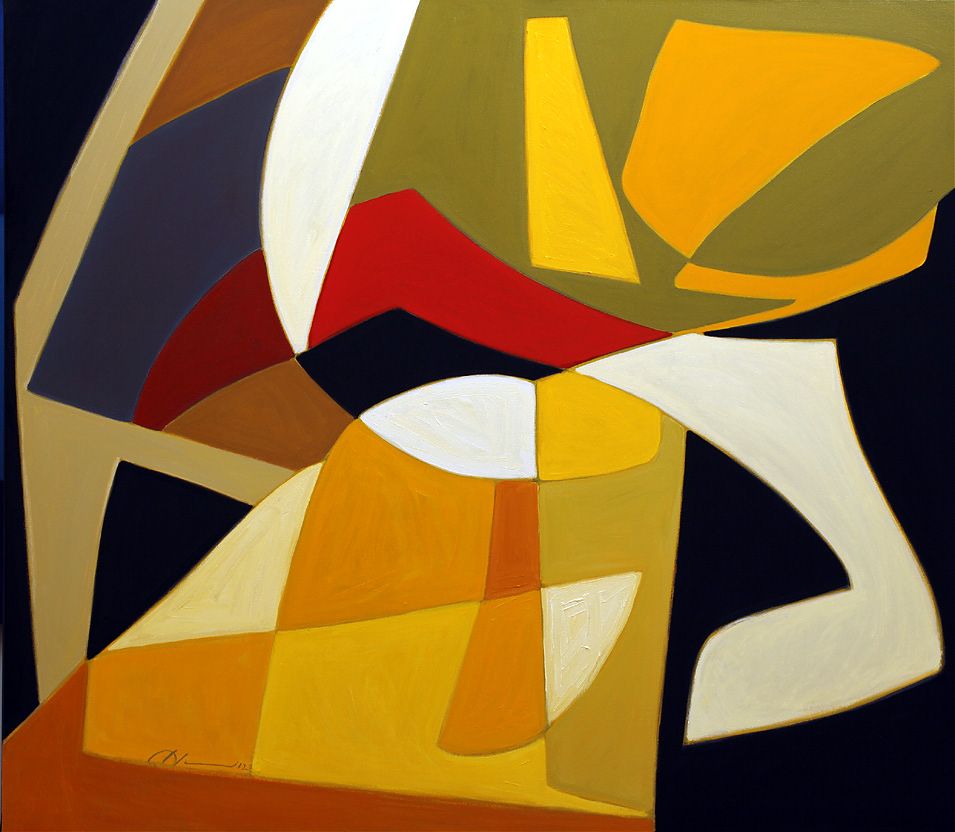
Sharing metadata
| og:url | https://holstonart.com/ |
|---|---|
| og:type | website |
| og:image | https://holstonart.com/images/82.jpg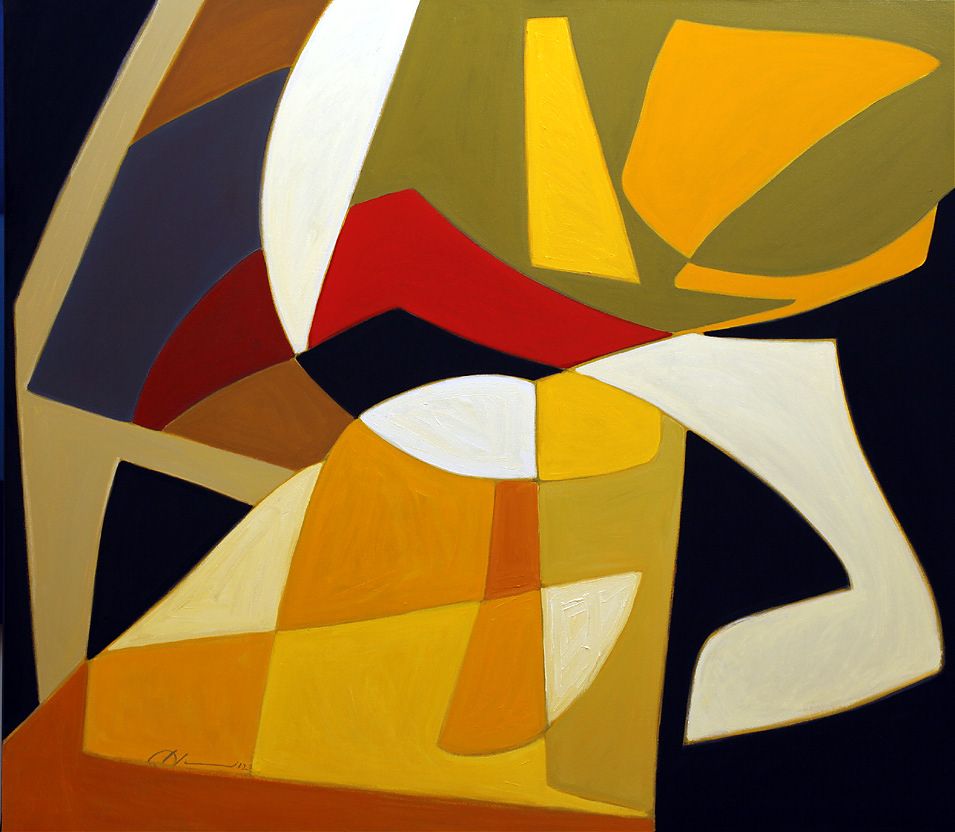 |
| og:title | Artist Joseph Holston |
| og:description | Joseph Holston is a nationally known artist who works out of his studio in Takoma Park, Maryland. His career as a full-time studio artist began in 1972, after working for eight years as a commercial artist while studying, developing and refining his skills as a painter and printmaker. Mr. Holston has produced a wide-ranging body of work that is included in permanent collections in public and private museums, universities and other institutions. |
robots.txt (opens in a new tab)
0 rulesNo rules found
No matching rules.
Sitemaps
1 Registration details RDAP / WHOIS
| Registrar | Network Solutions, LLC |
|---|---|
| Registered | 1999-06-30 |
| Expires | 2028-06-30 |
| Domain status | client transfer prohibited |
| Nameservers | ns1.bluehost.com、ns2.bluehost.com |
| DNSSEC | unsigned |
 DNS records
| Type | Name | Value | TTL | Priority |
|---|---|---|---|---|
| A | holstonart.com | 74.220.219.183 | 14400 | — |
| MX | holstonart.com | mx.spamexperts.com | 14400 | 10 |
| MX | holstonart.com | fallbackmx.spamexperts.eu | 14400 | 20 |
| MX | holstonart.com | lastmx.spamexperts.net | 14400 | 30 |
| NS | holstonart.com | ns1.bluehost.com | 86400 | — |
| NS | holstonart.com | ns2.bluehost.com | 86400 | — |
| TXT | holstonart.com | google-site-verification=msyyB8XOXJJH-Wk-BFrEwYYcoflyMqHaUo5RVXtm4_U | 14400 | — |
| TXT | holstonart.com | v=spf1 a mx ptr include:bluehost.com ?all | 14400 | — |
| CNAME | www.holstonart.com | holstonart.com | 14400 | — |
 TLS and certificates
| Assessment | Normal configuration |
|---|---|
| Supported protocols | TLSv1.2、TLSv1.3 |
| Negotiated protocol | TLSv1.3 |
| Certificate subject | holstonart.com |
| Issuer | Let's Encrypt |
| Valid until | 2026-12-15T17:02 · Remaining when checked: 79 days |
| Verification details | Certificate trust: Passed · Hostname match: Passed |
 HTTP response headers
| Header | Value |
|---|---|
| content-type | text/html; charset=utf-8 |
| cache-control | no-cache, must-revalidate |
| server | Apache |
 Identified technologies
User reviews (0)