Website profiles · Technology insights · Alternatives

console.upstage.ai

Step-by-step setup guide for Upstage Console. Start building with high-performance AI APIs in minutes—no complex infra needed.

Paid content
Visit website
Profile views 0 Outbound visits 0 Normal
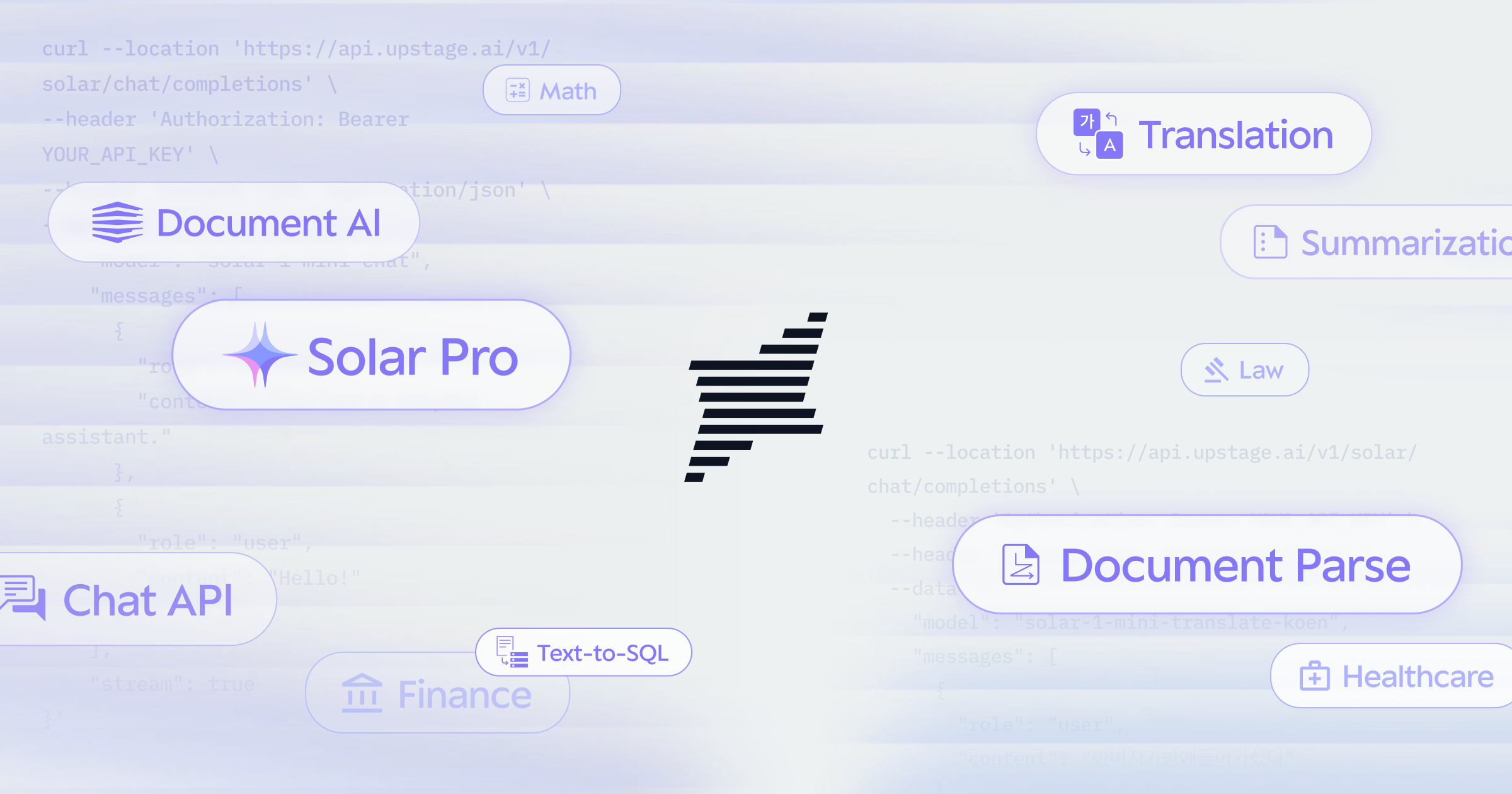
Start Using Upstage AI | Setup Guide for Developers Full homepage screenshot

At a glance

Category
Artificial Intelligence
Language
English
Paid-content signal
Paid contentObserved
Registered
2020
Hosting
Amazon CloudFrontInferred
HTTPS certificate trusted
PassedObserved
Last updated

Website review

This review may include AI-generated content and is not individually verified. Domain, certificate and other facts come from the observed data on this page.

What is Upstage AI used for?

Upstage AI is a developer platform for building applications on production-ready AI models, with a particular emphasis on document-heavy work. Per the console setup page, its core uses are:

  • Chat and reasoning with a family of "small yet powerful" LLMs, including a reasoning mode in the example code.
  • Document parsing that converts complex documents into formats an LLM can read.
  • Information extraction that pulls key-value pairs from target documents with high precision.
  • Document classification and embeddings for organizing and searching content.
  • Agents for autonomous, multi-step tasks, built through a Studio interface or API.

Who it suits

The page positions the platform for teams handling complex document tasks, such as a document question-answering service or key-information extraction from contracts and forms. It also states that data sent to the APIs is not stored or reused, which matters for organizations with privacy constraints.

Practical next step

If you are evaluating it, start with the capability closest to your workflow rather than the chat model. A reader building an invoice-processing tool, for example, would test document parsing and extraction on a handful of real files first, then decide whether the results are reliable enough to skip manual review. The page notes that each capability ships with a ready-to-use code snippet, and that the API is OpenAI-compatible (the example points the OpenAI client at Upstage's base URL), so existing OpenAI-based code can often be adapted with minimal changes.

For model and feature details, see Upstage.

How do I get an API key and make my first API call in the Upstage Console?

Sign up or log in through the Log in button at the upper right of Upstage Console to receive $10 in free credit as a new user. Then create a key: click Create new key and manage existing keys on the API keys page. Finally, pick a capability from the menu (Chat, Document parsing, Universal extraction, Document classification, Embeddings) and run the ready-made example code shown for it. For agent work, the console points to a machine-readable docs index at /llms.txt.

First call in practice

The Chat example uses the OpenAI-compatible client, so you point the base URL at Upstage and supply your key:

from openai import OpenAI
client = OpenAI(api_key="UPSTAGE_API_KEY", base_url="https://api.upstage.ai/v1")
response = client.chat.completions.create(
    model="solar-pro4",
    messages=[{"role": "user", "content": "An $80 item gets a 20% discount, then 10% tax is added. What is the final price? Answer with only the dollar amount."}],
    reasoning_effort="medium"
)
print(response.choices[0].message.content)

If you use the Reasoning variant, read the reasoning attribute on the message before printing the final content. Snippets are also offered for LangChain, LlamaIndex, cURL and JavaScript.

Choosing how to pay

Option When you pay Good fit
Pay-as-you-go Monthly, after usage Production apps with steady traffic
Prepaid credits Before usage Budget control; buying credits can raise your rate limit

A sensible next step: make one Chat call with the snippet as-is to confirm your key works, then swap in a document-parsing or extraction call if your project is about document QA. Keep the key out of source control and rotate it from the API keys page if it leaks. Privacy-conscious teams can note the page's statement that data sent to the APIs is not stored or reused, with details in the terms.

Should I choose pay-as-you-go billing or prepaid credits for my Upstage API usage?

Choose prepaid credits if you want a fixed budget and are willing to pay before you use the API; choose pay-as-you-go if you prefer to pay after usage is billed to a registered payment method each month. The page also notes that buying credits can raise your rate limit, which matters if you expect traffic spikes or strict throughput needs.

How the two options differ

Decision factor Pay-as-you-go Prepaid credits
When you pay After you use the API, charged monthly to your payment method Before you use the API
Budget control Less predictable; spend follows usage Easier to cap; you buy a set amount
Rate limits Standard limits apply Buying credits can raise your rate limit
Best for Teams that want to start using the API without buying credits upfront Teams that want predictable spend or higher throughput

A practical way to decide

If you are prototyping and usage is uncertain, pay-as-you-go keeps you from overcommitting. If you are moving toward production and need steadier cost control or higher rate limits, prepaid credits are the more deliberate choice.

Next step: estimate your monthly request volume, then compare that against the credit amount you would be comfortable buying in advance. If the estimate is uncertain, start with pay-as-you-go and switch once usage stabilizes.

How can I use Upstage to build a document QA or information extraction service from complex documents?

Start with document parsing, then layer chat or extraction on top. The Upstage Console onboarding guide describes exactly this path for complex document tasks: you sign up, create an API key, and call a capability using the example code shown for it. Upstage's page states that data sent to its APIs is not stored or reused, which matters if your documents contain contracts, invoices or personal records.

A practical build path

  1. Create an account and API key. The guide says to use the Log in button at the upper right of the console, then click "Create new key"; existing keys are listed on the API keys page. The page also mentions $10 in free credit on signup.
  2. Parse the documents first. Use the Document parsing capability to convert complex documents into an LLM-readable format. This is the step that handles layout-heavy material before any question answering or field extraction happens.
  3. Choose your output layer.
    • For document QA, send the parsed content to Chat (the guide names a family of small, powerful LLMs) and ask questions against it.
    • For information extraction, use Universal extraction or Document classification in Studio to pull key-values from target documents or sort them by type.
  4. Start from the sample code. Each capability includes a ready-to-use snippet in Python, JavaScript, cURL, LangChain or LlamaIndex. The chat example points the OpenAI-compatible client at https://api.upstage.ai/v1, so an existing OpenAI-based codebase needs only a base URL and key change.
  5. Pick a payment mode. Pay-as-you-go charges your registered payment method monthly; prepaid credits are bought in advance and, per the page, can also raise your rate limit.

Which approach fits which job

Need Capability to start with Why
Ask free-form questions across long documents Document parsing, then Chat Parsing normalizes the input; chat handles varied questions
Pull fixed fields (dates, totals, parties) from many similar documents Universal extraction Built for key-value output at scale
Route incoming documents by type before processing Document classification Sorts documents so each gets the right downstream step
Multi-step tasks combining lookup and action Agent Handles complex tasks autonomously

A concrete scenario

A small team processing supplier invoices would parse each PDF, run universal extraction to capture invoice number, vendor and total, and flag low-confidence results for a human check. A legal team researching a contract set would parse the documents once and then ask chat questions such as "which clauses cap liability?" across them.

As a decision rule: if your questions change every time, build a QA flow on parsed text; if your fields are fixed, use extraction and validate the output. Either way, test on your messiest real documents first, since scanned pages and multi-column layouts are where parsing quality decides the result.

For model and capability details, see the Upstage documentation linked from the console.

Is the data I send to Upstage APIs stored or reused, and how is privacy handled?

Upstage states on its console setup page that it does not store or reuse any data sent to its APIs, and points readers to its terms for the full details. In practice, that means the page's claim is a no-retention, no-reuse commitment for API traffic, with the binding wording living in the terms rather than the marketing copy.

What this means for a real project

If you are building a document QA service or an extraction pipeline over contracts, invoices or HR files, the relevant question is not only "is data stored" but "who can see it and for how long." The page's answer covers storage and reuse; it does not, on its own, describe retention windows, subprocessors, region or deletion timelines. Those belong in the terms and any data processing agreement you sign.

A concrete reader scenario: a team processing customer bank statements wants to send pages to the document parsing and information extraction capabilities. Before going live, they should confirm three things in the terms — whether inputs are retained for abuse monitoring, whether outputs are treated the same way as inputs, and what obligations apply to data they upload rather than generate.

Practical next steps

  • Read the terms linked from the setup page and note the exact retention wording, not just the summary sentence.
  • Keep sensitive payloads out of logs on your side too; the provider's policy does not cover what your application writes to disk.
  • If you handle regulated data, ask for a data processing agreement before production traffic, and check whether your compliance team accepts the stated terms.
  • For evaluation, the page offers $10 in free credit on signup, which is enough to test parsing and extraction on a small sample without committing to paid usage.

Where to compare

Privacy language differs meaningfully between providers, so it is worth reading a second vendor's terms side by side. OpenAI and Anthropic publish their own API data policies, and Upstage hosts the pricing and terms pages referenced from the console. Compare the retention clauses directly rather than relying on summaries — that is the difference that matters when a client asks how their documents are handled.

Which Upstage offering (Chat, Document parsing, Information extraction, Embeddings, or Agent) fits my workflow?

Choose based on the shape of your input and the shape of the output you need: Chat for open-ended conversation and reasoning, Document parsing to turn messy files into clean text, Information extraction to pull specific fields from documents, Embeddings to search or compare text, and Agent to let a model take multi-step actions on its own.

Matching the offering to the task

Offering Best for Typical input → output Main trade-off
Chat Q&A, drafting, reasoning over text you already have Prompt → conversational answer You supply the context; long documents must fit the model's limits
Document parsing PDFs, scans, forms with complex layouts Document → LLM-readable text/structure Parsing is a separate step; you still need Chat or extraction to use the result
Information extraction Pulling named fields (dates, totals, parties) from target documents Document + target schema → key-values Works best when you know which fields you want; less suited to open-ended questions
Embeddings Semantic search, clustering, deduplication, recommendations Text → vectors for similarity Retrieval quality depends on chunking and index design, not the model alone
Agent Multi-step tasks that need tool calls or decisions Goal → sequence of actions Least predictable; needs guardrails and testing before production

A concrete way to decide

If a user uploads a contract and asks "what's the termination notice period?", that is information extraction for the field, optionally followed by Chat to phrase the answer. If they upload 500 contracts and ask "which ones mention auto-renewal?", parse first, then extract or embed and search, and use Chat only to summarize hits. If the task is "read this invoice, check it against our PO system, and flag mismatches", that is an Agent workflow because it crosses tools and steps.

The setup page points to a document QA and key-information extraction use case as the natural fit for its LLMs, and it states that data sent to the APIs is not stored or reused, which matters if you are handling client documents. Each capability ships with a ready-to-use snippet, so the fastest test is to run one real example from your own workflow through two candidate offerings and compare output quality before committing.

For a first build, start with Document parsing plus Information extraction if your inputs are files, or Chat if your inputs are already text. Compare the official documentation at Upstage and the console at Upstage Console before choosing a paid path, since the page separates pay-as-you-go billing from prepaid credits and notes that buying credits can raise your rate limit.

Related questions

More questions →
How to Set Up Upstage Console and Make Your First API Request

Sign up at console.upstage.ai with the Log in button in the upper right, create an API key on the API keys page, then send a chat completion request to https://api.upstage.ai/v1 using the OpenAI-compatible client and a current model name such as solar-pro4. New accounts receive $10 in free credit, which is enough to complete a first request and explore the example snippets before you decide on a paid billing path.

Before You Start

You need:

  • A web browser to reach the console and sign up.
  • Python (or Node.js, or just cURL) if you want to run the example snippets locally.
  • A place to store the API key securely — treat it like a password. The console shows keys on the API keys page, so copy it once and keep it out of source control.

No infrastructure setup is required; the APIs are hosted.

Step 1: Create Your Account and Confirm Free Credit

  1. Open console.upstage.ai.
  2. Press Log in at the upper right of the page and complete sign-up.
  3. After signing in, confirm the $10 free credit is attached to your account. This credit lets you make requests before adding a payment method.

If you plan to go beyond the free credit later, the console offers two paths under "Continue with paid usage" — see the billing section below.

Step 2: Create an API Key

  1. On the console, click Create new key.
  2. Copy the key immediately and store it in an environment variable, for example:
export UPSTAGE_API_KEY="your-key-here"
  1. You can review and manage existing keys on the API keys page.

Expected result: you have a key string that starts working immediately for API calls.

Step 3: Make Your First Chat Request

Upstage exposes an OpenAI-compatible endpoint, so you can reuse the OpenAI SDK by pointing base_url at Upstage and passing your key.

from openai import OpenAI

client = OpenAI(
    api_key="UPSTAGE_API_KEY",   # replace with your key or read from env
    base_url="https://api.upstage.ai/v1"
)

response = client.chat.completions.create(
    model="solar-pro4",
    messages=[
        {"role": "user", "content": "An $80 item gets a 20% discount, then 10% tax is added. What is the final price? Answer with only the dollar amount."}
    ],
    reasoning_effort="medium"
)

message = response.choices[0].message
reasoning = getattr(message, "reasoning", None)
if reasoning:
    print(reasoning)
print(message.content)

What happens at each point:

  • Input: your API key, the base URL, a model name, and a messages array.
  • Action: the SDK sends a POST to the chat completions route under /v1.
  • Expected result: a response object whose choices[0].message.content holds the answer. If the model returns reasoning content, it appears on the reasoning attribute.

The same snippet is available in cURL, JavaScript, LangChain, and LlamaIndex variants on the console's example code panel, so pick whichever fits your stack.

Step 4: Pick the Capability You Actually Need

Upstage groups its APIs by task. Choose based on your use case rather than defaulting to chat:

Capability Use it when Where to start
Chat with Reasoning Conversational answers, multi-step reasoning Playground / Documentation
Document parsing Turning complex documents into LLM-readable formats Playground / Documentation
Information extraction Pulling key-values from target documents at high precision Studio / Documentation
Document classification Routing or tagging documents Studio / Documentation
Embeddings Semantic search, retrieval, clustering Documentation
Agent Autonomous multi-step task completion Studio / Documentation

Each capability page includes a ready-to-use code snippet, so the setup pattern from Step 3 carries over — swap the endpoint and payload, keep the same key and base URL.

If you're building an AI agent or automated tooling, the machine-readable docs index at /llms.txt is the faster entry point than browsing pages.

Step 5: Decide How to Pay Before Free Credit Runs Out

The console offers two billing models:

  • Pay-as-you-go: no credits to buy; your registered payment method is charged monthly for usage. Add a payment method from the billing page.
  • Prepaid credits: buy credits in advance. Buying credits can also raise your rate limit, which matters if you hit throttling during testing.

For details, the console points to its billing FAQ. Check current pricing on the Upstage pricing page before committing, since rates and credit terms can change.

Common Setup Problems and Fixes

Symptom Likely cause Fix
401 / authentication error Key missing, mistyped, or not loaded from env Re-copy the key from the API keys page; verify the env var is set in the same shell or process
404 or "model not found" Wrong base_url or an outdated model name Confirm base_url="https://api.upstage.ai/v1" and use a current model such as solar-pro4
Rate limit errors Free-tier or credit-tier limits Slow down requests, or buy prepaid credits, which can raise your rate limit
Request works in cURL but not in code SDK defaulting to OpenAI's endpoint Explicitly set base_url in the client constructor
Key leaked in a repo Key hardcoded in source Rotate the key in the console and load it from an environment variable

Privacy Note

Upstage states that it does not store or reuse any data sent to its APIs. If your documents are sensitive, review the linked terms before sending production data — this is the relevant condition to check rather than an assumption you should make.

What Can You Actually Do With a Free Hosted REST API Like ReqRes?

A free hosted REST API like ReqRes gives you a real HTTP endpoint you can call immediately—no signup, no local server, no database setup. You get predictable JSON responses for users, resources, login, and registration, which makes it useful for front-end demos, integration tests, learning HTTP clients, and prototyping. What it is not is a production backend for your app: the data is shared, resets periodically, and you don't control the schema. If you need persistent, private data with auth and logs, that's where an account-based backend or a commercial licence comes in.

What "free REST API for testing and prototyping" actually means

The phrase sounds vague, so it helps to separate two things people often conflate:

  • A mock/sample API — a public, hosted service with fixed or semi-fixed endpoints that return realistic-looking JSON. You don't own the data. It exists so you can point code at a URL and get a response.
  • A real backend you configure — a service where you define collections, schemas, authentication, and logging, and where your data persists and belongs to you.

ReqRes's landing page describes both: a free REST API for testing and prototyping with real responses and no signup, plus an option to build your own backend with collections, auth, and logs at app.reqres.in. Those are different products with different trade-offs. The free public endpoints are the "point and go" part; the account-based backend is the "own your data" part.

What you can do with the no-signup public endpoints

1. Front-end demos without a backend

If you're building a UI and need data to render, you can fetch from a public endpoint instead of hardcoding arrays. This keeps your demo code closer to real fetch logic:

async function loadUsers(page = 1) {
  const res = await fetch(`https://reqres.in/api/users?page=${page}`);
  if (!res.ok) throw new Error(`HTTP ${res.status}`);
  const { data, total, page: current } = await res.json();
  return { users: data, total, page: current };
}

You get pagination fields, a data array, and support metadata—enough to build list views, loading states, and empty states.

2. Integration and contract tests

You can assert that your HTTP layer handles status codes, headers, and JSON shapes correctly. Typical checks:

  • GET /api/users/2 returns 200 with a data object.
  • GET /api/users/23 returns 404 (a non-existent user).
  • POST /api/login with valid credentials returns a token; with missing fields returns 400.

This is useful for testing your client wrapper, retry logic, error handling, and serialization—without spinning up your own server.

3. Learning HTTP clients and tooling

If you're new to fetch, Axios, curl, Postman, or HTTPie, a hosted API is a low-friction target. You can practice:

  • Sending query parameters (?page=2, ?delay=3).
  • Setting headers and reading response headers.
  • Handling POST, PUT, PATCH, DELETE.
  • Observing status codes for success and failure.

4. Deliberate failure and latency testing

Endpoints that return 404 on purpose, or that accept a delay parameter, let you test how your app behaves when things go wrong or slow down. That's hard to do reliably against a happy-path local mock.

What the public endpoints are not good for

Use case Public sample endpoints Account-based backend
Persistent, private data No — shared and reset Yes
Custom schema/collections No Yes
Authentication you control Limited (demo login) Yes
Request logs and debugging No Yes
Production traffic Not intended Depends on plan/licence
Team collaboration No Yes

The key limitation: you don't own the data, and other people are hitting the same endpoints. Treat responses as illustrative, not authoritative.

When you'd move to an account-based backend

Consider app.reqres.in (collections, auth, logs) when any of these are true:

  • You need your own collections and fields, not the fixed demo schema.
  • You need data to persist between sessions and belong only to you.
  • You need real authentication flows you can rely on in a demo or internal tool.
  • You need request logs to debug what your client actually sent.
  • You're working with a team and need shared, stable endpoints.

The trade-off is setup and, eventually, cost. The public endpoints require none; the backend requires an account and configuration.

Where pricing and licensing become relevant

The site signals a commercial licence and an upgrade path (with Stripe as the payment platform), but specific prices, plan tiers, and limits aren't stated here—so don't assume numbers. What you can reason about:

  • Prototyping and learning → free public endpoints are usually enough.
  • Internal tools, demos for clients, or anything you don't want reset → an account-based backend is the natural next step.
  • Production or commercial use → check the licence terms and any paid plan, because "free for testing" and "free for commercial production" are not the same thing.

Before committing, read the current terms on the site rather than relying on secondhand summaries, since pricing and licence scope change.

A quick decision checklist

  1. Do you need data that persists and is private? If yes → account-based backend.
  2. Do you need a custom schema? If yes → account-based backend.
  3. Are you only testing HTTP behavior, UI rendering, or learning a client? If yes → free public endpoints.
  4. Will this touch real users or revenue? If yes → review the licence and any paid plan first.
  5. Do you need logs and team access? If yes → account-based backend.

If you answer "no" to 1, 2, 4, and 5, the free hosted API is likely all you need. If you answer "yes" to any of them, plan for the account-based path.

How Do I Get Started with the Upstage API and Make My First Request?

Sign up at console.upstage.ai, claim the $10 in free credit, create an API key, and send your first request to the OpenAI-compatible endpoint at https://api.upstage.ai/v1 using the example code shown in the console. This path works if you want to test Upstage's models before committing to paid usage; once the free credit is used up, you choose between pay-as-you-go billing and prepaid credits.

Step 1: Create an account and claim the free credit

Press the Log in button at the upper right of the console page to sign up. New accounts receive $10 in free credit, which is enough to run initial experiments with the chat, document parsing, extraction, and embedding capabilities.

Step 2: Generate an API key

Click Create new key in the console. Your keys are listed on the API keys page, so you can return there to view or manage them later. Treat the key like a password — it authenticates every request you send.

Step 3: Make your first API request

Pick a capability from the menu and use the ready-to-use code snippet provided for it. The console offers examples in Python, LangChain, LlamaIndex, cURL, and JavaScript. The chat example below uses the OpenAI SDK pointed at Upstage's base URL:

from openai import OpenAI

client = OpenAI(
    api_key="UPSTAGE_API_KEY",
    base_url="https://api.upstage.ai/v1"
)

response = client.chat.completions.create(
    model="solar-pro4",
    messages=[
        {
            "role": "user",
            "content": "An $80 item gets a 20% discount, then 10% tax is added. What is the final price? Answer with only the dollar amount."
        }
    ],
    reasoning_effort="medium"
)

message = response.choices[0].message
reasoning = getattr(message, "reasoning", None)
if reasoning:
    print(reasoning)
print(message.content)

What each part does:

  • base_url routes the OpenAI SDK to Upstage instead of OpenAI, so existing OpenAI-style code needs only the key and URL swapped.
  • model="solar-pro4" selects the chat model.
  • reasoning_effort="medium" controls how much reasoning the model applies; the response may include a separate reasoning field alongside the final answer.

Expected result: the script prints the model's reasoning (if returned) and then the final answer — for this prompt, the dollar amount.

Common snags:

  • A 401 error usually means the API key is missing, mistyped, or not yet created.
  • If you're building AI agents, the console points to a machine-readable docs index at /llms.txt for programmatic access to the documentation.

Step 4: Choose the capability that fits your task

Upstage groups its offerings by workflow. Match the capability to what you're building rather than defaulting to chat:

Capability Use it for Where to try it
Chat Conversational tasks with a family of small, powerful LLMs Playground, Documentation
Document parsing Converting complex documents into LLM-readable formats Playground, Documentation
Information extraction Pulling key-values from target documents with high precision Studio, Documentation
Agent Building autonomous agents that complete complex tasks Studio, Documentation
Embeddings Vector representations for search and retrieval Documentation

If your goal is a document QA service or extracting key information from documents, the document-focused capabilities are the intended starting point. On data privacy, Upstage states that it does not store or reuse any data sent to its APIs; the terms page has the details.

Step 5: Decide how to pay after the free credit

Two billing options are available, and the right one depends on your usage pattern:

  • Pay-as-you-go — you pay after you use, with no need to buy credits. Upstage charges your registered payment method each month for your usage. Choose this if your volume is steady and you'd rather not manage a credit balance.
  • Prepaid credits — you pay before you use by buying credits in advance. Buying credits can also raise your rate limit, which matters if you're hitting throughput ceilings during testing or launch. Choose this if you expect bursts of traffic or want predictable spend.

You can add a payment method or buy credits from the billing pages in the console. Current prices are listed on the pricing page; check it before committing to either option.

Quick checklist

  1. Log in at console.upstage.ai and confirm the $10 credit.
  2. Create an API key and note where to find it again.
  3. Run the chat snippet with your key and base_url="https://api.upstage.ai/v1".
  4. Switch to the capability matching your use case and reuse its snippet.
  5. Pick pay-as-you-go or prepaid credits based on volume and rate-limit needs.

Website Overview

An established domain and managed infrastructure suggest continuity of operations and may support dependable delivery, although neither guarantees service quality. Page metadata, canonical configuration and social previews work together to provide more consistent search and sharing presentation.

Domain and Registration

Registered in 2020, this domain has about 6 years of history. That suggests continuity, although ownership and purpose may have changed. Transfer-protection status is present, helping reduce the risk of unauthorized domain transfers. The registrar is NameCheap, Inc., a widely used domain service provider. Registration contact information is publicly available through RDAP. The domain uses the common .ai extension, which is not an independent safety signal.

DNS and Email

The lowest TTL is 60 seconds, supporting rapid record changes at the cost of more frequent lookups. Nameservers are provided by Namecheap, indicating managed DNS hosting. MX records point to the Google Workspace email service. No CNAME was found; the observed records resolve directly to addresses. SPF and DMARC are configured. DKIM status is unknown.

TLS and Certificates

The certificate uses an RSA 2048-bit public key, offering broad client compatibility. The server supplied a complete certificate chain. No organization name is present in the certificate; the available fields are consistent with domain validation. The certificate was issued within the Amazon cloud or CDN ecosystem. The certificate is valid for about 197 days in total, with 65 days remaining.

HTTP and Browser Security

The response lacks these common security headers: CSP, X-Content-Type-Options, Referrer-Policy, Permissions-Policy, clickjacking protection. No X-Powered-By header was found, reducing one common source of backend fingerprinting information. The x-cache, via response header indicates a CDN or caching proxy in the delivery path. No obvious internal addresses or debug information were found in the headers. No CORS permission header was found, so browsers normally restrict cross-origin script access.

Technology Stack Analysis

The public page identifies Next.js, Amazon CloudFront without precise versions, leaving fewer clues for version-specific scanning.

Search and Social Sharing

Twitter Card metadata is configured. JSON-LD includes Organization data, helping describe the organization as an entity. The title has 51 characters, within a common display range. A meta description is present, with 126 characters. The observed directives allow indexing and link following.

Hosting and Email

DNSNamecheap
HostingAmazon CloudFront
EmailGoogle Workspace
Approximate IP geolocation (inferred; a CDN or proxy may differ from the origin server) United States flagUnited States Inferred 99.84.132.10

Registration details

RDAP / WHOIS

RegistrarNameCheap, Inc.
Registered2020-08-30
Expires2030-08-30
Domain statusclient transfer prohibited
Nameserversdns1.registrar-servers.com、dns2.registrar-servers.com
DNSSECunsigned

DNS records

DNS

TypeNameValueTTLPriority
Aconsole.upstage.ai99.84.132.1060—
Aconsole.upstage.ai99.84.132.10460—
Aconsole.upstage.ai99.84.132.10960—
Aconsole.upstage.ai99.84.132.9760—
MXupstage.aiaspmx.l.google.com18001
MXupstage.aialt1.aspmx.l.google.com18005
MXupstage.aialt2.aspmx.l.google.com18005
MXupstage.aiaspmx2.googlemail.com180010
MXupstage.aiaspmx3.googlemail.com180010
NSupstage.aidns1.registrar-servers.com1800—
NSupstage.aidns2.registrar-servers.com1800—
TXTupstage.aiMS=ms274314751799—
TXTupstage.aiapple-domain-verification=Bv3BdAuWVgNy400R1799—
TXTupstage.aiatlassian-domain-verification=u6WP7ZtDDINo4RwV4aIhGHo/FYJFzsKmUkWNRW4TQEC6iOn1b4NXtuG1QdiAaAQc1799—
TXTupstage.aibrevo-code:8f696769fae96a63589217a3c517d61b1799—
TXTupstage.aigoogle-site-verification=ExS1EMXMeLd-0wFBCqo63xAO_htRvieP7hU0DvbpF0M1799—
TXTupstage.aigoogle-site-verification=u5PAwfRW7BFuQ8q-Gq8WvMEJXBCigHli3RtR1L5AVuE1799—
TXTupstage.aigoogle-site-verification=ylv8qfoIx3q92rRZnCdix7MCoe4udaDVicL4Q86Ctg81799—
TXTupstage.ainotion-domain-verification=NhV8NWUOyj4CYtCFVoWRM8zW3bYBzUB6cpS2b7q6DMc1799—
TXTupstage.aipaddle-verification=5e27377b1799—
TXTupstage.aipaddle-verification=d227377b1799—
TXTupstage.aiv=spf1 include:_spf.google.com include:mail.stibee.com include:_spf.salesforce.com include:sendgrid.net ~all1799—
DMARC_dmarc.upstage.aiv=DMARC1; p=reject; sp=none; pct=100; rua=mailto:[email protected]; ruf=mailto:[email protected]1799—

TLS and certificates

TLS / SSL

AssessmentNormal configuration
Supported protocolsTLSv1.2、TLSv1.3
Negotiated protocolTLSv1.3
Certificate subject*.console.upstage.ai
IssuerAmazon
Valid until2026-12-22T23:59 · Remaining when checked: 65 days
Verification detailsCertificate trust: Passed · Hostname match: Passed

HTTP response headers

HTTP

HeaderValue
content-typetext/html; charset=utf-8
cache-controlprivate, no-store, max-age=0, must-revalidate
strict-transport-securitymax-age=31536000; includeSubDomains; preload

Identified technologies

Next.jsAmazon CloudFront

Pages, Search and Sharing

Meta descriptionStep-by-step setup guide for Upstage Console. Start building with high-performance AI APIs in minutes—no complex infra needed.
Canonical URLhttps://console.upstage.ai/docs/getting-started
LanguageEnglish (default)
Twitter Cardsummary_large_image
All bots 1 allowed · 52 disallowed
  • Allow/
  • Disallow/api/access-token
  • Disallow/api/auth
  • Disallow/api/aws
  • Disallow/api/console
  • Disallow/api/demo-data
  • Disallow/api/internal
  • Disallow/api/lecture
  • Disallow/api/playground
  • Disallow/api/proxy
  • Disallow/login
  • Disallow/ko/login
  • Disallow/ja/login
  • Disallow/sign-up
  • Disallow/ko/sign-up
  • Disallow/ja/sign-up
  • Disallow/verify-email
  • Disallow/ko/verify-email
  • Disallow/ja/verify-email
  • Disallow/forgot-password
  • Disallow/ko/forgot-password
  • Disallow/ja/forgot-password
  • Disallow/api-keys/
  • Disallow/ko/api-keys/
  • Disallow/ja/api-keys/
  • Disallow/billing/
  • Disallow/ko/billing/
  • Disallow/ja/billing/
  • Disallow/dashboard/
  • Disallow/ko/dashboard/
  • Disallow/ja/dashboard/
  • Disallow/monitoring/
  • Disallow/ko/monitoring/
  • Disallow/ja/monitoring/
  • Disallow/account/
  • Disallow/ko/account/
  • Disallow/ja/account/
  • Disallow/playground/
  • Disallow/ko/playground/
  • Disallow/ja/playground/
  • Disallow/onboarding/
  • Disallow/ko/onboarding/
  • Disallow/ja/onboarding/
  • Disallow/_next/
  • Disallow/ai-os
  • Disallow/ai-pack
  • Disallow/schema-maker
  • Disallow/daso
  • Disallow/downloads
  • Disallow/resources
  • Disallow/en/ai-os
  • Disallow/ko/ai-os
  • Disallow/ja/ai-os
gptbot 1 allowed · 52 disallowed
  • Allow/
  • Disallow/api/access-token
  • Disallow/api/auth
  • Disallow/api/aws
  • Disallow/api/console
  • Disallow/api/demo-data
  • Disallow/api/internal
  • Disallow/api/lecture
  • Disallow/api/playground
  • Disallow/api/proxy
  • Disallow/login
  • Disallow/ko/login
  • Disallow/ja/login
  • Disallow/sign-up
  • Disallow/ko/sign-up
  • Disallow/ja/sign-up
  • Disallow/verify-email
  • Disallow/ko/verify-email
  • Disallow/ja/verify-email
  • Disallow/forgot-password
  • Disallow/ko/forgot-password
  • Disallow/ja/forgot-password
  • Disallow/api-keys/
  • Disallow/ko/api-keys/
  • Disallow/ja/api-keys/
  • Disallow/billing/
  • Disallow/ko/billing/
  • Disallow/ja/billing/
  • Disallow/dashboard/
  • Disallow/ko/dashboard/
  • Disallow/ja/dashboard/
  • Disallow/monitoring/
  • Disallow/ko/monitoring/
  • Disallow/ja/monitoring/
  • Disallow/account/
  • Disallow/ko/account/
  • Disallow/ja/account/
  • Disallow/playground/
  • Disallow/ko/playground/
  • Disallow/ja/playground/
  • Disallow/onboarding/
  • Disallow/ko/onboarding/
  • Disallow/ja/onboarding/
  • Disallow/_next/
  • Disallow/ai-os
  • Disallow/ai-pack
  • Disallow/schema-maker
  • Disallow/daso
  • Disallow/downloads
  • Disallow/resources
  • Disallow/en/ai-os
  • Disallow/ko/ai-os
  • Disallow/ja/ai-os
claudebot 1 allowed · 52 disallowed
  • Allow/
  • Disallow/api/access-token
  • Disallow/api/auth
  • Disallow/api/aws
  • Disallow/api/console
  • Disallow/api/demo-data
  • Disallow/api/internal
  • Disallow/api/lecture
  • Disallow/api/playground
  • Disallow/api/proxy
  • Disallow/login
  • Disallow/ko/login
  • Disallow/ja/login
  • Disallow/sign-up
  • Disallow/ko/sign-up
  • Disallow/ja/sign-up
  • Disallow/verify-email
  • Disallow/ko/verify-email
  • Disallow/ja/verify-email
  • Disallow/forgot-password
  • Disallow/ko/forgot-password
  • Disallow/ja/forgot-password
  • Disallow/api-keys/
  • Disallow/ko/api-keys/
  • Disallow/ja/api-keys/
  • Disallow/billing/
  • Disallow/ko/billing/
  • Disallow/ja/billing/
  • Disallow/dashboard/
  • Disallow/ko/dashboard/
  • Disallow/ja/dashboard/
  • Disallow/monitoring/
  • Disallow/ko/monitoring/
  • Disallow/ja/monitoring/
  • Disallow/account/
  • Disallow/ko/account/
  • Disallow/ja/account/
  • Disallow/playground/
  • Disallow/ko/playground/
  • Disallow/ja/playground/
  • Disallow/onboarding/
  • Disallow/ko/onboarding/
  • Disallow/ja/onboarding/
  • Disallow/_next/
  • Disallow/ai-os
  • Disallow/ai-pack
  • Disallow/schema-maker
  • Disallow/daso
  • Disallow/downloads
  • Disallow/resources
  • Disallow/en/ai-os
  • Disallow/ko/ai-os
  • Disallow/ja/ai-os
claude-searchbot 1 allowed · 52 disallowed
  • Allow/
  • Disallow/api/access-token
  • Disallow/api/auth
  • Disallow/api/aws
  • Disallow/api/console
  • Disallow/api/demo-data
  • Disallow/api/internal
  • Disallow/api/lecture
  • Disallow/api/playground
  • Disallow/api/proxy
  • Disallow/login
  • Disallow/ko/login
  • Disallow/ja/login
  • Disallow/sign-up
  • Disallow/ko/sign-up
  • Disallow/ja/sign-up
  • Disallow/verify-email
  • Disallow/ko/verify-email
  • Disallow/ja/verify-email
  • Disallow/forgot-password
  • Disallow/ko/forgot-password
  • Disallow/ja/forgot-password
  • Disallow/api-keys/
  • Disallow/ko/api-keys/
  • Disallow/ja/api-keys/
  • Disallow/billing/
  • Disallow/ko/billing/
  • Disallow/ja/billing/
  • Disallow/dashboard/
  • Disallow/ko/dashboard/
  • Disallow/ja/dashboard/
  • Disallow/monitoring/
  • Disallow/ko/monitoring/
  • Disallow/ja/monitoring/
  • Disallow/account/
  • Disallow/ko/account/
  • Disallow/ja/account/
  • Disallow/playground/
  • Disallow/ko/playground/
  • Disallow/ja/playground/
  • Disallow/onboarding/
  • Disallow/ko/onboarding/
  • Disallow/ja/onboarding/
  • Disallow/_next/
  • Disallow/ai-os
  • Disallow/ai-pack
  • Disallow/schema-maker
  • Disallow/daso
  • Disallow/downloads
  • Disallow/resources
  • Disallow/en/ai-os
  • Disallow/ko/ai-os
  • Disallow/ja/ai-os
perplexitybot 1 allowed · 52 disallowed
  • Allow/
  • Disallow/api/access-token
  • Disallow/api/auth
  • Disallow/api/aws
  • Disallow/api/console
  • Disallow/api/demo-data
  • Disallow/api/internal
  • Disallow/api/lecture
  • Disallow/api/playground
  • Disallow/api/proxy
  • Disallow/login
  • Disallow/ko/login
  • Disallow/ja/login
  • Disallow/sign-up
  • Disallow/ko/sign-up
  • Disallow/ja/sign-up
  • Disallow/verify-email
  • Disallow/ko/verify-email
  • Disallow/ja/verify-email
  • Disallow/forgot-password
  • Disallow/ko/forgot-password
  • Disallow/ja/forgot-password
  • Disallow/api-keys/
  • Disallow/ko/api-keys/
  • Disallow/ja/api-keys/
  • Disallow/billing/
  • Disallow/ko/billing/
  • Disallow/ja/billing/
  • Disallow/dashboard/
  • Disallow/ko/dashboard/
  • Disallow/ja/dashboard/
  • Disallow/monitoring/
  • Disallow/ko/monitoring/
  • Disallow/ja/monitoring/
  • Disallow/account/
  • Disallow/ko/account/
  • Disallow/ja/account/
  • Disallow/playground/
  • Disallow/ko/playground/
  • Disallow/ja/playground/
  • Disallow/onboarding/
  • Disallow/ko/onboarding/
  • Disallow/ja/onboarding/
  • Disallow/_next/
  • Disallow/ai-os
  • Disallow/ai-pack
  • Disallow/schema-maker
  • Disallow/daso
  • Disallow/downloads
  • Disallow/resources
  • Disallow/en/ai-os
  • Disallow/ko/ai-os
  • Disallow/ja/ai-os
chatgpt-user 1 allowed · 52 disallowed
  • Allow/
  • Disallow/api/access-token
  • Disallow/api/auth
  • Disallow/api/aws
  • Disallow/api/console
  • Disallow/api/demo-data
  • Disallow/api/internal
  • Disallow/api/lecture
  • Disallow/api/playground
  • Disallow/api/proxy
  • Disallow/login
  • Disallow/ko/login
  • Disallow/ja/login
  • Disallow/sign-up
  • Disallow/ko/sign-up
  • Disallow/ja/sign-up
  • Disallow/verify-email
  • Disallow/ko/verify-email
  • Disallow/ja/verify-email
  • Disallow/forgot-password
  • Disallow/ko/forgot-password
  • Disallow/ja/forgot-password
  • Disallow/api-keys/
  • Disallow/ko/api-keys/
  • Disallow/ja/api-keys/
  • Disallow/billing/
  • Disallow/ko/billing/
  • Disallow/ja/billing/
  • Disallow/dashboard/
  • Disallow/ko/dashboard/
  • Disallow/ja/dashboard/
  • Disallow/monitoring/
  • Disallow/ko/monitoring/
  • Disallow/ja/monitoring/
  • Disallow/account/
  • Disallow/ko/account/
  • Disallow/ja/account/
  • Disallow/playground/
  • Disallow/ko/playground/
  • Disallow/ja/playground/
  • Disallow/onboarding/
  • Disallow/ko/onboarding/
  • Disallow/ja/onboarding/
  • Disallow/_next/
  • Disallow/ai-os
  • Disallow/ai-pack
  • Disallow/schema-maker
  • Disallow/daso
  • Disallow/downloads
  • Disallow/resources
  • Disallow/en/ai-os
  • Disallow/ko/ai-os
  • Disallow/ja/ai-os
oai-searchbot 1 allowed · 52 disallowed
  • Allow/
  • Disallow/api/access-token
  • Disallow/api/auth
  • Disallow/api/aws
  • Disallow/api/console
  • Disallow/api/demo-data
  • Disallow/api/internal
  • Disallow/api/lecture
  • Disallow/api/playground
  • Disallow/api/proxy
  • Disallow/login
  • Disallow/ko/login
  • Disallow/ja/login
  • Disallow/sign-up
  • Disallow/ko/sign-up
  • Disallow/ja/sign-up
  • Disallow/verify-email
  • Disallow/ko/verify-email
  • Disallow/ja/verify-email
  • Disallow/forgot-password
  • Disallow/ko/forgot-password
  • Disallow/ja/forgot-password
  • Disallow/api-keys/
  • Disallow/ko/api-keys/
  • Disallow/ja/api-keys/
  • Disallow/billing/
  • Disallow/ko/billing/
  • Disallow/ja/billing/
  • Disallow/dashboard/
  • Disallow/ko/dashboard/
  • Disallow/ja/dashboard/
  • Disallow/monitoring/
  • Disallow/ko/monitoring/
  • Disallow/ja/monitoring/
  • Disallow/account/
  • Disallow/ko/account/
  • Disallow/ja/account/
  • Disallow/playground/
  • Disallow/ko/playground/
  • Disallow/ja/playground/
  • Disallow/onboarding/
  • Disallow/ko/onboarding/
  • Disallow/ja/onboarding/
  • Disallow/_next/
  • Disallow/ai-os
  • Disallow/ai-pack
  • Disallow/schema-maker
  • Disallow/daso
  • Disallow/downloads
  • Disallow/resources
  • Disallow/en/ai-os
  • Disallow/ko/ai-os
  • Disallow/ja/ai-os
google-extended 1 allowed · 52 disallowed
  • Allow/
  • Disallow/api/access-token
  • Disallow/api/auth
  • Disallow/api/aws
  • Disallow/api/console
  • Disallow/api/demo-data
  • Disallow/api/internal
  • Disallow/api/lecture
  • Disallow/api/playground
  • Disallow/api/proxy
  • Disallow/login
  • Disallow/ko/login
  • Disallow/ja/login
  • Disallow/sign-up
  • Disallow/ko/sign-up
  • Disallow/ja/sign-up
  • Disallow/verify-email
  • Disallow/ko/verify-email
  • Disallow/ja/verify-email
  • Disallow/forgot-password
  • Disallow/ko/forgot-password
  • Disallow/ja/forgot-password
  • Disallow/api-keys/
  • Disallow/ko/api-keys/
  • Disallow/ja/api-keys/
  • Disallow/billing/
  • Disallow/ko/billing/
  • Disallow/ja/billing/
  • Disallow/dashboard/
  • Disallow/ko/dashboard/
  • Disallow/ja/dashboard/
  • Disallow/monitoring/
  • Disallow/ko/monitoring/
  • Disallow/ja/monitoring/
  • Disallow/account/
  • Disallow/ko/account/
  • Disallow/ja/account/
  • Disallow/playground/
  • Disallow/ko/playground/
  • Disallow/ja/playground/
  • Disallow/onboarding/
  • Disallow/ko/onboarding/
  • Disallow/ja/onboarding/
  • Disallow/_next/
  • Disallow/ai-os
  • Disallow/ai-pack
  • Disallow/schema-maker
  • Disallow/daso
  • Disallow/downloads
  • Disallow/resources
  • Disallow/en/ai-os
  • Disallow/ko/ai-os
  • Disallow/ja/ai-os

User reviews (0)

  • No reviews yet.