
 简体中文
简体中文
datazone.birdlife.org
BirdLife International is a world-leader in conservation science. The BirdLife DataZone provides decision-makers and conservation practitioners with biodiversity data, knowledge and tools.
At a glance
- Category
- Resources & Utilities
- Language
- English
- Paid-content signal
- No paid content foundObserved
- Registered
- 1996
- Hosting
- VercelInferred
- HTTPS certificate trusted
- PassedObserved
- Last updated
Related questions
More questions →How can BirdLife DataZone support conservation decision-making?
BirdLife DataZone supports conservation decision-making by putting BirdLife International's biodiversity data, knowledge, and tools into one public platform. It is most useful when you need to identify which bird species are at greatest risk, which sites matter most for their conservation, what threats are most urgent, and which actions or policies are being proposed. The site is built for decision-makers and conservation practitioners, and it draws on the collective expertise of the entire BirdLife Partnership.
What data you can use
The DataZone presents several core datasets that can anchor a conservation decision:
| Data type | Count shown on the site | Typical decision use |
|---|---|---|
| Bird species | 11,185 | Screening species for extinction risk and conservation priority |
| Important sites for birds | 13,958 | Prioritising site-based protection or management |
| Country profiles | 251 | Comparing national context and obligations |
| Flyway profiles | 16 | Planning across migratory routes |
These figures are the platform's own headline counts. They give you a quick sense of scale before you drill into a specific species, site, country, or flyway.
How it helps you decide
Identify species and sites at greatest risk
The DataZone states that the BirdLife Partnership works to identify the bird species at greatest risk of extinction and the most important sites for their conservation. For a decision-maker, this means you can start from a defined conservation priority rather than assembling evidence from scratch.
Understand threats, actions, and policies
The platform links its science to the most urgent threats, the actions required to tackle them, and the policies needed to sustain nature. This is useful when a decision needs a rationale that connects a biodiversity problem to a response.
Use tools for evidence-based decisions
The Tools section is explicitly framed around supporting evidence-based decision-making. If your task is to justify a site designation, a funding allocation, or a policy position, the tools and underlying data are the intended starting point.
Draw on current science and policy resources
The Topics and Publications sections let you explore BirdLife's science and policy resources by theme or read reports written by BirdLife alone or with partners. The Policy section explains how BirdLife's science informs its conservation policy work.
A practical example
Suppose you are preparing a brief on migratory bird conservation. You could:
- Open the flyway profiles to frame the geographic scope.
- Check the relevant country profiles for national context.
- Use the species and site data to identify priorities within that flyway.
- Consult the latest State of the World's Birds report, whose sixth edition focuses on migratory birds and flyways and on what they reveal about the state of nature, the drivers of biodiversity loss, and solutions to reverse declines.
- Use the Publications and Policy sections to connect the evidence to recommended action.
Contributing and supporting the platform
The DataZone also links to the Globally Threatened Bird Forums, where professionals and amateurs — birdwatchers, researchers, or conservationists — can contribute information on bird species relevant to threat-status assessment and conservation. The site notes that it relies on donations to keep the service running.
What data and resources are available on BirdLife DataZone?
BirdLife DataZone is the public data and knowledge platform of BirdLife International, a conservation science organisation. It is aimed at decision-makers, conservation practitioners, researchers and anyone who needs biodiversity data and tools related to birds. According to the site, it currently covers 11,185 bird species, 13,958 important sites for birds, 251 country profiles and 16 flyway profiles. The resources are organised into data, articles, topics, publications, tools and policy sections, and access to the platform does not require a stated fee or login based on the available information.
Bird and site data
The DataZone presents its core biodiversity data through a search interface with filters for species, site, country and flyway. The headline figures shown on the site are:
| Data type | Number shown |
|---|---|
| Bird species | 11,185 |
| Important sites for birds | 13,958 |
| Country profiles | 251 |
| Flyway profiles | 16 |
These figures indicate the scale of the underlying datasets: a global species list, a set of sites identified as important for bird conservation, and profiles organised by country and by migratory flyway. The site describes this as data, knowledge and tools intended to support conservation decision-making worldwide.
Reports and publications
The Publications section collects scientific reports and publications written by BirdLife independently or with collaborators. A prominent example is the flagship State of the World's Birds report. The sixth edition focuses on migratory birds and their flyways, and on what they reveal about the state of nature, the drivers of biodiversity loss, and the solutions needed to reverse declines.
Tools and policy resources
The Tools section provides BirdLife's conservation tools for evidence-based decision-making. The Policy section explains how BirdLife's science informs its work to advance conservation policy. Together these sections connect the underlying data to practical use in planning and policy.
Topics and latest articles
A Topics section groups the full range of BirdLife's science and policy resources by subject, and a Latest articles section highlights recent additions. Both are entry points for browsing rather than fixed datasets, so their contents change over time.
Contributing through the Globally Threatened Bird Forums
The site links to the Globally Threatened Bird Forums, where professionals and amateurs — birdwatchers, researchers or conservationists — can contribute information on bird species relevant to assessing their threat status and conservation. This is a route for adding to the evidence base rather than only consuming it.
How to use the platform
- Start from the search interface and filter by species, site, country or flyway depending on your question.
- Use the country and flyway profiles when you need a regional or migratory-route overview rather than a single-species record.
- Go to Publications for in-depth reports such as State of the World's Birds.
- Use Tools and Policy when you need to apply the data to decisions or policy work.
- Visit the Globally Threatened Bird Forums if you have information to contribute on species threat status.
A practical limitation to keep in mind: the site states that it relies on donations to keep the service running, so availability of specific datasets or tools may change. For the most current figures and coverage, check the relevant section directly rather than relying on the counts quoted here.
How can I contribute to BirdLife DataZone?
You can contribute to BirdLife DataZone in two main ways: by submitting information on bird species through the Globally Threatened Bird Forums, and by donating to support BirdLife's science. The forums are open to professionals and amateurs alike—birdwatchers, researchers, and conservationists—and the information shared there feeds into assessments of species' threat status and their conservation.
Contribute species information via the Globally Threatened Bird Forums
The DataZone's own invitation is direct: "Whether you are a professional or an amateur, a birdwatcher, researcher or conservationist, you can contribute information on bird species relevant to the assessment of their threat status and their conservation."
This matters because the DataZone is built on BirdLife's conservation science, which identifies the bird species at greatest risk of extinction, the most important sites for their conservation, the most urgent threats, the actions required, and the policies needed. Species-level observations and knowledge from contributors help inform that threat-status assessment work.
Who can take part
- Professional or amateur ornithologists
- Birdwatchers
- Researchers
- Conservationists
No credential requirement is stated—the platform explicitly frames participation as open across these groups.
How to do it
- Go to the Globally Threatened Bird Forums from the DataZone homepage.
- Contribute information on bird species relevant to assessing their threat status and conservation.
- Your input supports the assessment process behind BirdLife's species data.
The expected result is that your species knowledge becomes part of the evidence base used to evaluate threat status and conservation needs.
Support BirdLife's science through donations
The DataZone states: "We rely on donations to keep this service running and help birds thrive around the world." If you want to sustain the platform rather than (or in addition to) contributing data, donating is the route offered on the site.
What your contribution connects to
The DataZone is powered by the collective expertise of the entire BirdLife Partnership. Its stated purpose is to give decision-makers and conservation practitioners state-of-the-art data, knowledge, and tools to conserve birds and biodiversity worldwide. The scale of the resource gives a sense of what contributions feed into:
| Resource | Count |
|---|---|
| Bird species | 11,185 |
| Important sites for birds | 13,958 |
| Country profiles | 251 |
| Flyway profiles | 16 |
Contributing through the forums therefore plugs into a system that also produces outputs such as the State of the World's Birds report—its sixth edition focuses on migratory birds and flyways, and on what they reveal about the state of nature, the drivers of biodiversity loss, and the solutions needed to reverse declines.
Choosing how to contribute
- If you have species-level knowledge or field observations, the Globally Threatened Bird Forums are the direct channel—especially relevant if your information bears on a species' threat status or conservation.
- If you want to keep the service running but don't have species data to share, donating is the option the site presents.
- If you're unsure where your expertise fits, note that the forums are explicitly open to amateurs and birdwatchers, not only researchers and conservation professionals.
One practical caveat: the site does not state any fee, membership, or login requirement for forum participation in the material available here, so check the forum itself for any registration steps before you plan to post.
What Is BirdLife DataZone?
BirdLife DataZone is the public data and knowledge platform of BirdLife International, a conservation science organization. It is built for decision-makers and conservation practitioners who need biodiversity data, knowledge, and tools to conserve birds and biodiversity worldwide. If you want authoritative, citable information on bird species, key conservation sites, country-level biodiversity profiles, or migratory flyways, this is the platform to use. It is not a casual birdwatching app; it is a science and policy resource.
What you can find on BirdLife DataZone
The platform organizes its content around several core data categories and resource types. According to the site, it currently covers:
| Data category | Count shown on site |
|---|---|
| Bird species | 11,185 |
| Important sites for birds | 13,958 |
| Country profiles | 251 |
| Flyway profiles | 16 |
Beyond these datasets, the DataZone also provides:
- Topics — the full range of BirdLife's science and policy resources, browsable by subject.
- Publications — scientific reports and papers written by BirdLife alone or with collaborators.
- Tools — conservation tools intended to support evidence-based decision-making.
- Policy — information on how BirdLife's science informs conservation policy work.
- Latest articles — a regularly updated feed of new content.
Who it is for
The site states its audience directly: decision-makers and conservation practitioners. In practice, that means:
- Researchers and scientists who need species threat status, site inventories, or flyway data.
- Conservation planners and NGOs identifying priority sites and species at greatest risk of extinction.
- Policy professionals looking for the evidence base behind conservation recommendations.
- Birdwatchers and amateur contributors — the Globally Threatened Bird Forums are open to professionals and amateurs alike, letting you contribute information relevant to threat-status assessments.
Key features worth knowing
The Globally Threatened Bird Forums
The DataZone hosts forums where anyone — birdwatcher, researcher, or conservationist — can contribute information on bird species relevant to assessing their threat status and conservation. This is a way for non-specialists to feed into the assessment process.
The State of the World's Birds report
The sixth edition of BirdLife's flagship report focuses on migratory birds and their flyways, examining what they reveal about the state of nature, the drivers of biodiversity loss, and the solutions needed to reverse declines. It is available to read through the DataZone.
How the data is produced
The DataZone is powered by the collective expertise of the entire BirdLife Partnership. The partnership works together to identify the bird species at greatest risk of extinction, the most important sites for their conservation, the most urgent threats, the actions required, and the policies needed to sustain nature.
Practical notes
- Language: The platform is in English.
- Cost: The site asks for donations to keep the service running, which indicates it relies on supporter funding. No pricing or paid-tier information is stated on the page, so access terms beyond what is described should be confirmed on the site itself.
- Starting points: If you are new, the "Explore our data" section and the "Topics" browser are the most direct ways to reach species, site, country, and flyway information.
Bottom line
Use BirdLife DataZone when you need credible, partnership-backed biodiversity data and conservation science — particularly for species threat status, important bird sites, country profiles, and flyway analysis. It is a reference and decision-support platform, not a field guide, and its value comes from the breadth of the BirdLife Partnership's data behind it.
Website Overview
An established domain and managed infrastructure suggest continuity of operations and may support dependable delivery, although neither guarantees service quality.
Domain and Registration
Registered in 1996, this domain has about 30 years of history. That suggests continuity, although ownership and purpose may have changed. Transfer-protection status is present, helping reduce the risk of unauthorized domain transfers. The domain uses the common .org extension, which is not an independent safety signal.
DNS and Email
The lowest TTL is 60 seconds, supporting rapid record changes at the cost of more frequent lookups. Nameservers are provided by Cloudflare, indicating managed DNS hosting. MX records point to the Mimecast email service. No CNAME was found; the observed records resolve directly to addresses. SPF and DMARC are configured. DKIM status is unknown.
TLS and Certificates
The certificate uses an RSA 2048-bit public key, offering broad client compatibility. The server supplied a complete certificate chain. No organization name is present in the certificate; the available fields are consistent with domain validation. The certificate was issued by Let's Encrypt, commonly associated with automated certificate services. The certificate's total validity is about 89 days, consistent with a short renewal cycle.
HTTP and Browser Security
X-Powered-By exposes backend information: Next.js. The response lacks these common security headers: CSP, X-Content-Type-Options, Referrer-Policy, Permissions-Policy, clickjacking protection. CORS permits the specified origin https://datazone.birdlife.org. No obvious internal addresses or debug information were found in the headers. The Server header contains the custom value Vercel.
Technology Stack Analysis
The public page identifies Next.js, Google Tag Manager, Vercel without precise versions, leaving fewer clues for version-specific scanning.
Search and Social Sharing
The meta description has 188 characters and may be shortened in search results. Twitter Card metadata is configured. The title has 37 characters, within a common display range. No Generator meta tag is publicly exposed. A viewport declaration is present, providing a basis for mobile layout.
Hosting and Email
 Cloudflare
 Vercel
 Mimecast
 United States
Inferred
66.33.60.34
United States
Inferred
66.33.60.34
Registration details
| Registrar | Mesh Digital Limited |
|---|---|
| Registered | 1996-09-21 |
| Expires | 2027-09-20 |
| Domain status | client delete prohibited、client renew prohibited、client transfer prohibited、client update prohibited |
| Nameservers | hattie.ns.cloudflare.com、watson.ns.cloudflare.com |
| DNSSEC | unsigned |
DNS records
| Type | Name | Value | TTL | Priority |
|---|---|---|---|---|
| A | datazone.birdlife.org | 66.33.60.34 | 280 | — |
| A | datazone.birdlife.org | 76.76.21.164 | 280 | — |
| MX | birdlife.org | eu-smtp-inbound-1.mimecast.com | 14400 | 10 |
| MX | birdlife.org | eu-smtp-inbound-2.mimecast.com | 14400 | 10 |
| NS | birdlife.org | hattie.ns.cloudflare.com | 86400 | — |
| NS | birdlife.org | watson.ns.cloudflare.com | 86400 | — |
| TXT | birdlife.org | DETQHI5LM7T8VP9FTP86YQQ1N385PCRLJTA2ADYIS | 60 | — |
| TXT | birdlife.org | MS=ms72715724 | 60 | — |
| TXT | birdlife.org | anthropic-domain-verification-71vctd=GYzzuJCjCEoa0VGhDVqK1NdQa | 60 | — |
| TXT | birdlife.org | atlassian-domain-verification=z6ebo9yTlqtBjPPC3B7V02mLmyXlPFLfOFHvL19gaThZZQN0wYwDT9dThmhP6aKl | 60 | — |
| TXT | birdlife.org | atlassian-sending-domain-verification=951fb9f9-d0f6-4b15-99e4-2fc5cfd3fbd9 | 60 | — |
| TXT | birdlife.org | brevo-code:120e4c32916cd8ada43b4ab0190194b5 | 60 | — |
| TXT | birdlife.org | brevo-code:a8cc62d4cdbb7abc696ea2597d7b6d88 | 60 | — |
| TXT | birdlife.org | canva-site-verification=SUjgMhoQm_rLVcrd6b0P8Q | 60 | — |
| TXT | birdlife.org | facebook-domain-verification=7c8d34sebvpoc9iexqq2j6110r9nb1 | 60 | — |
| TXT | birdlife.org | google-site-verification=57i-cXPEVkDQGaI_l0LeUJ2yGOXyrcLybwI9ff4rNrA | 60 | — |
| TXT | birdlife.org | google-site-verification=HbW8JxjAf5S0aACRr1TpKLFsJShoByS3XBlxczbjSBM | 60 | — |
| TXT | birdlife.org | iml75tt9fau8o2o3og3iuvb35v | 60 | — |
| TXT | birdlife.org | r33qcmpaqk8ev0brg9d56c70o3 | 60 | — |
| TXT | birdlife.org | v=spf1 redirect=8rbxgg30._spf._d.mim.ec | 60 | — |
| DMARC | _dmarc.birdlife.org | v=DMARC1; p=reject; sp=reject; rua=mailto:[email protected]; ruf=mailto:[email protected]; fo=1; | 300 | — |
TLS and certificates
HTTP response headers
| Header | Value |
|---|---|
| content-type | text/html; charset=utf-8 |
| cache-control | public, max-age=0, must-revalidate |
| server | Vercel |
| strict-transport-security | max-age=63072000 |
| access-control-allow-origin | https://datazone.birdlife.org |
Identified technologies
Pages, Search and Sharing
| Meta description | BirdLife International is a world-leader in conservation science. The BirdLife DataZone provides decision-makers and conservation practitioners with biodiversity data, knowledge and tools. |
|---|---|
| Canonical URL | https://datazone.birdlife.org/ |
| Language | English (default) |
| Twitter Card | summary_large_image |
Social Sharing Preview
11 fields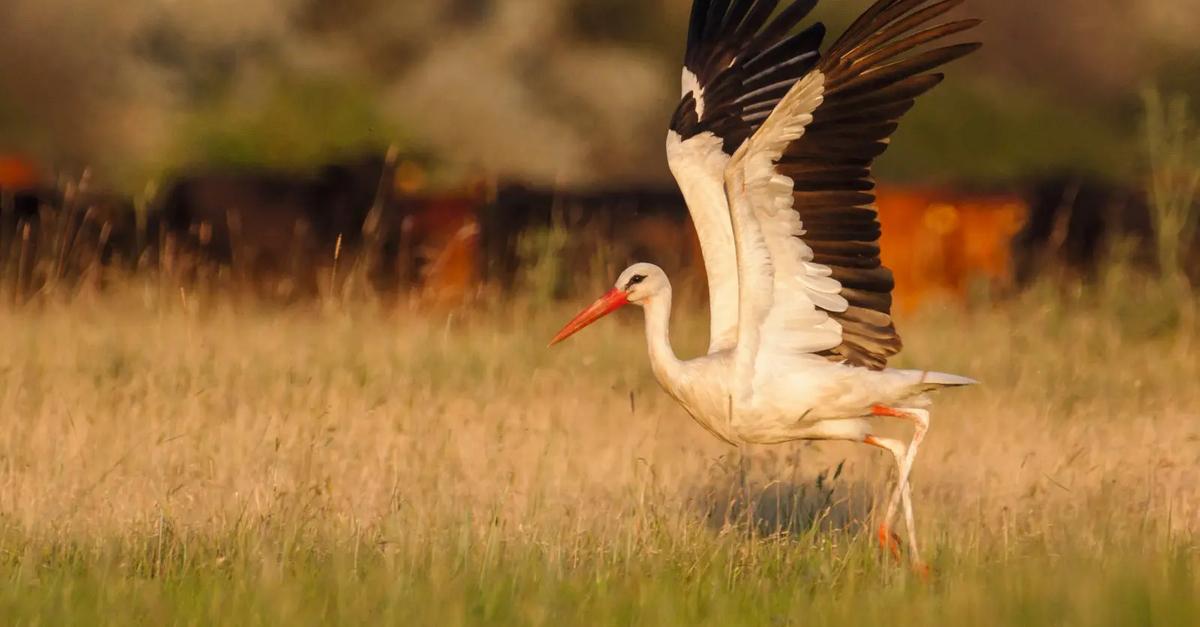

robots.txt (opens in a new tab)
17 rulesAll bots 1 allowed · 0 disallowed
- Allow
/
amazonbot 0 allowed · 1 disallowed
- Disallow
/
anthropic-ai 0 allowed · 1 disallowed
- Disallow
/
bytespider 0 allowed · 1 disallowed
- Disallow
/
ccbot 0 allowed · 1 disallowed
- Disallow
/
chatgpt-user 0 allowed · 1 disallowed
- Disallow
/
claudebot 0 allowed · 1 disallowed
- Disallow
/
claude-web 0 allowed · 1 disallowed
- Disallow
/
cohere-ai 0 allowed · 1 disallowed
- Disallow
/
diffbot 0 allowed · 1 disallowed
- Disallow
/
facebookbot 0 allowed · 1 disallowed
- Disallow
/
google-extended 0 allowed · 1 disallowed
- Disallow
/
gptbot 0 allowed · 1 disallowed
- Disallow
/
omgili 0 allowed · 1 disallowed
- Disallow
/
omgilibot 0 allowed · 1 disallowed
- Disallow
/
perplexitybot 0 allowed · 1 disallowed
- Disallow
/
youbot 0 allowed · 1 disallowed
- Disallow
/
No matching rules.
User reviews (0)