
 简体中文
简体中文 English
Website review
This review may include AI-generated content and is not individually verified. Domain, certificate and other facts come from the observed data on this page.
What is Dialogues@RU?
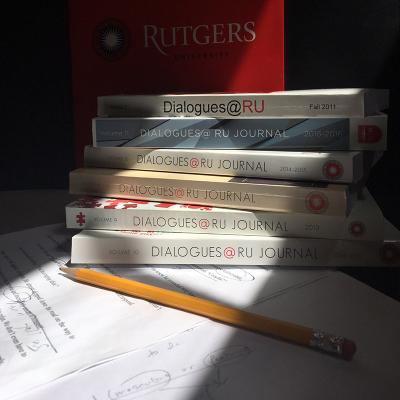
Dialogues@RU is an annual scholarly journal of undergraduate research written for the Writing Program course “Research in the Disciplines” (English 201) at Rutgers. The journal publishes some of the strongest student research papers produced in that course, with topics spanning STEM fields, Economics, Political Science, Sociology, Psychology, Film, and Literature.
Its purpose is both archival and instructional: it showcases undergraduate work while reflecting the course’s emphasis on critical reading and thinking, scholarly research, synthesis, and analytic writing across disciplines. The site presents the journal by volume, including recent editions such as 2024–2025 Volume 20 and earlier volumes going back through 2021–2022 Volume 17.
A useful next step is to browse a recent volume to see how student writers frame research questions, integrate sources, and structure arguments in different fields. If you are a student preparing a research paper, use an issue as a model for disciplinary conventions rather than as a source to cite; if you are an instructor or reviewer, the volumes provide a concrete record of the kind of work the course aims to produce.
How can I submit my paper to Dialogues@RU?
Submitting to Dialogues@RU is not an open call in the usual sense. The journal publishes undergraduate work written for the Rutgers Writing Program course "Research in the Disciplines" (English 201), so the realistic route is through that course and its instructors rather than a general submission portal. If you are currently taking English 201, ask your instructor whether your paper can be put forward; if you wrote a strong research paper in the course in a previous term, contact the journal through its Rutgers contact page to ask whether past-term work is still eligible.
What the journal looks for
- Papers grounded in scholarly research and synthesis across a discipline, not personal essays or opinion pieces.
- Topics spanning the areas the journal names, including STEM fields, economics, political science, sociology, psychology, film and literature.
- Analytic writing that shows critical reading and a clear argument built from sources.
Practical preparation
- Revise the paper as a standalone article: tighten the thesis, cut course-specific framing, and make sure citations are consistent.
- Ask your instructor for a recommendation or nomination, since faculty involvement is the normal channel.
- Check the current volume and recent issues to see the length, tone and citation style of published pieces before you submit.
A quick comparison of routes
| Situation | Best first step |
|---|---|
| Currently enrolled in English 201 | Ask your instructor about nomination and deadlines |
| Completed English 201 in a past term | Contact the journal via its Rutgers page to confirm eligibility |
| Not a Rutgers student | Look for an undergraduate journal at your own institution |
For context on how undergraduate research journals present their submission guidelines, Undergraduate Library and Rutgers University are useful starting points.
What are the submission requirements for Dialogues@RU?
The Dialogues@RU site does not publish a public submission checklist. What it does say is that the journal publishes undergraduate work written for “Research in the Disciplines” (English 201), the Writing Program course that teaches critical reading, scholarly research, synthesis, and analytic writing across disciplines. In practice, that means the journal's pipeline runs through the course rather than through an open call for anyone with a manuscript.
Who typically submits
- Students enrolled in English 201 at Rutgers, writing research papers on topics in STEM, economics, political science, sociology, psychology, film, or literature.
- Instructors or course coordinators, who are usually the ones nominating or forwarding the strongest papers from a section.
- Past contributors whose work already appeared in an earlier volume, if they take another 201-section course.
What the journal values, based on its own description
- Sustained scholarly research rather than opinion or personal reflection.
- Synthesis of sources, not just summary.
- Analytic writing that holds an argument together across disciplines.
A practical next step
If you are a current English 201 student, ask your instructor whether your department submits papers directly or whether students upload them; that single question resolves most of the ambiguity. If you are not in the course, the realistic path is to take English 201 or ask the Writing Program whether any exception exists.
What to prepare if you are asked to submit
- A clean, final research paper with a clear thesis and consistent citation style.
- A short abstract or cover note explaining the paper's research question and why it fits the journal's cross-disciplinary scope.
- Confirmation that the paper was written for English 201 and, if co-authored, that all authors agree to submission.
- A faculty sponsor or instructor contact, since course-based journals usually verify the work's origin.
For general orientation to the university's writing and research context, Rutgers University is the authoritative starting point; the journal itself lives at Dialogues@RU.
How is the peer review process for Dialogues@RU?
Dialogues@RU does not present itself as a peer-reviewed journal in the conventional academic sense. The page describes it as an annual scholarly journal containing some of the best student research papers produced within the Writing Program course “Research in the Disciplines” (English 201) at Rutgers. That wording points to a selection process based on coursework: papers are written for a class, then chosen for publication.
What the page evidence supports
- Origin: Undergraduate work completed in English 201, a Writing Program course.
- Selection: The journal features “some of the best” papers, implying an editorial choice rather than publication of all submissions.
- Scope: Research topics span STEM, Economics, Political Science, Sociology, Psychology, Film, and Literature.
- Format: Annual volumes, with recent editions listed by academic year and volume number (for example, 2024–2025 Volume 20).
What is not stated
The page does not describe double-blind review, reviewer credentials, acceptance rates, revision rounds, or a formal external referee system. For a student journal tied to a course, the more likely model is faculty or editorial review: instructors or journal editors evaluate coursework and invite or select strong papers. That is still a meaningful quality filter, but it is not the same as peer review in a research journal.
A practical way to think about it
If you are a student deciding whether to submit, or a reader judging the journal’s rigor, ask the program directly. A useful question is: “Who reviews submissions, and what criteria decide publication?” For course-based journals, the answer is often the course instructor plus an editorial board. That tells you the work has been vetted for research quality and writing, but not necessarily through independent anonymous referees.
For official details, see Dialogues@RU.
Can I read past issues of Dialogues@RU online?
Yes. Dialogues@RU publishes its past volumes on its own site, so you can read back issues online without visiting the university in person. The journal is the annual collection of undergraduate research written for the Writing Program course "Research in the Disciplines" (English 201) at Rutgers, and the site lists volumes by academic year—recent examples include 2024–2025 (Volume 20), 2023–2024 (Volume 19), 2022–2023 (Volume 18) and 2021–2022 (Volume 17). Start at Dialogues@RU and open the "Our Journals" section to browse the volume you want.
What you'll find in a past issue
The contents reflect the course's disciplinary range, with student papers drawn from STEM fields, economics, political science, sociology, psychology, film and literature. That makes the archive useful in two distinct ways:
- As a research model. If you are taking a writing or research-methods course, reading a full student paper shows how a claim, evidence and synthesis are actually assembled at undergraduate level—often more instructive than reading a published scholar's finished article.
- As a subject snapshot. The volumes record what undergraduates were investigating in a given year, which can be handy for anyone tracking shifting interests across disciplines.
A practical next step
Decide what you need before you browse. If you want a template for your own paper, pick a volume and read one article from start to finish, noting how the writer frames the research question and handles sources. If you are checking whether a specific topic has been covered, scan several consecutive volumes rather than one, since the journal's disciplinary mix changes year to year.
Keep in mind the trade-off: these are undergraduate papers selected for a course, not peer-reviewed professional research, so treat them as strong examples of student work and follow their cited sources for authoritative claims. For the university's broader scholarly output, the Rutgers libraries are the better destination.
What is the Research in the Disciplines course at Rutgers?
Research in the Disciplines is Rutgers' undergraduate writing course, English 201, and it is the course behind the student journal Dialogues@RU. According to the journal's site, the course teaches critical reading and thinking, scholarly research, synthesis, and analytic writing across the disciplines. Students research topics in fields such as STEM, economics, political science, sociology, psychology, film, and literature, and the strongest papers are published annually.
Why the course matters
At Rutgers, English 201 is not a generic composition class. It asks students to enter a disciplinary conversation: find credible sources, evaluate arguments, and combine evidence into an original research paper. The journal connection makes the course's purpose visible—student work can reach a public audience rather than ending as a graded assignment.
How to use this
If you are a student, treat the published volumes as models. Look at how a paper frames a research question, organizes sources, and moves from summary to analysis. If you are an instructor or adviser, point students to Dialogues@RU as a concrete outcome of the course.
The journal is hosted at Dialogues@RU, and the broader writing program is part of Rutgers School of Arts and Sciences.

User reviews (0)