Website profiles · Technology insights · Alternatives

emerywalker.org.uk Paid content

Categories: Arts & Culture

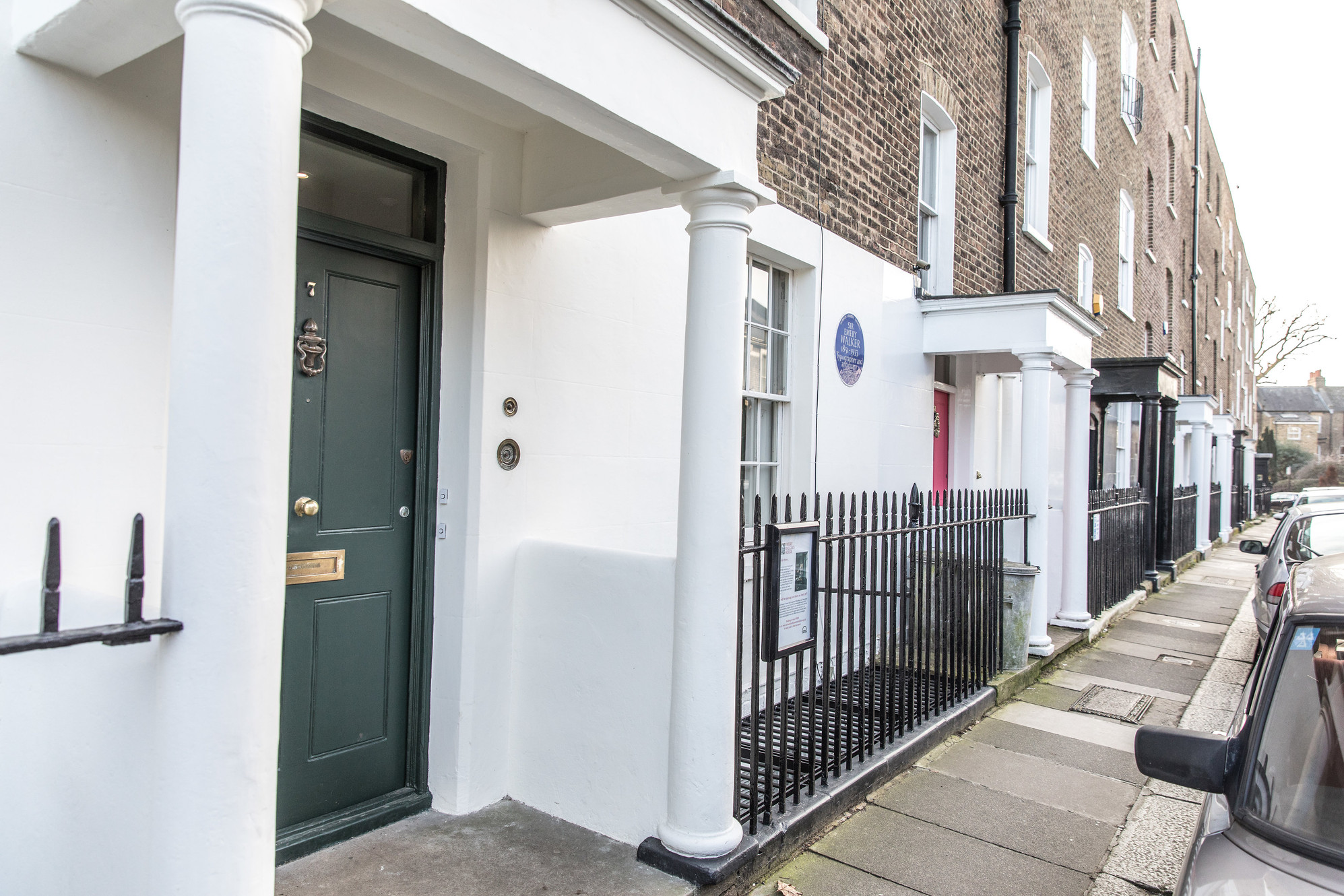
Emery Walker's House at 7 Hammersmith Terrace. Discover the Art and Crafts home, London.

Visit website

Updated: 2026-09-22 06:18 Language: English (default) Access: Normal

Profile views 1 Outbound visits 0
Emery Walker's House Full homepage screenshot
Editorial Review

Website Review

What is Emery Walker's House?

Emery Walker's House is a preserved Arts and Crafts home at 7 Hammersmith Terrace in London, once belonging to Emery Walker, a printer, typographer and associate of William Morris. It is presented much as it was in Walker's time, with original furnishings, textiles, prints and personal collections that reflect his circle and the British Arts and Crafts movement.

Who it suits

  • Design and typography enthusiasts interested in printing history and the Kelmscott Press milieu.
  • Arts and Crafts followers wanting a domestic interior rather than a conventional museum display.
  • Small-group visitors who prefer guided, intimate heritage experiences over large institutions.

Practical points

Visits are typically organised as timed guided tours rather than free-flow browsing, which suits people who want context and commentary. Because rooms are small and historic, capacity is limited; booking ahead is usually advisable. The house is reachable from Hammersmith, though the walk and historic interiors may be challenging for visitors with limited mobility.

For current opening arrangements and tour details, see Emery Walker's House. The official site is the most reliable place to confirm visiting information, as schedules for small heritage houses often change seasonally.

Who was Emery Walker and why is his house significant?

Emery Walker was a British engraver, printer and typographer active in the late 19th and early 20th centuries. He is best known for his close collaboration with William Morris on the Kelmscott Press, where his knowledge of historical typefaces and photographic reproduction techniques helped shape some of the era's most influential books. His expertise also made him a central figure in the wider Arts and Crafts movement and in debates about printing standards.

Why the house matters

His home at 7 Hammersmith Terrace, London, is significant because it survives as a remarkably intact Arts and Crafts interior. Rather than a museum of isolated objects, it presents a lived-in domestic setting, with furnishings, textiles, wallpapers and personal possessions that reflect Walker's circle and the movement's ideals. That combination gives visitors a sense of how craftsmanship, collecting and everyday life intersected for people in this network.

Who it suits

  • Design, typography and book-history enthusiasts
  • Followers of Morris, the Kelmscott Press and the Arts and Crafts movement
  • Visitors interested in period interiors rather than large institutional displays

The trade-off is scale and access: it is a small historic house, typically shown by guided tour, so it rewards advance planning over spontaneous drop-in visits. Practical visiting details are set out on Emery Walker's House.

What can visitors see inside the house?

Visitors to Emery Walker's House see one of London's most complete Arts and Crafts interiors, preserved largely as it was when typographer and printer Emery Walker lived there. The house at 7 Hammersmith Terrace is shown by guided tour, and the interiors reflect Walker's close friendships with figures such as William Morris and his circle.

What is on view

  • Original furnishings, textiles, wallpapers and decorative objects associated with the Arts and Crafts movement.
  • Walker's printing and typography material, including items linked to his work and the Kelmscott Press.
  • A collection of paintings, prints and personal possessions that give a sense of a working collector's home.
  • Period interiors that show how an Arts and Crafts house was lived in rather than displayed as a museum set.

The experience is suited to visitors interested in design history, printing, the Pre-Raphaelites and the Arts and Crafts movement. Because it is a small historic house, access is typically by timed guided tour, and rooms may be shown in a way that reflects conservation needs. More practical details are available on Emery Walker's House.

How do I plan a visit to Emery Walker's House?

Emery Walker's House, at 7 Hammersmith Terrace in London, is a preserved Arts and Crafts home associated with the printer and typographer Emery Walker. Visits are typically organised as guided tours rather than free-flow browsing, because the interiors are small and fragile.

Before you go

  • Check opening days and tour times in advance, as historic houses often run limited seasonal hours.
  • Book ahead where possible; timed tours at small properties can fill up.
  • Use the official planning page for current practical details: Emery Walker's House.

What to expect

The house retains original furnishings, textiles, wallpapers and printing-related items, so it appeals to people interested in the Arts and Crafts movement, typography, historic interiors and London local history. A guided format suits visitors who want context and conservation stories, while those seeking a quick, self-directed stop may find it less flexible.

Practical considerations

  • Allow extra time for travel to Hammersmith and for arriving before your slot.
  • Accessibility and photography rules vary in historic homes; confirm these directly.
  • Combine the visit with nearby riverside walks or other local heritage sites.

For accurate times, tickets and access arrangements, rely on the official site rather than third-party listings.

Is Emery Walker's House associated with the Arts and Crafts movement?

Yes. Emery Walker's House is presented as an Arts and Crafts home at 7 Hammersmith Terrace in London, and the movement is central to how the site is described.

Emery Walker was a printer, typographer and photographer who worked closely with William Morris and other leading figures of the later 19th-century British design revival. His house reflects that world: handcrafted detail, period interiors and a domestic setting shaped by Arts and Crafts ideals rather than by grand institutional display. For visitors, the appeal is usually the atmosphere of a lived-in home connected to a wider circle of designers, printers and social reformers.

It is likely to suit people interested in:

  • The Arts and Crafts movement and its London networks
  • Historic interiors and domestic architecture
  • Printing, typography and book design history
  • Small-scale heritage houses rather than large museums

The main trade-off is scale. This is a modest house with limited capacity, so visits are typically organised around set arrangements rather than free-flow browsing. If you want a broad survey of the movement, a large museum may cover more ground; if you want an intimate, specific sense of how Arts and Crafts ideas appeared in a real home, this is the more focused choice. Check current visiting arrangements before travelling.

What are the opening hours and ticket prices for Emery Walker's House?

Emery Walker's House at 7 Hammersmith Terrace is an Arts and Crafts home in London, preserved much as it was in Walker's time. The official site includes a "Plan your day" page, which is the best place to check current visiting arrangements before travelling, as opening times for historic houses often vary by season and by guided-tour schedule.

What to expect

  • Visits are typically organised as guided tours rather than free-flow entry, since the interiors are fragile and the rooms are small.
  • Because capacity is limited, booking ahead is often advisable, especially at weekends and during popular periods.
  • The house appeals to people interested in the Arts and Crafts movement, typography and printing history, and domestic interiors of the period.

Practical points

  • Opening hours and ticket prices are not listed here; consult Emery Walker's House for the authoritative, up-to-date details.
  • Check the "Plan your day" section for tour times, admission information and any booking requirements.
  • If you are planning a trip around other London heritage sites, confirm the house's days of operation first, as small museums sometimes open only on selected days.

For exact hours and prices, the official website remains the reliable source.

Related questions

More questions →
What Is Emery Walker's House?

Emery Walker's House is the preserved Arts and Crafts home of Sir Emery Walker at 7 Hammersmith Terrace, London. It is open to the public as a museum, and visits are by guided tour booked through the official site. It is worth considering if you are interested in the Arts and Crafts movement, historic interiors, or the history of printing and typography — and especially if you are already planning to see the William Morris sites nearby.

Who Emery Walker was

Emery Walker was a London printer, typographer, and photographer who became a central figure in the British Arts and Crafts movement. He is best known for his close collaboration with William Morris on the Kelmscott Press, where his knowledge of historical type and printing informed some of the movement's most influential books. His work connected the practical craft of printing with the wider Arts and Crafts ideal of good design and honest making.

Why 7 Hammersmith Terrace matters

The house at 7 Hammersmith Terrace is significant because it survives as a largely intact Arts and Crafts interior rather than a reconstructed display. It was Walker's home, and it retains the atmosphere of a lived-in late Victorian and Edwardian house associated with the movement's leading figures. Its location on Hammersmith Terrace places it in the same riverside neighbourhood as William Morris's Kelmscott House, which makes the area a concentrated point of interest for anyone following the Arts and Crafts story in London.

What you can see inside

The house is presented as a historic home, so the appeal is in the rooms, furnishings, and personal connections rather than in a conventional gallery of objects. Expect original furnishings and domestic settings that reflect Walker's life and circle, along with material relating to his printing work and the Arts and Crafts movement. Because it is a preserved house rather than a large museum, the experience is intimate and best suited to visitors who value atmosphere and detail over scale.

How it relates to nearby William Morris sites

Emery Walker's House sits close to Kelmscott House, William Morris's former home on the same stretch of the Thames at Hammersmith. Walker and Morris were collaborators, so seeing both in one trip gives a fuller picture of the movement and the personal and professional networks behind it. If you are specifically following Morris, treat Walker's house as a complementary stop rather than a substitute.

Planning a visit

Visits are organised through the official website, where you can find the Plan Your Day page for practical arrangements. The house is run as a guided-tour experience, so booking ahead is the sensible approach rather than turning up and expecting open access. Check the official site for current opening arrangements, tour times, and how to book before you travel, since these details can change.

A simple way to plan

  1. Go to the official site, emerywalker.org.uk.
  2. Open the Plan Your Day page to check opening and tour information.
  3. Book your tour in advance through the site.
  4. If you are also visiting Kelmscott House or other Morris sites, group them into the same trip to make the most of the location.

Is it for you?

  • Worth visiting if you are interested in the Arts and Crafts movement, historic house interiors, printing and typography, or the circle around William Morris.
  • Less suited if you are looking for a large museum with extensive galleries, or you prefer to browse without a guided tour.
  • Best combined with the nearby William Morris sites, so you can see the movement's London connections together.

For current details on tours, opening, and booking, use the official Emery Walker's House website as your starting point.

What Is the Arts and Crafts Movement?

The Arts and Crafts movement was a design and social reform movement that began in Britain in the 1860s and spread across Europe and North America. It argued that objects should be made by hand, that materials should be used honestly, and that industrial mass production was degrading both craft and the people who practised it. Its ideas reshaped domestic interiors, architecture, and the decorative arts — and Emery Walker's House at 7 Hammersmith Terrace, London, is a preserved example of an Arts and Crafts home where you can see those ideas in practice.

Core principles

The movement grew out of concern that factory production was separating makers from their work and flooding homes with cheap, poorly made goods. Its followers generally agreed on a few connected beliefs:

  • Handcraft over machine production. Skill, time, and the maker's judgement were treated as essential to good design.
  • Honest materials. Wood should look like wood, metal like metal; surfaces should not pretend to be something else.
  • Truth to materials and function. An object's form should follow what it is made of and what it is for.
  • The unity of art and craft. Decoration, structure, and everyday use were not separate categories.
  • Design as a social question. Good surroundings were seen as a route to better lives, not just a matter of taste.

These principles were often easier to state than to live by. Handmade goods cost more, which meant the movement's finest work was frequently available only to wealthier households — a tension its own critics noticed at the time.

What Arts and Crafts looks like in a home

If you are trying to recognise the style in a building or an interior, these are the features to look for:

Feature What to look for
Woodwork Exposed beams, panelling, and joinery in oak or other solid timber, often left unstained
Wallpaper and textiles Repeating botanical or geometric patterns, block-printed or woven rather than printed by machine
Windows Leaded or stained glass, sometimes with small decorative panels
Furniture Built-in cupboards, settles, and shelving designed for the specific room
Fireplaces and fittings Copper, brass, or wrought-iron details, often hand-finished
Overall effect Rooms that feel layered and handmade rather than uniform or showroom-perfect

A single house rarely shows every feature, and Arts and Crafts interiors often mix with earlier or later elements. The clearest signal is usually the combination of solid, visible craftsmanship and surface decoration drawn from nature.

Key figures and workshops

The movement is closely associated with a small group of designers, writers, and firms:

  • William Morris — designer, poet, and social thinker; his firm produced wallpapers, textiles, furniture, and stained glass that became the movement's visual signature.
  • Dante Gabriel Rossetti — painter and founding member of the Pre-Raphaelite Brotherhood, whose medievalising approach influenced Arts and Crafts aesthetics.
  • Morris & Co. — the decorative arts firm through which many of the movement's most recognisable patterns and interiors were produced.
  • Emery Walker — a leading figure in British fine printing, associated with the Kelmscott Press and with the wider Arts and Crafts circle.

These names overlap with the Pre-Raphaelites and with the private press movement, so you will often see them grouped together. The shared thread is a preference for skilled making and considered design over industrial uniformity.

How the movement shaped homes and architecture

Arts and Crafts ideas influenced British domestic architecture through architects who designed houses as complete environments — structure, fittings, and decoration considered together. The style spread to the United States and continental Europe, where it adapted to local materials and building traditions. Its emphasis on simplicity and honest construction also fed into later design thinking, even where the handcraft ideal was dropped.

For a visitor, the practical result is that an Arts and Crafts house is best read as a whole: the joinery, the wallpapers, the glass, and the furniture are meant to relate to one another rather than to stand alone.

Seeing it at Emery Walker's House

Emery Walker's House at 7 Hammersmith Terrace is described as an Arts and Crafts home in London, and it is a useful place to test the features above against a real interior. When visiting, look for:

  • Original surface decoration — wallpapers and textiles that show pattern design of the period.
  • Joinery and built-in elements — woodwork that is part of the room rather than added to it.
  • The relationship between rooms — how decoration, furniture, and light are handled together.
  • The house as a lived-in collection — a home shaped by its owner's circle and interests, not a museum reconstruction.

Before you go, check the Plan Your Day page on emerywalker.org.uk for current visiting arrangements, since opening details and any ticketing requirements are set by the site and can change.

Who Was Emery Walker and Why Visit His House?

Emery Walker was a London printer, typographer and photographer who became one of the most influential figures behind the Arts and Crafts movement — and 7 Hammersmith Terrace, his former home, is now a preserved Arts and Crafts interior open to visitors. Visit if you want to see an unusually intact late-Victorian/Edwardian home shaped by the movement's leading designers, rather than a conventional museum of objects in cases. Skip it if you need step-free access, large galleries or a quick, self-guided blockbuster experience; this is a small, timed-entry historic house.

Who Emery Walker was

Walker (1851–1933) worked at the centre of British fine printing and design. His roles included:

  • Printer and typographer — he ran a successful process-engraving and printing business, and his technical knowledge of type and reproduction made him a sought-after adviser.
  • Photographer of manuscripts and rare books — his photographic facsimiles let designers study historic letterforms and page layouts directly.
  • Lecturer and campaigner — his 1888 lecture on letterpress printing, delivered with William Morris, is often cited as a trigger for the revival of fine printing in Britain.
  • Business partner and executor — he was closely involved with Morris's Kelmscott Press and later helped manage Morris's literary estate.

In short, Walker was the practical craftsman and technical expert behind ideas that others, including Morris, are more often credited with.

Why the house matters

7 Hammersmith Terrace is significant less for grand architecture than for what survived inside it. Walker moved there in 1903 and lived in the house until his death; the interiors, furnishings and collections were kept largely in place by his daughter and later custodians.

What makes it worth a visit:

  • A lived-in Arts and Crafts interior — original wallpapers, textiles, furniture and decorative schemes rather than a reconstructed period room.
  • A working collection — printing-related material, books and objects that reflect Walker's professional world.
  • A social and creative network made visible — the house sits in a row associated with artists and designers, and its contents trace friendships and collaborations across the movement.

If you already know the broad outline of the Arts and Crafts movement, this is where you see how its ideals were applied in an ordinary London terrace house.

The William Morris and Kelmscott Press connection

Walker's link to Morris is the main reason the house carries weight beyond its own walls:

  • Walker and Morris worked together on printing and typography, and Walker's expertise fed directly into the Kelmscott Press, founded by Morris in 1891.
  • The Kelmscott Press produced highly crafted books with hand-cut type, handmade paper and Morris-designed ornaments — the clearest expression of Arts and Crafts thinking applied to print.
  • Walker's photographic and technical work supported the study and revival of historic type and page design that underpinned the press's look.
  • After Morris's death in 1896, Walker remained a central figure in the circle that carried those ideas forward.

For visitors, this means the house is a useful companion to Kelmscott-related collections elsewhere in London: it explains the people and processes behind the books.

What to look for inside

Treat the visit as a study of surfaces and details rather than a checklist of masterpieces:

  • Walls and decoration — period wallpapers and decorative treatments that show how Arts and Crafts principles were used domestically.
  • Textiles and furnishings — fabrics, rugs and furniture consistent with movement makers and their workshops.
  • Printing and typographic material — items connected to Walker's trade and to the fine-printing revival.
  • Pictures and collections — accumulated objects that reveal Walker's tastes and professional networks.
  • The house as a whole — the sequence of small rooms and the way light, colour and craft objects sit together is the point.

Because the house is small and fragile, displays can change and some areas may be restricted; ask on arrival what is currently viewable.

Practical visiting basics

  • Location: 7 Hammersmith Terrace, London — a residential terrace in Hammersmith, west London.
  • Opening arrangements: the house operates on limited, typically pre-booked timed entry rather than open-ended drop-in hours. Check the official site's plan-your-day page before travelling, as days and slots vary by season.
  • Booking: book ahead where possible; small-capacity historic houses frequently sell out, and walk-up availability is not guaranteed.
  • Access: this is a historic terraced house with stairs and narrow spaces. If you have mobility requirements, contact the house in advance rather than assuming step-free access.
  • Time needed: allow roughly an hour to ninety minutes for a guided or stewarded visit, plus travel time.
  • Getting there: Hammersmith is served by London Underground and bus routes; the house is a short walk from the main transport hub, but check the route on the day.

How to decide

Choose to visit if you are interested in the Arts and Crafts movement, fine printing, typography or William Morris's circle, and you value small, atmospheric historic interiors over large museums. Consider skipping it if you need full accessibility, want unconstrained opening hours, or are looking for a family-oriented attraction with hands-on displays.

Before you go, confirm current opening days, booking requirements and any access arrangements on the official Emery Walker's House website — those details change, and the house's small scale means they matter more than at a large institution.

Website Overview

An established domain and managed infrastructure suggest continuity of operations and may support dependable delivery, although neither guarantees service quality. Page metadata, canonical configuration and social previews work together to provide more consistent search and sharing presentation.

Domain and Registration

Registered in 2002, this domain has about 24 years of history. That suggests continuity, although ownership and purpose may have changed. Registration contact information is publicly available through RDAP. The domain uses the common .uk extension, which is not an independent safety signal.

DNS and Email

Nameservers are provided by wixdns.net, indicating managed DNS hosting. MX records point to the Google Workspace email service. SPF and DMARC are configured. DKIM status is unknown. TXT records include verification markers for Google. Such markers may also remain after a service stops being used. DNSSEC signatures were not detected, so this additional DNS authenticity protection is not confirmed.

TLS and Certificates

The certificate uses an RSA 2048-bit public key, offering broad client compatibility. The server supplied a complete certificate chain. No organization name is present in the certificate; the available fields are consistent with domain validation. The certificate was issued within the Google Trust Services cloud or CDN ecosystem. The certificate's total validity is about 89 days, consistent with a short renewal cycle.

HTTP and Browser Security

The response lacks these common security headers: CSP, Referrer-Policy, Permissions-Policy, clickjacking protection. No X-Powered-By header was found, reducing one common source of backend fingerprinting information. The cf-ray, x-cache, x-served-by response header indicates a CDN or caching proxy in the delivery path. No obvious internal addresses or debug information were found in the headers. The Server header identifies cloudflare without an exact version.

Technology Stack Analysis

The public page identifies Wix.com Website Builder, Wix, React, Sentry, Cloudflare, Fastly without precise versions, leaving fewer clues for version-specific scanning.

Search and Social Sharing

The Generator tag identifies Wix.com Website Builder, making the publishing system easier to fingerprint. Twitter Card metadata is configured. The title has 20 characters, within a common display range. A meta description is present, with 88 characters. The observed directives allow indexing and link following.

Hosting and Email

DNSwixdns.net
HostingFastly
EmailGoogle Workspace
Location United States flagUnited States 162.159.143.12

User reviews (0)

  • No reviews yet.

Pages, Search and Sharing

Meta descriptionEmery Walker's House at 7 Hammersmith Terrace. Discover the Art and Crafts home, London.
Canonical URLhttps://www.emerywalker.org.uk
LanguageEnglish (default)
Twitter Cardsummary_large_image
All bots 1 allowed · 1 disallowed
  • Allow/
  • Disallow*?lightbox=
adsbot-google-mobile 0 allowed · 2 disallowed
  • Disallow/_partials*
  • Disallow/pro-gallery-webapp/v1/galleries/*
adsbot-google 0 allowed · 2 disallowed
  • Disallow/_partials*
  • Disallow/pro-gallery-webapp/v1/galleries/*
petalbot 0 allowed · 1 disallowed
  • Disallow/
dotbot 0 allowed · 0 disallowed
  • IntervalCrawl delay 10 seconds
ahrefsbot 0 allowed · 0 disallowed
  • IntervalCrawl delay 10 seconds

Registration details RDAP / WHOIS

Registrar123-Reg Limited t/a 123-reg
Registered2002-08-14
Expires2028-08-14
Domain statusactive
Nameserversns10.wixdns.net、ns11.wixdns.net
DNSSECunsigned

DNS records

TypeNameValueTTLPriority
Acfd.wixdns.net162.159.143.123600—
Acfd.wixdns.net172.66.3.83600—
MXemerywalker.org.ukaspmx.l.google.com360010
MXemerywalker.org.ukalt1.aspmx.l.google.com360020
MXemerywalker.org.ukalt2.aspmx.l.google.com360030
MXemerywalker.org.ukaspmx2.googlemail.com360040
MXemerywalker.org.ukaspmx3.googlemail.com360050
NSemerywalker.org.ukns10.wixdns.net86400—
NSemerywalker.org.ukns11.wixdns.net86400—
TXTemerywalker.org.ukgoogle-site-verification=weF_emMWdUf18UI3JCTjocpi9xPPyaYNppQEOYlkhL03600—
TXTemerywalker.org.ukv=spf1 include:_spf.google.com ~all3600—
CNAMEwww.emerywalker.org.ukcdn3.wixdns.net3600—
DMARC_dmarc.wixemails.comv=DMARC1; p=none; rua=mailto:[email protected]300—

TLS and certificates

AssessmentNormal configuration
Supported protocolsTLSv1.2、TLSv1.3
Negotiated protocolTLSv1.3
Certificate subjectemerywalker.org.uk
IssuerGoogle Trust Services
Valid until2026-11-07T00:49 · Remaining when checked: 45 days
Verification detailsCertificate trust: Passed · Hostname match: Passed

HTTP response headers

HeaderValue
content-typetext/html; charset=UTF-8
content-languageen-US
cache-controlprivate,max-age=0,must-revalidate
servercloudflare
strict-transport-securitymax-age=31556952
x-content-type-optionsnosniff
set-cookieRedacted

Identified technologies

Wix.com Website BuilderWixReactSentryCloudflareFastly