
 flcc.edu
No paid content found
flcc.edu
No paid content found
Categories: Education & Learning
FLCC is located in Canandaigua, NY. We offer over 50 career and transfer programs. Learn more about our high-quality, low-cost education. Apply today.
 Visit website
 Updated: 2026-09-29 21:38
 Language: English (default)
 Access: Normal
 Profile views 3
 Outbound visits 0
Related questions
More questions →What Is a Faith-Based Catholic Education and How Do You Choose a Catholic School?
A faith-based Catholic education combines academic instruction with formation in Catholic virtues and Gospel values, and it typically involves the parish community alongside faculty and families. Southtowns Catholic School of Saint John Paul II Parish describes itself as a Catholic education community that develops each student to their fullest potential together with the faculty, families, and the parish. This article explains what that model involves and gives you a practical way to evaluate a Catholic school for your child. It applies if you are considering a parish-affiliated Catholic school and want to compare fit, not just test scores.
What "faith-based" actually means in a Catholic school
The phrase is often used loosely, so it helps to separate the parts:
- Catholic virtues and Gospel values are woven into how the school operates — how students are treated, how discipline and service are framed, and what the school says it is trying to form in a child.
- Parish involvement means the school is not a standalone institution. In this model, the parish, faculty, and families share responsibility for the student's development.
- Faith formation is the ongoing religious education a student receives, distinct from but connected to academic subjects.
- Sacramental preparation is the specific preparation for Catholic sacraments. The scope and timing vary by school and parish, so confirm the details directly rather than assuming.
The practical takeaway: a faith-based school is making a claim about formation, not only instruction. Your job when evaluating one is to check whether that claim shows up in daily practice.
How academics, faith formation, and sacramental preparation fit together
These are usually presented as one integrated program rather than separate tracks. A few things to clarify on a tour or in an admissions conversation:
- How religion appears in the timetable — Is it a standalone subject, integrated across the day, or both?
- Who delivers faith formation — Classroom teachers, a dedicated religion teacher, parish staff, or a combination.
- How sacramental preparation is handled — Whether it happens at the school, through the parish, or in partnership, and what the family's role is.
- How the school describes its academic goals — Look for concrete language about student growth rather than general claims.
If a school cannot explain how these pieces connect, that is useful information about how clearly the program is defined.
Key factors to evaluate
Use the same dimensions across every school you consider so the comparison is fair.
| Factor | What to look for | Why it matters |
|---|---|---|
| Accreditation | Whether the school states its accreditation status | Signals external review of academic standards |
| Class size | Stated student-to-teacher ratios or typical class sizes | Affects individual attention |
| Teacher qualifications | How the school describes its faculty | Directly shapes instruction quality |
| Community and parish link | How families and the parish participate | Central to the faith-based model |
| Faith formation approach | How virtues and Gospel values are applied day to day | Distinguishes real formation from marketing language |
| Enrollment conditions | Any parish membership, tuition, or aid requirements | Determines practical access |
Note that the source material for Southtowns Catholic School does not publish accreditation details, class sizes, tuition figures, or financial aid information. Treat those as questions to ask, not assumptions to make.
Questions to ask on a tour or at an open house
Bring a written list and take notes. Good questions include:
- How would you describe the school's approach to faith formation in a typical week?
- How are Catholic virtues and Gospel values reflected in discipline and student relationships?
- What is the relationship between the school and Saint John Paul II Parish?
- How does sacramental preparation work, and what is expected of families?
- What are typical class sizes and student-to-teacher ratios?
- What are the qualifications of the teaching staff?
- Is the school accredited, and by whom?
- What are the tuition costs, and what financial aid is available?
- Does enrollment require parish membership, and if so, how is that verified?
- How do you handle a child who is struggling academically or socially?
The answers matter more than the polish of the presentation. Vague answers to specific questions are a signal.
Tuition, financial aid, and parish membership
These are often the deciding practical factors, and they are also the ones families most often assume rather than verify. The available information about Southtowns Catholic School does not state tuition amounts, financial aid programs, or whether parish membership affects enrollment. Do not assume the school is free, that aid exists, or that membership is required — ask each school directly and get the answer in writing where possible.
When you ask, request specifics: the full cost including fees, the aid application process and deadlines, and any conditions attached to parish or diocesan rates.
Signs a school is a good fit
Fit is about alignment between what the school does and what your child and family need. Consider it a good sign when:
- The school's stated mission matches what you observe in classrooms and hallways.
- Staff can give specific examples of how faith formation works in practice.
- Class sizes and support structures match your child's learning needs.
- The community feels welcoming to families, not just students.
- Costs and enrollment conditions are clear and workable for your household.
Consider it a warning sign when mission language is repeated but never illustrated, when practical questions about cost or support go unanswered, or when the school's values do not match how it treats prospective families.
A short evaluation checklist
- [ ] Confirm accreditation status
- [ ] Ask for class sizes and student-to-teacher ratios
- [ ] Ask how faculty are qualified
- [ ] Ask how faith formation and sacramental preparation are organized
- [ ] Clarify the parish relationship and any membership conditions
- [ ] Get full tuition and fee figures, plus financial aid details
- [ ] Visit during a normal school day if possible
- [ ] Talk to current families
- [ ] Compare answers across at least two schools using the same questions
Working through this list turns a vague sense of "good school" into a decision you can defend.
What Is a College? Definition, Types, and How It Differs from a University
A college is a post-secondary educational institution where students pursue programs after high school, typically awarding associate's or bachelor's degrees (and sometimes certificates or diplomas). The term is used differently across countries: in the United States, "college" and "university" are often used interchangeably in everyday speech, while in many other systems a college is a smaller institution, a teaching-focused school, or a constituent part of a larger university. Use this article to classify a specific institution correctly and to decide which type fits a given goal.
Core definition and purpose
A college exists to deliver structured education beyond the secondary level. Its core functions are:
- Teaching and instruction — organized courses leading to a credential (certificate, diploma, associate's, bachelor's, or higher).
- Assessment and credentialing — exams, projects, and graduation requirements that certify a level of knowledge.
- Specialization — focusing on a field, a discipline group, or general education, depending on the type.
- Pathways — preparing students for employment, further study, or transfer to another institution.
The key marker is that a college is post-secondary: it enrolls students who have completed high school or its equivalent.
College vs. university vs. school vs. institute
These terms overlap, and the meaning depends on the country and the institution itself. The table below gives the practical distinctions.
| Term | Typical meaning | Common credential focus |
|---|---|---|
| College | Smaller or teaching-focused post-secondary institution; in some countries, a constituent unit of a university | Certificates, associate's, bachelor's |
| University | Institution that typically grants bachelor's and graduate degrees and often includes research | Bachelor's, master's, doctorate |
| School | Broad term; can mean a K–12 school, a faculty within a university (e.g., "school of engineering"), or a specialized institution | Varies widely |
| Institute | Often specialized in a technical, scientific, or professional field | Certificates through degrees, depending on the institute |
Practical rule: don't rely on the name alone. Check what credentials the institution actually awards and whether it is accredited. A "college" that grants master's and doctoral degrees functions like a university; a "university" with only undergraduate programs may look more like a college in scope.
Common types of colleges
Community college
- Focus: Broad access, lower cost, local enrollment.
- Typical programs: Associate's degrees, certificates, vocational training, and transfer-track courses.
- Common pathway: Complete general education and transfer to a four-year institution, or enter the workforce directly.
Liberal arts college
- Focus: Undergraduate education with a broad curriculum across humanities, social sciences, and natural sciences.
- Typical programs: Bachelor's degrees, small classes, emphasis on critical thinking and writing.
- Common pathway: Graduate study, professional school, or careers that value general analytical skills.
Technical college
- Focus: Applied, career-oriented training.
- Typical programs: Certificates, diplomas, and associate's degrees in fields such as engineering technology, IT, health trades, or skilled trades.
- Common pathway: Direct employment in a specific occupation; some credits may transfer.
Constituent or affiliated college
- Focus: A college that is part of, or affiliated with, a university.
- Typical programs: Often shares the university's degree-granting authority and curriculum standards.
- Common pathway: Students enroll through the parent university and receive its credential.
Degree-granting vs. non-degree-granting
Some colleges award full degrees; others offer only certificates or preparatory courses. This distinction matters more than the label when you are checking whether a program will qualify you for a job, a license, or further study.
Degree levels typically offered
| Credential | Typical length | Usually offered by |
|---|---|---|
| Certificate / diploma | Months to ~1 year | Community, technical, vocational colleges |
| Associate's degree | ~2 years | Community and technical colleges |
| Bachelor's degree | ~3–4 years | Liberal arts colleges, universities, some colleges |
| Master's / doctorate | 1+ years beyond bachelor's | Universities and some colleges with graduate programs |
Lengths vary by country and program, so confirm the specific duration with the institution.
How to choose the right type
Match the type to your goal rather than to the prestige of the name.
- Goal: enter a trade or job quickly. Prioritize a technical or community college with a career-focused certificate or associate's program and employer connections.
- Goal: transfer to a four-year degree. Choose a community college with a documented transfer agreement and confirm which credits the target institution accepts.
- Goal: broad undergraduate education and small classes. A liberal arts college may fit better than a large university.
- Goal: research or graduate study. Look for institutions that grant graduate degrees and have faculty active in your field — often universities, though some colleges qualify.
- Goal: minimize cost. Community colleges generally have lower tuition than four-year institutions; check local fees and aid, since these vary.
- Goal: a specific credential for licensing. Verify that the program and the institution are recognized by the relevant authority before enrolling.
Questions to ask before deciding
- What credential does this program award, and is it accredited?
- Do credits transfer to the institutions or programs I might want later?
- What is the total cost, and what financial aid is available?
- What are the graduation and employment outcomes for this program?
- Does the institution's structure (college vs. university) affect the degree I receive?
Key takeaway
A college is a post-secondary institution focused on teaching and credentialing, but the word covers very different things — from a two-year community college to a liberal arts college to a college inside a university. The reliable way to classify one is to check the credentials it awards, its accreditation, and its transfer and career pathways, not just its name.
Website Overview
The available information shows a mix of normal operation and configuration gaps. Depending on how the website is used, these gaps may affect secure access or the consistency of its public presentation.
Domain and Registration
Unknown
DNS and Email
The lowest TTL is 60 seconds, supporting rapid record changes at the cost of more frequent lookups. Nameservers are provided by suny.edu, indicating managed DNS hosting. DNS and provider evidence indicate traffic passes through the Amazon CloudFront CDN, which may support caching and traffic distribution. MX records point to the Microsoft 365 email service. The CNAME points to dqmhcsmefbrxi.cloudfront.net, associated with Amazon CloudFront.
TLS and Certificates
The certificate uses an RSA 2048-bit public key, offering broad client compatibility. The server supplied a complete certificate chain. No organization name is present in the certificate; the available fields are consistent with domain validation. The certificate was issued within the Amazon cloud or CDN ecosystem. The certificate is valid for about 394 days in total, with 152 days remaining.
HTTP and Browser Security
The response lacks these common security headers: CSP, X-Content-Type-Options, Referrer-Policy, Permissions-Policy. No X-Powered-By header was found, reducing one common source of backend fingerprinting information. The x-cache, via response header indicates a CDN or caching proxy in the delivery path. No obvious internal addresses or debug information were found in the headers. The Server header identifies Apache without an exact version.
Technology Stack Analysis
The public page identifies Terminalfour, Google Tag Manager, Amazon CloudFront, Apache without precise versions, leaving fewer clues for version-specific scanning.
Search and Social Sharing
The Generator tag identifies Terminalfour, making the publishing system easier to fingerprint. The canonical URL points to another host: https://flcc.edu/. Search engines may consolidate indexing signals there. Twitter Card metadata is configured. JSON-LD includes Organization data, helping describe the organization as an entity. The title has 63 characters, within a common display range.
 Hosting and Email
 Hosting
 Amazon CloudFront
 Microsoft 365
 Location
 United States
 Pages, Search and Sharing
| Meta description | FLCC is located in Canandaigua, NY. We offer over 50 career and transfer programs. Learn more about our high-quality, low-cost education. Apply today. |
|---|---|
| Canonical URL | https://flcc.edu/ |
| Language | English (default) |
| Twitter Card | summary_large_image |
Social Sharing Preview
15 fields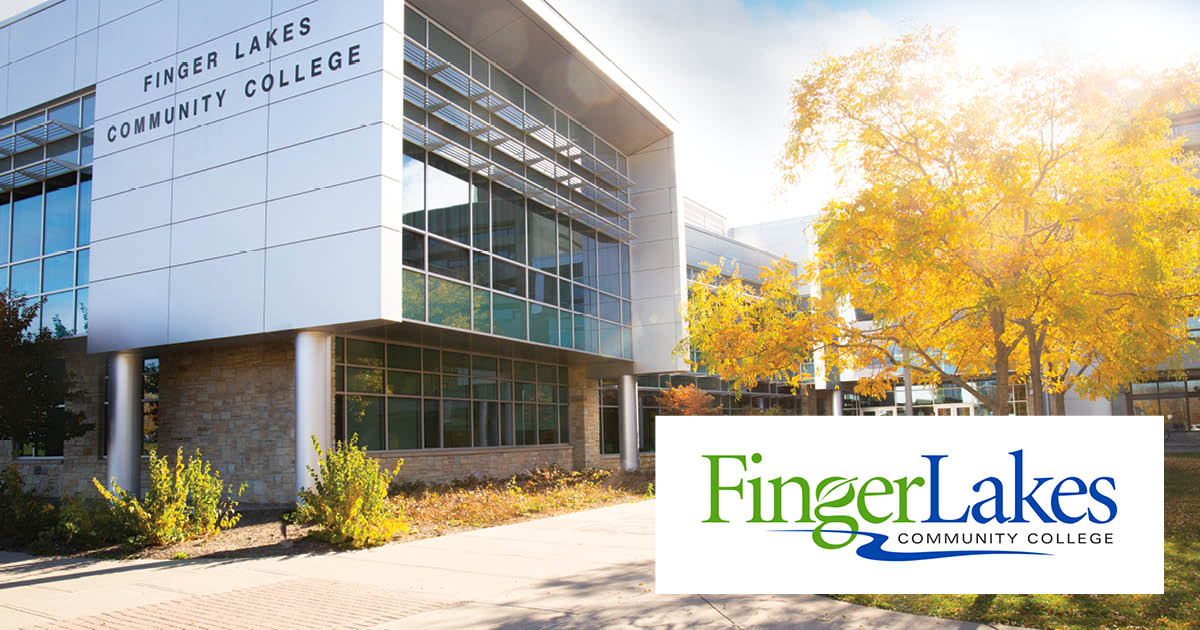

Sharing metadata
| og:url | https://flcc.edu/ |
|---|---|
| og:type | website |
| og:image | https://flcc.edu/media/flccedu/developer-assets/images/FLCC-OpenGraph-1200x630_1-1.jpg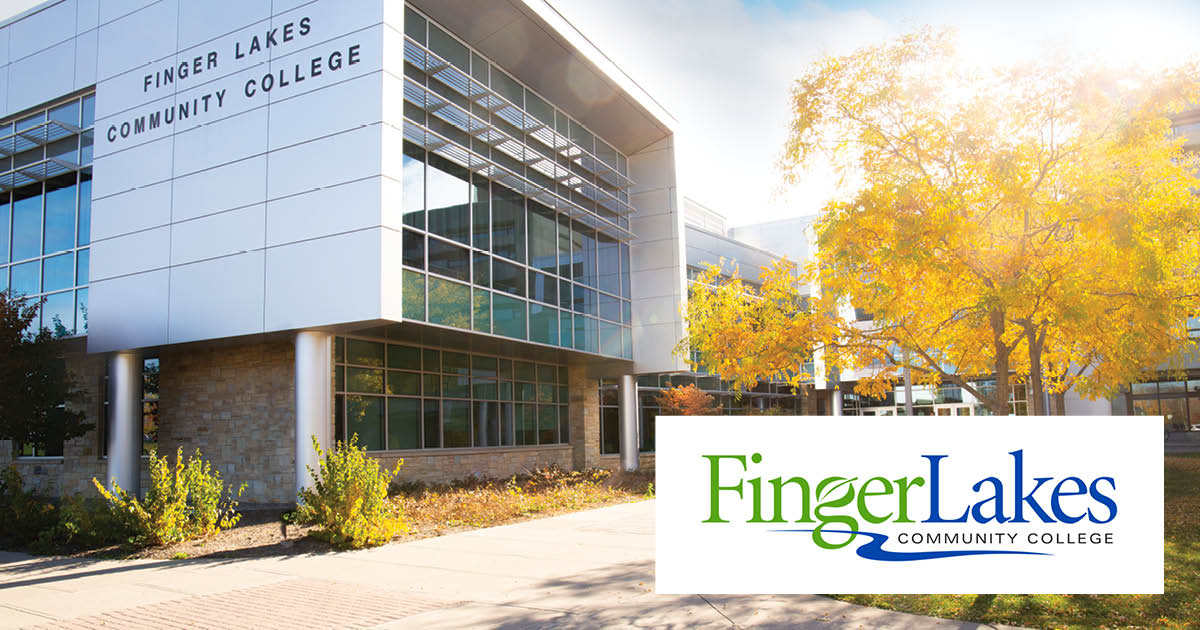 |
| og:title | Finger Lakes Community College |
| og:image:alt | Default image for Social Media |
| og:site_name | Finger Lakes Community College |
| og:description | FLCC is located in Canandaigua, NY. We offer over 50 career and transfer programs. Learn more about our high-quality, low-cost education. Apply today. |
| twitter:url | https://flcc.edu/ |
| twitter:card | summary_large_image |
| twitter:site | @flcc_connects |
| twitter:image | https://flcc.edu/media/flccedu/developer-assets/images/FLCC-OpenGraph-1200x630_1-1.jpg |
| twitter:title | Finger Lakes Community College |
| twitter:creator | @flcc_connects |
| twitter:image:alt | Default image for Social Media |
| twitter:description | FLCC is located in Canandaigua, NY. We offer over 50 career and transfer programs. Learn more about our high-quality, low-cost education. Apply today. |
robots.txt (opens in a new tab)
14 rulesAll bots 0 allowed · 4 disallowed

 All bots

/training-area/*/volunteer/volunteer-opportunities/*/transfer/agreements/*/site-assets/emergency-notices/*
terminalfour nutch spider 1 allowed · 0 disallowed

/- Interval
Crawl delay 0.5 seconds
googlebot 1 allowed · 0 disallowed
/- Interval
Crawl delay 2 seconds
googlebot-image 1 allowed · 0 disallowed
/- Interval
Crawl delay 2 seconds
siteimprove 0 allowed · 1 disallowed
https://www.flcc.edu/courses/*-
duckduckbot 1 allowed · 0 disallowed
/- Interval
Crawl delay 2 seconds
bingbot 1 allowed · 0 disallowed
/- Interval
Crawl delay 2 seconds
msnbot 1 allowed · 0 disallowed
/- Interval
Crawl delay 2 seconds
facebookexternalhit 1 allowed · 0 disallowed
/
megaindex.ru 0 allowed · 1 disallowed
/
megaindex.com 0 allowed · 1 disallowed
/
No matching rules.
Sitemaps
1 Registration details RDAP / WHOIS
Unknown
 DNS records
| Type | Name | Value | TTL | Priority |
|---|---|---|---|---|
| A | dqmhcsmefbrxi.cloudfront.net | 3.170.42.104 | 60 | — |
| A | dqmhcsmefbrxi.cloudfront.net | 3.170.42.105 | 60 | — |
| A | dqmhcsmefbrxi.cloudfront.net | 3.170.42.58 | 60 | — |
| A | dqmhcsmefbrxi.cloudfront.net | 3.170.42.8 | 60 | — |
| AAAA | dqmhcsmefbrxi.cloudfront.net | 2600:9000:2870:1e00:1c:c20a:4980:93a1 | 60 | — |
| AAAA | dqmhcsmefbrxi.cloudfront.net | 2600:9000:2870:5800:1c:c20a:4980:93a1 | 60 | — |
| AAAA | dqmhcsmefbrxi.cloudfront.net | 2600:9000:2870:5c00:1c:c20a:4980:93a1 | 60 | — |
| AAAA | dqmhcsmefbrxi.cloudfront.net | 2600:9000:2870:600:1c:c20a:4980:93a1 | 60 | — |
| AAAA | dqmhcsmefbrxi.cloudfront.net | 2600:9000:2870:8000:1c:c20a:4980:93a1 | 60 | — |
| AAAA | dqmhcsmefbrxi.cloudfront.net | 2600:9000:2870:9e00:1c:c20a:4980:93a1 | 60 | — |
| AAAA | dqmhcsmefbrxi.cloudfront.net | 2600:9000:2870:a400:1c:c20a:4980:93a1 | 60 | — |
| AAAA | dqmhcsmefbrxi.cloudfront.net | 2600:9000:2870:d600:1c:c20a:4980:93a1 | 60 | — |
| MX | flcc.edu | flcc-edu.mail.protection.outlook.com | 60 | 60 |
| NS | flcc.edu | ns.suny.edu | 86400 | — |
| NS | flcc.edu | ns2.suny.edu | 86400 | — |
| NS | flcc.edu | ns3.suny.edu | 86400 | — |
| NS | flcc.edu | ns4.suny.edu | 86400 | — |
| NS | flcc.edu | ns5.suny.edu | 86400 | — |
| NS | flcc.edu | ns6.suny.edu | 86400 | — |
| TXT | flcc.edu | MS=5C8B8C985E445515DB7FC39105F05DAFC539C15F | 1800 | — |
| TXT | flcc.edu | MS=ms68351484 | 1800 | — |
| TXT | flcc.edu | adobe-idp-site-verification=7a768b4c-ba94-46b0-94cb-088f42f77ea1 | 1800 | — |
| TXT | flcc.edu | airtable-verification=42c96446e33b1d528757e56662376402 | 1800 | — |
| TXT | flcc.edu | apple-domain-verification=oWVRHyHvtLKIaGq9 | 1800 | — |
| TXT | flcc.edu | ciscocidomainverification=676d988b888bd83dff4bc472e0933e0bc97a1c47e08acd48985987213a54464 | 1800 | — |
| TXT | flcc.edu | jelrhqdpf1gd4v0m1nfbvo2735. | 1800 | — |
| TXT | flcc.edu | knowbe4-site-verification=c0ef4499d767a958d697b330dad48b8b | 1800 | — |
| TXT | flcc.edu | v=spf1 a mx ip4:192.156.234.146 ip4:192.156.234.147 ip4:198.187.196.100 ip4:206.107.42.249 ip4:206.107.42.254 include:spf-na.exlibrisgroup.com include:sfsolutionsmail.com include:_spf.mlsend.com include:spf.finalsiteconnect.com include:spf.protection.outlook.com ~all | 1800 | — |
| TXT | flcc.edu | workplace-domain-verification=3cbf7dd5-23a7-4532-ac61-445480b3eb74 | 1800 | — |
| TXT | flcc.edu | workplace-domain-verification=PVJ4F6IE8t2K40QgSGL2hYV9o7kQHp | 1800 | — |
| CNAME | www.flcc.edu | dqmhcsmefbrxi.cloudfront.net | 300 | — |
| DMARC | _dmarc.flcc.edu | v=DMARC1; p=none; rua=mailto:[email protected],mailto:[email protected],mailto:[email protected]; ruf=mailto:[email protected] | 900 | — |
 TLS and certificates
| Assessment | Normal configuration |
|---|---|
| Supported protocols | TLSv1.2、TLSv1.3 |
| Negotiated protocol | TLSv1.3 |
| Certificate subject | *.flcc.edu |
| Issuer | Amazon |
| Valid until | 2027-02-28T23:59 · Remaining when checked: 152 days |
| Verification details | Certificate trust: Passed · Hostname match: Passed |
 HTTP response headers
| Header | Value |
|---|---|
| content-type | text/html; charset=UTF-8 |
| cache-control | max-age=86400 |
| server | Apache |
| strict-transport-security | max-age=31536000; includeSubDomains |
| x-frame-options | SAMEORIGIN |
| set-cookie | Redacted |
 Identified technologies
User reviews (0)