
 简体中文
简体中文 English
Website review
This review may include AI-generated content and is not individually verified. Domain, certificate and other facts come from the observed data on this page.
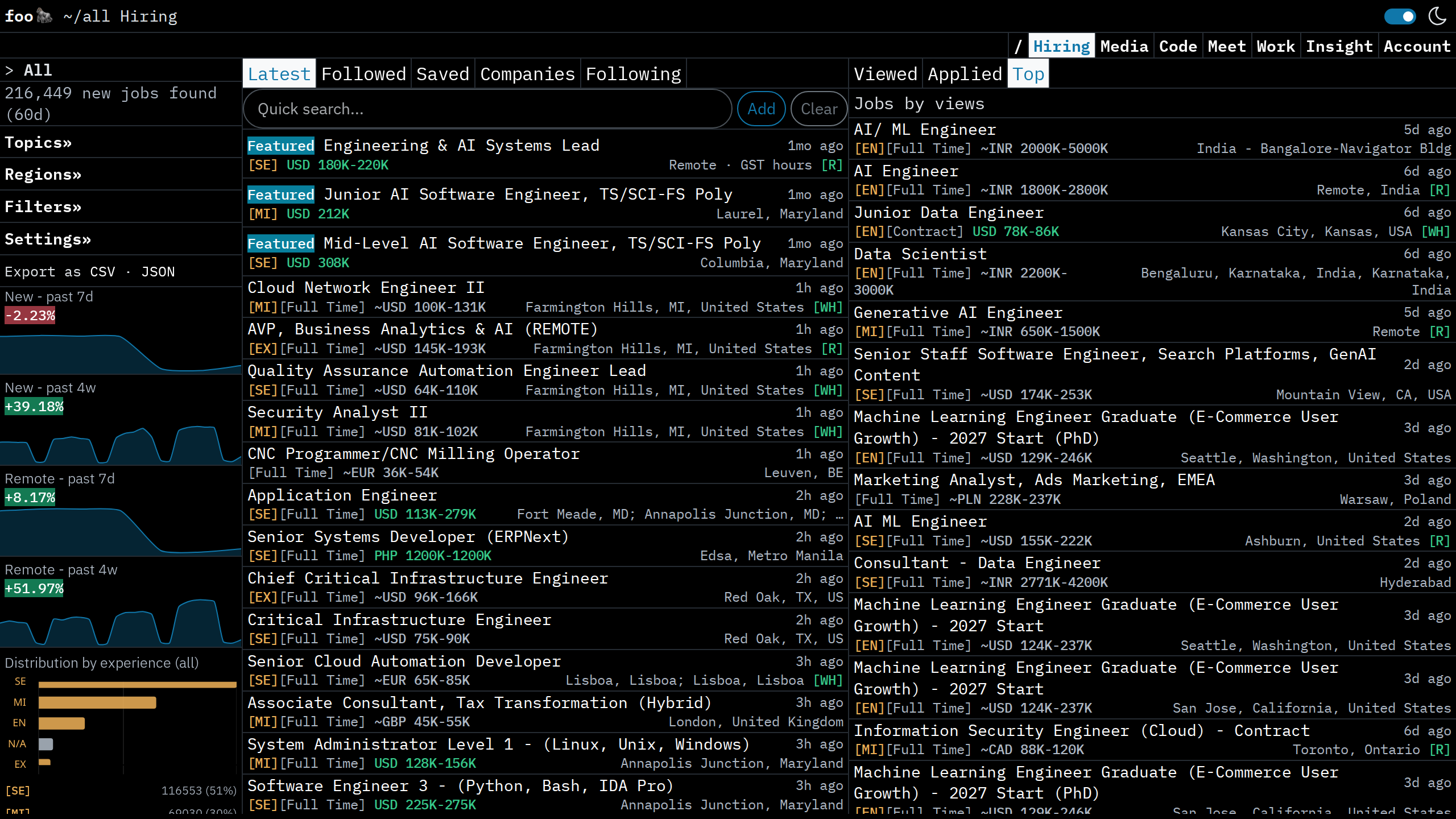
What is foorilla?
foorilla presents itself as a career platform for coders, builders, hackers and makers — that framing suggests it is aimed at people who create and ship technical work, rather than a general job board for every profession.
What that means in practice
Based on the site's own description, you can expect a platform oriented around technical careers: profiles, opportunities or resources for developers and hands-on makers. The wording is broad enough that it does not commit to a single function such as job listings, portfolios or community, so treat any specific feature as something to confirm on the site itself.
Who it suits
- Developers and engineers looking for roles or visibility in a technical market.
- Independent builders and makers who want their projects and skills presented as career evidence.
- Hackers in the constructive sense — people who experiment, prototype and learn by doing.
If you are hiring or recruiting in that space, the same positioning implies a candidate pool with practical, project-oriented backgrounds.
A useful next step
Open foorilla and check two things before investing time: whether it lists actual opportunities in your region or stack, and whether profiles emphasize projects and code rather than generic CV fields. Those two details will tell you quickly whether it fits your goal — finding work, showcasing work, or hiring.
How can I find coding jobs on foorilla?
On foorilla, job search is framed around a "career platform for coders, builders, hackers and makers," so the practical approach is to treat it as a discovery layer for technical roles rather than a single-company careers page. Start by narrowing on the kind of work you want—backend, frontend, infrastructure, security, data, or hardware-adjacent making—then scan listings with those terms and check each role's stated stack and seniority before investing time in an application.
A concrete routine: pick two or three role titles you would genuinely accept, search them, and keep a short list of postings that name technologies you can already discuss in an interview. For each, note the team context and what the employer says about the work itself; that is more useful than counting perks.
What to weigh
- Fit over volume: A smaller set of roles matching your actual stack beats mass applications.
- Evidence of the work: Prefer listings that describe projects, tools, and responsibilities concretely.
- Seniority signals: Check whether the posting implies mentoring, ownership, or scoped tasks, and apply where the level matches.
Useful next step
If foorilla's listings feel thin for your specialty, compare with broader technical job boards such as Hacker News (its monthly "Who is hiring" threads) or We Work Remotely for remote roles. Use foorilla as one source among several, and track applications in a simple list so you can follow up deliberately.
What types of tech roles are listed on foorilla?
foorilla is framed as a career platform for “coders, builders, hackers and makers,” so its job listings are oriented toward hands-on technical work rather than general business or non-technical roles. Expect the strongest coverage in software engineering and adjacent builder roles: application and web developers, backend and frontend engineers, DevOps and infrastructure work, data and machine learning roles, security and systems roles, and maker-adjacent hardware or embedded positions. Because the platform speaks to “hackers” and “makers,” it is also a reasonable place to look for smaller teams, early-stage startups and projects where one person covers several of these areas rather than a narrow specialist title.
The practical distinction is between role type and company type. A large employer on a general job board may list a “platform engineer” with a tightly scoped remit; a startup listing on a builder-focused platform may describe the same title as spanning infrastructure, backend and some product work. Read the responsibilities section, not just the title, to see which you are getting.
How to use the listings
- Filter by the work, not the label. Search for the languages, tools and systems you want to work with (for example, a specific cloud provider, database or framework) rather than relying on title keywords alone.
- Check the seniority signal. Builder-oriented platforms often carry a mix of founder-level, contract and mid-level roles; confirm scope and expectations in the description.
- Compare against broader boards. For large-company roles with structured levels, general boards such as LinkedIn or Indeed may surface more listings; foorilla is better suited to finding smaller, hands-on teams.
As a next step, pick two or three listings that interest you and map each required skill against your own experience; the gaps tell you whether to apply now or spend a few weeks closing them.
How do I create a profile on foorilla to attract employers?
foorilla is presented as a career platform for coders, builders, hackers and makers, so a profile there should read as evidence of what you build rather than a generic résumé. The available page information is limited, so the following focuses on how to present yourself well; check the site itself for its exact profile fields and setup steps.
Make the profile prove your skills
- Lead with work, not adjectives. Put your strongest project first: what it does, the stack, your specific role, and a link to a live demo or repository. "Built a CLI tool in Go that reduced deploy time by half" tells an employer more than "passionate developer."
- Show range and depth. List languages and tools you would genuinely accept work in, and mark your strongest areas. A maker-oriented audience will look for evidence of shipping, not just familiarity.
- Write a short, concrete summary. Two or three sentences on what you build, the problems you like, and the kind of role or collaboration you want. This helps employers self-select.
- Add proof of collaboration. Contributions to open source, code reviews, write-ups or talks signal how you work with others, which matters as much as raw skill.
Practical next step
Before publishing, ask a peer to skim the profile for 30 seconds and tell you what kind of developer you appear to be and what you have built. If their answer is vague, tighten the project descriptions and summary. Keep the profile current: add new projects as you finish them, since an outdated profile can undercut the impression you want to make.
Is foorilla suitable for freelance or contract developers?
Yes. foorilla describes itself as a career platform for coders, builders, hackers and makers, which fits the broad audience of freelance and contract developers. Its usefulness depends on what you need from a career platform: discovery of contract work, a public profile, or community and networking.
Where it fits freelance and contract work
- Independent developers building a reputation. If you work alone without an employer's brand behind you, a profile aimed at technical makers gives you a place to present skills and projects.
- People who move between engagements. Contract developers often need to re-establish visibility between projects, so a platform oriented around coders rather than general job seekers is a reasonable channel to check.
- Makers with side projects or open-source work. The "builders and hackers" framing suggests project work is welcome, which suits freelancers who show capability through shipped work rather than job titles.
Trade-offs to weigh
- A niche technical platform can mean more relevant peers and clients, but often a smaller pool of listings than large general job boards. Treat it as one channel alongside others, not a sole source of contracts.
- Platforms built around profiles reward active maintenance. If you won't keep your profile and project examples current, the benefit shrinks.
- For contract work specifically, confirm how engagements, rates and terms are handled before relying on any platform; those details matter more than the audience description.
A practical next step
Create a profile focused on two or three concrete project examples with the stack and outcomes, then compare the kinds of opportunities you see there with a general developer job board such as Stack Overflow or a freelance marketplace you already use. If foorilla surfaces contract leads or collaborators that the others don't, keep it in your rotation; if not, treat it as a networking and portfolio channel rather than a primary lead source.
How does foorilla differ from other job boards for programmers?
foorilla positions itself as a career platform for "coders, builders, hackers and makers" rather than a general job board, so its main difference is audience focus: it is aimed at people who identify with hands-on building and technical craft, not at the full range of office roles a mainstream board covers. The practical effect is that a developer scanning it is more likely to see listings framed around engineering and maker work than a mix of sales, marketing and operations postings.
What that means in practice
- For job-seeking developers: a narrower, more craft-oriented pool can mean less noise, but also fewer total listings than a large general board. Treat it as one channel alongside broader ones rather than a complete replacement.
- For teams hiring: the audience skews toward people who build, which suits engineering-heavy roles; it is a weaker fit for non-technical openings.
- Trade-off: focus buys relevance at the cost of volume. The right choice depends on whether you need reach or signal.
A useful next step
Before committing time to any niche board, compare it on three criteria: how many relevant roles are live now, whether listings show enough detail (stack, seniority, location or remote policy) to filter quickly, and how fresh they are. Run the same search on a general board such as Stack Overflow or GitHub's jobs listings and compare the overlap; if the niche board surfaces roles you would not otherwise see, it earns a place in your routine.
 Namecheap
 Hetzner Online GmbH
 Proton Mail
 Falkenstein, Saxony, Germany
User reviews (0)