
 简体中文
 English

Website review
This review may include AI-generated content and is not individually verified. Domain, certificate and other facts come from the observed data on this page.
What is Geodesign Barriers?
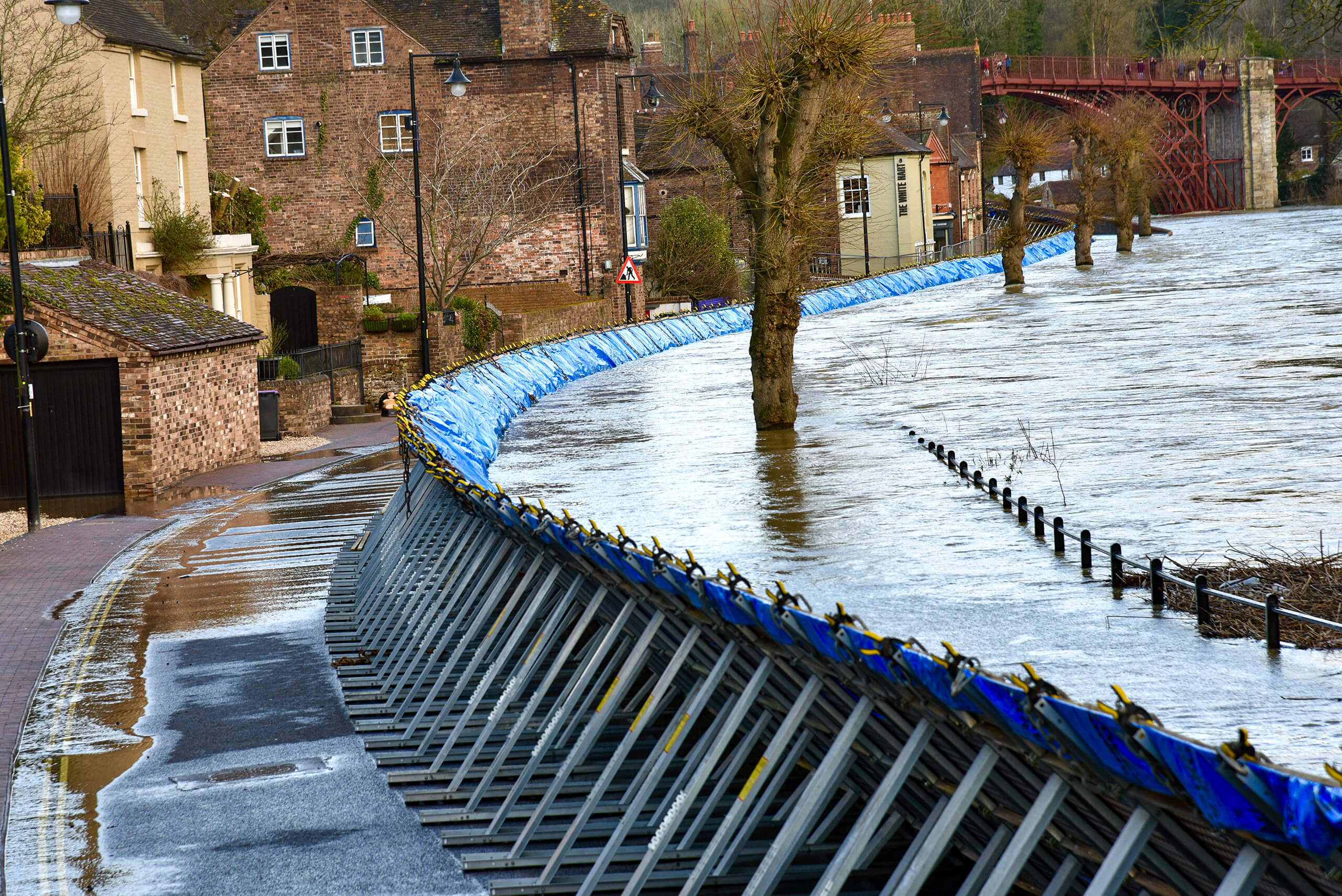
Geodesign Barriers is a maker of mobile steel flood barriers, describing itself as combining Swedish engineering with a design intended to be the strongest and most flexible mobile barrier on the market. The company says it has 30 years of global experience, FM Approvals certification and a Genève Grand Prix for Best Innovation of the Year. Its barriers are built from high-strength steel and, according to the site, need no tools for installation, so they can be deployed quickly in an emergency.
What the range covers
The site groups its products into three series that share one engineering principle but differ in dam height and technical design:
| Series | Dam height | Stated positioning |
|---|---|---|
| Elemental Flood Barrier | 41–61 cm | Cost-effective, simplified alternative to sandbag lines; few parts, stackable in a garage or warehouse; aimed at homeowners, local authorities and businesses |
| Industrial Flood Barrier | 81–121 cm | Speed and capacity for large-scale protection; all-in-one stackable 50 m crate for minimal storage |
| Third series | Not specified in the supplied page content | Described only as part of the same family |
The page also lists product applications for flood protection and cofferdams, and frames the company around making "a meaningful impact on the world."
Who it suits
The stated audiences are property owners who want a reusable barrier instead of sandbags, local authorities managing several sites, and businesses or large corporations needing rapid, storable protection. The trade-off is between height and capacity on one side and cost, weight and storage space on the other: the Elemental line is the low, simple entry point, while the Industrial line trades a bigger footprint and taller dam for volume coverage.
Next step
If you are comparing options for a specific property, start by measuring the expected flood depth at the openings you need to protect, then match it to a series height rather than choosing on price alone. Confirm deployment time, storage space and anchoring requirements for your site before committing. For independent technical context on flood barriers, FEMA publishes guidance on floodproofing measures.
Which Geodesign barrier series should I choose for a home versus an industrial site?
For a typical home or small business, the Elemental Flood Barrier (41–61 cm dam height) is the intended choice. For an industrial site or large-scale protection, the Industrial Flood Barrier (81–121 cm) is the better fit.
How they differ
| Elemental | Industrial | |
|---|---|---|
| Dam height | 41–61 cm | 81–121 cm |
| Designed for | Homeowners, local authorities, businesses | Large-scale flood protection |
| Key trade-off | Cost-effective, simplified, few parts that stack in a garage or warehouse corner; replaces sandbag lines | Faster deployment and higher capacity with minimal storage, via an all-in-one stackable 50 m crate |
| Deployment | No tools required; minimal time for low heights | No tools required; built for speed at scale |
Both series share the same engineering principle and tool-free installation; the third range varies further in height and technical design.
How to decide
- Match the barrier to your realistic flood depth, not your worst-case fear. If flooding at your property is typically shallow (around half a metre), the Elemental's height covers it and you gain easier storage and lower cost. A homeowner buying the Industrial series for a shallow driveway gains capacity they may never use and loses storage convenience.
- Think about who deploys it and how fast. A single resident sealing a garden gate has different needs from a site team protecting a yard. The Industrial series is described around speed and capacity at scale; the Elemental around simplicity and minimal parts.
- Check storage honestly. The Elemental is pitched at stacking in a garage corner; the Industrial's 50 m crate design is about compact bulk storage. If you have no suitable store, neither will deploy well in an emergency.
A practical next step: note your property's historic flood depth and the length of wall, gate or entrance you need to seal, then compare those figures against the two series' heights and configurations. Geodesign Barriers lists the full ranges for that comparison.
How quickly can Geodesign mobile flood barriers be deployed without tools during a flood emergency?
Geodesign states that none of its barriers require tools for installation and that they are designed for quick deployment in emergencies. It does not publish a specific deployment time on the page, so treat any minute figure as site-specific rather than a product guarantee.
What the page does say
- No tools needed: All three product ranges share this design principle, which matters when water is already rising and you are working in the dark or in rain.
- Elemental (41–61 cm): The page presents this as the fastest and simplest option, with few parts that stack in a garage or warehouse corner. A low dam height means less material to place per metre.
- Industrial (81–121 cm): Built around speed and storage efficiency, with an all-in-one stackable 50 m crate intended for rapid deployment at larger sites.
Practical reading
Deployment speed depends less on the barrier than on the crew. A homeowner installing 10 m of Elemental alone will be slower than a trained team with a pre-positioned crate, even though the parts are identical. For a shopfront or basement entrance, the realistic question is how many people you can call and whether the barrier is stored within reach of the doorway it protects. For a riverside industrial yard, the crate design matters more, because it reduces handling per metre of protection.
Next step
Ask Geodesign, or a reference customer, how long a trial installation takes for your exact run length, and rehearse it once before flood season. A timed dry run tells you more than any specification: it reveals the crew size, storage distance and access constraints that actually set your deployment time.
How do Geodesign flood barriers compare to sandbag lines for cost and effort?
Geodesign positions its barriers as a direct replacement for sandbag lines, and the comparison comes down to where you spend the effort: upfront purchase versus repeated labour. Sandbags are cheap per unit but demand large crews, heavy lifting and disposal after each event; Geodesign's Elemental range (41–61 cm dam height) is marketed as the cost-effective option for homeowners, local authorities and businesses that would otherwise stack sandbags. Its few parts store in a garage corner, and the page states no tools are needed for installation. Treat the sandbag comparison as the manufacturer's framing, not an independent cost study.
Practical differences
| Factor | Sandbag line | Geodesign barrier (per page) |
|---|---|---|
| Upfront cost | Low per bag | Higher purchase or investment |
| Recurring effort | Fill, haul, place, remove, dispose each flood | Deploy stored parts, no tools stated |
| Storage | Bulk bags; often single-use | Compact, stackable elements |
| Crew size | Many people, quickly fatiguing | Smaller team implied by tool-free setup |
| Reuse | Limited | Designed for repeated deployment |
For a homeowner facing occasional seepage at a doorway, the Elemental barrier's quick deployment and garage storage may offset the purchase price over several flood seasons, especially if hiring help to fill sandbags would otherwise be needed. For a riverside business or municipality defending long frontages, the Industrial range (81–121 cm) with its stackable 50 m crate is aimed at fast, large-scale deployment with minimal storage. Very low-risk properties that flood rarely may still find sandbags adequate.
A useful next step: estimate your typical flood duration and the number of people you can realistically muster within your warning time, then compare that against the deployment time and storage space each option requires. Geodesign Barriers lists its three product ranges by dam height; for general background on flood preparedness, see [[site:environment Agency|the Environment Agency]] guidance for your region.
Can Geodesign barriers be used as cofferdams for water control in construction projects?
Yes. Geodesign presents its barriers as suitable for both flood protection and cofferdam use, so they can serve as temporary water-control structures in construction settings, not only as property flood defences. The page describes three product ranges built on the same engineering principle, with different dam heights and technical designs, and states that none require tools for installation.
Where it fits in construction work
- Trench and excavation dewatering: keeping groundwater or surface water out of an open work area while crews work below grade.
- Temporary river or canal diversion: holding back water at a worksite edge during repairs to banks, bridges or outfalls.
- Site perimeter protection: shielding a site or stored materials from rising water during a flood warning.
Practical trade-offs
The main advantage is speed: tool-free assembly and stackable parts matter when water is already rising or a work window is short. The main constraints are height and ground conditions. The Elemental range tops out at 41–61 cm and the Industrial range at 81–121 cm, so deeper water needs a different approach or a combination of measures. A cofferdam also depends on how the barrier seats against the ground or existing structure; a barrier that works on a paved street may need preparation on soft or uneven site ground. For larger construction schemes, compare these mobile systems with conventional sheet-pile cofferdams, which handle greater depths and longer durations but take far longer to install and remove.
Decision criterion
Choose a mobile barrier system when the water control is short-term, the depth is modest and rapid deployment or reuse across sites matters most. Choose a conventional cofferdam when depths are large or the works will last months. Contractors can review the product applications and range details at Geodesign Barriers and confirm ground-seating and height limits for the specific site before specifying.
How much storage space do Geodesign barriers require when not in use?
Geodesign's page describes storage in qualitative terms rather than exact dimensions. The Elemental barrier is presented as having few parts that "can be easily stacked in the corner of a garage or warehouse," and the Industrial barrier is described as using an "all-in-one stackable 50m-crate design" that keeps storage volume low for large-scale protection. The page does not give footprint or volume figures for individual elements, so the honest answer is: storage is designed to be compact and stackable, but the actual space depends on which series and how many metres of barrier you buy.
What the page does tell you
| Series | Dam height | Storage-related claim |
|---|---|---|
| Elemental | 41–61 cm | Few parts, stackable in a garage or warehouse corner |
| Industrial | 81–121 cm | All-in-one stackable 50m-crate design, minimal storage volume |
The taller the dam, the larger and heavier the individual elements are likely to be, so the Industrial range will generally need more room per metre of protection than the Elemental range. That is a reasonable inference from the height difference, not a stated specification.
A practical way to decide
Think in terms of the length you need to protect. A homeowner covering a driveway or single door with the Elemental range needs only a corner of a garage. A local authority or industrial site covering 50 metres with the Industrial range needs space for a crate of that length, plus room to manoeuvre it during an emergency. Before ordering, ask the supplier for the stacked footprint and weight per crate for your specific configuration, and check that the storage location is close enough to the deployment point to be useful when water is already rising.
For broader context on flood protection options, Environment Agency publishes general guidance on property flood resilience.
 GoDaddy
 Cloudflare
 Google Workspace
User reviews (0)