Website profiles · Technology insights · Alternatives

getmarvia.com

Marvia's distributed marketing platform helps brands empower their network to drive local results while maintaining perfect brand consistency. Reclaim time, increase activation, and ensure brand compliance across all locations

Paid content Multilingual
Visit website
Profile views 3 Outbound visits 0 Normal
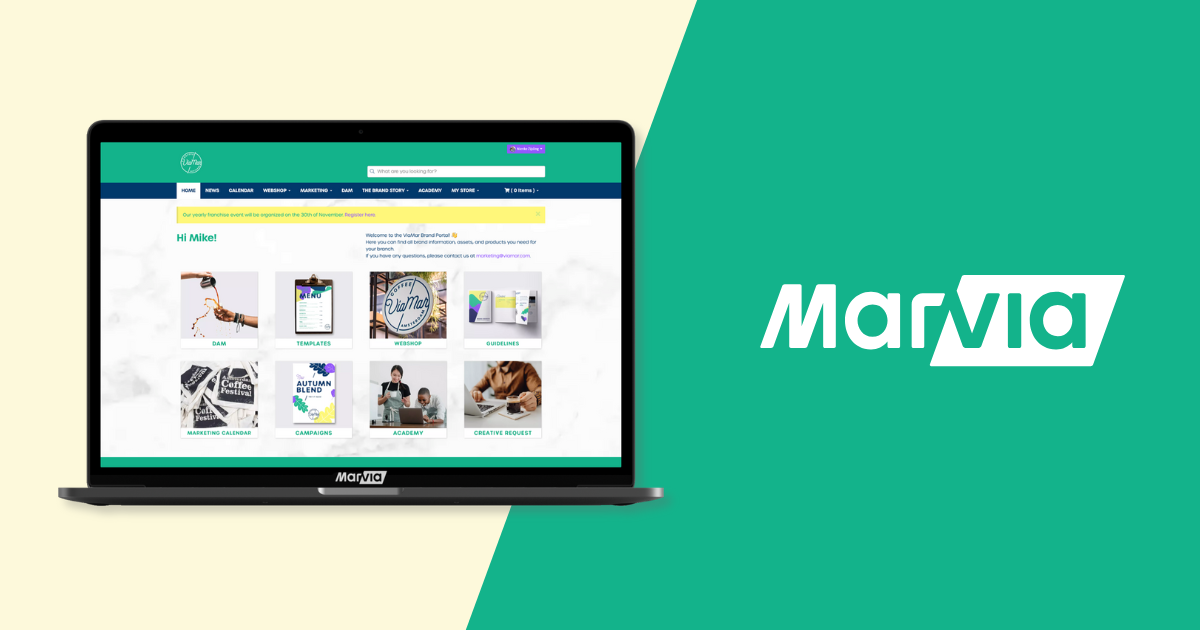
Marvia - Distributed Marketing Platform for Brand-to-Local Marketing Full homepage screenshot

At a glance

Category
Marketing
Language
English
Paid-content signal
Paid contentObserved
Registered
2006
Hosting
CloudflareInferred
HTTPS certificate trusted
PassedObserved
Last updated

Website review

This review may include AI-generated content and is not individually verified. Domain, certificate and other facts come from the observed data on this page.

What is Marvia?

Marvia is a distributed marketing platform built for "brand-to-local" marketing: it gives a central brand team one place to manage assets, templates and campaigns, while local locations, franchisees or partners adapt and publish that material themselves. The problem it targets is a familiar one — a headquarters team drowning in ad-hoc requests, and local teams either waiting on designers or improvising off-brand. Marvia sits in between, so local marketing can happen without central bottlenecks or loss of brand control.

What it actually does

The platform is organized around four steps, according to the site:

  • Centralize — a single brand hub where everyone finds current, approved assets instead of hunting through email threads or outdated folders.
  • Customize — local users personalize and localize content through templates, with no design skills or extra designer hires required.
  • Distribute — partners publish and share campaigns across their own channels.
  • Analyze — performance reporting across locations, so central teams see what is actually working locally.

Who it is for

The clearest fit is a multi-location organization with a strong central brand and many semi-autonomous local operators: restaurant and retail franchises, dealerships, gyms, insurance and real estate networks, and any brand with international partners. The site cites a 300+ unit QSR franchise and names Steve Madden and fit20 among its customers.

What users say

Stefan, a Local Store Marketing Manager quoted on the site, describes the value as letting franchisees run local campaigns while HQ controls design quality "without costing too much time." Uri, an IT Innovation Manager at Steve Madden, makes a subtler point: rather than selling features, Marvia works with the customer on the process itself. That distinction matters, because the harder half of distributed marketing is usually workflow and governance, not software.

Practical trade-offs

Template-driven localization trades creative freedom for speed and consistency — a good deal if your risk is off-brand local posts, a poor one if local teams need genuinely bespoke campaigns. It also only pays off at scale: the setup and template work is front-loaded, so a handful of locations will not see the same return as a network of hundreds.

Next step

List your three most frequent local requests — a seasonal social post, a price-change flyer, a store-opening announcement. If most of them are variations on the same design, a templated platform is worth evaluating; check Marvia pricing against what those requests currently cost you in designer and approval time.

How does Marvia help brands maintain brand consistency across local locations?

Marvia approaches brand consistency by controlling what locals can change rather than by locking assets down. Its page describes a four-step flow — Centralize, Customize, Distribute, Analyze — in which the central team defines the approved building blocks and local teams produce their own materials inside those limits.

The consistency mechanism

  • A single brand hub. Assets, guidelines and campaign material live in one place, so locations work from current approved files instead of whatever is circulating by email.
  • Templates with locked and editable zones. Local partners personalize and localize content without design expertise, while the elements that carry brand identity stay fixed.
  • Controlled distribution. Locations publish through the platform to their own channels, so what goes out has already passed through the approved template.
  • Performance analysis. Central teams can see which materials are used and how they perform, which turns brand compliance into something measurable rather than assumed.

The trade-off is real: the tighter the locks, the less genuinely local a post can feel. Brands with strong regional variation need to decide deliberately which elements are non-negotiable and which should flex.

What the reported results suggest

Marvia's page cites a 300+ unit QSR franchise reporting an 83% reduction in localization requests and a 57% increase in local materials created year over year. Those two numbers together are the interesting part — fewer requests reaching the central team while local output rose. Stefan, a Local Store Marketing Manager quoted on the page, frames it as franchisees running their own activities while HQ controls design quality without spending much time on it. Treat these as vendor-reported figures from named customers, not independently verified benchmarks.

A practical next step

List the five to ten brand elements that must never change — logo treatment, colour values, typography, legal disclaimers, claims language — and the ones locals should own, such as offers, imagery and event details. That split is what you would configure as locked versus editable template zones, and it is also the fastest way to test whether a platform like Marvia fits your network. If your locations need heavy creative freedom, a lighter asset library may serve you better; if inconsistency and approval bottlenecks are the actual pain, template-based control addresses both at once.

For context on the wider category, Bynder and Frontify cover adjacent brand-management ground, while Brandfolder focuses on asset organisation.

What types of businesses or franchises use Marvia?

Marvia is aimed at brands with a network of local outlets, franchisees, dealers or partners that need to market locally while staying on-brand. The page evidence points to multi-location and franchise operations rather than single-site businesses: it cites a "300+ unit QSR franchise" as a customer example and describes results such as fewer localization requests, weekly savings from automated content creation and more local materials produced year over year. A local store marketing manager at that franchise notes that Marvia lets franchisees run local activities while headquarters controls design quality without spending too much time.

Who tends to fit

  • Franchise networks, especially food service, where many units need campaign materials deployed quickly and consistently.
  • Retail and consumer brands with dealers, distributors or country partners, where local teams adapt global assets.
  • Multi-location service and hospitality businesses with regional marketing autonomy.
  • Brands with a small central marketing team supporting many local marketers who lack design skills.

The fit is strongest when the bottleneck is central approval and asset distribution, not when a single team handles all marketing. Steve Madden's IT innovation manager is quoted saying Marvia works with customers on the process rather than just selling features, which suggests implementation involves agreeing on workflows across headquarters and local users. A useful next step is to map how many locations create their own materials and how many approval steps a typical campaign passes through; if those numbers are high, a distributed marketing platform is worth evaluating. For general context on the category, see Marvia.

How does Marvia reduce localization requests for central marketing teams?

Marvia reduces localization requests by shifting routine customization out of the central team and into the hands of local marketers. Instead of each location emailing a request for a translated flyer, resized banner or localized social post, the platform provides a shared brand hub where approved assets and templates live. Local users pick a template, adapt the permitted elements—language, imagery, offer details, channel format—and publish or distribute it themselves. The central team sets the guardrails once, then reviews exceptions rather than producing every variation.

The page evidence describes this as a four-step flow: Centralize → Customize → Distribute → Analyze. Centralization puts assets in one place so people stop hunting through inboxes and outdated files. Customization lets non-designers personalize content without designer involvement. Distribution pushes campaigns across locations and channels. Analysis then shows which local materials perform, so the central team can refine templates instead of fielding one-off requests.

What this looks like in practice

A franchise marketing manager preparing a seasonal promotion would normally receive dozens of requests: different languages, different store photos, different opening hours, different social formats. With this model, they publish one master campaign with locked brand elements and editable local fields. Each franchisee produces their own version in minutes. The central team's queue shrinks because the repetitive work never reaches them.

The page cites a 300+ unit QSR franchise reporting an 83% reduction in localization requests and a 57% increase in local materials created year-over-year. Treat those as vendor-reported customer outcomes rather than guaranteed results; the direction is plausible because the mechanism removes the central bottleneck, but the size of the effect depends on how many locations you have, how much creative freedom they need, and how strictly brand rules must be enforced.

Trade-offs to weigh

  • Governance design matters. If too many elements are editable, brand consistency slips; if too few, locations go back to requesting changes. The value comes from getting that balance right, which takes an initial setup effort.
  • Adoption is the real constraint. Local teams must actually use the hub. If they default to emailing the center, request volume won't fall.
  • Best fit. Multi-location brands, franchises and dealer or partner networks with recurring, format-heavy creative needs (social, print, local ads). A single-location brand with one marketing team has little to gain.

Next step

Map your last month of localization requests by type—translation, resizing, photo swaps, copy edits. If most fall into repeatable categories, those are the templates to build first. Compare that list against what Marvia's template and brand-hub capabilities cover on Marvia, and check the pricing page for whether the model fits your network size.

What is the pricing for Marvia's distributed marketing platform?

Marvia does not publish specific pricing tiers or rates on its public site. The platform lists a pricing page at Marvia, but the details available here describe capabilities and outcomes rather than dollar figures, seats, or plan names. In practice, distributed marketing platforms like this are usually quoted based on the size of your network, the number of locations or users, and which modules you adopt—so expect a custom quote rather than a self-serve checkout.

What to do next

If you are evaluating Marvia for a franchise, retail chain, or multi-location brand, request a tailored quote and ask these questions:

  • How is pricing structured—per location, per user, or per module (brand hub, templates, calendar, distribution, analytics)?
  • Are there implementation or onboarding fees, and what does the rollout timeline look like?
  • What is included in support and training for local teams?
  • How do costs scale if you add locations or markets mid-contract?

How to judge the value

Rather than comparing headline prices, compare the cost against the workload it replaces. Marvia's page cites a 300+ unit QSR franchise reporting an 83% reduction in localization requests, $3,000 saved weekly by automating content creation, and a 57% year-over-year increase in local materials created—figures attributed to that customer, not guarantees. If your central team currently spends significant time on approvals and asset requests, those efficiency gains are the real pricing benchmark. Ask for a pilot or phased rollout so you can measure activation and time saved before committing network-wide.

How does Marvia integrate with existing marketing tools and workflows?

Marvia integrates mainly by acting as the hub between central brand assets and the tools local teams already use, rather than by replacing every existing system. From the supplied page evidence, its workflow is built around four steps: Centralize, Customize, Distribute, and Analyze. That structure is the integration story: brand assets and guidelines live in one brand hub, local teams personalize approved templates, distribute the results through their own channels, and performance flows back for analysis.

What the page evidence supports

  • Centralized assets: Marvia gives network users access to approved materials in one brand hub, which reduces email threads, lost files, and outdated assets.
  • Template-based localization: Local partners can personalize and localize content without design expertise, which matters if your current workflow depends on designers for every market variation.
  • Distribution: Partners can distribute content and campaigns across their own channels, including social posts mentioned in the fit20 example.
  • Analytics: The platform includes performance analysis, so local activity can be reviewed rather than guessed at.

Practical integration scenarios

If you run a franchise or multi-location brand, the most realistic setup is to keep your existing design, social, and local marketing tools while using Marvia as the controlled layer above them. A central team uploads approved assets and templates; local managers adapt them; the finished posts or campaigns go out through the channels those locations already use. That avoids forcing every location onto a new publishing tool while still keeping brand consistency.

For example, a 300+ unit QSR franchise cited on the page used Marvia to streamline campaign deployment across its network, with results including an 83% reduction in localization requests and a 57% increase in local materials created year over year. That suggests the integration benefit is less about technical connectors and more about removing repeated manual handoffs between headquarters, designers, and local teams.

Decision criteria

Ask these questions before assuming Marvia fits your stack:

  1. Do your local teams already publish through social or ad platforms you want to keep? If so, Marvia is most useful as the asset and approval layer, not a full replacement.
  2. Is your bottleneck designer dependency and approval delays? The template and brand-hub features target that directly.
  3. Do you need deep, real-time data sync with a CRM or analytics warehouse? The page evidence describes performance analysis, but not specific connector details, so verify those requirements directly.
  4. How many locations and languages are involved? The value of centralized templates grows with network size and localization volume.

A useful next step is to map your current brand-to-local workflow from asset request to published post, then compare each step against Marvia's Centralize, Customize, Distribute, Analyze model. If most of your friction sits in asset access, local customization, and approval, that is where the platform is designed to plug in.

Related questions

More questions →
What to Consider When Choosing Marvia for Multi-Location Marketing

Marvia is a distributed marketing platform built for brand-to-local execution: it gives a central team one brand hub while letting franchises, dealers, or local branches customize and distribute on-brand materials themselves. It fits organizations where a central team is the bottleneck and local units need marketing autonomy without breaking brand rules — typically franchises and multi-location brands. If your problem is purely a central content calendar, or you have no local network to activate, it is likely more platform than you need.

Who Marvia is designed for

The platform's own positioning is "brand-to-local marketing," and its evidence points to network-based organizations:

  • Franchises — a 300+ unit QSR franchise is cited as a reference case.
  • Multi-location brands — brands that need consistent execution across many locations.
  • Networks with local partners — the fit20 example describes partners worldwide creating locally relevant social posts from templates.

The common thread: a central team owns the brand, and a distributed group executes locally. If that structure doesn't exist, the core value proposition doesn't apply.

Evaluation criteria that actually differentiate options

Use the same four dimensions Marvia organizes its product around — they double as your comparison checklist against any alternative.

Dimension What to check Marvia's stated position
Brand consistency Can local users customize without breaking guidelines? Claims 100% brand consistency with local customization enabled
Local activation How easily can locations create and publish their own materials? Claims 70% increase in local marketing activation
Central team workload How much manual work is removed from HQ? Claims 15+ hours reclaimed weekly; case cites 83% fewer localization requests
Analytics Can you see what's being used and how it performs? "From guesswork to insights: analyze performance"

The workflow is Centralize → Customize → Distribute → Analyze. When comparing tools, ask whether each step is genuinely self-serve for local users or still routes back through HQ.

Questions to ask before committing

Integration. How does the platform connect to the channels and systems your locations already use? The site describes distribution across channels but does not list specific integrations — ask for the current list rather than assuming.

Template flexibility. How much can a local user change before it violates brand rules? This is the trade-off at the heart of the product: too rigid and locals won't use it, too loose and consistency breaks. Ask to see the actual guardrails.

User roles. How are permissions split between HQ, regional managers, and individual locations? The value depends on locals being able to act without approval bottlenecks, so map roles to your real org chart.

Proof in your context. The published results come from a large QSR franchise and other named brands. Ask for a reference in your sector and size before treating those numbers as transferable.

On pricing and budget comparison

Marvia publishes a pricing page at getmarvia.com/pricing, so budget comparison is possible — but the available material does not state figures, tiers, or whether a trial or login is required. Treat pricing as something to confirm directly rather than estimate.

A practical way to decide

  1. Quantify your current pain: hours your central team spends on localization requests, and how many local materials get created per year. The case metrics (83% fewer requests, 57% more local materials year-over-year) give you a benchmark to test against your own baseline.
  2. List the roles that would use it — HQ, region, individual location — and check whether the permission model matches.
  3. Ask for a reference customer with a similar network size and structure.
  4. Compare on the four dimensions above, not on feature counts. The differentiator here is process fit, which one customer quote makes explicit: "Unlike companies that are selling features, Marvia works with the customer on the process and the best ways to support and facilitate it."

If your central team is the bottleneck and your locations need to self-serve on-brand marketing, Marvia is built for exactly that. If your constraint is elsewhere, the four criteria above will show it quickly.

How Marvia Helps Brands Maintain Brand Consistency While Enabling Local Customization

Marvia is a distributed marketing platform built for brand-to-local marketing. It keeps brand consistency by centralizing approved assets and templates in one brand hub, then letting local teams customize and distribute those materials within pre-set brand rules. This fits brands with a network of locations, franchisees, or partners that need local relevance without a central design bottleneck. If your organization has no distributed local marketing layer, the platform's core value does not apply.

The core mechanism: centralize, customize, distribute, analyze

Marvia organizes brand-to-local marketing into four connected stages. Each stage addresses a specific failure point that appears when local teams work outside a shared system.

Centralize: one brand hub instead of scattered files

The platform gives everyone access to what they need in a single brand hub. According to Marvia, this replaces "endless emails, lost files, or outdated assets." The practical effect is that local teams pull from the same approved source rather than requesting files or reusing old versions.

This matters because brand inconsistency usually starts with asset sprawl, not with local teams deliberately ignoring guidelines. When the only available file is the current approved one, consistency becomes the default.

Customize: templates that remove the design skill requirement

Local partners can personalize and localize content without design expertise or additional designer hires. Marvia describes this through templates: partners select a template, adapt it to their market, and produce a finished asset.

fit20's COO Nienke Thomas describes the outcome: "With templates, our partners worldwide can create locally relevant social posts and share them directly on their channels." The template constrains the elements that must stay on-brand (logo, colors, typography, layout) while opening the elements that should vary by location (offer, language, imagery, channel format).

Distribute: from manual sending to automated publishing

Once localized, content and campaigns are distributed across channels. Marvia frames this as moving "from manual to automated," so partners publish without routing every asset back through the central team.

Analyze: performance visibility across the network

The platform includes performance analysis, described as moving "from guesswork to insights." This closes the loop: central teams see which localized materials perform, and can adjust templates or guidance accordingly.

How consistency and local relevance are balanced

The balance is not a policy statement — it is enforced by the template structure. Central teams define what is locked and what is editable. Local teams operate inside those boundaries.

Element Controlled by central team Controlled by local team
Logo, colors, typography Locked in template Not editable
Layout and format Locked in template Not editable
Offer, message, language Guidance provided Adapted locally
Imagery Approved library Selected locally
Channel and timing Campaign framework Scheduled locally

This is why the platform claims "100% brand consistency" alongside local customization: consistency is a property of the template system, not of manual review.

Reported results from a franchise case

Marvia cites a 300+ unit QSR franchise that needed to streamline campaign deployment across its network. Reported outcomes:

  • 83% reduction in localization requests
  • $3,000 saved weekly by automating content creation tasks
  • 57% increase in local materials created year-over-year

The franchise's Local Store Marketing Manager, Stefan, describes the value: "Marvia enables us to provide our franchisees the possibility to develop local marketing activities and campaigns, while the HQ is able to control the quality of the designs that are being used locally without costing too much time."

Marvia also states platform-level outcomes of reclaiming 15+ hours weekly for central teams and increasing local marketing activation by 70%. These are vendor-reported figures; treat them as directional rather than guaranteed.

What to check before deciding

  • Network size and structure. The platform targets brands with many locations, franchisees, or partners. A single-location brand gains little.
  • Who currently produces local assets. If local teams already have design resources and a working approval process, the customization layer may be redundant.
  • How locked your brand guidelines are. The template model works best when guidelines can be expressed as fixed and variable elements. Brands with fluid or frequently contested guidelines will need internal alignment first.
  • Whether you need distribution and analytics, not just asset management. Marvia positions itself across all four stages. If you only need a digital asset management library, a narrower tool may fit.
  • Pricing and plan limits. Marvia lists a pricing page at getmarvia.com/pricing. The available material does not state specific prices, seat limits, or whether a trial is offered, so confirm these directly before committing.

A useful test: pick one recurring local campaign, map how many steps and approvals it takes today, then check whether Marvia's centralize-customize-distribute-analyze flow removes those specific steps. If it does not, the platform is unlikely to change your consistency problem.

What Is Brand-to-Local Marketing and Why Is It Hard to Manage Across Locations?

Brand-to-local marketing is the practice of letting a central brand team and its local partners (franchisees, dealers, resellers, branch offices) produce and run marketing together: headquarters controls the brand, while each location adapts campaigns to its own market. It gets hard because those two goals pull in opposite directions — central teams want consistency and control, local teams want speed and relevance — and most organizations try to manage the tension with email, shared drives, and manual approvals. A distributed marketing platform exists to remove that friction by giving both sides one system for assets, templates, distribution, and performance.

The core tension: central control vs. local relevance

Every brand-to-local program has to answer the same question: how much freedom does a local partner get?

  • Too much central control and locations can't respond to their market. They wait on HQ for every post, flyer, or offer, and campaigns arrive too late to matter.
  • Too much local freedom and the brand fragments. Logos get stretched, colors drift, claims go off-message, and legal or compliance review becomes a bottleneck rather than a safeguard.

The goal is not to pick a side. It's to define what is fixed (brand guidelines, approved claims, core creative) and what is flexible (local offers, imagery, timing, channels) — then make that boundary easy to operate within.

Why it breaks down in practice

Marvia's site frames the problem directly: "Overwhelmed central teams, inconsistent local execution, and missed market opportunities are costing you growth." Those three symptoms usually trace back to the same operational gaps.

The central team becomes a bottleneck

When every local request runs through a small central team, that team spends its time on repetitive production and approvals instead of strategy. Marvia claims brands can "reclaim 15+ hours weekly" by eliminating repetitive tasks and approval bottlenecks — a useful benchmark for judging whether your own process is overloaded.

Local execution drifts off-brand

Without a controlled source of truth, locations pull outdated logos, reuse last year's creative, or rebuild assets from scratch. The result is inconsistency that's hard to detect until it's already public.

Assets are scattered

"Endless emails, lost files, or outdated assets" is how Marvia describes the default state. If your brand hub is a folder structure plus a group inbox, you don't have a single source of truth — you have several competing ones.

Local markets get missed

Locations closest to the customer often see opportunities first, but if they can't act without a design hire or a central approval, those opportunities pass. Marvia cites one 300+ unit QSR franchise that cut localization requests by 83% and increased local materials created by 57% year-over-year after changing its process — the pattern to look for is fewer requests flowing to HQ while more local output actually ships.

How a distributed marketing platform bridges the gap

Marvia describes its platform through four stages: Centralize, Customize, Distribute, Analyze. That sequence is a reasonable mental model for evaluating any tool in this category.

Stage What it solves What to check in a tool
Centralize Scattered files, outdated assets One brand hub with instant access to current, approved materials
Customize Local relevance without designers Templates locals can personalize without design expertise
Distribute Manual, one-by-one publishing Automated distribution across locations and channels
Analyze Guesswork about what works Performance visibility down to the local level

The customization layer is where most of the value sits. As fit20's COO put it, "With templates, our partners worldwide can create locally relevant social posts and share them directly on their channels." The template is the mechanism that lets a non-designer produce something on-brand — which is what makes scale possible without hiring.

It's also worth noting how vendors differ in approach. Uri, IT Innovation Manager at Steve Madden, drew the distinction this way: "Unlike companies that are selling features, Marvia works with the customer on the process and the best ways to support and facilitate it." If your bottleneck is process rather than software, that distinction matters when you're evaluating options.

When this problem is worth solving with a platform

Brand-to-local marketing is manageable with manual processes when you have a handful of locations, a small volume of recurring assets, and a central team with spare capacity. It stops being manageable when any of these are true:

  • You have enough locations that individual requests overwhelm the central team.
  • Local teams need to publish frequently and can't wait on approvals.
  • Brand consistency is a real risk — regulated claims, franchise agreements, or high-visibility campaigns.
  • You're hiring designers just to service localization requests.

If most of those apply, the question shifts from whether to centralize to which platform fits. Marvia publishes pricing information at getmarvia.com/pricing, so cost and plan details are best confirmed there rather than assumed.

What to verify before choosing

  • Does the template system actually prevent off-brand output, or does it just host files? Ask for a live demo of a local user customizing an asset.
  • How does distribution work — does it publish to the channels your locations actually use?
  • What does the analytics layer show, and can it report at the local level rather than only in aggregate?
  • How much implementation support is included? Process-heavy rollouts succeed or fail on adoption, not features.
  • What's the real cost at your scale? Check the pricing page and confirm seat, location, or usage limits directly.
What Is Marvia and What Does Its Distributed Marketing Platform Do?

Marvia is a distributed marketing platform built for brand-to-local marketing. It gives a central brand team one place to manage assets, templates, and campaigns, while locations or partners customize and publish on-brand materials themselves. It fits organizations with multi-location or partner networks — franchises, retail chains, dealer networks — where local execution matters but central oversight can't scale manually.

The problem it addresses

Marvia's own framing of the problem is blunt: "Overwhelmed central teams, inconsistent local execution, and missed market opportunities are costing you growth."

In practice, that shows up as:

  • Central teams fielding endless localization requests and approval back-and-forth
  • Locations working from outdated files or creating off-brand materials
  • Campaigns that launch late or inconsistently across markets

The platform's stated goal is to let brands "empower their network to drive local results while maintaining perfect brand consistency" — scaling marketing output without scaling the central team.

The four-step workflow

Marvia organizes its product around four stages, presented on its homepage as Centralize → Customize → Distribute → Analyze.

Centralize

A single brand hub holds assets, so "everyone [has] instant access to exactly what they need." This replaces scattered emails, lost files, and outdated assets. The related capability here is digital asset management (DAM), plus a marketing calendar.

Customize

Partners and locations personalize and localize content through templates — without design expertise or hiring designers. As fit20's COO Nienke Thomas puts it: "With templates, our partners worldwide can create locally relevant social posts and share them directly on their channels."

Distribute

Content and campaigns move from manual handling to automated distribution across locations and channels.

Analyze

Performance reporting turns local activity into insights, described on the site as moving "from guesswork to insights."

Who it's for

Marvia targets brands with a network to activate — multi-location operations and partner or franchise structures. The clearest example in its own materials is a 300+ unit QSR franchise, which reported:

Result Figure
Reduction in localization requests 83%
Weekly savings from automated content creation $3,000
Increase in local materials created year-over-year 57%

Marvia also states broader outcome claims across its customer base: reclaiming 15+ hours weekly for central teams, a 70% increase in local marketing activation, and 100% brand consistency. These are vendor-reported figures, so treat them as directional rather than independently verified.

Named customers include Steve Madden and fit20, and the site notes it is "trusted by brands like yours" across similar network-based organizations.

What to check before deciding

  • Network size and structure. The value proposition assumes many locations or partners creating local materials. A single-location brand has little to distribute.
  • How much local autonomy you want. Marvia's model is controlled customization — local flexibility inside brand guardrails. If you need fully bespoke local creative, templates may feel constraining.
  • Your current bottlenecks. If the pain is localization requests and approval queues, the centralize-and-template model maps directly. If the pain is elsewhere, the fit is less obvious.
  • Pricing and plan details. The site links to a pricing page, but the available material doesn't state figures or terms — check that page directly for current numbers.

For brands whose central team is the bottleneck and whose locations need to move faster, Marvia is designed for exactly that gap. For everyone else, the four-step model is still a useful way to think about where brand-to-local marketing breaks down.

What Results Can Brands Expect from Marvia's Distributed Marketing Platform?

Marvia reports three headline outcomes for brands that adopt its distributed marketing platform: central teams reclaim 15+ hours weekly, local marketing activation rises by 70%, and brand consistency is maintained at 100% while still allowing local customization. A 300+ unit QSR franchise case study adds harder numbers — an 83% reduction in localization requests, $3,000 saved weekly through automated content creation, and a 57% year-over-year increase in local materials produced. These figures come from Marvia's own site, so treat them as vendor-reported benchmarks rather than independently audited results; the realistic range for your brand depends on how much local marketing is currently done manually.

The Three Core Outcomes Marvia Claims

Marvia frames its value around a specific problem: overwhelmed central teams, inconsistent local execution, and missed market opportunities. Its reported results map directly onto those three pain points.

Reported outcome What it addresses How it's framed
Reclaim 15+ hours weekly Central team time lost to repetitive tasks and approval bottlenecks Time recovered by eliminating manual back-and-forth
70% increase in local marketing activation Locations not producing or distributing their own materials Local teams create and distribute market-specific content without adding central workload
100% brand consistency Off-brand or outdated assets used locally Local customization stays within brand guidelines

The logic connecting these: if central teams stop being the bottleneck for every local asset, locations activate more, and because they work from locked templates, consistency holds. The 15+ hours and 70% figures are stated as general platform results, not tied to a single named customer.

The QSR Franchise Case Study in Detail

The most concrete evidence on the site is a 300+ unit quick-service restaurant franchise. Its stated challenge was deploying campaigns across a large network. The reported results:

  • 83% reduction in localization requests — fewer one-off requests flowing back to the central team
  • $3,000 saved weekly by automating content creation tasks
  • 57% increase in local materials created year-over-year

A quote from Stefan, Local Store Marketing Manager at the franchise, describes the mechanism: franchisees gain the ability to develop local marketing activities and campaigns while HQ controls design quality "without costing too much time."

This is the pattern to look for when evaluating whether the results apply to you — the savings come from removing repeated manual localization work, so brands with high volumes of location-specific requests stand to gain the most.

How the Platform Produces These Results

Marvia describes a four-stage flow: Centralize → Customize → Distribute → Analyze. Each stage maps to a reported outcome.

Centralize

Everything lives in one brand hub, giving users instant access to what they need. This targets lost files, endless email threads, and outdated assets — the source of much of the reclaimed central-team time.

Customize

Partners personalize and localize content without design expertise or extra designer hires. This is what enables the 70% activation figure: locations can act without waiting on central design resources. Nienke Thomas, COO at fit20, notes that templates let partners worldwide create locally relevant social posts and share them directly.

Distribute

Content and campaigns move from manual to automated distribution across partner channels.

Analyze

The platform moves performance tracking "from guesswork to insights." This is the piece that supports continuous improvement — results aren't a one-time lift but something you monitor and refine, which matters if you want the activation and consistency numbers to hold over time.

What to Check Before Assuming These Results Apply to You

The reported numbers are strongest for franchise and multi-location networks with a large gap between central capacity and local demand. Before treating them as a forecast:

  • Count your current localization requests. The 83% reduction is meaningful only if you have a comparable backlog.
  • Estimate hours your central team spends on repetitive asset work. The 15+ hours figure is a claim about recovered time, not a guarantee.
  • Check whether local teams currently have any self-serve capability. The 70% activation lift assumes locations want to act but can't.
  • Confirm pricing and plan details directly. Marvia lists a pricing page, but the source material doesn't state figures, tiers, or whether a trial or login is required — verify at getmarvia.com/pricing rather than assuming.

A useful reference point from the site: Uri, IT Innovation Manager at Steve Madden, notes that Marvia "works with the customer on the process" rather than just selling features — worth weighing if implementation support matters to your rollout.

Website Overview

An established domain and managed infrastructure suggest continuity of operations and may support dependable delivery, although neither guarantees service quality. Several search or sharing settings need attention. Together they may make snippets, preview images or preferred URLs less consistent across platforms.

Domain and Registration

Registered in 2006, this domain has about 19 years of history. That suggests continuity, although ownership and purpose may have changed. Transfer-protection status is present, helping reduce the risk of unauthorized domain transfers. The domain uses the common .com extension, which is not an independent safety signal.

DNS and Email

The lowest TTL is 60 seconds, supporting rapid record changes at the cost of more frequent lookups. Nameservers are provided by Amazon Route 53, indicating managed DNS hosting. MX records point to the Google Workspace email service. DNSSEC is enabled, allowing validating resolvers to authenticate signed DNS data. CAA records restrict which certificate authorities are authorized to issue certificates.

TLS and Certificates

The public key uses EC with 256 bits. The server supplied a complete certificate chain. No organization name is present in the certificate; the available fields are consistent with domain validation. The certificate was issued within the Google Trust Services cloud or CDN ecosystem. The certificate's total validity is about 90 days, consistent with a short renewal cycle.

HTTP and Browser Security

The response lacks these common security headers: X-Content-Type-Options, Permissions-Policy, clickjacking protection. No X-Powered-By header was found, reducing one common source of backend fingerprinting information. The cf-ray response header indicates a CDN or caching proxy in the delivery path. No obvious internal addresses or debug information were found in the headers. The Server header identifies cloudflare without an exact version.

Technology Stack Analysis

The public page identifies HubSpot, Google Tag Manager, Cloudflare without precise versions, leaving fewer clues for version-specific scanning.

Search and Social Sharing

The title has 68 characters and may be truncated in search results. The meta description has 226 characters and may be shortened in search results. The Generator tag identifies HubSpot, making the publishing system easier to fingerprint. Open Graph is partially configured; og:type is missing. Twitter Card metadata is configured.

Hosting and Email

DNSAmazon Route 53
HostingCloudflare
EmailGoogle Workspace
Approximate IP geolocation (inferred; a CDN or proxy may differ from the origin server) United States flagUnited States Inferred 199.60.103.227

Registration details

RDAP / WHOIS

RegistrarAmazon Registrar, Inc.
Registered2006-11-24
Expires2026-11-24
Domain statusclient transfer prohibited
Nameserversns-1239.awsdns-26.org、ns-1542.awsdns-00.co.uk、ns-307.awsdns-38.com、ns-908.awsdns-49.net
DNSSECsigned

DNS records

DNS

TypeNameValueTTLPriority
Agroup38.sites.hscoscdn30.net199.60.103.227300—
Agroup38.sites.hscoscdn30.net199.60.103.29300—
AAAAgroup38.sites.hscoscdn30.net2606:2c40::c73c:671d300—
AAAAgroup38.sites.hscoscdn30.net2606:2c40::c73c:67e3300—
MXgetmarvia.comaspmx.l.google.com8640010
MXgetmarvia.comalt1.aspmx.l.google.com8640020
MXgetmarvia.comalt2.aspmx.l.google.com8640020
MXgetmarvia.comaspmx2.googlemail.com8640030
MXgetmarvia.comaspmx3.googlemail.com8640030
MXgetmarvia.comaspmx4.googlemail.com8640030
MXgetmarvia.comaspmx5.googlemail.com8640030
NSgetmarvia.comns-1239.awsdns-26.org172800—
NSgetmarvia.comns-1542.awsdns-00.co.uk172800—
NSgetmarvia.comns-307.awsdns-38.com172800—
NSgetmarvia.comns-908.awsdns-49.net172800—
TXTgetmarvia.comapple-domain-verification=0L69rVf3NNdA8En9300—
TXTgetmarvia.comfacebook-domain-verification=tskm5xaey81mfhn5ixpde7kw18g1tk300—
TXTgetmarvia.comgoogle-site-verification=SqrYfyUGXmhayp2H1WSHh3xwUm3L_D29LT8B6y0HRt8300—
TXTgetmarvia.comv=spf1 ip4:54.217.94.16 include:_spf.webslice.eu include:amazonses.com include:_spf.google.com include:6233388.spf06.hubspotemail.net ~all300—
CNAMEwww.getmarvia.com6233388.group38.sites.hubspot.net60—
CAAgetmarvia.com0 issue "amazon.com"60—
CAAgetmarvia.com0 issue "digicert.com; cansignhttpexchanges=yes"60—
CAAgetmarvia.com0 issue "letsencrypt.org"60—
CAAgetmarvia.com0 issue "pki.goog; cansignhttpexchanges=yes"60—
CAAgetmarvia.com0 issue "sectigo.com"60—
CAAgetmarvia.com0 issuewild "amazon.com"60—
CAAgetmarvia.com0 issuewild "digicert.com; cansignhttpexchanges=yes"60—
CAAgetmarvia.com0 issuewild "letsencrypt.org"60—
CAAgetmarvia.com0 issuewild "pki.goog; cansignhttpexchanges=yes"60—
CAAgetmarvia.com0 issuewild "sectigo.com"60—
DSgetmarvia.com61797 13 2 daa2bac7c1332fd7fd3e596bb5a869625aa05ce2ac13d3ddf607a17fa3b2cd4786400—
DMARC_dmarc.getmarvia.comv=DMARC1; p=reject; sp=quarantine; rua=mailto:[email protected]; aspf=r; pct=100300—

TLS and certificates

TLS / SSL

AssessmentNormal configuration
Supported protocolsTLSv1.2、TLSv1.3
Negotiated protocolTLSv1.3
Certificate subject87496b8c.sni.cloudflaressl.com
IssuerGoogle Trust Services
Valid until2027-01-01T18:49 · Remaining when checked: 85 days
Verification detailsCertificate trust: Passed · Hostname match: Passed

HTTP response headers

HTTP

HeaderValue
content-typetext/html; charset=UTF-8
cache-controls-maxage=36000, max-age=5
servercloudflare
strict-transport-securitymax-age=31536000
content-security-policyupgrade-insecure-requests
referrer-policyno-referrer-when-downgrade
set-cookieRedacted

Identified technologies

HubSpotGoogle Tag ManagerCloudflare

Pages, Search and Sharing

Meta descriptionMarvia's distributed marketing platform helps brands empower their network to drive local results while maintaining perfect brand consistency. Reclaim time, increase activation, and ensure brand compliance across all locations
Canonical URLhttps://www.getmarvia.com
LanguageEnglish (default) · Multilingual
Twitter Cardsummary_large_image
All bots 0 allowed · 7 disallowed
  • Disallow/sample-*
  • Disallow/blog/sample-*
  • Disallow/_hcms/preview/
  • Disallow/hs/manage-preferences/
  • Disallow/hs/preferences-center/
  • Disallow/*?*hs_preview=*
  • Disallow/*?*hsCacheBuster=*

User reviews (0)

  • No reviews yet.