
 简体中文
简体中文 English
Website review
This review may include AI-generated content and is not individually verified. Domain, certificate and other facts come from the observed data on this page.
What is Gravitec Systems Inc?
Gravitec Systems Inc is a fall protection specialist: a company that combines training, engineering, consulting, equipment sales, and accredited testing for people who work at height. Its stated mission is to protect workers at height, and it serves both employers and individual technicians — anyone from a construction crew needing a rescue plan to a rope access professional buying a kit.
What they actually offer
- Fall protection training, including open-enrollment sessions and live online courses, plus materials for running your own standdown session.
- Rope access courses and rope access engineering, aimed at technicians and the organizations that deploy them.
- Fall protection engineering and consulting — designing systems and anchorages rather than only selling hardware.
- ISO 17025 accredited testing, which matters if you need equipment or systems verified to a recognized standard.
- Equipment sales, including rescue and evacuation kits and block-and-tackle kits.
Who it suits
If you are a safety manager at a plant, a construction firm, or an industrial site, the mix of training plus engineering plus testing means one vendor can cover the whole chain: assess the hazard, design the system, train the crew, and test the hardware. If you are an individual rope access technician or rescuer, the kits and courses are the relevant part.
How to choose among their routes
| If your need is… | Start with… |
|---|---|
| Getting a crew certified | Fall protection training or live online training |
| Building a rescue capability from scratch | Training plus a rescue kit |
| A site-specific system design | Engineering and consulting |
| Verifying equipment performance | Testing services |
| Buying ready-made rescue gear | G4 kits and fall protection equipment |
A practical next step: before buying equipment, decide whether you need a training seat, an engineering assessment, or a kit — they are separate purchases, and the right order is usually training and assessment first, hardware second. Note that kit prices appear on the site as product listings; confirm current pricing and lead times directly with Gravitec rather than assuming the listed figures.
For comparison, other established fall protection training and equipment organizations include MSA Safety and 3M.
How do I choose the right fall protection training course for my team?
Match the course to the work your team actually performs, not to a generic certification level. Start by listing the tasks, the fall hazards, and the equipment in use; then pick the training that covers those exact situations.
Gravitec's site organizes its offering around distinct audiences: open-enrollment fall protection training, rope access courses, live online fall protection training, and engineering/testing services. That structure suggests a practical first split: are your workers exposed to general fall hazards, or do they work on rope and need access and rescue skills?
A quick way to sort your options
| Your situation | Training direction | Why |
|---|---|---|
| General construction, maintenance or industrial work at height | Fall protection training (classroom, hands-on, or live online) | Covers hazard recognition, systems and equipment use for typical at-height tasks |
| Workers who use rope access methods | Rope access courses | Rope access has its own techniques, certification levels and rescue requirements |
| Teams that must rescue a fallen worker | Rescue-focused training and equipment | Rescue is a separate competency from fall prevention |
Questions to ask before booking
- What does your written fall protection plan require? Training should map to the plan and to the equipment you own.
- Authorized person, competent person, or rescuer? These are different roles with different depth of instruction.
- On-site, off-site, or online? Live online works for awareness and refresher content; hands-on practice is needed for equipment use and rescue.
- How often do you need refresher training? Schedule it around equipment changes, incident reviews, or regulatory cycles rather than a fixed calendar.
A concrete next step
Write a one-page table of your team's roles, the heights and systems they work with, and the rescue arrangements you have. Send that to the training provider and ask which course covers each row. For general industry context on fall protection requirements, the U.S. Occupational Safety and Health Administration publishes guidance at OSHA, and the ANSI/ASSP Z359 standards family covers managed fall protection programs. If you want to see how a provider packages its own courses, Gravitec's site is at Gravitec Systems Inc.
The deciding factor is usually not the course title but whether the hands-on portion uses the same equipment and scenarios your team will face on site.
What are the requirements for ISO 17025 accredited fall protection testing?
ISO 17025 accreditation is a laboratory competence standard, not a pass/fail mark for a product. For fall protection testing, it means the lab has been assessed against ISO/IEC 17025 for the specific tests it offers, so results carry more weight with regulators, insurers, and clients than in-house testing alone. On Gravitec Systems Inc, testing appears as one of its core services alongside engineering, training, and equipment, and the site states it holds ISO 17025 accredited testing.
What the standard actually requires
Accreditation bodies assess a lab against ISO/IEC 17025 in these areas:
- Defined scope. The accreditation certificate lists which test methods and standards the lab may perform. A lab can be accredited for anchor testing but not for, say, full-body harness dynamic drop tests. Always match the scope to your exact test.
- Validated methods. Tests must follow published standards (for example, ANSI/ASSP or EN fall protection test methods) or documented, validated in-house procedures.
- Traceable equipment. Force gauges, load cells, and drop-test rigs must be calibrated against national or international measurement standards, with records.
- Competent personnel. Technicians need documented training and demonstrated proficiency for each test in scope.
- Documented quality system. Sample handling, chain of custody, data recording, and reporting follow written procedures.
- Impartiality and confidentiality. The lab must manage conflicts of interest and protect client data.
- Accredited reporting. Results are issued on a report that references the accreditation and the specific methods used.
How to check a lab for your project
- Ask for the accreditation certificate and the scope schedule, not just a logo.
- Confirm the test standard you need is listed, including the edition or year.
- Ask whether the test is performed in-house or subcontracted, and if subcontracted, who holds the accreditation.
- Request sample calibration records for the instruments used on your test.
- Confirm the report will state the method, conditions, and measurement uncertainty.
Practical trade-offs
| Approach | Strength | Limitation |
|---|---|---|
| ISO 17025 accredited lab | Independent, traceable, widely accepted | Higher cost, longer lead times, scope limits |
| Manufacturer in-house testing | Fast, product-specific, often cheaper | Less independent; may not satisfy regulators or specifiers |
| Third-party lab without accreditation | Can be flexible on custom tests | Results may be challenged in disputes or approvals |
If you are specifying equipment for a project, ask suppliers for accredited test reports that name the standard and the lab's scope. If you are a manufacturer or employer needing verification of an anchor, harness, or rescue system, contact the lab before shipping samples to confirm scope, turnaround, and what the report will include.
How can I build a custom fall protection standdown session for my workplace?
Start with the session's goal, not the agenda: a standdown works best when it targets the specific fall hazards your crews actually face, rather than delivering a general safety lecture. Gravitec Systems Inc runs a "Build Your Own Fall Protection Standdown Session" resource, which suggests treating the session as a customizable package you assemble around your site's conditions. Gravitec Systems Inc
Build it in five steps
- List your real exposures. Walk the site and note every task where someone works at height: roof edges, ladders, scaffolds, aerial lifts, loading docks, rope access, confined spaces with vertical entry. Rank them by how often they occur and how severe a fall would be.
- Pick two or three topics, not ten. A 60–90 minute session covering edge protection, anchor points and rescue readiness will land better than a half-day survey of everything.
- Match format to crew. Toolbox talk at the site, classroom session, or live online training all suit different shift patterns. Gravitec advertises live online fall protection training, which helps if crews are spread across locations. Gravitec Systems Inc
- Include rescue, not just prevention. A fall arrest system that leaves someone suspended without a retrieval plan is an incomplete program. Rescue equipment and planning belong in the same session.
- Close with a check. End with a short quiz, a hands-on harness and lanyard inspection, or a documented commitment each worker signs.
Matching session content to your situation
| Your situation | Session focus | Why |
|---|---|---|
| General industry, mixed heights | Hazard recognition, inspection, anchor selection | Broadest applicability across many crews |
| Rope access or tower work | Rope access techniques, technician-level rescue | Higher technical demand than standard fall arrest |
| Single high-risk task (e.g. tank entry) | Task-specific rescue and evacuation drill | Narrow but deep; builds real competence |
| Multi-site or remote crews | Live online training plus on-site practical | Keeps consistency without travel cost |
A concrete example
A plant with roof-mounted equipment and two aerial lift operators could run a 90-minute standdown: 20 minutes on edge protection and anchor points, 20 minutes inspecting harnesses and lanyards brought by workers, 30 minutes on assisted rescue from a lift basket, and 20 minutes for questions and sign-off. Equipment from the site's own inventory makes the practice real rather than theoretical.
Next step
Draft your hazard list first, then decide whether you need outside instruction. For rescue-heavy or rope access work, look at whether your team needs formal certification rather than an awareness session — Gravitec lists rope access courses and engineering services alongside training. Gravitec Systems Inc For general industry programs, compare with established safety bodies such as OSHA for regulatory minimums and ASSE for consensus standards your session should reference.
What is included in the G4 Assist Kit and when should it be used?
The G4 Assist Kit is a packaged rescue system for getting a suspended worker down quickly, and Gravitec lists it on its site as a "Rescue System & Equipment" kit. In practical terms, that means you get the hardware and rigging components needed to perform an assisted descent rescue, rather than just a single device. The site does not break out an itemized bill of materials on the page, so confirm the exact contents with the vendor before you rely on the kit for a specific rescue plan.
When it makes sense to use it
- A worker is suspended in a harness after a fall and cannot self-rescue.
- You need to lower the person to a safe level rather than haul them up.
- The rescue is within a short window and you have a trained rescuer on site.
- You want a pre-assembled kit instead of building a system from loose parts.
What to check before buying
Ask for the component list, the rated load and descent distance, and whether the kit works with the anchor points and rope you already use. Also confirm whether it is intended for a single rescuer or a two-person team, and whether it covers evacuation as well as rescue. Gravitec's related G4 Evacuation Kit is listed separately, which suggests the Assist Kit is aimed at rescue rather than general evacuation.
A practical next step
If your team already has fall protection training but no dedicated rescue gear, this kit is the type of purchase that closes that gap. Compare it against the G4 Rescue Kit and the G4 R.A.P.T.R. before deciding, since those cover different rescue and rope-access scopes. Reviewing the rest of Gravitec's offerings at Gravitec Systems Inc can help you match the kit to your site's actual rescue plan.
How do I select between block and tackle kits, evacuation kits, and rescue kits for my worksite?
Select based on what the worker must do after the fall: stay suspended and wait for a rescue, move themselves out of danger, or be retrieved by a trained rescuer. The Gravitec G4 line splits roughly along those lines — block and tackle kits for lifting/lowering and work positioning, evacuation kits for self-evacuation, and rescue kits for assisted retrieval.
H3 Comparison
| Need at the worksite | Typical kit type | Who operates it | Main trade-off |
|---|---|---|---|
| Raise or lower a worker or load; reposition during work | Block and tackle kit | The worker or a partner on the same level | Not a standalone rescue plan; needs an anchor and a trained operator |
| Worker can move and must leave the hazard zone quickly (e.g., a platform, tower, or structure with a safe descent route) | Evacuation kit | The worker alone | Only works if the person is conscious and capable of descending |
| Worker is injured, unconscious, or trapped and must be retrieved by someone else | Rescue kit | A trained rescuer or rescue team | Highest cost and the most training and practice required |
H3 How to decide
- Write the post-fall scenario first. For each work area, state whether the fallen worker can act. If yes, an evacuation kit may cover the case. If no, you need a rescue kit and people trained to use it.
- Check the descent or retrieval path. Evacuation and rescue both need a clear route to a safe lower level or an edge the rescuer can reach. Block and tackle kits need a suitable anchor above the load.
- Match the kit to the task, not the other way around. Block and tackle kits are working tools as much as emergency tools; buying a rescue kit for a job that only needs lifting wastes money and adds unused complexity.
- Count the trained people. A rescue kit on site without trained rescuers is not a rescue capability. Budget for initial training and refreshers, and for practice on the actual equipment.
H3 Example
A bridge inspection crew works from a suspended platform. The work itself needs lifting and positioning, so a block and tackle kit fits the daily task. If a worker becomes unconscious on the platform, a partner cannot lower them with the same kit alone, so the crew also needs a rescue kit and at least two trained rescuers. If the platform has a controlled descent route and workers stay conscious, an evacuation kit may be the simpler, cheaper addition.
Gravitec sells all three categories and also provides training, engineering, and testing, so a practical next step is to ask them to review your fall protection and rescue plan against your actual site conditions before choosing kits. See Gravitec Systems Inc for the G4 kit range and course options.
 Cloudflare
 Microsoft 365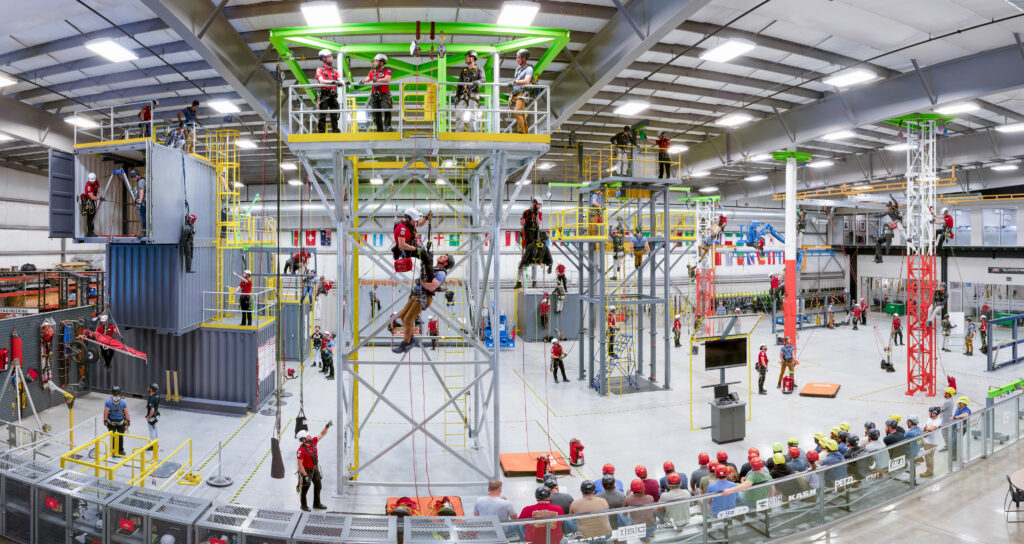
User reviews (0)