
 hacknplan.com
 Paid content
Categories: Productivity
Plan, track, and ship games on time and budget with HacknPlan, the best project management tool for game development teams.
 Visit website
 Updated: 2026-09-23 18:04
 Language: English (default)
 Access: Normal
 Profile views 0
 Outbound visits 0
Related questions
More questions →How Do Enterprise Teams Adopt Specialist AI Agents Without Disrupting Existing Workflows?
Enterprise teams can adopt specialist AI agents without disruption by starting with one narrow, high-volume workflow, running it as a bounded pilot with human review, measuring against a baseline, and only then expanding. The key is to treat agents as new team members with defined scopes rather than as a replacement for existing tools or a sweeping platform migration. This article explains what specialist agents are, where they fit across common team functions, and a phased approach you can follow.
What Makes an Agent "Specialist" Rather Than General-Purpose
A general-purpose assistant responds to open-ended prompts across many topics. A specialist agent is scoped to one job: it has a defined goal, a limited set of tools and data sources, and a clear definition of "done."
That scoping matters for enterprise teams for three practical reasons:
- Predictability. A narrow agent produces more consistent outputs, which makes it easier to review and trust.
- Permission control. You can grant access only to the systems that specific task needs, rather than broad data access.
- Measurable value. When an agent owns one workflow, you can compare its output against a manual baseline.
A useful rule of thumb: if you cannot describe the agent's job in one sentence with a clear input and output, it is still too broad to deploy safely.
Mapping Team Functions to Agent Use Cases
Most enterprise teams have a handful of repetitive, rules-plus-judgment tasks that are good first candidates. The table below shows typical starting points.
| Team | Candidate agent task | Why it fits |
|---|---|---|
| Sales | Research and enrich inbound leads before handoff | High volume, structured output, easy to verify |
| Customer success | Draft responses to common account questions | Repetitive, benefits from consistency |
| Marketing | Repurpose long-form content into channel variants | Clear brief, reviewable drafts |
| HR | Screen and summarize applications against criteria | High volume, needs audit trail |
| Operations | Triage and route incoming requests | Rule-based with clear routing logic |
Notice that none of these replace a person's judgment. They compress the repetitive portion so the human spends time on exceptions and decisions.
A Phased Adoption Approach: Pilot, Measure, Expand
Phase 1: Pick one workflow and define success
Choose a task that is high-volume, low-risk, and currently a bottleneck. Write down:
- The current process, step by step
- The baseline metric (time per task, volume per week, error rate)
- What "good output" looks like, with two or three examples
- Who reviews the agent's work
Phase 2: Run a bounded pilot
Keep the agent inside the existing workflow rather than beside it. For example, the agent drafts; the human sends. Set a review gate so nothing leaves the team unreviewed. Run for a fixed period, such as four to six weeks, with a small group.
Phase 3: Measure against the baseline
Compare the same metrics you recorded in Phase 1. Look for time saved, consistency gained, and — importantly — where the agent failed. Failures tell you whether the scope was right.
Phase 4: Expand deliberately
Only widen scope after the pilot shows a clear, repeatable gain. Expand in one of two directions: more volume of the same task, or an adjacent task with the same data and review pattern. Avoid expanding into a new function and a new data source at the same time.
Handling Workflow Integration Concerns
Data access
Give each agent the minimum access its task requires. Prefer read access plus a single write action over broad permissions. Document which systems it touches so security and IT can review.
Handoffs
Define exactly where the agent stops and a human begins. A simple handoff rule works well: the agent completes the task and flags anything outside its defined scope for a person. Ambiguous handoffs are the most common source of friction.
Human oversight
Decide the review level up front:
- Full review for anything customer-facing or high-stakes
- Spot check for internal, low-risk outputs
- Exception-only review once the agent has a track record
Start stricter than you think you need, then relax as evidence accumulates.
How Roles and Responsibilities Shift
Adopting agents rarely removes roles; it redistributes effort. Expect these shifts:
- Reviewers become editors. People spend less time producing first drafts and more time improving and approving them.
- Process owners become agent owners. Someone needs to maintain the agent's instructions, examples, and scope as the business changes.
- New quality checks appear. Teams need a lightweight way to catch drift — for example, a weekly sample review.
Be explicit about who owns the agent after launch. An unowned agent degrades quietly.
Practical Criteria for Choosing Where to Start
Score candidate workflows against these questions:
- Volume: Does it happen often enough to matter?
- Risk: What is the cost of a wrong output, and can a human catch it?
- Structure: Is the input and output reasonably consistent?
- Baseline: Can you measure the current state today?
- Ownership: Is there a person who will own the agent after launch?
A workflow that scores well on all five is a strong first pilot. A high-volume task with no clear owner is a poor start, no matter how repetitive it is.
A Simple Pilot Template
You can copy this structure to scope your first agent:
- Task: [one sentence]
- Current baseline: [time/volume/error rate]
- Agent scope: [what it does, what it does not do]
- Data access: [systems, read/write]
- Handoff rule: [when it escalates to a human]
- Review level: [full / spot / exception]
- Owner: [name]
- Pilot length: [weeks]
- Success metric: [target]
Bottom Line
Disruption comes from adopting too much at once, not from agents themselves. Start with one scoped task, keep humans in the loop, measure against a real baseline, and expand only when the evidence supports it. Platforms built around specialist agents — such as Relevance AI, which offers agents for sales, customer success, marketing, and HR — are designed for exactly this kind of task-by-task rollout, so you can add capability without rebuilding your team's existing processes.
What Is Project Management and How Do You Actually Run a Project?
Project management is the discipline of planning, executing, and closing a temporary effort that produces a specific outcome—distinct from ongoing operations, which repeat indefinitely. You "run" a project by moving it through five phases (initiation, planning, execution, monitoring, closure), maintaining four core artifacts (scope, schedule, budget, risk register), and choosing a methodology (waterfall, agile, or hybrid) that matches how much uncertainty you face. This guide explains each piece and where projects typically break.
Project vs. operations: the line that matters
A project has a defined start and end, a unique deliverable, and a temporary team. Operations are continuous and repeatable—processing payroll, running a support desk, maintaining a production line.
The distinction changes how you manage:
| Dimension | Project | Operations |
|---|---|---|
| Duration | Temporary, ends at delivery | Ongoing |
| Output | Unique deliverable | Consistent, repeatable service |
| Success measure | Delivered on scope, time, budget | Stable throughput and quality |
| Team | Assembled, then disbanded | Stable, role-based |
| Change | Expected and managed | Minimized |
If the work never "finishes," you are managing operations and should use process-improvement methods instead of project controls.
The five phases, and what each produces
Initiation
Define why the project exists and who owns it. Outputs: a project charter (problem, goal, sponsor, high-level constraints) and a stakeholder list. Without a named sponsor with authority to remove blockers, projects stall at the first conflict.
Planning
Turn the goal into a workable plan. Outputs: scope statement, work breakdown structure (WBS), schedule, budget, resource plan, and risk register. Planning is where scope creep is prevented—or invited—by how precisely you define what is out of scope.
Execution
The team does the work. Your job shifts to coordination: assigning tasks, unblocking people, and keeping communication flowing. Most of the project manager's time is spent here.
Monitoring and controlling
Runs alongside execution. You compare actual progress against the plan and correct course. Outputs: status reports, change requests, updated risk register. This is not a separate phase in time—it is a parallel activity.
Closure
Deliver, get formal acceptance, release the team, and capture lessons learned. Skipping closure means the next project repeats the same mistakes.
The four artifacts that hold a project together
- Scope — what is included and explicitly excluded. The WBS decomposes scope into deliverable-sized chunks.
- Schedule — tasks, dependencies, durations, and milestones. Critical-path tasks have zero slack; delay them and the whole project slips.
- Budget — estimated cost by category, with contingency for known risks.
- Risk register — each risk with likelihood, impact, owner, and a response (avoid, mitigate, transfer, accept).
A change to any one of these usually affects the others. That relationship is the "triple constraint": scope, time, and cost trade off against each other, with quality as the outcome.
Waterfall, agile, or hybrid: pick by uncertainty
| Methodology | Best when | Weakness |
|---|---|---|
| Waterfall | Requirements are stable and known; regulatory or contractual gates | Poor at absorbing change late |
| Agile | Requirements will evolve; frequent feedback is available | Harder to forecast fixed cost/date |
| Hybrid | Some phases are fixed (compliance), others exploratory | Requires discipline to avoid the worst of both |
Choose waterfall when change is expensive and requirements are clear. Choose agile when you can deliver in increments and learn as you go. Choose hybrid when a fixed milestone (e.g., a compliance review) must coexist with iterative build work.
Documenting current state and keeping people aligned
Before you can plan change, you need a shared picture of how things work today. Teams often map the current state—processes, systems, dependencies—so that everyone, including new contributors, works from the same reference. Lucid positions its capabilities around documenting the current state of a business and keeping people and AI agents aligned as work moves forward, which fits the "shared reference" problem that derails projects when it is missing.
Practically, alignment requires:
- One source of truth for status, not five.
- A visible owner for every open risk and decision.
- A cadence (daily standup, weekly review) that matches the project's pace.
Where projects actually fail
- No sponsor authority — decisions stall; escalate early or the project drifts.
- Vague scope — "improve the portal" becomes infinite. Write exclusions.
- Optimistic estimates — no contingency, no buffer on critical-path tasks.
- Silent risks — a register nobody updates is decoration.
- No closure — lessons lost, team not released, benefits never measured.
Troubleshoot by returning to the artifact that is weakest: if dates keep slipping, re-examine dependencies and estimates; if scope keeps growing, reassert the change-control process; if the team is confused, the problem is usually communication cadence, not effort.
Getting started
Pick your methodology based on uncertainty, write a one-page charter, build a WBS before a schedule, and keep a live risk register. If you need a shared place to document current state and keep contributors aligned, Lucid offers a free sign-up and published pricing for its charting plans—check the current terms on its pricing page before committing a team.
Website Overview
An established domain and managed infrastructure suggest continuity of operations and may support dependable delivery, although neither guarantees service quality. Page metadata, canonical configuration and social previews work together to provide more consistent search and sharing presentation.
Domain and Registration
Registered in 2015, this domain has about 11 years of history. That suggests continuity, although ownership and purpose may have changed. Transfer-protection status is present, helping reduce the risk of unauthorized domain transfers. The domain uses the common .com extension, which is not an independent safety signal.
DNS and Email
The observed email authentication setup is incomplete: DMARC is missing. Nameservers are provided by Azure DNS, indicating managed DNS hosting. MX records point to the Google Workspace email service. No CNAME was found; the observed records resolve directly to addresses. TXT records include verification markers for Google. Such markers may also remain after a service stops being used.
TLS and Certificates
The certificate issuer is DigiCert Inc, a commercial certificate authority. The certificate uses an RSA 2048-bit public key, offering broad client compatibility. The server supplied a complete certificate chain. No organization name is present in the certificate; the available fields are consistent with domain validation. The certificate is valid for about 183 days in total, with 136 days remaining.
HTTP and Browser Security
No X-Powered-By header was found, reducing one common source of backend fingerprinting information. All six checked browser-security headers are present. Their effectiveness still depends on the policy values and application behavior. No obvious internal addresses or debug information were found in the headers. No explicit CDN or WAF marker was found in the response headers. No CORS permission header was found, so browsers normally restrict cross-origin script access.
Technology Stack Analysis
The public page identifies Next.js without precise versions, leaving fewer clues for version-specific scanning.
Search and Social Sharing
Twitter Card metadata is configured. JSON-LD includes Organization data, helping describe the organization as an entity. The title has 47 characters, within a common display range. A meta description is present, with 123 characters. The observed directives allow indexing and link following.
 Hosting and Email
 Azure DNS
 Hosting
 Microsoft Corporation
 Google Workspace
 Location
 Boydton, Virginia, United States
 Pages, Search and Sharing
| Meta description | Plan, track, and ship games on time and budget with HacknPlan, the best project management tool for game development teams. |
|---|---|
| Canonical URL | https://hacknplan.com |
| Language | English (default) |
| Twitter Card | summary_large_image |
Social Sharing Preview
10 fieldsSharing metadata
| og:url | https://hacknplan.com |
|---|---|
| og:type | website |
| og:image | https://hacknplan.com/screenshots/main_hero.webp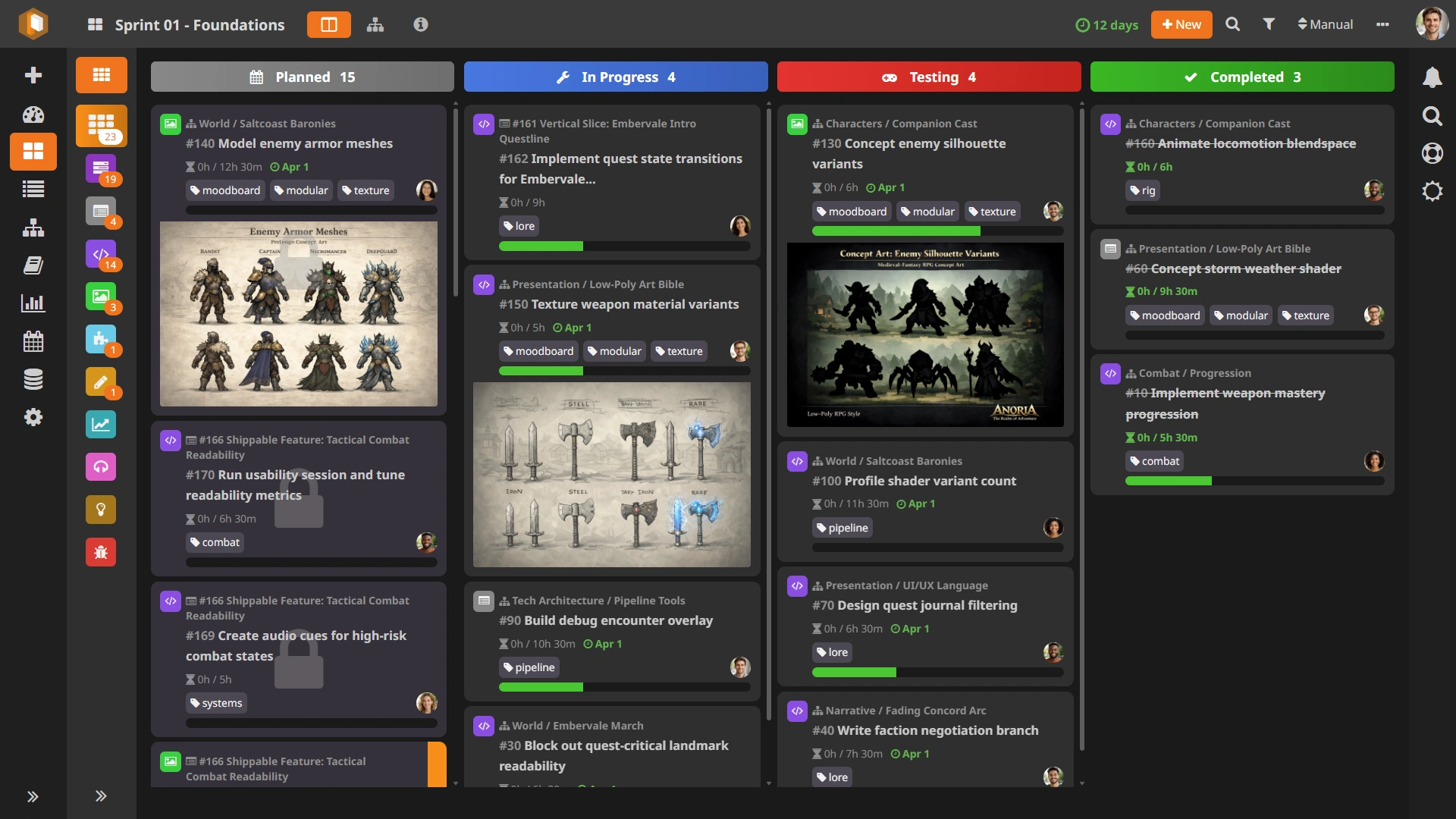 |
| og:title | The project management tool for game developers |
| og:site_name | HacknPlan |
| og:description | Plan, track, and ship games on time and budget with HacknPlan, the best project management tool for game development teams. |
| twitter:card | summary_large_image |
| twitter:image | https://hacknplan.com/screenshots/main_hero.webp |
| twitter:title | The project management tool for game developers |
| twitter:description | Plan, track, and ship games on time and budget with HacknPlan, the best project management tool for game development teams. |
robots.txt (opens in a new tab)
1 rulesAll bots 1 allowed · 0 disallowed

 All bots

/
No matching rules.
Sitemaps
1 Registration details RDAP / WHOIS
| Registrar | Launchpad.com Inc. |
|---|---|
| Registered | 2015-06-10 |
| Expires | 2027-06-10 |
| Domain status | client transfer prohibited |
| Nameservers | ns1-07.azure-dns.com、ns2-07.azure-dns.net、ns3-07.azure-dns.org、ns4-07.azure-dns.info |
| DNSSEC | unsigned |
 DNS records
| Type | Name | Value | TTL | Priority |
|---|---|---|---|---|
| A | hacknplan.com | 20.62.72.11 | 3600 | — |
| MX | hacknplan.com | aspmx.l.google.com | 3600 | 1 |
| MX | hacknplan.com | alt2.aspmx.l.google.com | 3600 | 5 |
| MX | hacknplan.com | alt3.aspmx.l.google.com | 3600 | 10 |
| MX | hacknplan.com | alt4.aspmx.l.google.com | 3600 | 10 |
| NS | hacknplan.com | ns1-07.azure-dns.com | 172800 | — |
| NS | hacknplan.com | ns2-07.azure-dns.net | 172800 | — |
| NS | hacknplan.com | ns3-07.azure-dns.org | 172800 | — |
| NS | hacknplan.com | ns4-07.azure-dns.info | 172800 | — |
| TXT | hacknplan.com | _num5yoh5j2nmfon4605ntopwh6fph1n | 3600 | — |
| TXT | hacknplan.com | google-site-verification=LFkHxIYJY6ofUxgWTSYvc9LPihRbWFRjub85lUoV5jQ | 3600 | — |
| TXT | hacknplan.com | v=spf1 mx a include:sendgrid.net include:_spf.google.com ?all | 3600 | — |
 TLS and certificates
| Assessment | Normal configuration |
|---|---|
| Supported protocols | TLSv1.2、TLSv1.3 |
| Negotiated protocol | TLSv1.3 |
| Certificate subject | hacknplan.com |
| Issuer | DigiCert Inc |
| Valid until | 2027-02-06T23:59 · Remaining when checked: 136 days |
| Verification details | Certificate trust: Passed · Hostname match: Passed |
 HTTP response headers
| Header | Value |
|---|---|
| content-type | text/html |
| cache-control | public, must-revalidate, max-age=30 |
| strict-transport-security | max-age=31536000; includeSubDomains; preload |
| content-security-policy | default-src 'self'; base-uri 'self'; object-src 'none'; frame-ancestors 'none'; form-action 'self'; frame-src 'self' https://www.google.com https://maps.google.com; img-src 'self' data: https:; font-src 'self' data: https:; style-src 'self' 'unsafe-inline' https:; script-src 'self' 'unsafe-inline' https:; connect-src 'self' https:; upgrade-insecure-requests |
| x-frame-options | DENY |
| x-content-type-options | nosniff |
| referrer-policy | strict-origin-when-cross-origin |
| permissions-policy | accelerometer=(), autoplay=(), camera=(), geolocation=(), gyroscope=(), magnetometer=(), microphone=(), payment=(), usb=() |
 Identified technologies
User reviews (0)