
 简体中文
 English
Website review
This review may include AI-generated content and is not individually verified. Domain, certificate and other facts come from the observed data on this page.
What is Ladd Hill Orchards?
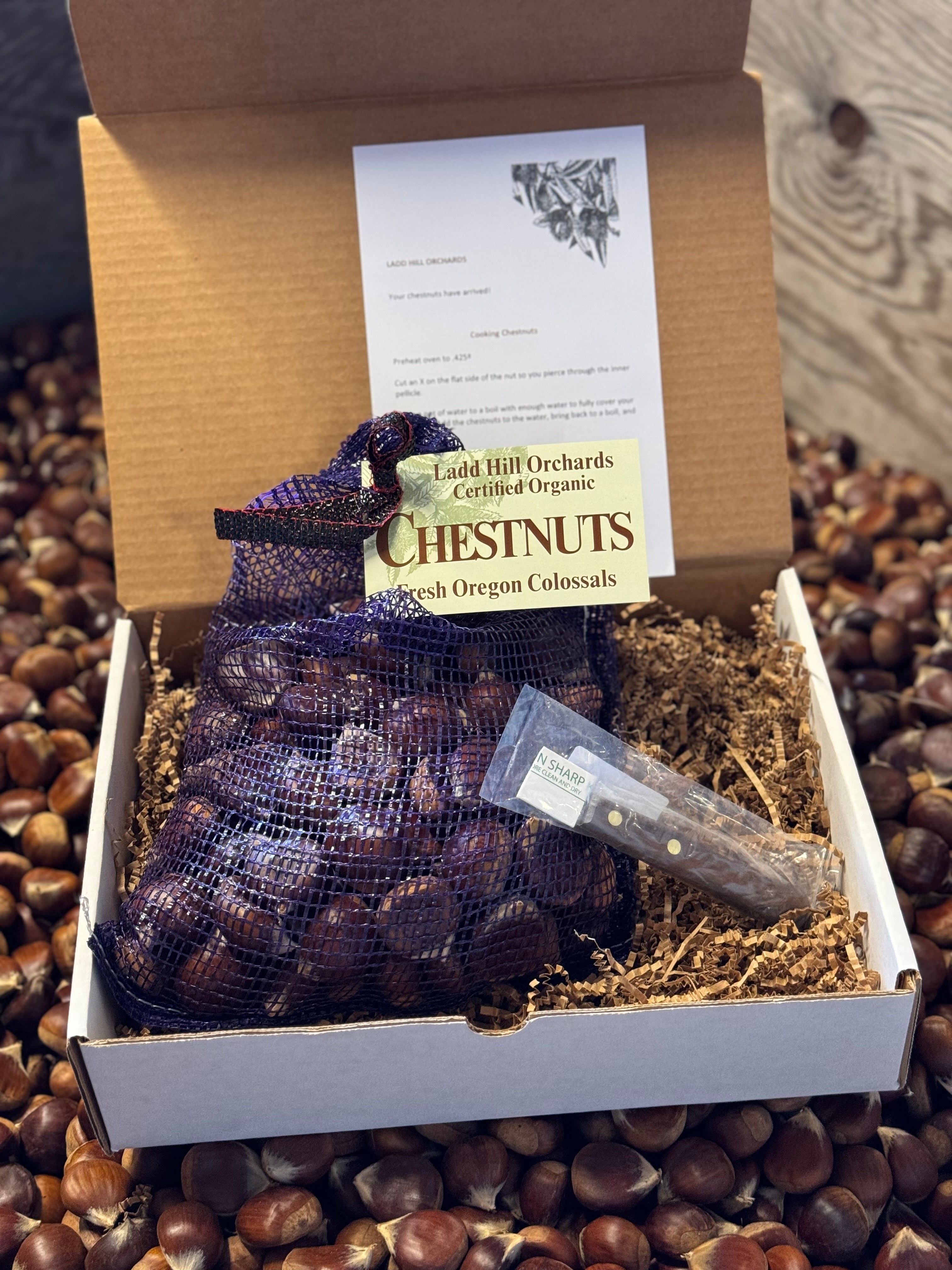
Ladd Hill Orchards is a family-run, certified organic chestnut orchard in Oregon's Willamette Valley, selling fresh Colossal-variety chestnuts each fall to grocers, restaurants and directly to customers. The orchard has been managed organically for more than 30 years, certified by Oregon Tilth, and describes its growing practices as sustainable and its harvest as perishable and seasonal, with shipping starting in early to mid-October. Its website is Ladd Hill Orchards.
The practical takeaway is that this is a seasonal fresh-produce source rather than a year-round pantry shop. If you are planning a fall menu, a holiday gift or a bulk order for a store, check availability and shipping timing before October; the site lists nuts by size grade, from medium through jumbo, plus a gift package, so buyers can match size to use. Larger nuts are typically easier to peel and showier for roasting or gifting, while medium nuts suit stuffing, purees and everyday cooking where size matters less.
For a home cook, a useful next step is to decide how many pounds you will actually use within a few weeks, since fresh chestnuts perish, and to store them cold and dry on arrival. For a restaurant or grocer, ask about volume and delivery windows early, as harvest supply is finite and the largest grade can sell out.
When do Ladd Hill chestnuts ship, and how long do they stay fresh after arrival?
Ladd Hill Orchards ships fresh chestnuts starting in early- to mid-October, according to the orchard's site. The nuts are a perishable fall harvest, so shipping begins once the new crop is ready rather than year-round. The site does not state a shelf life after arrival, so treat the chestnuts as fresh produce and plan to use them promptly.
What the site confirms
- Ship start: early- to mid-October.
- Variety: Colossal, chosen for flavor and easier peeling.
- Sizes: Large (1¼"–1½"), Medium (1"–1¼"), and Jumbo (1½"+); Jumbo was listed as sold out on the page.
- Certification: organic, certified by Oregon Tilth.
Keeping them fresh after arrival
For a concrete scenario: if you order a pound for a holiday stuffing or roast, open the box the day it arrives, discard any nuts with mold or a rancid smell, and refrigerate the rest in a breathable bag or paper sack rather than a sealed plastic container, which can trap moisture. Fresh chestnuts dry out and can mold, so aim to cook or freeze them within a couple of weeks; freezing works well for nuts you plan to roast later. Ask the orchard about its shipping schedule and storage advice when you order, since timing can shift with the harvest.
For general storage guidance, university extension services such as Penn State Extension publish home-storage advice for nuts and produce.
What is the difference between the Large, Medium, and Jumbo chestnut sizes, and which should I order?
The three sizes differ only in nut diameter; variety, freshness and organic growing are the same across all three. From the orchard's listings:
| Size | Diameter | Practical character |
|---|---|---|
| Medium | 1"–1¼" | Smallest and least expensive per pound; more nuts per pound, so more peeling per cup of usable nutmeat |
| Large | 1¼"–1½" | The middle option; a balance of size and price |
| Jumbo | 1½"+ | Largest nuts, fewest per pound, highest price per pound; the listing showed this size sold out |
Ladd Hill notes that its Colossal-variety nuts have more flavor and peel more easily than other chestnuts, and that fresh nuts are perishable and shipping begins in early to mid-October.
Which to order
- Chestnut stuffing, soups or purees where you need volume: Medium. You get the most nutmeat per dollar and the size disappears once the nuts are chopped or mashed.
- Roasting and eating whole, or a first order: Large. It is the middle price point and a sensible default if you are unsure how much peeling effort you want.
- Gifts, holiday tables or impressing guests: Jumbo, if available. The visual payoff is the point; you are paying for size, not extra flavor. Check availability early, since the largest grade can sell out.
- Testing the orchard: Start with a single pound of Large, roast them, and judge freshness and peelability before committing to a larger holiday order.
As a general rule, buy by total weight you will actually use, not by nut count — a pound of Medium contains noticeably more nuts than a pound of Jumbo.
Are Ladd Hill chestnuts certified organic, and by whom?
Yes. Ladd Hill Orchards describes its chestnuts as certified organic, with certification by Oregon Tilth. The site says the orchard has used organic, sustainable practices for more than 30 years and credits those practices with the orchard's thriving wildlife and bountiful harvest.
What this means in practice
- Certification matters for buyers who need documentation. Grocers and restaurants sourcing organic ingredients should confirm current certification directly with the orchard before listing or serving the nuts as certified organic.
- "Always organic" is the orchard's own framing. The site presents organic growing as a long-standing family practice, not a recent conversion—useful context if you care about continuity of method.
- Certification covers growing practices, not freshness. These are perishable fall-harvest nuts, so storage and shipping timing still matter regardless of organic status.
Next step
If you're buying for a store or kitchen, ask Ladd Hill for a copy of the current Oregon Tilth certificate and confirm the shipping window, since the site notes shipping begins in early- to mid-October. For background on what USDA-accredited organic certification involves, see USDA Agricultural Marketing Service.
Can I order chestnuts in bulk for a grocery store or restaurant?
Yes. Ladd Hill Orchards explicitly sells to grocers and restaurants as well as directly to customers, and it offers its Colossal-variety nuts in three sizes by the pound: Large (1¼"–1½"), Medium (1"–1¼"), and Jumbo (1½"+) — the Jumbo size showed as sold out in the page evidence, so confirm availability before planning a menu around it.
What to know for a bulk order
- Seasonality: These are fresh, perishable chestnuts harvested each fall; shipping begins in early- to mid-October. Bulk purchasing is therefore a seasonal decision, not a year-round supply arrangement.
- Certification: The orchard has been certified organic by Oregon Tilth for more than 30 years, which matters if your store or kitchen markets organic sourcing.
- Size choice: For retail display, uniform Large or Jumbo nuts look and price better per unit; for peeling-heavy kitchen use (stuffing, purées, soups), the Large size is described as more flavorful and easier to peel, which reduces labor.
- Gift packages: A separate gift-package option exists, useful for retail add-on displays rather than kitchen volume.
Next step
Because the site lists per-pound retail pricing rather than wholesale terms, contact the orchard directly to ask about volume pricing, minimum quantities, delivery timing, and cold-storage/shipping advice for your location. A practical approach: place a small trial order in early October to test size consistency and shelf life, then commit to a larger fall order once you know how the nuts perform in your store or kitchen.
How should I store fresh chestnuts to keep them from spoiling?
Fresh chestnuts are perishable and should be treated more like a fresh vegetable than a pantry nut. The key is to keep them cold, slightly humid and ventilated, and to use them within a reasonable time rather than letting them sit at room temperature.
Practical storage approach
- Sort and discard first. Remove any nuts with holes, mold, a soft feel or an off smell. One bad chestnut can spread mold to the rest.
- Keep them cold. Refrigerate in a breathable container—a paper bag, a cotton sack or a shallow box with ventilation. A sealed plastic bag traps moisture and encourages mold.
- Maintain slight humidity. A barely damp (not wet) cloth or paper towel in the container helps prevent the nuts from drying out and going hard.
- Check regularly. Inspect every few days and remove anything suspicious. Refrigerated fresh chestnuts are best used within a few weeks, though quality declines over time.
- For longer storage, freeze. Score the shells, roast or boil the nuts, peel them, and freeze the kernels in an airtight container. This is the most reliable way to avoid waste if you buy in quantity.
A quick comparison
| Method | Best for | Main trade-off |
|---|---|---|
| Refrigerator, breathable container | Short-term use over a few weeks | Requires regular checking; still perishable |
| Freezing peeled, cooked kernels | Long-term storage | Extra prep work; texture softens slightly |
| Room temperature | Only a day or two | High risk of mold and drying |
Avoid storing fresh chestnuts in a closed plastic bag on the counter, and don't wash them before refrigerating—moisture on the shell speeds spoilage.
A concrete scenario
If you order a few pounds from a grower such as Ladd Hill Orchards, whose chestnuts ship fresh each fall starting in early-to-mid October, plan to refrigerate them on arrival and decide within the first week whether you'll eat them fresh or freeze part of the batch. Splitting a large order into a "use now" bag and a "cook and freeze" portion prevents losing the whole order to mold.
 Cloudflare
 Ottawa, Ontario, Canada
User reviews (0)