
 简体中文
简体中文 English
Website review
This review may include AI-generated content and is not individually verified. Domain, certificate and other facts come from the observed data on this page.
What is The Laughing Cavaliers?
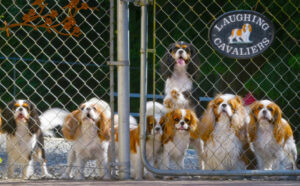
The Laughing Cavaliers is a small Cavalier King Charles Spaniel breeding operation run by Barbara Garnett-Wilson and her husband Roy Wilson in Kitsap, Washington State. The site describes an active, conscientious program that produces occasional litters for what it calls qualified adoption, alongside a sideline of Cavalier-themed books, calendars and note-card sets written and designed by the couple.
What the site covers
- About Us — the story of the breeders themselves, presented as a continuing narrative rather than a single-page bio.
- Our Babies — photographs of the dogs, positioned as the best advertisement for the program.
- Our Cavalier-Inspired Treasures — the couple's own published and designed items, including award-winning titles.
Who it is for
Two distinct audiences. People in the Pacific Northwest considering a Cavalier and wanting to vet a breeder before making contact will find the most value in the About Us and Our Babies sections, since those show the people and the dogs behind the kennel. Cavalier enthusiasts who are not in the market for a puppy may be more interested in the books and calendars.
What to weigh
A personal, photo-led breeder site like this is strongest on tone and transparency about who is doing the breeding, and weakest on the structured detail buyers usually compare — health testing, pedigree lines, waitlist terms and pickup logistics. If you are evaluating a breeder seriously, treat the site as a starting point and ask directly about health clearances, contract terms, and what "qualified adoption" means in practice. For breed-wide background before you make contact, the national club resources at Cavalier King Charles Spaniel Club of the USA and the health-focused Cavalier Health Information are useful complements.
A practical next step: read About Us and Our Babies first to see whether the program's philosophy fits what you want, then use the contact route on the site to ask your specific questions in one message rather than several.
How do I adopt a King Charles Cavalier puppy from this breeder?
Adoption at The Laughing Cavaliers is framed as an application-and-approval process rather than a first-come purchase. The site states the breeding program is active and produces occasional litters “for qualified adoption,” which tells you the practical path: introduce yourself, explain your household and cavalier experience, and wait to be matched when a litter is available.
What to prepare before you make contact
- Your home situation: who lives there, ages of children, other pets, whether you rent and have landlord permission, and whether someone is home during the day.
- Your cavalier background: previous dogs, veterinary references, and how you handle grooming, heart checks and separation.
- Your timing: be honest about whether you need a puppy now or can wait for an occasional litter.
- Your questions: ask about health testing of the parents, litter size, deposit and waitlist terms, pickup or transport, and what support continues after adoption.
How the process typically looks
- Read the site’s About Us and Our Babies sections to understand the breeders and see the dogs.
- Contact Barbara Garnett-Wilson and Roy Wilson through the website with your introduction.
- Discuss availability and suitability; if there is no current litter, ask to be considered for a future one.
- If approved, agree on terms in writing, including any deposit, timing and health documentation.
- Arrange pickup or delivery and confirm the puppy’s vaccination, microchip and veterinary records.
A useful decision criterion
Ask yourself whether you want a breeder who interviews adopters and keeps litters occasional, or one with puppies available immediately. The first tends to mean more screening and a longer wait; the second may mean less certainty about health testing and placement. If a wait is acceptable, this breeder’s stated approach fits that preference.
For broader context on the breed and responsible breeding, the Cavalier King Charles Spaniel Club USA at Cavalier King Charles Spaniel Club USA and the American Kennel Club at American Kennel Club publish breed health and breeder-selection guidance. A local cavalier rescue such as Cavalier Rescue USA is worth checking if you are open to an adult dog rather than a puppy.
What health testing and breeding practices are used for the Cavaliers?
The site does not publish a health-testing protocol or a breeding-practices checklist. What it states is that the kennel runs "an active, conscientious breeding program, producing occasional litters for qualified adoption," and it frames the dogs themselves as the best representatives of the line. Beyond that, the visible page content covers the proprietors, the puppies, and cavalier-themed books, calendars and note-card sets—not test results, screening schemes, or placement terms.
What to ask a Cavalier breeder directly
Because "conscientious" and "occasional litters" are self-descriptions rather than verifiable claims, treat them as a starting point for questions, not as evidence. For Cavalier King Charles Spaniels specifically, the breed's well-documented concerns are heart disease (mitral valve disease) and syringomyelia, a neurological condition; responsible breeders typically screen breeding dogs for both and can discuss results.
Useful questions:
- Which health tests are done on the sire and dam, by which scheme, and at what age?
- Can you see the actual certificates or results, not just a summary?
- How old are the dogs at breeding, and how often is a dam bred?
- What is the documented health history of the grandparents?
- What happens if a puppy develops a hereditary condition later?
- May I speak with owners of previous litters?
How to weigh the answers
| Response | What it suggests |
|---|---|
| Names specific tests and offers documents | Verifiable, checkable practice |
| Says "all our dogs are healthy" only | No screening information to evaluate |
| Refuses records or owner references | A reason to keep looking |
| Explains waitlists, contracts and returns | A structured placement process |
A practical next step for a reader in Washington State: ask for test documentation before visiting, and compare any breeder's answers against the breed club's published health recommendations. The same approach works for national registries and rescue organizations such as Cavalier Rescue USA, where breed-specific health experience is often shared openly. If the goal is a companion rather than a show dog, a rescue Cavalier with a known veterinary history can be an equally sound route.
What books and calendars are available from The Laughing Cavaliers?
The Laughing Cavaliers sells its own books, calendars and note-card sets under the heading "Our Cavalier-Inspired Treasures." The site describes these as award-winning items written, designed and produced personally by Barbara Garnett-Wilson and Roy Wilson, the proprietors of this Kitsap County, Washington cavalier breeding program. Specific titles and cover images are not listed in the page summary, so treat the category as the reliable part: printed books, annual-style calendars and boxed note cards, all built around Cavalier King Charles Spaniels.
What to expect as a buyer
- Books — the most likely purchase if you want breed background, photographs or a gift for a cavalier owner.
- Calendars — practical for people who already follow the kennel's dogs and want them on a wall through the year.
- Note-card sets — the low-commitment option, useful as a small gift or for correspondence.
How to choose
If you are mainly looking for a puppy, the treasures are secondary; the site's adoption information sits under "About Us" and "Our Babies," where the kennel notes it still runs an active breeding program with occasional litters for qualified homes. If you want the printed items, start at the "Our Cavalier-Inspired Treasures" section to see current titles and ordering details, since availability changes with each calendar year. For general cavalier care and health information alongside a purchase, the breed club sites such as Cavalier Health and American Kennel Club are useful complements, but they are not connected to this kennel's merchandise.
How can I contact or visit The Laughing Cavaliers in Washington State?
The Laughing Cavaliers presents itself as a small Cavalier King Charles Spaniel breeding operation in Kitsap County, Washington, run by Barbara Garnett-Wilson and Roy Wilson. The site is built around introductions and photos rather than a booking system: its main sections are About Us, Our Babies (the dogs and litters), and Cavalier-Inspired Treasures (books, calendars and note-card sets the couple produce themselves). It also states that the breeding program remains active, with occasional litters placed through what it calls qualified adoption.
How to go about contacting or visiting
Start with the site itself at The Laughing Cavaliers. Because the published page evidence shows no contact form, phone number, email address or visiting hours, use whatever contact details appear on the site's own pages and treat the "About Us" and "Our Babies" sections as your first stop for understanding how they operate.
When you write, be specific and brief. Breeders who place only occasional litters are usually screening for homes that fit their dogs, so a useful first message includes:
- Your name, city and how far you are from Kitsap County.
- Your household: adults, children, other pets, whether you rent or own, and any fencing.
- Your experience with the breed or with dogs generally, plus your vet's name if you have one.
- Whether you want a puppy now, are willing to wait for a future litter, or would consider an adult dog.
- Your question about visiting: whether they allow prospective owners to visit, and at what stage.
Visiting: what to expect and what to ask
Many responsible breeders limit visits to serious, pre-screened applicants, and some restrict visitors around young or unvaccinated puppies for health reasons. A request framed as "we'd like to meet you and see the dogs" is more likely to get a reply than a demand to see puppies on a specific date. If a visit is possible, ask in advance:
| Topic | Why it matters |
|---|---|
| Health testing | Ask which tests are done on the parents and whether results are shareable. |
| Puppy raising | How puppies are socialized, and what they go home with. |
| Contract and health guarantee | Terms, return policy and spay/neuter expectations. |
| Waitlist and timing | How litters are planned and how you'd be notified. |
| Pick-up vs. shipping | Whether you collect in person or another arrangement is used. |
If travel to Kitsap is impractical, ask whether a video call or photo updates can substitute for an in-person visit, and whether they will work with owners who live further away. Also check whether the couple's books and note-card sets are sold separately, since that is a low-commitment way to support them and learn more about how they think about the breed.
For breed-wide health and rescue information, the national club is Cavalier Health and the AKC breed page is the American Kennel Club; both are useful for evaluating any breeder's health-testing claims.
What should I expect when bringing home a Cavalier puppy from this breeder?
Bringing home a Cavalier King Charles puppy from this breeder means joining a small, established program rather than a high-volume operation. The site presents a conscientious breeding program with occasional litters placed through a qualification process, run by Barbara Garnett-Wilson and Roy Wilson in Kitsap, Washington. Expect the breeder to assess you as a home before an adoption is agreed.
What to expect in practice
- Limited availability. Litters are described as occasional, so timing depends on when a litter is planned or already on the ground. Ask directly about expected dates and how a waitlist works.
- A screening conversation. The wording "qualified adoption" signals that the breeder will ask about your household, schedule, other pets and prior dog experience. Have honest answers ready, especially about how often the dog would be alone.
- A puppy raised as part of the family. The site frames the dogs themselves as the best introduction to the program, which suggests puppies are socialised in a home setting. Ask what early experiences, handling and household sounds the puppies are exposed to before leaving.
- A breeder with a public profile. Barbara and Roy also produce Cavalier-themed books, calendars and note-card sets, so this is a long-standing personal interest rather than a side business. That history can be useful when you ask how long they have bred and what health testing they follow.
- A need to confirm health documentation yourself. The page does not list specific cardiac, eye or neurological testing results. Cavaliers are a breed where mitral valve disease and syringomyelia matter, so ask for the parents' test results and the relevant scheme names before committing.
Questions to ask before you visit
- Which health tests have the sire and dam had, and can I see the certificates?
- At what age do puppies go home, and what vaccinations, worming and microchipping are done first?
- What contract terms apply, including any return or rehoming clause?
- Can I meet the mother, and see where the puppies are kept?
- What food, crate and vet routine are the puppies already used to?
A realistic reader scenario
Suppose you work full time and live in a flat with no garden. A breeder running a small program may be cautious about placing a Cavalier with you, because the breed is companion-focused and dislikes long stretches alone. Rather than treating that as rejection, come with a plan: a midday walker, a settled routine and evidence you have thought about the dog's adult life, not just its puppy stage.
If you are comparing options, look at how breeders in the wider Cavalier community describe their testing and contracts, such as The Cavalier King Charles Spaniel Club in the UK or The American Cavalier King Charles Spaniel Club in the US. For general breed health background, CavalierHealth.org is a long-running independent resource.
The practical next step is to contact the breeder through the site, describe your household plainly, and ask for the current litter timeline and health documentation in the same message. That single exchange will tell you quickly whether this program fits your circumstances.
User reviews (0)