
 简体中文
简体中文 English
Website review
This review may include AI-generated content and is not individually verified. Domain, certificate and other facts come from the observed data on this page.
What is Lehmann Stringed Instruments?
Lehmann Stringed Instruments is a one-person lutherie workshop in Rochester, New York, run by master luthier Bernie Lehmann, who has been building handmade instruments there since 1972. It is not a factory brand or a retail chain: the site presents custom-designed, individually built guitars and related fine instruments, with the maker himself shown holding and describing specific builds.
What the workshop actually offers
The site's model list points to several distinct instrument families rather than one standard product line:
- Master Model 2000 — an ebony instrument with a hand-cut pierced rose soundhole, presented as a flagship build.
- Model Eclipse — described in the site's voice as a jazz-oriented instrument.
- Contempo Archtop — built in cinnamon burled maple; the copy places it at home on a club stage, a big stage, or in a spare bedroom.
- Cadenza Model — aimed at the "deft and classically-oriented troubadour."
- MandoCello and Model KN flattops — the latter noted as two instruments that are "the same but ....different," which is a fair summary of how custom work usually goes.
The site also notes an appearance at The Artisan Guitar Show in Harrisburg, Pennsylvania, opening April 10–12, 2026.
Who this is for
The natural audience is a player who wants an instrument designed around their own hands, repertoire and tonal preferences — a jazz guitarist after an archtop voice, a classical player wanting a responsive nylon-string-style instrument, or someone ordering a flattop or mandocello to their own specs. The trade-off is the usual one with bespoke lutherie: long lead times, limited ability to comparison-shop by spec sheet, and a result you cannot try before committing, since each instrument is made rather than pulled from stock. Buying used or visiting a show is the practical way to hear the work first.
A useful next step
If you are considering a commission, treat the first conversation as a design brief: bring recordings of the tone you want, describe your playing style and body size, and ask what woods, scale length and appointments the maker recommends for that sound. Visiting a show such as the Harrisburg event, or the workshop at 34 Elton St. in Rochester, lets you play finished instruments before deciding. For context on how handmade archtops and classical guitars compare with small-shop and factory alternatives, see Lehmann Stringed Instruments and Luthiers.com.
Which Lehmann guitar model is best for jazz players?
For jazz players, the Lehmann model to look at first is the Model Eclipse, which the site presents as built with jazz in mind. If you want an archtop with a more general stage-or-home character, the Contempo Archtop is the other relevant option.
What the site actually says
- The Model Eclipse is introduced with a jazz-playing prompt, suggesting it is the jazz-oriented build.
- The Contempo Archtop is described as ready for a club, a big stage, or a spare bedroom — a versatile archtop rather than a jazz-specific label.
- Other named models (Master Model 2000, Cadenza, MandoCello, Model KN flattops) are not framed around jazz, so they are less obvious starting points for that style.
How to choose between them
- Model Eclipse — start here if jazz is your main use and you want the model the site ties to that style.
- Contempo Archtop — consider it if you play jazz but also need an instrument that works across amplified club gigs, larger stages, and quiet practice at home.
H3: A practical next step Because these are handmade instruments by luthier Bernie Lehmann in Rochester, NY, the model name is only the beginning. A jazz player should ask about scale length, neck profile, pickup or amplification setup, and whether the instrument is built to order. A concrete scenario: if you mostly play small jazz combos and want a traditional archtop response, ask about the Eclipse; if you double on other styles and need one guitar for varied rooms, ask how the Contempo Archtop is voiced and configured.
You can see the models and contact details at Lehmann Stringed Instruments.
How do I commission a custom guitar from Bernie Lehmann?
Commissioning a guitar from Bernie Lehmann starts with a direct conversation about the instrument you want, not a shopping-cart checkout. The site presents him as a master luthier building handmade instruments in Rochester, New York since 1972, organized around named models such as the Master Model 2000, Model Eclipse, Contempo Archtop, Cadenza, Model KN flattops, and a MandoCello. That range tells you he builds across archtop, flattop, classical-leaning, and hybrid instruments rather than one fixed product line.
H3 Practical first steps
- Write down the music you actually play, the scale length and neck feel you like, and any amplification or pickup needs. A jazz archtop commission and a classical-oriented build will pull the design in different directions.
- Contact the shop through the details on Lehmann Stringed Instruments and ask about current lead time, deposit expectations, and whether you can visit or ship measurements.
- Ask which existing model is closest to your goal before requesting a full custom design. The site's model names give you a useful vocabulary for that conversation.
- Expect to discuss tonewoods, body size, bracing, finish, and decorative work such as the hand-cut pierced rose sound hole shown on the Master Model 2000.
H3 What a realistic timeline looks like
A commission is usually a sequence: initial consultation, design agreement and deposit, wood selection, build updates, then final voicing, setup, and delivery. Ask at each stage what decisions are still open. If you need an instrument for a specific tour or recording date, say so at the outset rather than after the build begins.
H3 Choosing between a stock model and full custom
| Situation | Better fit |
|---|---|
| You like an existing design and mainly want wood or finish changes | Base it on a named model |
| You need a different scale, ergonomics, or unusual string configuration | Full custom design |
| You want to compare options before committing | Ask about visiting the Rochester shop or seeing instruments at a show |
The site notes the Artisan Guitar Show in Harrisburg, Pennsylvania, opening April 10–12, 2026. If you are undecided, attending a show where his instruments are exhibited lets you hear and handle them before committing to a commission.
A useful next step: draft a one-page brief covering your repertoire, preferred neck profile, amplification, budget range, and target delivery date, then send it with your inquiry. That single document will make the first conversation far more productive.
What is the difference between the Model KN Flattops and other Lehmann models?
The Model KN Flattops are Lehmann's flattop steel-string guitars, and the site presents them as a pair of instruments that are "the same but ....different" — meaning two KN builds share the same flattop platform while differing in the details that matter to a player. That contrasts with Lehmann's other named models, which are distinct designs aimed at different musical roles rather than variations on one platform.
The clearest way to see the split is by body style and intended use:
| Model | Type | Stated orientation |
|---|---|---|
| Model KN Flattop | Flattop steel-string | Two sibling builds, same design, differing details |
| Master Model 2000 | Ebony, hand-cut pierced rose sound hole | Showpiece-level craftsmanship |
| Model Eclipse | Archtop | Built for jazz playing |
| Contempo Archtop | Cinnamon burled-maple archtop | Club, big stage, or spare bedroom |
| Cadenza | Classical-style | "Deft and classically-oriented troubadour" |
| MandoCello | Hybrid | Listed alongside the guitars as a separate instrument |
So the practical difference is this: the KN Flattops are a flattop family you choose within, comparing the two versions against each other, while the Eclipse, Contempo, Cadenza and Master Model are separate designs you choose between based on genre and playing style. An archtop like the Eclipse or Contempo is built around a carved, projecting jazz voice; a classical-oriented instrument like the Cadenza assumes nylon-string technique and repertoire; a flattop KN assumes fingerstyle or flatpicking on steel strings. The MandoCello sits outside the guitar question entirely.
If you are deciding, start with repertoire rather than wood or ornament. Jazz comping and chord-melody point to the archtops; classical technique points to the Cadenza; singer-songwriter, folk, and fingerstyle work point to a KN Flattop — and only then compare the two KN versions side by side. Since these are custom instruments built by Bernie Lehmann in Rochester, New York, the sensible next step is to contact the shop directly and ask what actually separates the two KN builds, then discuss scale length, nut width, and top wood against how you play. You can see the models at Lehmann Stringed Instruments.
How much does a handmade Lehmann guitar cost?
Lehmann does not publish guitar prices on its site. The pages describe models and a build philosophy — hand-built instruments by luthier Bernie Lehmann in Rochester, NY, working since 1972 — but no figures appear in the page evidence. For custom lutherie of this kind, cost is normally set per commission based on model, woods, ornamentation and options, so any number you see quoted elsewhere should be treated as a starting point for a conversation, not a list price.
What actually drives the price
- Model and body type. The site names several distinct instruments, including the Master Model 2000 (ebony, with a hand-cut pierced rose sound hole), the Model Eclipse (described in connection with jazz playing), the Contempo Archtop (cinnamon burled maple), the Cadenza classical model, a MandoCello, and 2 Model KN flattops. An archtop or an ornate master model involves far more carving and detail than a straightforward flattop.
- Materials. Ebony, burled maple and similar figured or dense woods raise both material cost and the labour needed to work them.
- Ornamentation and custom design. Hand-cut soundhole work and one-off design requests are time-intensive, and time is the main cost in handmade instruments.
- Scale and complexity. A MandoCello is a larger, less standardised build than a six-string guitar.
How to get a real number
Contact Lehmann directly with your intended model and specification — that is the only way to get an accurate figure for a commission. A useful first step is to write a short brief: which model interests you, your playing style (jazz, classical, fingerstyle), preferred woods if you have any, and whether you want a stock-style build or a one-off design. Ask for a quote range and an estimated timeline in the same message, since waiting time is part of the real cost of a handmade instrument.
As a decision criterion, compare a quoted price against the closest factory or small-shop alternative you could buy immediately, then ask yourself whether the specific design, materials and maker involvement are worth the difference and the wait. If you are near Rochester, NY, an in-person visit or a trial at a show — the site mentions the Artisan Guitar Show in Harrisburg, PA — will tell you more about playability and tone than any price list. For wider context on handmade instruments before you commit, The Guitar Salon covers classical and handmade guitars, and The Artisan Guitar Show lists exhibitors and dates for trying instruments in person.
Where can I see Lehmann guitars in person at the 2026 Artisan Guitar Show?
You can see Lehmann Stringed Instruments in person at the Artisan Guitar Show in Harrisburg, Pennsylvania, running April 10–12, 2026, according to the notice on Lehmann Stringed Instruments. That page also shows the kind of instruments associated with luthier Bernie Lehmann, including the Master Model 2000 with a hand-cut pierced rose soundhole, the cinnamon burled-maple Contempo Archtop, the Cadenza Model, the Model Eclipse, a MandoCello and 2 Model KN Flattops.
What to expect at a show like this
- A chance to play, not just look. Luthier-run guitar shows usually put instruments in visitors' hands, which matters far more than photos for judging neck shape, string spacing, weight and acoustic response.
- Direct conversation with the maker. Lehmann's page frames the instruments around specific players and settings — jazz on the Eclipse, stage or club work on the Contempo Archtop, classical-oriented playing on the Cadenza. A show is where you can ask which of those actually fits how you play.
- One-off and custom work. Descriptions such as "custom designed and built," the pierced rose soundhole and the "same but... different" pair of Model KN Flattops point to instruments where small variations are the point, so comparing two examples side by side is useful.
- A realistic caveat. Show floors are loud and busy. Bring your own picks, a tuner and any music you rely on, and try to visit earlier in the day or during quieter stretches if you want to hear subtle differences.
Practical next step
Before you go, note the specific models you most want to try and what you'd use them for — fingerstyle, jazz comping, classical repertoire or ensemble work — then ask Bernie Lehmann to point you to the closest match. If you can't attend, check the site's Models section for the current lineup and use the show's own listing to confirm dates, venue and exhibitor details closer to April 2026.
 Cloudflare
 Fastly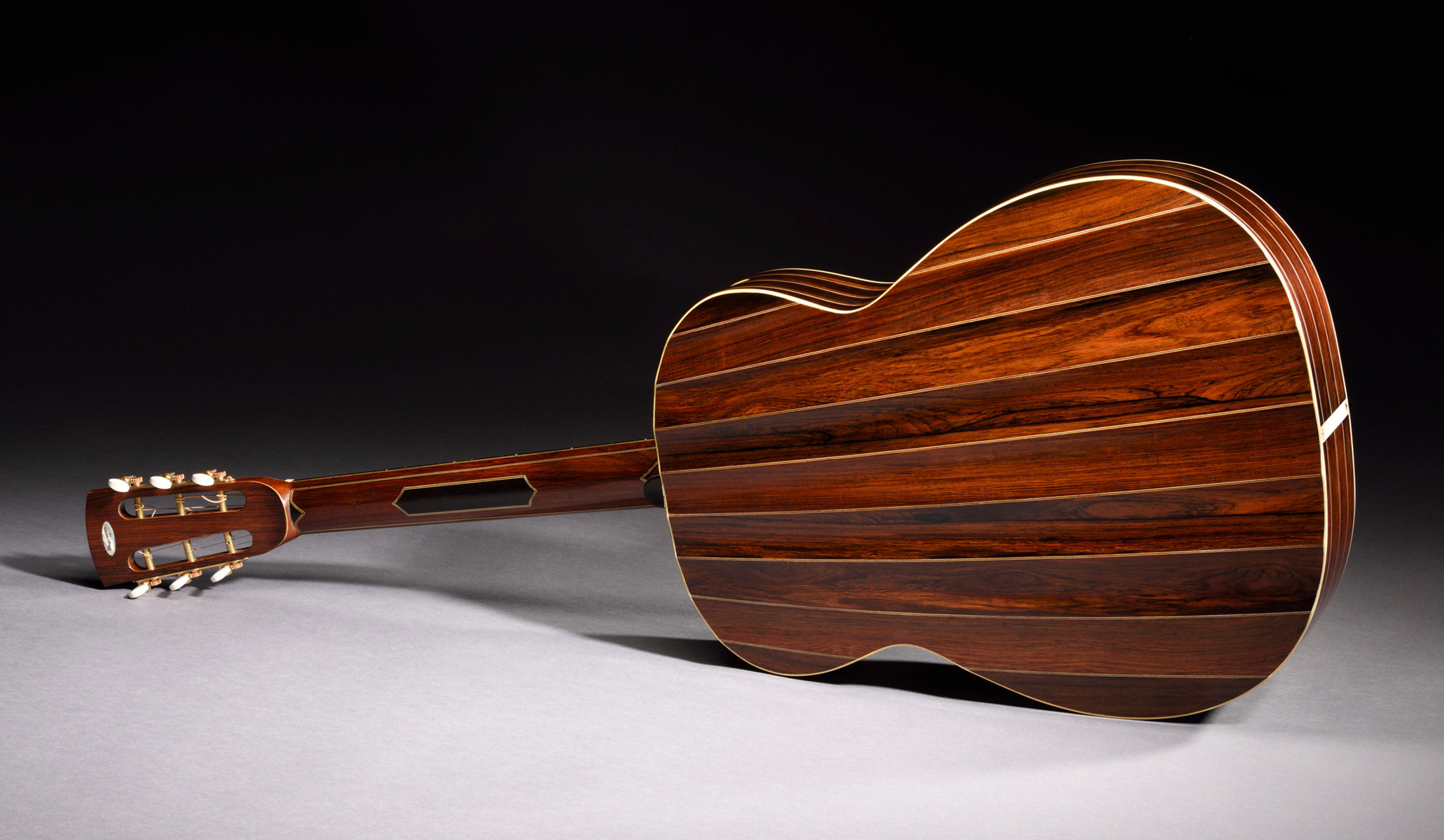

User reviews (0)