
 简体中文
简体中文 English
Website review
This review may include AI-generated content and is not individually verified. Domain, certificate and other facts come from the observed data on this page.
What is The Low Down?
The Low Down is a feisty English-language newspaper covering the Gatineau Hills region of Quebec — local news, municipal and elections coverage, arts and entertainment, environment, and sports, with a monthly local arts guide and community sports showcase. It publishes in English for an anglophone readership in an area where language and representation are live political issues, and it supports itself partly through subscriptions.
Who it's for
- Residents of the Gatineau Hills (Chelsea, Wakefield, Kazabazua and nearby) who want local reporting in English.
- Anglophone readers in Quebec who want coverage of language and minority-community issues, such as the election language-rules story.
- People outside the area with a cottage, family connection, or interest in the region.
What you'll typically find
- Hard local news: police and public-safety items, municipal decisions, ecological corridors and land protection.
- Community life: studio tours, fundraising runs, local sports figures.
- Reader engagement: polls, newsletters, contests, and merchandise.
Practical trade-off
It's a small regional paper, so expect depth on Gatineau Hills matters and little on national or international news. If you need broad Quebec or Canadian coverage, pair it with a larger outlet; if you need to know what your municipality approved last week, this is the kind of source that actually carries it.
Next step: if you're deciding whether to read regularly or subscribe, skim the section fronts — news, environment, arts — and see whether the places and institutions named match your own daily life. If they do, the subscription is the way to keep it going.
How can I subscribe to The Low Down and what does a subscription include?
The Low Down takes subscriptions through its own website; the Subscribe page is the starting point: The Low Down. The site also offers a free newsletter signup (first name, last name, email) for contests and updates, so you can sample its coverage before paying.
What the site shows a subscription covers
- Local news for the Gatineau Hills: municipal and elections coverage, police and public-safety stories, environment and land-use items such as the Meech Creek ecological corridor.
- Arts and entertainment: listings and features like the Chelsea Wakefield Studio Tour, plus a monthly local arts and entertainment guide.
- Community and sports: profiles of local athletes, coaches and volunteers, such as longtime Terry Fox Run organizer Irma Peck.
- Polls and reader interaction: for example, the site's poll on whether the NCC should ban motorboats on Meech Lake.
- Delivery: the site promotes hard-copy delivery to your mailbox as well as email, and sells merchandise separately.
What to check before you commit
- Whether you want the print edition, digital access, or both — the Subscribe page is where the current options and terms are set out.
- How often you'd actually read it. If you mainly want event listings and headlines, the free newsletter may be enough; if you follow council decisions, zoning and local elections, a paid subscription is the more useful choice.
- Delivery area. "Gatineau Hills" is a specific region, so confirm your address is covered if print delivery matters to you.
Practical next step: open the Subscribe page, compare the print and digital options, and if you're undecided, sign up for the newsletter first and read a few weeks of stories. If the municipal and environment coverage is what you keep opening, subscribe; if you only skim the arts listings, stay with the free signup.
What local news and events does The Low Down cover in the Gatineau Hills?
The Low Down is a feisty English-language newspaper serving the Gatineau Hills, with coverage that mixes hard local news, municipal politics, environment, arts, sports and community events. Its front page shows the range clearly: election language rules affecting English-speaking voters, a long-serving Terry Fox Run organizer stepping down, a Chelsea–Wakefield studio tour, a police identification in Gatineau Park, and a new ecological corridor protecting Meech Creek.
What it covers
- Local politics and language issues — stories such as English advocacy groups pushing back on Élections Québec polling-staff language rules, relevant to anglophone residents in Quebec.
- Municipal and environment news — Chelsea council decisions, conservation corridors, citizen-science efforts and Gatineau Park matters.
- Arts and entertainment — studio tours, exhibitions and a monthly guide to local arts and entertainment.
- Sports and community figures — a monthly showcase of standout athletes, coaches and sports advocates.
- Local events — run/walk events, open studio weekends and similar gatherings across the Hills.
- Reader polls — for example, a poll on whether the NCC should ban motorboats on Meech Lake.
Who it is for
Anglophone and bilingual residents of communities like Chelsea, Wakefield, Kazabazua and Farm Point who want local news in English, plus anyone tracking Gatineau Hills issues from outside the area. If you mainly need national or provincial news, this is not the fit; if you want to know what your municipality is deciding and what is happening this weekend, it is.
A practical next step
Start with the sections closest to your own community — municipal, environment or arts — and use the newsletter signup if you want updates without checking the site. For a broader regional view, compare with CBC or Ottawa Citizen, though neither matches The Low Down's hyperlocal Gatineau Hills focus. Subscriptions are offered if you want to support the paper directly.
How does The Low Down cover English-language advocacy and language rights issues in Quebec?
The Low Down treats English-language advocacy as core local news rather than an occasional feature, because its readership is the anglophone and bilingual community of the Gatineau Hills. Its coverage tends to be event-driven and community-anchored: a single political development, followed by the practical consequences for local residents.
What that looks like in practice
- News framing around a specific decision. A story on Élections Québec directing polling staff to use French unless a voter qualifies for English service is presented through the reaction of English advocacy groups, not as an abstract policy debate. The headline centres the groups' pushback.
- Local institutions as the unit of coverage. Municipal and regional bodies — Chelsea, the MRC des Collines, the NCC, Gatineau Park — appear alongside language and election issues, so language rights are shown as something that plays out in local governance, not only in Quebec City.
- Community participation as a theme. Environmental and civic stories built on "citizen science" and volunteer effort reflect the paper's broader interest in how residents organise themselves, which is the same muscle advocacy groups use.
- Interactive prompts. Reader polls, such as one asking whether the NCC should ban motorboats on Meech Lake, turn policy questions into something readers can respond to directly.
Who this suits
A reader who wants to know how a language-rights decision affects polling stations, municipal services or community life in the Hills will find it more useful than a reader looking for province-wide legal analysis. The paper's stated identity — a feisty English-language newspaper of the Gatineau Hills — signals opinionated, locally rooted reporting rather than neutral wire coverage.
A practical next step
If you are following a language-rights file, read the paper's version alongside a provincial outlet to separate what changed in the law from what changed on the ground locally. For the Hills angle specifically, The Low Down is the place to check first, and its newsletter is the way to catch stories between issues.
Where can I find The Low Down's monthly guide to local arts and entertainment?
The monthly guide lives on The Low Down's own site, The Low Down. On the homepage, look for the section labelled "plan your night with THE MONTHLY GUIDE TO LOCAL ARTS AND ENTERTAINMENT" and follow its "get planning" link.
A practical way to use it: if you're in the Gatineau Hills and want a night out, check the guide first, then confirm details with the venue, since listings can change.
If you'd rather not hunt for it each month, the site also offers a newsletter signup and a subscription option — useful if you want local arts coverage delivered rather than searching for it.
How can I submit news tips, letters, or story ideas to The Low Down?
The Low Down does not publish a single, obvious "submit a tip" form on its homepage. What the homepage does show is a local newsroom that runs on community input: it covers elections, police and municipal news, environment, arts and sports, and it actively invites readers to subscribe, sign up for a newsletter, vote in polls and shop its merch. That pattern suggests contributions are welcome but handled through direct contact rather than an automated portal.
For a practical approach, use the newsroom's own contact route rather than a generic social media message. If you cannot find a dedicated "contact" or "letters" page on The Low Down, check the footer or masthead of a recent article, where small papers usually list an editor's email.
H3 What to send, and how to make it usable
- News tips: Give the who, what, when and where in the first two lines. Add names, addresses or locations, and say how you know. If there are documents or photos, describe them and ask before sending large files.
- Letters: Keep it short and local. State your name and the town or neighbourhood you live in, since The Low Down serves the Gatineau Hills. Expect editing for length and clarity.
- Story ideas: Explain why it matters now and who is affected. A single sentence on the angle is more useful than a long backstory.
- Corrections: Say which article, what is wrong and what the correct information is. This is usually the fastest way to get a response.
H3 A concrete reader scenario
Suppose you live near Meech Creek and have photos of a new culvert or a change in water flow. Do not just post them publicly. Email the newsroom with a two-line summary, the date and location, and offer the photos. That gives an editor enough to decide whether to follow up, and it keeps you in control of your material.
If you want a model for how a small local outlet handles reader input, compare with The Low Down only if that is the official address; otherwise rely on the contact details printed in the paper itself. For broader context on community journalism practices, CAJ and The Michener Foundation publish useful guidance on tips, ethics and corrections.
H3 Decision criterion
If your item is time-sensitive, pick up the phone or send a short email with "TIP" in the subject line. If it is a letter or opinion piece, wait for the next issue cycle and keep it under a few hundred words. If you are unsure whether it is newsworthy, send it anyway with a one-line explanation; local editors would rather hear from you than miss a story.
 Google LLC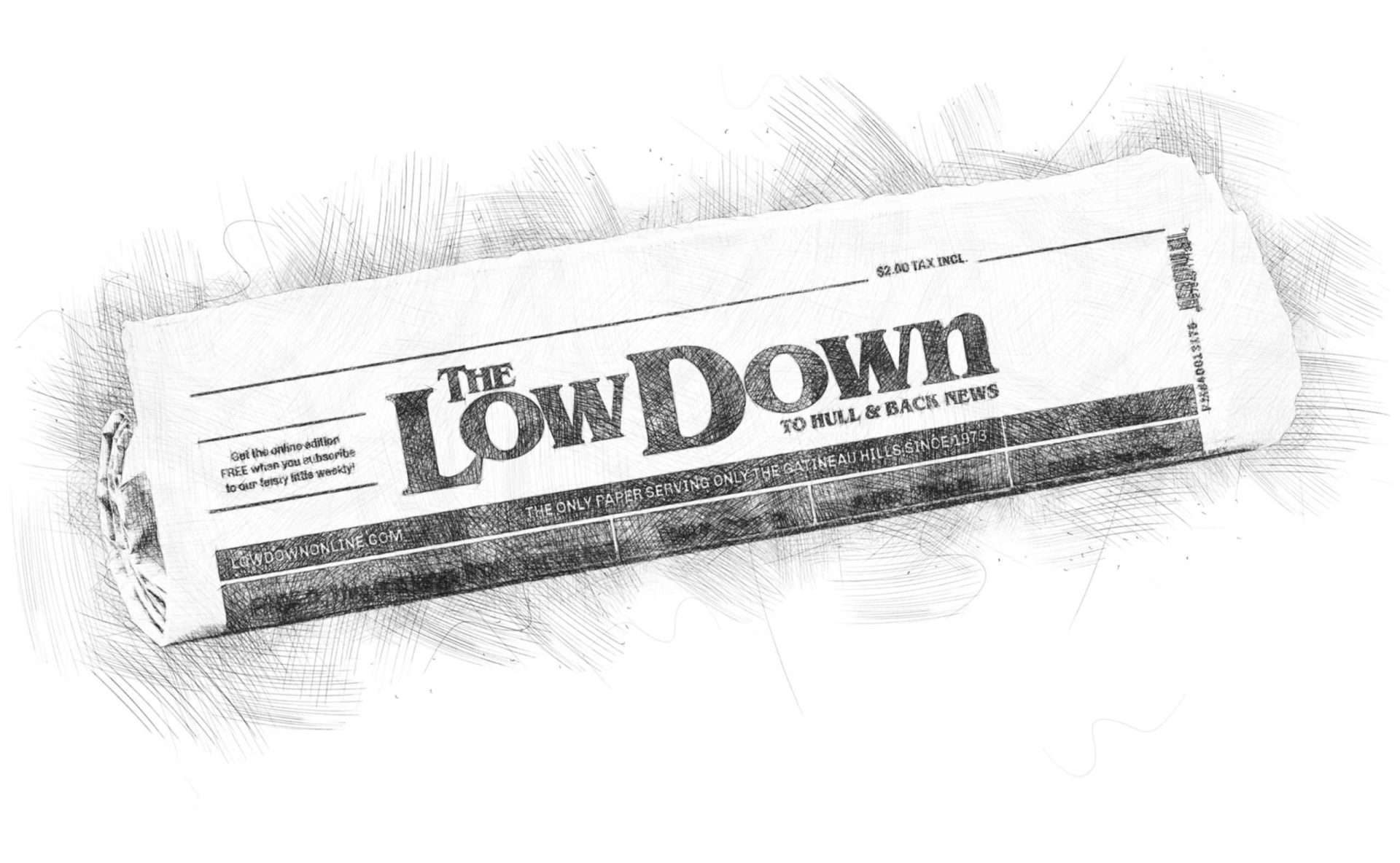

User reviews (0)