
 mangolinkcam.com
No paid content found
mangolinkcam.com
No paid content found
Categories: Other
Live streaming webcams showing wildlife, animals, birds, zoos, aquariums, pets and reptiles around the world
 Visit website
 Updated: 2026-09-28 11:11
 Language: English (default)
 Access: Normal
 Profile views 5
 Outbound visits 1
Related questions
More questions →How to Follow Animal Science News Without Getting Lost in the Hype
Animal science news on a site like ScienceDaily covers everything from paleontology to veterinary medicine, and the word "animals" itself is a poor filter — it returns studies on lab mice, wild bird populations, livestock genetics, and extinct dinosaurs in the same feed. To follow it without drowning, treat "animals" as a starting point rather than a topic: narrow to a taxonomic group or a research question, check whether the study organism is the subject or just a model for human health, and read the source institution's own release before trusting a headline. This guide explains how to do each of those things.
Why "animals" is a weak keyword
ScienceDaily's own topic list runs from agriculture and anthropology to brain, cancer, and stem cells, and its description covers astronomy, chemistry, climate, computers, engineering, and medicine alongside biology. A single keyword like "animals" sits across several of those categories at once.
That means a search or feed built on "animals" will mix:
- Wildlife and ecology — population studies, conservation, behavior in natural habitats
- Paleontology and evolution — dinosaurs, extinct species, evolutionary biology
- Biomedical model organisms — mice, rats, zebrafish, fruit flies used to study disease
- Agriculture and livestock — breeding, nutrition, welfare, production
- Veterinary and comparative medicine — animal health that may or may not inform human health
These are different literatures with different standards of evidence. A mouse study in a cancer journal and a field survey of songbird migration are both "animal science," but they answer different questions and carry different weight.
Separate the study organism from the study's purpose
The single most useful habit is asking: is this study about the animal, or about something the animal stands in for?
| If the headline says… | Ask… | What it usually means |
|---|---|---|
| "Scientists discover… in mice" | Is the finding about mouse biology or human disease? | Often a model-organism study; human relevance is a hypothesis, not a result |
| "New species of…" | Is this a description, a range extension, or a claim about behavior? | Taxonomy and distribution are solid; behavioral claims need more evidence |
| "Animals can…" | Which animals, how many, under what conditions? | Broad claims from narrow samples are the most common hype pattern |
| "Study links [animal] to [outcome]" | Was the outcome measured in the animal or inferred? | Correlation in animals rarely transfers cleanly to other species |
A study can be excellent science and still tell you almost nothing about the animal in the headline. That is not a flaw in the research — it is a flaw in how the headline frames it.
Build a narrower tracking routine
Instead of following "animals," pick two or three specific threads and follow those. Concrete options:
- Taxon filters — "birds," "marine mammals," "primates," "insects," "reptiles." These cut the feed sharply and match how most research communities organize themselves.
- Question filters — "animal cognition," "animal behavior," "conservation biology," "animal welfare," "evolutionary biology." Better than taxon filters if your interest is a type of question rather than a type of creature.
- Method filters — "field study," "tracking," "genomics," "fossil." Useful when you care about how a result was produced.
Combine one taxon term with one question term (for example, "birds" + "cognition") and you get a feed that is small enough to actually read.
Check the source behind the story
ScienceDaily aggregates releases from universities and research organizations. That is useful, but it means the framing usually comes from the institution that did the work — which has an interest in the finding sounding important.
Before accepting a claim, look for:
- The journal and study type — a peer-reviewed paper, a conference abstract, and a press release are three different levels of evidence.
- Sample size and setting — ten captive individuals in a lab and a ten-year field survey support very different conclusions.
- Whether the release names the limitation — good institutional releases usually do; if none appears, be more cautious.
- Independent coverage — if only the originating institution is reporting it, the finding has not yet been weighed by outside researchers.
Recognizing common hype patterns
A few recurring shapes are worth memorizing:
- The model-organism leap — a mouse or zebrafish result presented as if it were about humans or "animals" generally.
- The single-study headline — one small study reported as settled fact, with no mention that replication is pending.
- The anthropomorphism shortcut — animal behavior described with human emotional terms ("grieving," "jealous," "generous") when the measured behavior was narrower.
- The extinct-species certainty — soft-tissue or behavior claims about dinosaurs and other extinct animals stated more confidently than the fossil evidence supports.
- The "scientists say" passive — no named researcher, no institution, no paper. Treat as unverified.
None of these mean the underlying study is wrong. They mean the headline has done work the evidence has not.
A quick reading checklist
When an animal science story catches your attention, run these four questions in order:
- What species, and how many individuals?
- Was the animal the subject, or a stand-in for another question?
- What kind of evidence is this — field data, lab experiment, model, or fossil?
- Who is reporting it, and does anyone independent corroborate it?
If you can answer all four from the story itself, it is probably a well-reported piece. If you cannot answer any of them, you are reading a headline, not a finding.
Website Overview
An established domain and managed infrastructure suggest continuity of operations and may support dependable delivery, although neither guarantees service quality. An active inbound-mail setup with incomplete authentication may leave the domain more open to impersonation. Provider hosting alone does not close that gap.
Domain and Registration
Registered in 2013, this domain has about 13 years of history. That suggests continuity, although ownership and purpose may have changed. Transfer-protection status is present, helping reduce the risk of unauthorized domain transfers. The domain uses the common .com extension, which is not an independent safety signal.
DNS and Email
MX records exist, but SPF, DKIM and DMARC were not detected. Protection against domain impersonation may be incomplete. Nameservers are provided by dns-parking.com, indicating managed DNS hosting. MX records point to the Google Workspace email service. No CNAME was found; the observed records resolve directly to addresses. TXT records include verification markers for Google. Such markers may also remain after a service stops being used.
TLS and Certificates
The public key uses EC with 256 bits. The server supplied a complete certificate chain. No organization name is present in the certificate; the available fields are consistent with domain validation. The certificate was issued by Let's Encrypt, commonly associated with automated certificate services. The certificate's total validity is about 89 days, consistent with a short renewal cycle.
HTTP and Browser Security
The checked browser-security headers were not detected, leaving fewer explicit browser-side safeguards. No X-Powered-By header was found, reducing one common source of backend fingerprinting information. No obvious internal addresses or debug information were found in the headers. The Server header contains the custom value LiteSpeed. No explicit CDN or WAF marker was found in the response headers.
Technology Stack Analysis
The public page identifies jQuery, Bootstrap, Google Tag Manager without precise versions, leaving fewer clues for version-specific scanning.
Search and Social Sharing
No homepage canonical URL was detected. If duplicate URLs exist, consolidation may be less explicit. JSON-LD includes Organization data, helping describe the organization as an entity. The title has 47 characters, within a common display range. A meta description is present, with 108 characters. The observed directives allow indexing and link following.
 Hosting and Email
 Hosting
 Hostinger International Limited
 Google Workspace
 Location
 Boston, Massachusetts, United States
 Pages, Search and Sharing
| Meta description | Live streaming webcams showing wildlife, animals, birds, zoos, aquariums, pets and reptiles around the world |
|---|---|
| Canonical URL | Not detected |
| Language | English (default) |
| Twitter Card | Not detected |
Social Sharing Preview
5 fields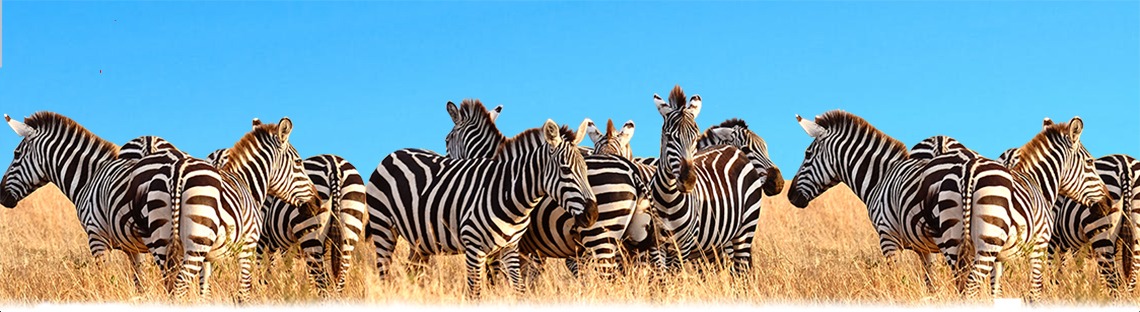
Sharing metadata
| og:url | https://www.mangolinkcam.com |
|---|---|
| og:type | article |
| og:image | https://www.mangolinkcam.com/newversion/img/banner.jpg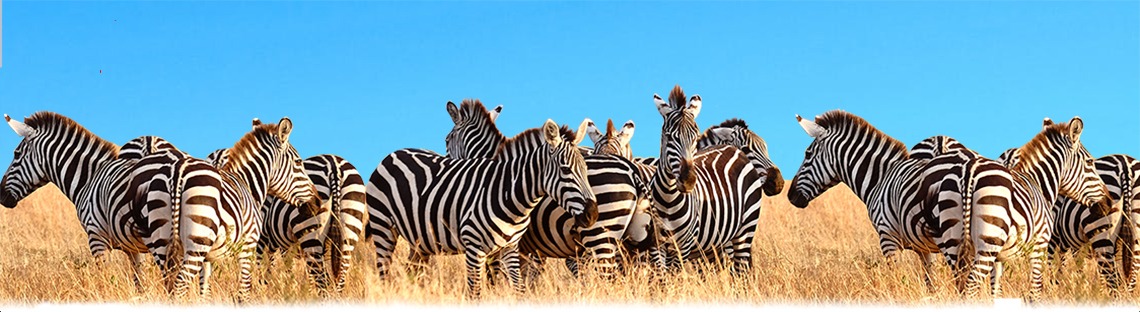 |
| og:title | Live Streaming Animal Web Cams |
| og:description | Keep up to date with hundreds of live streaming animal webcams from around the world including mammals, birds, aquatic life, reptiles, insects and pets |
robots.txt (opens in a new tab)
0 rulesAll bots 0 allowed · 0 disallowed

 All bots
No matching rules.
Sitemaps
1 Registration details RDAP / WHOIS
| Registrar | DomainPeople, Inc. |
|---|---|
| Registered | 2013-07-01 |
| Expires | 2027-07-01 |
| Domain status | client transfer prohibited |
| Nameservers | ns1.dns-parking.com、ns2.dns-parking.com |
| DNSSEC | unsigned |
 DNS records
| Type | Name | Value | TTL | Priority |
|---|---|---|---|---|
| A | mangolinkcam.com | 147.93.44.34 | 14400 | — |
| AAAA | mangolinkcam.com | 2a02:4780:2d:5035::1 | 14400 | — |
| MX | mangolinkcam.com | SMTP.GOOGLE.com | 14400 | 10 |
| NS | mangolinkcam.com | ns1.dns-parking.com | 86400 | — |
| NS | mangolinkcam.com | ns2.dns-parking.com | 86400 | — |
| TXT | mangolinkcam.com | google-site-verification=AOeQu7vf67SNdmEkFUKAqRGCwtc0jGUHUBc7Z7c85pg | 14400 | — |
 TLS and certificates
| Assessment | Normal configuration |
|---|---|
| Supported protocols | TLSv1.2、TLSv1.3 |
| Negotiated protocol | TLSv1.3 |
| Certificate subject | mangolinkcam.com |
| Issuer | Let's Encrypt |
| Valid until | 2026-12-13T23:09 · Remaining when checked: 76 days |
| Verification details | Certificate trust: Passed · Hostname match: Passed |
 HTTP response headers
| Header | Value |
|---|---|
| content-type | text/html |
| server | LiteSpeed |
 Identified technologies
User reviews (0)