
 简体中文
 English

Website review
This review may include AI-generated content and is not individually verified. Domain, certificate and other facts come from the observed data on this page.
What is Mary Hare School?
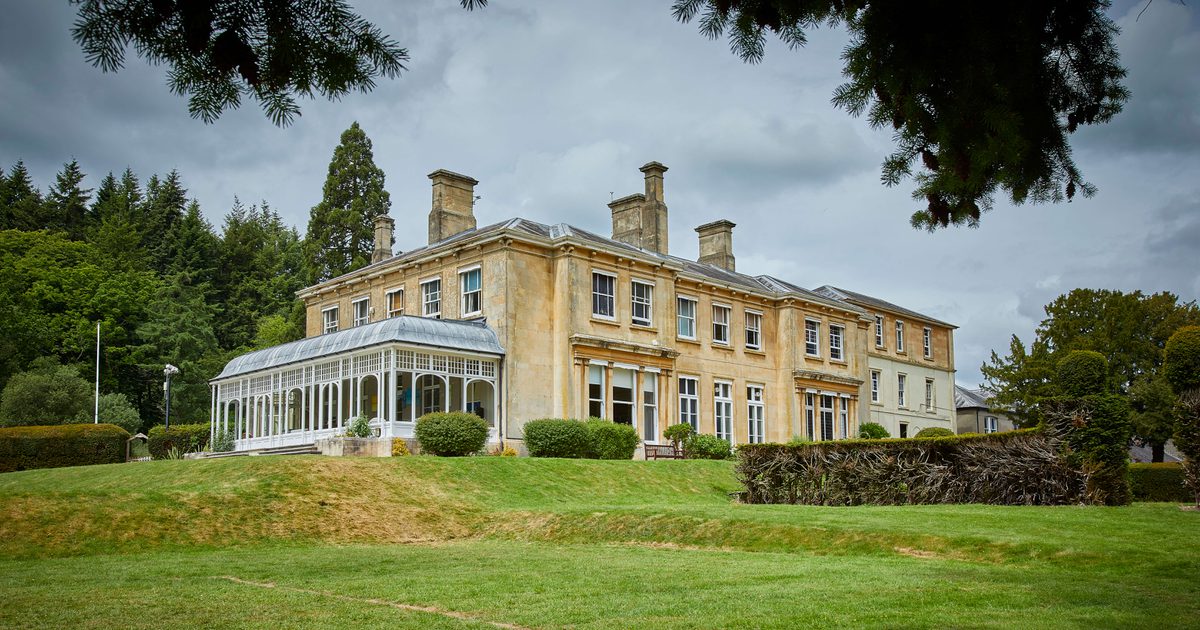
Mary Hare School is a specialist school in Newbury, Berkshire, for deaf children and young people aged roughly 4 to 19, from Reception through Year 13. It is described as the UK's largest residential school for deaf pupils and operates as both a boarding and day school, drawing students from across the country. Teaching emphasises spoken and written English to build language, listening and communication skills alongside full access to the national curriculum, and classes are staffed by qualified Teachers of the Deaf with additional support and specialist technology. The school also offers a full curriculum including GCSEs, BTECs, A Levels and Diplomas, and states that it works in partnership with families on placement decisions.
Who it may suit
- Families seeking a deaf peer group for social as well as academic development, particularly where a mainstream setting has not provided enough language access.
- Parents considering boarding, for whom a residential option reduces daily travel.
- Students aiming for formal qualifications through to sixth form.
The main trade-off is specialism versus locality: a residential specialist school can offer concentrated expertise and a large deaf peer community, but may mean distance from home or a boarding routine. Families weighing this against mainstream provision with support can explore the school's own information at Mary Hare School and compare it with local authority options before deciding.
How do I apply for a place at Mary Hare School for my deaf child?
Mary Hare School's site presents it as a specialist residential and day school for deaf children and young people in Newbury, Berkshire, admitting from Reception to Year 13 (ages 4–19). The site explains its approach—spoken and written English, Teachers of the Deaf, and access to the full national curriculum—but the application steps themselves are not set out in the supplied page text. The practical answer is to start by contacting the school's admissions team directly, then prepare the information they will need.
What to prepare before you contact admissions
- Your child's details: age, current school or setting, and year group sought.
- Communication profile: how your child communicates, their hearing levels, and any hearing technology or support they use.
- Existing paperwork: any Education, Health and Care (EHC) plan or equivalent, and recent reports from professionals such as Teachers of the Deaf, speech and language therapists, or educational psychologists.
- Your preferences: day or boarding, and why you are considering a specialist placement.
- Funding questions: whether you are exploring a local-authority placement or another route; the school or your local authority can clarify what applies in your case.
How the process usually works for specialist schools
For a school like this, an enquiry typically leads to a conversation with admissions, a visit or assessment, and then a decision involving both the school and the placing authority. Because Mary Hare is a non-maintained specialist school, a local-authority placement is often part of the picture, so it helps to speak to your current school's SENCo or your local authority's SEN team early and in parallel with the school.
A useful next step
Contact Mary Hare's admissions office through Mary Hare School and ask three questions: what information they need to begin, what their assessment or visit involves, and what funding routes they see most often. For broader context on specialist provision and the placement process, the National Deaf Children's Society at National Deaf Children's Society offers family guidance, and the school's own site is the authority on its admissions arrangements.
What is it like to board at Mary Hare School as a deaf student?
Boarding at Mary Hare School means living on campus in Newbury, Berkshire, within a school that runs as both a boarding and day school for deaf students from Reception to Year 13 (ages 4–19). The site describes it as the largest residential school for deaf children and young people in the UK, with a peer group made up entirely of deaf students. For a deaf teenager who has often been the only deaf pupil in their class, that peer group is the main draw: social life, dorm life and lessons all happen among people who share the same communication experience.
What the school says the day-to-day looks like
- Language and learning: pupils are immersed in spoken and written English, with teaching aimed at developing language, listening, communication and academic skills so students can access the full national curriculum.
- Staffing: all teachers are described as qualified subject-specialist Teachers of the Deaf, backed by an additional support team.
- Technology: classrooms are equipped with technology intended to maximise learning.
- Academics: a full curriculum including GCSEs, BTECs, A Levels and Diplomas.
- Pastoral aim: the school says it works to build confidence, self-esteem and resilience for life after school, in what it describes as a safe and happy environment where friendships can flourish.
What that means in practice
A realistic picture for a prospective boarder: evenings and weekends are spent in a signing-and-speaking community of deaf peers, with staff who are trained specifically for deaf learners rather than a mainstream boarding house adapting on the fly. The spoken-and-written-English focus suits families who want an oral/aural approach; a student whose family prioritises a signing-first environment should check how that fits before applying. Boarding also means distance from home for much of the UK, so homesickness and travel logistics matter as much as the classroom.
A useful next step
Ask the school directly about the weekly versus full-boarding pattern, how communication support is arranged in the boarding house after lessons end, and whether you can speak to current pupils or parents about residential life. Visiting on a normal school day, including an evening, tells you more about boarding than an open-day tour. For comparison, other specialist provision includes Royal School for the Deaf Derby; look at each school's own site for its boarding arrangements.
How does Mary Hare School teach spoken and written English to deaf pupils?
Mary Hare teaches through an immersion approach: pupils are surrounded by spoken and written English throughout the school day, with the explicit aim of closing the language gap so they can access the full national curriculum. Teachers are qualified subject-specialist Teachers of the Deaf, and classes are equipped with technology to maximise learning. The school describes its focus as developing language, listening, communication and academic skills together, rather than treating English as a separate remedial subject.
What that means in practice
- Spoken English is developed alongside listening, not instead of it — the stated goal is language and listening growth that carries into every subject.
- Written English is reinforced across the curriculum, since access to GCSEs, BTECs, A Levels and Diplomas depends on literacy in every subject area.
- Specialist staffing is universal: every teacher is a qualified Teacher of the Deaf, supported by an additional support team.
- Peer context matters: pupils learn and socialise within a deaf peer group, which the school frames as part of building confidence, self-esteem and resilience for life after school.
How to judge fit
If your child's priority is spoken-language development in a signing-poor environment, this immersion model is the direct match. If your family's priority is a bilingual signing-and-speaking approach, ask specifically how sign is used in classrooms and social settings before applying — the published description emphasises spoken and written English, so clarify the role of British Sign Language in day-to-day teaching.
A useful next step is to ask the school for a sample timetable and to sit in on a lesson during a visit, so you can see how language support is woven into a content subject rather than delivered separately. For comparison, other specialist provision includes National Deaf Children's Society, which offers independent guidance on communication approaches to help frame your questions.
What GCSE, BTEC and A Level options are available at Mary Hare School?
Mary Hare School states that it offers a full curriculum including GCSEs, BTECs and A Levels and Diplomas, but the supplied page information does not list individual subjects or course names. So the honest answer is that the qualification types are confirmed, while the specific option blocks are not.
What the page confirms
- GCSEs are offered as part of the curriculum for pupils up to Year 13 (ages 4–19).
- BTECs are offered alongside academic qualifications.
- A Levels are offered in the Sixth Form.
- Diplomas are also named as part of the offer.
- Teaching is in spoken and written English, delivered by qualified Teachers of the Deaf, with the aim of giving students access to the full national curriculum.
How to get the actual subject list
Subject availability changes year to year and depends on timetable blocks and class sizes, so treat any general list as a starting point. For a realistic picture:
- Ask the school directly for the current GCSE and Sixth Form option blocks for the year your child would enter.
- Ask how BTEC and A Level subjects are combined, and whether a mixed programme is possible.
- Ask what entry criteria apply to each subject and what support is available in the classroom.
- Visit on a normal teaching day and sit in on lessons in two or three likely subjects.
For comparison, other specialist provision includes Royal School for Deaf Children and National Deaf Children's Society, which publishes general guidance on choosing a school and on post-16 options.
Does Mary Hare School offer professional courses or services beyond its school provision?
Yes. Beyond its Reception–Year 13 school provision, Mary Hare School lists wider services on its site, including professional courses. The page's "Our wider services" section signals training and specialist services aimed at professionals and families, not just enrolled pupils.
What this means in practice
- For teachers and support staff: professional courses are the most direct fit if you work with deaf children and want specialist continuing professional development.
- For families: the wider services are worth checking if you need advice or support beyond day-to-day schooling, though the page evidence doesn't detail each service.
- For placement decisions: the school itself is a residential and day school in Newbury, Berkshire, for deaf students aged 4–19, with spoken and written English central to teaching.
Next step
If your interest is professional training, ask Mary Hare directly which courses are running, who they're for and how they're delivered. If your interest is a child's placement, use the admissions route instead. Related context is available from National Deaf Children's Society on education options for deaf children.
 Cloudflare
 Microsoft 365
 United Kingdom

User reviews (0)