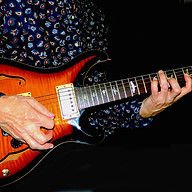
Website profiles · Technology insights · Alternatives

masterguitar.com

The official website of guitarist Jay EuDaly. Cd's, downloads, videos, pictures, gig schedule. Master Guitar. Guitar performance.

No paid content found
Visit website
Profile views 7 Outbound visits 1 Normal
Master Guitar Full homepage screenshot

At a glance

Category
News
Language
English
Paid-content signal
No paid content foundObserved
Registered
1999
Hosting
FastlyInferred
HTTPS certificate trusted
PassedObserved
Last updated

Website review

This review may include AI-generated content and is not individually verified. Domain, certificate and other facts come from the observed data on this page.

What is Master Guitar?

Master Guitar is the official website of guitarist Jay EuDaly. It functions primarily as an artist hub rather than a retail store or a general guitar-instruction platform, though it does include educational materials.

What visitors typically find

  • Music releases: CDs and downloads, including titles such as Channeling Harold, My Ship, Sound Tracks and Vertical Truth.
  • Video and photos: performance footage and images related to EuDaly's work.
  • Gig schedule: upcoming live dates, useful for fans planning to attend shows.
  • Instructional material: Chordal Mechanisms for the Guitar suggests a method or theory resource aimed at players who want to understand chord voicings and fretboard organization, rather than beginner chord charts.

Who it suits

The site is best suited to listeners interested in EuDaly's guitar playing, and to intermediate or advanced guitarists curious about his approach to harmony and chord construction. Someone seeking a large, structured curriculum with graded lessons may find it narrower than dedicated teaching platforms. Because pricing signals are not available, costs for recordings or instructional items cannot be stated here.

Overall, Master Guitar works as a compact home base for one guitarist's recordings, performances and teaching ideas, with the gig calendar and media sections serving casual visitors and the instructional titles serving practicing musicians.

Who is Jay EuDaly?

Jay EuDaly is a guitarist whose official website, Master Guitar, presents his work as a performer and music educator. The site describes itself as covering CDs, downloads, videos, pictures, and a gig schedule, so it functions as both a promotional hub and a reference point for listeners who want to follow his performances.

His catalog titles suggest a mix of original instrumental music and instructional material. Items such as Channeling Harold, My Ship, and Sound Tracks point toward recorded guitar performance, while Chordal Mechanisms for the Guitar and Vertical Truth appear aimed at players studying harmony and fretboard organization.

Different audiences may use the site in different ways:

  • Listeners can explore recordings and check upcoming appearances.
  • Guitar students may be drawn to the method-oriented titles and video content.
  • Event organizers or collaborators can review performance material and scheduling information.

Because the site focuses on performance and education rather than a retail platform, it is suited to people seeking a direct overview of EuDaly's musical output and teaching approach. Pricing and detailed product specifications are not indicated in the supplied information, so those would need to be confirmed on the site itself.

What CDs and downloads are available on Master Guitar?

Master Guitar is guitarist Jay EuDaly's official site, centered on his own recordings, downloads, videos, photos and gig schedule rather than a broad retail catalog.

What the site covers

  • CDs — physical releases by Jay EuDaly are the core offering, alongside related albums and soundtrack work.
  • Downloads — digital versions of the music, typically the same recordings in downloadable form.
  • Named projects — titles such as Channeling Harold, My Ship, Sound Tracks, Vertical Truth and Chordal Mechanisms for the Guitar appear as releases or instructional works.
  • Performance media — videos and pictures supporting the recordings.

Who it suits

Listeners already interested in EuDaly's playing will find the most value, since the catalog is personal rather than a wide-ranging store. Guitarists drawn to his instructional material may also find the chordal and theory-based titles useful. Anyone seeking a large multi-artist shop would likely be better served elsewhere.

Trade-offs

  • Advantages: a focused, artist-run catalog; recordings and downloads gathered in one place; direct connection to gig dates and videos.
  • Limitations: selection is limited to this artist; pricing, formats and availability are not specified here, so check the site directly before buying.

For the current list, visit Master Guitar.

What is the gig schedule for Jay EuDaly?

The site presents Jay EuDaly as a performing guitarist and offers a gig schedule among its main sections, alongside CDs, downloads, videos and photos. The schedule is the most time-sensitive part of the site: it typically lists upcoming appearances with dates and venues, so it is the first place to check before planning to see him play live. Because listings change as bookings are confirmed, the schedule is best treated as the authoritative source rather than any third-party calendar.

That makes the site most useful to:

  • Local listeners deciding which night to attend
  • Fans who want to confirm whether a show is still on
  • Promoters or venues verifying a date

For those who cannot attend, the recordings, downloads and videos sections serve as a substitute, capturing performances rather than announcing them. The trade-off is that a schedule only helps if it is kept current; when it is quiet, the media sections remain the reliable content. Anyone wanting the performance side rather than the schedule can explore the catalogue and video material at Master Guitar, where the gig listing also appears.

What are Chordal Mechanisms for the Guitar and Vertical Truth?

Two distinct works from Jay EuDaly

Chordal Mechanisms for the Guitar and Vertical Truth are titles associated with guitarist Jay EuDaly's official site, Master Guitar. The site presents them alongside his CDs, downloads, videos, photos and gig schedule, so both appear to sit within a catalogue that mixes recorded music with guitar-focused educational material.

Chordal Mechanisms for the Guitar
The name points toward chord-based study: how chords are built, connected and voiced on the instrument. Material of this kind is typically aimed at players who want to move beyond memorised shapes and understand why progressions work. It may suit intermediate guitarists, songwriters and teachers looking for a systematic way to think about harmony.

Vertical Truth
This title suggests a different angle — possibly a method, album or written work exploring harmony in a vertical, chord-stacking sense, or a personal artistic statement. Without fuller details on the site, its exact format is unclear, but it belongs to the same body of work as the chordal material.

How they differ

Chordal Mechanisms for the Guitar Vertical Truth
Likely focus Chord construction and movement Harmony or an artistic concept
Likely audience Students of guitar harmony Players and listeners drawn to EuDaly's approach

For specifics — formats, contents and availability — check the official site directly.

What videos and pictures are featured on Master Guitar?

Master Guitar is the official site of guitarist Jay EuDaly. Its video and picture sections serve as a portfolio and archive rather than a media library, so they are best understood by what they document about his playing and releases.

Videos typically focus on guitar performance, including clips related to his recordings and projects such as Channeling Harold, My Ship and Sound Tracks. Some material may also tie into his instructional work, notably Chordal Mechanisms for the Guitar and Vertical Truth, where demonstrations of chordal and improvisational ideas are useful. Viewers who want to see technique in context are the natural audience; those seeking full-length lessons or structured courses may find the clips supplementary.

Pictures are likely live and promotional photographs — gig shots, portraits and images connected to CDs and downloads. They suit fans, promoters and journalists looking for a sense of the artist's stage presence and history.

The trade-off is depth versus breadth: the site gathers performance media in one place under a single artist's name, but it is not a general video platform, and availability may change as new gigs and releases are added. Check the gig schedule alongside the media for current activity.

Related questions

More questions →
What Does "Channeling Harold" Mean in Jay EuDaly's Guitar Work?

"Channeling Harold" is the title of a piece in Jay EuDaly's Master Guitar body of work, not a named guitar technique you'll find in method books. The phrase signals a musical homage: "channeling" in this context means deliberately playing in the spirit and vocabulary of another guitarist, and "Harold" identifies the player being evoked. On a site built around EuDaly's recordings, downloads, videos, and gig schedule, it functions as a titled composition or concept piece rather than a product, course, or exercise system.

That distinction matters if you arrived at the phrase expecting a lesson. It isn't a technique label like "sweep picking" or "hybrid picking." It's closer to a dedication — a piece written and performed so that another player's influence is audible in the choices being made.

Why "Channeling" Is the Right Word

Guitar culture uses "channeling" to describe conscious stylistic evocation. When a player says they were channeling Wes Montgomery, they mean the octaves, the thumbed attack, the phrasing arcs. It's not imitation for its own sake; it's a way of composing and improvising through another musician's language.

Applied to a titled piece, that framing tells the listener what to expect:

  • A recognizable stylistic fingerprint. Something in the melody, comping, or tone points toward a specific player's approach.
  • A personal filter. The piece still sounds like EuDaly. Channeling is a lens, not a costume.
  • A statement of lineage. Naming the influence is a way of crediting it.

The word also implies intent. You don't accidentally channel someone. The title announces that the evocation is the point of the piece.

What a Listener Can Expect

Because the title is a dedication rather than a genre, the useful thing to listen for is where the homage lives. In guitar composition it usually shows up in one or more of these places:

Harmonic language

Chord voicings and substitutions carry a lot of stylistic information. A piece that leans on close-interval chord voicings, moving inner lines, or unexpected bass motion is telling you something about its model before the melody even arrives.

Comping and chord movement

How the accompaniment breathes — whether chords move in steady blocks, in rhythmic jabs, or as a continuous inner voice — is often the clearest homage signal. This is also where EuDaly's interest in chordal playing connects directly.

Single-note phrasing

Attack, vibrato width, note placement against the beat, and how phrases end all point toward a specific player. Two guitarists can play the same line and reveal completely different models through phrasing alone.

Tone and texture

Pick attack, thumb versus pick, amp character, and whether the guitar sits dry or wet in the mix all contribute. Tone is often the fastest tell.

Arrangement choices

Whether the piece is solo guitar, guitar with rhythm section, or something more layered changes how the homage reads. A solo chordal arrangement puts the influence front and center; a full-band setting lets it sit inside a larger texture.

How It Connects to the Rest of the Master Guitar Material

"Channeling Harold" doesn't sit in isolation. It belongs to a cluster of interests visible across the site's keywords and titles.

Chordal Mechanisms for the Guitar points to a systematic interest in how chords are built, voiced, and moved on the instrument. A piece that channels another player through comping and voicings is a natural companion to that kind of study — the mechanism is the theory, the piece is the application.

Vertical Truth suggests a harmonic, chord-stacking orientation rather than a purely linear, scale-running one. That's consistent with a piece whose homage may live in the chords as much as in the lines.

My Ship is a standard associated with rich harmonic treatment. Players drawn to that repertoire tend to care about voicings, reharmonization, and how a melody sits against moving harmony — the same instincts that make a "channeling" piece meaningful.

Sound Tracks and the broader catalog of CDs, downloads, and videos indicate that this material is meant to be heard as recorded music, not only studied as exercises. So the primary way to understand "Channeling Harold" is to listen to it.

What a Guitarist Can Take From It

If you're a player rather than just a listener, a titled homage is a useful study prompt. The exercise below is a general approach, not a claim about how the piece was written.

A practical exercise: build your own "channeling" piece

  1. Pick one player. Choose someone whose style you can already recognize by ear.
  2. Name three specific traits. Not "he's bluesy" but "he bends into the third, ends phrases on the fifth, and leaves the downbeat empty." Specificity is the whole exercise.
  3. Write eight bars using only those traits. Restrict yourself. If you can't tell it's a homage, neither can anyone else.
  4. Add one thing that is unmistakably you. A rhythmic tic, a voicing you favor, a tone you always reach for.
  5. Play it for someone who knows the model player. Ask what they heard. Their answer tells you whether the channeling landed.

The value isn't in producing a convincing imitation. It's in discovering which elements of a style are actually load-bearing — usually fewer than you'd guess.

What to listen for in the original

  • Does the homage appear in the chords, the melody, or the overall feel?
  • Is it consistent throughout, or does it appear in a section?
  • What does EuDaly do that the model player wouldn't? That's the personal filter.
  • Does the piece stand on its own if you don't know the reference?

That last question is the real test of any homage piece. A good one works whether or not you catch the dedication.

Common Misreadings

"It's a technique." It isn't. There's no "channeling" technique to practice. If you're looking for a method, look at the chordal and harmonic material instead.

"It's a product or course." The site is built around recordings, downloads, videos, and performance dates. A titled piece belongs to that catalog, not to a separate instructional product line.

"Harold is a nickname for the site owner." Nothing in the available material supports that. The natural reading is that Harold is the player being evoked.

"It's a cover." Channeling and covering are different. A cover reproduces a song. A channeling piece is an original that borrows a style.

The Short Answer

"Channeling Harold" is a titled piece in Jay EuDaly's Master Guitar work whose name announces a stylistic homage — playing in the spirit of another guitarist named Harold. It is best understood by listening to it and by noticing where the evocation lives: in the voicings, the comping, the phrasing, or the tone. For players, it doubles as a prompt to try the same exercise with an influence of their own.

What Is Master Guitar and Who Is Jay EuDaly?

Master Guitar is the official website of guitarist Jay EuDaly. It serves as a hub for his work as a performer and recording artist, bringing together his CDs, downloads, videos, pictures, and gig schedule in one place. If you want to explore his guitar music or find out where he's playing, this site is the starting point.

Who Jay EuDaly Is

Jay EuDaly is a guitarist and recording artist. His site describes him as a guitar performer, and the content it hosts—recordings, videos, and live dates—centers on that performance work rather than on lessons, gear reviews, or general guitar culture.

That distinction matters if you arrived expecting a teaching platform. Master Guitar is a musician's site, not a method or course brand.

What You'll Find on the Site

The site's own description lists the main content areas:

  • CDs – released recordings
  • Downloads – digital music
  • Videos – performance footage
  • Pictures – photos
  • Gig schedule – upcoming live dates

The site also references several named works and concepts associated with EuDaly's guitar output, including Channeling Harold, Chordal Mechanisms for the Guitar, My Ship, Sound Tracks, and Vertical Truth. These appear as keywords tied to the site, suggesting they are titles or topics within his catalog rather than separate products with published details.

How to Start Exploring

  1. For listening – begin with the CDs and downloads sections to hear his recorded work.
  2. For watching – the videos section holds performance footage.
  3. For live shows – check the gig schedule for dates.
  4. For background – the pictures section and site pages give context on the artist himself.

What the Site Doesn't Tell You

The available site information does not include pricing, purchase links, payment platforms, or login requirements. So you can't assume from this description alone whether downloads are free, paid, or gated. If cost or access matters to your decision, check the individual CD and download pages directly rather than relying on the general description.

The Short Version

Master Guitar = Jay EuDaly's official home for his guitar performance work. Use it to listen, watch, and find shows. Treat any pricing or access question as something to verify on the specific page, since the site's summary doesn't cover it.

What Are Chordal Mechanisms on Guitar and How Do They Work?

Chordal mechanisms are the repeatable ways chords move, connect, and transform on the fretboard. Instead of memorizing hundreds of isolated chord shapes, you learn a handful of systems—voice-leading patterns, common-tone anchors, and string-set transfers—that generate chords on demand in any key. A chord dictionary gives you static grips; a chordal mechanism tells you how to get from one chord to the next, and why it works.

This article explains the concept, shows how the same mechanism transfers across keys and chord qualities, and gives you a concrete practice routine you can apply to a progression you already know.

Chord Shapes vs. Chordal Mechanisms

A chord shape is a photograph. A chordal mechanism is a route.

Chord shape Chordal mechanism
What it is A fixed fingering for one chord A repeatable way chords connect or move
Scope One chord, one position Many chords, many keys
Learning load One item per chord One system covers dozens of chords
Failure mode Forgotten shape = silence You can derive the next voicing
Typical use Strumming a known song Comping, arranging, improvising, reharmonizing

The practical difference shows up when something changes. If the singer moves the tune up a step, a shape-based player hunts for new fingerings. A mechanism-based player shifts the pattern and keeps the same voice leading intact.

The Core Idea: Voice Leading and Common Tones

Most useful chordal mechanisms rest on two facts:

  1. Chords in a progression usually share notes. In C major, C (C-E-G) and Am (A-C-E) share C and E. Those shared notes are common tones—they can stay put while other voices move.
  2. The remaining voices move by the smallest available distance. This is voice leading. Smooth progressions tend to move one or two notes by a step or a half step rather than jumping.

A mechanism is simply a rule for handling those two facts on the guitar's specific tuning. Because the guitar's strings are tuned in fourths (with one major-third exception between G and B), the same voice-leading move looks different depending on which string set you're on. That's why mechanisms are usually organized by string set.

String sets as the organizing principle

Common groupings:

  • 6-4-3 / 5-3-2 / 4-2-1 — three-note groupings (often called shell voicings or triads)
  • 6-4-3-2 / 5-3-2-1 — four-note groupings (seventh chords)
  • 5-4-3-2-1 — full five- and six-note voicings

A mechanism learned on one string set usually transfers to the others with a predictable adjustment, because the interval relationships between adjacent strings are consistent except at the G–B boundary.

How One Mechanism Transfers Across Keys and Qualities

Take a simple, concrete mechanism: keep the top note, move the bottom two voices down by step.

Assume a four-note voicing on strings 4-3-2-1. If you apply "top note stays, lower voices descend," you can walk through a diatonic progression without ever consulting a chord chart. The same rule produces:

  • a different set of chords in a different key (just start elsewhere),
  • a different quality of chord (major, minor, dominant) depending on which scale degrees land under your fingers,
  • a different register (move the whole pattern up or down the neck).

This is the payoff: one rule, many outputs. You are no longer storing chords; you are running a process.

A worked example (hypothetical teaching case)

Suppose you know a ii–V–I in C: Dm7 – G7 – Cmaj7. Rather than learning three separate grips, apply a common-tone mechanism:

  • Identify the note shared between Dm7 and G7 (the F, the 7th of G7 and the 3rd of Dm7).
  • Hold that note.
  • Move the other voices to the nearest chord tones of the next chord.

Then repeat from G7 to Cmaj7, where the shared tone is B (the 3rd of G7, the 7th of Cmaj7). You now have a ii–V–I that works in any key by shifting the starting position, because the voice-leading relationships are identical.

A Practice Approach You Can Start Today

  1. Pick one progression you already play (a ii–V–I, a I–vi–ii–V, a blues turnaround).
  2. Choose one string set. Start with 4-3-2-1 for four-note chords.
  3. Write down the shared tones between each adjacent pair of chords.
  4. Find the smallest movement for the non-shared voices.
  5. Play the progression using only those movements—no jumping to familiar shapes.
  6. Transpose the whole thing up a whole step and repeat. Notice what stayed the same.
  7. Change one chord's quality (make the minor chord major, the dominant chord minor) and observe how the mechanism adapts.

Do this for ten minutes a day on one progression, and within a couple of weeks you'll be deriving voicings instead of recalling them.

Where This Fits in Broader Fretboard Organization

Chordal mechanisms are one layer of a larger project: making the fretboard predictable. Guitarists who organize the neck well tend to share a few habits—they think in intervals rather than shapes, they group strings into sets, and they treat harmony as motion rather than as a list.

Jay EuDaly's Vertical Truth approach, referenced on Master Guitar, is one example of this kind of organizing framework: it treats the fretboard as a system of relationships to be understood rather than a collection of memorized patterns. You don't need any particular method to benefit from the mechanism idea, but if you're already studying a fretboard system, chordal mechanisms are a natural companion—they're the harmonic application of the same "understand the relationships" principle.

Common Misconceptions

  • "Mechanisms are just inversions." Inversions are one result of a mechanism. The mechanism is the rule that produces them.
  • "You still have to memorize chords." You memorize a few anchor voicings and the rules that connect them. The rest is derived.
  • "This is only for jazz." Any style with chord movement—folk, rock, pop, gospel—benefits from smoother voice leading and fewer shape hunts.
  • "It's too theoretical to play." The test is simple: can you get from chord A to chord B without stopping to think? If yes, the mechanism is working.

Key Takeaways

  • A chordal mechanism is a repeatable rule for how chords move and connect, not a fixed shape.
  • Voice leading and common tones are the engine; string sets are the map.
  • One mechanism transfers across keys, registers, and chord qualities.
  • Practice by applying a single mechanism to a progression you already know, then transposing it.
  • This concept sits naturally inside broader fretboard-organization systems like Vertical Truth.

Start with one progression, one string set, and one rule. The goal isn't to collect more chords—it's to need fewer.

Who Is Jay EuDaly and What Is Master Guitar?

Jay EuDaly is a guitarist and the artist behind Master Guitar (masterguitar.com), his official website. The site is a hub for his work as a performer and teacher: it presents his CDs, downloads, videos, and photos, along with his gig schedule. If you want to listen to his music, follow his live dates, or explore the guitar concepts he teaches, Master Guitar is the place to start.

What the Master Guitar Site Offers

The site's stated purpose covers both sides of EuDaly's work — performance and instruction. According to the site's own description, you'll find:

  • CDs and downloads — recorded music you can listen to or purchase
  • Videos — performance and/or instructional footage
  • Photos — images of the artist and his work
  • Gig schedule — where and when he's playing live

The site also names several signature works and concepts associated with EuDaly, including Channeling Harold, Chordal Mechanisms for the Guitar, Vertical Truth, My Ship, and Sound Tracks. These titles point to the range of his output: original music, arrangements, and a teaching vocabulary built around how the guitar actually works as a chordal and harmonic instrument.

The Concepts Behind the Names

Two of the recurring terms on the site — Chordal Mechanisms and Vertical Truth — are best understood as EuDaly's framework for thinking about guitar harmony and fretboard organization. They're the kind of ideas that show up in his instructional material rather than casual listening, so if you're a player looking to go deeper than chord charts, these are the entry points to watch for.

Channeling Harold and My Ship appear as titled works in his catalog. My Ship is a well-known jazz standard, which fits the profile of a guitarist working in a jazz-influenced idiom; Channeling Harold reads as an original piece or concept tied to his own musical voice.

How to Decide Where to Start

Your next step depends on what you came for:

If you want to… Start with
Hear his playing CDs and downloads on the site
See him perform The gig schedule
Learn his approach to guitar Videos and the Chordal Mechanisms / Vertical Truth material
Get a feel for his style first Photos and videos before committing to a purchase

Because the site itself doesn't publish pricing on the pages referenced here, treat any purchase or download as something to confirm directly on masterguitar.com rather than assuming terms in advance.

A Practical Note

Master Guitar is a single-artist site, not a marketplace or a subscription platform. That means the fastest way to answer "is this for me?" is to sample what's freely visible — videos and photos — then move to the catalog and schedule for the parts that require a decision. If you're a guitarist specifically interested in chordal thinking and fretboard logic, the instructional titles are the most distinctive thing on offer; if you're a listener, the recordings and gig dates are your path.

What Is "My Ship" by Jay EuDaly and Where Can You Hear It?

"My Ship" is a piece in Jay EuDaly's catalog on his official site, Master Guitar (masterguitar.com). The site is the hub for his CDs, downloads, videos, photos, and gig schedule, so that is where you would look to hear it or confirm its current availability. The site's own materials do not spell out a track-by-track description of "My Ship" in the information available here, so treat any specific claim about its arrangement, personnel, or release format as something to verify on the page itself rather than assume.

Where "My Ship" Sits in the Master Guitar Catalog

Master Guitar is the official website of guitarist Jay EuDaly. Its stated purpose is to present his guitar performance through CDs, downloads, videos, pictures, and a gig schedule. "My Ship" appears among the site's keywords alongside other named works and concepts:

  • Channeling Harold — a separate titled work in the catalog
  • Chordal Mechanisms for the Guitar — an instructional concept/title
  • Sound Tracks — another titled release or category
  • Vertical Truth — another named work
  • My Ship — the piece in question

Because these are distinct entries, "My Ship" should not be conflated with Channeling Harold or Sound Tracks. If you are trying to place it, the reliable move is to open the specific page for "My Ship" on masterguitar.com and read its own description, rather than inferring from the other titles.

How to Access or Listen to It

The site lists these access channels for EuDaly's work:

Channel What it typically provides
CDs Physical releases
Downloads Digital audio files
Videos Performance footage
Pictures Photos
Gig schedule Live performance dates

To find "My Ship":

  1. Go to masterguitar.com.
  2. Look for the section covering CDs, downloads, or videos — the site's stated content areas.
  3. Search or browse for the title "My Ship" within that section.
  4. If it appears as a download or CD track, follow that page's own purchase or playback instructions.

The available site information does not state a price, a free/paid status, or a login requirement for any item. Do not assume "My Ship" is free or requires no account — check the specific page.

Checking for Live Performances

The gig schedule on masterguitar.com is the place to see whether "My Ship" or related material appears in live sets. Live setlists are not guaranteed to be listed per song, so the schedule may only show dates and venues. Videos are the other place a live or studio performance could surface.

What to Keep in Mind

  • "My Ship" is one entry among several named works on the site; it is not the same as Channeling Harold or Sound Tracks.
  • The site is the authoritative source for whether it is currently available as a CD, download, or video.
  • Details like style, arrangement, and personnel for "My Ship" specifically are not established by the site description alone — confirm them on the item's own page.

Website Overview

An established domain and managed infrastructure suggest continuity of operations and may support dependable delivery, although neither guarantees service quality. Page metadata, canonical configuration and social previews work together to provide more consistent search and sharing presentation.

Domain and Registration

Registered in 1999, this domain has about 27 years of history. That suggests continuity, although ownership and purpose may have changed. Transfer-protection status is present, helping reduce the risk of unauthorized domain transfers. The domain uses the common .com extension, which is not an independent safety signal.

DNS and Email

MX records exist, but SPF, DKIM and DMARC were not detected. Protection against domain impersonation may be incomplete. Nameservers are provided by wixdns.net, indicating managed DNS hosting. MX records point to the masterguitar.com email service. DNSSEC signatures were not detected, so this additional DNS authenticity protection is not confirmed. The lowest observed DNS TTL is 3600 seconds.

TLS and Certificates

The certificate uses an RSA 2048-bit public key, offering broad client compatibility. The server supplied a complete certificate chain. No organization name is present in the certificate; the available fields are consistent with domain validation. The certificate was issued by Let's Encrypt, commonly associated with automated certificate services. The certificate's total validity is about 89 days, consistent with a short renewal cycle.

HTTP and Browser Security

The response lacks these common security headers: CSP, Referrer-Policy, Permissions-Policy, clickjacking protection. No X-Powered-By header was found, reducing one common source of backend fingerprinting information. The x-cache, x-served-by, via response header indicates a CDN or caching proxy in the delivery path. No obvious internal addresses or debug information were found in the headers. The Server header contains the custom value Pepyaka.

Technology Stack Analysis

The public page identifies Wix.com Website Builder, Wix, React, Sentry, Fastly without precise versions, leaving fewer clues for version-specific scanning.

Search and Social Sharing

The Generator tag identifies Wix.com Website Builder, making the publishing system easier to fingerprint. Twitter Card metadata is configured. The title has 13 characters, within a common display range. A meta description is present, with 129 characters. The observed directives allow indexing and link following.

Hosting and Email

DNSwixdns.net
HostingFastly
Emailmasterguitar.com
Approximate IP geolocation (inferred; a CDN or proxy may differ from the origin server) United States flagKansas City, Missouri, United States Inferred 34.149.87.45

Registration details

RDAP / WHOIS

RegistrarWix.com Ltd.
Registered1999-07-08
Expires2029-07-08
Domain statusclient transfer prohibited、client update prohibited
Nameserversns12.wixdns.net、ns13.wixdns.net
DNSSECunsigned

DNS records

DNS

TypeNameValueTTLPriority
Atd-ccm-neg-87-45.wixdns.net34.149.87.4586400—
MXmasterguitar.commail.masterguitar.com360010
NSmasterguitar.comns12.wixdns.net86400—
NSmasterguitar.comns13.wixdns.net86400—
CNAMEwww.masterguitar.comcdn1.wixdns.net3600—

TLS and certificates

TLS / SSL

AssessmentNormal configuration
Supported protocolsTLSv1.2、TLSv1.3
Negotiated protocolTLSv1.3
Certificate subjectmasterguitar.com
IssuerLet's Encrypt
Valid until2026-11-03T01:24 · Remaining when checked: 42 days
Verification detailsCertificate trust: Passed · Hostname match: Passed

HTTP response headers

HTTP

HeaderValue
content-typetext/html; charset=UTF-8
content-languageen
cache-controlprivate,max-age=0,must-revalidate
serverPepyaka
strict-transport-securitymax-age=31556952
x-content-type-optionsnosniff
set-cookieRedacted

Identified technologies

Wix.com Website BuilderWixReactSentryFastly

Pages, Search and Sharing

Meta descriptionThe official website of guitarist Jay EuDaly. Cd's, downloads, videos, pictures, gig schedule. Master Guitar. Guitar performance.
Canonical URLhttps://www.masterguitar.com
LanguageEnglish (default)
Twitter Cardsummary_large_image
All bots 1 allowed · 1 disallowed
  • Allow/
  • Disallow*?lightbox=
adsbot-google-mobile 0 allowed · 2 disallowed
  • Disallow/_partials*
  • Disallow/pro-gallery-webapp/v1/galleries/*
adsbot-google 0 allowed · 2 disallowed
  • Disallow/_partials*
  • Disallow/pro-gallery-webapp/v1/galleries/*
petalbot 0 allowed · 1 disallowed
  • Disallow/
dotbot 0 allowed · 0 disallowed
  • IntervalCrawl delay 10 seconds
ahrefsbot 0 allowed · 0 disallowed
  • IntervalCrawl delay 10 seconds

User reviews (0)

  • No reviews yet.