
 简体中文
简体中文 English
Website review
This review may include AI-generated content and is not individually verified. Domain, certificate and other facts come from the observed data on this page.
What is Mountain View Optometry?
Mountain View Optometry is a family eye clinic with locations in Calgary and Cochrane, Alberta. It describes itself as offering comprehensive eye exams and medical eye care alongside eyewear and contact lens dispensing, with a particular emphasis on dry eye treatment and eyelid care.
What the clinic offers
- Comprehensive eye exams — routine vision and eye health assessments for adults and families.
- Emergency eye care — for urgent eye problems rather than booked routine visits.
- Myopia therapy — including the MiSight 1-Day contact lens listed among its products.
- Diabetic eye exams — retinal monitoring for patients with diabetes.
- Pre-cataract eye care and lens guidance — support before cataract surgery and advice on lens options.
- Dry eye clinic — advanced treatments listed as intense pulsed light (IPL), radio frequency (RF), Jett Plasma, and ZEST, plus eyelid treatments such as a non-surgical eyelid lift, chalazion treatment, melasma removal, and seborrheic keratosis removal.
Products stocked
The clinic carries a broad contact lens range, including daily, biweekly, and monthly lenses from Acuvue, Bausch + Lomb (Ultra, Biotrue, PureVision), CooperVision (Biofinity, Clariti, MyDay, Proclear, MiSight), and Alcon (DAILIES, TOTAL30, AIR OPTIX). It also lists a large dry eye product section: drops and gels, omega-3 supplements, eyelid hygiene wipes and sprays, and heated eye masks such as Bruder Mask.
Who it suits
- Calgary and Cochrane families wanting one clinic for routine exams, kids' vision, and contact lens fitting.
- Contact lens wearers who want a clinic that fits specialty options, including toric, multifocal, and myopia-control lenses.
- People with dry eye or eyelid conditions who have not had success with over-the-counter drops alone and want in-clinic treatments.
Next step: If you are booking, ask specifically which service you need — a routine exam, a dry eye assessment, or an emergency slot — since these are scheduled differently. For dry eye, ask which of the listed treatments (IPL, RF, Jett Plasma, ZEST) the doctor recommends for your type of dry eye, because they are not interchangeable. For comparison while researching, the Alberta College of Optometrists and the Canadian Association of Optometrists publish general guidance on what an eye exam includes.
How do I book an eye exam at Mountain View Optometry in Calgary or Cochrane?
Booking an eye exam at Mountain View Optometry means contacting one of its two Alberta locations directly—the clinic describes itself as serving both Calgary and Cochrane, so your first decision is which office is more convenient. The site lists comprehensive eye exams, emergency eye care, myopia therapy, diabetic eye exams, and pre-cataract care among its services, which helps you describe your reason for the visit when you reach out.
What to have ready
- Which location you want: Calgary or Cochrane.
- Whether this is a routine exam, a specific concern (for example, diabetes, cataract planning, or sudden symptoms), or a dry eye assessment.
- Your current eyewear or contact lens prescription details, since the clinic carries a large contact lens range and eyewear.
- Your insurance or benefit information, if you plan to use it.
A practical next step
Call the location you prefer during business hours and ask three things: the next available appointment, whether your visit type needs extra time, and what to bring. If you have sudden vision loss, eye pain, flashes, or a suspected injury, say so immediately—emergency eye care is listed as a service, and that changes how the clinic schedules you.
If you would rather compare before committing, Mountain View Optometry is the only source for its own hours, phone numbers, and booking method; other Calgary clinics such as Calgary Eye Clinic and Dry Eye Calgary can serve as points of comparison for wait times and dry eye services.
What should I do if I have a sudden eye injury or emergency?
For a sudden eye injury or emergency, seek immediate professional care rather than trying to manage it at home. Mountain View Optometry lists Emergency Eye Care among its Calgary and Cochrane services, so a clinic like this is a reasonable first call for urgent eye problems during office hours—but for severe trauma, chemical exposure, or sudden vision loss, go to a hospital emergency department or call emergency services instead of waiting for an appointment.
What counts as urgent
- Chemical splash: flush the eye with clean water or saline immediately and continuously, then get emergency care. Time matters more than which provider you see.
- Penetrating injury or embedded object: do not rub, press, or try to remove anything. Shield the eye lightly and go to an emergency department.
- Sudden vision loss, flashes, floaters, or a curtain across your vision: treat as urgent; these can signal retinal problems.
- Blunt trauma, cuts to the eyelid, or a foreign body that won't rinse out: get assessed the same day.
- Sudden pain, redness, light sensitivity, or discharge: call the clinic promptly; some of these need same-day attention.
Practical steps while you arrange care
- Protect the eye with a clean shield or the bottom half of a paper cup taped in place; avoid pressure.
- Don't apply ointments, drops, or home remedies unless a clinician tells you to.
- Note what happened, when, and any chemicals or materials involved—this speeds up treatment.
- Bring a list of your medications and any current eye drops.
Choosing where to go
| Situation | Better first stop |
|---|---|
| Chemical splash, penetrating injury, severe pain, sudden vision loss | Hospital emergency department or emergency services |
| Foreign body, mild trauma, new redness or pain during office hours | Optometry clinic offering emergency eye care |
| Ongoing dryness, eyelid issues, or follow-up after an injury | Scheduled optometry visit |
If you're in the Calgary or Cochrane area, Mountain View Optometry is one option to call for urgent eye care; ask whether they can see you the same day, and if not, ask for guidance on the nearest appropriate facility. For broader urgent-care options, Alberta Health Services publishes emergency and urgent care information for the province.
How can I tell if I need dry eye treatment and what options are available?
Dry eye becomes worth treating when it is persistent, recurring, or interfering with daily life rather than a one-off irritation. Symptoms often include burning, stinging, a gritty or sandy sensation, redness, blur that clears when you blink, light sensitivity, or eyes that water because they are dry. Some people notice it most on screens, in air-conditioned or heated rooms, while driving at night, or in the morning on waking. Contact lens wearers may find lenses become uncomfortable earlier in the day.
When to see an eye doctor rather than self-treat
- Symptoms most days for more than a few weeks.
- Pain, significant redness, sudden vision change, or a feeling something is stuck in the eye.
- Symptoms after an injury, chemical exposure, or new medication.
- Recurrent styes, chalazia, or crusty, inflamed eyelids.
- Dryness that persists despite basic artificial tears.
A comprehensive exam matters because "dry eye" is a symptom, not a single disease. It can stem from poor tear production, fast evaporation linked to eyelid or oil-gland problems, medication effects, or underlying health conditions. An optometrist can check tear quality and stability, eyelid and lash health, and the eye surface, then match treatment to the cause.
Typical options, from simple to advanced
- Home basics: preservative-free artificial tears, gels or ointments, warm compresses, eyelid hygiene, humidifiers, screen breaks, and attention to hydration and omega-3 intake.
- Eyelid and oil-gland care: lid wipes, sprays, masks, and in-office expression of blocked glands.
- Prescription drops and anti-inflammatories: for surface inflammation or allergy-related dryness.
- Punctal plugs: small inserts that slow tear drainage.
- In-office procedures: intense pulsed light (IPL), radio frequency, and Jett Plasma therapy, which Mountain View Optometry lists under its advanced dry eye treatments, along with ZEST treatment for dry eye and non-surgical eyelid lift for eyelid-related concerns.
- Specialty lenses and eyewear: scleral or other therapeutic lenses, moisture-chamber glasses, and punctal occlusion, depending on the diagnosis.
A practical decision path
Start with a two-week symptom diary: note when symptoms occur, what you were doing, and what helped. If over-the-counter drops and warm compresses do not give lasting relief, book an exam. In Calgary and Cochrane, Mountain View Optometry provides comprehensive eye exams, emergency eye care, and a dedicated dry eye clinic, so you can move from assessment to treatment in one place. For a second opinion or comparison, Dry Eye Specialist is another Canadian clinic resource, and Canadian Council of the Blind offers broader eye-health information.
One caution: avoid medicated "redness relief" drops for regular use, since rebound redness can make things worse. Bring a list of your medications and your symptom diary to the appointment; both speed up finding the right option.
What are the differences between the contact lens brands you offer?
The main differences are in replacement schedule, material (hydrogel vs. silicone hydrogel), and how many prescription options each brand covers. Mountain View Optometry lists products from Johnson & Johnson, Bausch + Lomb, CooperVision, and Alcon, and the range spans daily disposables, two-week lenses, and monthly lenses, including toric and multifocal versions.
How the listed brands differ
| Brand family | Typical replacement | What it tends to be known for |
|---|---|---|
| Acuvue (Johnson & Johnson) | Daily, 1–2 weeks | Broad daily range, strong toric and multifocal options in the Oasys and Moist lines |
| Dailies / Air Optix / PureVision (Alcon) | Daily and monthly | Daily total1 and monthly Air Optix lines, including night-and-day and color options |
| Biofinity / Proclear / MyDay / Clariti / MiSight (CooperVision) | Monthly and daily | Monthly silicone hydrogel options, plus MiSight for myopia control |
| Ultra / Biotrue (Bausch + Lomb) | Daily and monthly | Daily and monthly silicone hydrogel lenses, including presbyopia and astigmatism fits |
What actually matters when choosing
- Wearing schedule: Daily lenses are discarded every day, which suits people who want minimal cleaning or wear lenses only occasionally. Monthly lenses usually cost less per day but need nightly disinfection.
- Comfort and oxygen: Silicone hydrogel materials generally transmit more oxygen than older hydrogel materials. Which feels better varies person to person.
- Astigmatism and presbyopia: Not every brand covers every prescription. Toric lenses correct astigmatism; multifocal lenses address near vision. The listed range includes toric and multifocal versions of Acuvue, Ultra, Biofinity, MyDay, and Dailies Total1.
- Special cases: MiSight 1-Day is a myopia-control lens for children, and Air Optix Colors and Dailies Colors are cosmetic tinted options.
A practical next step
If you are deciding between brands, the most useful comparison is a fitting rather than a spec sheet. A Calgary or Cochrane exam can measure your cornea and tear film, then trial two or three candidates in your prescription. Ask how each lens felt at hour eight, not just at insertion, and confirm the replacement schedule before ordering. For a broader look at eye health services in the area, Mountain View Optometry lists exams and dry eye care alongside its lens range.
Do you offer eye care for children, and at what age should they have their first exam?
Yes. Mountain View Optometry provides children’s eye care in Calgary and Cochrane as part of its family-focused services, including comprehensive eye exams and myopia therapy. The site also lists MiSight 1-Day contact lenses, a product option sometimes used for myopia management in children.
On the age question, the website does not state a first-exam age. As general advice rather than a policy of this clinic, many eye-care organizations recommend a first comprehensive eye exam at around six months, another at about three years, and then before starting school, with yearly exams afterward unless an eye doctor advises differently. Children often pass a basic vision screening while still having a focusing, alignment or eye-health problem that a full exam can detect.
A practical next step is to book a comprehensive exam for your child and ask two questions when you call: the earliest age the clinic examines, and whether it offers myopia management for children. If your child has a turned eye, suspected vision loss, headaches, or a family history of strong glasses or lazy eye, mention it when booking so the visit can be prioritized.
For broader context on recommended exam schedules, the Canadian Association of Optometrists at Canadian Association of Optometrists publishes age-based guidance, and the American Optometric Association at American Optometric Association offers a similar pediatric schedule.
 Cloudflare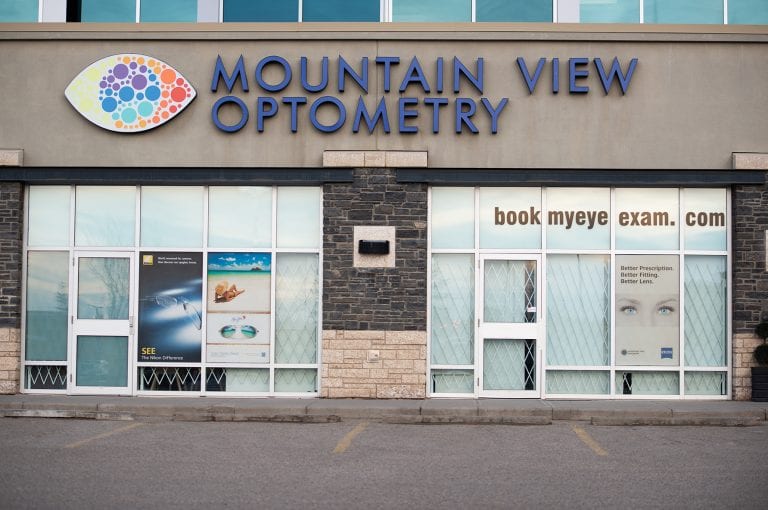
User reviews (0)