
 museumofindianculture.org
No paid content found
museumofindianculture.org
No paid content found
Categories: Education & Learning
"Museum of Indian Culture" oldest Native American heritage museum in Pennsylvania nestled in the Lehigh Parkway offering guided tours and educational programs.
 Visit website
 Updated: 2026-10-01 14:45
 Language: English (default)
 Access: Normal
 Profile views 0
 Outbound visits 0
Related questions
More questions →What Does "Native American" Mean, and How Is It Different from Specific Nations Like the Iroquois?
"Native American" is a broad collective label for the hundreds of distinct Indigenous nations, tribes, and peoples whose homelands lie within the present-day United States. It is not the name of a single culture, language, or government. The Iroquois (Haudenosaunee) are one specific confederacy within that larger category — so "Native American" tells you a general category, while "Haudenosaunee" or "Iroquois" tells you which nation, government, and cultural tradition you mean. If you need to be accurate — in writing, in a classroom, or when talking with someone about their own community — the specific nation name is usually the better choice.
The term is a category, not a culture
The United States is home to hundreds of federally recognized tribes and many more state-recognized and unrecognized nations. They differ in language, governance, ceremony, foodways, and history. Treating "Native American" as one culture is like treating "European" as one culture: it points to a shared geographic and political framing, not a shared way of life.
That is why the Iroquois Indian Museum describes its work as fostering understanding of Iroquois culture specifically, using Iroquois art as the window into that culture. A museum dedicated to one confederacy exists precisely because the general term cannot carry that detail.
How the Iroquois (Haudenosaunee) fit inside the broader term
The Haudenosaunee — often called the Iroquois — are a confederacy of nations with their own names, governing structure, and traditions. They are Native American in the collective sense, but they are not interchangeable with other Native nations, and their own name for themselves is Haudenosaunee.
This is the pattern across the category: a general term at the top, specific nations and confederacies underneath, each with its own identity.
| Level | Example | What it tells you |
|---|---|---|
| Collective label | Native American, American Indian, Indigenous | A broad category covering many distinct peoples |
| Specific nation or confederacy | Haudenosaunee (Iroquois) | Which people, government, and cultural tradition |
| Individual community | A particular Haudenosaunee nation or reserve | The local context and community you mean |
Which term should you use?
There is no single term that every Indigenous person prefers, and preference varies by person, community, and region. What is consistent is that specificity is respected.
- When you know the nation, use it. "Haudenosaunee," "Iroquois," or the specific nation name is more accurate than a broad label.
- When you mean the broad category, "Native American" and "American Indian" are both in wide use, including in institutional names such as the Iroquois Indian Museum. "Indigenous" is also common, especially in international or academic contexts.
- When you are unsure, ask or follow the community's own usage. Many nations and organizations state their preferred name on their own materials.
The practical rule: use the broad term only when you genuinely mean the broad category, and switch to the specific name as soon as you know it.
Why specificity matters in practice
If you are researching, teaching, or planning a visit, the general term will not get you far. A search for "Native American art" returns material from many nations with different visual traditions. A search for Haudenosaunee or Iroquois art returns a coherent body of work tied to one confederacy's history and artists.
The same applies to places to learn. Museums and cultural centers focused on a specific nation — like the Iroquois Indian Museum in Howes Cave, New York — are set up to teach that nation's culture in depth, rather than presenting "Native American" as a single story. If your goal is to understand a particular people, start with an institution or source that names them.
Quick way to decide
- Writing generally about Indigenous peoples across the U.S.? "Native American" or "Indigenous" is appropriate.
- Referring to a specific people? Use their own name — for example, Haudenosaunee (Iroquois).
- Quoting an organization or institution? Use the name it uses for itself.
- Unsure? Use the most specific name you can verify, and adjust if the community indicates a preference.
Maine Coon Breeders in Pennsylvania: What to Check Before You Buy a Kitten
If you are looking for a Maine Coon kitten in Pennsylvania, the practical starting point is to verify three things before you pay a deposit: the cattery's physical location and setup, the health and registration documentation behind the breeding cats, and the timing and socialization of the specific litter. Mylancoon Maine Coon Cats, a small home-based cattery in Palmyra, PA — about five minutes from Hershey — is a useful example of the kind of operation you'll encounter: a home cattery breeding cats "in a variety of colors," reachable by email at [email protected], with pages for available kittens, kings and queens, and past litters. Use that structure as a checklist, not as an endorsement.
Confirm the cattery is real and local
A Pennsylvania address is easy to claim and hard to verify, so treat location as a claim to test rather than a fact.
- Ask for the town, not just the state. "Palmyra, PA" is specific enough to check against maps and to ask about a visit. A listing that only says "Pennsylvania" or "PA" with no town is harder to verify.
- Look for a home-based setup described in plain terms. A small cattery that says it is home-based and lists its own cats by name (as Mylancoon does with its kings, queens, and named past litters) gives you something concrete to ask about.
- Check whether the site shows its own cats and litters over time. Past litters with dates — for example, kittens born March 31 and April 5 — suggest an ongoing breeding record rather than a one-off listing.
- Use the contact method as a signal. A direct email address tied to the cattery name is a starting point; it is not proof of anything by itself.
What to ask before you commit
Bring a written list to your first conversation. The answers matter more than the questions.
| Topic | What to ask | Why it matters |
|---|---|---|
| Health testing | Which tests have the breeding cats had, and can you see results? | Maine Coons have breed-associated conditions; testing is the main verifiable signal of responsible breeding |
| Registration | Are the kittens registered, with which registry, and what paperwork comes with them? | Determines whether you get papers and what they actually certify |
| Vaccinations and vet care | What has the kitten received, at what age, and what records transfer to me? | Sets your first vet visit and vaccination schedule |
| Socialization | How are kittens raised — in the home, around people and household sounds? | Affects how quickly a kitten settles in |
| Pickup timing | At what age do kittens leave, and can I visit before pickup? | Early separation and no-visit policies are common problem areas |
| Deposit and contract | What does the deposit cover, and what does the contract say about returns or health issues? | Protects you if something goes wrong |
Evaluate the kittens and the breeding cats
You are judging two things at once: the individual kitten and the breeding program behind it.
- Look at the queens and kings, not just the kittens. A cattery that shows its adult cats by name and lets you ask about their age, litters, and health gives you a track record to evaluate.
- Ask how many litters the cattery produces. A small home cattery with a handful of named cats and dated litters is a different picture from a high-volume operation.
- Ask about color and pattern honestly. "A variety of colors" is a description, not a guarantee — confirm what is actually available in the current litter before you get attached to a specific look.
- Ask what happens if the kitten you want is already reserved. A cattery with an available-kittens page and past-litter history can tell you when the next litter is expected.
Prepare your home before pickup
Maine Coons grow large and need more space and sturdier equipment than the average cat, so set up before the kitten arrives.
- Litter box: a large, high-sided box — this breed outgrows standard sizes quickly.
- Scratching and climbing: a tall, stable cat tree; Maine Coons are heavy and will test anything flimsy.
- Food and water: wide, shallow bowls, and a plan for what the breeder is currently feeding so you can transition gradually.
- Safe room: a single quiet room for the first few days, with the door closed, before you introduce the rest of the house.
- Vet appointment: book it for the first few days after pickup so vaccination and health records can be reviewed while they're current.
- Travel setup: a carrier sized for a large cat, not a kitten-sized one, plus a plan for a car ride home — relevant whether you're driving across PA or flying in.
Red flags when searching in PA
- No town, no visit, no names. A cattery that won't tell you where it is or let you see the cats is the single biggest warning sign.
- Kittens offered well before 12 weeks with no health records and pressure to pay quickly.
- No health testing information for the breeding cats, or vague answers when you ask.
- Prices or payment handled entirely through untraceable methods with no contract.
- Photos that appear on multiple unrelated sites. Reverse-image search the kitten photos before you send money.
- A "breeder" who can't answer basic questions about the breed, the parents, or the kitten's current diet and vet care.
The bottom line
A legitimate Pennsylvania Maine Coon breeder should be able to tell you exactly where it is, name its breeding cats, show dated litters, answer health and registration questions directly, and let you visit or at least see the cats in their home environment. Mylancoon in Palmyra fits the profile of a small home cattery you can start a conversation with at [email protected] — but verify the health testing, registration, and pickup terms yourself before any deposit. If a breeder resists those questions, that resistance is your answer.
Website Overview
An established domain and managed infrastructure suggest continuity of operations and may support dependable delivery, although neither guarantees service quality. Page metadata, canonical configuration and social previews work together to provide more consistent search and sharing presentation.
Domain and Registration
Registered in 2006, this domain has about 20 years of history. That suggests continuity, although ownership and purpose may have changed. Transfer-protection status is present, helping reduce the risk of unauthorized domain transfers. The domain uses the common .org extension, which is not an independent safety signal.
DNS and Email
MX records exist, but SPF, DKIM and DMARC were not detected. Protection against domain impersonation may be incomplete. Nameservers are provided by wix.com, indicating managed DNS hosting. MX records point to the Google Workspace email service. DNSSEC signatures were not detected, so this additional DNS authenticity protection is not confirmed. The lowest observed DNS TTL is 3600 seconds.
TLS and Certificates
The certificate uses an RSA 2048-bit public key, offering broad client compatibility. The server supplied a complete certificate chain. No organization name is present in the certificate; the available fields are consistent with domain validation. The certificate was issued within the Google Trust Services cloud or CDN ecosystem. The certificate's total validity is about 89 days, consistent with a short renewal cycle.
HTTP and Browser Security
The response lacks these common security headers: CSP, Referrer-Policy, Permissions-Policy, clickjacking protection. No X-Powered-By header was found, reducing one common source of backend fingerprinting information. The cf-ray, x-cache, x-served-by response header indicates a CDN or caching proxy in the delivery path. No obvious internal addresses or debug information were found in the headers. The Server header identifies cloudflare without an exact version.
Technology Stack Analysis
The public page identifies Wix.com Website Builder, Wix, React, Sentry, Cloudflare, Fastly without precise versions, leaving fewer clues for version-specific scanning.
Search and Social Sharing
The Generator tag identifies Wix.com Website Builder, making the publishing system easier to fingerprint. Twitter Card metadata is configured. The title has 24 characters, within a common display range. A meta description is present, with 159 characters. The observed directives allow indexing and link following.
 Hosting and Email
 Hosting
 Fastly
 Google Workspace
 Location
 United States
 Pages, Search and Sharing
| Meta description | "Museum of Indian Culture" oldest Native American heritage museum in Pennsylvania nestled in the Lehigh Parkway offering guided tours and educational programs. |
|---|---|
| Canonical URL | https://www.museumofindianculture.org |
| Language | English (default) |
| Twitter Card | summary_large_image |
Social Sharing Preview
12 fields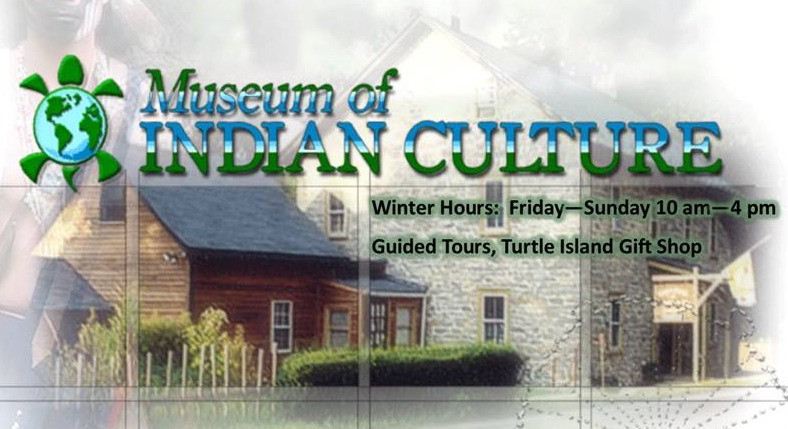

Sharing metadata
| og:url | https://www.museumofindianculture.org |
|---|---|
| og:type | website |
| og:image | https://static.wixstatic.com/media/7c2ace_1dc703b042394c9d9190d91a7d304cc6.jpg/v1/fit/w_2500,h_1330,al_c/7c2ace_1dc703b042394c9d9190d91a7d304cc6.jpg |
| og:title | Museum of Indian Culture |
| og:site_name | website-2015 |
| og:description | "Museum of Indian Culture" oldest Native American heritage museum in Pennsylvania nestled in the Lehigh Parkway offering guided tours and educational programs. |
| og:image:width | 2500 |
| og:image:height | 1330 |
| twitter:card | summary_large_image |
| twitter:image | https://static.wixstatic.com/media/7c2ace_1dc703b042394c9d9190d91a7d304cc6.jpg/v1/fit/w_2500,h_1330,al_c/7c2ace_1dc703b042394c9d9190d91a7d304cc6.jpg |
| twitter:title | Museum of Indian Culture |
| twitter:description | "Museum of Indian Culture" oldest Native American heritage museum in Pennsylvania nestled in the Lehigh Parkway offering guided tours and educational programs. |
robots.txt (opens in a new tab)
7 rulesAll bots 1 allowed · 1 disallowed

 All bots

/
*?lightbox=
adsbot-google-mobile 0 allowed · 2 disallowed
/_partials*/pro-gallery-webapp/v1/galleries/*
adsbot-google 0 allowed · 2 disallowed
/_partials*/pro-gallery-webapp/v1/galleries/*
petalbot 0 allowed · 1 disallowed
/
dotbot 0 allowed · 0 disallowed
- Interval
Crawl delay 10 seconds
ahrefsbot 0 allowed · 0 disallowed
- Interval
Crawl delay 10 seconds
No matching rules.
Sitemaps
1 Registration details RDAP / WHOIS
| Registrar | eNom, LLC |
|---|---|
| Registered | 2006-01-26 |
| Expires | 2027-01-26 |
| Domain status | client transfer prohibited |
| Nameservers | ns1.wix.com、ns2.wix.com |
| DNSSEC | unsigned |
 DNS records
 TLS and certificates
| Assessment | Normal configuration |
|---|---|
| Supported protocols | TLSv1.2、TLSv1.3 |
| Negotiated protocol | TLSv1.3 |
| Certificate subject | museumofindianculture.org |
| Issuer | Google Trust Services |
| Valid until | 2026-12-25T12:25 · Remaining when checked: 84 days |
| Verification details | Certificate trust: Passed · Hostname match: Passed |
 HTTP response headers
| Header | Value |
|---|---|
| content-type | text/html; charset=UTF-8 |
| content-language | en-US |
| cache-control | private,max-age=0,must-revalidate |
| server | cloudflare |
| strict-transport-security | max-age=31556952 |
| x-content-type-options | nosniff |
| set-cookie | Redacted |
 Identified technologies
User reviews (0)