Website profiles · Technology insights · Alternatives

nkg.net

As a globally operating green coffee service group, we work devotedly for and with coffee, as it is the only product our business focuses on. With more than 50 companies in 26 countries and more than 2,600 highly skilled employees, we are active in the sectors Export & Milling, Import, Farming, Agents & Representative Offices, and Services.

No paid content found
Visit website
Profile views 9 Outbound visits 1 Normal
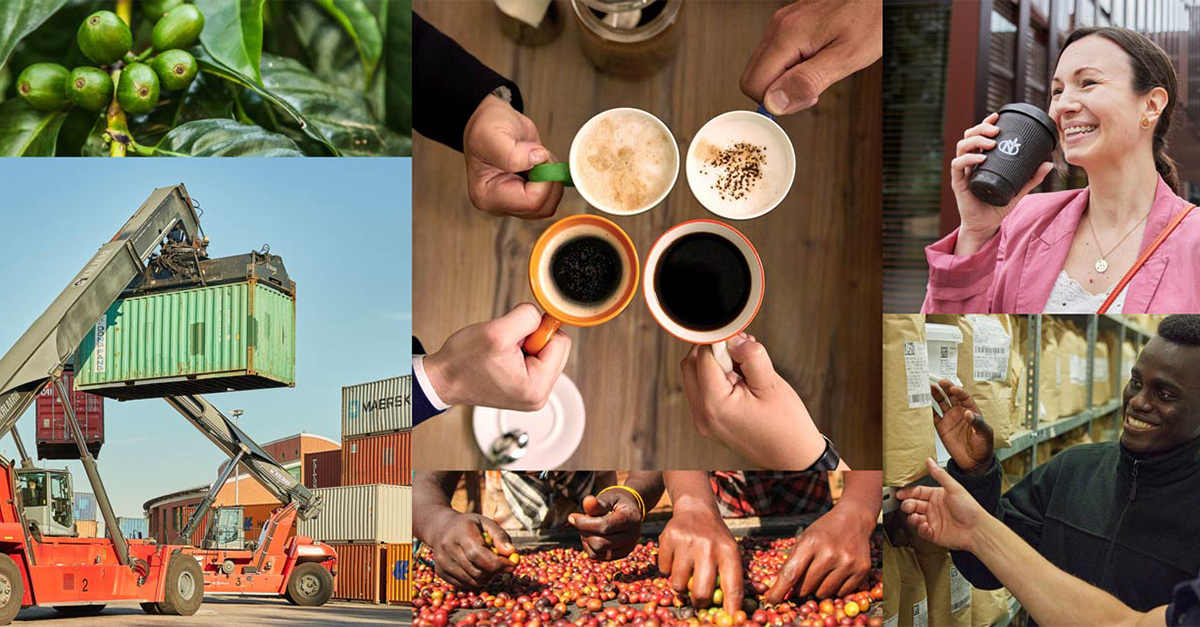
Neumann Kaffee Gruppe (NKG) - We're all about coffee. Today. Tomorrow. Together. Full homepage screenshot

At a glance

Category
Business Services
Language
English
Paid-content signal
No paid content foundObserved
Registered
2000
Hosting
all-connect Data Communications GmbHInferred
HTTPS certificate trusted
PassedObserved
Last updated

Website review

This review may include AI-generated content and is not individually verified. Domain, certificate and other facts come from the observed data on this page.

What is Neumann Kaffee Gruppe (NKG)?

Neumann Kaffee Gruppe (NKG) is a privately owned green coffee service group. Its business is built around a single product — coffee — and it describes itself as operating along the green coffee value chain rather than selling roasted coffee to consumers. According to Neumann Kaffee Gruppe, the group covers export and milling, import, farming, agents and representative offices, and a set of supply-chain services including insurance, logistics, warehousing, financing and statistics.

Who it serves

  • Roasting companies, including both large industrial roasters and small specialty roasters, are the main customers of its import businesses.
  • Coffee producers and local suppliers connect with international buyers through its agent and representative offices.
  • The group also runs its own farms in Mexico, Brazil and Uganda, so it participates in production as well as trade.

How to think about it

NKG is best understood as infrastructure for the coffee trade: it moves, prepares, stores and finances green coffee before roasting. That makes it relevant if you are sourcing coffee at volume, looking for an import partner in a specific market, or trying to understand who sits between farms and roasters. It is not a retail brand, so a consumer looking to buy coffee will not find a shop here.

A practical next step is to use the site's local contact finder: match your own country or region to the relevant import or agent office, since services and coverage differ by market. If your interest is sustainability, look at the initiatives section separately from the core service list — the group presents social, environmental and economic considerations as part of its business model, and the initiatives pages show where that is put into practice.

How does NKG source and export green coffee from farms to roasters?

NKG's own description frames the company as a green coffee service group, meaning it does not simply buy and ship beans; it operates pieces of the chain between farms and roasting plants. The page lists its activities as export and milling, import, farming, agents and representative offices, and services such as insurance, logistics, warehousing, financing and statistics. That is the sourcing model: local export companies and mills prepare green coffee for export, import companies then serve both large roasters and small specialty roasters, and agents or representative offices connect local producers and suppliers with international buyers.

A practical way to picture the route from farm to roaster:

  • At origin: NKG's export companies and mills prepare green coffee for export, which typically means grading, milling and packing it into a shippable form. The group also farms on its own sites in Mexico, Brazil and Uganda.
  • Between origin and buyer: Agents and representative offices link producers and suppliers with international buyers, which is the relationship-building and matchmaking layer.
  • At destination: Import companies fulfill the needs of the roasting industry and small specialty roasters, handling the arrival side of the trade.
  • Around the shipment: Services such as logistics, warehousing, insurance, financing and statistics support the coffee as it moves.

For a specialty roaster, the useful distinction is between buying through an importer that already holds stock and buying through an agent who can connect you to a specific producer or supplier. The first is usually simpler and better for smaller volumes; the second can give more origin control but asks more of you in planning and communication.

If you want to move forward, start with the "Find your local contact" route on the NKG site and ask which entity covers your origin of interest and your roasting volume. As a comparison point for the wider trade landscape, the International Coffee Organization publishes market and trade information, and Specialty Coffee Association covers the specialty-roaster side.

What services does NKG offer along the coffee value chain?

NKG provides services across the green coffee value chain rather than selling roasted coffee to consumers. According to its site, the group describes five areas: Export & Milling, Import, Farming, Agents & Representative Offices, and Services.

H3 What each area covers

  • Export & Milling — Export companies and mills prepare green coffee for export.
  • Import — Import companies serve the roasting industry, including small specialty roasters.
  • Farming — NKG produces green coffees on its own farms in Mexico, Brazil and Uganda.
  • Agents & Representative Offices — These connect local producers and suppliers with international buyers.
  • Services — Service companies along the supply chain add value for customers; the site names insurance, logistics, warehousing, financing and statistics among the wider service offerings.

H3 Who this is for

This is business-to-business infrastructure, not a retail shop. The natural audiences are coffee farmers and producer groups looking for routes to market, exporters and mills needing preparation capacity, and roasters — from large industrial roasters to small specialty ones — seeking green coffee supply and related support. Companies needing trade finance, storage or insurance connected to coffee shipments are also part of the intended audience.

H3 How to choose what you need

If you are a roaster, start with the Import side, since that is the stated point of contact for roasting businesses. If you are a producer or cooperative, the Agents & Representative Offices and Export & Milling areas are the more relevant entry points. If your need is operational rather than sourcing — storage, cover, working capital — look at the Services area.

A practical next step is to use the site's "Find your local contact" option and approach the office in your region, since the group operates through many local companies and the right desk depends on where you and your coffee are located.

For comparison, the same green coffee trade terrain is covered by other trade-focused organizations, such as the International Coffee Organization for sector-wide information, though NKG's own scope is commercial services along the chain rather than policy or market regulation.

How does NKG approach sustainability in its coffee operations?

NKG frames sustainability as a commercial necessity rather than a side initiative: its page states that for coffee to remain "available, attractive to grow, and viable for trade," the work has to start "on the ground." It also describes social, environmental and economic considerations as an integral part of its business model rather than an add-on.

Concretely, the page points to several levers along the green coffee value chain:

  • Farming: NKG produces green coffee on its own farms in Mexico, Brazil and Uganda, which gives it direct operational control over growing practices.
  • Export & Milling: export companies and mills prepare green coffee for export, a stage where processing choices and waste handling matter.
  • Import: import companies serve both large roasters and small specialty roasters, so sustainability expectations travel through these commercial relationships.
  • Services: insurance, logistics, warehousing, financing and statistics are listed as supply-chain services, meaning risk and efficiency — including climate and crop risk — are handled within the group.
  • Initiatives: NKG says it runs its own and collaborative initiatives to contribute to a more sustainable coffee business.

A practical way to read this: NKG's sustainability approach is supply-chain-shaped. Because it spans farm to importer, it can act at multiple points — origin practices, milling and logistics efficiency, and financing — rather than only at one link. The trade-off is that a group operating across 28 countries with thousands of employees must coordinate very different local conditions, and results depend on execution at each origin rather than a single global policy.

If you are evaluating NKG as a supplier or partner, ask which specific initiative or origin your coffee would fall under, and request detail on how social and environmental considerations are measured at that stage. Start with the initiatives section and your local contact via Neumann Kaffee Gruppe.

How can a coffee roaster or buyer contact NKG or find a local representative?

For a roaster or green coffee buyer, the practical route to NKG is through its local operating companies rather than a single central sales desk. The group describes itself as a green coffee service group with import companies that serve both the roasting industry and small specialty roasters, alongside export and milling operations and agent offices that link producers with international buyers.

How to make contact

  • Start with the "Find your local contact" path on Neumann Kaffee Gruppe. That is the intended entry point for reaching the company that covers your market.
  • Identify which function fits your need: an import company if you are buying green coffee for roasting, an agent or representative office if you are connecting supply and demand, or a service company for logistics, warehousing, financing or statistics.
  • Expect to be routed by region. With operations spread across many countries, the relevant office depends on where you roast or buy, not on the group headquarters alone.

A concrete example

A small specialty roaster in Europe looking for a specific origin would typically approach the NKG import company covering its country, describe the volumes, cup profile and delivery schedule it needs, and ask which origins and contracts that office can offer. A larger industrial roaster might instead begin with a regional import contact and ask about multi-origin programmes, blending and logistics support.

Decision criterion

Choose the contact route based on what you are actually buying. If you need finished green coffee delivered to your roastery, go to an import company. If you are a producer or exporter seeking a buyer, an agent or representative office is the better fit. If your need is operational — storage, financing, insurance or data — ask about the service companies directly.

If the website's contact finder does not clearly cover your country, use the general "get in touch" enquiry and state your location, roasting capacity and the origins you are interested in, so the message can be forwarded to the right office.

What role does NKG play in the global green coffee trade compared to other coffee companies?

NKG is a business-to-business green coffee service group rather than a consumer-facing coffee brand. Its role in the global trade is to move unroasted coffee from producing origins to roasters, and to provide the surrounding infrastructure that trade depends on.

Where NKG sits in the chain

According to its own description, NKG operates along the green coffee value chain through:

  • Export & Milling – preparing green coffee for export at origin
  • Import – supplying roasting companies, including small specialty roasters
  • Farming – producing green coffee on its own farms in Mexico, Brazil and Uganda
  • Agents & Representative Offices – connecting local producers and suppliers with international buyers
  • Services – insurance, logistics, warehousing, financing and statistics, among others

That combination is the main difference from most other coffee companies. A roaster buys and sells roasted coffee; a trader typically buys and sells green coffee; NKG describes itself as covering origination, import and the services in between, with coffee as its only product focus.

How it compares

Type of company Typical role Where NKG differs
Consumer coffee brand Roasts, packages and markets coffee to shoppers NKG is not aimed at consumers; its customers are roasters and the trade
Specialty roaster Buys green coffee, roasts and sells it NKG supplies roasters rather than competing for shelf space
Green coffee trader Connects origins with buyers NKG also runs farms, mills and service companies along the chain
Producer or cooperative Grows and processes coffee at origin NKG works with producers and also buys, imports and finances

The practical trade-off is scale versus directness. A roaster working with a group like NKG can access multiple origins, logistics and financing through one relationship, but may have less direct contact with individual producers than when buying through a small importer or directly at origin. A specialty roaster seeking a single micro-lot with full traceability might prefer a smaller importer; a roaster needing container volumes, hedging support or delivery across several markets is more likely to value a group with NKG's range.

Next step

If you are choosing a green coffee supplier, list what you actually need: volume, origins, milling, warehousing, financing or insurance. Then check which of those the supplier performs itself and which it brokers out. Start with NKG's service pages at Neumann Kaffee Gruppe to see whether its chain coverage matches your buying model.

Related questions

More questions →
What services does Neumann Kaffee Gruppe provide along the green coffee value chain?

Neumann Kaffee Gruppe (NKG) is a privately owned green coffee service group that works exclusively with coffee. According to its website, the group operates through more than 40 companies in 28 countries with over 3,300 employees, and its services span the green coffee value chain: export and milling, import, farming, agents and representative offices, and additional supply-chain services. If you are trying to understand where NKG fits between a coffee farm and a roaster, the short answer is that it covers most of the steps in between.

Export & Milling

NKG's export companies and mills prepare green coffee for export. In practice, this is the stage where coffee moves from origin into a form and condition suitable for shipping to importing countries.

Import

NKG's import companies serve the roasting industry, including small specialty roasters. This means the group is positioned as a supplier to roasters rather than only to large trade houses.

Farming

NKG produces a wide range of green coffees on its own farms in three countries:

  • Mexico
  • Brazil
  • Uganda

This gives the group a direct production footprint in addition to its trading and service operations.

Agents & Representative Offices

These connect local producers and suppliers with international buyers. They act as the link between origin-side supply and the global buyer network.

Services

Beyond the core trade and farming activities, NKG's service companies along the supply chain add value for customers. The website lists the following areas among its services:

  • Insurance
  • Logistics
  • Warehousing
  • Financing
  • Statistics

How the pieces fit together

Stage What NKG does
Farming Produces green coffee on farms in Mexico, Brazil, and Uganda
Export & Milling Prepares green coffee for export
Agents & Representative Offices Connect local producers and suppliers with international buyers
Import Fulfills the needs of the roasting industry, including small specialty roasters
Services Adds value through insurance, logistics, warehousing, financing, and statistics

Sustainability as part of the model

NKG states that considering social, environmental, and economic needs is an integral part of its business model, and that sustainability "starts on the ground." The group says it engages in several own and collaborative initiatives to contribute to a sustainable coffee business. For anyone evaluating NKG as a supply-chain partner, this is relevant context: the company frames sustainability as embedded in its operations rather than as a separate program.

Who this is for

This overview is useful if you are a roaster, producer, or trade professional trying to map out which parts of the green coffee chain NKG actually handles. The group is privately owned and run, with David M. Neumann as the founder-family's third-generation Managing Partner, overseeing the group with his management team. To find a local point of contact, the website directs visitors to a "Find your local contact" option.

What is Neumann Kaffee Gruppe (NKG) and what does nkg.net offer?

nkg.net is the corporate website of Neumann Kaffee Gruppe (NKG), a privately owned, globally operating green coffee service group whose business focuses on a single product: coffee. The site is aimed at anyone who wants to understand what NKG is, how its companies fit along the green coffee value chain, and how to reach the right local contact. It is an information and contact hub rather than an online shop — the page evidence shows no pricing, product listings, or e-commerce functions.

What NKG is

NKG describes itself as a green coffee service group working "for and with coffee," with coffee as the only product its business focuses on. Key facts from the site:

  • Ownership and leadership: The group is privately owned and run. David M. Neumann, of the founder family's third generation, is Managing Partner and oversees the group together with his Management Team.
  • Scale: The site states more than 40 companies in 28 countries with more than 3,300 employees. (Note: the site's own description text also cites different figures — "more than 50 companies in 26 countries and more than 2,600 employees" — so treat the exact numbers as approximate and subject to change.)
  • Scope of services: Export and milling, import, farm management, insurance, logistics, warehousing, financing, and statistics.
  • Sustainability stance: The site frames social, environmental, and economic considerations as an integral part of the business model, with sustainability work starting "on the ground."

The five business areas on the site

The homepage organizes NKG's activity along the green coffee value chain into five sections:

Area What the site says it does
Export & Milling Export companies and mills prepare green coffee for export
Import Import companies serve the roasting industry and small specialty roasters
Farming NKG produces green coffees on three farms in Mexico, Brazil, and Uganda
Agents & Representative Offices Connect local producers and suppliers with international buyers
Services Service companies along the supply chain add value for customers

There is also an Initiatives section covering NKG's own and collaborative efforts toward a sustainable coffee business.

What you can actually do on nkg.net

The site functions as a corporate information and routing tool. Based on the page content, visitors can:

  1. Read the group overview — who NKG is, its ownership structure, and its scale.
  2. Understand the value chain — how export, import, farming, agency, and service businesses fit together.
  3. Learn about sustainability initiatives — the site links to further detail via "Find out more about us."
  4. Find a local contact — a "Find your local contact" entry point is provided for getting in touch.
  5. Follow announcements and posts — the homepage includes an announcements and posts section.

One practical caveat: the homepage embeds a Vimeo video behind a consent placeholder. To view it, you must accept the third-party service, which shares data with that provider.

Who the site is for

  • Coffee trade and roasting professionals looking for a supplier group with import and export operations.
  • Producers and local suppliers seeking representation or a route to international buyers.
  • Journalists, researchers, or students needing a factual overview of a major green coffee group.
  • Potential partners or applicants wanting to understand NKG's structure before making contact.

If you need pricing, order placement, or account login, this site does not provide those functions based on the available evidence — the appropriate next step is to use the local contact finder.

Who owns and manages Neumann Kaffee Gruppe?

Neumann Kaffee Gruppe (NKG) is a privately owned and run group, and its management sits with the founding family. According to the company's own description on nkg.net, David M. Neumann is the third generation of the founder family to serve as Managing Partner, and he oversees the group jointly with his Management Team. This applies to the group as a whole; the site does not list individual managing directors, regional heads, or ownership percentages.

Ownership: private, family-linked, not publicly traded

The key facts the website states are straightforward:

  • NKG describes itself as privately owned and run.
  • The Neumann family is the founding family, and the current Managing Partner comes from its third generation.
  • The site gives no indication of a stock listing, external majority shareholder, or public share structure.

Because the company does not publish a detailed ownership breakdown, you should treat "privately owned" as the confirmed part and avoid assuming anything about the exact distribution of shares within the family or any minority holdings.

Management: one Managing Partner plus a Management Team

The management model described is a shared one rather than a single-CEO structure:

Role Who Scope
Managing Partner David M. Neumann Oversees the group
Management Team Not named individually on the page Manages the group jointly with the Managing Partner

The page names David M. Neumann specifically and refers to "his Management Team" without listing its members. If you need the names of other executives or regional managers, the site's contact pages are the practical next step rather than the "We are Neumann Kaffee Gruppe" section.

Scale and structure in the same description

The ownership and management details appear alongside the group's operating profile, which helps explain what is being managed:

  • A green coffee service group focused on a single product — coffee.
  • More than 40 companies in 28 countries.
  • More than 3,300 employees.
  • Activities spanning export and milling, import, farming, agents and representative offices, and services such as insurance, logistics, warehousing, financing, and statistics.
  • Three own farms, in Mexico, Brazil, and Uganda.

Note that the site's own numbers have changed over time: an earlier version of the same description cited more than 50 companies in 26 countries and more than 2,600 employees. If you are citing figures, use the current page and date your reference.

Where this information comes from

All of the above is drawn from the "We are Neumann Kaffee Gruppe" content on nkg.net, which is the section that introduces the group, its ownership character, and its leadership. For anything beyond that — full management roster, board structure, or ownership details — the site points visitors to its contact options rather than publishing further detail.

How to Contact Neumann Kaffee Gruppe or Find a Local Contact

The fastest route is the "Find your local contact" link on nkg.net. NKG describes itself as a globally operating green coffee service group with companies in many countries, so the right contact depends on where you are and which part of the coffee value chain you need — export and milling, import, farming, agents and representative offices, or services. The site's contact prompt ("Would you like to talk to us? Just get in touch!") leads into that local-contact lookup rather than a single global address.

What nkg.net gives you for getting in touch

The homepage is organized around NKG's business rather than a general enquiry form. The relevant elements are:

Element on the page What it is for
"Find your local contact" Entry point for locating the NKG company or representative closest to you
"Would you like to talk to us? Just get in touch!" The site's general invitation to make contact
"Our services along the green coffee value chain" Tells you which business area your enquiry belongs to
"Announcements and posts" Recent group news, useful for context before you write

Because NKG operates through separate companies rather than one central office, there is no single universal contact that covers every request. Expect to be routed by country and by function.

Step-by-step: finding the right contact

  1. Go to nkg.net and look for the contact prompt or the "Find your local contact" link.
  2. Identify your region. The group's companies are spread across many countries, so your location usually determines the first filter.
  3. Match your request to a business area. Use the service categories on the page to decide who you actually need:
    • Export & Milling — if you are a producer or supplier working toward export.
    • Import — if you are a roaster (industrial or small specialty) looking for green coffee supply.
    • Farming — for NKG's own farm operations.
    • Agents & Representative Offices — if you are a local producer or supplier seeking a connection to international buyers.
    • Services — for supply-chain functions such as logistics, warehousing, financing, insurance, or statistics.
  4. Use the local contact you find rather than a generic address, and state your business area in the first line so it reaches the right team.
  5. Check "Announcements and posts" first if your question is about something recent — it may already be answered there.

Expected result: you end up with a country- or company-level contact whose remit matches your request, instead of a message that has to be forwarded internally.

What to include in your message

NKG's own framing — one product, many facets, with services spanning export, import, farming, and support functions — means a vague enquiry is likely to be redirected. A useful first message states:

  • Who you are: producer, exporter, roaster, supplier, or service provider.
  • Which part of the chain you sit in: for example, "small specialty roaster seeking green coffee" or "local producer looking for an export partner."
  • Your country or region, so the contact can confirm they are the right entity.
  • What you want: a quote, a partnership, a supplier relationship, or general information.

Common sticking points

  • Assuming one global contact handles everything. NKG is a group of companies; the local entity is usually the correct first stop.
  • Picking the wrong business area. A roaster writing to an export office, or a producer writing to an import desk, adds a forwarding step.
  • Expecting pricing or terms from the website. The page describes services and structure, not commercial terms — those come from the contact conversation.
  • Overlooking the announcements section. For time-sensitive or recently changed matters, it is worth a look before you write.

If your goal is simply to understand what NKG is before reaching out, the homepage summary is enough: a privately owned green coffee service group focused solely on coffee, with services along the value chain and a stated emphasis on social, environmental, and economic considerations. Once you know which of those services you need, the local-contact lookup is the practical next move.

How Neumann Kaffee Gruppe Approaches Sustainability in the Coffee Business

Neumann Kaffee Gruppe (NKG) treats sustainability as something that starts on the ground rather than as a separate reporting exercise. On nkg.net, the group describes social, environmental, and economic considerations as "an integral part of our business model," and frames the goal in commercial terms: coffee must remain available, attractive to grow, and viable for trade. The site points readers to an Initiatives section for the programs behind that claim.

What NKG says sustainability is for

The stated logic is industry-level, not just corporate. NKG describes coffee as connecting its business "with people, places, and nature across the world," and argues that a successful future for the company depends on a successful future for the crop itself. That produces three conditions the group says it works toward:

  • Coffee remains available — supply continues to exist.
  • Coffee remains attractive to grow — producers have reason to keep farming it.
  • Coffee remains viable for trade — it can move through the supply chain economically.

This is a supply-chain resilience argument as much as an ethical one. If growing coffee stops making sense for farmers, the green coffee volumes NKG's export, import, and milling companies handle are affected directly.

Where sustainability sits in the business model

NKG is a green coffee service group, and its own description places responsibility inside operations rather than beside them. The site states that designing processes along the coffee supply chain as well as possible is the top priority, "with regard to the consideration of social, environmental, and economic needs as an integral part of our business model."

That framing matters for how to read the rest of the site. Sustainability is not presented as a standalone foundation or a marketing page; it is tied to the same value chain the group services:

Value chain area What NKG says it does
Export & Milling Export companies and mills prepare green coffee for export
Import Import companies serve the roasting industry and small specialty roasters
Farming Green coffee produced on three farms in Mexico, Brazil, and Uganda
Agents & Representative Offices Connect local producers and suppliers with international buyers
Services Service companies along the supply chain add value for customers
Initiatives Own and collaborative initiatives contributing to a sustainable coffee business

The farming operations are the most direct point of contact with origin conditions, but the Initiatives line is where the group locates its broader sustainability engagement.

Own and collaborative initiatives

NKG states that it engages in "several own and collaborative initiatives to contribute to a sustainable coffee business," and directs readers to a dedicated Initiatives section to find out more. Two things are worth noting about this as a source:

  • The distinction between own and collaborative initiatives signals that some work is run inside the group and some through partnerships — the site does not claim everything is proprietary.
  • The site does not enumerate the individual initiatives on the page excerpt available here, so specific program names, targets, and timelines need to be checked in the Initiatives section itself rather than inferred.

How to verify the details yourself

If you need more than the positioning statement — for example, to assess NKG as a supplier, employer, or partner — the site's own structure gives you a path:

  1. Open the Initiatives section from the main navigation to see the named programs and whether they are NKG-run or collaborative.
  2. Cross-check the Farming pages for the Mexico, Brazil, and Uganda operations, since origin-level practice is where social and environmental claims are most concrete.
  3. Use Find your local contact if you need information specific to a country or a trading relationship, since NKG operates through more than 40 companies in 28 countries and local entities may hold detail the group site does not.

One caveat on scope: the group's own description covers what it does across the green coffee value chain, but the level of sustainability detail per initiative is not visible from the homepage material alone. Treat the headline claims as a framework and the Initiatives section as the place where they either hold up or do not.

Website Overview

Identifiable technologies and additional version or configuration signals make the service easier to fingerprint, which may help targeted scanners narrow their checks. An established domain and managed infrastructure suggest continuity of operations and may support dependable delivery, although neither guarantees service quality.

Domain and Registration

Registered in 2000, this domain has about 26 years of history. That suggests continuity, although ownership and purpose may have changed. The domain uses the common .net extension, which is not an independent safety signal.

DNS and Email

The observed email authentication setup is incomplete: DMARC is missing. Nameservers are provided by telekom.net, indicating managed DNS hosting. MX records point to the Microsoft 365 email service. No CNAME was found; the observed records resolve directly to addresses. TXT records include verification markers for Apple. Such markers may also remain after a service stops being used.

TLS and Certificates

The certificate issuer is Sectigo Limited, a commercial certificate authority. The certificate uses an RSA 4096-bit public key, offering broad client compatibility. The server supplied a complete certificate chain. No organization name is present in the certificate; the available fields are consistent with domain validation. The certificate is valid for about 198 days in total, with 101 days remaining.

HTTP and Browser Security

The checked browser-security headers were not detected, leaving fewer explicit browser-side safeguards. No X-Powered-By header was found, reducing one common source of backend fingerprinting information. No obvious internal addresses or debug information were found in the headers. The Server header identifies Apache without an exact version. No explicit CDN or WAF marker was found in the response headers.

Technology Stack Analysis

The public page identifies WordPress 7.1.2, jQuery, Apache, with exact versions exposed for 1 technologies. These details can narrow vulnerability checks, although exposure alone is not a vulnerability.

Search and Social Sharing

The title has 80 characters and may be truncated in search results. The meta description has 342 characters and may be shortened in search results. The Generator tag identifies WordPress 7.1.2, making the publishing system easier to fingerprint. Twitter Card metadata is configured. JSON-LD includes Organization data, helping describe the organization as an entity.

Hosting and Email

DNStelekom.net
Hostingall-connect Data Communications GmbH
EmailMicrosoft 365
Approximate IP geolocation (inferred; a CDN or proxy may differ from the origin server) Germany flagGermany Inferred 80.254.132.74

Registration details

RDAP / WHOIS

RegistrarDeutsche Telekom AG
Registered2000-03-04
Expires2027-03-04
Domain statusactive
Nameserversns1.telekom.net、pns.dtag.de
DNSSECunsigned

DNS records

DNS

TypeNameValueTTLPriority
Awww.nkg.net80.254.132.743600—
MXnkg.netnkg-net.mail.protection.outlook.com36000
NSnkg.netns1.telekom.net43200—
NSnkg.netpns.dtag.de43200—
TXTnkg.netapple-domain-verification=7RR3pT2bhYnDgv5j3600—
TXTnkg.netv=spf1 include:spf.protection.outlook.com -all3600—

TLS and certificates

TLS / SSL

AssessmentNormal configuration
Supported protocolsTLSv1.2、TLSv1.3
Negotiated protocolTLSv1.3
Certificate subjectnkg.net
IssuerSectigo Limited
Valid until2027-01-13T23:59 · Remaining when checked: 101 days
Verification detailsCertificate trust: Passed · Hostname match: Passed

HTTP response headers

HTTP

HeaderValue
content-typetext/html; charset=UTF-8
cache-controlmax-age=604800, private, must-revalidate
serverApache

Identified technologies

WordPress 7.1.2jQueryApache

Pages, Search and Sharing

Meta descriptionAs a globally operating green coffee service group, we work devotedly for and with coffee, as it is the only product our business focuses on. With more than 50 companies in 26 countries and more than 2,600 highly skilled employees, we are active in the sectors Export & Milling, Import, Farming, Agents & Representative Offices, and Services.
Canonical URLhttps://www.nkg.net/
LanguageEnglish (default)
Twitter Cardsummary_large_image
All bots 0 allowed · 0 disallowed

User reviews (0)

  • No reviews yet.