Website profiles · Technology insights · Alternatives

oist.jp

Paid content Multilingual
Visit website
Profile views 1 Outbound visits 10 Normal
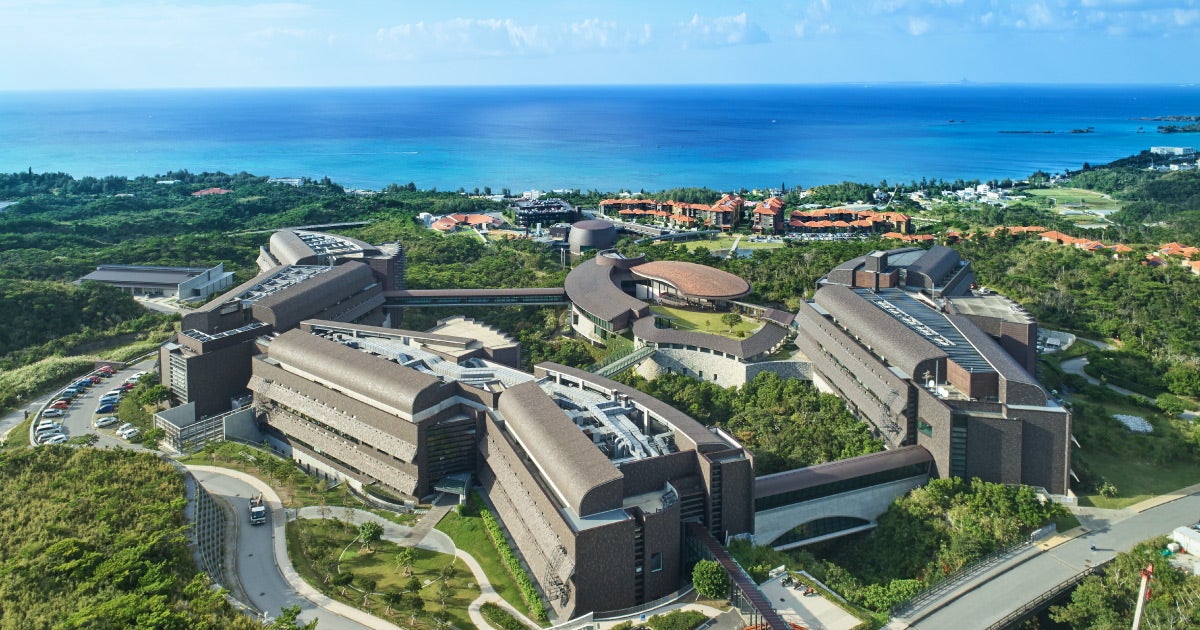
Okinawa Institute of Science and Technology OIST Full homepage screenshot

At a glance

Category
Other
Language
English
Paid-content signal
Paid contentObserved
Registered
Unknown
Hosting
FastlyInferred
HTTPS certificate trusted
PassedObserved
Last updated

Website review

This review may include AI-generated content and is not individually verified. Domain, certificate and other facts come from the observed data on this page.

What is OIST used for?

OIST is a graduate university and research institute in Okinawa, Japan. Its main uses are threefold: conducting interdisciplinary scientific research, training graduate students, and helping build an innovation hub in Okinawa. The site describes it as a "pioneering graduate university" with no academic departments, where researchers from more than 50 countries work across disciplines such as marine science, quantum physics, and computational biology.

For a prospective student, that means OIST is used as a place to earn a graduate degree while doing lab research in an international, department-free structure. For a researcher or partner, it functions as a collaborative research institution—for example, its coral reef work in the Ryukyuan islands informs conservation, and its marine genomics and quantum research units produce published findings.

A practical next step depends on your role: prospective students should look at the "Study at OIST" section for admissions and program details, while researchers and journalists can browse "Research and Faculty" to find units and recent news. If you want a broader sense of Okinawa's academic ecosystem, the official Okinawa Institute of Science and Technology OIST site is the primary source.

How can I apply to study at OIST as a graduate student?

OIST admits graduate students through its own graduate program rather than through a conventional department-based application, so the practical first step is to read the admissions guidance on the official site before choosing a research unit or contacting faculty. The university describes itself as a pioneering graduate university with no academic departments, where researchers from more than 50 countries collaborate across disciplines — that structure shapes how you should prepare: identify the research units whose work matches your interests, since your fit with a specific group matters more than departmental alignment.

What to prepare

  • A clear research interest. Be ready to explain the scientific question you want to pursue and why OIST's interdisciplinary, unit-based model suits it.
  • Evidence of research potential. Transcripts, prior research experience and references carry weight for a research-focused graduate university.
  • A shortlist of units and faculty. Review the "Research and Faculty" and "Faculty and Research Units" sections to find supervisors whose work overlaps with yours.
  • Careful reading of the current admissions requirements. Application windows, required documents and eligibility rules change, so rely on the official admissions pages rather than secondary summaries.

A useful next step

Start at Okinawa Institute of Science and Technology OIST and navigate to the "Study at OIST" section, which is the entry point the site itself provides for prospective students. From there, read the admissions requirements in full and note deadlines before drafting anything. If you are unsure whether your background fits, a concise enquiry to a research unit — stating your interest and relevant experience — is a reasonable way to test alignment before committing to an application.

Decision criterion

If your goal is a specific research question and you can name potential supervisors whose published work connects to it, OIST's unit-based structure is likely a good fit. If you need a broad, coursework-heavy master's with many specialization tracks, compare the program structure carefully against other graduate schools before applying.

What research areas and faculty units does OIST focus on?

OIST is organized around interdisciplinary research rather than traditional academic departments. Its faculty are grouped into research units, and researchers from more than 50 countries work across scientific fields to combine approaches to discovery and problem-solving. The page highlights several areas in its own materials: marine genomics and coral reef science, quantum physics (including work on macroscopic quantum phenomena), computational biology and ion channel evolution, and environmental genetics such as stress in urban fish populations.

What the page shows

  • No academic departments. Research is structured by unit and by cross-disciplinary collaboration, so a single project can span biology, physics, chemistry and computation.
  • Marine and coral research. The Ryukyuan islands give OIST a strong base for studying coral reef ecosystems, biodiversity monitoring and conservation science.
  • Physics and quantum work. The page cites lab work on quantum spins displacing a centimeter-scale object, an example of the institute's fundamental physics research.
  • Computational and evolutionary biology. Computational models are used to investigate questions such as ion channel evolution and brain function.
  • Environmental and genomic monitoring. Gene activity in blue damselfish is used to detect physiological stress that conventional monitoring may miss.

How to use this

If you are a prospective graduate student, look at individual faculty units rather than department names, since the unit is the practical home for a research project. If you are evaluating collaboration or visiting research, match your field to a unit first, then check whether the interdisciplinary model suits how you like to work. The trade-off is real: cross-disciplinary units can open unusual combinations of methods, but they may offer less of the structured departmental identity some researchers expect. For a concrete next step, browse the Faculty and Research Units section of OIST and shortlist two or three units whose recent publications overlap your interests.

How does OIST's interdisciplinary, department-free model differ from traditional universities?

OIST's model removes academic departments entirely: researchers from more than 50 countries work across and combine scientific disciplines rather than sitting inside departmental silos. Traditional universities typically organize faculty and students into departments (biology, chemistry, physics, engineering), with hiring, budgets and curricula tied to those units. At OIST, the basic organizational unit is the research unit led by a faculty member, and collaboration across fields is the default rather than an exception.

What the difference looks like in practice

Dimension OIST (department-free) Traditional university
Core unit Research units grouped by topic, not discipline Departments and faculties
Hiring and evaluation Faculty recruited to cross-disciplinary units Faculty hired into a department
Student path Graduate-only, research-first training Undergraduate-to-graduate, credit- and major-based
Collaboration Built into structure; fields combine by design Often arranged across departmental boundaries
Scale and breadth Small, focused, research-intensive Usually larger, with broad program catalogs

The page evidence supports the structural claim directly: OIST describes itself as a graduate university with no academic departments where researchers "collaborate across and combine scientific disciplines." Its news illustrates the output of that setup—computational models addressing ion channel evolution, and quantum spin experiments moving a centimeter-scale object—topics that straddle biology, physics and computation.

Who benefits, and the trade-offs

A prospective PhD student with a project that sits between fields (say, marine genomics plus data science, as in OIST's coral and damselfish research) gains from a structure where that overlap is normal. The cost is narrower breadth: no undergraduate majors, a smaller institution, and less of the course-catalog variety a large university offers. Students who want a defined disciplinary credential or a wide menu of taught courses may find a traditional department a better fit.

As a next step, compare your own interests against unit descriptions rather than department names: read the Faculty and Research Units pages on OIST and ask whether any single unit could supervise your project alone, or whether it needs two. If it needs two, a department-free model is likely the stronger match.

What is OIST doing to understand and protect Okinawa's coral reefs?

OIST studies Okinawa's coral reefs as a research subject and uses that science to inform conservation. Its own framing is that the Ryukyuan islands' reefs make the site "one of the best places in the world to study these fascinating, fragile ecosystems," and that understanding the scientific foundations of reefs can "inform future conservation efforts." The institution presents this as an "Under the Surface" feature covering the threats reefs face, tactics for monitoring biodiversity, and other aspects of its coral research.

What the work involves

  • Threat assessment: examining the pressures on Ryukyuan reefs, which is the starting point for any protection argument.
  • Biodiversity monitoring: developing and applying ways to measure what lives on and around reefs, so change can be detected rather than assumed.
  • Marine genomics: OIST's Marine Genomics Unit, named in its news pages, points to genetic-level study of reef organisms as part of the wider research base.
  • Cross-disciplinary collaboration: OIST states it has no academic departments and that researchers from more than 50 countries combine disciplines, which matters for coral work that spans biology, chemistry and computational modelling.

A useful way to read OIST's coral material is as the "understanding" half of the problem: it produces evidence and monitoring methods. Turning that into protection on the ground involves policy bodies, local communities and conservation organisations, which is where a reader interested in outcomes should look next. For the research detail itself, start with the coral feature linked from the OIST homepage at Okinawa Institute of Science and Technology OIST and follow through to the Marine Genomics Unit pages.

Can outside researchers or the public attend OIST seminars and events?

Yes. OIST's events calendar lists seminars and research events that appear open to attendees beyond its own faculty and students, such as a seminar and a "Research Mini Course: Practical Machine Learning for Polymer Chemistry." The public-facing "Outreach News" section also indicates activity aimed at audiences outside the lab.

What to check before planning a visit

  • Event type: Seminars and mini courses may be aimed at specialists, while outreach events target general audiences. Match the format to your background.
  • Registration: Confirm whether an event requires sign-up or has capacity limits; the calendar entry is the place to look.
  • Location and access: OIST's main campus is in Onna, Okinawa, which is car-dependent; check travel time and whether an event is on-site or online.
  • Language: Sessions may be in English, Japanese, or both.

A practical next step: browse the events calendar for a topic close to your field, then email the listed contact to ask about attendance eligibility and any registration steps. For broader context on the institution, see Okinawa Institute of Science and Technology OIST.

Related questions

More questions →
What is the Okinawa Institute of Science and Technology (OIST)?

OIST is a graduate university in Okinawa, Japan, built around interdisciplinary research rather than traditional academic departments. It describes itself as conducting research that bridges disciplines, educating a new generation of scientific leaders, and acting as a catalyst for an innovation hub in Okinawa. This overview is for prospective students, researchers, journalists, and partners who want to understand what kind of institution OIST is and what it actually does.

An interdisciplinary graduate university, not a department-based one

The clearest structural fact about OIST is stated directly on its site: OIST has no academic departments. Instead, researchers from more than 50 countries collaborate across and combine scientific disciplines. This shapes how the institution works in practice:

  • Research is organized around units and faculty rather than departmental silos.
  • Hiring and collaboration cut across fields, which OIST frames as a way to pioneer new approaches to discovery and problem-solving.
  • The model has been externally reviewed: a third International External Peer Review report commended OIST's interdisciplinary research model and scientific achievements, describing it as a world-leading research institution and expressing confidence in its future growth.

If you are comparing OIST with a conventional university, the absence of departments is the single most important difference to weigh. It suits people who want cross-disciplinary work; it may be less familiar if you expect a clear departmental home for your field.

What OIST actually does: research, education, and outreach

OIST's activities fall into three broad areas, all visible in its current communications.

Research

Research updates on the site show the range of work, from molecular and evolutionary biology to quantum physics:

  • Computational models helping solve a longstanding ion channel evolution mystery, with findings suggesting spike timing may have been an evolutionary pressure on the brain's BK ion channel.
  • The first observation of quantum spins shifting a centimeter-scale object in the lab, described as the largest object displaced by spin force alone and a new standard for studying macroscopic superposition and quantum gravity.
  • Gene activity in blue damselfish revealing physiological stress along Okinawa's urbanized coasts, even where fish remain abundant and conventional environmental monitoring may miss the problem.

The site also highlights coral reef research, framing the Ryukyuan islands as one of the best places in the world to study these ecosystems and presenting the science as a foundation for future conservation efforts.

Graduate education

OIST presents itself as a graduate university that educates scientific leaders. The "Study at OIST" section is the entry point for prospective students; use it to check program details, application requirements, and timelines directly, since those specifics are not covered in the material summarized here.

Outreach and events

OIST runs outreach news and public research events. Examples listed on the site include a research mini course on practical machine learning for polymer chemistry and seminars. These are useful if you want to engage with OIST without enrolling or collaborating formally.

How to use the site to answer your own question

Different visitors need different things. The table below maps common goals to the sections OIST provides.

Your goal Where to start What you'll find
Understand the institution's model Home page and "Research and Faculty" The no-departments structure, international researcher community, and external review results
Explore research areas "Research and Faculty," news updates Faculty and research units, recent findings across disciplines
Consider studying there "Study at OIST" Graduate program information and how to apply
Follow science news "News" Research updates and institutional news
Attend public events Research events listings Seminars, mini courses, and dates
Stay updated Subscription page A way to subscribe to OIST updates

Practical notes before you rely on it

  • Language: the site is in English, which is useful for international audiences.
  • Currency of information: news items and events carry dates; check them before acting, since event listings and research updates change over time.
  • Details not covered here: tuition, fees, application deadlines, and eligibility rules are not part of the material summarized above. Confirm them on the official pages rather than assuming.
  • Verification path: for anything decision-critical—applying, collaborating, or citing OIST—go to the primary pages (Study at OIST, Faculty and Research Units, News) rather than secondhand summaries.

In short, OIST is best understood as a department-free, internationally staffed graduate university where research, education, and outreach are treated as one connected mission, with interdisciplinary collaboration as its defining organizational choice.

How OIST's Interdisciplinary, No-Departments Research Model Works

OIST (Okinawa Institute of Science and Technology) is a graduate university that deliberately has no academic departments. Instead of organizing researchers into separate chemistry, biology, or physics departments, OIST groups them into research units and expects them to combine disciplines when attacking a problem. The model is intended to remove the usual administrative walls between fields, and it has been commended in an external peer review. It suits readers who want to understand how a department-free institution actually structures research, and prospective students or collaborators checking whether that structure fits how they work.

What "no departments" actually means

At a conventional university, a researcher is hired into a department, and collaboration across departments is something you arrange around the edges. At OIST the department layer is absent from the start. The institution describes itself as having no academic departments, with researchers from more than 50 countries collaborating across and combining scientific disciplines.

The practical consequence is that the unit, not the department, is the basic organizational block. A unit is led by a faculty member and staffed with the researchers and technicians needed for that line of work. Because units are not slotted into a faculty hierarchy, a single project can pull in computational modeling, wet-lab biology, and physics instrumentation without a formal cross-appointment.

How research is organized

The site's "Research and Faculty" section is the entry point for seeing how this plays out. Two things are worth knowing before you browse it:

  • Faculty and Research Units are listed together as the primary structure. When you look for a lab, you look for a unit and its lead, not a department and then a sub-field.
  • Research at OIST is presented thematically rather than by discipline, which reflects the same logic — the question comes first, the field label second.

For a reader trying to judge fit, the useful test is to open a few units and check whether their stated work crosses fields. If a unit's description reads like a single traditional discipline with no adjacent methods, that tells you something about how the model is applied in practice.

What interdisciplinary work looks like in practice

The clearest evidence is in the research updates OIST publishes, which show fields being combined rather than merely sitting side by side.

Computational models and biology. One study reports that computational models helped solve a longstanding mystery about ion channel evolution. The finding suggests spike timing may have been a key evolutionary pressure behind changes in the brain's BK ion channel, linked to advanced brain functions. This is a case where modeling and evolutionary neurobiology are not separate projects but one argument.

Quantum physics and macroscopic objects. Another update describes the first observation of quantum spins shifting a centimeter-scale object in the lab — the largest object displaced by spin force alone — which the institution frames as setting a new standard for studying macroscopic superposition and quantum gravity. That kind of result typically requires precision measurement, materials work, and theory in the same room.

Genes and ecology. A third study found that blue damselfish remain abundant along Okinawa's urbanized coasts, but gene activity reveals physiological stress that conventional environmental monitoring may miss. The point is methodological: gene-level measurement answers an ecological question that counting fish cannot.

Coral reefs. OIST presents coral research as a flagship example of the model, noting that the Ryukyuan islands' reefs make it one of the best places in the world to study these ecosystems, and that understanding the scientific foundations of reefs can inform future conservation efforts. The work spans threats to reefs, tactics for monitoring biodiversity, and other aspects of coral science — a problem that does not respect disciplinary boundaries.

How the model is evaluated

OIST reports that its third International External Peer Review highly commended its interdisciplinary research model and scientific achievements, describing its development as a world-leading research institution and expressing confidence in its future growth. For a reader weighing the model, this is the most direct external signal available on the site: the structure has been reviewed by outside experts and assessed favorably, rather than only described by the institution itself.

Who this model fits — and where to check further

The department-free structure tends to suit people who already work across fields or who want to, and who are comfortable with a unit's direction being set by its lead rather than by a departmental curriculum. It is less obviously suited to someone who wants a clearly bounded disciplinary home with a predictable internal path.

Two concrete next steps:

  1. If you are considering studying there, start from the "Study at OIST" section, then cross-reference the units whose work matches your interests — the unit, not a department, is what you would be joining.
  2. If you are checking the research itself, read the full research updates rather than headlines; the interdisciplinary claim is best judged by whether the methods in a given study genuinely depend on each other.

One caution on logistics: the site has a "Subscribe" link, but the supplied material does not state terms, pricing, or whether any content or event requires registration. Treat access conditions as unconfirmed until you check the relevant page directly.

What Can I Study at OIST as a Graduate Student?

OIST (Okinawa Institute of Science and Technology) is a graduate university, and its own description of its mission centers on educating "a new generation of scientific leaders" through research that bridges disciplines. If you are looking for a specific list of degree programs or departments, the key thing to understand is that OIST states it has no academic departments — so the way you identify what to study is by research area and faculty unit rather than by a conventional department name. The practical starting points on the site are the "Study at OIST" section and the "Faculty and Research Units" pages.

How the academic structure shapes what you can study

Because OIST organizes itself around interdisciplinary research rather than departments, your field of study is defined by the research unit and faculty member you work with, combined with the broader discipline that unit sits in. The site describes researchers from more than 50 countries collaborating "across and combine scientific disciplines to pioneer new approaches to discovery and problem-solving."

This means:

  • Your specialization comes from the research unit, not from a named department major.
  • Cross-disciplinary work is the norm, so a project may span fields that would sit in separate departments at a traditional university.
  • Faculty and Research Units is the page to browse when you want to see what areas are actually active.

Where to find study information on the website

The homepage navigation includes a Study at OIST entry, which is the intended route for prospective students. From there you can move into the research and faculty pages. The site's main sections visible in the navigation are:

Section What it helps you do
Study at OIST Find the graduate study pathway and admissions-related information
Research and Faculty Understand the research model and explore units
Faculty and Research Units Identify faculty and units aligned with your field
News / Research Update See current research directions and outputs

If you want to gauge whether a field is active at OIST, the Research Update news items are a useful signal — recent examples on the homepage cover ion channel evolution, marine genomics, coral reef research, and quantum physics, which shows the breadth of disciplines in play.

Exploring faculty and research units for your field

A practical way to decide what you could study:

  1. Go to Faculty and Research Units.
  2. Scan unit names and faculty profiles for the discipline you come from (for example, marine science, genomics, physics, chemistry, computational science).
  3. Read the unit's research description to see whether the work is single-discipline or crosses into other fields — this tells you how interdisciplinary your training would be.
  4. Cross-check with Research Update news to see recent output from that area.

The homepage's "Under the Surface" feature on coral reefs is a concrete example of how a research theme is presented: it explains the scientific foundations of coral reef ecosystems and how that research informs conservation. That pattern — a theme tied to a research unit and its questions — is a good model for how to read other areas of study.

What to verify before applying

The site confirms OIST is a graduate university and points to a study section, but details such as specific degree offerings, application deadlines, and eligibility are not spelled out in the material available here. Before relying on any plan, check the Study at OIST pages directly for the current program structure and admissions requirements, and confirm specifics with OIST rather than assuming them from the general research description.

What OIST Studies in Coral Reefs, and Why Okinawa Is the Right Place

OIST researches coral reefs to understand their scientific foundations so that future conservation efforts can be informed by evidence. The work described on its site covers the threats reefs face and tactics for monitoring biodiversity. Okinawa is central to this because the Ryukyuan islands are home to coral reefs, which OIST describes as making it one of the best places in the world to study these ecosystems.

What the research covers

OIST frames its coral work around a straightforward goal: by understanding how reefs function scientifically, researchers can inform conservation. The published description points to three connected areas:

  • Threats to coral reefs — identifying and examining the pressures reefs are under.
  • Biodiversity monitoring — developing and applying tactics to track the range of life on reefs.
  • Scientific foundations — building the underlying knowledge that conservation decisions can draw on.

These are presented as parts of one program rather than separate projects, which fits OIST's broader model: it has no academic departments, and researchers from more than 50 countries combine disciplines to approach problems.

Why Okinawa

The location is the argument. The Ryukyuan islands host coral reefs, and OIST states plainly that this makes the institute one of the best places in the world to study them. Proximity matters for reef science because reefs are living systems that change with seasons, disturbances, and local conditions — being situated among them supports sustained observation rather than short visits.

OIST also presents coral research as a way to answer larger questions. Its "Under the Surface" feature uses coral reefs as one example of how OIST research addresses big questions about life, alongside the institute's wider marine genomics work.

How to learn more

  • Start with the coral research feature linked from the OIST homepage ("How can we keep coral reefs healthy?" and "Learn more about corals").
  • Browse Research and Faculty to find the units working on marine science; OIST organizes research by unit rather than department.
  • Check the News section for research updates, which is where new findings are announced.
  • The site also lists research events and seminars, useful if you want to follow talks in this area.

If your interest is studying rather than reading about the research, the "Study at OIST" section covers graduate study at the institute.

Where to Follow OIST News, Research Updates, and Events

The best starting point is the OIST website itself (oist.jp). Its News section carries both research updates and institutional announcements, the Research and Faculty pages profile the people and units behind that work, and the Events listings cover seminars and short courses. If you want updates pushed to you rather than checking back, the site also offers a subscription page at oist.jp/subscription.

What Each Part of the Site Gives You

News: research and institutional updates in one stream

The News section mixes two kinds of items, and it helps to know which you are reading:

  • Research Update items summarize a specific finding. Examples currently featured include computational models on ion channel evolution, a study of gene activity in blue damselfish along Okinawa's urbanized coasts, and the first lab observation of quantum spins shifting a centimeter-scale object.
  • Institutional News covers the organization itself — for instance, an In Memoriam notice for a professor of the Marine Genomics Unit, or an external peer review report commending OIST's interdisciplinary model.

Use this section if your goal is to track scientific output or institutional developments. The "View More" link at the end of the news block leads to the fuller archive.

Research and Faculty: who is doing what

OIST states that it has no academic departments; researchers from more than 50 countries collaborate across disciplines. The Research and Faculty pages are where that structure becomes concrete — you can browse faculty and research units rather than navigate by department. This is the right section if you want to identify a group whose work matches your interest, rather than read a single result.

Events: seminars and short courses

The events listings include dated entries such as a Research Mini Course on practical machine learning for polymer chemistry and seminar listings. Events are the place to look for scheduled talks and training rather than published findings. Because listings are date-specific, check the current calendar rather than relying on any single entry you saw earlier.

Outreach and deeper features

The site also carries Outreach News and long-form features. One example is the "Under the Surface" feature on coral reef research, which explains the threats facing Ryukyuan reefs, tactics for monitoring biodiversity, and the broader context of OIST's coral work. These pieces sit between news and education: useful if you want background rather than a single study summary.

Choosing Where to Look

Your goal Where to go
Read about a new finding News → Research Update
Track institutional announcements News → Institutional News
Find a researcher or unit Research and Faculty
Attend a talk or short course Events listings
Get background on a research theme Features such as "Under the Surface"
Receive updates without checking back Subscription page (oist.jp/subscription)

Practical Notes

  • The subscription page exists, but the available material does not state what a subscription includes or whether any part of it is restricted, so check the page itself before signing up.
  • News items are short summaries; for methods and full results, follow through to the underlying publication or the relevant research unit.
  • Event entries are tied to specific dates, so confirm details on the live listing before planning around one.

For most readers, a single routine works: skim News for what is new, use Research and Faculty when a topic catches your interest, and check Events if you want to attend something in person or online.

Website Overview

Several search or sharing settings need attention. Together they may make snippets, preview images or preferred URLs less consistent across platforms.

Domain and Registration

Unknown

DNS and Email

The lowest TTL is 60 seconds, supporting rapid record changes at the cost of more frequent lookups. Nameservers are provided by sinet.ad.jp, indicating managed DNS hosting. DNS and provider evidence indicate traffic passes through the Fastly CDN, which may support caching and traffic distribution. MX records point to the Microsoft 365 email service. The CNAME points to x.sni.global.fastly.net, associated with Fastly.

TLS and Certificates

The certificate uses an RSA 2048-bit public key, offering broad client compatibility. The server supplied a complete certificate chain. No organization name is present in the certificate; the available fields are consistent with domain validation. The certificate's total validity is about 29 days, consistent with a short renewal cycle. The SAN includes a wildcard covering multiple hostnames at the same subdomain level. Shared private keys can increase the impact of a compromise.

HTTP and Browser Security

The response lacks these common security headers: CSP, Referrer-Policy, Permissions-Policy. No X-Powered-By header was found, reducing one common source of backend fingerprinting information. The x-cache, x-served-by, via response header indicates a CDN or caching proxy in the delivery path. No obvious internal addresses or debug information were found in the headers. The Server header identifies nginx without an exact version.

Technology Stack Analysis

The public page identifies Drupal, Google Analytics, Fastly, nginx without precise versions, leaving fewer clues for version-specific scanning.

Search and Social Sharing

No homepage meta description was detected, leaving snippet selection more dependent on page text. Open Graph is partially configured; og:description is missing. Twitter Card metadata is configured. JSON-LD includes Organization data, helping describe the organization as an entity. The page declares 2 language or regional alternatives using hreflang.

Hosting and Email

DNSsinet.ad.jp
HostingFastly
EmailMicrosoft 365
Approximate IP geolocation (inferred; a CDN or proxy may differ from the origin server) United States flagUnited States Inferred 151.101.1.242

Registration details

RDAP / WHOIS

Unknown

DNS records

DNS

TypeNameValueTTLPriority
Ax.sni.global.fastly.net151.101.1.24260—
Ax.sni.global.fastly.net151.101.129.24260—
Ax.sni.global.fastly.net151.101.193.24260—
Ax.sni.global.fastly.net151.101.65.24260—
AAAAx.sni.global.fastly.net2a04:4e42:200::49860—
AAAAx.sni.global.fastly.net2a04:4e42:400::49860—
AAAAx.sni.global.fastly.net2a04:4e42:600::49860—
AAAAx.sni.global.fastly.net2a04:4e42::49860—
MXoist.jpoist-jp.mail.protection.outlook.com864000
NSoist.jpdns-x.sinet.ad.jp86400—
NSoist.jpextdnsc0.oist.jp86400—
TXToist.jp31C62AA9C3E48C78EDC44F4A1B285E5F86400—
TXToist.jp_9pexkzzqbsga9igcf7dls6khu1dujat86400—
TXToist.jp_pzgt17chb6asswljk15kxgjq3286j8h86400—
TXToist.jpasv=2b5dcbf1a5843757a600e26928d8a45c86400—
TXToist.jpdocusign=7207daa3-7492-4946-9a53-8890962e101a86400—
TXToist.jpdocusign=ca915af8-369d-409c-8e23-c27244c02cf986400—
TXToist.jpgoogle-site-verification=BTjdr5jE0jOWBlJPPm197BQWNtMpfrlGy9WQ3hgxmz886400—
TXToist.jpsr5wk5zDTGxjPUai1YHPL8VrGkCOmt6t1OvFc/p6TS84ns5IKiRsPKW/whMcQs86Y+43ByJIhsKBKl7ddHP9MQ==86400—
TXToist.jpv=spf1 ip4:203.181.243.3 ip4:203.181.243.17 ip4:203.181.243.77 ip4:203.181.243.165 ip4:163.43.136.149 ip4:153.125.144.148 include:spf.protection.outlook.com include:spf.securemx.jp include:spf.worksap.co.jp include:nii.ac.jp include:spf.gigacc.com ~all86400—
CNAMEwww.oist.jpx.sni.global.fastly.net3600—
DMARC_dmarc.oist.jpv=DMARC1; p=none; rua=mailto:[email protected]; ruf=mailto:[email protected]; fo=1; pct=100; adkim=r; aspf=r3600—

TLS and certificates

TLS / SSL

AssessmentNormal configuration
Supported protocolsTLSv1.2、TLSv1.3
Negotiated protocolTLSv1.3
Certificate subject*.oist.jp
IssuerCertainly
Valid until2026-11-16T17:38 · Remaining when checked: 24 days
Verification detailsCertificate trust: Passed · Hostname match: Passed

HTTP response headers

HTTP

HeaderValue
content-typetext/html; charset=utf-8
content-languageen
cache-controlmax-age=3600, public
servernginx
strict-transport-securitymax-age=31557600
x-frame-optionsSAMEORIGIN
x-content-type-optionsnosniff

Identified technologies

DrupalGoogle AnalyticsFastlynginx

Pages, Search and Sharing

Meta descriptionNot detected
Canonical URLhttps://www.oist.jp/
LanguageEnglish (default) · Multilingual
Twitter Cardsummary_large_image
All bots 22 allowed · 35 disallowed
  • Allow/core/*.css$
  • Allow/core/*.css?
  • Allow/core/*.js$
  • Allow/core/*.js?
  • Allow/core/*.avif
  • Allow/core/*.gif
  • Allow/core/*.jpg
  • Allow/core/*.jpeg
  • Allow/core/*.png
  • Allow/core/*.svg
  • Allow/core/*.webp
  • Allow/profiles/*.css$
  • Allow/profiles/*.css?
  • Allow/profiles/*.js$
  • Allow/profiles/*.js?
  • Allow/profiles/*.avif
  • Allow/profiles/*.gif
  • Allow/profiles/*.jpg
  • Allow/profiles/*.jpeg
  • Allow/profiles/*.png
  • Allow/profiles/*.svg
  • Allow/profiles/*.webp
  • Disallow/core/
  • Disallow/profiles/
  • Disallow/README.md
  • Disallow/composer/Metapackage/README.txt
  • Disallow/composer/Plugin/ProjectMessage/README.md
  • Disallow/composer/Plugin/Scaffold/README.md
  • Disallow/composer/Plugin/VendorHardening/README.txt
  • Disallow/composer/Template/README.txt
  • Disallow/modules/README.txt
  • Disallow/sites/README.txt
  • Disallow/themes/README.txt
  • Disallow/admin/
  • Disallow/comment/reply/
  • Disallow/filter/tips
  • Disallow/node/add/
  • Disallow/search/
  • Disallow/search?
  • Disallow/user/register
  • Disallow/user/password
  • Disallow/user/login
  • Disallow/user/logout
  • Disallow/media/oembed
  • Disallow/*/media/oembed
  • Disallow/index.php/admin/
  • Disallow/index.php/comment/reply/
  • Disallow/index.php/filter/tips
  • Disallow/index.php/node/add/
  • Disallow/index.php/search/
  • Disallow/index.php/search?
  • Disallow/index.php/user/password
  • Disallow/index.php/user/register
  • Disallow/index.php/user/login
  • Disallow/index.php/user/logout
  • Disallow/index.php/media/oembed
  • Disallow/index.php/*/media/oembed

User reviews (0)

  • No reviews yet.