Website profiles · Technology insights · Alternatives

openra.net

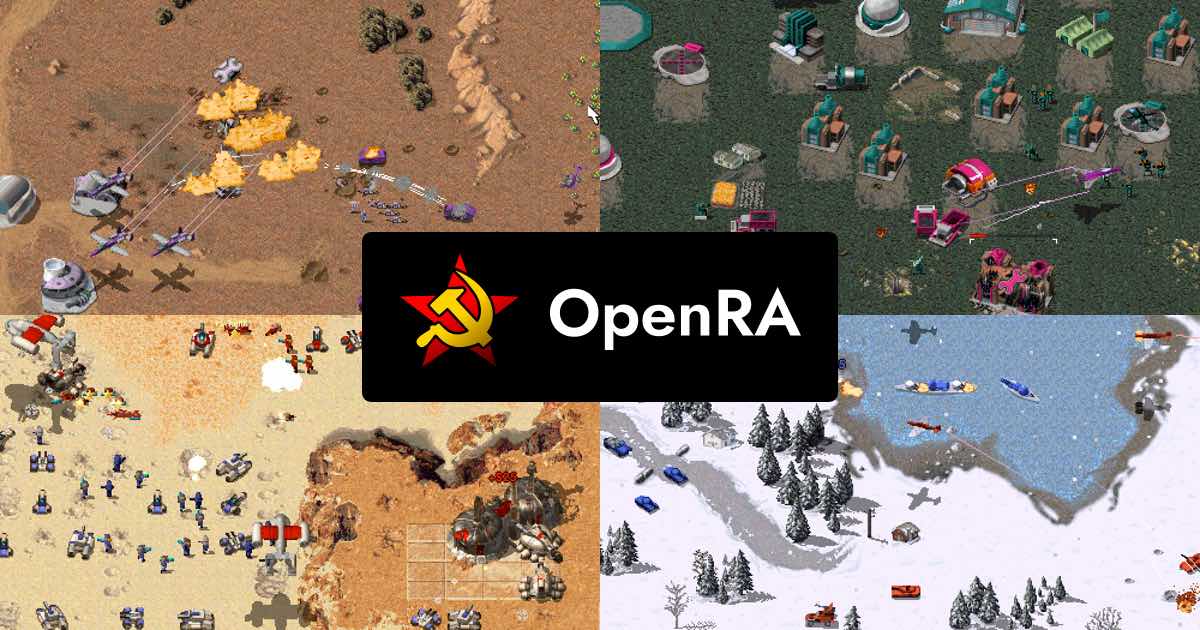
OpenRA is an open source project that recreates and modernizes classic real time strategy games, like Red Alert, Command & Conquer, and Dune 2000.

No paid content found
Visit website
Profile views 9 Outbound visits 1 Normal
OpenRA Full homepage screenshot

At a glance

Category
Games & Board Games
Language
English
Paid-content signal
No paid content foundObserved
Registered
2014
Hosting
FastlyInferred
HTTPS certificate trusted
PassedObserved
Last updated

Website review

This review may include AI-generated content and is not individually verified. Domain, certificate and other facts come from the observed data on this page.

What is OpenRA?

OpenRA is an open-source project that rebuilds classic real-time strategy games for modern computers. Its page describes it as recreating and modernizing titles such as Red Alert, Command & Conquer (Tiberian Dawn), and Dune 2000, with ongoing development shared through playtest releases and changelogs. You can find it at OpenRA.

What it actually is

It is not a single new game but a shared engine plus game rules for several classics. The project rebuilds those games so they run on current systems, with modern conveniences rather than a straight re-release. Development is community-driven, and the page notes community-led balance work alongside official changes.

What the page highlights

  • Random map generators for Red Alert, Tiberian Dawn, and Dune 2000, usable in Skirmish and Multiplayer, with options for biome, player count, symmetry, and resources.
  • A balance overhaul for skirmish and multiplayer, plus single-player campaign difficulty adjustments.
  • Map editor improvements, including a Path Tiler tool for placing cliffs, beaches, and roads.
  • A standalone Tiberian Dawn HD mod that can switch between remastered and classic artwork, audio, and music, with a stated goal of merging those features into core OpenRA later.
  • Smaller additions such as a new mouse input mode, timed auto-save, bots that build expansion bases, and new missions for Red Alert and Tiberian Dawn.

Who it suits

If you want OpenRA fits when
To replay old C&C-style games on a modern PC The rebuilt rules and engine are the point
Multiplayer or skirmish with generated maps Random map generation and balance changes matter most
Map-making and modding Editor tools and mod support are central
A polished commercial remaster That is a different kind of product; this is a community project

A practical next step

If you already own or remember these games, treat OpenRA as a way to play them again with modern matchmaking-era features and active balance changes. Start with a skirmish against bots using a generated map, then try multiplayer once you are comfortable with the controls and the current balance. If you mainly want the remastered visuals, check whether the Tiberian Dawn HD mod is still standalone at the time you download, since the page says integration into core OpenRA was planned for a later release.

How do I install and play OpenRA?

OpenRA is an open-source project that rebuilds classic real-time strategy games — Red Alert, Command & Conquer (Tiberian Dawn), and Dune 2000 — for modern systems. Installing it is closer to installing a normal desktop game than to setting up a development environment: you download a build, run the installer or extract the archive, and launch the game. The original game files are not required for the base experience, though the project does support using assets from the C&C Remastered Collection in its Tiberian Dawn HD mod.

H3 Where to get it

Go to the official site, OpenRA, and use its download section. Pick the build for your operating system (Windows, macOS, or Linux). The project publishes playtest builds alongside stable releases; the page's own notes describe a playtest with new random map generators for all three games, so if you want the newest features you may need to opt into a playtest rather than the default download. If you prefer a storefront, a Linux distribution package, or a Flatpak-style install, check whether your platform's package manager carries it — versions there can lag behind the official releases.

H3 First launch and setup

  1. Install or extract the download, then start the launcher. The launcher lists the supported games as separate mods, so choose Red Alert, Tiberian Dawn, or Dune 2000.
  2. Let it check for content. If you own the original games or the Remastered Collection, you can point OpenRA at those files for higher-fidelity assets and music. Otherwise the built-in free assets are enough to play.
  3. Set your display and input options. The project recently added an "Other RTS" mouse input mode, which is worth trying if the default controls feel wrong to you — it mimics the input conventions of other classic RTS titles.
  4. Turn on timed auto-save if you plan to play missions or skirmish matches, so a crash or a bad decision does not cost you the whole session.

H3 Choosing what to play

Mode Best for What to expect
Single-player campaign Learning the game, story Difficulty has been adjusted to ease the learning curve, so it is a reasonable starting point
Skirmish vs. bots Practising build orders Bots now attempt to build expansion bases, so they pressure the map more than before
Multiplayer Playing with friends or online Balance has had a community-led overhaul; expect a different feel from the original games
Random map generator Fresh maps without downloading any Select biome, player count, symmetry and resources; works in skirmish and multiplayer

H3 If you want to make maps

The map editor has seen continued UI improvements. The Path Tiler tool makes it easier to place cliffs, beaches, and roads, and newer tools build on the random map generator logic. If you only want to play, skip this; if you enjoy level design, it is the most direct way to contribute.

H3 Practical notes

  • Performance is generally modest by modern standards, but very large multiplayer matches can still slow down on older hardware.
  • Localisation support is still in progress, so non-English interfaces may be incomplete.
  • Because OpenRA is community-maintained, features arrive through playtests first. If something in a playtest misbehaves, the stable release is the safer choice.

Your next step: download the build for your platform from OpenRA, launch the launcher, pick Red Alert or Tiberian Dawn, and start with a skirmish match against one bot on an easy setting before trying the campaign or multiplayer.

How does OpenRA compare to the original Command & Conquer games?

OpenRA is a free, open-source reimplementation of the classic Westwood RTS engines, not a remaster or a wrapper around the original game files. It rebuilds the games in a new engine so they run natively on modern systems, with modern conveniences added on top. The trade-off is that it plays like a modernised, rebalanced version of these games rather than a pixel-perfect reproduction of the 1990s originals.

What it covers: the site describes recreations of Red Alert, Tiberian Dawn (Command & Conquer), and Dune 2000, with the classic campaigns plus skirmish and multiplayer.

Where it differs from the originals

Aspect Original games OpenRA
Engine Original Westwood code, DOS/Windows era New open-source engine, modern OS support
Balance As shipped in the 1990s Community-led balance overhauls for skirmish and multiplayer
Campaign difficulty Original tuning Adjusted to ease the learning curve
Multiplayer LAN/dial-up era netcode Online play with modern netcode and matchmaking-style lobbies
Maps Hand-made originals Built-in random map generators plus an improved map editor
Art and audio Original assets Original assets by default; optional remastered assets for Tiberian Dawn via a separate HD mod

Practical differences worth knowing

  • Random map generators. The current playtest adds generators for Red Alert, Tiberian Dawn, and Dune 2000: pick a biome, player count, symmetry, and resource settings, and play in skirmish or multiplayer. This is something the originals never had and it substantially extends replayability.
  • Quality-of-life features. These include an "Other RTS" mouse input mode (for players used to right-click-command conventions), timed auto-save for missions and skirmish, and bots that build expansion bases. None of this exists in the originals.
  • Campaign content. The site notes a new mission each for Red Alert and Tiberian Dawn, so the campaigns are not frozen copies — they have been extended.
  • Dune 2000 specifics. New visual effects for Sonic Tanks and damaged structures, plus "bulk purchase" logic at the Starport, which changes how you buy units in that game.
  • Remastered assets. Support for Command & Conquer Remastered Collection assets in Tiberian Dawn is feature-complete in the standalone Tiberian Dawn HD mod, letting you switch between remastered and classic artwork, audio, and music. At the time of the post, this had not yet been merged into core OpenRA Tiberian Dawn.

Who should pick which

  • Play OpenRA if you want these games to run cleanly on a modern machine, want active online multiplayer with ongoing balance patches, or want random maps and a better editor.
  • Play the originals (or a faithful remaster) if you want the exact 1990s balance, unit behaviour, and feel — competitive players of the original meta will notice differences.
  • Play both if you are curious: OpenRA is a separate install and does not overwrite anything.

A useful next step: install OpenRA, play a skirmish match against a bot on a generated map to get a feel for the rebalanced units and modern controls, then try a campaign mission to judge the difficulty changes for yourself. If you specifically want the remastered visuals, look at the Tiberian Dawn HD mod rather than the default download.

Can I play OpenRA online with other people?

Yes. OpenRA includes multiplayer for its reworked Red Alert, Tiberian Dawn and Dune 2000, and the project's own update notes describe generated maps working in both Skirmish and Multiplayer. So online play with other people is a normal, supported part of the package rather than an extra.

H3 How it usually works in practice

  • You pick a game (Red Alert, Tiberian Dawn or Dune 2000), then host or join a match, choose a map and set up teams and starting positions.
  • Skirmish is you against computer bots; Multiplayer is the same match framework but with human opponents and allies.
  • The new random map generators let a host pick a biome, player count, symmetry and resource settings, then generate a map for Skirmish or Multiplayer on the spot.
  • Balance changes and bot behaviour are actively maintained, so the multiplayer side is treated as a first-class mode.

H3 What to expect as a newcomer If you have never played these games online, the practical hurdle is rarely the software and more often the pace. Veteran players know build orders and map timing, while the campaign difficulty adjustments and skirmish bots give you a lower-pressure place to learn hotkeys, unit counters and expansion timing first. A sensible path is: a few skirmish games against bots, then a cooperative or team match with people, then one-on-one.

H3 Practical considerations

  • Match setup details, available maps and community etiquette live with the project and its community rather than in the game alone, so check the official site and its forum before your first online game.
  • The Dune 2000 side has received a community-led balance overhaul, which is good news for fair matches but means old guides may be out of date.
  • For the original games themselves, the official publisher sites remain the reference points for buying the classic titles: Electronic Arts.

H3 Your next step Install OpenRA, play one skirmish match against a bot on a generated map to confirm everything runs smoothly, then look for a hosted multiplayer game or ask on the project's forum for a beginner-friendly match. If you want company, team games are usually the gentlest introduction.

How do I create or edit maps in OpenRA?

OpenRA ships with its own map editor, and the playtest notes describe recent work aimed squarely at map makers: a Path Tiler tool for placing cliffs, beaches and roads, plus new tools that reuse the random map generator logic. You can also skip manual building entirely and let the generator produce a map for you.

Two routes to a new map

  • Play the generator first. In the playtest described on the page, random map generators exist for Red Alert, Tiberian Dawn and Dune 2000. You pick a biome, player count, symmetry and resource details, and the result works in both Skirmish and Multiplayer. This is the fastest way to get a playable map, and a good way to study layouts before editing by hand.
  • Open the map editor. Use it when you want a specific chokepoint, a scripted mission, or a faithful recreation of a layout. The Path Tiler tool is the part to learn early, since cliffs, beaches and roads are the terrain features that most often look wrong when placed tile by tile.

A practical starting workflow

  1. Generate a map with the settings you like, then open it in the editor and adjust rather than starting from blank terrain.
  2. Lay down cliffs, beaches and roads with Path Tiler before placing buildings, ore or resources.
  3. Check symmetry and starting positions for each player, then test in Skirmish against bots.
  4. For missions, use the timed auto-save setting mentioned in the notes so a long editing-and-testing session doesn't cost you progress.

Who this suits

If you want to… Best route
A quick balanced multiplayer map Random map generator
A hand-tuned competitive layout Generator as a base, then editor
A single-player mission Editor, with auto-save on
Remastered-era visuals while building Tiberian Dawn HD mod assets

One caveat from the page: the C&C Remastered Collection asset support and the content manager that switches between remastered and classic artwork, audio and music currently live in the standalone Tiberian Dawn HD mod, with integration into core OpenRA still in progress. If you build maps expecting remastered assets in the base game, you may need that mod for now.

As a next step, read the release notes and changelog on OpenRA for the exact editor controls in your version, then share feedback on the project forum — the notes explicitly invite playtest feedback, and map-maker input is what drives these tools.

Which classic games does OpenRA support and can I use my original game files?

OpenRA rebuilds several classic Westwood real-time strategy games on a modern, cross-platform engine. The three main supported titles are:

  • Command & Conquer: Red Alert — the most actively played and balanced of the set.
  • Command & Conquer (Tiberian Dawn) — the original 1995 game, with a separate HD mod that can use remastered assets.
  • Dune 2000 — including recent visual and Starport improvements.

There is also an active map-making and modding scene around these games, and the engine is designed so that community projects can build on the same foundation.

Do you need the original game files?

Yes, for the full experience. OpenRA is an open-source engine and does not ship the original artwork, music, or campaign content itself. To play, you generally need the data files from a legitimate copy of the original games. The project's own download and installation instructions explain which files are required for each title and how to point the engine at them. If you own the games on disc or through a digital store, you can typically use those assets.

An important exception is the separate Tiberian Dawn HD mod, which supports the Command & Conquer Remastered Collection assets. That mod lets you choose between remastered and classic artwork, audio, and music, and it is being merged into the core Tiberian Dawn experience over time.

A practical next step

If you are unsure whether you own compatible files, start with Red Alert: it has the largest player base, the most mature balance, and the clearest setup path. Check the official installation guide at OpenRA for the exact file requirements before you begin, then try a skirmish match against bots to confirm everything works.

Related questions

More questions →
What Are Open-Source UI Element Libraries and How Do They Differ From UI Frameworks?

An open-source UI element library is a collection of individual, ready-made interface pieces—buttons, cards, inputs, toggles, loaders—that you copy into your own project and adapt. A UI framework, by contrast, is a structured system of components, conventions, and often a theming layer that governs how your whole interface is built. The practical difference: an element library gives you a snippet; a framework gives you a way of working. If you need a polished button in ten minutes, reach for the element library. If you're building a 40-screen product with a team, you probably want the framework.

What "open-source UI element library" actually means

The term gets used loosely, so it helps to separate the parts:

  • Open-source: the code is publicly available, and the license tells you what you may do with it—copy, modify, redistribute, or use commercially.
  • UI element: a single, self-contained piece of interface, usually small enough to read in one sitting. A button with hover states, a pricing card, a search field.
  • Library: a browsable, searchable collection of those elements, typically contributed by many different people.

On a site like Uiverse, elements are shared by a community and written in plain CSS or Tailwind. You find one you like, copy the markup and styles, paste them into your project, and adjust colors, spacing, and text to fit. There's no package to install and no build step required—which is exactly the appeal, and also the source of most of the confusion.

Element library vs. UI framework: the core differences

Dimension Open-source UI element library UI framework / design system
Unit of reuse A single snippet you copy A component you import or call
Installation None; paste into your code Package install, config, sometimes a provider
Consistency Depends on you; each element may look different Enforced by shared tokens and APIs
Theming Manual edits per element Central theme/config file
Updates You own the copy; no upstream updates Version bumps bring fixes and changes
Accessibility Varies per contributor; must be checked Usually tested and documented
Best for Prototypes, landing pages, small sites, one-off needs Multi-page apps, teams, long-lived products
Learning curve Low—read the CSS Higher—learn the API and conventions

The table isn't a verdict. It's a map of trade-offs. Element libraries win on speed and freedom; frameworks win on consistency and maintenance.

Licensing and attribution: what to check before you paste

This is where people get into trouble, and it's worth slowing down for.

  1. Find the license. Every element or collection should state one. Common open-source licenses include MIT, Apache-2.0, and BSD. Some projects use copyleft licenses like GPL, which can impose obligations if you redistribute your code.
  2. Understand what the license permits. MIT and Apache-2.0 are permissive: you can typically use the code in commercial and closed-source projects. Copyleft licenses may require you to release derivative source under the same terms.
  3. Check attribution requirements. Permissive licenses usually require you to keep the copyright notice and license text somewhere in your project. That's a real obligation, not a formality.
  4. Look for per-element terms. On community sites, the site's overall terms and the individual contributor's stated wishes may differ. If a contributor asks for credit, honor it.
  5. When in doubt, ask or avoid. If a snippet has no license at all, you don't have clear permission to reuse it. Treat "no license" as "not open source," even if the code is publicly visible.

This article is general information, not legal advice. For commercial products with real exposure, have someone qualified review the licenses you're relying on.

How to use a community element in your project: a practical workflow

Here's a repeatable process that avoids most of the usual mess.

1. Start from a real need, not a browsing session

Decide what you need first—"a compact primary button with a loading state"—then search. Browsing aimlessly produces a pile of pretty snippets that don't fit together.

2. Copy the smallest version that works

Take the markup and the styles. Strip anything you don't need: demo wrappers, extra animations, decorative layers. Less code means fewer surprises.

3. Convert it to your conventions

If your project uses design tokens or CSS variables, replace hard-coded values:

/* Before: hard-coded */
.button { background: #4f46e5; border-radius: 8px; }

/* After: token-based */
.button { background: var(--color-primary); border-radius: var(--radius-md); }

This one step is what keeps a copied element from looking like a foreign object in your UI.

4. Check accessibility before you ship

Community elements vary widely here. Verify at minimum:

  • Keyboard focus is visible and the element is reachable by Tab.
  • Color contrast meets WCAG AA (4.5:1 for normal text).
  • Interactive elements use semantic HTML (<button>, not a clickable <div>).
  • Form inputs have associated labels.
  • Motion respects prefers-reduced-motion.

5. Test in context

Paste it into a real page with real content. Long labels, small screens, and dark mode break more copied elements than anything else.

6. Note where it came from

Keep a short comment or an internal credits file: source, license, date. Future you—and your legal reviewer—will be grateful.

Where element libraries genuinely shine

  • Prototypes and demos: you need something clickable today, not a design system.
  • Landing pages and marketing sites: a handful of distinctive elements, each custom.
  • Filling gaps: your framework lacks one specific component, and you don't want to build it from scratch.
  • Learning: reading well-made CSS is one of the fastest ways to improve.
  • Small projects: a personal site doesn't need a theming architecture.

Where they fall short

  • Consistency at scale: ten elements from ten contributors rarely look like one product.
  • Maintenance: you own every copy. When your design changes, you edit each one.
  • Accessibility debt: you inherit whatever the contributor did or didn't do.
  • No upstream fixes: a bug fixed in the original won't reach your copy.
  • Integration friction: different naming conventions, different units, different assumptions about resets.

When to choose which

Choose an element library when the scope is small, the timeline is short, or you need a few distinctive pieces rather than a whole system.

Choose a framework or design system when multiple people build multiple screens over months, when consistency is a product requirement, or when accessibility and theming need to be guaranteed rather than checked.

A hybrid works well for many teams: adopt a framework for the structural components—forms, navigation, layout—and borrow individual elements for the places where you want personality. Just route every borrowed element through the same token and accessibility checks, so it lands as part of your system rather than beside it.

The short version: open-source UI element libraries are a fast, flexible way to get good-looking interface pieces into a project. They are not a substitute for a design system, and the license and accessibility details are the part worth reading carefully.

Which Classic RTS Games Can You Play on OpenRA?

OpenRA is an open-source project that rebuilds classic real-time strategy games for modern systems. According to the official site, it recreates and modernizes three titles: Red Alert, Command & Conquer (Tiberian Dawn), and Dune 2000. You can play all three through OpenRA, but each has its own state of development, so what you get differs by game.

The three supported games

Game Status in OpenRA Notable modernization
Red Alert Fully supported Random map generator, new mission, balance overhaul
Tiberian Dawn Fully supported Random map generator, new mission, HD mod in progress
Dune 2000 Fully supported New visual effects, Starport bulk purchase, balance overhaul

All three share the same core OpenRA engine, which is what allows them to run on modern operating systems rather than requiring the original discs and compatibility patches.

What "modernized" actually means

OpenRA isn't a straight re-release. The project rebuilds each game on a new engine and layers on changes that the originals never had. Based on the latest playtest notes (playtest-20260222, posted 22 February 2026), the shared improvements include:

  • Random map generators for Red Alert, Tiberian Dawn, and Dune 2000. You select a biome, the number of players, and details about symmetry and resources, then play. Generated maps work in both Skirmish and Multiplayer.
  • Map editor improvements, including a new Path Tiler tool that makes it easy to place cliffs, beaches, and roads.
  • Quality-of-life options such as a new "Other RTS" mouse input mode and timed auto-save settings for missions and skirmish.
  • Smarter bots that will now attempt to build expansion bases.
  • New missions — one each for Red Alert and Tiberian Dawn.
  • Ongoing localization work toward support in a future release.

How each game differs

Dune 2000

Dune 2000 received what the announcement calls a "glow-up": new visual effects for the Sonic Tank and for damaged structures, plus the long-awaited bulk purchase logic for the Starport. It also includes a complete, community-led balance overhaul for skirmish and multiplayer, and single-player campaign difficulty adjustments intended to ease the learning curve.

Tiberian Dawn

Tiberian Dawn benefits from the same random map generator and a new mission. Separately, the Tiberian Dawn HD mod adds support for the Command & Conquer Remastered Collection assets. As of this release the mod is feature-complete, with new HD sprites for the last custom assets and a content manager that lets you choose between remastered or classic artwork, audio, and music. Important caveat: the HD mod is still standalone — it has not yet been merged into core OpenRA Tiberian Dawn, though the project hopes to complete that merge in the next release.

Red Alert

Red Alert gets the random map generator, a new mission, and the shared engine improvements. The announcement doesn't list game-specific visual overhauls for Red Alert in this playtest, so its headline additions are the generator, the mission, and the general quality-of-life changes.

What this means for you

If you want to play any of these three games on a modern machine, OpenRA is the route — all three are supported. Your choice depends on what you care about:

  • Want the most polished single-player experience right now? Dune 2000 has the most game-specific work in this release (effects, Starport logic, campaign difficulty tuning).
  • Want remastered visuals? Tiberian Dawn is your only option, but only through the standalone HD mod, not the core game.
  • Want to generate your own maps? All three support the new random map generator, and the map editor tools apply across them.

The full changelog is available alongside the release for details on fixes and smaller changes, and the project invites feedback through its forum.

What is OpenRA?

OpenRA is an open-source project that recreates and modernizes classic real-time strategy games — specifically Red Alert, Command & Conquer (Tiberian Dawn), and Dune 2000 — so they run on modern systems. If you want to play these classic RTS titles with updated features, active development, and community-driven balance changes, OpenRA is the project to look at. It is community-driven and distributed through playtests and releases, with ongoing updates rather than a single frozen build.

What games does OpenRA cover?

OpenRA rebuilds three classic titles:

  • Red Alert
  • Command & Conquer (Tiberian Dawn)
  • Dune 2000

Each is recreated and modernized rather than emulated, meaning the underlying engine is reworked to support modern features and ongoing changes.

What does "modernized" actually mean?

The project adds features and improvements on top of the original games. Based on the latest playtest notes (playtest-20260222, posted 22 February 2026), recent developments include:

New random map generators

Random map generators were added for Red Alert, Tiberian Dawn, and Dune 2000. You select a biome, the number of players, and details about symmetry and resources, then play. Generated maps work in both Skirmish and Multiplayer.

Dune 2000 visual and gameplay updates

  • New visual effects for the Sonic Tank and damaged structures
  • Long-awaited "bulk purchase" logic for the Starport
  • A complete, community-led balance overhaul for skirmish and multiplayer
  • Single-player campaign difficulty adjustments to ease the learning curve

Tiberian Dawn HD mod progress

Support for the C&C Remastered Collection assets in Tiberian Dawn reached two milestones in the (currently) standalone Tiberian Dawn HD mod:

  • The mod is now feature-complete, with new HD sprites for the last custom assets
  • A new content manager lets you select between remastered or classic artwork, audio, and music

Integration of these features into the core OpenRA Tiberian Dawn is in progress; the release remains a standalone mod for now, with the merge hoped for in the next release.

Map-making and editor improvements

  • Further UI improvements to the OpenRA map editor
  • New tools that take advantage of the random map generator logic
  • The new Path Tiler map editor tool makes it easy to place cliffs, beaches, and roads

Other notable changes

  • Added a new "Other RTS" mouse input mode
  • Added timed auto-save settings for missions/skirmish
  • Bots will now attempt to build expansion bases
  • Further progress toward localization support in a future release
  • Added a new mission each for Red Alert and Tiberian Dawn
  • Many bug fixes and minor performance optimizations

Who is OpenRA for?

OpenRA suits players who:

  • Want to play Red Alert, Tiberian Dawn, or Dune 2000 on modern hardware
  • Are interested in community-driven balance and ongoing development
  • Want to try new features like random map generation and improved map editing
  • Prefer an open-source project they can follow and give feedback on

If you only want the original games exactly as they were, note that OpenRA modernizes and rebalances them rather than preserving them unchanged.

How do you get involved?

The project runs playtests and asks players to share feedback on its forum and community channels. The full changelog for each release is available with more detail on changes and fixes. If you want to influence development, taking part in a playtest and reporting your experience is the intended path.

How OpenRA's Random Map Generator Works

OpenRA's random map generator creates playable maps on demand: you pick a biome, the number of players, and details about symmetry and resources, then play. It shipped in playtest-20260222 and covers Red Alert, Tiberian Dawn, and Dune 2000, with generated maps usable in both Skirmish and Multiplayer.

What you choose before generating

The generator is driven by a small set of inputs rather than a blank canvas:

  • Biome — the visual and terrain theme for the map.
  • Number of players — how many starting positions the map must support.
  • Symmetry — how the layout is balanced between those positions.
  • Resource details — how resource fields are placed and distributed.

Once those are set, the map is produced and ready to play. The project's own announcement notes the generators "can make better maps than me," which is a fair signal that the defaults are meant to be playable without hand-tuning.

Where generated maps can be used

Mode Supported
Skirmish Yes
Multiplayer Yes

That covers the two modes most players will reach for. The generator is not described as a campaign tool — the single-player campaign in this release instead received its own difficulty adjustments to ease the learning curve.

Which games have it

The random map generators were added for all three of OpenRA's supported classic titles:

  • Red Alert
  • Tiberian Dawn
  • Dune 2000

The same logic also powers editor tools

The generator's logic isn't confined to in-game map creation. This release also brought new tools to the OpenRA map editor that take advantage of it, alongside further UI improvements for the map-making community. One example is the new Path Tiler tool, which makes it easy to place cliffs, beaches, and roads.

So if you want a quick match, generate a map from the setup screen; if you want to build or refine something by hand, the editor now shares the same underlying generator logic.

Other changes in the same playtest

Worth knowing if you're evaluating the release as a whole:

  • Dune 2000 received new visual effects for the Sonic Tank and damaged structures, plus "bulk purchase" logic for the Starport.
  • A complete, community-led balance overhaul for skirmish and multiplayer.
  • Tiberian Dawn HD (currently a standalone mod) became feature-complete, with a content manager for choosing between remastered or classic artwork, audio, and music.
  • A new "Other RTS" mouse input mode, timed auto-save settings for missions and skirmish, and bots that attempt to build expansion bases.
  • A new mission each for Red Alert and Tiberian Dawn.

The full changelog accompanying the release has more detail on fixes and performance work.

How to Try OpenRA Playtests and Share Feedback

OpenRA publishes playtest builds so players can try features before they reach a stable release — the current example being playtest-20260222, announced by Paul Chote on 22 February 2026. To take part, install the playtest build alongside (or instead of) your stable install, play a few matches, then report what you find on the OpenRA forum and community channels. The full changelog ships with the release and is the fastest way to see exactly what changed.

What a playtest is for

Playtests are preview builds. They carry new features, balance changes, and bug fixes that are still being tested, so expect rough edges. The 20260222 playtest is a good illustration of the scope:

  • New random map generators for Red Alert, Tiberian Dawn, and Dune 2000
  • A community-led balance overhaul for skirmish and multiplayer
  • Single-player campaign difficulty adjustments to ease the learning curve
  • Dune 2000 visual effects for Sonic Tanks and damaged structures, plus "bulk purchase" logic for the Starport
  • Map editor improvements, including a Path Tiler tool for placing cliffs, beaches, and roads
  • A new "Other RTS" mouse input mode, timed auto-save settings for missions and skirmish, and bots that attempt to build expansion bases
  • One new mission each for Red Alert and Tiberian Dawn

Because these are preview features, anything you rely on in a stable release may behave differently here.

Trying the new random map generators

The headline feature of this playtest is the random map generator, and it works the way you would expect from the description:

  1. Select a biome.
  2. Choose the number of players.
  3. Set details about symmetry and resources.
  4. Start the match.

Generated maps work in both Skirmish and Multiplayer, so you can test them solo before taking them online. If you want to see how the generator behaves across different settings, run several maps with the same biome and player count but vary symmetry and resource options — that is the quickest way to judge whether the output suits how you play.

Map editor additions worth testing

If you make maps, this release adds tools built on the random map generator logic, plus the Path Tiler for cliffs, beaches, and roads. The practical test is to open an existing map, place a stretch of cliff or road with the new tool, and check that the result connects cleanly to terrain you placed by hand. Report anything that looks wrong while the feature is still in preview.

Tiberian Dawn HD status

The Tiberian Dawn HD mod, currently standalone, reached two milestones: it is feature-complete, with HD sprites for the last custom assets, and it has a new content manager that lets you choose between remastered or classic artwork, audio, and music. Support for the C&C Remastered Collection assets is being merged into core OpenRA Tiberian Dawn, but that merge is not finished — this release is still a standalone mod, with the merge hoped for in the next release. If you want remastered assets today, use the standalone mod; if you want them inside the main game, wait for the merge.

Sending feedback that gets used

Feedback goes to the OpenRA forum and the project's community channels. To make a report actionable:

  • Note the playtest version (for example, playtest-20260222) so others know which build you mean.
  • Say which game and mode you were in — Red Alert, Tiberian Dawn, or Dune 2000; Skirmish, Multiplayer, or campaign.
  • For map generator issues, include the biome, player count, and symmetry/resource settings you chose.
  • For balance feedback, describe the matchup and what felt off rather than only the outcome.
  • Check the full changelog first, since it lists the changes and fixes already made and may explain what you saw.

Deciding whether to switch

Situation Reasonable choice
You want to test new features and can tolerate bugs Install the playtest and report issues
You mainly play competitive multiplayer Keep the stable release for matches; test the playtest separately
You want remastered Tiberian Dawn assets now Use the standalone Tiberian Dawn HD mod
You want those assets in core OpenRA Wait for the merge planned for a future release

The changelog included with the release is the authoritative list of what changed, and the forum is where the project collects reactions to it.

Website Overview

An established domain and managed infrastructure suggest continuity of operations and may support dependable delivery, although neither guarantees service quality. Page metadata, canonical configuration and social previews work together to provide more consistent search and sharing presentation.

Domain and Registration

Registered in 2014, this domain has about 12 years of history. That suggests continuity, although ownership and purpose may have changed. Transfer-protection status is present, helping reduce the risk of unauthorized domain transfers. The domain uses the common .net extension, which is not an independent safety signal.

DNS and Email

Nameservers are provided by hyp.net, indicating managed DNS hosting. MX records point to the baxxster.no email service. DNSSEC is enabled, allowing validating resolvers to authenticate signed DNS data. The CNAME points to openra.github.io, associated with GitHub Pages. SPF and DMARC are configured. DKIM status is unknown.

TLS and Certificates

The certificate uses an RSA 2048-bit public key, offering broad client compatibility. The server supplied a complete certificate chain. No organization name is present in the certificate; the available fields are consistent with domain validation. The certificate was issued by Let's Encrypt, commonly associated with automated certificate services. The certificate's total validity is about 89 days, consistent with a short renewal cycle.

HTTP and Browser Security

The checked browser-security headers were not detected, leaving fewer explicit browser-side safeguards. CORS permits any origin to read this response. This is common for public resources; sensitive responses need narrower handling. No X-Powered-By header was found, reducing one common source of backend fingerprinting information. The x-cache, x-served-by, via response header indicates a CDN or caching proxy in the delivery path. No obvious internal addresses or debug information were found in the headers.

Technology Stack Analysis

The public page identifies jQuery, Fastly without precise versions, leaving fewer clues for version-specific scanning.

Search and Social Sharing

Twitter Card metadata is configured. The title has 58 characters, within a common display range. A meta description is present, with 146 characters. The observed directives allow indexing and link following. No Generator meta tag is publicly exposed.

Hosting and Email

DNShyp.net
HostingFastly
Emailbaxxster.no
Approximate IP geolocation (inferred; a CDN or proxy may differ from the origin server) United States flagUnited States Inferred 185.199.108.153

Registration details

RDAP / WHOIS

RegistrarDomeneshop AS dba domainnameshop.com
Registered2014-02-11
Expires2027-02-11
Domain statusclient transfer prohibited
Nameserversns1.hyp.net、ns2.hyp.net、ns3.hyp.net
DNSSECsigned

DNS records

DNS

TypeNameValueTTLPriority
Aopenra.github.io185.199.108.1533600—
Aopenra.github.io185.199.109.1533600—
Aopenra.github.io185.199.110.1533600—
Aopenra.github.io185.199.111.1533600—
AAAAopenra.github.io2606:50c0:8000::1533600—
AAAAopenra.github.io2606:50c0:8001::1533600—
AAAAopenra.github.io2606:50c0:8002::1533600—
AAAAopenra.github.io2606:50c0:8003::1533600—
MXopenra.netbaxxster.no360010
NSopenra.netns1.hyp.net86400—
NSopenra.netns2.hyp.net86400—
NSopenra.netns3.hyp.net86400—
TXTopenra.netgoogle-site-verification=qG1W7x9_PFoaPMw2zV9-sVnnoq-AbcS5IwfNcL-CylA3600—
TXTopenra.netv=spf1 +a +mx ~all3600—
CNAMEwww.openra.netopenra.github.io3600—
DSopenra.net27256 15 2 23f3daa8b3f28654aa25782f7832db2f9dd529c29a29b175e5d34d9ff561b1e486400—
DSopenra.net27256 15 4 1629d7c640d12832e71898bfbfb3521661fff9dc6bb564c5a73203d4ceb2189cbd64de8c04d35127882d47f7e6beb9c186400—
DMARC_dmarc.openra.netv=DMARC1; p=none3600—

TLS and certificates

TLS / SSL

AssessmentNormal configuration
Supported protocolsTLSv1.2、TLSv1.3
Negotiated protocolTLSv1.3
Certificate subjectwww.openra.net
IssuerLet's Encrypt
Valid until2026-11-28T10:24 · Remaining when checked: 55 days
Verification detailsCertificate trust: Passed · Hostname match: Passed

HTTP response headers

HTTP

HeaderValue
content-typetext/html; charset=utf-8
cache-controlmax-age=600
serverGitHub.com
access-control-allow-origin*

Identified technologies

jQueryFastly

Pages, Search and Sharing

User reviews (0)

  • No reviews yet.