
 简体中文
简体中文 English
Website review
This review may include AI-generated content and is not individually verified. Domain, certificate and other facts come from the observed data on this page.
What is PeptaHub?
PeptaHub is a reference website about peptides: short chains of amino acids used in research and, in some cases, approved medicines. Its stated approach is evidence-based profiles — each compound gets a page covering mechanism of action, research summaries, reported study ranges, risks and regulatory status, drawn from peer-reviewed sources. The site describes a compendium of 156 profiles across 10 categories, organised into editorial hubs such as GLP-1 peptides, recovery peptides, longevity peptides, GH secretagogues, nootropic peptides, skin peptides and immune peptides.
Who it suits
- Curious readers who want a structured starting point before reading primary papers.
- Students and writers checking how a compound is classified, what it is studied for, and where it stands regulatorily.
- Researchers and clinicians using it as a map of the literature rather than a substitute for it.
What the structure gives you
| Section | What it does |
|---|---|
| Profiles | Per-compound pages with mechanism, research context, risks, regulatory status |
| Hubs | Category overviews, e.g. GLP-1 or recovery peptides, grouping related compounds |
| Comparisons | Head-to-head pages such as semaglutide vs tirzepatide |
| Regulatory tracker | Per-compound status, plus an FDA timeline |
| Tools and news | Supporting reference material and updates |
How to use it well
Treat it as an index, not a verdict. If you are weighing two compounds — say semaglutide against tirzepatide, or BPC-157 against TB-500 — read the comparison page first to see which differences the site considers meaningful, then follow its cited sources for the numbers that actually matter to your question. Anything involving human use, dosing or legal status should be confirmed against the regulator's own materials and current clinical guidance, since research and approval landscapes shift.
For a second, independent reference layer, the U.S. regulator publishes its own drug information at FDA, and peer-reviewed literature searches are best run through PubMed.
How does PeptaHub compare BPC-157 and TB-500 for recovery?
PeptaHub treats BPC-157 and TB-500 as two distinct recovery peptides rather than interchangeable options, and its comparison page frames the choice around what each one is studied for. BPC-157 is presented as a synthetic 15-amino-acid pentadecapeptide derived from a sequence found in human gastric juice, while TB-500 is described as the synthetic research form of an actin-binding fragment of thymosin beta-4, a 43-amino-acid peptide first isolated from calf thymus tissue. In other words, one is a gut-derived fragment and the other is a fragment of a larger regulatory protein — different origins, different research lineages.
What the comparison actually turns on
| Dimension | BPC-157 | TB-500 |
|---|---|---|
| Identity | Synthetic pentadecapeptide (15 aa) | Fragment of thymosin beta-4 (Tβ4) |
| Research framing | Tissue-protective, gut-derived sequence | Actin-binding / cell-migration biology |
| Category on the site | Recovery | Recovery |
| Cited sources on profile | 7 peer-reviewed sources | 6 peer-reviewed sources |
The practical difference for a reader is scope. TB-500 sits inside a broader naming problem — the site also runs a TB-500 vs Thymosin beta-4 comparison, which matters because people often conflate the fragment with the parent peptide when reading studies. BPC-157 has its own pairing questions, including BPC-157 vs MGF. If you are reading primary literature, check which molecule the study actually used before assuming a result transfers.
How to use this
Start with the head-to-head page, then read each full profile for mechanisms, reported study ranges and regulatory status. A sensible decision rule: if your question is about the gut-derived protective sequence, read BPC-157 first; if it is about actin-binding and cell migration, read TB-500 first — and always confirm whether a cited study used TB-500 or full thymosin beta-4. The site's broader PeptaHub directory and regulatory tracker are worth checking, since neither compound's legal status is settled in most jurisdictions and that often matters more than the mechanistic differences.
Which peptides does PeptaHub rank best for weight loss?
PeptaHub does not publish a single numbered "best for weight loss" list; it organizes weight-loss peptides into a GLP-1 hub of roughly 29 profiles and marks several as editor's picks. The compounds it foregrounds for weight loss are semaglutide, tirzepatide and retatrutide, with head-to-head comparisons pairing semaglutide vs tirzepatide, retatrutide vs tirzepatide and survodutide vs tirzepatide. PeptaHub
What the ranking actually reflects
| Compound | Class as described | Why it sits high |
|---|---|---|
| Semaglutide | GLP-1 analog | Long-acting synthetic analog of the incretin hormone GLP-1 |
| Tirzepatide | Dual GLP-1 / GIP | Compared against nearly every other weight-loss entry |
| Retatrutide | GLP-1 class | Positioned as a newer comparator to tirzepatide |
| Survodutide | GLP-1 class | Appears in a comparison against tirzepatide |
The pattern is mechanism breadth and evidence volume, not a scored league table. Tirzepatide's dual GLP-1/GIP action and the sheer number of comparisons it anchors suggest it is treated as the reference point; semaglutide carries the deepest GLP-1 profile; retatrutide and survodutide appear mainly as challengers.
How to use this
If you are choosing where to start reading, open the GLP-1 hub first, then the tirzepatide profile, then the comparison pages — that sequence moves from class context to a single compound to direct trade-offs. Decide by what you need: a well-characterized GLP-1 (semaglutide), a dual-agonist comparator (tirzepatide), or pipeline compounds where the evidence base is thinner (retatrutide, survodutide). PeptaHub's profiles also carry regulatory status per compound, which matters more than any ranking if availability is your constraint.
What is the FDA regulatory status and timeline for peptides according to PeptaHub?
PeptaHub tracks FDA status per compound and also maintains a dedicated timeline running from 2023 to 2026, so the answer depends on which peptide you mean rather than a single blanket status. Its regulatory tracker is organized compound-by-compound, with each profile pairing a mechanism and research summary against the compound's current regulatory position.
What the site actually covers
- Per-compound status: Each of the 156 profiles is described as including regulatory status alongside mechanism, research context and risks, so status is attached to the individual peptide rather than to "peptides" as a class.
- A timeline view: A separate FDA regulatory timeline spans 2023 to 2026, which suits readers tracking when positions changed rather than only where they stand now.
- Category-level context: Ten categories and seven hubs group compounds (GLP-1, recovery, longevity, GH secretagogues, nootropic, skin, immune), which is where class-wide patterns are easiest to see.
How to use it
Treat the timeline as the primary source and the profiles as the detail layer. A practical sequence: open the timeline to see which compounds moved and when, then open the individual profile for that compound to get the mechanism and evidence context behind the change, then check the relevant hub if you want to know whether the shift affected a whole class or just one molecule.
A concrete reader scenario
Suppose you are comparing a GLP-1 compound against a recovery peptide for a research write-up. The statuses are not comparable in kind — GLP-1 peptides have approved drug counterparts and a dense regulatory record, while recovery peptides such as BPC-157 and TB-500 sit in a very different position, and the site's head-to-head pages (for example BPC-157 vs TB-500, or Semaglutide vs Tirzepatide) are built to make those contrasts explicit. Reading the timeline first prevents the common mistake of assuming one compound's status carries over to a structurally similar one.
Decision criteria
- If you need current legal or clinical status for one compound: go straight to that profile and the tracker, not the category hub.
- If you are writing about a class: use the hub, but verify each member individually, since status within a category is not uniform.
- If you are tracking change over time: the 2023–2026 timeline is the reason to use this site over a static reference.
- If you need primary documents: the site describes itself as sourced from peer-reviewed research and cites source counts per profile (for example, seven for BPC-157, six for TB-500), so use those as pointers to the underlying literature rather than as the final authority.
For an authoritative cross-check on any specific compound, the FDA's own pages at U.S. Food and Drug Administration should be your confirming source, since a reference site summarizes status while the agency publishes it.
How does PeptaHub compare semaglutide and tirzepatide for GLP-1 weight loss?
PeptaHub treats semaglutide and tirzepatide as its two flagship weight-loss profiles, and its comparison pages frame the difference mainly as receptor mechanism: semaglutide as a GLP-1 receptor agonist, tirzepatide as a dual GLP-1/GIP agent. Both are grouped in the site's GLP-1 Peptides hub, which it describes as covering 29 peptides compared by mechanism, FDA status and clinical evidence.
What the site gives you
- Individual profiles for each compound, with mechanisms, research context, reported study ranges, risks and regulatory status.
- A dedicated head-to-head page, "Semaglutide vs Tirzepatide," listed under GLP-1 comparisons.
- Related comparison pages for retatrutide vs tirzepatide and survodutide vs tirzepatide, useful if you want to see where the class is heading.
- A ranking guide ("Best peptides for weight loss") and a per-compound regulatory status tracker with an FDA timeline spanning 2023 to 2026.
How to use the comparison
Read the head-to-head page first for the mechanism and evidence contrast, then open each profile for the sourcing depth — the semaglutide profile cites five peer-reviewed sources, which tells you how much primary literature sits behind each claim. If regulatory status is your deciding factor, the tracker is the more current page; approval and scheduling details change faster than mechanism summaries.
A practical scenario: someone comparing these two for research or personal decision-making would start at the head-to-head page, check the FDA timeline for current status, then use the retatrutide and survodutide comparisons to judge whether waiting for newer agents matters for their case.
Trade-offs to keep in mind
A reference site organises and summarises evidence; it does not replace a clinician's judgement about your health, dosing or contraindications. Treat reported study ranges as research context rather than personal guidance, and note that a hub page counting 29 peptides signals breadth, not that every compound has equal evidence quality.
For an independent regulatory view, check U.S. Food and Drug Administration directly, and for trial-level detail, ClinicalTrials.gov.
How does PeptaHub explain the mechanisms of action and research ranges for peptides like BPC-157?
PeptaHub presents peptide mechanisms as structured reference entries rather than as narrative articles. Each profile is built around a defined compound, and the explanation is split into what the peptide is, how it is thought to act, what research has examined, and where regulators stand.
How mechanisms are handled
For BPC-157, the site identifies it as a synthetic pentadecapeptide of 15 amino acids, sequence GEPPPGKPADDAGLV, derived from a protective protein sequence found in human gastric juice. That framing matters: the mechanism discussion starts from the compound's origin and structure, then moves to proposed pathways. The profile is labelled under recovery and cites peer-reviewed sources, so the mechanism section functions as a summary of published findings rather than a single claimed pathway.
This is the pattern across the compendium. PeptaHub organises 156 profiles into 10 categories and 7 editorial hubs, including GLP-1 peptides, recovery peptides, longevity peptides, GH secretagogues, nootropic peptides, skin peptides, and immune peptides. Mechanism explanations are therefore placed next to category context — a recovery peptide is explained alongside other recovery peptides, a GLP-1 alongside other incretin compounds.
How research ranges are handled
Reported study ranges appear as part of the profile structure, alongside mechanisms, research context, risks, and regulatory status. The site describes its profiles as evidence-based and sourced from peer-reviewed research, with source counts shown per compound — BPC-157 lists 7 peer-reviewed sources, TB-500 lists 6, and semaglutide lists 5.
The practical value is that ranges are attached to a named compound and a named evidence base, not presented as general dosing advice. A reader comparing BPC-157 and TB-500, for example, can see each compound's reported range in the context of its own sources rather than as interchangeable numbers.
What this means in practice
If you are reading a profile to understand a mechanism, expect a layered answer: what the peptide is and where it comes from, which pathways research has proposed, what studies reported, and what regulators have said. The regulatory dimension is treated as a first-class part of the entry, with a per-compound status tracker and a regulatory timeline covering 2023 to 2026.
A useful next step is to read the BPC-157 profile together with the BPC-157 vs TB-500 comparison, since the comparison page forces the mechanism and range differences into direct view. For broader context, the GLP-1 peptide hub shows how the same structure scales across a large compound class.
 Cloudflare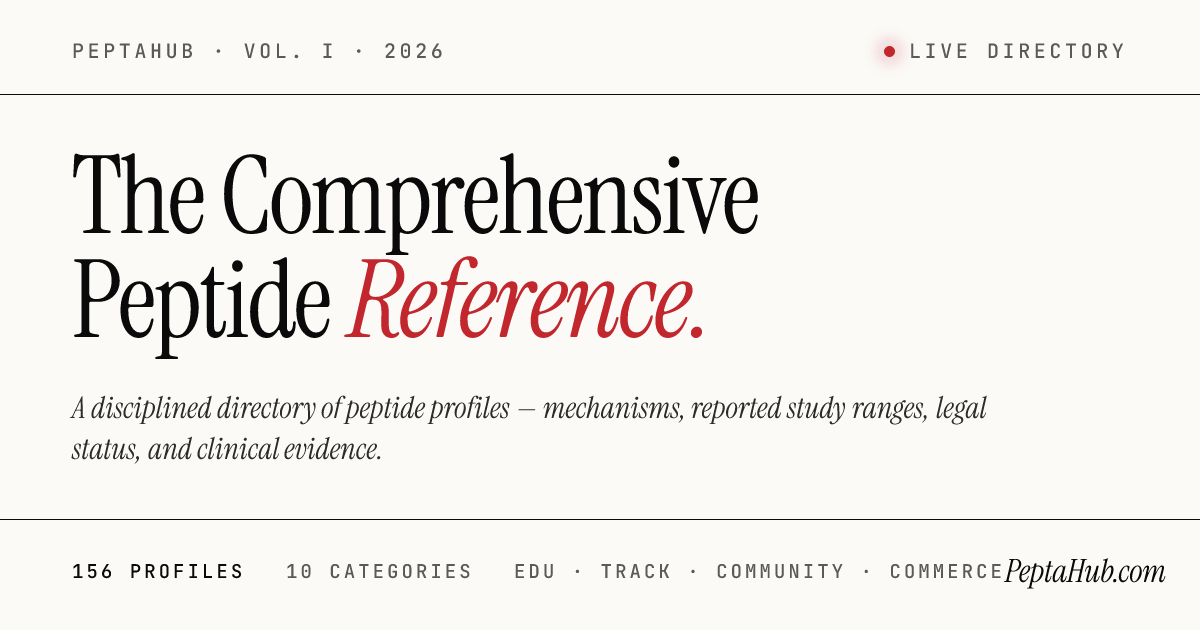

User reviews (0)