Website profiles · Technology insights · Alternatives

printingmuseum.org.au No paid content found

Categories: Other

The Penrith Museum of Printing is a unique and fully operational letterpress museum set up as a 1940's print shop. The museum conducts tours and courses.

Visit website

Updated: 2026-09-27 12:36 Language: English (default) Access: Normal

Profile views 0 Outbound visits 0
The Penrith Museum of Printing Full homepage screenshot
Editorial Review

Website Review

What is The Penrith Museum of Printing?

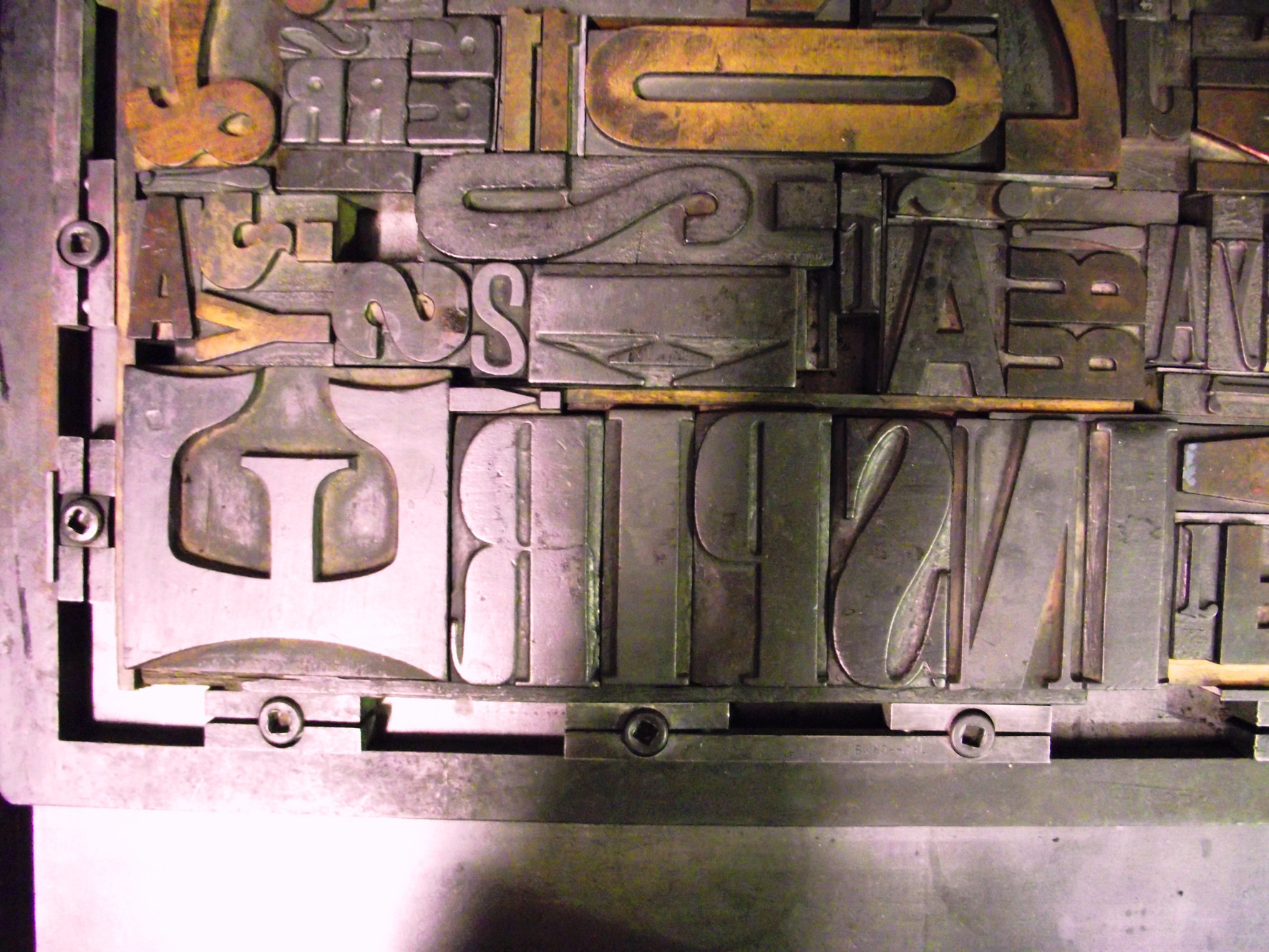
The Penrith Museum of Printing is a working letterpress museum in Penrith, New South Wales, set up to look and operate like a 1940s print shop. It is not a glass-case display: the machinery is run, and visitors can see 19th-century presses in action and, on occasion, pull a proof themselves. The collection spans the letterpress era from Gutenberg's time through to its decline in the 1980s. It is located at Mulgoa Rd & Ransley St, Penrith NSW 2750, and is run largely by volunteers with a hands-on, demonstrative approach. See The Penrith Museum of Printing.

H3 Who it suits

  • Curious locals and families: a low-commitment Sunday outing with something genuinely unusual to watch.
  • Designers, typographers and print hobbyists: a chance to handle metal type, see imposition and understand how letterpress actually worked.
  • History and heritage visitors: the museum presents printing as a trade and craft, not just a technology timeline.
  • Groups and event organisers: the museum markets itself as a venue for parties, meetings and group tours.

H3 Visiting and learning The museum is open to the public every Sunday from 10am to 2pm, or by appointment. Entry is $5 for adults and free for children. Group tours must be booked ahead by email or phone. Beyond drop-in visits, the museum runs popular one-day letterpress workshops covering typography, posters and Adana press work; these run from 10.30am to 4pm and cost $125 per person. Workshop places are limited and tend to fill, so booking ahead matters. The museum also hosts occasional events, including Rare Book Week and a heritage trades fair where staff print souvenirs on an 1890 Pearl treadle and an ADANA press.

H3 Practical next step If you want to do more than look, book a workshop rather than relying on a Sunday visit, since the workshop is where you get your hands on the equipment. If you are organising a group, contact the museum directly to arrange a tour time and confirm what your group will be able to try. As a comparison, Powerhouse Museum and Museums of History NSW cover broader social and technological history, while Penrith is narrowly and deeply about letterpress itself — choose it when the craft, not the overview, is the point.

What letterpress workshops does the museum offer and how much do they cost?

The museum offers one-day letterpress workshops in Typography, Poster and Adana printing. Each workshop runs from 10:30am to 4pm and costs $125 per person. Places are booked online or by phone, and the museum advises booking ahead — its next advertised workshop date was Tuesday, 22 September. The museum also runs general letterpress tours and group visits; entry for casual Sunday visits (10am–2pm) is $5 for adults and free for children, which is separate from the workshop fee.

For a practical decision: choose the Typography workshop if you want to understand type, spacing and composition; the Poster workshop if you want to produce a larger display piece; and the Adana workshop if you are interested in small, tabletop platen press work. All three suit beginners and hobbyists rather than production printers, since the museum operates as a 1940s-style letterpress print shop.

To book, contact the museum by phone on 0408 412 708 or by email, and confirm the current workshop date and whether materials are included. If you are travelling to Penrith, the museum notes free parking nearby and a 15-minute walk or bus ride from Penrith station.

How can I book a group tour or private event at the museum?

Contact the museum directly to arrange a group tour or private event: email [email protected] or phone 0408 412 708 and ask for Bob. The museum takes tour bookings online or by phone, and for groups it specifically asks you to email or call in advance "to avoid disappointment." It also advertises itself as a venue for parties, meetings and events, so if your group wants something beyond a standard walk-through, say so when you enquire.

What to include in your enquiry

  • Preferred date and a backup date, plus arrival and finish times
  • Number of people, including children
  • Whether you want a standard tour or a private event such as a party or meeting
  • Any interest in hands-on printing, since the museum runs presses during visits and lets people pull a proof
  • A phone number for confirmation

Practical points

  • Regular public opening is Sundays, 10am–2pm, with entry listed as $5 for adults and children free.
  • The site is at Mulgoa Rd & Ransley St, Penrith NSW 2750, with free parking next to the museum. By train, take the Blue Mountains line to Penrith, then a bus or about a 15-minute walk.
  • If you want a structured learning session rather than a tour, the museum's letterpress workshops (Typography, Poster and Adana) are listed at $125 per person, run one day from 10.30am to 4pm, and require booking.
  • Special open days and events appear on the calendar, so check dates before fixing your visit. See The Penrith Museum of Printing.

Next step

Send one email with your date options, group size and the type of visit you want, then follow up by phone if you have not heard back within a few days. If your group is large or you need exclusive use of the space, ask what maximum number the museum can comfortably host and whether a deposit or minimum spend applies.

What can I see or do during a Sunday visit to the museum?

A Sunday visit (10am–2pm) centres on a working 1940s-style letterpress print shop rather than a static display case. The museum describes itself as fully operational, so the appeal is watching and joining in with presses that still run.

What you can see

  • 19th-century machinery in action, including treadle and Arab presses, with type, formes and rollers set up as they would have been in a jobbing shop.
  • A working collection that traces letterpress from Gutenberg's era through to its commercial decline in the 1980s.
  • Displays tied to temporary events, such as Rare Book Week and heritage craft fairs, when extra printing demonstrations are laid on.

What you can do

  • Pull a proof of your own on a press, which is the highlight for most first-time visitors.
  • Talk with volunteers about the equipment and the trade — this suits anyone interested in typography, book history or industrial heritage.
  • Book a group tour, or enquire about using the space for a party, meeting or event; the museum promotes itself as a step-back-in-time venue.
  • Join a one-day workshop if you want more than a look: Typography, Poster and Adana sessions run 10.30am–4pm, and the museum lists them at $125 per person. These need booking ahead, so a Sunday drop-in and a workshop are different kinds of visit.

Practical fit Sunday entry is listed at $5 for adults with children free, and there is free parking beside the museum; the site is also reachable by train to Penrith plus a bus or a 15-minute walk. If you mainly want to browse, an hour or two is ample; if you want hands-on printing or a workshop, plan and book. Contact the museum by phone on 0408 412 708 or email [email protected] to confirm a Sunday demonstration or secure a workshop place before travelling.

What special events like the Penrith Highland Festival and Rare Book Week take place at the museum?

The museum programmes two named special events alongside its regular Sunday openings, plus occasional off-site appearances.

Penrith Highland Festival 2026. The museum marks the inaugural festival, held Saturday 3 October 2026, by opening from 8am to 5pm instead of its usual Sunday hours. Visitors are invited to see 19th-century machinery running and to pull a proof themselves, with letterpress history presented from Gutenberg through to the craft's decline in the 1980s.

Rare Book Week 2026. Hosted for the fourth year, scheduled for Saturday 24 October, 11am–1pm. The page notes details were still to follow.

Heritage Trades & Traditional Crafts Fair. At the Wollondilly Heritage Centre & Museum on Sunday 13 September, 10am–3pm, staff print souvenirs for visitors on an 1890 Pearl treadle and an ADANA press — a chance to see the craft away from Penrith.

Regular access. Open every Sunday, 10am–2pm, or by appointment; entry is $5 for adults and free for children. Bookings for tours and workshops are taken online or by phone (0408 412 708, or email [email protected]). Letterpress workshops — Typography, Poster and Adana — run one day, 10.30am–4pm, at $125 per person, with the next listed on Tuesday 22 September. Free parking sits next to the museum; Penrith station is a bus ride or about a 15-minute walk away.

Practical next step. If your interest is hands-on printing, pick a workshop date and register early, since places are limited; if you mainly want to watch presses run, a Sunday visit or one of the festival open days is the simpler option. Confirm current dates and any Rare Book Week details directly with the museum, as some were still to be announced.

For broader context on letterpress collections, see The Penrith Museum of Printing.

How do I become a member of The Penrith Museum of Printing?

Membership inquiries are handled directly by The Penrith Museum of Printing rather than through an online signup form. The museum's site lists a "Become a Member click here" option, and the contact details it publishes are email [email protected] or phone 0408 412 708 (ask for Bob). Contacting them is the practical route: ask about the current membership fee, what the membership year covers, and whether any volunteer or workshop commitments are expected.

What to ask when you make contact

  • Cost and term: annual or other period, and any concession rate.
  • What's included: free or discounted entry, workshop discounts, access to printing sessions, newsletters or event invitations.
  • Any expectations: whether members are expected to volunteer, help at open days, or assist with tours.
  • How to pay and renew: whether payment is taken in person, by bank transfer, or another method.

Practical context

The museum opens to the public every Sunday from 10am to 2pm, so a Sunday visit is a good chance to talk to someone in person, see the 1940s-style print shop in operation, and confirm membership details on the spot. It also runs one-day letterpress workshops (Typography, Poster and Adana), which are a natural first step if you want to try the craft before committing to membership.

For a broader sense of how letterpress collections and membership programs work elsewhere in Australia, the Australian Museum of Printing in Victoria is a useful comparison point.

Related questions

More questions →
What Is Letterpress Printing and How Can You Try It?

Letterpress printing is a relief printing method in which raised, inked type or images are pressed directly onto paper. It was the dominant way Western text was printed from Gutenberg's movable type in the 1440s until it was largely displaced by offset and other methods in the 1980s. You can try it hands-on at The Penrith Museum of Printing, a working 1940s-style print shop in Penrith, NSW, which runs tours and one-day workshops.

How letterpress works

The process has three core elements:

  1. Movable type — individual metal or wood characters are assembled, letter by letter, into a "form" that makes up a page or poster.
  2. Inking — rollers apply ink to the raised surface of the type only.
  3. Pressing — paper is pressed against the inked type, transferring the image. The pressure leaves a slight impression in the paper, which is a hallmark of letterpress work.

Because every character is placed by hand, setting type is slow and deliberate — which is why the museum describes pages "awaiting imposition," the stage where assembled type is locked into position ready to print.

Press types you'll encounter

Press / tool What it is Where it fits
Treadle press (e.g. an 1890 Pearl) Foot-powered platen press Common 19th-century shop work; used at museum events to print souvenirs
Adana press Small hand-operated platen press Popular for beginners and small jobs; the subject of a dedicated workshop
Wharfedale Cylinder press Larger, heavier production work; the museum references its rollers

See it in action

The museum is set up as a fully operational 1940s print shop, so machinery is demonstrated rather than just displayed. Visitors can watch 19th-century equipment run and, at some events, pull a proof themselves.

  • Open days: every Sunday, 10am–2pm, or by appointment
  • Entry: $5 for adults, children free
  • Tours: book online or by phone
  • Group tours and venue hire: available on request

Special events in 2026 include the Penrith Highland Festival (Saturday, 3 October, with doors open 8am–5pm) and Rare Book Week (Saturday, 24 October, 11am–1pm). At the Heritage Trades & Traditional Crafts Fair at Wollondilly Heritage Centre & Museum (Sunday, 13 September, 10am–3pm), staff will print souvenirs on an 1890 Pearl treadle and an Adana press.

Learn it yourself: workshops

The museum's letterpress workshops cover Typography, Poster, and Adana printing. Each runs one day, 10.30am–4pm, and costs $125 per person. The next scheduled workshop is Tuesday, 22 September. Spots are limited, so register online or by phone.

These suit complete beginners — the one-day format and small-press focus mean you spend the time setting type and printing rather than on theory.

Practical details

  • Address: Mulgoa Rd & Ransley St, Penrith NSW 2750
  • Phone: 0408 412 708 (Bob)
  • Email: [email protected]
  • Getting there: free parking beside the museum, or take the Blue Mountains train to Penrith then a bus or a 15-minute walk
  • Membership: available if you want ongoing access

If you want to understand letterpress by doing it rather than reading about it, a Sunday visit is the low-commitment option; a workshop is the way to actually set type and pull a print yourself.

What Can You See and Do at the Penrith Museum of Printing?

The Penrith Museum of Printing is a working letterpress museum set up as a 1940s print shop, open to the public every Sunday from 10am to 2pm (or by appointment). Entry is $5 for adults and free for children, and you can see 19th-century machinery in action, pull a proof of your own, or book a one-day letterpress workshop for $125 per person. It suits anyone curious about how printing worked from Gutenberg's era through to the 1980s, and it's a practical option if you want hands-on time with real presses rather than a static display.

Where it is and when to go

  • Address: Mulgoa Rd & Ransley St, Penrith NSW 2750
  • Regular opening: Every Sunday, 10am–2pm, or by appointment
  • Entry: $5 adult, children free
  • Getting there: Plenty of free parking right next to the museum, or catch the Blue Mountains train to Penrith and then a bus or a 15-minute walk

If you're planning around a specific event, check the dates below, since the museum also opens at different hours for festivals.

What you can see and do

The museum is fully operational rather than a behind-glass collection. You can watch 19th-century machinery running and, in the museum's own words, "perhaps pull a proof of your own." The setting is a 1940s print shop, so the equipment, type, and presses are arranged as a working environment.

Hands-on options include:

  • Pulling a proof during a visit, particularly at special events where souvenirs are printed for visitors
  • One-day letterpress workshops, including Typography, Poster, and Adana workshops
  • Group tours, which can be booked in advance
  • Private events, if you want a unique venue for a party, meeting, or gathering

Workshops: what to expect

The museum's popular letterpress workshops are open for registration now.

Detail Information
Cost $125 per person
Duration One day, 10.30am–4pm
Types Typography, Poster, and Adana workshops
Next workshop Tuesday, 22 September
Booking Online or by phone

Spots are limited, so the museum advises contacting them immediately to secure your place and planning ahead.

Special events in 2026

The museum runs and joins several events through the year:

  • Heritage Trades & Traditional Crafts Fair — Sunday, 13 September, 10am–3pm at Wollondilly Heritage Centre & Museum. The museum will print souvenirs for visitors on an 1890 Pearl treadle and an ADANA press.
  • Penrith Highland Festival — Saturday, 3 October 2026. To mark the inaugural festival, the Australian Museum of Printing opens from 8am to 5pm, with 19th-century machinery in action and the chance to pull your own proof.
  • Rare Book Week 2026 — Saturday, 24 October, 11am–1pm. This is the fourth year the museum has hosted it; further details are to follow.

How to book

Bookings for tours, workshops, and events are taken online or by phone. For direct contact:

The museum recommends emailing or calling ahead for group tours "to avoid disappointment." You can also become a member if you want ongoing involvement.

Common questions

Do I need to book just to visit? No — the museum is open to the public every Sunday from 10am to 2pm, or by appointment. Booking ahead matters most for group tours, workshops, and events.

Is it suitable for children? Children enter free, and the working presses and hands-on proof-pulling make it a visual, active visit rather than a quiet gallery.

What if I can't come on a Sunday? Appointments are available, so contact the museum by phone or email to arrange a time.

What Is Historic Letterpress Printing and How Can You Experience It?

Historic letterpress printing is the relief process that dominated Western printing from Gutenberg in the 1440s until its commercial decline in the 1980s: ink is applied to a raised surface of movable metal or wood type, paper is pressed against it, and the image transfers. You can experience it hands-on at The Penrith Museum of Printing in NSW, Australia — a fully operational letterpress museum set up as a 1940s print shop — which runs Sunday open days, guided tours, and one-day workshops where you can pull your own proof.

How Letterpress Printing Actually Works

Letterpress is a relief method, meaning only the top surface of the printing plate carries ink. The basic sequence at a working museum press is:

  1. Set the type. Individual pieces of movable type (each carrying one character) are assembled by hand into a forme — the locked-up block of text or image that will be printed.
  2. Ink the surface. Ink is applied to the raised face of the type, traditionally by hand-inking with a roller or brayer. The recessed areas stay clean.
  3. Press the paper. Paper is placed over the inked forme and pressure is applied — on a treadle press by foot, on other presses by lever or mechanised action.
  4. Pull the proof. The printed sheet is lifted off. The result is a sharp, slightly debossed impression where the type met the paper.

The museum's own captions describe this in practice: "Form on Arab press, ready to print" and "Wharfedale rollers" show the stages of preparing a forme and inking a cylinder press before a run.

Why It Is Called "Historic"

The museum frames the story as running "from the days of Gutenberg (1440s) until its end in the 1980s." That span covers roughly five centuries in which letterpress was the primary way text was printed — books, newspapers, posters, and job printing. It was displaced in the late 20th century by offset lithography and then digital printing, which are faster and cheaper for most commercial work. What survives in museums and studios is the craft version: slower, tactile, and valued for the physical impression it leaves.

What You Can See at a Working 1940s Print Shop

The Penrith Museum of Printing is not a glass-case display — it is set up as a functioning 1940s print shop, so the equipment is demonstrated rather than just exhibited. Based on the museum's own descriptions, you can expect to see:

  • 19th-century machinery in action, including treadle presses such as an 1890 Pearl and an ADANA press used for printing souvenirs at events.
  • Cylinder and other presses with their inking rollers, such as the Wharfedale rollers mentioned in the museum's captions.
  • Movable type and formes in various stages — including "pages awaiting imposition," the step where individual pages are arranged into the correct order for printing and folding.
  • The full workflow from setting type to pulling a finished proof.

The museum also states that visitors can "perhaps pull a proof of your own," which is the clearest hands-on option for a casual visit.

Hands-On Options: Tours, Proofs, and Workshops

There are three levels of involvement, depending on how much time and money you want to commit.

Option What it involves Cost When
Sunday open visit Self-guided look at the working shop; chance to pull a proof $5 adult, children free Every Sunday, 10am–2pm
Group tour Organised tour, by prior booking Not stated on the site By arrangement
One-day workshop Typography, Poster, or Adana workshop; one day, 10.30am–4pm $125 per person Scheduled dates, e.g. Tuesday 22 September

The workshops are described as "popular" and the museum advises registering early to secure a spot. If you want the full experience of setting type and running a press yourself, the workshop is the option to book; if you just want to see the machinery working and try a proof, a Sunday visit is enough.

Practical Visiting Details

  • Address: Mulgoa Rd & Ransley St, Penrith NSW 2750.
  • Opening hours: Every Sunday, 10am–2pm, or by appointment.
  • Entry: $5 adult, children free.
  • Getting there: Plenty of free parking next to the museum, or take the Blue Mountains train to Penrith and then a bus or a 15-minute walk.
  • Bookings: Online or by phone on 0408 412 708. Email contact for bookings and Rare Book Week is [email protected] (Bob).
  • Group tours: Book by email or phone in advance to avoid disappointment.
  • Private events: The museum also offers itself as a venue for parties, meetings, or events.

Special Events Worth Planning Around

The museum runs occasional open days beyond its regular Sundays, which are useful if you want to see more presses running at once:

  • Heritage Trades & Traditional Crafts Fair at Wollondilly Heritage Centre & Museum, Sunday 13 September, 10am–3pm — the museum will be printing souvenirs on an 1890 Pearl treadle and an ADANA press.
  • Penrith Highland Festival, Saturday 3 October 2026 — the Australian Museum of Printing will open from 8am to 5pm for the occasion.
  • Rare Book Week 2026, Saturday 24 October, 11am–1pm — the museum hosts this for the fourth year; further details were still to follow at the time of writing.

If your interest is specifically in seeing historic presses under power and trying the craft yourself, a Sunday visit plus a workshop booking covers both. If you only have an hour, the Sunday open day at $5 is the lowest-commitment way to see a working letterpress shop and pull a proof.

What Are Printing Presses and How Can You See Them in Action?

A printing press is a machine that transfers ink from a raised surface — type or an engraved block — onto paper under pressure. The letterpress process runs from setting movable type, locking it into a forme, inking the surface, and pressing paper against it to pull a print. You can see this process live, and even pull a proof yourself, at working museums such as The Penrith Museum of Printing in NSW, Australia, which operates as a 1940s print shop and runs tours and courses.

The letterpress process, step by step

Letterpress is relief printing: the parts that carry ink are raised above the rest of the surface. The basic sequence is:

  1. Set the type. Individual metal or wood characters are assembled into words and lines, historically by hand from a type case.
  2. Impose the pages. Pages are arranged in a forme so they fall in the correct order once the sheet is folded — the museum's own pages are described as "awaiting imposition," which is exactly this stage.
  3. Lock up the forme. The type is secured in a chase so nothing shifts under pressure.
  4. Ink the surface. Rollers carry ink across the raised faces only.
  5. Press and pull. Paper is pressed against the inked type, transferring the image. The result is a proof or finished sheet.

Every historical press type below is a variation on this same idea — what changes is how the pressure is applied.

Main types of historical printing press

Press type How it works Typical era Example
Hand press Screw or lever applies pressure manually; one sheet at a time Gutenberg era (1440s) onward Wooden common press
Treadle press Operator powers it with a foot treadle, leaving hands free to feed and register paper 19th century Pearl treadle, ADANA
Cylinder press A rotating cylinder rolls the sheet over the inked forme, faster than flat-bed pressing 19th–20th century Wharfedale

The shift from Gutenberg-era wooden hand presses to 19th- and 20th-century iron and powered machines is largely a story of speed and consistency: treadle and cylinder designs let a single operator produce far more sheets per hour, and iron frames held tighter tolerances than wood.

Where to see presses running

The Penrith Museum of Printing is a fully operational letterpress museum set up as a 1940s print shop, covering letterpress from the days of Gutenberg until its commercial end in the 1980s. Its collection includes 19th-century machinery shown in action, with Wharfedale rollers and a form on an Arab press ready to print among the documented equipment.

Practical visiting details:

  • Open: every Sunday, 10am–2pm, or by appointment
  • Entry: $5 adult, children free
  • Address: Mulgoa Rd & Ransley St, Penrith NSW 2750
  • Getting there: plenty of free parking next to the museum, or catch the Blue Mountains train to Penrith then a bus or a 15-minute walk
  • Tours and bookings: online or by phone on 0408 412 708, or email [email protected]

At events the museum prints souvenirs for visitors on presses including an 1890 Pearl treadle and an ADANA press, and visitors can "pull a proof of your own" — a hands-on way to feel how much pressure and registration a real press demands.

Try a press yourself: workshops

If you want more than watching, the museum's letterpress workshops cover Typography, Poster, and Adana work.

  • Cost: $125 per person
  • Length: one day, 10.30am–4pm
  • Booking: register online or by phone; the museum advises contacting it immediately to secure a spot

The museum also hosts group tours and can be booked as a venue for parties, meetings, or events, and offers membership.

Common sticking points

  • Book ahead. Tours and workshops are booked by email or phone, and workshop places are limited — the museum explicitly warns to plan ahead "to avoid disappointment."
  • Check event dates. Special openings, such as the Penrith Highland Festival on Saturday 3 October 2026 (8am–5pm) and Rare Book Week on Saturday 24 October, 11am–1pm, differ from the regular Sunday hours.
  • Expect hand-powered timing. Treadle and hand presses are slow by design; a workshop day is enough to complete a project, not to master the craft.

For anyone asking what a printing press actually is, the shortest answer is a machine for pressing inked type onto paper — and the clearest way to understand it is to watch one run and pull a sheet yourself.

Website Overview

Page metadata, canonical configuration and social previews work together to provide more consistent search and sharing presentation. An active inbound-mail setup with incomplete authentication may leave the domain more open to impersonation. Provider hosting alone does not close that gap.

Domain and Registration

Transfer-protection status is present, helping reduce the risk of unauthorized domain transfers. The domain uses the common .au extension, which is not an independent safety signal.

DNS and Email

The observed email authentication setup is incomplete: DMARC is missing. Nameservers are provided by wixdns.net, indicating managed DNS hosting. MX records point to the Google Workspace email service. TXT records include verification markers for Google. Such markers may also remain after a service stops being used. DNSSEC signatures were not detected, so this additional DNS authenticity protection is not confirmed.

TLS and Certificates

The certificate uses an RSA 2048-bit public key, offering broad client compatibility. The server supplied a complete certificate chain. No organization name is present in the certificate; the available fields are consistent with domain validation. The certificate was issued by Let's Encrypt, commonly associated with automated certificate services. The certificate's total validity is about 89 days, consistent with a short renewal cycle.

HTTP and Browser Security

The response lacks these common security headers: CSP, Referrer-Policy, Permissions-Policy, clickjacking protection. No X-Powered-By header was found, reducing one common source of backend fingerprinting information. The cf-ray, x-cache, x-served-by response header indicates a CDN or caching proxy in the delivery path. No obvious internal addresses or debug information were found in the headers. The Server header identifies cloudflare without an exact version.

Technology Stack Analysis

The public page identifies Wix.com Website Builder, Wix, React, Sentry, Cloudflare, Fastly without precise versions, leaving fewer clues for version-specific scanning.

Search and Social Sharing

The Generator tag identifies Wix.com Website Builder, making the publishing system easier to fingerprint. Twitter Card metadata is configured. The page declares 2 language or regional alternatives using hreflang. The title has 30 characters, within a common display range. A meta description is present, with 153 characters.

Hosting and Email

DNSwixdns.net
HostingFastly
EmailGoogle Workspace
Location United States flagUnited States 162.159.143.12

User reviews (0)

  • No reviews yet.

Pages, Search and Sharing

Meta descriptionThe Penrith Museum of Printing is a unique and fully operational letterpress museum set up as a 1940's print shop. The museum conducts tours and courses.
Canonical URLhttps://www.printingmuseum.org.au
LanguageEnglish (default)
Twitter Cardsummary_large_image
All bots 1 allowed · 1 disallowed
  • Allow/
  • Disallow*?lightbox=
adsbot-google-mobile 0 allowed · 2 disallowed
  • Disallow/_partials*
  • Disallow/pro-gallery-webapp/v1/galleries/*
adsbot-google 0 allowed · 2 disallowed
  • Disallow/_partials*
  • Disallow/pro-gallery-webapp/v1/galleries/*
petalbot 0 allowed · 1 disallowed
  • Disallow/
dotbot 0 allowed · 0 disallowed
  • IntervalCrawl delay 10 seconds
ahrefsbot 0 allowed · 0 disallowed
  • IntervalCrawl delay 10 seconds

Registration details RDAP / WHOIS

RegistrarUnknown
RegisteredUnknown
ExpiresUnknown
Domain statusserverRenewProhibited https://identitydigital.au/whois-status-codes#serverRenewProhibited
Nameserversns0.wixdns.net、ns1.wixdns.net
DNSSECunsigned

DNS records

TypeNameValueTTLPriority
Acfd.wixdns.net162.159.143.123600—
Acfd.wixdns.net172.66.3.83600—
MXprintingmuseum.org.auaspmx.l.google.com360010
MXprintingmuseum.org.aualt1.aspmx.l.google.com360020
MXprintingmuseum.org.aualt2.aspmx.l.google.com360030
MXprintingmuseum.org.aualt3.aspmx.l.google.com360040
MXprintingmuseum.org.aualt4.aspmx.l.google.com360050
NSprintingmuseum.org.auns0.wixdns.net86400—
NSprintingmuseum.org.auns1.wixdns.net86400—
TXTprintingmuseum.org.augoogle-site-verification=ytarIRiWiYg_WlkpVplw-BG8dqjRfAu6BZkBGCJ11483600—
TXTprintingmuseum.org.auv=spf1 include:_spf.google.com ~all3600—
CNAMEwww.printingmuseum.org.aucdn3.wixdns.net3600—

TLS and certificates

AssessmentNormal configuration
Supported protocolsTLSv1.2、TLSv1.3
Negotiated protocolTLSv1.3
Certificate subjectprintingmuseum.org.au
IssuerLet's Encrypt
Valid until2026-11-19T21:28 · Remaining when checked: 53 days
Verification detailsCertificate trust: Passed · Hostname match: Passed

HTTP response headers

HeaderValue
content-typetext/html; charset=UTF-8
content-languageen
cache-controlprivate,max-age=0,must-revalidate
servercloudflare
strict-transport-securitymax-age=31556952
x-content-type-optionsnosniff
set-cookieRedacted

Identified technologies

Wix.com Website BuilderWixReactSentryCloudflareFastly