
 简体中文
 English

Website review
This review may include AI-generated content and is not individually verified. Domain, certificate and other facts come from the observed data on this page.
What is the Scottish Seabird Centre?
The Scottish Seabird Centre is a marine conservation and education charity based in North Berwick, on Scotland's east coast. It runs an award-winning visitor centre with a Discovery Experience (interactive exhibits, games, VR, films and live wildlife cameras, including panoramic views of the Bass Rock gannet colony), a café, a gift shop and seasonal wildlife boat trips. It is open daily.
Scottish Seabird Centre
What you can actually do there
- Discovery Experience — indoor, family-oriented exhibits and live cameras; a good wet-weather option. Check ahead for maintenance closures, since parts of it can shut temporarily.
- Wildlife boat trips — seasonal, so availability depends on when you visit; book early in peak season.
- Outdoor and family activities — run alongside the indoor exhibits.
- Café and shop — coastal views and sustainable gifts, useful if you want a shorter, lower-cost stop.
- Learning programmes — primary, secondary, group and outdoor learning tied to the Curriculum for Excellence, aimed at ages 4+.
Who it suits
Families with children, school and group trips, wildlife photographers and birders interested in gannets and other seabirds, and anyone wanting a coastal half-day in North Berwick. If you mainly want time on the water rather than exhibits, a boat trip alone may be enough; if you have young children or unreliable weather, the Discovery Experience plus café is the safer plan.
Conservation angle
It is a charity, not just an attraction, and it campaigns on marine issues — for example, it has joined RSPB Scotland, the Scottish Wildlife Trust, the National Trust for Scotland and the Marine Conservation Society in opposing the Berwick Bank wind farm over its expected impact on seabirds. Visitors can add their voice to that campaign.
Next step
Check the Plan Your Visit page for opening times, ticket booking and boat trip dates before travelling, then decide whether you want exhibits only, a boat trip, or both.
Scottish Seabird Centre
What can I see and do at the Discovery Experience in North Berwick?
The Discovery Experience at the Scottish Seabird Centre in North Berwick is an indoor, interactive exhibition about Scotland's marine environment, aimed at a general and family audience. According to the centre, it includes interactive exhibits, games, virtual reality, films and live wildlife cameras, among them live panoramic views of the Bass Rock, described as one of the world's largest Northern gannet colonies.
What you can do there
- Work through hands-on exhibits and games about Scotland's seas and wildlife.
- Watch films and try VR elements.
- Check the live cameras for real-time views of seabirds, including the Bass Rock gannetry.
- Combine the visit with the café, gift shop, seasonal wildlife boat trips or family outdoor activities, all run by the same charity.
Practical points
- The centre says it is open daily, but the Discovery Experience can close for maintenance: it was scheduled to be shut from 2–4 September for essential work. Check ahead before travelling if your trip depends on it.
- Boat trips are seasonal, so they are not a guaranteed add-on outside their running period.
- The wider site mixes conservation and education with the visitor attraction, so expect interpretation and campaign material alongside the displays, such as the centre's joint campaign with other conservation bodies against the Berwick Bank windfarm.
Who it suits Families with children, casual visitors and anyone wanting context on Scottish seabirds before or after a boat trip. If you mainly want time on the water or on the cliffs, treat the Discovery Experience as a rainy-day or half-day complement rather than the whole outing.
Next step: check the centre's Plan Your Visit page for current opening times, ticket booking and any closure notices, then decide whether to pair your slot with a seasonal boat trip: Scottish Seabird Centre.
How do I book a wildlife boat trip and what marine life might I see?
Book wildlife boat trips through the Scottish Seabird Centre in North Berwick, either online or when you arrive; trips are seasonal, so check dates before planning travel. Use the official planning page to confirm times, prices and availability: Scottish Seabird Centre.
What you might see
The Firth of Forth and nearby Bass Rock are best known for seabirds, especially northern gannets from one of the world's largest colonies. Depending on season and route, expect:
- Puffins, guillemots, razorbills and kittiwakes
- Gannets around Bass Rock
- Seals hauled out on rocks
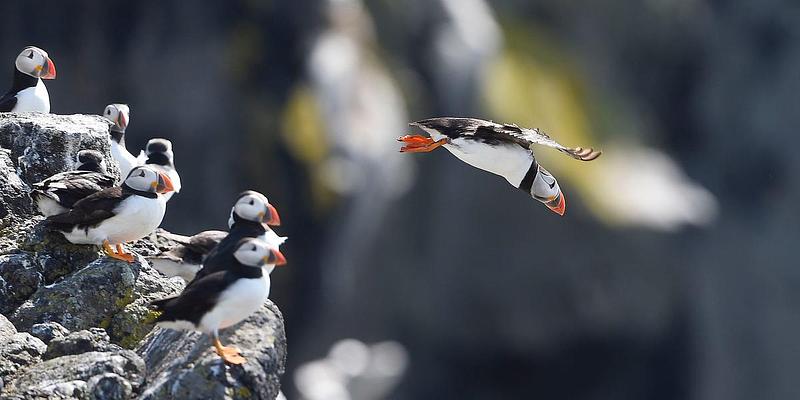
- Occasionally dolphins, porpoises or minke whales
Wildlife is never guaranteed, so treat sightings as likely rather than certain.
Practical booking advice
Book ahead in summer and school holidays, choose a morning trip if you want calmer conditions, and bring layers, sunscreen and a camera with zoom. If you are prone to seasickness, take medication before boarding and pick a shorter trip.
If boats are full or cancelled
The Discovery Experience is a strong fallback: interactive exhibits, films and live cameras including panoramic views of Bass Rock. You can also ask staff about seasonal outdoor activities and family events.
For a concrete plan, check the boat trip page first, then build the rest of your visit around the Discovery Experience, café and gift shop.
What is the Cancel Berwick Bank campaign and how can I support it?
The Cancel Berwick Bank campaign is a conservation push led by the Scottish Seabird Centre together with RSPB Scotland, the Scottish Wildlife Trust, the National Trust for Scotland and the Marine Conservation Society. Its aim is to stop the Berwick Bank offshore wind farm, which the campaign describes as threatening to be the deadliest windfarm for birds anywhere in the world. The concern is the impact on seabirds in the Firth of Forth and surrounding waters, an area of international importance for species such as gannets, puffins and kittiwakes.
The campaign is run by the Scottish Seabird Centre, a marine conservation and education charity based in North Berwick. The charity pairs this advocacy work with its visitor centre, education programmes and seasonal wildlife boat trips, so the campaign sits alongside its wider mission to help people learn about and protect Scotland's seas.
How you can support it
- Add your voice through the campaign's action page. The Scottish Seabird Centre's site has a "Find out how you can help" link from its Berwick Bank section, which is the most direct route to any petition, consultation response or template letter.
- Write to SSE and the Scottish Government directly. The campaign explicitly names both as the decision-makers it is trying to influence, so a short, specific email or letter referencing the bird-impact concern is a reasonable step.
- Support the organisations behind it. Joining or donating to the Scottish Seabird Centre or the partner charities funds the staff time and expertise that keeps the campaign running.
- Talk about it locally. If you live in Scotland or visit the Forth coast, sharing what you have seen — gannet colonies, puffin numbers, boat-trip sightings — gives the campaign a human, place-based angle that generic messages lack.
A practical next step
If you want to do one thing today, go to the campaign section on the Scottish Seabird Centre's website and use its action link to submit a response. If you would rather do something offline, a brief letter to your MSP about the wind farm's bird impacts takes about ten minutes and carries more weight than a social media post.
What to weigh up
The campaign is an advocacy position, not a neutral overview. Offshore wind is also central to Scotland's renewable energy and climate targets, and some conservation bodies support offshore wind in principle while opposing specific sites or designs. If you want to support the campaign, it helps to be clear about which part you back: the objection to this location, the objection to the current design, or a broader call for better bird-sensitivity assessments. Being precise makes your message more credible and more useful to the people deciding.
What educational programmes and school trip options does the centre offer?
The Scottish Seabird Centre runs structured learning programmes for school groups and informal learners, built around Scotland's marine wildlife and linked to the Curriculum for Excellence.
Formal education programmes
- Primary learning — classroom-style sessions for younger pupils.
- Secondary learning — sessions pitched at older students.
- Groups and families — activities for mixed-age and non-school groups.
- Outdoor learning — programmes for ages 4 and up, delivered indoors and outdoors, which the centre presents as seaside school trips.
What a school visit can include The Discovery Experience supplies the indoor core: interactive exhibits, games, VR, films and live wildlife cameras, including panoramic views of the Bass Rock gannet colony. Seasonal boat trips and family-focused outdoor activities add a field-based element, so a trip can mix guided teaching with direct wildlife observation.
Practical considerations
- Programmes are described as serving all ages, abilities and backgrounds, so mixed-ability classes are catered for.
- The centre is open daily, and the site notes that the Discovery Experience can close for maintenance — check dates before booking a trip.
- Boat trips are seasonal, so a visit outside that window will lean more heavily on the indoor and outdoor learning programmes.
Next step Start with the centre's own learning pages to check which programme fits your year group, then confirm availability and any closure dates before arranging transport. If you want to compare how other marine education providers structure school visits, RSPB and The Wildlife Trusts both publish their own learning offers.
Is the Scottish Seabird Centre suitable for a family day out with young children?
Yes — the Scottish Seabird Centre in North Berwick is built around families, and its mix of indoor and outdoor activities makes it workable even when young children have short attention spans or the weather turns.
What suits young children
- The Discovery Experience is the core indoor attraction: interactive exhibits, games, films, VR and live wildlife cameras, including panoramic views of the Bass Rock gannet colony. This is the part most likely to hold a child's interest, since it combines screens, movement and real animals rather than static displays.
- The café and gift shop give you easy breaks without leaving the building, and the centre says it is open daily.
- Seasonal wildlife boat trips and family-focused outdoor activities add an outdoor option, but these depend on the season and on whether your children are comfortable on a boat.
Practical things to weigh
| Consideration | Why it matters with young children |
|---|---|
| Boat trips | Seasonal, so check dates before promising one; sea conditions can affect suitability for small children |
| Live cameras | A reliable fallback if outdoor plans are rained off |
| Indoor/outdoor balance | Lets you alternate between active and calm time |
| Maintenance closures | The centre notes the Discovery Experience will be closed 2–4 September for essential maintenance — check current notices before travelling |
A useful next step is to look at the centre's plan-your-visit and what's-on pages to match your date with boat trip availability and any family events, then decide whether to book tickets in advance. If your children are very young, treat the Discovery Experience plus the café as the dependable core of the day, and add a boat trip only if timings and sea conditions suit. For wider context on Scotland's marine wildlife, the centre's conservation work with partners such as RSPB reflects the same seabird focus you will see on its cameras.
 Akamai Connected Cloud
 Microsoft 365
 London, England, United Kingdom

User reviews (0)