
 简体中文
 English
Website review
This review may include AI-generated content and is not individually verified. Domain, certificate and other facts come from the observed data on this page.
What is Saint Joseph's University?
Saint Joseph's University is a private Catholic university in Philadelphia, known for combining liberal arts with strong professional programs in business, education, health, science and nursing. It offers a wide range of credentials—bachelor's, master's, doctoral, associate and certificate programs—and lets students combine majors across schools or choose accelerated, direct-entry and dual-degree paths.
Who it suits
- Undergraduates who want flexibility: Students can mix studies across colleges rather than being locked into a single track.
- Career-focused learners: The professional schools in business, health and education are central to its identity.
- Graduate and certificate seekers: There are options beyond the bachelor's level, including doctoral and certificate credentials.
What stands out from the page
- More than 270 academic programs, with 160+ undergraduate degrees and 90+ certificates, master's and doctoral programs.
- Five schools and colleges spanning arts and sciences, business, education, healthcare and nursing.
- Roughly 20,000 square feet of simulation space for nursing and allied health training.
- A large alumni network of over 110,000 people worldwide.
A practical way to decide
Start with the specific program, not the university brand. Check whether your intended field sits in a school with the facilities and pathways you need—for example, simulation space matters if you're considering nursing or allied health, while cross-school major combinations matter if your interests span disciplines.
For official program lists and admission details, see Saint Joseph's University.
How do I apply for admission to Saint Joseph's University?
Applying to Saint Joseph's University means choosing the right entry path for your level of study, then submitting an online application with your academic records, and — for most applicants — test scores or a test-optional declaration. Saint Joseph's is a private Catholic university in Philadelphia with bachelor's, master's, doctoral, associate and certificate programs across five schools and colleges, so the process differs depending on whether you are a first-year, transfer, graduate or international applicant.
What the application generally involves
- Pick your program first. The university organizes admission by level (bachelor's, master's, doctoral, associate, certificate) and by school, so confirm the specific program and its requirements before starting.
- Submit an application. Saint Joseph's accepts the Common Application for undergraduates and also offers its own online application; graduate programs typically use program-specific applications.
- Send transcripts. Official high school records for first-year applicants, or college transcripts for transfer and graduate applicants.
- Test scores. SAT or ACT scores are accepted; many programs are test-optional, so check the current policy for your intended entry term.
- Supporting materials. Essays, letters of recommendation, and for some programs portfolios, auditions or interviews.
- Application fee or waiver. A fee usually applies, with waivers available for eligible students.
Practical next step
Before you write anything, open the "Find Your Program" tool on the university site and note the admission contact for that specific school. Then work backward from the deadline: gather transcripts early, since those take the longest to arrive, and draft your essay while you wait. If you are applying as a transfer student, request a credit evaluation early — it affects both your timeline and your cost.
A quick way to decide your path
| Applicant type | Main application | What matters most |
|---|---|---|
| First-year | Common App or university application | High school transcript, essay, optional test scores |
| Transfer | University or program application | College transcript, credit evaluation, GPA |
| Graduate | Program-specific application | Prerequisites, recommendations, statement of purpose |
| International | Program application | English proficiency proof, credential evaluation, visa documents |
If you are unsure which category fits you — for example, you have some college credit but never enrolled full-time — contact admission directly rather than guessing, because the wrong application type can delay a decision by weeks.
For verified deadlines, fees and program-specific requirements, check Saint Joseph's University directly, and compare its offerings with nearby options such as Temple University or Villanova University if you are weighing Philadelphia-area schools.
What financial aid and scholarship options are available at Saint Joseph's University?
Saint Joseph's University offers need-based financial aid, merit scholarships and a few specialized awards, though the specific dollar amounts and deadlines change every year, so the official financial aid office is the place to confirm your own numbers.
What the university itself highlights
- Its main page promotes Saint Joseph's as a "Best Value" school and lists more than 260 academic programs across five schools and colleges, which matters for aid because eligibility often depends on which program you enter (undergraduate, graduate, certificate, accelerated or dual-degree).
- The site's news section shows donor-funded initiatives, such as the NEST commitment tied to AI and skilled-trades work. That is a signal that named, program-specific funding exists, but it is not a general scholarship open to all applicants.
Typical categories to ask about
- Need-based grants and federal or state aid, determined by the FAFSA (and, for some applicants, the CSS Profile).
- Merit scholarships for first-year and transfer undergraduates, usually tied to GPA and test scores.
- Awards for graduate, doctoral, certificate and adult-learner students, which are often handled by the individual school rather than centrally.
- Endowed or donor-named scholarships, sometimes restricted by major, hometown or background.
- Athletic, service and departmental awards, plus tuition-exchange or Catholic-school partnerships.
How to decide where to focus If you are a traditional undergraduate, start with need-based aid plus automatic merit consideration, since those cover the largest share of most packages. If you are a graduate or certificate student, go straight to your program's page, because assistantships and program scholarships are usually awarded there. If you have a specific affiliation, ask whether a named award applies before assuming you are ineligible.
Next step Contact the financial aid office directly and ask three things: which forms they require, the priority filing date, and whether your intended program has its own scholarship application. Pair that with the university's official site, Saint Joseph's University, and compare offers from other schools using total net cost, not sticker price.
What campus life and student activities does Saint Joseph's University offer?
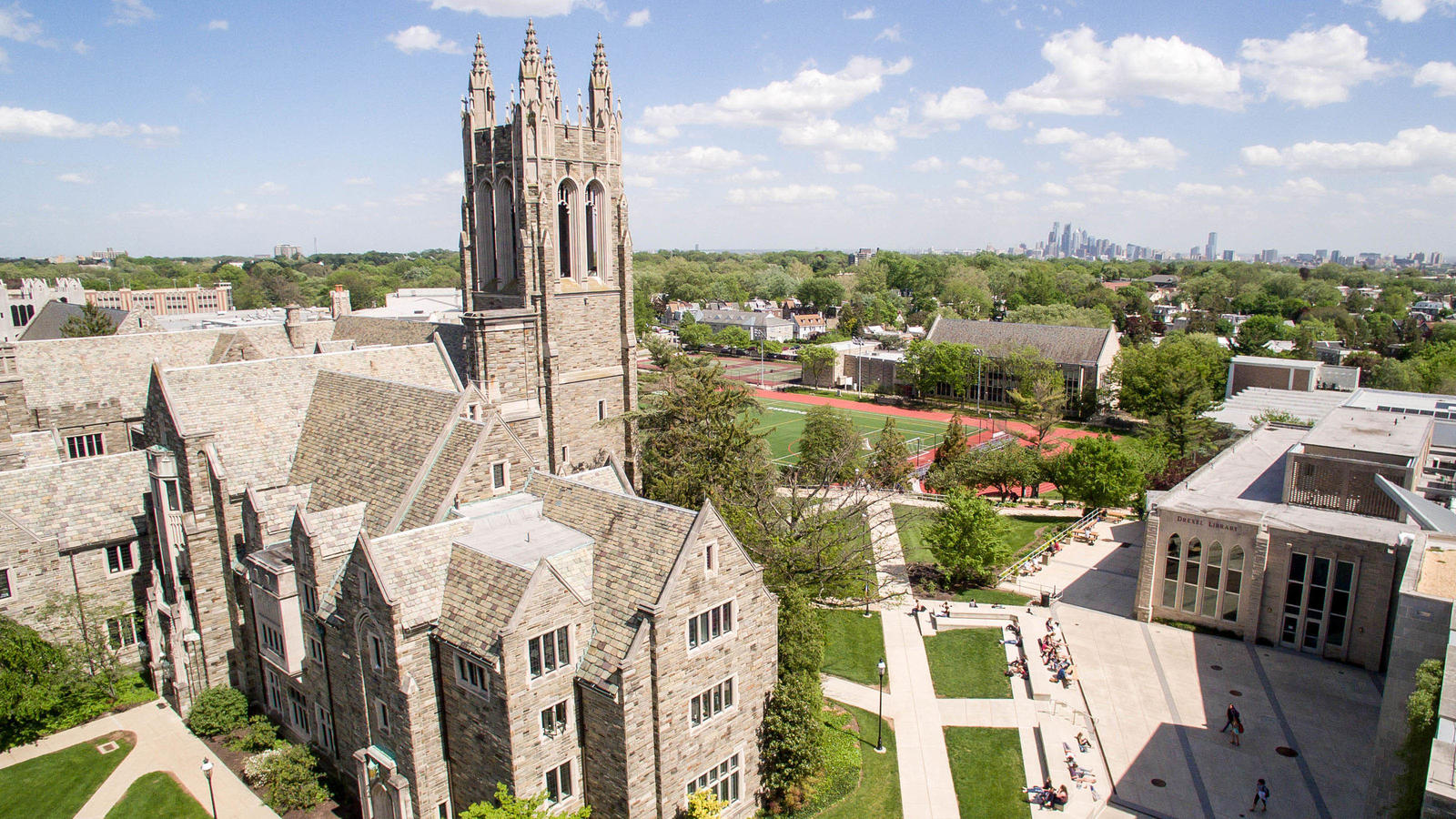
Saint Joseph's University offers a fairly traditional, campus-centered student experience anchored in its Hawk Hill location in Philadelphia, with a Catholic and Jesuit identity shaping much of the community culture. The page evidence emphasizes academics, schools and colleges, and university news rather than a detailed activities calendar, so treat the specifics below as general expectations for a school of this type rather than a confirmed list.
What shapes campus life
- A residential, community-oriented feel. With 110K+ alumni described as rooting for and giving back to the community, school spirit and alumni connection appear central to the culture.
- Philadelphia as an extension of campus. The location gives students access to a major city for internships, culture and entertainment, while the campus itself provides the day-to-day social core.
- Values-driven programming. As a Catholic university, expect service opportunities, retreats and ethics-focused programming to feature alongside standard clubs and events.
- Academic-life overlap. Five schools and colleges and 270+ programs mean student organizations often cluster around professional interests in business, education, healthcare, arts and sciences, and nursing.
Activities you'd typically find
- Club and intramural sports, fitness and recreation
- Student government, media and performance groups
- Service and immersion trips tied to the university's mission
- Professional and pre-professional societies within each school
- Cultural, religious and identity-based organizations
A practical next step
If you're evaluating fit, don't rely on a general description. Check the university's own student life pages for the current club directory, housing options and event calendar, then compare with a peer urban Catholic school such as Temple University or Villanova University to see how much of student life happens on campus versus in the city. Ask current students one concrete question: how often do you leave campus in a typical week, and what keeps you there?
How do the five schools and colleges at Saint Joseph's University differ in their academic programs?
Saint Joseph's University organizes its academic portfolio into five schools and colleges, and the main differences are in subject focus, degree levels and how career-oriented the programs are. The page describes a combined offering of more than 260 programs across business, education, healthcare, arts and sciences, and nursing, with options ranging from associate and bachelor's degrees to master's, doctoral and certificate programs.
The five schools and colleges
- College of Arts and Sciences — The broadest, most traditional academic home. The page presents it as preparation for engaging the world with purpose, combining rigorous coursework, experiential learning and faculty guidance. It suits students who want a liberal arts foundation, plan to combine majors across schools, or intend to continue to graduate study.
- Haub School of Business — The professional business school. It fits students targeting careers in accounting, finance, marketing, management or analytics, and tends to emphasize internships, industry connections and applied projects over purely theoretical study.
- School of Education and Human Development — Focused on teaching, counseling and human-services pathways. Programs typically blend classroom theory with field placements in schools or community organizations, so it appeals to students who already know they want to work in education or related settings.
- School of Health Studies and Education (health and science programs) — The page highlights 20,000 square feet of immersive simulation space for nursing and allied health programs, which signals a hands-on, clinical orientation. This is the natural choice for students aiming at patient care, laboratory science or health-related graduate study.
- School of Nursing — The most clinically specialized of the five, built around licensure-track and advanced nursing preparation. Its curriculum is sequenced around simulation, clinical rotations and certification requirements rather than open elective exploration.
How to choose between them
| If you want... | Consider |
|---|---|
| Maximum flexibility and room to combine majors | College of Arts and Sciences |
| A direct line to corporate or finance roles | Haub School of Business |
| To teach, counsel or work in community services | School of Education and Human Development |
| Patient care or lab-based health careers | School of Health Studies / Nursing |
| Accelerated or direct-entry professional training | Nursing or health programs with clinical sequencing |
A practical next step is to open the "Find Your Program" tool on the university's site, filter by degree level (bachelor's, master's, doctoral, associate or certificate), then compare two or three programs across different schools. If a program appears in more than one school, that is usually a sign of an interdisciplinary or dual-degree option — worth asking an admissions counselor how the requirements differ.
What career outcomes and alumni support can graduates of Saint Joseph's University expect?
Graduates can expect a career-oriented education with a broad set of academic pathways, plus an alumni network the university describes as 110,000+ people worldwide who "root for and give back" to the community. The page emphasizes professional programs in business, education, health, and science, alongside arts and sciences and nursing, which suggests career preparation is woven into the curriculum rather than treated as an add-on.
What the page supports
- Varied degree routes: bachelor's, master's, doctoral, associate, and certificate programs, including accelerated, direct-entry, and dual-degree options. This matters if you want to stack credentials or change fields without starting over.
- Scale and choice: 270+ academic programs, with 160+ undergraduate degrees and 90+ certificates, master's, and doctoral programs.
- Applied health training: 20,000 square feet of immersive simulation space for nursing and allied health programs — relevant if you're targeting clinical roles where hands-on practice hours matter.
- Active alumni community: 110,000+ alumni described as engaged supporters of the university and each other.
- Career-adjacent momentum: A university-wide, multi-year Initiative for Human Formation in an Age of AI, plus an industry partnership (NEST committing $200,000) focused on AI-driven solutions in facilities management and skilled trades. These signal where the university is directing resources, not guaranteed job placements.
How to judge the alumni support for your situation
Alumni networks vary by school, major, and city. Before enrolling, ask a specific question rather than a general one:
| Your goal | What to ask | Why it matters |
|---|---|---|
| Local job market | How many alumni in my target city and industry? | A large global network can still be thin in your field |
| Career switching | Are there alumni mentorship or referral programs for career changers? | General pride doesn't equal warm introductions |
| Health care roles | Which clinical partners host students and hire graduates? | Simulation space helps, but placement pipelines decide outcomes |
| Business or education | What does the career office report by program, not university-wide? | Averages hide weak and strong programs |
A practical next step
Pick two or three specific programs you're considering, then contact the career services office and the relevant department. Ask for outcomes by program — employment rates, typical employers, and starting roles — and ask to be connected with two recent alumni in your intended field. If the alumni are willing to talk about how they actually landed their first job, that tells you more than any ranking. You can start from the program finder at Saint Joseph's University.
 Amazon Route 53
 Google Workspace

User reviews (0)