Website profiles · Technology insights · Alternatives

thegardensatmillfleurs.com

Rare plant collection garden and nursery in Bucks County. Guided garden tours and lectures. Private garden tours by appointment. (215) 297-1000;

No paid content found
Visit website
Profile views 1 Outbound visits 0 Normal
Home | garden Full homepage screenshot

At a glance

Category
Other
Language
English
Paid-content signal
No paid content foundObserved
Registered
2014
Hosting
FastlyInferred
HTTPS certificate trusted
PassedObserved
Last updated

Website review

This review may include AI-generated content and is not individually verified. Domain, certificate and other facts come from the observed data on this page.

What is The Gardens at Mill Fleurs?

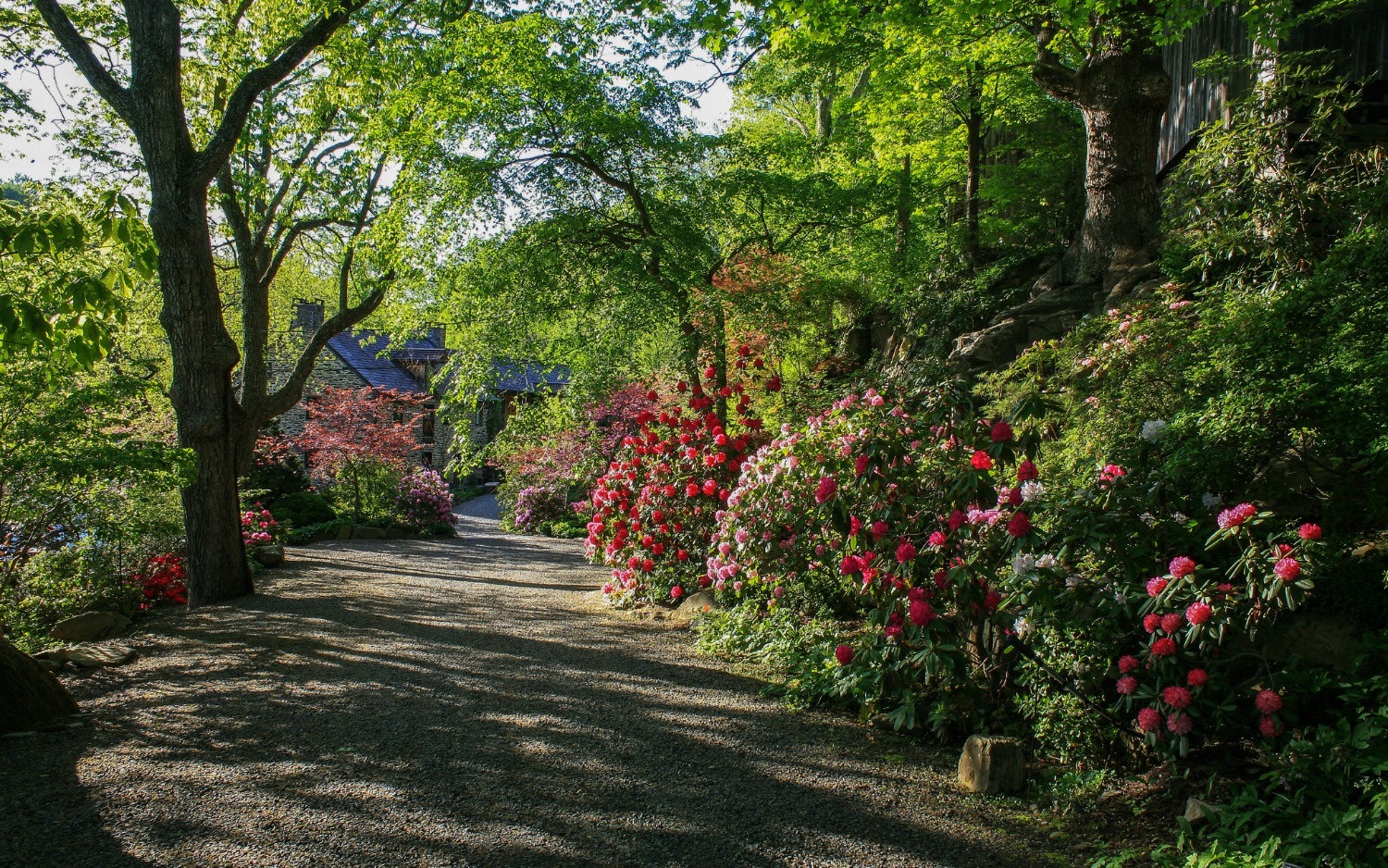
The Gardens at Mill Fleurs is a rare-plant collection garden and nursery in Bucks County, Pennsylvania, built around a grist mill and a sawmill on the banks of the Tohickon Creek. The owners describe 25 years of making "an impossible garden on an impossible site"; the garden is open seasonally, and spring opening dates are announced on its Events page. Visitors come for guided garden tours and lectures, and private tours can be arranged by appointment.

The collection leans heavily on shade and woodland plants, with an emphasis on hosta, epimedium, rhododendron, the polygonatum/disporum family, tricyrtis, astilbe and galanthus, plus natives and Asian woodlanders. The owners also favor variegated shrubs, trees with interesting bark, and "anything with a green or black flower." Some of the shade was lost to hurricanes, tornadoes and ash thinning, so expect a changing, light-shifted landscape rather than a static woodland.

Who it suits

  • Plant collectors and shade-garden enthusiasts who want to see mature, unusual hosta and woodlander combinations and talk plants with fellow collectors.
  • Small groups booking a guided tour or lecture, where the nursery and collection context adds substance beyond a stroll.
  • Gardeners planning a visit who should check the Events page first, since the garden closes for the season.

If you want a conventional display garden with guaranteed daily opening, this is a weaker fit; if you enjoy collector's gardens and want to time a trip around bloom and openings, it is a strong one. As a next step, check the Events page for the spring opening announcement before planning travel, and call ahead if you want a private tour. For broader regional garden planning, Pennsylvania Horticultural Society lists public gardens across the state.

When does The Gardens at Mill Fleurs reopen for the season?

The Gardens at Mill Fleurs has not published a specific reopening date. The website says the gardens are closed for the season and that the spring opening will be announced on the Events page. That means the date is set seasonally rather than fixed, so the reliable answer is to check the Events page for the announcement.

Practical next step

If you are planning a visit, especially a private tour by appointment, check the Events page before calling (215) 297-1000. The site describes guided garden tours and lectures, with private garden tours by appointment, so confirming the opening announcement first avoids arranging a visit during the closed period.

For context on comparable public garden openings in the region, Pennsylvania Horticultural Society and Bucks County publish seasonal garden and event information.

How can I book a private garden tour at Mill Fleurs?

Private garden tours at Mill Fleurs are arranged by appointment; the listed contact number is (215) 297-1000. Before calling, check the Events page for the seasonal opening announcement, because the gardens are currently closed for the season and tours are unlikely to be scheduled until they reopen.

What to confirm when you call

  • Whether private tours can be booked during your preferred dates and what days or times are available.
  • The group size the garden can accommodate and whether a minimum applies.
  • What the visit includes—for example, whether it covers the nursery as well as the display gardens.
  • Accessibility and terrain: the garden is described as built on a steep creekside mill site, so ask about paths, steps and walking conditions if anyone in your group has mobility limits.
  • Whether photography, sketching or plant-purchase browsing is permitted during the tour.

Who this suits

The collection is aimed at plant collectors and keen gardeners rather than casual sightseers: the owners describe 25 years of planting an "impossible garden" on an "impossible site," with a strong emphasis on shade plants—hostas, epimediums, rhododendrons, woodlanders such as polygonatum and trillium relatives, and unusual green- or black-flowered plants. A private tour is most rewarding if your group wants to ask questions about particular plants and see mature specimens up close.

A practical next step

Call with two or three candidate dates and a rough headcount, and ask when spring bookings typically open. If you are travelling some distance, confirm the opening status again shortly before your visit, since the season is weather-dependent. For broader context on visiting plant-collector gardens in the region, Visit Bucks County lists local gardens and seasonal openings; the garden's own Events page remains the authoritative source for Mill Fleurs' dates.

What rare and shade plants can I see blooming at Mill Fleurs?

Mill Fleurs is a collector's shade garden rather than a display garden organized by bloom calendar. The plant list on the site emphasizes hosta above all, alongside epimedium, rhododendron, woodlanders such as the polygonatum/disporum family, tricyrtis, astilbe and galanthus, plus variegated shrubs and trees with interesting bark. The owners also single out "anything with a green or black flower — the stranger, the better."

What you can actually see blooming depends on when you visit: the site's "What's in Bloom" section is the intended place for current bloom information, and the garden is closed for the season, with the spring opening announced on the Events page. Plan around that announcement rather than assuming a fixed peak.

Matching plants to a visit

Plant group Why it draws collectors Practical timing note
Hosta The collection's core, repeated throughout the site Grown mainly for foliage; visit when leaves are fully unfurled
Epimedium Subtle spring flowers on shade-tolerant plants Early-season interest
Woodlanders (polygonatum/disporum, tricyrtis, astilbe, galanthus) Unusual forms and native/Asian range Spread across spring through late summer
Rhododendron Structure and spring flower Check bloom status before booking
Green- or black-flowered plants Novelty and rarity Often brief; confirm what's open

For a reader deciding whether to go: if you want a broad flower show, a conventional botanical garden may suit you better; if you want to see unusual shade plants and talk with collectors, this is the fit. Check the Events page for the spring opening date, then call (215) 297-1000 about guided tours, lectures or private tours by appointment, and ask specifically what is in bloom that week. For comparison, nearby public collections with plant records include Philadelphia Museum of Art—not a garden—so for regional garden options look to Longwood Gardens and Morris Arboretum, both of which publish bloom information you can check against Mill Fleurs' schedule.

Does Mill Fleurs sell plants from its nursery, and how do I buy them?

Yes—Mill Fleurs describes itself as a plant collectors' garden and nursery, so plants are part of what it offers alongside guided tours and lectures. The site does not spell out an online shop, plant list, or ordering process; it points visitors to phone contact and to an Events page for opening announcements.

How to buy in practice

  • Call ahead. The listed contact number is the most direct route to ask what's currently for sale, whether pickup is by appointment, and whether the nursery is open when the garden is closed.
  • Time your visit to the season. The garden is currently closed for the season, with the spring opening announced on the Events page. Nursery stock is likely tied to the same opening schedule, but confirm that by phone rather than assuming.
  • Go with a plant list in mind. The collection leans heavily on shade plants—hosta, epimedium, rhododendron, woodlanders such as polygonatum/disporum, tricyrtis, astilbe and galanthus—plus variegated shrubs and trees with interesting bark. Knowing this helps you ask targeted questions: "Do you have any green- or black-flowered selections this spring?" "Which epimedium are you dividing?"

A realistic scenario

A shade-garden owner in Bucks County wants a specific epimedium and a couple of hostas. Rather than driving out on a whim during the off-season, they check the Events page for the spring opening date, then call to ask whether those plants will be available and whether a private appointment is needed. That sequence avoids a wasted trip and matches how the site presents itself: appointment-based, seasonal, and collector-focused.

Decision criterion

Choose Mill Fleurs for plants if you want unusual shade and woodland selections from growers who clearly collect them; choose a general nursery if you need mainstream stock, published inventory, or online ordering, since none of that is evident here.

Are guided tours and lectures at Mill Fleurs suitable for beginning gardeners?

Yes, with a caveat: the tours and lectures suit beginners who want to see unusual shade plants in a real garden setting, but they are not structured as introductory gardening courses. The garden describes itself as a collection built by plant collectors "heavy on shade plants," with hosta, epimedium, rhododendron, woodlanders, and "anything with a green or black flower — the stranger, the better." A beginner should expect inspiration and plant exposure more than step-by-step fundamentals.

Who gets the most from a visit

  • New shade gardeners: useful for seeing how hostas, epimediums, and woodland plants are combined at scale.
  • Plant-curious visitors: rewarding if you enjoy learning names and asking questions on a guided tour.
  • Absolute beginners wanting basics: less directly served; soil preparation, design principles, and routine maintenance are not the stated focus.

The practical trade-off is specialization. A collection this opinionated is memorable and gives beginners a clear sense of what shade gardening can look like, but the vocabulary and plant variety can feel dense. Arrive with two or three questions—such as which plants tolerate dry shade or how to choose among hostas—and the tour becomes more useful.

Check the Mill Fleurs Events page before planning, since the garden states it is closed for the season and will announce its spring opening there. Private tours are by appointment, so confirm whether a beginner-friendly guided format is available on your date.

Related questions

More questions →
What to Expect from Bucks County Garden Tours

Bucks County garden tours generally fall into three formats: guided group walks, lectures, and private tours booked by appointment. The Gardens at Mill Fleurs, a rare-plant collection garden and nursery in Bucks County, is a useful example of what a tour here involves. Before planning a visit, check the garden's Events page: Mill Fleurs closes its gardens for the season and posts its spring reopening announcement there. Tours are arranged by phone at (215) 297-1000.

Tour Formats and How to Book

Mill Fleurs lists three ways to visit:

  • Guided garden tours — led walks through the collection.
  • Lectures — scheduled talks, typically tied to the garden's plant interests.
  • Private garden tours — available by appointment.

To book, call the garden directly. When you call, confirm:

  1. Whether the gardens are open for the season (the website states closures explicitly, so ask if the reopening has been announced).
  2. Which format fits your group — a scheduled guided tour, a lecture, or a private appointment.
  3. Tour times and whether groups can be accommodated.
  4. What is currently in bloom, so your visit matches what you most want to see.

What a Plant-Collector Garden Looks Like

Mill Fleurs is not a formal display garden; it is the work of plant collectors. The owners describe spending 25 years creating "an impossible garden on an impossible site" — a grist mill and a sawmill side by side on the banks of the Tohickon Creek.

The collection leans heavily on shade plants. Expect to see many hosta, epimedium, and rhododendron, along with woodlanders both native and Asian: the polygonatum/disporum family, tricyrtis, astilbe, and galanthus. The garden also favors anything with a green or black flower — "the stranger, the better" — plus variegated shrubs and trees with interesting bark.

The site's history shapes what grows there. The property was once densely shaded, but trees were lost to hurricanes and local tornadoes, and the ash forest was deliberately thinned to get ahead of the emerald ash borer. That means the shade structure you see on a tour reflects both natural loss and active management, which is itself part of the story a guide can explain.

Check Season and Bloom Status First

Two checks prevent a wasted trip:

  • Season status. The garden's homepage states plainly when the gardens are closed for the season and directs visitors to the Events page for the spring opening announcement. Confirm current status before traveling.
  • What's in Bloom. The site maintains a "What's in Bloom" section. Bloom timing shifts with weather, so treat it as a guide and confirm by phone close to your visit date.

Is a Bucks County Garden Tour Right for You?

If you want… Consider…
A structured introduction to rare and shade plants A guided tour at a collector garden like Mill Fleurs
Deeper plant knowledge, not just a walk A lecture, if one is scheduled
Flexibility for a group or a specific date A private tour by appointment
A casual stroll with broad seasonal color Confirm bloom status first; collector gardens emphasize foliage and unusual plants over massed annuals

Because Mill Fleurs is also a nursery, plant-focused visitors may find the tour pairs naturally with browsing — but confirm nursery access and hours when you call, since the site does not detail them.

Practical Steps Before You Go

  1. Visit the garden's website and check the Events page for the current season and reopening date.
  2. Call (215) 297-1000 to confirm open status, tour format, times, and group options.
  3. Ask what is in bloom during your planned visit window.
  4. If you are bringing a group, ask in advance about private tour availability and any size limits.
  5. Reconfirm shortly before your date, since closures and bloom timing can change.
What Is a Garden Club and What Does It Do?

A garden club is a local membership organization built around horticulture, civic beautification, and conservation. The Litchfield Garden Club (LGC) is a working example: founded on September 9, 1913 by nine Litchfield women inspired by the then-recent founding of the Garden Club of America, it has operated for more than a century and still defines itself by service to its town through conservation, beautification, and education. If you are trying to decide whether a club like this matches your interests, the useful question is not "do they garden?" but "what do they actually spend their time on?"

The stated purpose, in the club's own terms

The LGC describes its purpose as educating members and the public in scientific and artistic methods of gardening, stimulating interest in horticulture, encouraging and assisting in civic beautification, and raising environmental awareness while protecting and conserving natural and historic heritage.

That single sentence contains four distinct commitments, and they pull in different directions:

  • Education — teaching members and the public how to garden, in both scientific and artistic terms
  • Horticulture — cultivating interest in growing plants, not just maintaining them
  • Civic beautification — improving shared public spaces
  • Conservation and heritage — environmental awareness plus protection of natural and historic resources

A club that only held lectures would satisfy the first two. A club that only planted town beds would satisfy the third. The LGC's framing ties all four together, which is why its activity list is broad rather than narrow.

What the activity looks like

The LGC's site organizes its work into recurring categories rather than a single program:

Category What it covers
Civic and community projects Beautification and service work in the Litchfield community
Conservation Environmental awareness and protection efforts
Flower shows Recurring shows, including 2017, 2019, 2023, a centennial show, and a scheduled 2026 show
Garden history and design Study of design principles and historic gardens
Horticulture Growing, showing, and judging plants, with published rules and sweepstakes information
Design Floral and garden design, also with sweepstakes rules
Photography A judged category with its own sweepstakes information
Lectures and programs Educational programming for members

Two things stand out. First, flower shows are a recurring, dated commitment — not a one-off event — which means they structure the club's calendar. Second, the presence of sweepstakes rules and judging categories across horticulture, design, and photography indicates a competitive, standards-based layer on top of the educational one. That is a meaningful signal about what membership involves: some members are preparing entries and working to judging criteria, not only attending talks.

The club also maintains internal infrastructure — committees, directories, a newsletter and blog, club documents, and financial reporting — which tells you it operates as a formal organization with officers and records, not an informal meetup.

Who it serves

The LGC's purpose explicitly names two audiences: members and the public. Education and environmental awareness are directed outward as well as inward, and civic beautification by definition produces something the wider community sees. So a garden club is not a private hobby group; part of its stated function is to benefit people who never join.

The site also references membership information, club documents, and provisional member bios, indicating a defined membership process rather than open drop-in attendance. The specific requirements, dues, and meeting schedule are not stated in the material available here, so if those matter to your decision, they are the things to ask the club directly.

Deciding whether to join

Match your interest against what the club actually does:

  • You want to learn to garden better — the educational purpose fits, and lectures and horticulture programming are the entry point.
  • You want to compete and be judged — the flower show, design, horticulture, and photography sweepstakes categories are the fit.
  • You want to improve your town — civic and community projects plus conservation work are the fit.
  • You want casual, unstructured gardening conversation — a formal club with committees, shows, and judging standards may be more structure than you want.
  • You want to study garden history and design — this is a named category of the club's work, not an afterthought.

The honest test is whether the club's calendar matches how you want to spend your time. A century-old club with recurring flower shows and judging rules is asking for participation in organized activity. If that appeals, the LGC's membership information and club documents are the place to start. If you mainly want plant advice, the public-facing educational programming may give you what you need without joining at all.

What Are Rare Plants and How Do You Start Collecting Them?

Rare plants are plants that are scarce in cultivation, hard to source, or limited to specialized collections—not simply plants with unusual looks. You can start collecting by choosing a plant group that matches your garden conditions, buying from specialist nurseries or collection gardens, and beginning with easier woodland or shade plants before moving to demanding species. A collection garden such as Mill Fleurs in Bucks County, Pennsylvania, shows how this works in practice: it is a private garden and nursery built around shade plants, and it offers guided tours, lectures, and tours by appointment.

What "Rare" Actually Means

A plant can be rare for different reasons, and the reason affects how you grow it:

  • Scarce in the trade: Few nurseries propagate it, so it is hard to buy.
  • Slow or difficult to propagate: It may be common in the wild but rarely offered for sale.
  • Restricted to collectors: It circulates mainly through plant societies and private exchanges.
  • Narrow habitat: It comes from a specific woodland, alpine, or wetland environment and needs similar conditions at home.

"Rare" does not automatically mean "delicate." Many collector plants are tough once their basic requirements are met. The real challenge is usually finding them and matching their conditions.

The Main Categories Collectors Chase

Mill Fleurs describes itself as a collection of plant collectors "heavy on shade plants," and its plant list is a useful map of what rare-plant collecting often looks like:

Category Examples from the collection Why collectors value them
Woodland perennials Hosta, epimedium, tricyrtis, astilbe Huge range of leaf forms and flower detail
Woodlanders, native and Asian Polygonatum/disporum family, galanthus Subtle, early-season interest; strong collector communities
Unusual flower color "Anything with a green or black flower—the stranger, the better" Novelty and rarity within familiar plant groups
Variegated shrubs and trees Variegated forms with interesting bark Structure and foliage interest beyond flowers

The garden also notes that its site was once densely shaded before trees were lost to hurricanes, tornadoes, and deliberate thinning of ash forest to limit emerald ash borer damage. That detail matters for collectors: shade-garden collections depend on a tree canopy, and canopy loss changes what will grow.

How to Start Collecting

1. Match plants to your site first

Before chasing a specific plant, assess your light, soil, and moisture. A shade-plant collection needs reliable shade and woodland-style soil. If your garden is sunny and dry, start with collectors' plants suited to those conditions instead.

2. Pick one plant family

Collectors often focus on a single genus—hosta, epimedium, or galanthus—because it makes sourcing, comparing, and learning easier. Mill Fleurs' repeated emphasis on hosta shows how deep a single genus can go.

3. Source plants deliberately

  • Specialist nurseries that propagate collector plants.
  • Plant societies and collector exchanges, where rare material circulates.
  • Collection gardens that sell or share plants; Mill Fleurs operates as a garden and nursery.
  • Lectures and guided tours, which are often where sourcing leads and cultivation advice come up.

4. Start with forgiving species

Begin with woodland plants that tolerate average garden soil and some drought, then add the fussier species once you understand your site.

5. Verify hardiness and provenance

Ask about cold hardiness, soil pH, and whether a plant is nursery-propagated rather than wild-collected. Nursery propagation keeps rare plants available without pressure on wild populations.

What to Look For on a Collection Garden Visit

Mill Fleurs' own site states that the gardens are closed for the season, with the spring opening announced on its Events page—so check timing before planning a visit. When you do go, use the visit as research:

  • Ask what grows well on the site and what fails. The garden's history of canopy loss is exactly the kind of local knowledge a tour can explain.
  • Look at plant combinations, not just individual plants. How shade plants are grouped tells you about soil and moisture management.
  • Ask where the plants came from. A collector's sourcing network is often more valuable than any single plant.
  • Note what is in bloom and when. The site's "What's in Bloom" section signals that seasonal timing shapes what you will see.

For Bucks County garden tours specifically, confirm dates, whether tours are guided or by appointment, and whether the nursery is open when the garden is not.

Common Pitfalls

  • Buying by rarity alone. A rare plant that does not fit your site is an expensive loss.
  • Ignoring canopy and shade changes. Shade collections are only as stable as the trees above them.
  • Skipping quarantine and hygiene. New plants can carry pests; isolate and inspect them before planting among a collection.
  • Assuming a garden is open. Collection gardens often run limited seasons or appointment-only visits, as Mill Fleurs does.

Bottom Line

Start with your site, choose one plant family, and source from specialist nurseries and collection gardens rather than general retailers. Treat a visit to a collector's garden—like Mill Fleurs in Bucks County—as both inspiration and practical research, and confirm opening dates and tour arrangements before you go.

Website Overview

An established domain and managed infrastructure suggest continuity of operations and may support dependable delivery, although neither guarantees service quality. Page metadata, canonical configuration and social previews work together to provide more consistent search and sharing presentation.

Domain and Registration

Registered in 2014, this domain has about 12 years of history. That suggests continuity, although ownership and purpose may have changed. Transfer-protection status is present, helping reduce the risk of unauthorized domain transfers. The registrar is GoDaddy.com, LLC, a widely used domain service provider. The domain uses the common .com extension, which is not an independent safety signal.

DNS and Email

MX records exist, but SPF, DKIM and DMARC were not detected. Protection against domain impersonation may be incomplete. Nameservers are provided by wixdns.net, indicating managed DNS hosting. MX records point to the GoDaddy email service. DNSSEC signatures were not detected, so this additional DNS authenticity protection is not confirmed. The lowest observed DNS TTL is 3600 seconds.

TLS and Certificates

The certificate uses an RSA 2048-bit public key, offering broad client compatibility. The server supplied a complete certificate chain. No organization name is present in the certificate; the available fields are consistent with domain validation. The certificate was issued by Let's Encrypt, commonly associated with automated certificate services. The certificate's total validity is about 89 days, consistent with a short renewal cycle.

HTTP and Browser Security

The response lacks these common security headers: CSP, Referrer-Policy, Permissions-Policy, clickjacking protection. No X-Powered-By header was found, reducing one common source of backend fingerprinting information. The cf-ray, x-cache, x-served-by response header indicates a CDN or caching proxy in the delivery path. No obvious internal addresses or debug information were found in the headers. The Server header identifies cloudflare without an exact version.

Technology Stack Analysis

The public page identifies Wix.com Website Builder, Wix, React, Sentry, Cloudflare, Fastly without precise versions, leaving fewer clues for version-specific scanning.

Search and Social Sharing

The Generator tag identifies Wix.com Website Builder, making the publishing system easier to fingerprint. Twitter Card metadata is configured. The title has 13 characters, within a common display range. A meta description is present, with 144 characters. The observed directives allow indexing and link following.

Hosting and Email

DNSwixdns.net
HostingFastly
EmailGoDaddy
Approximate IP geolocation (inferred; a CDN or proxy may differ from the origin server) United States flagUnited States Inferred 162.159.143.12

Registration details

RDAP / WHOIS

RegistrarGoDaddy.com, LLC
Registered2014-03-22
Expires2029-03-22
Domain statusclient delete prohibited、client renew prohibited、client transfer prohibited、client update prohibited
Nameserversns10.wixdns.net、ns11.wixdns.net
DNSSECunsigned

DNS records

DNS

TypeNameValueTTLPriority
Acfd.wixdns.net162.159.143.123600—
Acfd.wixdns.net172.66.3.83600—
MXthegardensatmillfleurs.comsmtp.secureserver.net360010
MXthegardensatmillfleurs.commailstore1.secureserver.net360020
NSthegardensatmillfleurs.comns10.wixdns.net86400—
NSthegardensatmillfleurs.comns11.wixdns.net86400—
CNAMEwww.thegardensatmillfleurs.comcdn3.wixdns.net3600—

TLS and certificates

TLS / SSL

AssessmentNormal configuration
Supported protocolsTLSv1.2、TLSv1.3
Negotiated protocolTLSv1.3
Certificate subjectthegardensatmillfleurs.com
IssuerLet's Encrypt
Valid until2026-11-25T20:11 · Remaining when checked: 33 days
Verification detailsCertificate trust: Passed · Hostname match: Passed

HTTP response headers

HTTP

HeaderValue
content-typetext/html; charset=UTF-8
content-languageen
cache-controlprivate,max-age=0,must-revalidate
servercloudflare
strict-transport-securitymax-age=31556952
x-content-type-optionsnosniff
set-cookieRedacted

Identified technologies

Wix.com Website BuilderWixReactSentryCloudflareFastly

Pages, Search and Sharing

Meta descriptionRare plant collection garden and nursery in Bucks County. Guided garden tours and lectures. Private garden tours by appointment. (215) 297-1000;
Canonical URLhttps://www.thegardensatmillfleurs.com
LanguageEnglish (default)
Twitter Cardsummary_large_image
All bots 1 allowed · 1 disallowed
  • Allow/
  • Disallow*?lightbox=
adsbot-google-mobile 0 allowed · 2 disallowed
  • Disallow/_partials*
  • Disallow/pro-gallery-webapp/v1/galleries/*
adsbot-google 0 allowed · 2 disallowed
  • Disallow/_partials*
  • Disallow/pro-gallery-webapp/v1/galleries/*
petalbot 0 allowed · 1 disallowed
  • Disallow/
dotbot 0 allowed · 0 disallowed
  • IntervalCrawl delay 10 seconds
ahrefsbot 0 allowed · 0 disallowed
  • IntervalCrawl delay 10 seconds

User reviews (0)

  • No reviews yet.