
 简体中文
 English

Website review
This review may include AI-generated content and is not individually verified. Domain, certificate and other facts come from the observed data on this page.
What is Vampire Genesis?
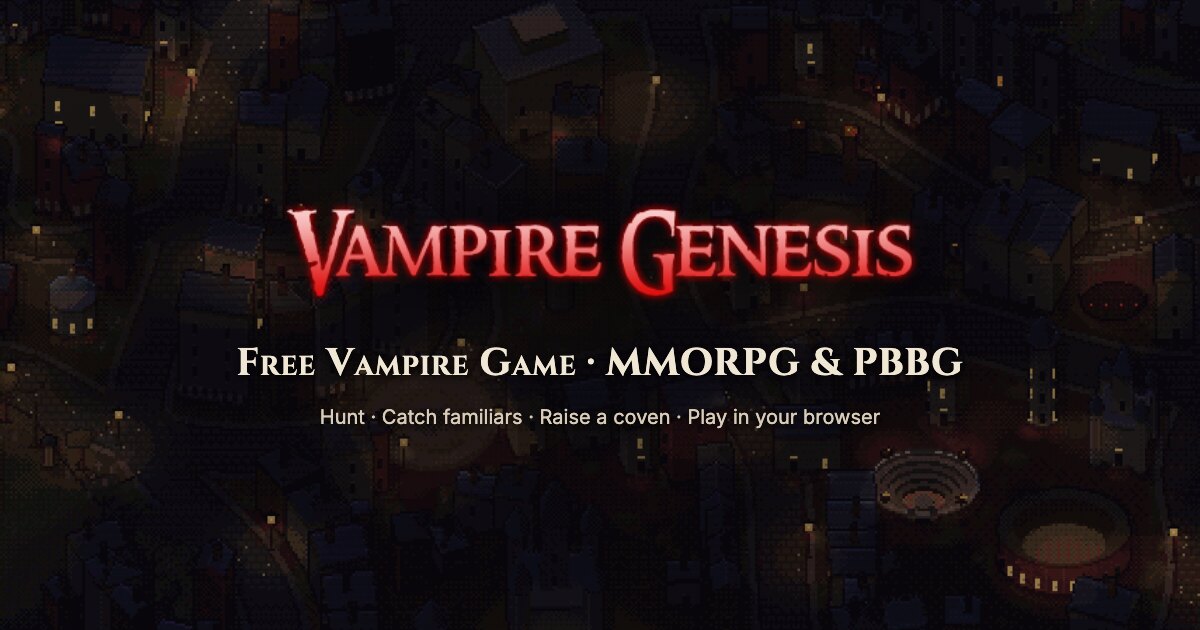
Vampire Genesis is a free vampire MMORPG and persistent browser-based game (PBBG) set in a gothic pixel-art city called Death Valley. You play a vampire who keeps existing in a shared world between sessions, so progress continues whether or not you are logged in, and there is no download: everything runs in the browser.
What you actually do
- Live in the city: Eight districts, from the High Court to the Underbelly, run on their own clock and weather (crimson mist, blood rain), and lit windows belong to real players.
- Hunt for blood: Plan expeditions into four wild wards (Gallows Moor, the Rookery, the Drowned Fens, the Ashen Reach) or take a quick hunt; deeper routes mean richer blood and deadlier creatures. A shared Daily Hunt and a "Blood Fever" kill-chain reward risk-taking, and rival hunters can be dueled for triple spoils.
- Join or found a coven: Covens compete for five of the eight districts through fortification, sieges and multi-front Coven Wars, with shared treasuries, banks and leader-set taxes.
- Build a vampire's unlife: Fight in the Arena's ranked ladder and bounties, catch and breed familiars through Blood Communion, and upgrade from the Common Lair to a room, flat or townhouse.
Who it suits
It fits players who like asynchronous, text-and-menu progression in a shared world—checking in for a few minutes a day or losing a whole night—more than those wanting real-time combat or a solo story campaign. The trade-off is the usual PBBG one: depth through planning, territory and social play rather than moment-to-moment action.
A useful next step: if you enjoy this style, compare it with other long-running browser RPGs such as Kingdoms or a classic text MMO like Kingdom of Loathing to see whether coven warfare or solo questing appeals more.
How do I start playing Vampire Genesis without downloading anything?
Open Vampire Genesis in a browser at Vampire Genesis and create your vampire; the game is described as browser-based with no download, so there is no client to install. Once you are in, the page's own structure suggests a sensible first session: walk the gothic pixel-art city to get your bearings, then take a quick hunt in the wilds rather than committing to a full expedition.
A practical first-session order
- Learn the city map. Eight districts are listed, from the High Court to the Underbelly, and five are described as up for taking. Knowing which districts are contested tells you where coven politics will matter later.
- Feed before you explore. The Hunt section describes quick hunts for short sessions and planned expeditions across four wild wards for longer ones. A quick hunt is the lower-risk way to learn the combat choices.
- Bank your rewards early. Blood Fever rewards chained kills but warns you to bank them before you fall, so treat chaining as something to test once you know how much punishment you can take.
- Join a coven sooner than feels necessary. Covens hold territory, run wars and share a treasury and bank, so the social layer is where much of the long-term play sits.
Who this suits
Vampire Genesis is a persistent browser-based game, meaning your vampire keeps existing between sessions. That fits players who like checking in for a few minutes a day and watching slow progress accumulate, and it fits people who enjoy territory and coven politics more than twitch combat. If you want a game that resolves entirely within one sitting, the persistent, shared-world design is a mismatch.
One decision to make up front
Decide whether you are playing solo or socially. The Arena, hunting and familiars all work on your own, but territory wars, Coven Wars and shared spoils only exist inside a coven. Choosing a coven early gets you the tax, healing and repair arrangements its leaders set, which is easier than discovering them after you have already built up a lone character.
For a second opinion on the broader genre before committing, Example is not a source I can point you to here; instead, start with the city guide and hunting guide linked from the game's own front page, since those explain the districts and creatures you will meet first.
How do territory wars and Coven Wars work in Vampire Genesis?
Territory wars are the ongoing fight to hold districts; Coven Wars are the scheduled, multi-front battles that decide who takes them. Both run on the same premise: five of the city's eight districts can be held by covens, and your coven has to fortify and defend what it claims.
Territory wars
The page describes territory wars as the persistent layer: a coven fortifies a district and then holds it under siege against rival covens. This is the part that runs alongside normal play, so holding ground means being present enough to defend it. It rewards organisation over bursts of activity—a coven with members logging in across the day is harder to dislodge than one that only shows up for events.
Coven Wars
Coven Wars are the concentrated version: three fronts, two days of fighting, and the winner takes territory. Because the outcome is settled over a fixed window across several fronts, a coven needs to decide where to commit strength rather than spread thin. For a newer or smaller coven, the practical choice is often to contest one front seriously instead of defending all three half-heartedly.
| Territory wars | Coven Wars | |
|---|---|---|
| Duration | Ongoing, tied to holding a district | Fixed: two days |
| Scope | One district under fortification and siege | Three fronts fought at once |
| Decided by | Sustained defence of held ground | Winning fronts within the window |
| Best suited to | Covens with steady daily activity | Covens that can coordinate a concentrated push |
What to do before committing
Check how your coven is set up, because the shared structure matters as much as numbers. Covens level from 1 to 30, unlocking larger halls, more member slots and a tabard in your colours, and there is a treasury and coven bank with a gold tax plus healing and repair cover set by leaders. Before a war, confirm the tax and cover are set at levels members can actually sustain—an aggressive tax can empty the bank mid-siege.
If you are choosing a coven rather than founding one, ask two things: how many members play daily, and whether leadership has a plan for which fronts to contest. A mid-sized coven with a clear plan usually beats a large, disorganised one over a two-day war.
For a broader look at the genre while you weigh the time commitment, Vampire Genesis itself is the direct source on these systems, and Urban Dead is a long-running browser game with a comparable persistent, faction-driven structure worth comparing if you want to gauge how much daily play these games tend to demand.
What is the best way to plan a hunting expedition into the wild wards?
Plan around the four wild wards as a risk-and-reward ladder. The page describes expeditions where you plan a route across Gallows Moor, the Rookery, the Drowned Fens or the Ashen Reach, choose how to fight each beast, and carry your spoils home; it also states that the deeper you go, the richer the blood and the deadlier what finds you. So the best plan is not "go as deep as possible" but "go as deep as your current gear, healing and time buffer can safely bring back."
A practical expedition routine
- Set the goal before the route. Decide whether you are hunting for blood, for a specific creature, or for a quick daily fill. The page mentions a shared Daily Hunt, which is the natural low-commitment option when time is short.
- Pick one ward, not all four. Learn one ward's creatures and their fight choices first. The hunting guide is the reference for what lives in each ward.
- Plan the return leg. Since spoils only count once hauled home, reserve time and resources for the trip back rather than spending everything on the last fight.
- Use Blood Fever deliberately. Chaining kills raises rewards but risks losing the chain if you fall, so bank the chain before a fight you are unsure about rather than after.
- Expect rival hunters. Other vampires work the same trails. Decide in advance whether you will duel for triple spoils or slip past; duelling is a gamble on your PvP readiness, not a free bonus.
Choosing depth by situation
| Situation | Sensible approach |
|---|---|
| Few minutes, real-life interruption likely | Quick hunt or the Daily Hunt; shallow route |
| Building confidence in a new ward | One ward, conservative route, bank early |
| Strong gear and healing cover | Deeper route with a Blood Fever chain, banked before the riskiest fight |
| Contested trails, PvP-ready | Duel rivals for triple spoils; otherwise avoid them |
| Coven operation | Coordinate routes so members cover different wards and share spoils via the coven bank |
Two trade-offs matter most. Depth multiplies reward but also the chance of losing an unbanked chain, so the break-even point is your confidence in the next fight, not the size of the reward. And duelling rivals is optional: slipping past costs you triple spoils but protects a chain you have already built.
A useful next step is to treat your first run in each ward as reconnaissance: note which creatures appear, which fight choices worked, and how much you brought home, then set your standard route from that record. If you play with a coven, compare notes with members who hunt different wards so the group's knowledge covers all four.
How does the persistent PBBG format affect how often I need to log in?
The persistent format means the game keeps running without you, so there is no fixed login schedule—you choose a rhythm that matches your goals. Vampire Genesis is built for short daily check-ins (a quick hunt, feeding, checking coven news) as well as longer sessions when you want to plan expeditions or fight in territory wars.
What drives how often you log in
- Daily shared activities: There is one shared Daily Hunt each day, so a brief daily visit captures that without requiring a long stay.
- Expeditions and hunts: These are planned trips with routes and risk; you can run a quick hunt when time is short or commit to a deeper expedition when you have longer.
- Coven obligations: Territory wars, Coven Wars (three fronts over two days), and leader-set taxes, healing and repair cover create reasons to check in around scheduled events rather than constantly.
- Arena and Ranked ladder: These reward periodic play to collect bounties and climb the monthly ladder; missing days slows progress but does not erase your vampire.
- Blood Fever chains: Chaining kills for bigger rewards and banking them before you fall favors attentive sessions, so this is the activity most sensitive to how long you stay logged in.
A practical way to decide
Ask what you want from the game. If you want steady background progress, a few minutes a day covers feeding and the Daily Hunt. If you want coven leadership or competitive ranking, plan around war windows and the monthly ladder. The trade-off is straightforward: shorter, frequent visits suit solo hunting and upkeep; longer, less frequent sessions suit expeditions and coordinated coven battles.
As a next step, pick one anchor—the Daily Hunt or your coven's next war—and build your login habit around it, then add expeditions only when you have a longer block of time.
What can I do with familiars and Blood Communion in Vampire Genesis?
Familiars are collectible night creatures you catch, raise as a combat companion, and breed through Blood Communion to create new bloodlines. In practice, that makes them a second progression track alongside your vampire: something to hunt down in the world, develop over time, and pair with your build in the Arena and elsewhere.
What the page describes
- Catching: you catch creatures of the night rather than buying them outright, so collecting is tied to play.
- Raising: a familiar fights beside you, making it a combat asset, not just a cosmetic pet.
- Blood Communion: breeding familiars to produce new bloodlines — the long-term layer, aimed at players who enjoy tinkering with lineage and combinations.
Who this suits
If you play for a few minutes a day, familiars give you a short, concrete task (catch, check, breed) that still moves something forward between bigger sessions. If you play in long stretches, the breeding side is where the depth sits — it rewards planning across multiple familiars rather than a single favourite.
A practical next step
Before investing in breeding, decide what you want your familiar to do: cover your weaknesses in Arena duels, or serve as a breeding project whose offspring you keep or trade within your coven. Those are different goals, and the page doesn't spell out the breeding rules, so the in-game familiar guide is the place to check costs and inheritance before committing.
For comparison, Vampire Genesis sits alongside other long-running browser vampire games such as Dark Throne, though each handles pets and companions differently — worth a look if breeding systems are your main interest.
 Cloudflare

User reviews (0)