
voko.world No paid content found
Categories: Video & Film
VOKO is The Playable Drama where you can watch short dramas, play interactive stories shaped by your choices, create your own worlds, and turn every playthrough into a video worth watching.
 Visit website
 Updated: 2026-09-29 10:16
 Language: English (default)
 Access: Normal
 Profile views 0
 Outbound visits 0
Related questions
More questions →What to Look for in a Video Platform Beyond Hosting and Sharing
If you're evaluating a video platform for a small business or marketing team, hosting and sharing are just the entry point. The features that actually determine whether a platform fits your workflow fall into four areas: privacy and playback control, collaboration and review tools, marketing and analytics capabilities, and practical limits like storage and mobile support. Most general-purpose tools (cloud storage, social networks, free hosts) cover hosting well but leave gaps in the other three. This guide walks through what each area means in practice, so you can map features to your own situation instead of comparing endless checklists.
Start by separating three jobs: hosting, editing, and marketing
Video platforms tend to bundle three distinct functions, and confusion usually comes from mixing them up:
- Hosting — storing a file, generating a player, delivering it reliably to viewers. This is the baseline.
- Editing — trimming, assembling, adding captions or branding. Some platforms include basic editors; others expect you to edit elsewhere and upload the result.
- Marketing and business features — privacy controls, lead capture, calls to action, analytics, team review workflows. These are what separate a "video host" from a "video platform."
A useful exercise: write down your last five video tasks (a product demo, a client pitch, a social clip, an internal training, a landing page embed). For each one, note which of the three jobs it required. If most of your tasks stop at hosting, a lighter tool may be enough. If several involve review cycles, gated access, or measuring viewer behavior, a fuller platform earns its cost.
Privacy and playback control: the business-vs-social divide
On social platforms, everything is public by default and wrapped in ads and recommendations. For business use, that's often the opposite of what you want. Look for:
- Granular privacy settings — can you restrict a video to specific people, a password, a domain, or an embed location? Can you make it unlisted but still embeddable?
- Ad-free playback — your product demo shouldn't end with a competitor's ad or an unrelated recommendation.
- Customizable embeds — control over player color, logo, and whether related videos appear. This matters when the video sits on your own site and represents your brand.
- Domain-level restrictions — the ability to limit playback to your own website prevents your content from being re-embedded elsewhere.
If your videos are purely promotional and public, these controls matter less. If you share client work, internal training, or pre-release material, they become the deciding factor.
Collaboration and review: the most common gap
This is where general-purpose tools most often fall short. A shared drive lets people comment on a file, but it doesn't give you a structured review process. A dedicated platform typically offers:
- Timestamped comments — feedback attached to a specific moment in the video, so "the logo looks off" points to an exact frame.
- Versioning — uploading a new cut while keeping the old one, so reviewers can see what changed.
- Approval status — a clear "approved" or "needs changes" state rather than a scattered email thread.
- Role-based access — reviewers who can comment but not download or reshare.
When this becomes relevant: as soon as more than two people need to sign off on a video, or when you're producing videos on a recurring schedule. For a solo operator publishing once a month, a simple comment thread may be sufficient.
Analytics and lead capture: beyond view counts
A raw view count tells you almost nothing actionable. Business-oriented platforms go further:
| Feature | What it tells you | When it matters |
|---|---|---|
| Watch time / engagement graph | Where viewers drop off | Improving content or editing |
| Viewer identity | Who watched (when gated) | Sales follow-up, internal training |
| Lead capture forms | Email collected before or during playback | Demand generation |
| Calls to action | Click-through to a page or booking link | Converting viewers |
| Embed/domain reports | Where your video is being watched | Tracking campaign performance |
If your goal is brand awareness, basic view counts may be fine. If you're using video to generate leads or train staff, the deeper metrics are the reason to choose a platform over a free host.
Practical limits that affect daily use
Feature lists rarely mention the constraints that cause friction later. Check these before committing:
- Storage and bandwidth limits — how much you can upload, and whether high viewership triggers overage fees.
- Upload size and length caps — relevant if you work with long recordings or high-resolution footage.
- Mobile app support — can you upload, review, and respond to comments from a phone? For teams that shoot on mobile, this is a real workflow factor.
- Export and portability — can you download your originals and embed codes if you leave? Lock-in is a hidden cost.
- Integrations — does it connect to the tools you already use (your website builder, CRM, or project tracker)?
Deciding between a full platform and a lighter tool
Use these rough conditions as a starting point:
A lighter tool (free host, cloud storage, social platform) is likely enough if:
- You publish occasionally and mostly to public channels.
- One person handles video end to end.
- You don't need gated access or viewer-level analytics.
A dedicated platform is worth evaluating if:
- Multiple people review or approve videos.
- You need privacy controls, ad-free playback, or branded embeds.
- You're using video for lead generation, training, or client delivery.
- You publish frequently enough that manual workarounds cost more than a subscription.
Pricing and plan details change often, so check the platform's current plans page directly rather than relying on secondhand comparisons. The right approach is to list your actual requirements first, then match them against what each option offers — not the other way around.
What Is The Marlowe Society at Cambridge University?
The Marlowe Society is one of the University of Cambridge's oldest and most prestigious drama societies, founded within the university in 1907. It is best understood as a student-run company with a professional outlook: it stages classical texts (Shakespeare, Marlowe, and other Renaissance and Greek drama), and it exists to develop early actors, directors, and playwrights while connecting them to the professional theatre world. If you are a Cambridge student wanting practical stage experience, or an audience member looking for serious classical theatre in Cambridge, the Society is the relevant organisation. The sections below cover what it does, who it has produced, and how to take part or watch.
What the Society is and what it stands for
The Marlowe Society describes itself as committed to three things:
- Staging classical texts — its core repertoire is classical and Renaissance drama rather than contemporary or experimental work.
- Fostering connections between the student and professional worlds — productions are treated as a bridge to professional theatre, not just a student hobby.
- Developing the skills of early playwrights — it is not only an acting society; it also has a role in nurturing new writing.
Founded in 1907, it has had over a century to build that reputation, which is why it is often described as one of Cambridge's oldest and most prestigious drama societies.
The kind of theatre it stages
The repertoire is deliberately canonical. Documented productions on the Society's own pages include:
| Play | Director | Notes |
|---|---|---|
| Othello | John Haidar | Cast includes Bilal Hasna and Jamie Bisping |
| Romeo and Juliet | Tom Littler | Cast includes Matilda Wickham and Harry Redding |
| The Spanish Tragedy | — | Production photography by Nick Rutter |
That mix — Shakespeare, Marlowe's contemporaries, and Renaissance tragedy — shows the pattern: well-known classical texts, staged with enough production quality to be photographed and publicised professionally. If you want to act in Shakespeare or direct an early modern play, this is the society whose output matches that ambition.
Who it has produced
The Society's reputation rests heavily on the actors who came through it. Its own keywords and public profile link it to Derek Jacobi and Ian McKellen, both of whom performed with the Marlowe Society as Cambridge students before professional careers. This matters for two reasons:
- It tells you the standard the Society aims at — student productions treated as a genuine training ground.
- It explains why the professional-connection part of its mission is credible rather than aspirational.
If you are deciding whether to audition, the alumni record is the strongest argument that the experience carries weight beyond the university.
How Cambridge students can get involved
The Society's stated mission covers on-stage, backstage, and writing roles, so involvement is not limited to actors. Practical routes:
- Performing — audition for a main production. Expect classical text work, since that is the repertoire.
- Directing or producing — the Society stages multiple shows, and student directors are part of how those get made.
- Backstage and technical — lighting, sound, stage management, and design are needed for every production; this is often the easiest entry point if you have no performance experience.
- Writing — the commitment to "developing skills of early playwrights" means new writing is part of the Society's purpose, not an afterthought.
The general pattern for Cambridge drama societies applies: watch for audition and crew calls at the start of term, and expect the main shows to be cast and staffed early in the production cycle. If you are new, joining a crew first is a low-risk way to learn how the Society operates before auditioning.
How to find and attend productions
- Check the Society's website (themarlowesociety.com) for current and upcoming shows — production pages list the play, director, and cast, as with Othello, Romeo and Juliet, and The Spanish Tragedy.
- Watch for term-time performance dates, since Cambridge student drama runs on the university calendar.
- Look at production photography and credits on the site to judge the scale and style of a show before booking.
If you are an audience member rather than a student, the Society's classical repertoire is the draw: you are seeing early modern and classical drama performed by a company with a long track record, in Cambridge.
The short version
The Marlowe Society is Cambridge University's classical drama society, founded in 1907, known for staging Shakespeare and Renaissance texts and for launching actors including Ian McKellen and Derek Jacobi. Students get involved as performers, directors, crew, or writers; audiences find its productions through its website. The deciding factor is fit: if you want classical text and a professional-facing training environment, it matches; if you want contemporary or devised theatre, look at other Cambridge societies.
Website Overview
Identifiable technologies and additional version or configuration signals make the service easier to fingerprint, which may help targeted scanners narrow their checks.
Domain and Registration
The domain was registered less than a year ago and has limited historical evidence to assess. Transfer-protection status is present, helping reduce the risk of unauthorized domain transfers. The registrar is GoDaddy.com, LLC, a widely used domain service provider. The domain uses the common .world extension, which is not an independent safety signal.
DNS and Email
Nameservers are provided by GoDaddy, indicating managed DNS hosting. MX records point to the Google Workspace email service. No CNAME was found; the observed records resolve directly to addresses. SPF and DMARC are configured. DKIM status is unknown. TXT records include verification markers for Google. Such markers may also remain after a service stops being used.
TLS and Certificates
The public key uses EC with 256 bits. The server supplied a complete certificate chain. No organization name is present in the certificate; the available fields are consistent with domain validation. The certificate was issued by Let's Encrypt, commonly associated with automated certificate services. The certificate's total validity is about 89 days, consistent with a short renewal cycle.
HTTP and Browser Security
The Server header exposes the software version: nginx/1.24.0 (Ubuntu). This makes version-targeted checks easier, but is not proof of an exploitable vulnerability. The checked browser-security headers were not detected, leaving fewer explicit browser-side safeguards. No X-Powered-By header was found, reducing one common source of backend fingerprinting information. No obvious internal addresses or debug information were found in the headers. No explicit CDN or WAF marker was found in the response headers.
Technology Stack Analysis
The public page identifies nginx 1.24.0, with exact versions exposed for 1 technologies. These details can narrow vulnerability checks, although exposure alone is not a vulnerability.
Search and Social Sharing
The meta description has 189 characters and may be shortened in search results. Twitter Card metadata is configured. The title has 55 characters, within a common display range. The observed directives allow indexing and link following. No Generator meta tag is publicly exposed.
 Hosting and Email
 GoDaddy
 Hosting
 Amazon.com, Inc.
 Google Workspace
 Location
 Boardman, Oregon, United States
 Pages, Search and Sharing
| Meta description | VOKO is The Playable Drama where you can watch short dramas, play interactive stories shaped by your choices, create your own worlds, and turn every playthrough into a video worth watching. |
|---|---|
| Canonical URL | https://voko.world/ |
| Language | English (default) |
| Twitter Card | summary_large_image |
Social Sharing Preview
11 fields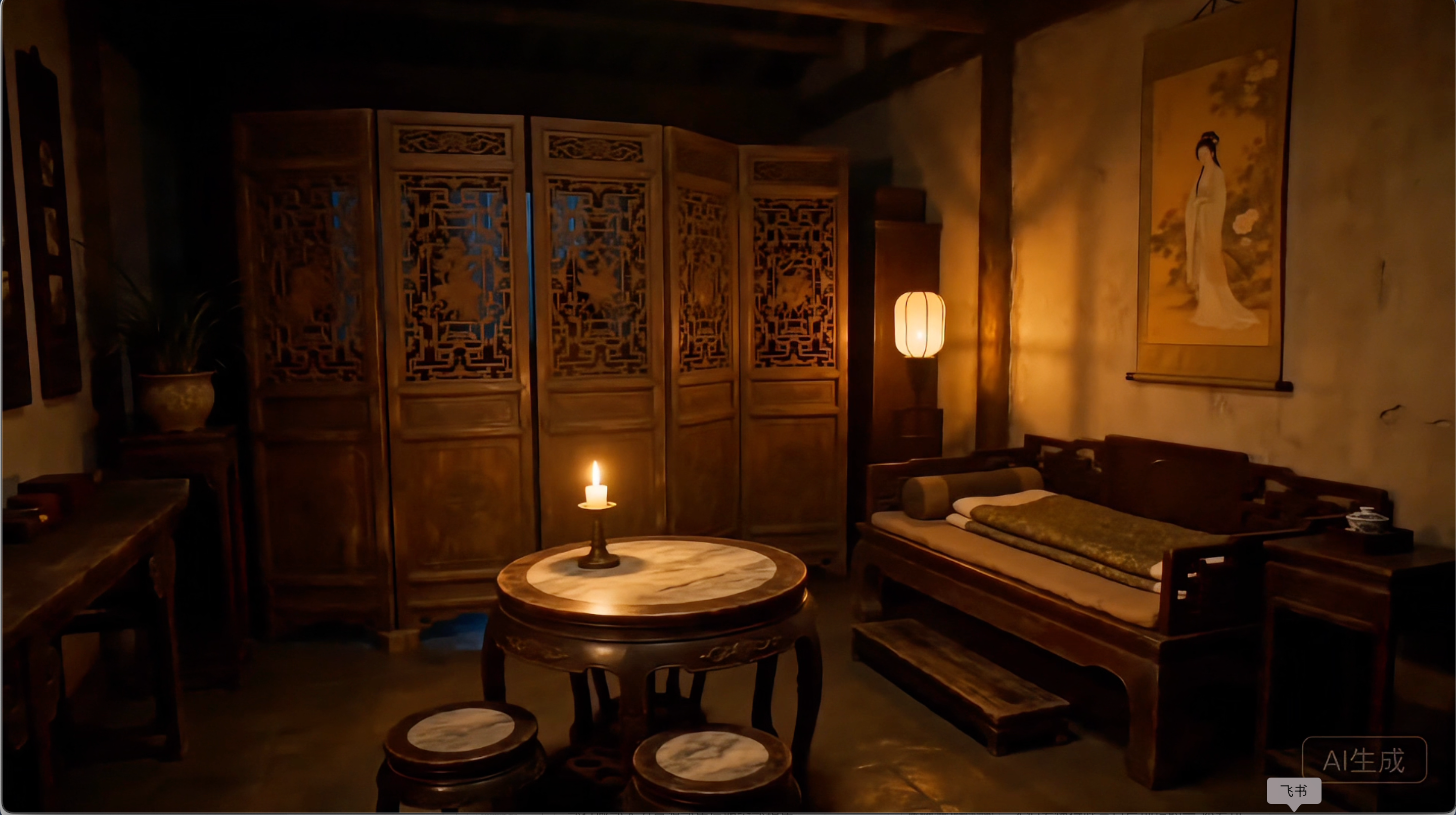

Sharing metadata
| og:url | https://voko.world/ |
|---|---|
| og:type | website |
| og:image | https://voko.world/assets/trpg/painted_skin/entry_startled.png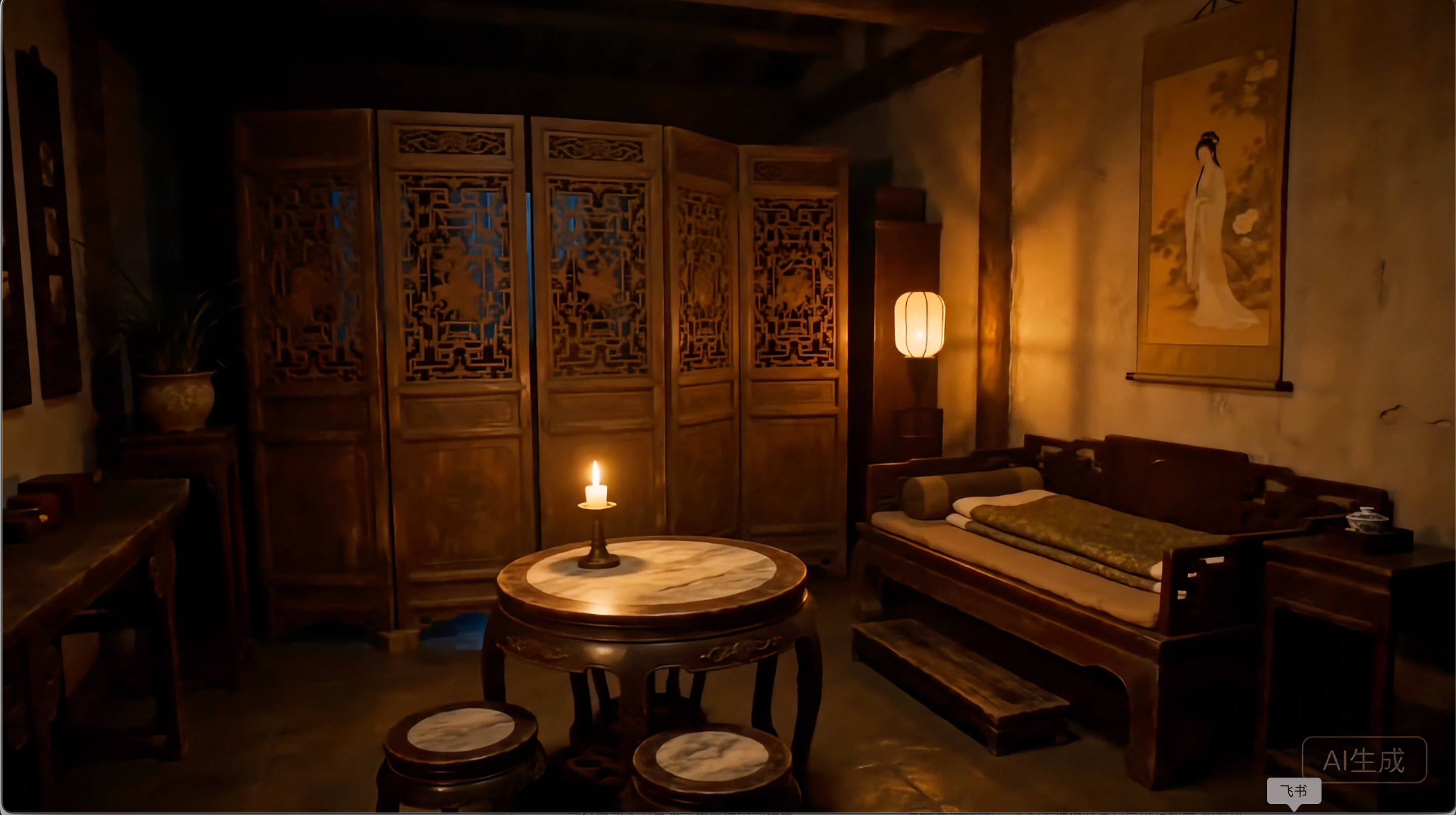 |
| og:title | VOKO — The Playable Drama |
| og:image:alt | voko.world generative drama game scene |
| og:site_name | voko.world |
| og:description | Watch short dramas, play through stories that call you back, create your own world, and turn every playthrough into a video worth watching. |
| twitter:card | summary_large_image |
| twitter:image | https://voko.world/assets/trpg/painted_skin/entry_startled.png |
| twitter:title | VOKO — The Playable Drama |
| twitter:description | Watch short dramas, play through stories that call you back, create your own world, and turn every playthrough into a video worth watching. |
robots.txt (opens in a new tab)
1 rulesAll bots 1 allowed · 0 disallowed

 All bots

/
No matching rules.
Sitemaps
1 Registration details RDAP / WHOIS
| Registrar | GoDaddy.com, LLC |
|---|---|
| Registered | 2026-07-18 |
| Expires | 2027-07-18 |
| Domain status | client delete prohibited、client renew prohibited、client transfer prohibited、client update prohibited |
| Nameservers | ns11.domaincontrol.com、ns12.domaincontrol.com |
| DNSSEC | unsigned |
 DNS records
| Type | Name | Value | TTL | Priority |
|---|---|---|---|---|
| A | voko.world | 54.71.173.103 | 600 | — |
| MX | voko.world | aspmx.l.google.com | 3600 | 1 |
| MX | voko.world | alt1.aspmx.l.google.com | 3600 | 5 |
| MX | voko.world | alt2.aspmx.l.google.com | 3600 | 5 |
| MX | voko.world | alt3.aspmx.l.google.com | 3600 | 10 |
| MX | voko.world | alt4.aspmx.l.google.com | 3600 | 10 |
| NS | voko.world | ns11.domaincontrol.com | 3600 | — |
| NS | voko.world | ns12.domaincontrol.com | 3600 | — |
| TXT | voko.world | google-site-verification=tYWkwlCKfSKP0GPVCzxvclH9IUaJ7op8WlnxFuYmb0k | 600 | — |
| TXT | voko.world | tiktok-developers-site-verification=0IEH6vI670aV0OAo3eV5K9YAsQtnFMnx | 600 | — |
| TXT | voko.world | tiktok-developers-site-verification=FfbMOXzzUgbfwZjwduQUMfHdHHc9G8uM | 600 | — |
| TXT | voko.world | tiktok-developers-site-verification=Q8YwLV2vga6d5CBcHc8ZJyLzFVyjNnWU | 600 | — |
| TXT | voko.world | v=spf1 include:dc-aa8e722993._spfm.voko.world ~all | 600 | — |
| DMARC | _dmarc.voko.world | v=DMARC1; p=quarantine; adkim=r; aspf=r; rua=mailto:[email protected]; | 3600 | — |
 TLS and certificates
| Assessment | Normal configuration |
|---|---|
| Supported protocols | TLSv1.2、TLSv1.3 |
| Negotiated protocol | TLSv1.3 |
| Certificate subject | main-game.voko.world |
| Issuer | Let's Encrypt |
| Valid until | 2026-12-13T03:08 · Remaining when checked: 74 days |
| Verification details | Certificate trust: Passed · Hostname match: Passed |
 HTTP response headers
| Header | Value |
|---|---|
| content-type | text/html |
| cache-control | no-cache |
| server | nginx/1.24.0 (Ubuntu) |
 Identified technologies
User reviews (0)