Website profiles · Technology insights · Alternatives

web-rewind.com

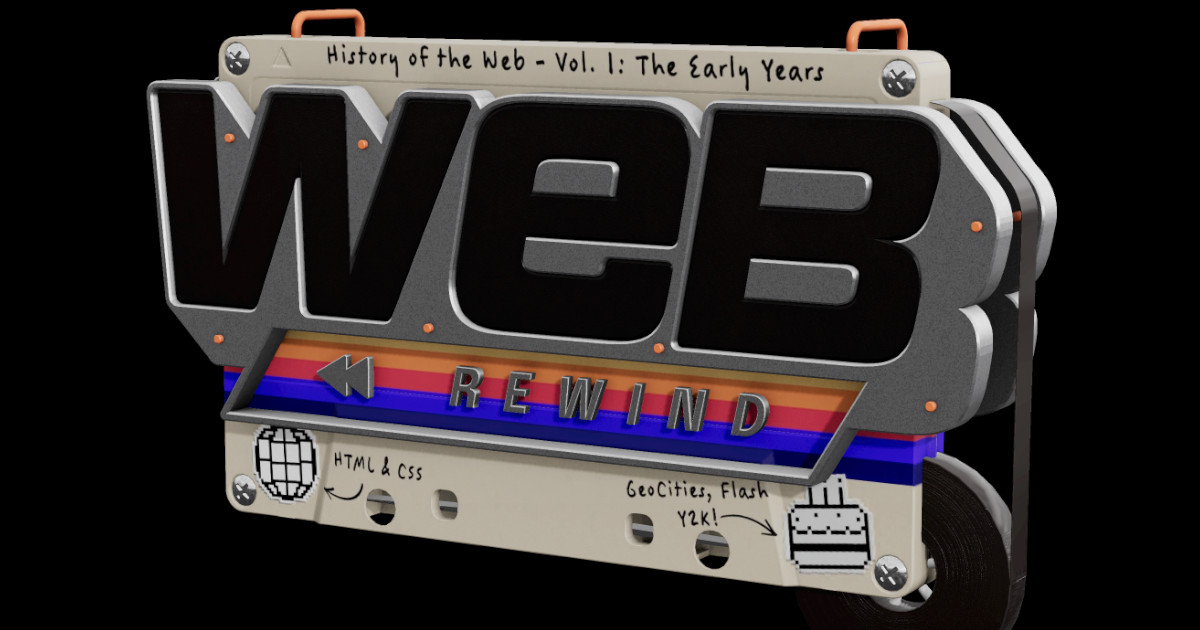
An interactive journey through 30 years of the web

No paid content found
Visit website
Profile views 0 Outbound visits 0 Normal
Web Rewind Full homepage screenshot

At a glance

Category
Other
Language
English
Paid-content signal
No paid content foundObserved
Registered
2026
Hosting
CloudflareInferred
HTTPS certificate trusted
PassedObserved
Last updated

Website review

This review may include AI-generated content and is not individually verified. Domain, certificate and other facts come from the observed data on this page.

What is Web Rewind?

Web Rewind is an interactive journey through 30 years of the web, presented as a single immersive experience rather than a reference archive. Its focus is the story of how the web evolved, told through an interactive format.

What to expect

  • A chronological, exploratory tour of three decades of web history.
  • An interactive presentation style, so you move through the material rather than just read it.
  • A broad sweep from the early web to the modern era.

How it differs from other history resources

Resource type Best for
Interactive journey like Web Rewind Getting a feel for how the web changed over time in one sitting
Archived snapshots, e.g. Internet Archive Checking what a specific page looked like on a specific date
Reference histories, e.g. W3C Tracing standards, specifications and technical milestones

A useful next step is to treat Web Rewind as a starting point for curiosity, then use a snapshot archive when you want to verify a specific site or moment. If you are a teacher, a designer or someone who grew up online, the interactive framing is likely to hold attention better than a timeline article; if you need precise dates or citations, pair it with a reference source instead.

How can I explore 30 years of web history on Web Rewind?

Web Rewind is built as an interactive journey through three decades of the web, so the main way to explore it is to move through the timeline rather than search for a specific page. Treat it as a guided walk: start at the earliest period, then advance era by era to see how the web changed.

What to expect

  • A chronological path through roughly 30 years of web history.
  • Interactive elements rather than a static article, so you click or step forward to progress.
  • A broad overview, not a deep archive of every site.

How to get the most from it

  1. Start at the beginning. Early web history explains why later design and technology choices happened.
  2. Pause at each era. Note what changed in layout, speed, and how people published.
  3. Compare with your own experience. If you used the web in a particular decade, check whether the journey matches your memory.

Who it suits

It works well for a general audience, students, or anyone feeling nostalgic. If you need precise dates, primary sources, or a specific site's history, a dedicated archive such as the Internet Archive is a better next step. For a broader museum-style view of computing and the web, the Computer History Museum is also useful.

A practical next step

Open Web Rewind, work through it in one sitting if it is short, and keep a note of two or three moments that surprise you. Those notes give you specific topics to research further, which is where archives and official histories become more valuable than a general overview.

Is Web Rewind free to use or does it require a subscription?

Web Rewind does not appear to require a subscription. The site presents itself as an interactive journey through 30 years of the web, and nothing in its visible page content points to paid plans, pricing tiers or account-gated access.

Because the landing page loads as an interactive experience rather than a pricing page, the practical way to confirm is to open the site and start the journey. If you can move through the timeline without hitting a paywall, signup wall or checkout prompt, it is free to use in the ordinary sense of the word.

What "free" usually means for a site like this

For an interactive web-history project, free access typically comes with one of a few trade-offs:

  • No account needed: you can browse immediately, but you may not be able to save progress or revisit a specific point.
  • Account required but free: useful if you want to bookmark eras or compare visits over time.
  • Ad-supported or sponsor-backed: the experience stays free, but expect promotional panels or partner branding.
  • Freemium: the core journey is open, while extras such as downloads, educator packs or extended archives sit behind payment.

How to decide quickly

If your goal is a one-off browse, free access is almost certainly enough. If you are a teacher planning to build a lesson around it, check two things before committing: whether the experience works without creating an account, and whether there is a way to link directly to a specific period in the timeline. Those two details matter more than the price label for classroom use.

A useful comparison point for expectations is the Internet Archive's Wayback Machine at Internet Archive, which is free to use and needs no subscription, though it serves a different purpose: retrieving archived pages rather than narrating web history. If Web Rewind follows that norm, you can treat it as a free, browse-as-you-go resource.

What types of websites and moments from the web's past are featured on Web Rewind?

Web Rewind is framed as an interactive journey through 30 years of the web, so its focus is the web itself: the sites, interfaces and moments that shaped how people used it. The page evidence available is minimal — essentially a loading state with no listed exhibits, categories or examples — so the specific sites and moments it features cannot be confirmed from the supplied information.

What to expect from this kind of retrospective

A 30-year web history typically covers a few broad strands:

  • Early personal and academic pages. Plain-text pages, hand-coded HTML, visitor counters and webrings.
  • Portal and search eras. Directories, early search engines and the shift to algorithmic indexing.
  • Social and participatory web. Blogs, forums, wikis, comment culture and the rise of user-generated content.
  • Design and interface shifts. Frames, Flash, skeuomorphism, flat design, responsive layouts and mobile-first browsing.
  • Cultural moments. Viral clips, meme formats, launch-day traffic spikes and the retirement of beloved services.

A practical next step

Because the exact roster is unverified here, treat any specific site as unconfirmed until you see it on the site itself. If you are browsing for a particular era, check whether the journey is organised chronologically or thematically, and whether entries are interactive recreations or static screenshots — that distinction changes how useful it is for teaching, nostalgia or design research.

For broader context alongside it, the Internet Archive's Wayback Machine at Internet Archive lets you load archived versions of real pages, which pairs well with a curated tour.

Can I use Web Rewind for teaching or research purposes?

Yes, Web Rewind is well suited to both teaching and research, because it presents 30 years of web history as an interactive journey rather than a static article. That format lets you move through eras, compare how sites and technologies changed, and use the timeline itself as a discussion or evidence-gathering tool.

Practical teaching uses

  • Lecture openers: show a dated example to frame a topic such as the shift from static pages to social platforms.
  • Guided exploration: have students walk the timeline and note three changes in design, access or business models.
  • Assignments: ask learners to pick one era, describe its constraints, and argue what drove the next change.

Practical research uses

  • Scoping and orientation: use the journey to map periods and identify turning points worth investigating.
  • Source leads: treat the featured moments as starting points, then verify claims against archived pages and primary documents.
  • Context for interviews or surveys: give participants a shared reference point before asking about their own web experiences.

Trade-offs to plan for

An interactive overview favours breadth and narrative over depth. It is excellent for framing a period but weaker for citation-level detail, so pair it with an archive such as the Internet Archive for dated captures. If your focus is the web's technical standards, the World Wide Web Consortium documents primary specifications; for UK national web history, UK Web Archive holds curated collections. For classroom projection, check that the interactive elements work on your network and devices before the session, and prepare a static screenshot fallback.

A useful next step: choose one era from the timeline, write down two claims it suggests, and test each against an archived page. That single exercise turns a browsing session into a defensible teaching resource or a research lead.

How does Web Rewind differ from other internet archive or web history tools?

Web Rewind is framed as an interactive journey through 30 years of the web, which positions it as a guided, narrative experience rather than a research utility. Most established web-history tools are built for retrieval: you arrive with a URL or a date and pull up what a page looked like. Web Rewind's stated emphasis on a "journey" suggests the opposite starting point — you browse a curated path through web history and encounter sites along the way, with the historical material as the content rather than the lookup result.

How that difference plays out

Tool type Typical starting point Best for
Archive lookup services A URL or a specific date Verifying what a page said, citing a source, recovering a dead link
Web history / museum-style experiences Curiosity about a period or theme Browsing, teaching, nostalgic exploration, casual discovery
Web Rewind (as described) An interactive journey through 30 years Getting a sense of how the web changed without already knowing what to search for

The practical trade-off is depth versus direction. Archive lookup tools give you precision but assume you know the target; a guided journey gives you direction but is less useful when you need one specific page from one specific month. If your task is "find the 2004 version of this company's pricing page," a lookup archive is the right instrument. If your task is "show a class how the web looked before social media," a curated journey is easier to run.

A concrete scenario

Imagine you are preparing a short talk on how personal homepages gave way to social profiles. With a lookup archive, you would need to recall or research a list of example sites first, then check each one's capture dates. With a guided, journey-style experience, the sequence is partly assembled for you, and you spend your time selecting and narrating rather than hunting. The reverse holds if a colleague asks you to confirm a claim about a single site's wording on a single day — that is lookup work.

How to decide

  • Choose a guided experience when the goal is orientation, teaching or browsing, and you are open to where it leads.
  • Choose an archive lookup service when you need a specific page, date or citation.
  • Use both: browse a journey to find candidate examples, then verify each one in an archive before you rely on it.

For verification and citation, the long-running public archives remain the standard reference points — for example the Internet Archive's Wayback Machine at Internet Archive and the library-oriented collections surfaced through Archive-It. A useful next step is to try Web Rewind with a broad question in mind ("what did the web feel like in the late 1990s?") and a lookup archive with a narrow one, and notice which kind of question each one actually answers well.

Related questions

More questions →
What Can You Explore on Web Rewind?

Web Rewind (web-rewind.com) is an interactive journey through 30 years of the web. Based on the site's own description, it is best understood as a visual, timeline-style experience rather than a research archive: you move through three decades of web history and see how the web changed along the way. It suits anyone curious about internet nostalgia or the evolution of web design, but not someone looking for deep documentation or downloadable datasets.

What the site covers

The core promise is breadth over depth: 30 years of the web presented as a single continuous journey. That framing suggests coverage that spans from the early web era through to the modern web, with the emphasis on how things looked and felt at different points rather than on exhaustive historical detail.

Expect the content to lean toward:

  • Era-by-era change — how the web evolved across roughly three decades
  • Visual style shifts — the look and feel of web pages at different stages
  • Web culture touchpoints — the trends and conventions that defined each period

How you explore it

The site describes itself as an interactive journey, which points to self-directed browsing rather than a linear article or video. In practice, that means you choose where to go and how long to stay, moving along a timeline or between points of interest instead of being walked through a fixed narrative.

This matters for how you use it:

If you want to… Web Rewind is a good fit
Browse nostalgically and recognize things you remember Yes
Get a quick visual sense of how the web changed Yes
Read detailed history with citations No
Extract data or sources for research No

Who it's for

Web Rewind works best as a browsing experience — something you open out of curiosity and move through at your own pace. It is aimed at people who want to see the web's evolution, not study it. If your goal is a visual, interactive overview of how the web got from there to here, it matches that intent. If you need depth, primary sources, or structured reference material, look elsewhere.

Note that the site loads its content dynamically, so the experience depends on the interactive elements rendering in your browser.

Why does Web Rewind show only "Loading"?

Web Rewind's page evidence shows a single "Loading" state, which means the site is an interactive experience that has to fetch its content before anything appears. If that word stays on screen, your browser is either still waiting on the site's scripts and assets, or something on your side is blocking them. There is no published fix from the site itself, so the steps below are general browser troubleshooting you can apply in order.

What the "Loading" screen actually means

Web Rewind describes itself as "an interactive journey through 30 years of the web." Interactive journeys of this kind typically load a shell page first, then pull in media, timelines, or animation data afterwards. The "Loading" text is that shell. Until the rest arrives, there is nothing to click.

That gives you two broad causes:

  • The content hasn't arrived yet — slow connection, large assets, or a server that is slow to respond.
  • The content can't arrive — a script blocker, an incompatible browser, or a cached broken version of the page.

Try these in order

  1. Wait 15–30 seconds. Interactive sites sometimes pause on "Loading" while a large asset downloads. If it moves on, nothing is wrong.
  2. Reload the page. A hard reload (Ctrl+Shift+R on Windows/Linux, Cmd+Shift+R on Mac) skips the cached copy and requests everything fresh.
  3. Check your connection. Open another site in a new tab. If that is also slow, the problem is your network, not Web Rewind.
  4. Disable extensions for this site. Ad blockers, privacy extensions, and script managers are the most common cause of a page that loads its frame but never its content. Try an incognito or private window, which usually runs without extensions.
  5. Try a different browser. If it works elsewhere, the issue is browser-specific — often an outdated version or a setting blocking JavaScript.
  6. Come back later. If none of the above changes anything, the site may be temporarily down or under heavy load.

Quick diagnosis table

What you see Most likely cause First thing to try
"Loading" then content appears Normal slow load Nothing
"Loading" forever, other sites fine Extension or script blocker Private/incognito window
"Loading" forever, all sites slow Your connection Check network
Works in one browser, not another Browser compatibility or settings Update or switch browser
Worked before, now stuck Stale cache Hard reload

If it still won't load

If a private window on a second browser still shows only "Loading," the problem is almost certainly on the site's side rather than yours. In that case there is nothing to configure — wait and retry later. Since Web Rewind's own page gives no status page or support contact in the available evidence, you have no official channel to check; a retry after some hours is the practical option.

What is Web Rewind?

Web Rewind is an interactive website that takes visitors on a journey through roughly 30 years of the web's history. It is best suited to anyone curious about how the internet evolved — from early pages to the modern web — and who wants to explore that story in a visual, timeline-style format rather than by reading a long article. The site describes itself as "an interactive journey through 30 years of the web," so expect a browsing experience, not a static reference page.

What you'll find there

  • A retrospective of the web's history spanning about three decades.
  • An interactive format — the content is meant to be explored, not just read.
  • A timeline-style presentation that unfolds as you move through the experience.

What to know before you visit

The page loads its content dynamically, so you may see a loading state before anything appears. Give it a moment to finish loading rather than assuming the site is broken.

Who it's for

If you want to… Web Rewind fits
Get a quick, visual sense of how the web changed over 30 years Yes
Explore history interactively instead of reading an article Yes
Look up specific facts, dates, or citations Not ideal — it's an experience, not a database

If your goal is a structured, interactive look back at the web's evolution, it's worth a visit. If you need precise reference material, treat it as a starting point and verify details elsewhere.

Who Is Web Rewind For?

Web Rewind (web-rewind.com) is for anyone curious about how the web looked and felt over the past three decades. It describes itself as "an interactive journey through 30 years of the web," which makes it a good fit for casual explorers, nostalgia seekers, and educators who want a visual, hands-on way to show how the internet evolved. It is not a research database, a source of live data, or a business tool, so anyone needing citable statistics or current information should look elsewhere.

Who gets the most out of it

People interested in web history and early internet culture

If you remember dial-up, early browsers, or the first wave of personal homepages, Web Rewind is built for that kind of curiosity. The appeal is experiential rather than analytical: you move through the history rather than read a timeline about it.

Nostalgia-driven visitors

Anyone who wants to revisit the look and feel of earlier web eras will find the format suited to browsing rather than studying. Treat it as a walk through the past, not a reference lookup.

Educators and classroom use

Web Rewind works well as a visual supplement when teaching the history of the internet or digital culture. Because it is interactive, it can hold attention better than a static slide or article, and it gives students something concrete to react to.

Casual explorers with no specific goal

You do not need prior knowledge or a research question to use it. The site is designed for open-ended browsing, so dropping in without an agenda is a reasonable way to use it.

Who should look elsewhere

If you need... Web Rewind is not the right fit because...
Real-time or current data It covers the past 30 years of the web, not present-day information
Academic citations or sourced statistics It is an interactive experience, not a referenced research resource
A commercial or productivity tool It is an exploratory journey, not software for getting work done
A quick factual answer The format rewards browsing, not targeted lookup

How to get the most from it

  • Browse in segments rather than all at once. The experience is organized as a journey, so moving through it piece by piece matches how it is meant to be used.
  • Approach it with curiosity, not a checklist. Going in expecting specific answers will likely be frustrating; going in open to what you find works better.
  • Use it alongside other material if you are teaching. It complements a lesson or article well, but it is not a standalone reference.
  • Expect an interactive format. The site loads as an experience, so give it a moment and interact with it rather than scanning for text.

A quick way to decide

If your goal is to feel how the web changed, or to show someone else that change in a vivid way, Web Rewind is aimed at you. If your goal is to cite, measure, or act on current information, it is not the tool for the job.

Website Overview

The available information shows a mix of normal operation and configuration gaps. Depending on how the website is used, these gaps may affect secure access or the consistency of its public presentation.

Domain and Registration

The domain was registered less than a year ago and has limited historical evidence to assess. Transfer-protection status is present, helping reduce the risk of unauthorized domain transfers. The domain uses the common .com extension, which is not an independent safety signal.

DNS and Email

Nameservers are provided by Cloudflare, indicating managed DNS hosting. No CNAME was found; the observed records resolve directly to addresses. No MX record was found. A conventional explicit inbound-mail route is not configured. TXT records include verification markers for Google. Such markers may also remain after a service stops being used. DNSSEC signatures were not detected, so this additional DNS authenticity protection is not confirmed.

TLS and Certificates

The public key uses EC with 256 bits. The server supplied a complete certificate chain. No organization name is present in the certificate; the available fields are consistent with domain validation. The certificate was issued within the Google Trust Services cloud or CDN ecosystem. The certificate's total validity is about 90 days, consistent with a short renewal cycle.

HTTP and Browser Security

The response lacks these common security headers: HSTS, CSP, Permissions-Policy, clickjacking protection. CORS permits any origin to read this response. This is common for public resources; sensitive responses need narrower handling. No X-Powered-By header was found, reducing one common source of backend fingerprinting information. The cf-ray response header indicates a CDN or caching proxy in the delivery path. No obvious internal addresses or debug information were found in the headers.

Technology Stack Analysis

The public page identifies Google Tag Manager, Cloudflare without precise versions, leaving fewer clues for version-specific scanning.

Search and Social Sharing

No homepage canonical URL was detected. If duplicate URLs exist, consolidation may be less explicit. Twitter Card metadata is configured. The title has 10 characters, within a common display range. A meta description is present, with 50 characters. The observed directives allow indexing and link following.

Hosting and Email

DNSCloudflare
HostingCloudflare
EmailUnknown
Approximate IP geolocation (inferred; a CDN or proxy may differ from the origin server) United States flagUnited States Inferred 2606:4700::6812:67d

Registration details

RDAP / WHOIS

RegistrarNameWeb BVBA
Registered2026-01-14
Expires2027-01-14
Domain statusclient transfer prohibited
Nameserversnitin.ns.cloudflare.com、robin.ns.cloudflare.com
DNSSECunsigned

DNS records

DNS

TypeNameValueTTLPriority
Aweb-rewind.com104.18.6.125300—
Aweb-rewind.com104.18.7.125300—
AAAAweb-rewind.com2606:4700::6812:67d300—
AAAAweb-rewind.com2606:4700::6812:77d300—
NSweb-rewind.comnitin.ns.cloudflare.com86400—
NSweb-rewind.comrobin.ns.cloudflare.com86400—
TXTweb-rewind.comgoogle-site-verification=ibjU6dXypBhUBcU3PNR1__0BbMC4YdbEEwShhQ9UbqI300—
TXTweb-rewind.comv=spf1 -all300—
DMARC_dmarc.web-rewind.comv=DMARC1; p=reject; sp=reject; adkim=s; aspf=s;300—

TLS and certificates

TLS / SSL

AssessmentNormal configuration
Supported protocolsTLSv1.2、TLSv1.3
Negotiated protocolTLSv1.3
Certificate subjectweb-rewind.com
IssuerGoogle Trust Services
Valid until2026-12-30T10:19 · Remaining when checked: 75 days
Verification detailsCertificate trust: Passed · Hostname match: Passed

HTTP response headers

HTTP

HeaderValue
content-typetext/html; charset=utf-8
cache-controlpublic, max-age=0, must-revalidate
servercloudflare
x-content-type-optionsnosniff
referrer-policystrict-origin-when-cross-origin
access-control-allow-origin*

Identified technologies

Google Tag ManagerCloudflare

Pages, Search and Sharing

Meta descriptionAn interactive journey through 30 years of the web
Canonical URLNot detected
LanguageEnglish (default)
Twitter Cardsummary_large_image
All bots 0 allowed · 4 disallowed
  • Disallow/199*
  • Disallow/200*
  • Disallow/201*
  • Disallow/202*

No sitemaps found

User reviews (0)

  • No reviews yet.