
 简体中文
简体中文 English
wfto.com
Discover how WFTO is transforming lives by promoting fair trade enterprises globally. Join the fair trade movement today.
At a glance
- Category
- Nonprofits & Volunteering
- Language
- English
- Paid-content signal
- No paid content foundObserved
- Registered
- 2000
- Hosting
- DigitalOcean, LLCInferred
- HTTPS certificate trusted
- PassedObserved
- Last updated
Related questions
More questions →What Is WFTO's Roadmap to Systemic Change?
WFTO's roadmap to systemic change starts from a critique: the current economic system is extractivist by foundation, concentrates wealth, deepens social and economic inequality, and accelerates environmental degradation. Its proposed alternative is to scale Fair Trade Enterprises — businesses that practise the 10 Fair Trade Principles — as a globally viable, economically self-sustaining model rather than a charitable add-on. This page explains what that roadmap argues, the six positions it rests on, and how to use it if you are evaluating WFTO or considering membership.
The starting diagnosis
WFTO frames the problem in structural, not individual, terms. In its own words, the present system "is not working. Neither for the planet nor for the people." Two mechanisms are named:
- Extractivism as the foundation. The economy is described as extractivist by design, which hinders equitable distribution of wealth and perpetuates inequality.
- Short-term profit over long-term sustainability. Businesses are said to prioritise producing more and more for shareholders, "careless of who or what is paying the price."
The roadmap is therefore not a set of charity recommendations. It is a claim that the business model itself has to change.
The six pillars of the roadmap
WFTO presents its solution as six numbered positions. They are the core of the roadmap and worth reading as a single argument rather than a list of slogans.
| # | Position | What it means |
|---|---|---|
| 01 | WFTO has a holistic approach | Fair Trade Enterprises go beyond profit maximisation; social, environmental, and economic factors are interconnected and must be addressed collectively. |
| 02 | WFTO is aligned with the SDGs | Fair Trade Enterprises are deeply aligned with the UN Sustainable Development Goals. |
| 03 | Fair trade is not charity | The model is presented as a business proposition, not donor-dependent aid. |
| 04 | Fair trade business models need to happen globally | The approach is not limited to niche or local markets. |
| 05 | WFTO is for local economies | The model is positioned as strengthening local economies rather than extracting from them. |
| 06 | Fair trade is economically viable | Fair Trade Enterprises are argued to be financially sustainable in their own right. |
Positions 03, 04, and 06 carry most of the weight. Together they answer the obvious objection — that fair trade only works at small scale or with subsidy — by asserting that the model is economically viable and globally scalable.
How the roadmap connects to the SDGs
Pillar 02 states alignment with the Sustainable Development Goals, and WFTO's wider framing reinforces it: the organisation describes itself as a collective of activists and changemakers "advocating for an equitable and sustainable world." The roadmap's logic is that because social, environmental, and economic factors are interconnected (pillar 01), progress on inequality and environmental degradation has to be pursued together rather than traded off. That is the same logic the SDGs are built on, which is why WFTO treats alignment as a structural feature of its model rather than a communications claim.
Who the roadmap is aimed at
The roadmap is not only a policy statement. WFTO is a membership organisation and verifier of enterprises that fully practise its 10 Fair Trade Principles, and it brings together small and medium-sized enterprises across sectors — food, fashion, houseware, tourism, toys, and digital services. So the roadmap functions on two levels:
- For enterprises: it is the case for adopting the Fair Trade Enterprise model and seeking verification.
- For buyers and supporters: it is the case for sourcing from verified members and joining the movement.
If you are assessing whether the roadmap applies to your situation, the practical test is whether your business can commit to the 10 Principles as a whole. WFTO's position is that partial adoption is not the model — the holistic approach in pillar 01 is explicit that the factors must be addressed collectively.
How to use the roadmap in practice
- Read the 10 Principles first. The roadmap is the "why"; the 10 Principles are the "what." WFTO offers them as a downloadable document and asks that anyone using them in media, publications, or websites contact the organisation first.
- Check the theory of change. WFTO publishes the roadmap under the heading "Our Roadmap To Systemic Change," with a "View Our Solution" entry point, so you can read the full argument rather than the summary.
- Decide which side of the roadmap you are on. Enterprises move toward verified membership; buyers and supporters move toward sourcing and the First Buyer route.
- Verify before you claim alignment. Use WFTO's verified member search to source Fair Trade products rather than relying on self-description.
Common sticking points
- Treating the roadmap as a certification checklist. It is a theory of change. Certification and verification sit with the 10 Principles and the member verification process, not with the six pillars.
- Assuming "not charity" means "no cost." Pillar 03 says the model is not charity; it does not say participation is free. WFTO's public page does not state pricing for membership or labels, so treat cost as something to confirm directly with the organisation.
- Reading "local economies" as "local only." Pillar 05 and pillar 04 sit together: the model is for local economies and is meant to happen globally, not in one region.
- Confusing the labels. WFTO's page lists "Our Product & First Buyer Labels" and a "Guaranteed Fair Trade Label" alongside the member search. If your question is about a specific product claim, check which label applies rather than assuming a single mark covers everything.
Where to go next
The roadmap answers why WFTO believes the economy needs to change and how it proposes to do it. The operational questions — how to become a verified member or First Buyer, how to find verified enterprises, and what the 10 Principles require — are answered by the corresponding WFTO pages and the verified member search. Start with the 10 Principles, then use the member search to see what the model looks like in practice across food, fashion, houseware, tourism, toys, and digital services.
What is WFTO and what does wfto.com offer?
WFTO (the World Fair Trade Organization) is the global community and verifier of enterprises that fully practise its 10 Fair Trade Principles. Its website, wfto.com, is the public face of that network: it explains the principles, lets you search verified members and source Fair Trade products, and provides entry points for enterprises that want to become a Verified Member or a First Buyer. It is aimed at two audiences — businesses that want to join or buy from the Fair Trade movement, and supporters who want to understand how Fair Trade Enterprises work.
What WFTO actually is
WFTO describes itself as an association of visionary small and medium-sized enterprises (SMEs) that believe a new economy is possible. Two things define it:
- A global community of enterprises operating across sectors — food, fashion, houseware, tourism, toys and digital services.
- A verifier of enterprises that fully practise the 10 Fair Trade Principles.
So it is not a single brand or a certification mark applied to one product line. It is a membership organization and a verification body for businesses, and it positions itself as a collective of activists and changemakers advocating for an equitable and sustainable world.
What you can do on wfto.com
The site is organized around a few practical functions rather than being a general news portal.
| Section | What it gives you |
|---|---|
| Our 10 Principles of Fair Trade | The standard that member enterprises are verified against, with a downloadable version |
| Our Verified Member Search | A way to find and source Fair Trade products from verified members |
| Our Product & First Buyer Labels | Information on the Guaranteed Fair Trade Label and the First Buyer route |
| Our Movement | Background on WFTO as a global community and membership organization |
| Our Roadmap To Systemic Change | WFTO's theory of change and its view of the current economic system |
The most immediately useful parts for a visitor are usually the Verified Member Search (if you want to find or source products) and the 10 Principles (if you want to understand what "Fair Trade Enterprise" means in practice).
The 10 Principles and the Guaranteed Fair Trade Label
WFTO states that its members are enterprises that fully practise the 10 Fair Trade Principles — the word "fully" matters, because it distinguishes WFTO's approach from schemes that certify a single product. The site provides the principles as a downloadable document and asks that anyone using them in media, publications or websites contact WFTO first.
Alongside the principles, the site references a Guaranteed Fair Trade Label under its "Product & First Buyer Labels" heading. If your interest is in what a label guarantees versus what membership means, those are two separate things on the site and worth reading side by side.
How WFTO frames the problem: the theory of change
WFTO's "Roadmap To Systemic Change" sets out its diagnosis: the current economic system is, by its foundation, extractivist — hindering equitable distribution of wealth, perpetuating social and economic inequality, and speeding environmental degradation. It argues businesses prioritize short-term profit over long-term sustainability, producing more to transfer to shareholders without regard for who pays the price.
Against that, the site lists six positions:
- WFTO has a holistic approach — social, environmental and economic factors are interconnected and must be addressed collectively.
- WFTO is aligned with the SDGs (the UN Sustainable Development Goals).
- Fair Trade is not charity.
- Fair Trade business models need to happen globally.
- WFTO is for local economies.
- Fair Trade is economically viable.
The first of these is expanded on the page: Fair Trade Enterprises embrace an approach that extends beyond profit maximisation. The remaining points are presented as headlines in the same roadmap.
Who wfto.com is for
- Enterprises that already operate on Fair Trade lines and want verification or membership — the site offers a "Become a Verified Member" route.
- Buyers and sourcing teams looking for verified suppliers — via the Verified Member Search and the "Become a First Buyer" route.
- Supporters, researchers and media who want the 10 Principles, the theory of change, or a definition of what a Fair Trade Enterprise is.
If you only need one thing from the site, start with the Verified Member Search to find enterprises, or the 10 Principles to understand the standard they are held to.
How to Find Verified Fair Trade Enterprises Through WFTO
Use the Verified Member Search on wfto.com to look up enterprises that WFTO has verified as fully practising its 10 Fair Trade Principles. This is the right route if you want to source Fair Trade products or check whether a specific business is a WFTO Verified Member. It is not a general business directory — only members that have gone through WFTO's verification appear there.
What the Verified Member Search gives you
WFTO describes itself as the global community and verifier of enterprises that fully practise its 10 Fair Trade Principles. The member search is the public tool that turns that claim into something you can check.
What you can expect from it:
- Verified members only — enterprises that WFTO has assessed against its principles, not self-declared Fair Trade businesses.
- Sector coverage — members operate across food, fashion, houseware, tourism, toys and digital services, so the same search covers very different product categories.
- A global network — WFTO is a membership organisation of small and medium-sized enterprises (SMEs), so results skew toward smaller producers and brands rather than large multinationals.
How to run a search
- Go to wfto.com.
- Open the Our Verified Member Search entry from the site navigation.
- Filter or browse by the sector or region you need — for example, fashion if you are sourcing textiles, or food if you are buying ingredients.
- Open an individual member's listing to confirm it is a WFTO Verified Member before you contact them or place an order.
The expected result is a shortlist of enterprises you can approach directly as a buyer, or cite as verified sources if you are researching Fair Trade supply chains.
If you are a buyer rather than a consumer
WFTO separates two labels on its site: Our Product & First Buyer Labels and the Guaranteed Fair Trade Label. If your goal is to stock or resell Fair Trade goods, look at the First Buyer route as well as the member search — the search tells you who is verified, while the label information tells you what a Fair Trade claim on a product actually covers.
Common sticking points
- A business saying "fair trade" is not the same as being verified. Only the member search reflects WFTO verification.
- The search is a starting point, not a full due-diligence file. Use the member listing to confirm status, then ask the enterprise directly about the specific product, capacity and lead times you need.
- Sector coverage is broad but not exhaustive. If your category is not represented, that reflects the current membership, not a judgement on other suppliers.
Where to go next
- Our 10 Principles of Fair Trade — read these first if you need to judge whether a member's practices match what you are looking for; WFTO also offers the principles as a download for use in media, publications or websites.
- Our Roadmap To Systemic Change — WFTO's explanation of why it treats Fair Trade as an economic model rather than charity, useful context if you are justifying a Fair Trade sourcing decision internally.
How Businesses Become WFTO Verified Members or First Buyers
WFTO (the World Fair Trade Organization) offers two distinct entry points for businesses: Verified Membership for enterprises that fully practise the 10 Fair Trade Principles, and the First Buyer route for buyers who want to source fair trade products. Both start from the same place — wfto.com — where you'll find the "Become a Verified Member" and "Become a First Buyer" calls to action, alongside the Guaranteed Fair Trade Label and the 10 Principles that underpin verification.
The key difference: Verified Membership is about being recognised as a fair trade enterprise yourself; First Buyer is about joining the movement as a purchaser of fair trade goods. Which one fits depends on whether you make/sell or buy.
What WFTO Is and Why It Matters for Your Decision
WFTO describes itself as "the global community and verifier of enterprises that fully practise our 10 Fair Trade Principles." It is a membership organisation bringing together small and medium-sized enterprises (SMEs) across sectors — food, fashion, houseware, tourism, toys, and digital services.
Two things follow from that description:
- Verification is the core function. WFTO doesn't just list businesses; it verifies that members fully practise the 10 Principles. That's what separates a WFTO Verified Member from a business that merely claims to be "fair trade."
- It's an SME network. The organisation explicitly frames itself around visionary small and medium-sized enterprises, not large corporates.
If your business model centres on fair trade as a founding principle rather than a marketing label, Verified Membership is the relevant track. If you're a buyer looking to source from verified enterprises, the First Buyer route and the member search are your tools.
The Two Paths: Verified Member vs. First Buyer
| Dimension | Become a Verified Member | Become a First Buyer |
|---|---|---|
| Who it's for | Enterprises that fully practise the 10 Fair Trade Principles | Buyers who want to source fair trade products |
| What you get | Recognition as a verified fair trade enterprise within the global WFTO community | Access to the fair trade sourcing network and the Verified Member Search |
| Label connection | Guaranteed Fair Trade Label (under Product & First Buyer Labels) | Product & First Buyer Labels |
| Entry point | "Become a Verified Member" on wfto.com | "Become a First Buyer" on wfto.com |
Both routes connect to the same label system. WFTO's site groups "Our Product & First Buyer Labels" together, with the Guaranteed Fair Trade Label as the flagship. The label is what makes a verified claim legible to customers and partners — it signals that the 10 Principles are actually practised, not just stated.
What the 10 Principles Require of You
The 10 Principles of Fair Trade are the backbone of WFTO verification. The site presents them as a downloadable document and asks that anyone using them in media, publications, or websites contact WFTO first.
The principles matter for your decision in a practical way: they are the criteria against which a Verified Member is assessed. WFTO's own framing of its approach is holistic — it states that "social, environmental, and economic factors are interconnected and must be addressed collectively," and that fair trade enterprises "embrace a holistic approach that extends beyond profit maximisation."
That has a direct implication: if your business is structured purely around short-term profit maximisation, verification is unlikely to be a fit. WFTO contrasts its model with businesses that "keep prioritising short-term profit over long-term sustainability." The organisation also states plainly that "Fair Trade is not charity" and that "Fair Trade is economically viable" — so this isn't a grant or donation programme; it's a business network with commercial expectations.
How to Find Verified Enterprises (the Buyer's First Step)
Before committing to either path, use the Verified Member Search on wfto.com. It's listed as a primary navigation item ("Our Verified Member Search") and is described as the way to "Source Fair Trade Products."
A sensible sequence for a buyer:
- Open the Verified Member Search on wfto.com.
- Filter or browse by sector — WFTO members operate across food, fashion, houseware, tourism, toys, and digital services.
- Identify enterprises whose products match your sourcing needs.
- Use the "Become a First Buyer" entry point to join the movement as a buyer.
This order matters: seeing who is already verified tells you whether the network covers your category before you invest time in the First Buyer route.
How to Decide Between the Two
Choose Verified Membership if:
- Your enterprise already operates on fair trade principles across its whole business, not just one product line.
- You want external verification, not self-declaration.
- You're an SME and comfortable with WFTO's framing of members as "activists and changemakers."
Choose First Buyer if:
- You want to source fair trade products rather than be verified as a producer.
- You need access to the verified member network and the label system from the purchasing side.
- You're joining the movement as a buyer rather than seeking recognition as an enterprise.
Neither may fit if:
- You're looking for a free listing or directory entry — WFTO frames both routes as joining a movement and, for members, undergoing verification.
- Your business is large-corporate in structure; WFTO's self-description centres on SMEs.
What the Site Does Not Tell You
The available page content does not state membership fees, application timelines, or the specific documents required for verification. Pricing signals are absent, so you should not assume either route is free. For current requirements, costs, and the application process, contact WFTO directly or start from the "Become a Verified Member" and "Become a First Buyer" pages on wfto.com.
One practical note from the site itself: if you want to use the 10 Principles of Fair Trade in any media, publication, or website, WFTO asks that you contact them first. The principles are downloadable, but reuse is not unrestricted.
What Are WFTO's 10 Principles of Fair Trade?
WFTO's 10 Principles of Fair Trade are the standards the World Fair Trade Organization uses to verify whether an enterprise fully practises fair trade. They matter because WFTO membership is not open to any business that simply claims to be ethical: wfto.com states that WFTO is "the global community and verifier of enterprises that fully practise our 10 Fair Trade Principles." If you want to understand what WFTO stands for, judge whether a member enterprise is credible, or align your own business with fair trade, these principles are the reference point.
What the 10 Principles are for
The principles serve three practical purposes:
- Verification. They are the criteria behind WFTO's verified member status, so they distinguish verified Fair Trade Enterprises from ordinary businesses using fair trade language.
- A holistic standard. WFTO describes Fair Trade Enterprises as taking "a holistic approach that extends beyond profit maximisation," recognising that social, environmental and economic factors "are interconnected and must be addressed collectively."
- A public tool. wfto.com offers the principles as a downloadable document and invites organisations to contact WFTO if they want to use the 10 Principles of Fair Trade in media, publications or on a website.
How the principles fit into WFTO's wider work
The principles are one part of a larger structure on wfto.com:
| Element on wfto.com | What it does |
|---|---|
| Our 10 Principles of Fair Trade | The standards members must fully practise |
| Our Product & First Buyer Labels | Labels connected to fair trade products and first buyers |
| Our Verified Member Search | Lets you source products from verified members |
| Our Movement | WFTO's global community of small and medium-sized enterprises |
| Our Roadmap To Systemic Change | WFTO's theory of change for a fairer economy |
WFTO describes itself as an association of small and medium-sized enterprises (SMEs) working across sectors "from food to fashion, from house ware to tourism, from toys to digital services, globally." The principles are what hold that network to a common standard.
Why the principles matter
WFTO's own framing explains the stakes. It argues the current economic system is "extractivist," hindering equitable distribution of wealth, perpetuating social and economic inequality, and speeding environmental degradation, while businesses prioritise short-term profit over long-term sustainability.
Against that backdrop, WFTO makes several claims about fair trade that shape how the principles should be read:
- Fair trade is not charity.
- Fair trade is economically viable.
- Fair trade business models need to happen globally.
- WFTO is for local economies.
- WFTO is aligned with the SDGs (Sustainable Development Goals).
In other words, the principles are not a charitable add-on. They describe a business model intended to be economically viable while distributing value more equitably.
How to use the principles
- Read the full list. Download the 10 Fair Trade Principles from wfto.com rather than relying on summaries, since verification depends on the complete set.
- Check a business against them. Use the Verified Member Search on wfto.com to find enterprises that WFTO has verified as fully practising the principles.
- Reuse them correctly. If you want to publish or display the principles, wfto.com asks you to contact WFTO for permission for media, publication or website use.
- Consider membership. Businesses that fully practise the principles can apply through the "Become a Verified Member" route on wfto.com; buyers can use the "Become a First Buyer" option.
Common points of confusion
- "Fair trade" vs. WFTO verification. Many businesses use fair trade language; WFTO verification specifically means an enterprise fully practises all 10 principles.
- Principles vs. labels. The principles are the underlying standard; the Product & First Buyer Labels are a separate part of wfto.com's offering.
- Charity framing. WFTO explicitly states fair trade is not charity, so the principles should be read as business requirements, not donations or aid.
For the authoritative wording of each principle, download the document from wfto.com or contact WFTO directly about reuse.
Website Overview
An established domain and managed infrastructure suggest continuity of operations and may support dependable delivery, although neither guarantees service quality. Page metadata, canonical configuration and social previews work together to provide more consistent search and sharing presentation.
Domain and Registration
Registered in 2000, this domain has about 26 years of history. That suggests continuity, although ownership and purpose may have changed. Transfer-protection status is present, helping reduce the risk of unauthorized domain transfers. The registrar is GoDaddy.com, LLC, a widely used domain service provider. The domain uses the common .com extension, which is not an independent safety signal.
DNS and Email
Nameservers are provided by GoDaddy, indicating managed DNS hosting. MX records point to the Google Workspace email service. DNSSEC is enabled, allowing validating resolvers to authenticate signed DNS data. No CNAME was found; the observed records resolve directly to addresses. SPF and DMARC are configured. DKIM status is unknown.
TLS and Certificates
The certificate uses an RSA 2048-bit public key, offering broad client compatibility. The server supplied a complete certificate chain. No organization name is present in the certificate; the available fields are consistent with domain validation. The certificate was issued by Let's Encrypt, commonly associated with automated certificate services. The certificate's total validity is about 89 days, consistent with a short renewal cycle.
HTTP and Browser Security
The response lacks these common security headers: Permissions-Policy. No X-Powered-By header was found, reducing one common source of backend fingerprinting information. The x-cache response header indicates a CDN or caching proxy in the delivery path. No obvious internal addresses or debug information were found in the headers. The Server header identifies nginx without an exact version.
Technology Stack Analysis
The public page identifies Elementor 4.2.3; features: e_font_icon_svg, additional_custom_breakpoints; settings: css_print_method-external, google_font-enabled, font_display-swap, WordPress, jQuery, Google Tag Manager, nginx without precise versions, leaving fewer clues for version-specific scanning.
Search and Social Sharing
The Generator tag identifies Elementor 4.2.3; features: e_font_icon_svg, additional_custom_breakpoints; settings: css_print_method-external, google_font-enabled, font_display-swap, making the publishing system easier to fingerprint. Twitter Card metadata is configured. JSON-LD includes Organization data, helping describe the organization as an entity. The title has 54 characters, within a common display range. A meta description is present, with 121 characters.
Hosting and Email
 GoDaddy
 DigitalOcean, LLC
 Google Workspace
 Slough, United Kingdom
Inferred
144.126.236.229
Slough, United Kingdom
Inferred
144.126.236.229
Registration details
| Registrar | GoDaddy.com, LLC |
|---|---|
| Registered | 2000-05-06 |
| Expires | 2027-05-06 |
| Domain status | client delete prohibited、client renew prohibited、client transfer prohibited、client update prohibited |
| Nameservers | ns09.domaincontrol.com、ns10.domaincontrol.com |
| DNSSEC | signed |
DNS records
| Type | Name | Value | TTL | Priority |
|---|---|---|---|---|
| A | wfto.com | 144.126.236.229 | 600 | — |
| MX | wfto.com | aspmx.l.google.com | 3600 | 1 |
| MX | wfto.com | alt1.aspmx.l.google.com | 3600 | 5 |
| MX | wfto.com | alt2.aspmx.l.google.com | 3600 | 5 |
| MX | wfto.com | alt3.aspmx.l.google.com | 3600 | 10 |
| MX | wfto.com | alt4.aspmx.l.google.com | 3600 | 10 |
| NS | wfto.com | ns09.domaincontrol.com | 3600 | — |
| NS | wfto.com | ns10.domaincontrol.com | 3600 | — |
| TXT | wfto.com | MS=ms93736943 | 1800 | — |
| TXT | wfto.com | google-site-verification=27RTVZJJbJUxmTkIFw-f_J-eOEbSybf_8K1-WwLidt4 | 1800 | — |
| TXT | wfto.com | google-site-verification=_fE_sgN_WPhWo-y4ItsNKsLm3TLdfLbO_Bp4tFyOBWA | 1800 | — |
| TXT | wfto.com | v=spf1 include:_spf.google.com include:one.zoho.com include:zcsend.net ~all | 1800 | — |
| DS | wfto.com | 15129 13 2 70f69a5cb4477cdd968d698340228971678a232b80a33697dd1c503e2676a880 | 86400 | — |
| DS | wfto.com | 18772 13 2 ee1ccad5a28d8a37fbd2eac8f65566c89d6082998676d91d09e897aca9164dda | 86400 | — |
| DMARC | _dmarc.wfto.com | v=DMARC1; p=none; | 3600 | — |
TLS and certificates
HTTP response headers
| Header | Value |
|---|---|
| content-type | text/html; charset=UTF-8 |
| cache-control | no-cache, public, max-age=86400 |
| server | nginx |
| strict-transport-security | max-age=31536000 |
| content-security-policy | frame-ancestors 'self' https://crm.zoho.com |
| x-frame-options | SAMEORIGIN |
| x-content-type-options | nosniff |
| referrer-policy | strict-origin-when-cross-origin |
Identified technologies
Pages, Search and Sharing
| Meta description | Discover how WFTO is transforming lives by promoting fair trade enterprises globally. Join the fair trade movement today. |
|---|---|
| Canonical URL | https://wfto.com/ |
| Language | English (default) |
| Twitter Card | summary_large_image |
Social Sharing Preview
11 fields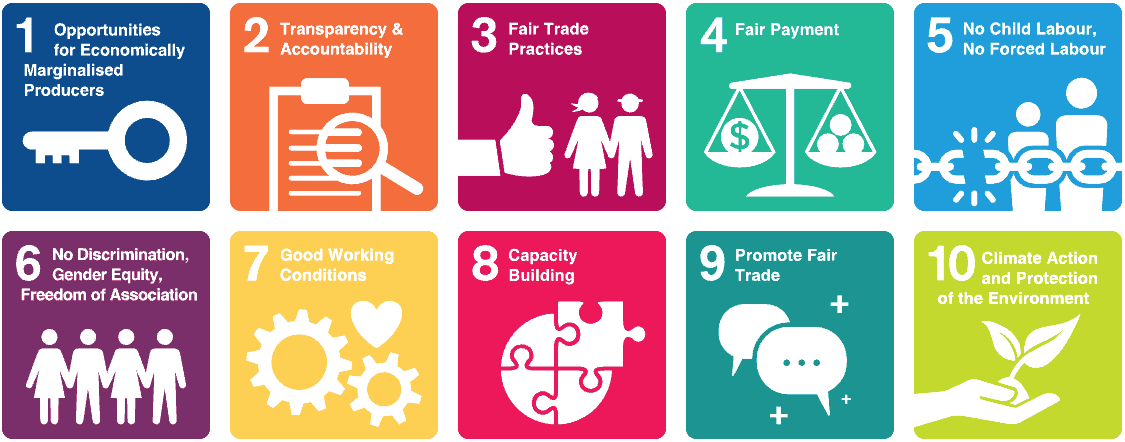
robots.txt (opens in a new tab)
0 rulesAll bots 0 allowed · 0 disallowed
No matching rules.
Sitemaps
1Recent Updates
- Website images
- Screenshots
- Network details
- Website Technologies
- Pages and Search Information
- HTTP Response Information
- TLS and certificates
- DNS Information
- Domain Registration
- Website profile
- Website Description
- Website Name
- Website profile
- Website Description
- Website Name
User reviews (0)