
 wotaku.wiki
No paid content found
wotaku.wiki
No paid content found
Categories: Other
Wotaku, your hub for all otaku interests. We list websites for Anime, Manga, Light Novels, Music, Games and Hentai, also Aniyomi and Mihon extensions.
 Visit website
 Updated: 2026-09-30 08:32
 Language: English (default)
 Access: Normal
 Profile views 0
 Outbound visits 0
Related questions
More questions →What Is The Japan Times and How Can You Use It to Follow Japan News in English?
The Japan Times (japantimes.co.jp) is an English-language news site covering Japan across politics, business, culture, sports, life, and opinion. It is a practical starting point if you want Japan news in English rather than Japanese, and its own description frames it as covering "latest news on Japan: business, politics, commentary, sports, culture, life and more." The site also signals a subscription option, so expect some content to sit behind a paywall rather than assuming everything is free.
What The Japan Times Covers
Based on the site's own description, coverage is organized around these areas:
- Business — corporate, market, and economic news related to Japan
- Politics — government, policy, and political developments
- Commentary / Opinion — analysis and column-style pieces
- Sports — domestic and international sports with a Japan angle
- Culture — arts, entertainment, and cultural reporting
- Life — everyday living, society, and lifestyle topics
This breadth makes it useful both for hard news (what happened today) and for slower features (why something matters in context).
How to Navigate for Breaking News vs. Sections and Analysis
The site's own framing separates "breaking news" from sections and commentary. A practical way to use that structure:
- For breaking news — start from the homepage or the top news area, where the most recent items are surfaced first. Use this when you need to know what just happened.
- For a specific topic — go to the relevant section (business, politics, sports, culture, life) instead of scrolling the homepage. This filters out unrelated stories.
- For interpretation — use the opinion/commentary area. This is where you get analysis rather than raw reporting, which helps when a headline alone doesn't explain the significance.
A simple rule: homepage for what happened, sections for what you care about, opinion for what it means.
What English-Language Readers Get Compared With Japanese-Language Sources
| Dimension | The Japan Times (English) | Japanese-language sources |
|---|---|---|
| Language | English | Japanese |
| Audience | English-speaking readers, residents, international observers | Domestic Japanese readers |
| Framing | Often explains Japanese context for outsiders | Assumes domestic context |
| Use case | Following Japan news without Japanese fluency | Deep local coverage, native nuance |
The trade-off is straightforward: an English-language source makes Japan news accessible if you don't read Japanese, but it may cover fewer local stories and carry less linguistic nuance than domestic Japanese outlets. For many readers, using both — English for accessibility, Japanese for depth — is the practical combination.
How Subscription and Free Access Work
The site includes subscription signals, which means access is not uniformly free. What that implies in practice:
- Some articles are likely readable without a subscription; others are likely gated.
- If you hit a paywall, you'll be prompted to subscribe rather than being able to read the full piece.
- The site does not, in the available information, specify exact prices or free-article limits, so treat those as things to check on the site itself rather than assumptions.
If your goal is casual headline-following, free access may be enough. If you want full articles and analysis, a subscription is the likely path.
How to Judge Reliability and Freshness
When following Japan news, two checks matter most:
- Freshness — breaking-news items should carry recent timestamps. If a story is presented as breaking but is dated days ago, treat it as background, not current.
- Sourcing — reliable reporting names where information comes from (officials, documents, other outlets). Vague attribution is a warning sign.
For cross-checking, compare a Japan Times report against at least one other outlet before treating a major claim as settled. Single-source breaking news is common and not automatically wrong, but confirmation reduces the risk of acting on an early, incomplete report.
A Practical Routine
- Daily: scan the homepage for breaking news.
- Weekly: read one section you care about (e.g., business or culture) for depth.
- When a big story breaks: read the news report first, then the opinion/analysis piece for context.
- Before sharing or acting: verify the timestamp and check a second source.
Used this way, The Japan Times works as a reliable English-language entry point to Japan news — with the caveat that full access depends on its subscription model, which you should confirm directly on the site.
How to Listen to Free Music, Radio, and Podcasts on iHeart
iHeart is a free streaming platform that combines live radio stations, customizable artist stations, playlists, and podcasts in one place. You can start listening without paying by opening iheart.com in a browser or using the iHeart app, then searching for a station, artist, song, or podcast. A subscription is only relevant for certain premium features; the core listening experience described on iHeart's site is available for free.
What you can listen to on iHeart
iHeart organizes its content into a few main types, and knowing the difference helps you find what you want faster.
| Content type | What it is | Best for |
|---|---|---|
| Live radio stations | Thousands of real-time broadcast stations | Hearing a scheduled show, local station, or live event |
| Artist stations | Stations built around a specific artist | Continuous music in the style of an artist you like |
| Playlists | Curated or self-made collections of songs | A defined set of tracks for a mood or activity |
| Podcasts | On-demand episodic shows | Talk, news, storytelling, and interviews |
| Music and trending news | Updates on artists, songs, and bands | Discovering what's new |
The key distinction is live versus on-demand. Live radio plays whatever is broadcasting right now, so you can't skip tracks. Artist stations and playlists behave more like on-demand listening, where you control the starting point.
How to start listening for free
You can begin on either the web or the app. The steps are similar.
- Open the platform. Go to iheart.com in a browser, or install the iHeart app on your phone or tablet.
- Search or browse. Use the search function to enter a station name, artist, song, or podcast. Alternatively, browse categories to see what's available.
- Select what you want to hear. Choosing a live station starts playback immediately. Choosing an artist creates or opens a station built around that artist.
- Press play and adjust. Use the player controls to pause, change volume, or move between stations. On live radio, expect no track skipping; on artist stations, you have more control over what plays next.
- Save what you like. Favoriting a station or artist makes it easier to return to later without searching again.
Expected result: audio begins playing shortly after you select content, and your favorites appear in your account for quick access next time.
Creating your own stations and playlists
- Artist stations: Start from an artist you like, and the station plays music in that style. This is the fastest way to get continuous music without building a list yourself.
- Playlists: Add individual songs to a playlist when you want a specific set of tracks rather than a continuous stream. This suits workouts, commutes, or a fixed party set.
- Tip: Use artist stations for discovery and playlists for control. If a station drifts away from what you want, switch to a playlist instead of fighting the stream.
What's free versus what needs a subscription
iHeart's own description states that its music, podcasts, and radio stations are available for free, and that you can listen to thousands of live stations or create your own artist stations and playlists. The site also references a subscription, which indicates that some features sit behind a paid tier.
Because the exact free-versus-paid split isn't fully detailed in the available information, treat it this way:
- Assume free: live radio stations, artist stations, playlists, podcasts, and general music/news browsing, based on iHeart's stated offering.
- Check before assuming: any feature labeled as premium, ad-free, or subscription-only. If a paywall appears, that specific feature requires payment.
- Don't assume: that a subscription is required to listen at all, or that everything is free. Verify at the point where you're asked to sign up or pay.
Common snags and how to handle them
- A station won't play. Live stations can be unavailable due to regional restrictions or temporary outages. Try another station to confirm whether the issue is the station or your connection.
- You can't skip a track. That's expected on live radio. Switch to an artist station or playlist if you want control.
- Search returns too many results. Add the type of content to your search, such as the artist name plus "station," or search podcasts separately from music.
- You lose your favorites. Sign in to an account so saved stations and playlists persist across sessions and devices.
Quick decision guide
- Want background music with no effort? Open an artist station.
- Want a specific set of songs? Build a playlist.
- Want a live show or local broadcast? Pick a live radio station.
- Want talk or storytelling? Go to podcasts.
- Want to avoid paying? Stick to the free listening options above and check any prompt before entering payment details.
What Is Manga and How Do You Find and Download It on Nyaa?
Manga is Japanese comic art—sequential panels read right-to-left in the original format—distributed as collected volumes, magazine chapters, or digital scans. On Nyaa (nyaa.si), a BitTorrent community focused on Eastern Asian media, manga appears as torrent listings you can browse and download with a BitTorrent client. This guide explains what manga is, how it differs from anime and other Asian comics, what file formats you'll encounter, and how to search, evaluate, and download manga torrents on Nyaa.
What Manga Actually Is
Manga (漫画) refers to comics originating from Japan. It's a medium, not a genre—manga spans action, romance, horror, sports, slice-of-life, and everything in between. Key traits:
- Reading direction: Traditional Japanese manga reads right-to-left, top-to-bottom. Many digital releases preserve this; some fan translations flip pages for left-to-right reading.
- Serialization model: Chapters typically run in magazines (weekly, monthly), then get collected into bound volumes called tankōbon.
- Audience categories: Shōnen (young male), shōjo (young female), seinen (adult male), josei (adult female)—these describe target demographic, not content rating.
Manga vs. Anime vs. Manhwa vs. Manhua
| Term | Origin | Format | Typical Reading Direction |
|---|---|---|---|
| Manga | Japan | Comics | Right-to-left |
| Anime | Japan | Animated video | N/A (video) |
| Manhwa | Korea | Comics | Left-to-right (often webtoon-style, vertical scroll) |
| Manhua | China/Taiwan/HK | Comics | Traditionally right-to-left, but varies |
The practical takeaway: if you're looking for moving pictures, that's anime. If you're looking for static comics from Japan, that's manga. Nyaa hosts both, but they're listed in separate categories.
Common Manga File Formats and How to Read Them
Manga torrents on Nyaa typically come in a few formats:
- CBZ — A ZIP archive renamed with a .cbz extension. Contains image files (JPG/PNG) in page order. The most common digital manga format.
- CBR — A RAR archive renamed .cbr. Same idea, different compression.
- PDF — A single document containing all pages. Less common for manga but appears in some releases.
- Image folders — Raw JPG/PNG files in a directory, sometimes without archiving.
To read them:
- CBZ/CBR: Use a dedicated comic reader—CDisplayEx (Windows), YACReader (cross-platform), Panels (iOS/macOS), Tachiyomi/Mihon (Android), or Calibre (desktop, converts to other formats). These handle page ordering and right-to-left reading natively.
- PDF: Any PDF reader works, but comic-specific readers give better zoom and page-fit controls.
- Raw images: Open the folder in an image viewer that supports sequential navigation, or repackage as CBZ for convenience.
A quick verification step: after downloading, open the first few pages to confirm the volume number, language, and scan quality match the listing description.
How Nyaa Organizes Manga Listings
Nyaa's browse page separates content into top-level categories. Manga falls under Literature, not Anime. Within Literature, you'll find subcategories like:
- English-translated — Fan scanlations and official digital rips in English
- Raw — Untranslated Japanese releases
- Non-English-translated — Other languages
Each listing shows:
- Title — Usually includes series name, volume number, language tag (e.g.,
[English]), and release group - Category — Confirms it's Literature > English-translated (or whichever applies)
- Size — Larger files generally mean higher scan quality or more volumes bundled
- Date — Newer uploads are more likely to have active seeders
- Seeders/Leechers — Green numbers under "S" indicate active uploaders; higher is better for download speed and completion
- Magnet link — The clickable magnet icon or link that opens your BitTorrent client
Step-by-Step: Searching and Downloading Manga on Nyaa
Prerequisites: A BitTorrent client (qBittorrent, Transmission, Deluge, etc.) installed and a basic understanding of how torrents work.
- Go to nyaa.si and use the search bar. Enter the series name. Example:
One Piece. - Filter by category. On the search results page, use the category dropdown or sidebar to select Literature and then the relevant subcategory (e.g., English-translated). This removes anime, music, and other noise.
- Sort by seeders. Click the "S" column header to sort by seeder count descending. This surfaces the most downloadable torrents first.
- Read the listing title carefully. A typical title looks like:
[GroupName] Series Name v01-v10 (CBZ) [English]. Check:- Volume range (v01-v10 means volumes 1 through 10)
- Format (CBZ, CBR, PDF)
- Language
- Whether it's complete or ongoing
- Check the seeders. A torrent with 0 seeders is likely dead—you may never finish downloading. Aim for at least a few seeders, ideally 10+.
- Click the magnet link. This opens your BitTorrent client with the torrent pre-loaded. Choose a download location and start.
- Wait for completion. Seeding peers upload pieces to you. Once complete, your client will seed back (please leave it seeding for a while to help others).
- Open and verify. Extract if needed (CBZ/CBR don't require extraction—open directly in a comic reader). Check page count, image quality, and that all listed volumes are present.
Expected result: A readable manga collection in your chosen format, organized by volume, ready to read in a comic reader app.
Common Pitfalls and How to Avoid Them
- Dead torrents: Listings with 0 seeders may stall at 0% or partial completion. Check seeder count before downloading. If a torrent is dead, look for an alternative upload or a newer release of the same series.
- Missing volumes: A listing titled "v01-v05" won't include volume 6. If you need the full series, search for a complete bundle or download volumes individually. Cross-check the total volume count against a manga database.
- File naming confusion: Release groups use inconsistent naming.
v01might mean volume 1 or a version tag. Read the listing description or comments for clarification. - Format surprises: Some listings bundle CBZ files inside a RAR archive, requiring double extraction. Others provide loose images. Check the file list before downloading if size seems unusually large or small.
- Language mismatches: A listing might say "English" but contain machine-translated text or raw Japanese with no translation. Scanlator group reputation matters—established groups generally deliver consistent quality.
- Right-to-left vs. left-to-right: Some digital releases are mirrored for Western reading. If page order feels wrong, check your reader's direction setting.
What Nyaa Does Not Provide
Nyaa is a torrent index—it hosts magnet links and metadata, not the files themselves. It does not offer a built-in reader, a download manager, or any payment or subscription service. Everything depends on peer-to-peer availability. If no one is seeding, the content is effectively unavailable regardless of how many listings exist.
How to Watch Anime on Windows and in Your Browser: A Practical Guide
Watching anime on a Windows PC comes down to three things: choosing a legitimate streaming source, getting your browser or app to play the video smoothly, and avoiding the sketchy sites that bundle ads and malware. This guide walks through each part with concrete steps, so you can set up a reliable viewing routine without guessing.
Start With a Legitimate Source
The safest and most stable way to watch anime is through a licensed streaming service. These platforms handle licensing, subtitles, dubbing, and video delivery for you, which removes most technical headaches.
Common categories of legal options:
- Dedicated anime services – subscription platforms built specifically around anime libraries, often with simulcasts (episodes released shortly after they air in Japan).
- General streaming services – larger video platforms that carry a selection of anime films and series alongside other content.
- Free, ad-supported services – some legal platforms offer a rotating catalog at no cost, funded by ads. Availability varies heavily by region.
- Studio or publisher channels – some distributors post full episodes or previews on their own official channels.
A practical approach: pick one paid service that matches the genres and simulcast seasons you care about, then keep one free legal option as a backup for older titles. Because catalogs and pricing change constantly by country, check the service's own site for the current lineup rather than relying on older lists.
Why This Matters on a Tech Site
If you're the type of user who already tunes browser settings and manages Windows updates, the same habits apply here. Unofficial streaming sites are a common vector for malicious ads, fake "player update" prompts, and drive-by downloads. Sticking to licensed sources eliminates most of that risk before you even open a video.
Set Up Your Browser for Smooth Playback
Most anime streaming happens in a browser, so a few adjustments go a long way.
1. Use a Modern Browser and Keep It Updated
Chrome, Edge, Firefox, and Opera all handle modern video playback well. The important part is staying current, since streaming sites rely on recent codecs and DRM components. An outdated browser is one of the most common causes of "video won't play" errors.
2. Enable Hardware Acceleration
Hardware acceleration offloads video decoding to your GPU, which reduces CPU load and stutter, especially at 1080p and above.
- Chrome / Edge: Settings → System → turn on "Use hardware acceleration when available," then restart the browser.
- Firefox: Settings → General → Performance → uncheck "Use recommended performance settings," then enable hardware acceleration.
If you see green or black video artifacts after enabling it, your GPU driver may be the culprit—update it, or turn acceleration back off to test.
3. Manage Extensions Carefully
Ad and tracker blockers can make playback far more pleasant on ad-supported legal sites, but they can also break legitimate players. If a video fails to load, try pausing your blocker for that site only. Avoid installing random "anime player" extensions from unofficial sources—these are a frequent malware delivery method.
4. Check DRM Support
Paid services use DRM (often Widevine) to protect content. In most modern browsers this works automatically. If you get a DRM error:
- Make sure the browser is up to date.
- Confirm DRM/Protected Content is enabled in browser settings.
- On Windows, ensure the relevant media features are installed (some Windows editions ship without certain media components).
Fix Common Playback Problems
| Symptom | Likely Cause | Quick Fix |
|---|---|---|
| Video won't start | Outdated browser or blocked DRM | Update browser, enable protected content |
| Buffering constantly | Slow connection or high quality setting | Lower resolution, close other tabs |
| No sound | Wrong output device or muted tab | Check Windows sound settings and tab mute |
| Stuttering / dropped frames | Hardware acceleration off or weak GPU | Enable acceleration, update GPU driver |
| "Not available in your region" | Licensing restrictions | Use a service licensed for your country |
Region Locks
Licensing is regional, so a title available in one country may be blocked in another. The clean solution is to use a service that officially operates in your region. Circumventing geo-restrictions can violate a platform's terms of service, so treat that as a decision to make knowingly rather than a default fix.
Organize and Track What You Watch
You don't need a paid tool to keep track of a long series list.
- Browser bookmarks with folders – group by season or genre.
- A simple spreadsheet – columns for title, episode, status, and rating.
- Built-in watchlists – most streaming services already track your progress; use one as your primary list to avoid duplication.
- Notes app – a quick running list works fine if you only follow a few shows.
Pick one system and stick to it. The goal is to avoid re-watching episodes or losing your place across multiple services.
Security Checklist Before You Press Play
- Use a licensed service whenever possible.
- Keep Windows, your browser, and your GPU driver updated.
- Don't download "player updates" or codecs from pop-ups.
- Keep a reputable ad blocker active on ad-supported legal sites.
- Avoid entering payment details on sites you don't recognize.
A Simple Setup You Can Copy
- Pick one licensed streaming service for current seasons.
- Add one free legal service as a backup.
- Update your browser and enable hardware acceleration.
- Install one well-known ad blocker, and learn to pause it per-site.
- Track shows in a single spreadsheet or the service's own watchlist.
Follow those five steps and most playback issues disappear, because the two biggest causes—unlicensed sources and outdated software—are removed from the equation.
What Is Anime? A Beginner's Guide to Styles, Genres, and Where to Watch
Anime is Japanese-style animation, and the fastest way to find something you'll like is to filter by demographic (who it's made for) and genre (what happens), then pick a format that fits your time. If you're brand new, start with a single-season TV series or a standalone film rather than a long-running show. This guide covers the terms, the categories, and how to choose a first title without getting lost.
What "anime" actually means
Anime refers to animation produced in the Japanese style and industry tradition. The word itself is borrowed from English "animation" and, in Japan, covers all animation — but outside Japan it usually means Japanese-produced or Japanese-style series and films.
The practical difference from Western cartoons isn't the art style. It's the production model and storytelling conventions:
- Serialized storytelling: many series adapt an ongoing manga or light novel and run across a full season (typically 12–13 episodes) or multiple seasons.
- Demographic targeting: titles are often marketed to a specific age and gender group, which is why the demographic labels below matter.
- Genre range: anime spans romance, horror, sports, slice of life, and everything in between — not just action for kids.
A common beginner mistake is judging a show by its art style alone. A bright, cute-looking series can be a dark psychological drama, and a gritty-looking one can be a comedy.
The four demographic categories
These labels describe the intended audience, not a hard restriction. They're the single most useful filter when browsing.
| Term | Target audience | Typical themes |
|---|---|---|
| Shonen | Young boys / teens | Action, rivalry, friendship, growth |
| Shojo | Young girls / teens | Romance, relationships, emotional drama |
| Seinen | Adult men | Mature themes, psychological depth, realism |
| Josei | Adult women | Realistic romance, workplace and adult life |
Isekai is not a demographic — it's a genre meaning "another world," where a character is transported or reincarnated into a different world. It's one of the most common modern genres and often overlaps with shonen or seinen.
Common formats and how much time they take
Format matters more than most beginners expect, because it determines your time commitment.
- TV series: the standard format, usually 12–13 episodes per season (a "cour"), roughly 20–25 minutes each.
- Films: standalone, 90–120 minutes, and often the easiest entry point because they require no prior knowledge.
- OVA / ONA: original video animation and original net animation — released directly to video or streaming rather than broadcast TV. Often side stories or extra content tied to a main series.
- Manga adaptations: many anime are adapted from manga. The anime may cover only part of the source material, so a series ending can be a stopping point rather than the full story.
How to choose your first anime
Work through these steps in order:
- Pick a format by available time. Short on time? Start with a film. Want a longer commitment? A 12-episode TV season.
- Pick a demographic that matches your taste. Enjoy action and competition? Shonen. Want emotional character drama? Shojo or josei. Prefer mature, slower stories? Seinen.
- Pick a genre inside that demographic. Sports, romance, fantasy, horror, comedy, slice of life.
- Check whether it's a complete story or an ongoing adaptation. If it adapts a manga, decide whether you're fine with an open ending.
- Start at episode one of the intended entry point. Some franchises have multiple series and films; starting mid-series is the most common beginner mistake.
Where to find and watch anime
Anime is distributed through official streaming services and, separately, through community file-sharing sites. These are different paths with different tradeoffs.
- Official streaming: licensed, subtitled or dubbed, and supports the creators. Availability varies heavily by region.
- Community sources: sites like Nyaa (nyaa.si) are BitTorrent communities focused on Eastern Asian media, including anime, manga, and music. Listings there are torrents — you need a BitTorrent client and a magnet link or torrent file to download. This route requires understanding how torrents and peer-to-peer sharing work, and it carries legal and security considerations that official streaming does not.
If you're unfamiliar with torrents, the mechanics are covered separately: a torrent is a small file or link that tells your client where to find pieces of a larger file across many peers, and BitTorrent is the peer-to-peer protocol that moves those pieces between users.
Quick reference for a first pick
- Want a film, no commitment: choose a standalone film in a genre you already like.
- Want a short series: a 12-episode season of a shonen or shojo title.
- Want mature themes: look at seinen or josei.
- Want fantasy with a twist: isekai.
- Want to read ahead: check whether the series adapts a manga, and start the manga where the anime ends.
The main thing to avoid is treating "anime" as one genre. It's a medium with the same breadth as live-action television — the demographic and genre filters are what turn it into something you can actually navigate.
Website Overview
Identifiable technologies and additional version or configuration signals make the service easier to fingerprint, which may help targeted scanners narrow their checks. Page metadata, canonical configuration and social previews work together to provide more consistent search and sharing presentation.
Domain and Registration
Transfer-protection status is present, helping reduce the risk of unauthorized domain transfers. The domain has about 2 years of registration history; its current configuration provides more context than age alone. Registration contact information is publicly available through RDAP. The domain uses the common .wiki extension, which is not an independent safety signal.
DNS and Email
Nameservers are provided by Cloudflare, indicating managed DNS hosting. No CNAME was found; the observed records resolve directly to addresses. No MX record was found. A conventional explicit inbound-mail route is not configured. TXT records include verification markers for Google. Such markers may also remain after a service stops being used. DNSSEC signatures were not detected, so this additional DNS authenticity protection is not confirmed.
TLS and Certificates
The public key uses EC with 256 bits. The server supplied a complete certificate chain. No organization name is present in the certificate; the available fields are consistent with domain validation. The certificate was issued within the Google Trust Services cloud or CDN ecosystem. The certificate's total validity is about 90 days, consistent with a short renewal cycle.
HTTP and Browser Security
The response lacks these common security headers: HSTS, CSP, Permissions-Policy, clickjacking protection. CORS permits any origin to read this response. This is common for public resources; sensitive responses need narrower handling. No X-Powered-By header was found, reducing one common source of backend fingerprinting information. The cf-ray response header indicates a CDN or caching proxy in the delivery path. No obvious internal addresses or debug information were found in the headers.
Technology Stack Analysis
The public page identifies VitePress 2.0.0-alpha.12, Cloudflare, with exact versions exposed for 1 technologies. These details can narrow vulnerability checks, although exposure alone is not a vulnerability.
Search and Social Sharing
The Generator tag identifies VitePress v2.0.0-alpha.12, making the publishing system easier to fingerprint. Twitter Card metadata is configured. The title has 28 characters, within a common display range. A meta description is present, with 150 characters. The observed directives allow indexing and link following.
 Hosting and Email
 Cloudflare
 Hosting
 Location
 unknown
104.21.79.239
Location
Location unknown
104.21.79.239
 Pages, Search and Sharing
| Meta description | Wotaku, your hub for all otaku interests. We list websites for Anime, Manga, Light Novels, Music, Games and Hentai, also Aniyomi and Mihon extensions. |
|---|---|
| Canonical URL | https://wotaku.wiki/ |
| Language | English (default) |
| Twitter Card | summary_large_image |
Social Sharing Preview
18 fields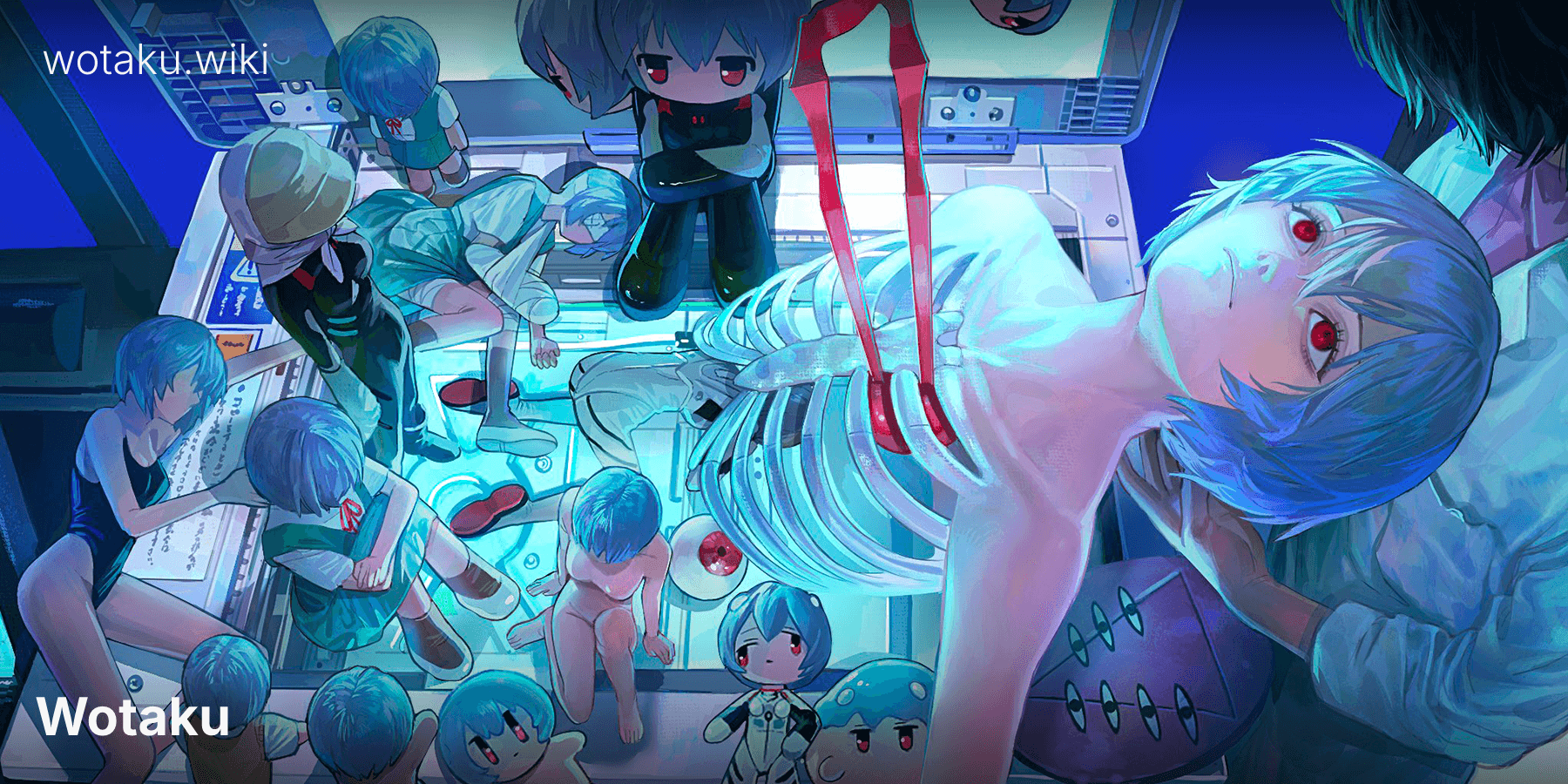

Sharing metadata
| og:url | https://wotaku.wiki/ |
|---|---|
| og:type | website |
| og:image | https://wotaku.wiki/__og_image__/og.png |
| og:title | Wotaku |
| og:locale | en |
| og:image:alt | Wotaku |
| og:image:type | image/png |
| og:description | A wiki that covers everything weeb-related! |
| og:image:width | 1098 |
| og:image:height | 530 |
| twitter:url | https://wotaku.wiki/ |
| twitter:card | summary_large_image |
| twitter:image | https://wotaku.wiki/__og_image__/og.png |
| twitter:title | Wotaku |
| twitter:image:alt | Wotaku |
| twitter:description | A wiki that covers everything weeb-related! |
| twitter:image:width | 1098 |
| twitter:image:height | 530 |
robots.txt (opens in a new tab)
1 rulesAll bots 1 allowed · 0 disallowed

 All bots

/
No matching rules.
Sitemaps
1 Registration details RDAP / WHOIS
| Registrar | NETIM SAS |
|---|---|
| Registered | 2024-08-06 |
| Expires | 2028-08-06 |
| Domain status | client transfer prohibited、server transfer prohibited |
| Nameservers | alex.ns.cloudflare.com、sandy.ns.cloudflare.com |
| DNSSEC | unsigned |
 DNS records
| Type | Name | Value | TTL | Priority |
|---|---|---|---|---|
| A | wotaku.wiki | 104.21.79.239 | 300 | — |
| A | wotaku.wiki | 172.67.172.3 | 300 | — |
| AAAA | wotaku.wiki | 2606:4700:3030::ac43:ac03 | 300 | — |
| AAAA | wotaku.wiki | 2606:4700:3037::6815:4fef | 300 | — |
| NS | wotaku.wiki | alex.ns.cloudflare.com | 86400 | — |
| NS | wotaku.wiki | sandy.ns.cloudflare.com | 86400 | — |
| TXT | wotaku.wiki | google-site-verification=J-28g16aYBYOPtJlIyL3PARMlADkLR4y5weB1fSGgSg | 300 | — |
 TLS and certificates
| Assessment | Normal configuration |
|---|---|
| Supported protocols | TLSv1.2、TLSv1.3 |
| Negotiated protocol | TLSv1.3 |
| Certificate subject | wotaku.wiki |
| Issuer | Google Trust Services |
| Valid until | 2026-11-06T00:27 · Remaining when checked: 36 days |
| Verification details | Certificate trust: Passed · Hostname match: Passed |
 HTTP response headers
| Header | Value |
|---|---|
| content-type | text/html; charset=utf-8 |
| cache-control | public, max-age=0, must-revalidate |
| server | cloudflare |
| x-content-type-options | nosniff |
| referrer-policy | strict-origin-when-cross-origin |
| access-control-allow-origin | * |
 Identified technologies
User reviews (0)