
 solitaire.com
No paid content found
solitaire.com
No paid content found
Categories: Games & Board Games
Play classic Solitaire display ad-free on Solitaire.com. Enjoy daily challenges and the best free Solitaire experience online. Just pure card game fun.
 Visit website
 Updated: 2026-09-30 07:02
 Language: English (default)
 Access: Normal
 Profile views 0
 Outbound visits 0
Related questions
More questions →How to Start Playing Solitaire Online on Solitaire.com
You can start playing on Solitaire.com by opening the site in a browser on a computer or phone — no download or registration is required. The game loads directly in the page, and once it does you can begin a classic Klondike deal right away. The only things you need are a browser and an internet connection; the site also provides Hint, Unlimited Undo, and Daily Challenges while you play.
What you're playing
The game on Solitaire.com is classic Solitaire, also known as Klondike. It's a one-player card game where the goal is to move all cards into four Foundation piles, sorted by suit from Ace to King.
The four areas of the board
Before your first move, it helps to know what each part of the layout does:
| Area | What it is | What it's for |
|---|---|---|
| Tableau | Seven card columns | Where most play happens; some cards face down, some face up |
| Foundation | Four piles, one per suit | Build Ace to King to win |
| Stockpile | The draw deck | Draw from here when no other moves are available |
| Waste pile | Cards you draw but can't use yet | Holds drawn cards that aren't immediately playable |
Steps to start a game
- Open the site. Go to Solitaire.com in your browser, on desktop or phone. No download or sign-up step is involved.
- Start a deal. A standard game begins with the seven-column Tableau, the empty Foundations, and the Stockpile ready to draw from.
- Make Tableau moves. In the seven columns you may only stack a card one rank lower and of the opposite color — for example, place the 7♦ on the 8♣, but not on the 8♥.
- Reveal hidden cards. When you move a card from a Tableau column, the card underneath (if any) turns face-up automatically. This is how you unlock new moves.
- Build the Foundations. Cards go into the Foundation by suit in ascending order, starting with the Ace: add the 2, then the 3, and continue to the King.
- Draw from the Stockpile when no other moves are available. Cards you draw but can't use immediately go to the Waste pile.
- Use the helpers when you're stuck. Hint suggests a move, and Unlimited Undo lets you take a move back.
What to expect: the deal is playable immediately after the page loads, and every legal move updates the board in place. You'll know you've won when all four Foundations run from Ace to King.
Common sticking points
- A card won't stack. Check both rank and color — Tableau stacking requires one rank lower and the opposite color.
- A Foundation card won't place. Foundations are suit-specific and must go in ascending order starting from the Ace.
- You run out of obvious moves. Draw from the Stockpile, or use Hint to surface a move you missed.
- You regret a move. Unlimited Undo is available, so you can reverse it rather than restarting.
If you want more variety
Daily Challenges are available on the site for players who want something beyond a standard deal. They're a reasonable next step once the basic rules above feel automatic.
How to Play Classic Solitaire (Klondike): Rules, Setup, and How to Win
Classic Solitaire, also called Klondike, is a one-player card game where you win by moving all 52 cards into four Foundation piles, sorted by suit from Ace to King. You play it on Solitaire.com directly in a browser or on a phone, with no download or registration required, and the page lists Hint, Unlimited Undo, and Daily Challenges as available features. The rules below cover the standard layout and the moves that decide whether a game is winnable.
What the goal actually is
The win condition is narrow: all four Foundations must be built up in suit, Ace first, then 2, 3, and so on through King. Every other move on the board exists to make those Foundation moves possible. A game is won when the last King lands on its Foundation; if no legal move remains and the Stockpile is empty, the deal is lost.
The four areas of the layout
A deal places cards into four zones, each with a different job:
| Area | What it holds | What you do with it |
|---|---|---|
| Tableau | Seven columns; some cards face down, some face up | Build descending sequences and uncover hidden cards |
| Foundation | Four piles, one per suit | Build Ace to King in suit to win |
| Stockpile | The unused draw deck | Draw from here when no other move is available |
| Waste pile | Cards drawn but not yet playable | Take the top card when it fits a Tableau or Foundation |
The Tableau is where most decisions happen, because face-down cards there are the main obstacle between you and the Foundations.
The rules that govern every move
Moving cards on the Tableau
In the seven Tableau columns you may only stack a card on one rank higher and of the opposite color. For example, place the 7♦ on the 8♣, but not on the 8♥. Sequences built this way can be moved as a group when the whole run is in valid descending, alternating-color order.
Revealing hidden cards
When you move a card off a Tableau column, the card underneath — if there is one — is automatically turned face-up. This is the core engine of the game: each reveal can expose an Ace or a card that unlocks a new sequence, so moves that turn over a face-down card are usually worth prioritizing.
Building each suit in the Foundation
Cards go to the Foundation only in suit and in ascending order, starting with the Ace. Add the 2, then the 3, and continue until you reach the King. A card that cannot legally go to a Foundation yet stays on the Tableau or in the Waste pile.
Using the Stockpile and Waste pile
When no Tableau or Foundation move is available, draw from the Stockpile. Cards you draw but cannot use immediately go to the Waste pile, and the top Waste card can be played onto the Tableau or a Foundation when it fits. Cycling through the Stockpile is how you keep a stalled game moving.
How a game flows
- Read the initial Tableau: note which face-down cards block the most useful columns.
- Make Foundation moves whenever an Ace or the next card in sequence is available.
- Build Tableau sequences in descending rank and alternating color, favoring moves that flip a face-down card.
- Draw from the Stockpile when the Tableau offers nothing.
- Repeat until all four Foundations reach King, or until no move remains.
Common sticking points
- Color, not just rank. A 6♠ cannot go on a 7♣; the colors must alternate, so check both rank and color before moving.
- Empty columns. An empty Tableau column is valuable because only a King (or a sequence starting with a King) can be placed there — plan which King you want to free up.
- Foundation order is strict. You cannot park a 5 on a Foundation before the 4 of that suit is there, even if the 5 is otherwise free.
- Undo and Hint. The site lists Unlimited Undo and Hint as features, which lets you test a line of play and reverse it rather than committing blind.
If you want a low-pressure way to learn the rhythm, Daily Challenges on Solitaire.com give you a fresh deal to practice reading the Tableau before you chase a full win.
What Is Solitaire.com?
Solitaire.com is a free online site for playing classic Solitaire, also known as Klondike Solitaire. You can play directly in your browser or on your phone, with no download or registration required, and the site describes the experience as ad-free. It also offers features such as Hint, Unlimited Undo, and Daily Challenges.
What you can do on the site
- Play classic Klondike Solitaire for free.
- Start a game in a browser or on a phone without installing anything.
- Use Hint when you are unsure of a move.
- Use Unlimited Undo to reverse moves.
- Play Daily Challenges for a changing objective.
How the game is set up
A game uses four main areas:
| Area | Purpose |
|---|---|
| Tableau | Seven card columns where most play happens; some cards are face down and some face up |
| Foundation | Four piles, one per suit, built from Ace to King to win |
| Stockpile | The draw deck of unused cards |
| Waste pile | Cards drawn but not immediately usable |
The basic rules
Moving cards on the Tableau
In the seven Tableau columns, you may stack a card only on a card one rank higher and of the opposite color. For example, place the 7♦ on the 8♣, but not on the 8♥.
Revealing hidden cards
When you move a card from a Tableau column, the card underneath, if any, is automatically turned face-up. This uncovers hidden cards and can unlock new moves.
Building each suit in the Foundation
Cards placed into the Foundation must follow suit and move in ascending order, starting with the Ace. Add the 2, then the 3, and continue until you reach the King.
Who it is for
Solitaire.com suits anyone who wants a familiar single-player card game without installing an app or creating an account. It is a reasonable choice if you want a quick browser game, a phone-friendly layout, and built-in help features. If you prefer playing offline or want a version with different rules, you would need to look elsewhere.
What Are the Tableau, Foundation, Stockpile, and Waste Piles in Solitaire?
A game of Solitaire (Klondike) is built around four areas, and each one has a distinct job. The Tableau is the seven-column playing field where most moves happen. The Foundation is four piles, one per suit, that you build from Ace to King to win. The Stockpile is the draw deck of unused cards. The Waste pile holds cards you draw but can't use right away. Understanding what each area does — and how they feed into each other — is the fastest way to stop guessing and start playing with a plan.
The four areas at a glance
| Area | What it is | What it's for |
|---|---|---|
| Tableau | Seven card columns | Main gameplay: stacking and uncovering cards |
| Foundation | Four piles, one per suit | Building Ace → King to win the game |
| Stockpile | The draw deck | Source of new cards when no moves remain |
| Waste pile | Cards drawn but not used | Temporary holding spot for drawn cards |
Tableau: where the game actually happens
The Tableau is seven columns of cards. Some cards start face down (hidden) and some start face up. This is where nearly all of your decisions take place.
The stacking rule here is specific: you may only place a card on another card that is one rank higher and the opposite color. For example, you can place the 7♦ on the 8♣, but not on the 8♥. Building these alternating red-black sequences is what lets you rearrange the board and reach hidden cards.
Revealing hidden cards
When you move a card out of a Tableau column, the card underneath it (if there is one) is automatically turned face-up. This is the core engine of the game: every move that clears a column can unlock a new card and open up fresh options. For example, uncovering a face-down card might reveal an Ace you can send straight to the Foundation.
Foundation: the four piles you build to win
The Foundation is four piles, one for each suit. Cards placed here must follow suit and move in ascending order, starting with the Ace. So you add the 2, then the 3, and continue until you reach the King.
The Foundation is your win condition: the goal of the game is to move all the cards into these four piles, sorted by suit from Ace to King. Because the order is fixed, the Foundation tells you which cards are genuinely useful right now — an Ace is always a good find, while a mid-rank card may need to wait.
Stockpile: your source of new cards
The Stockpile is the draw deck holding the cards not yet in play. You draw from it when no other moves are available on the Tableau. Think of it as your reserve: when the board stalls, the Stockpile is where you go to find new options.
Waste pile: cards you drew but can't use yet
Cards you draw but can't immediately use go to the Waste pile. It's a temporary holding area, not a dead end — cards here can often be played later once the Tableau or Foundation changes. A card sitting in the Waste pile isn't lost; it's waiting for the right moment.
How the four areas work together
The layout is designed to guide your decisions. A typical chain looks like this:
- You move a card in the Tableau, which flips a hidden card face-up.
- That newly revealed card might be an Ace, which you send to the Foundation.
- If no Tableau moves remain, you draw from the Stockpile.
- Cards you can't use land in the Waste pile, ready to be played once the board shifts.
Reading these four areas together — rather than treating them as separate zones — is what turns a random series of moves into a strategy.
Quick answers
Which area do you play in most? The Tableau, the seven columns where stacking and uncovering happen.
Where do cards go to win? The Foundation, built by suit from Ace to King.
Where do new cards come from? The Stockpile, drawn when no other moves are available.
Where do unused drawn cards go? The Waste pile, where they wait to become playable.
At Solitaire.com you can play classic Solitaire (Klondike) right in your browser or on your phone, with no downloads or registration required, plus features like Hint, Unlimited Undo, and Daily Challenges.
Website Overview
An established domain and managed infrastructure suggest continuity of operations and may support dependable delivery, although neither guarantees service quality. Page metadata, canonical configuration and social previews work together to provide more consistent search and sharing presentation.
Domain and Registration
Registered in 1997, this domain has about 28 years of history. That suggests continuity, although ownership and purpose may have changed. Transfer-protection status is present, helping reduce the risk of unauthorized domain transfers. The registrar is GoDaddy.com, LLC, a widely used domain service provider. The domain uses the common .com extension, which is not an independent safety signal.
DNS and Email
The lowest TTL is 20 seconds, supporting rapid record changes at the cost of more frequent lookups. Nameservers are provided by Akamai Edge DNS, indicating managed DNS hosting. No CNAME was found; the observed records resolve directly to addresses. No MX record was found. A conventional explicit inbound-mail route is not configured. TXT records include verification markers for Google. Such markers may also remain after a service stops being used.
TLS and Certificates
The certificate uses an RSA 2048-bit public key, offering broad client compatibility. The server supplied a complete certificate chain. No organization name is present in the certificate; the available fields are consistent with domain validation. The certificate was issued by Let's Encrypt, commonly associated with automated certificate services. The certificate's total validity is about 89 days, consistent with a short renewal cycle.
HTTP and Browser Security
CORS permits any origin to read this response. This is common for public resources; sensitive responses need narrower handling. No X-Powered-By header was found, reducing one common source of backend fingerprinting information. All six checked browser-security headers are present. Their effectiveness still depends on the policy values and application behavior. No obvious internal addresses or debug information were found in the headers. No explicit CDN or WAF marker was found in the response headers.
Technology Stack Analysis
The public page identifies Next.js without precise versions, leaving fewer clues for version-specific scanning.
Search and Social Sharing
Twitter Card metadata is configured. JSON-LD includes Organization data, helping describe the organization as an entity. The title has 53 characters, within a common display range. A meta description is present, with 151 characters. The observed directives allow indexing and link following.
 Hosting and Email
 Akamai Edge DNS
 Hosting
 Location
 Ashburn, Virginia, United States
 Pages, Search and Sharing
| Meta description | Play classic Solitaire display ad-free on Solitaire.com. Enjoy daily challenges and the best free Solitaire experience online. Just pure card game fun. |
|---|---|
| Canonical URL | https://solitaire.com/ |
| Language | English (default) |
| Twitter Card | summary_large_image |
Social Sharing Preview
10 fields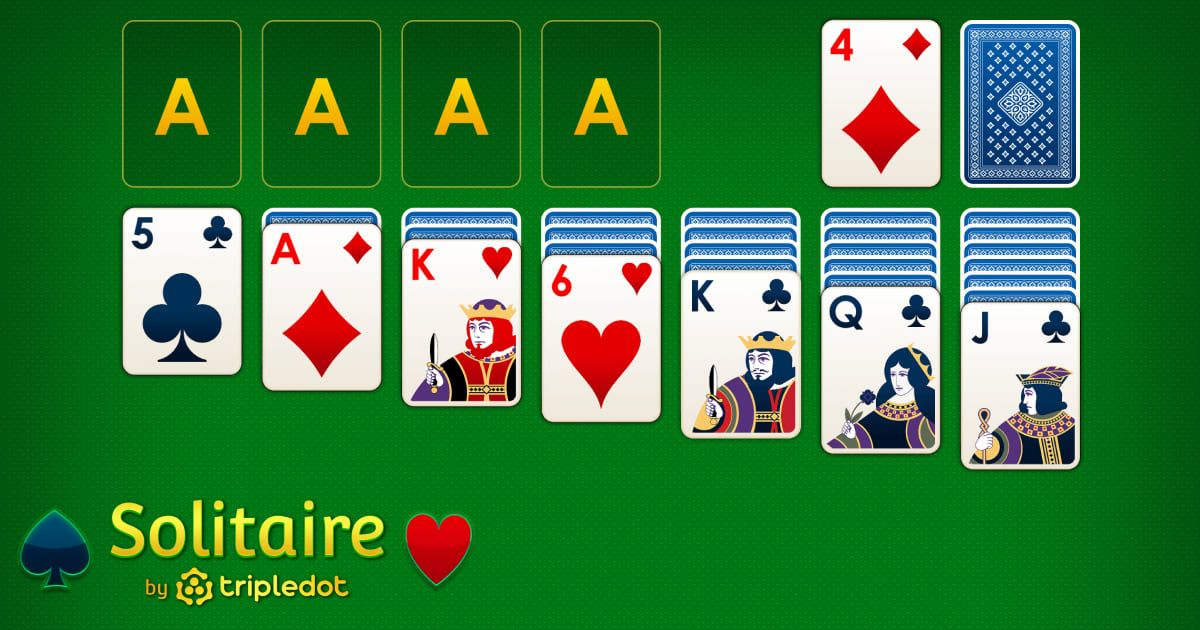

Sharing metadata
| og:url | https://solitaire.com/ |
|---|---|
| og:type | website |
| og:image | https://arenacloud.cdn.arkadiumhosted.com/arkcomstrapiuploadsprod-blob/tripledot/assets/solitaire_1200x630_c838b0ba64.jpg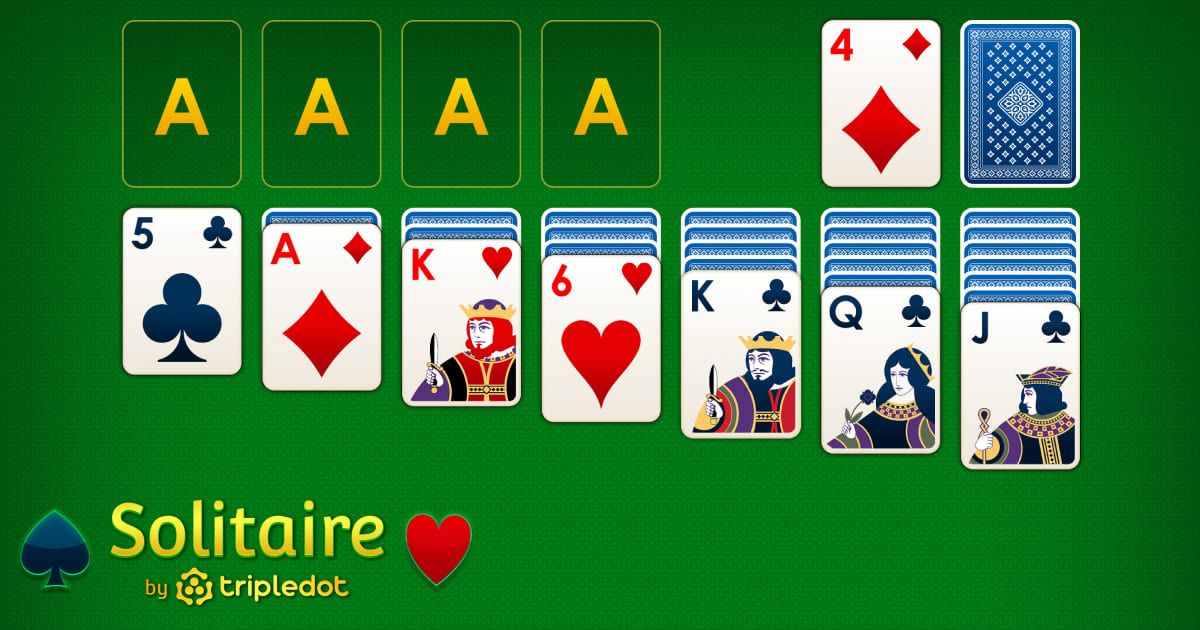 |
| og:title | Solitaire - Play #1 Classic Card Game Online for Free |
| og:description | Play classic Solitaire display ad-free on Solitaire.com. Enjoy daily challenges and the best free Solitaire experience online. Just pure card game fun. |
| twitter:card | summary_large_image |
| twitter:site | @tripledotgames |
| twitter:image | https://arenacloud.cdn.arkadiumhosted.com/arkcomstrapiuploadsprod-blob/tripledot/assets/solitaire_1200x630_c838b0ba64.jpg |
| twitter:title | Solitaire - Play #1 Classic Card Game Online for Free |
| twitter:description | Play classic Solitaire display ad-free on Solitaire.com. Enjoy daily challenges and the best free Solitaire experience online. Just pure card game fun. |
robots.txt (opens in a new tab)
1 rulesAll bots 1 allowed · 0 disallowed

 All bots

/
No matching rules.
Sitemaps
1 Registration details RDAP / WHOIS
| Registrar | GoDaddy.com, LLC |
|---|---|
| Registered | 1997-12-12 |
| Expires | 2030-12-11 |
| Domain status | client delete prohibited、client renew prohibited、client transfer prohibited、client update prohibited |
| Nameservers | a1-191.akam.net、a12-67.akam.net、a13-65.akam.net、a4-67.akam.net、a5-67.akam.net、a6-65.akam.net |
| DNSSEC | unsigned |
 DNS records
| Type | Name | Value | TTL | Priority |
|---|---|---|---|---|
| A | solitaire.com | 23.212.251.196 | 20 | — |
| A | solitaire.com | 23.212.251.198 | 20 | — |
| AAAA | solitaire.com | 2600:1408:c400:e::17cd:6a07 | 20 | — |
| AAAA | solitaire.com | 2600:1408:c400:e::17cd:6a16 | 20 | — |
| NS | solitaire.com | a1-191.akam.net | 86400 | — |
| NS | solitaire.com | a12-67.akam.net | 86400 | — |
| NS | solitaire.com | a13-65.akam.net | 86400 | — |
| NS | solitaire.com | a4-67.akam.net | 86400 | — |
| NS | solitaire.com | a5-67.akam.net | 86400 | — |
| NS | solitaire.com | a6-65.akam.net | 86400 | — |
| TXT | solitaire.com | google-site-verification=VH8-SJhFDoE6upiLVXekU2VYn_cZjwQahb5uerxAflQ | 3600 | — |
| TXT | solitaire.com | google-site-verification=f9TY23JoY497rPCAyFRnpIhDyAeUHgh71VLPLcWftZA | 3600 | — |
 TLS and certificates
| Assessment | Normal configuration |
|---|---|
| Supported protocols | TLSv1.2、TLSv1.3 |
| Negotiated protocol | TLSv1.3 |
| Certificate subject | cdn-le4.arkadiumhosted.com |
| Issuer | Let's Encrypt |
| Valid until | 2026-12-27T08:33 · Remaining when checked: 88 days |
| Verification details | Certificate trust: Passed · Hostname match: Passed |
 HTTP response headers
| Header | Value |
|---|---|
| content-type | text/html; charset=utf-8 |
| cache-control | public, max-age=7200 |
| strict-transport-security | max-age=31536000; includeSubDomains |
| content-security-policy | frame-ancestors 'self'; upgrade-insecure-requests ; report-uri https://sentry.arkadiumhosted.com/api/48/security/?sentry_key=3c87480ef068384126c67cff094d5029 |
| x-frame-options | SAMEORIGIN |
| x-content-type-options | nosniff |
| referrer-policy | origin-when-cross-origin |
| permissions-policy | camera=(), display-capture=(self), fullscreen=(self), geolocation=(self), microphone=(), publickey-credentials-get=(), screen-wake-lock=(), web-share=(), browsing-topics=() |
| access-control-allow-origin | * |
 Identified technologies
Recent Updates
- Website images
- Screenshots
- Network details
- Website Technologies
- Pages and Search Information
- HTTP Response Information
- TLS and certificates
- DNS Information
- Domain Registration
- Website profile
- Website Description
- Website Name
- Website profile
- Website Description
- Website Name
User reviews (0)