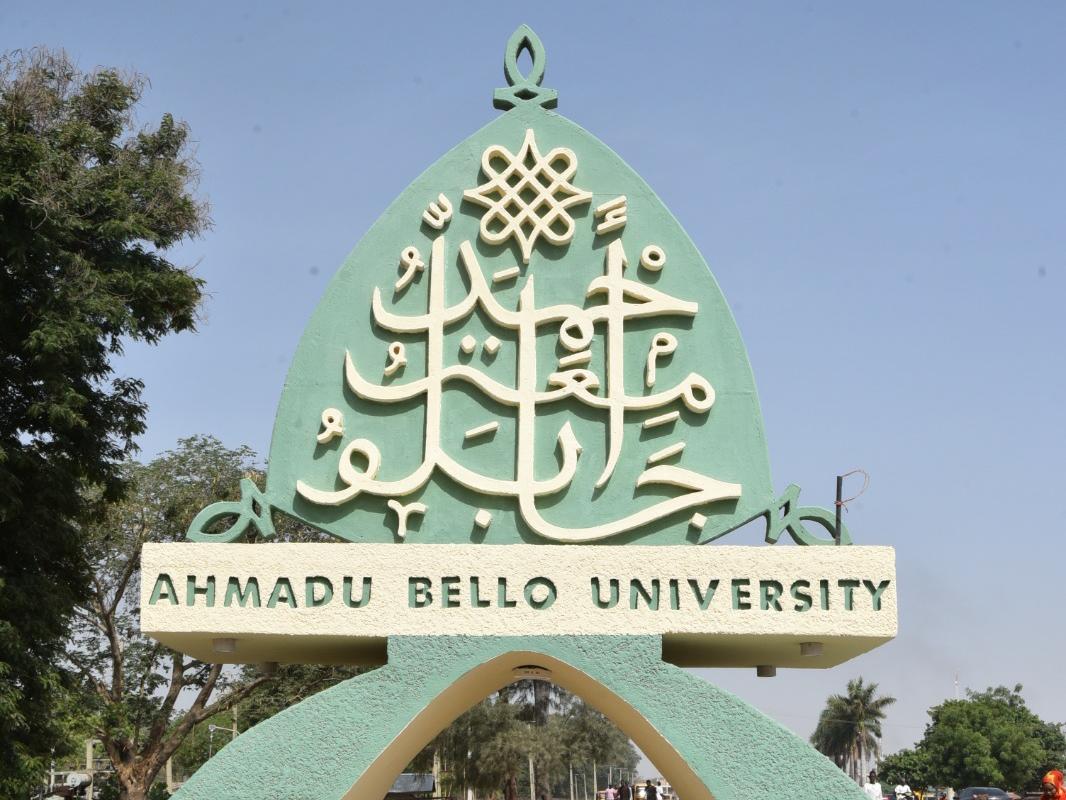
Website profiles · Technology insights · Alternatives

abu.edu.ng

According to Sir Ahmadu Bello:

No paid content found
Visit website
Profile views 0 Outbound visits 0 Normal
Home Page - Ahmadu Bello University Full homepage screenshot

At a glance

Category
Education & Learning
Language
English
Paid-content signal
No paid content foundObserved
Registered
2009
Hosting
Ahmadu Bello University Zaria NigeriaInferred
HTTPS certificate trusted
PassedObserved
Last updated

Website review

This review may include AI-generated content and is not individually verified. Domain, certificate and other facts come from the observed data on this page.

What is Ahmadu Bello University?

Ahmadu Bello University (ABU) is a public university in Zaria, Nigeria, named after Sir Ahmadu Bello (1910–1966). Its stated vision, quoted on its homepage, is to be "a world-class university comparable to any other," combining contemporary teaching with multidisciplinary research relevant to its community, Nigeria and the wider world.

What the university offers

  • Undergraduate study: about 94 undergraduate programmes, producing thousands of graduates each year.
  • Postgraduate study: roughly 664 PhD, MPhil, MSc and PGD programmes.
  • Distance learning: a Distance Learning Centre for students who cannot attend on campus.
  • Research: 16 research institutes and 13 research centres, plus journals and conferences.
  • Student support: a Counselling and Human Development Centre offering career guidance, personal and academic counselling, and welfare and academic-integrity campaigns.
  • Campus life: a residential campus, with current notices such as the 2025–2026 Student Handbook and staff mobility and conference calls listed under campus news.

Who it suits

A prospective undergraduate comparing Nigerian universities, a graduate looking for a research-based master's or PhD, or a working adult who needs a degree without relocating. Researchers may find the institute and centre listings a useful starting point for collaboration.

A practical next step

Match the level you want to the right section of Ahmadu Bello University: check the undergraduate or postgraduate programme lists for entry requirements and duration, and the Distance Learning Centre page if you cannot study on campus. For a specific department, confirm accreditation and current course details directly with the university before applying.

How do I apply for undergraduate admission at ABU?

Undergraduate admission at Ahmadu Bello University starts from the official portal rather than from any third-party service. The university's site lists roughly 94 undergraduate programmes and directs prospective students to a dedicated "UG Programmes" page, which is the correct first stop for checking that your intended course exists and what it requires. Applications themselves run through the national admissions system (JAMB/UTME for entry, with Direct Entry for holders of A-Levels, NCE or diplomas), and ABU then handles screening and admission on its side.

A practical sequence

  1. Confirm the programme and its subject requirements on the ABU undergraduate programmes page.
  2. Sit UTME (or prepare Direct Entry documentation) and select ABU as your institution of choice.
  3. Watch the ABU site's "Campus News and Updates" section for screening or Post-UTME announcements — these are posted as news items with dates, not kept on a permanent admissions page.
  4. Keep your O-Level results, JAMB registration details and personal data consistent across every form; mismatches are a common cause of delays.
  5. Once admitted, download the Student Handbook for your session — the site currently offers the 2025-2026 edition, plus separate handbooks for ETEN and Met and Mats students — and complete the Next-of-Kin Nomination Form from the Registrar's Office.

Who this suits

Applicant Route Watch for
School leaver with WAEC/NECO results UTME + screening Cut-off marks vary by programme; competitive courses need higher scores
Diploma/NCE/A-Level holder Direct Entry Ensure your transcript reaches ABU before the deadline
Applicant who cannot relocate Distance Learning Centre Fewer programme choices than on-campus study

Students who cannot attend physically should look at the Distance Learning Centre, which the site presents as a full degree route rather than a short course.

Next step

Open Ahmadu Bello University and go to the Programmes section first, then the news feed for the current screening notice. If you are unsure whether your grades match a course, the Student Counselling and Human Development Centre also runs career guidance and academic counselling — useful before committing to a programme rather than after.

What distance learning degree programmes does ABU offer?

ABU offers distance learning as a route to a degree through its Distance Learning Centre, but the homepage does not list the specific programmes available through that route. It only states that students who cannot study physically on campus can earn a degree via distance learning and directs visitors to the Centre's page for details. The main programme figures on the page—about 94 undergraduate programmes and roughly 664 postgraduate programmes—describe ABU's overall catalogue, not specifically what is offered at a distance.

What to check before choosing

Use the Distance Learning Centre as the authoritative source, and confirm for any programme you are considering:

  • Whether the specific degree is actually offered in distance mode
  • Admission requirements and whether they differ from on-campus entry
  • Study format, duration and any required in-person sessions
  • Accreditation status of the distance programme
  • Fees and payment arrangements, which the page does not state

A practical example

A working adult in Zaria or elsewhere in Nigeria who wants a degree without relocating should start from the Centre's programme list, then compare two or three candidates on accreditation, schedule and total cost before applying. If the Centre's list is thin for your field, ask whether a comparable on-campus programme has any flexible or part-time arrangement.

For the wider institutional picture—faculties, research centres and student support—see Ahmadu Bello University.

How can I download the ABU student handbook for the 2025-2026 session?

Open the ABU homepage and use the link in the banner headline “ABU Student Handbook for the 2025-2026 Session Download Now” (followed by “Check here”). That link on Ahmadu Bello University is the intended route to the handbook download for the session.

If you can't find the banner

  • Scroll through the homepage's main notices: the handbook is listed alongside other student documents, such as the Met and Mats Student Handbook and the ETEN Student Handbook, which also have “Check here” links. Make sure you choose the general ABU handbook rather than one of those programme-specific ones.
  • Look in the Student section of the site navigation, since the handbook is a student-facing document.
  • Check Campus News and Updates for a reposted notice if the banner has been replaced by newer announcements.

Practical notes

The handbook is published as a downloadable file, so open the link on a device where you can save or store a PDF and keep a copy offline for reference during registration and orientation. If you are a new or prospective student, the same homepage links to undergraduate and postgraduate programme pages and the Distance Learning Centre, which are worth checking alongside the handbook.

If the download link does not respond, contact the Office of the Registrar, whose forms and notices are listed on the same page, and ask them to confirm the current handbook file for 2025-2026.

What counselling and career guidance services are available to ABU students?

Ahmadu Bello University's homepage points students to its Student Counselling and Human Development Centre, which describes support for both students and staff. The listed services are career guidance and job-readiness workshops, a Students Support Associates programme, and talks and campaigns on student welfare and academic integrity. The page also mentions personal and academic counselling alongside career guidance, so the centre appears to cover wellbeing and study concerns as well as employment preparation.

What this means in practice

  • Career guidance and job-readiness workshops suit final-year students preparing applications, CVs or interviews, and earlier-year students exploring which path fits their degree.
  • Personal and academic counselling is the relevant route for stress, adjustment to university life, or difficulties affecting study progress.
  • Students Support Associates suggests a peer or associate-based layer of support, useful if a student wants an informal first conversation before approaching staff.
  • Welfare and academic-integrity campaigns are awareness activities rather than individual appointments; they matter for understanding rules and available help.

Limits of the homepage listing

The page names service categories but does not give opening hours, booking steps, staff ratios or whether sessions are confidential and free. Treat the list as a starting point, not a service catalogue.

A useful next step

A student who wants an appointment should open the Counselling Page linked from the homepage and look for contact details or a booking route, then ask directly about confidentiality and waiting times. Prospective students comparing universities can use the same list as a checklist: does a department offer one-to-one counselling, career workshops and peer support, or only general campaigns?

For broader institutional context, the main portal is Ahmadu Bello University.

What research grants and funding opportunities does ABU's Directorate of Research and Innovation provide?

The page confirms that ABU's Directorate of Research and Innovation (DRI) is the university office associated with research grants, patents, AAMs and conference presentations, and it links to a repository for these. It also states a ₦10.5 billion sponsored research budget and points to 16 research institutes and 13 research centres. What the page does not give is a list of specific DRI grant schemes, eligibility rules, award sizes or application deadlines. So the honest answer is: DRI is the right entry point for funding and research-support enquiries at ABU, but you need to check its own pages or contact the directorate for the actual calls.

What the page supports

  • Research grants and patents: DRI is named alongside grants, patents, AAMs and conference presentations, with a repository link.
  • Conference presentations: listed as part of DRI's remit, which suggests support or coordination for staff presenting research.
  • Sponsored research capacity: the ₦10.5 billion figure signals large externally sponsored research activity, though the page does not break it down by scheme or discipline.
  • Institutional research base: 16 research institutes and 13 research centres, useful if you are looking for a host unit before applying.

Practical next step

If you are an ABU staff member or postgraduate researcher, start with the DRI repository link on the homepage and then approach the directorate directly with a one-page concept note: your research question, the unit you are attached to, the funding range you need and whether the output is a publication, patent or conference paper. That framing matches how the page describes DRI's scope and saves time compared with asking generally about "available grants."

For context on the wider university, see Ahmadu Bello University. Prospective students comparing research environments may also find the postgraduate programme listings useful, since around 664 PhD, MPhil, MSc and PGD programmes are advertised.

Related questions

More questions →
What Research Resources and Support Does ABU Provide?

Ahmadu Bello University (ABU), Zaria, supports research through three main channels: the Directorate of Research and Innovation (DRI), a network of 16 research institutes and 13 research centres, and sponsored research funding. The DRI is the entry point for researchers seeking grants, patents, conference support, and access to the university's research repository. These resources are relevant to ABU staff, postgraduate students, and external collaborators looking for institutional research partners.

The Directorate of Research and Innovation (DRI)

The DRI is ABU's central office for research administration and innovation support. According to the university's website, its scope covers:

  • Research grants — support and administration for funded research projects
  • Patents — handling of intellectual property arising from research
  • AAMs — the university lists this category alongside grants and patents; confirm its exact meaning and scope with the DRI directly
  • Conference presentations — support for researchers presenting at conferences
  • A research repository — a dedicated page where research outputs are stored and can be visited

The DRI also maintains a separate page for the Equipment Maintenance and Development Centre, which publishes a 2025 Training Calendar. Researchers who need equipment support or training should check that page.

How to use the DRI

  1. Go to abu.edu.ng and locate the Directorate of Research and Innovation link (it appears under the Research section of the homepage).
  2. Visit the Repository to browse existing research outputs or check what the repository accepts.
  3. For grants, patents, or conference support, use the DRI contact route on its page to ask about current application windows and requirements — the homepage does not publish deadlines or eligibility rules.
  4. Check the Equipment Maintenance and Development Centre page for the 2025 training calendar if your work depends on shared equipment.

Expected result: you will know which DRI service matches your need and who to contact. Common sticking point: the homepage lists DRI services but not application forms or deadlines, so direct contact is necessary before planning a submission.

Research Institutes and Centres

ABU describes its research base as 16 research institutes and 13 research centres. The website provides index pages ("Visit 16 Research Institutes" and "Visit 13 Research Centers") that list the individual units. The homepage does not name each institute or centre, so use those index pages to identify the unit relevant to your field — for example, a specific institute for agricultural or medical research — before making an approach.

These units are distinct from the faculties, centres, institutes, schools and colleges listed under Academics. If you are unsure whether a unit is a research institute or a teaching faculty, check both index pages.

Research Funding

The university states a ₦10.5 billion sponsored research budget. The homepage does not break this down by source, discipline, or year, and does not describe how individual researchers can access it. Treat the figure as an indicator of scale rather than a grant you can apply for; ask the DRI about current funding lines and internal calls.

Conferences and Journals

ABU hosts and links to research conferences and journals:

  • A Call for Papers for the 5th International Conference at the Ahmadu Bello University Library Complex is posted in the campus news section.
  • The website provides links to Research Journals and Conferences under its Research menu.

These are the practical routes for presenting work or publishing through the university. Conference calls appear as news items, so check the Campus News and Updates section periodically rather than expecting a single fixed deadline page.

Quick Reference

Need Where to go
Grants, patents, conference support Directorate of Research and Innovation (DRI)
Browse research outputs DRI Repository
Identify a research unit in your field 16 Research Institutes / 13 Research Centres index pages
Equipment training Equipment Maintenance and Development Centre — 2025 Training Calendar
Present or publish Conferences and Research Journals links; campus news for calls for papers
Funding scale ₦10.5 billion sponsored research budget (contact DRI for access)

What the Website Does Not Tell You

The homepage does not publish grant deadlines, patent filing procedures, eligibility rules for the research budget, or the names of the individual institutes and centres. For any of these, the DRI and the institute/centre index pages are the next step. Researchers planning a submission should confirm requirements directly rather than relying on the homepage summary.

What Does It Mean to Be an IB Student? Roles and Expectations Across the Four Programmes

Being an IB student means more than attending a school that offers an International Baccalaureate programme. It means learning through a specific framework that asks you to think critically, communicate clearly, and take responsibility for your own progress. The IB's four programmes — the Primary Years Programme (PYP), Middle Years Programme (MYP), Diploma Programme (DP), and Career-related Programme (CP) — share a common philosophy but place different demands on students at each stage.

This article explains what the IB expects from students, how responsibilities change across the four programmes, and how families can prepare for the transition.

The foundation: the IB learner profile

Across all four programmes, the IB describes ten attributes it hopes students develop. These are usually called the learner profile. Students are encouraged to be:

  • Inquirers — curious and skilled at asking good questions
  • Knowledgeable — exploring ideas across a range of subjects
  • Thinkers — using critical and creative thinking
  • Communicators — expressing ideas confidently in more than one language
  • Principled — acting with integrity and fairness
  • Open-minded — appreciating other perspectives and cultures
  • Caring — showing empathy and respect
  • Risk-takers — approaching uncertainty with courage
  • Balanced — attending to intellectual, physical, and emotional well-being
  • Reflective — assessing their own learning and experience

These attributes are not a checklist to complete. They describe habits and dispositions that teachers look for and that students are expected to demonstrate over time. In practice, they shape how lessons are taught, how projects are assessed, and how students are asked to behave toward one another.

How student responsibilities differ across the four programmes

Each programme has its own structure, age range, and expectations. The table below summarises the main differences.

Programme Typical age range Core expectation of the student Main assessment emphasis
PYP 3–12 Active participation, curiosity, and reflection on learning Teacher observation, portfolios, student-led conferences
MYP 11–16 Connecting subjects to real-world contexts; developing research and self-management skills Criterion-based assessment, personal project, interdisciplinary units
DP 16–19 Independent academic work across six subject groups plus core requirements External exams, coursework, extended essay, theory of knowledge
CP 16–19 Combining academic study with career-related learning and a reflective project Career-related study, DP courses, personal and professional skills

PYP: building the habits of inquiry

In the PYP, the student's main job is to engage. Children are expected to ask questions, work with others, and reflect on what they have learned. The emphasis is on developing curiosity and basic research skills rather than on formal examinations. Students often take part in units of inquiry that connect subjects, and they may lead conferences where they explain their learning to parents.

MYP: making connections and managing yourself

The MYP asks students to go further. They study eight subject groups and are expected to connect what they learn to the world around them. A key responsibility is the personal project, an independent piece of work that students plan, research, and complete over an extended period. This is often the first time students must manage a long-term deadline largely on their own. Service learning also becomes more structured, and students are encouraged to reflect on their role in the community.

DP: depth, independence, and the core

The DP is the most academically demanding of the four programmes. Students typically study six subjects, three at higher level and three at standard level, and complete three core requirements:

  • Theory of knowledge (TOK) — a course that asks how we know what we claim to know
  • The extended essay — an independent research paper of up to 4,000 words
  • Creativity, activity, service (CAS) — a programme of ongoing experiences outside academic study

DP students are expected to manage a heavy workload, meet external examination deadlines, and produce original academic work. Independent study is not optional; it is central to the programme.

CP: academic study with a career focus

The CP is designed for students who want to combine academic courses with career-related learning. Students take at least two DP courses alongside a career-related study programme, and complete a reflective project. They also develop personal and professional skills. The CP suits students who learn best when their studies connect directly to a practical field, while still requiring the critical thinking and communication skills common to all IB programmes.

How assessment and independence change as students progress

One of the clearest patterns across the IB is the shift from teacher-led assessment toward student-led responsibility.

In the PYP, teachers observe and document learning, and students are guided through reflection. In the MYP, students are assessed against published criteria and must increasingly manage their own projects. By the DP and CP, students are preparing for external examinations and independent research, and they are expected to organise their time, seek help when needed, and meet deadlines without constant reminders.

This progression is deliberate. The IB wants students to leave as self-directed learners who can think for themselves.

Common misconceptions about being an IB student

Several myths circulate about the IB. Here are a few clarifications.

  • "IB students must be geniuses." The programmes are demanding, but they are designed for a broad range of students. Effort, curiosity, and organisation matter as much as raw ability.
  • "The IB is only about exams." Assessment includes projects, portfolios, oral work, and service. The DP has external exams, but the core requirements are equally important.
  • "Students must be fluent in a second language before starting." Language learning is part of the IB, and support is usually available. Requirements vary by programme and school.
  • "IB students have no free time." The workload is real, but the learner profile includes balance. Schools generally encourage students to manage their time and well-being.
  • "All IB schools are the same." Schools implement the programmes in different ways, and the range of subjects and support offered can vary.

Preparing for the transition into an IB programme

If you are a student or a parent preparing to enter an IB programme, the following steps can help.

  1. Read the programme guide for your specific programme. The IB publishes curriculum and assessment information for PYP, MYP, DP, and CP. Understanding the structure reduces surprises.
  2. Talk to current students and teachers. Ask about workload, deadlines, and what support is available.
  3. Build organisational habits early. A simple planner, weekly review, and clear study space make a difference, especially in the MYP and DP.
  4. Practise reflection. The IB asks students to think about their own learning. Keeping a short journal or notes on what worked and what did not is useful preparation.
  5. Ask about language and subject choices. Requirements differ by programme and school, so confirm the details with the school directly.
  6. Plan for the core requirements. In the DP, the extended essay, TOK, and CAS take time. Starting early and setting interim deadlines helps.
  7. Use school support. Coordinators, counsellors, and teachers are there to help. Asking for guidance is part of being a successful IB student.

A practical summary

Being an IB student means developing the learner profile attributes while meeting the specific demands of your programme. In the PYP, that means curiosity and participation. In the MYP, it means making connections and managing independent work. In the DP, it means academic depth and completing the core. In the CP, it means combining academic study with career-related learning and reflection.

Across all four, the common thread is responsibility: for your learning, your time, and your contribution to the community around you. Understanding that early makes the transition smoother and the experience more rewarding.

What Programmes Does Ahmadu Bello University Offer?

Ahmadu Bello University (ABU), Zaria, offers three main study routes: about 94 undergraduate programmes, roughly 664 postgraduate programmes (PhD, MPhil, MSc and PGD), and degree study through its Distance Learning Centre for students who cannot attend on campus. The right route depends on the qualification you already hold and whether you can study physically in Zaria.

Undergraduate Programmes

ABU runs about 94 undergraduate programmes and, according to the university, produces thousands of fresh graduates each year. These are the standard entry route for school leavers and others seeking a first degree.

  • Who it suits: applicants seeking a first degree who can study on campus.
  • What to check: the specific programme list and entry requirements on the university's UG Programmes page, since the site presents the count but not the full catalogue in the homepage text.

Postgraduate Programmes

The postgraduate route covers around 664 established programmes across four award types:

Award type Typical purpose
PhD Research doctorate
MPhil Research master's, often a stepping stone to PhD
MSc Taught master's
PGD Postgraduate diploma, often for conversion or professional upgrading
  • Who it suits: graduates looking to specialise, convert fields, or pursue research careers.
  • What to check: the PG Programmes page for the specific award available in your field, plus admission requirements for that programme.

Distance Learning Centre

If you cannot learn on campus physically, ABU's Distance Learning Centre gives you the chance to earn a degree remotely. The university markets it as a way to "earn your degree with ease" for off-campus learners.

  • Who it suits: working adults or students based away from Zaria.
  • What to check: which programmes the Distance Learning Centre actually delivers, and how assessment and study materials are handled, before committing.

How to Choose Between the Routes

Use these conditions to decide:

  • No degree yet, can study on campus → undergraduate programmes.
  • Already hold a degree, want specialisation or research → postgraduate programmes (MSc/PhD for research or advanced taught study; PGD for conversion or professional development).
  • Cannot relocate or attend classes physically → Distance Learning Centre.

Where to Verify Details

The ABU homepage links directly to each route: "Check UG Programmes," "Check PG Programmes," and "Visit Now" for the Distance Learning Centre. Programme counts and award types come from the university's own site; specific entry requirements, fees and deadlines are not stated on the homepage, so confirm them on the linked programme pages or with the relevant faculty before applying.

Where Students Can Find the ABU Student Handbook and Key Forms

The ABU Student Handbook for the 2025–2026 session, the Met and Mats and ETEN student handbooks, and the Registrar's Staff Next-of-Kin Nomination Form are all reachable from the Ahmadu Bello University homepage at abu.edu.ng. The homepage carries a dedicated notice for each item with a "Check here" or "Download here" link, so the practical route is to open the homepage and follow those links rather than search the site's menus. This applies to current and incoming students who need official university documents, and to staff who need the next-of-kin form.

What is available from the homepage

The homepage groups these documents in a block of notices above the Campus News section. The items named there are:

Document Who it is for How the page points to it
ABU Student Handbook, 2025–2026 session Students "Download Now" and "Check here"
Met and Mats Student Handbook Students in that programme "Now Available — Check here"
ETEN Student Handbook Students in that programme "Now Available — Check here"
Registrar's Staff Next-of-Kin Nomination Form Staff "Download here"

The same area also links to the Directorate of Research and Innovation repository for research grants, patents, AAMs and conference presentations, and to the Equipment Maintenance and Development Centre's 2025 training calendar. Those are separate from the student handbooks but appear alongside them, which is useful if you are scanning the page for official downloads.

How to get the handbook

  1. Open abu.edu.ng in a browser.
  2. Look at the notice block near the top of the page, headed by the line about the ABU Student Handbook for the 2025–2026 session.
  3. Select the "Download Now" or "Check here" link next to the handbook you need — the main student handbook, Met and Mats, or ETEN.
  4. Save the file and check that the session year on the cover matches 2025–2026 before relying on it.

Expected result: you have the correct handbook file for your programme and session. If a link does not respond, reload the homepage first, since the notice block is updated as new documents are posted.

Other student-facing resources on the same site

Beyond the handbooks, the homepage points to several services that students commonly need:

  • Programmes: about 94 undergraduate programmes and roughly 664 postgraduate programmes (PhD, MPhil, MSc and PGD), plus the Distance Learning Centre for those who cannot study on campus.
  • Counselling and Human Development Centre: career guidance, job-readiness workshops, personal and academic counselling, and the Students Support Associates programme.
  • Academics: directories of faculties, centres, institutes, schools and colleges, plus research journals and conference pages.
  • Campus News and Updates: current calls and announcements, such as the 2026/2027 ABU–URV staff mobility programme and conference paper calls.

Common sticking points

  • Wrong session: handbooks are labelled by session. Confirm the year before using rules or deadlines from the file.
  • Programme-specific handbooks: Met and Mats and ETEN have their own handbooks. If you are in one of those programmes, use that version rather than the general student handbook.
  • Staff versus student forms: the Next-of-Kin Nomination Form is listed under the Office of the Registrar for staff. Students looking for their own forms should check the student handbook and the counselling or academics pages instead.
  • No single "downloads" menu: the documents are surfaced as homepage notices, so bookmark the homepage or the specific file once you find it.
Student Support Services and Campus Life at ABU (abu.edu.ng)

Ahmadu Bello University (ABU) provides student support through its Student Counselling and Human Development Centre, which offers career guidance, personal and academic counselling, job-readiness workshops, a Students Support Associates programme, and campaigns on student welfare and academic integrity. Campus life is residential, and the university also publishes student handbooks and key forms online. These services are described on the official website, abu.edu.ng; specific schedules, eligibility rules, and application procedures are not detailed there, so students should confirm them with the relevant office.

Student Counselling and Human Development Centre

The Counselling and Human Development Centre is the main hub for student support at ABU. According to the university website, its services cover both students and staff and include:

  • Career guidance and job-readiness workshops — help with career direction and preparation for employment.
  • Personal and academic counselling — support for personal challenges and academic progress.
  • Students Support Associates programme — a structured peer or associate support arrangement for students.
  • Talks and campaigns on student welfare and academic integrity — awareness activities on wellbeing and honest academic conduct.

The website points visitors to a dedicated Counselling page and to the university's YouTube channel for videos. It does not list opening hours, booking steps, or contact details for the Centre, so students should check the Counselling page or ask at the Centre directly.

Who it is for and how to use it

The Centre is described as serving students and staff, so both current students and employees can approach it. For a student who is unsure about a career path or is struggling academically, the practical route is to visit the Counselling page linked from the homepage and then contact the Centre to ask about appointments. Because the site does not publish a booking process, treat any step-by-step instructions you find elsewhere as unverified until confirmed by the Centre.

Campus life

ABU describes itself as having a residential campus, and the homepage includes a "Campus Life / Student Life" section. Beyond the residential character, the homepage excerpt does not give details on hostels, student societies, or campus facilities. Students who need accommodation or activity information should look for the Student Life section on the site or contact the relevant student affairs office.

Handbooks and key forms

The homepage highlights several downloadable documents for the current session:

Document Where it appears
ABU Student Handbook for the 2025-2026 Session Homepage notice ("Download Now")
MET and MATS Student Handbook Homepage notice ("Check here")
ETEN Student Handbook Homepage notice ("Check here")
Staff Next-of-Kin Nomination Form (Office of the Registrar) Homepage download link

These are direct download links from the homepage. The handbooks are the most likely place to find rules, procedures, and support contacts in detail, so downloading the current-session handbook is a sensible first step for any student question the website leaves open.

Related academic and research support

The site also lists broader academic infrastructure that supports students:

  • Programmes: about 94 undergraduate programmes and around 664 postgraduate programmes (PhD, MPhil, MSc, and PGD), plus a Distance Learning Centre for students who cannot study on campus.
  • Research support: 16 research institutes and 13 research centres, a stated ₦10.5 billion sponsored research budget, and a Directorate of Research and Innovation (DRI) repository for research grants, patents, AAMs, and conference presentations.
  • Faculties, institutes, schools, and colleges: each has its own page linked from the Academics section.

What to do next

  1. Open abu.edu.ng and download the ABU Student Handbook for the 2025-2026 Session from the homepage notice.
  2. Visit the Counselling page for career guidance, personal or academic counselling, and welfare and academic-integrity campaigns.
  3. For programme-specific questions, use the Undergraduate, Postgraduate, or Distance Learning pages.
  4. For anything the site does not answer — appointment times, hostel arrangements, form submission — contact the relevant office (for example, the Office of the Registrar for the Next-of-Kin form) rather than relying on third-party summaries.

Website Overview

Identifiable technologies and additional version or configuration signals make the service easier to fingerprint, which may help targeted scanners narrow their checks. An established domain and managed infrastructure suggest continuity of operations and may support dependable delivery, although neither guarantees service quality.

Domain and Registration

Registered in 2009, this domain has about 17 years of history. That suggests continuity, although ownership and purpose may have changed. Transfer-protection status is present, helping reduce the risk of unauthorized domain transfers. Registration contact information is publicly available through RDAP. The domain uses the common .ng extension, which is not an independent safety signal.

DNS and Email

Nameservers are provided by abu.edu.ng, indicating managed DNS hosting. MX records point to the Microsoft 365 email service. No CNAME was found; the observed records resolve directly to addresses. SPF and DMARC are configured. DKIM status is unknown. TXT records include verification markers for Google. Such markers may also remain after a service stops being used.

TLS and Certificates

The certificate uses an RSA 2048-bit public key, offering broad client compatibility. The server supplied a complete certificate chain. No organization name is present in the certificate; the available fields are consistent with domain validation. The certificate was issued by Let's Encrypt, commonly associated with automated certificate services. The certificate's total validity is about 89 days, consistent with a short renewal cycle.

HTTP and Browser Security

The response lacks these common security headers: HSTS, CSP, X-Content-Type-Options, Referrer-Policy, clickjacking protection. No X-Powered-By header was found, reducing one common source of backend fingerprinting information. No obvious internal addresses or debug information were found in the headers. The Server header identifies Apache without an exact version. No explicit CDN or WAF marker was found in the response headers.

Technology Stack Analysis

The public page identifies WordPress 7.1.3, React, jQuery, Apache, with exact versions exposed for 1 technologies. These details can narrow vulnerability checks, although exposure alone is not a vulnerability.

Search and Social Sharing

The Generator tag identifies WordPress 7.1.3, making the publishing system easier to fingerprint. Twitter Card metadata is configured. JSON-LD includes Organization data, helping describe the organization as an entity. The title has 35 characters, within a common display range. A meta description is present, with 30 characters.

Hosting and Email

DNSabu.edu.ng
HostingAhmadu Bello University Zaria Nigeria
EmailMicrosoft 365
Approximate IP geolocation (inferred; a CDN or proxy may differ from the origin server) Nigeria flagNigeria Inferred 196.220.66.178

Registration details

RDAP / WHOIS

Registrarskanhost
Registered2009-05-13
Expires2027-07-13
Domain statusclient transfer prohibited、client delete prohibited、DS automation disabled、NS automation disabled
Nameserversns0.abu.edu.ng、ns1.abu.edu.ng
DNSSECunsigned

DNS records

DNS

TypeNameValueTTLPriority
Aabu.edu.ng196.220.66.1783600—
MXabu.edu.ngabu-edu-ng.mail.protection.outlook.com36000
NSabu.edu.ngns0.abu.edu.ng3600—
TXTabu.edu.nggoogle-site-verification=BtkgMY7KOFULsJRUUGlAhe2TWCityJGaUjnTPqrYu603600—
TXTabu.edu.nggoogle-site-verification=CRX2dA6pAlAjYh-yX-1_ynBsIIotDRixqhhCRWGxtW83600—
TXTabu.edu.nggoogle-site-verification=wU1TzEYmfE8_0hWhb9e8p3Z97RMsFN2FuREOrvLtwP03600—
TXTabu.edu.ngv=spf1 include:spf.protection.outlook.com -all3600—
DMARC_dmarc.abu.edu.ngv=DMARC1; p=reject; rua=mailto:[email protected]3600—

TLS and certificates

TLS / SSL

AssessmentNormal configuration
Supported protocolsTLSv1.2、TLSv1.3
Negotiated protocolTLSv1.3
Certificate subjectabu.edu.ng
IssuerLet's Encrypt
Valid until2027-01-01T22:01 · Remaining when checked: 73 days
Verification detailsCertificate trust: Passed · Hostname match: Passed

HTTP response headers

HTTP

HeaderValue
content-typetext/html; charset=UTF-8
serverApache
permissions-policyprivate-state-token-redemption=(self "https://www.google.com" "https://www.gstatic.com" "https://recaptcha.net" "https://challenges.cloudflare.com" "https://hcaptcha.com"), private-state-token-issuance=(self "https://www.google.com" "https://www.gstatic.com" "https://recaptcha.net" "https://challenges.cloudflare.com" "https://hcaptcha.com")

Identified technologies

WordPress 7.1.3ReactjQueryApache

Pages, Search and Sharing

Meta descriptionAccording to Sir Ahmadu Bello:
Canonical URLhttps://abu.edu.ng/
LanguageEnglish (default)
Twitter Cardsummary_large_image
All bots 1 allowed · 1 disallowed
  • Allow/wp-admin/admin-ajax.php
  • Disallow/wp-admin/

User reviews (0)

  • No reviews yet.