
 简体中文
简体中文 English
uts.edu.au
UTS Science is research-driven, relevant, innovative and practical, achieving success and impact for its quality teaching and research.
At a glance
- Category
- Education & Learning
- Language
- English
- Paid-content signal
- No paid content foundObserved
- Registered
- Unknown
- Hosting
- CloudflareInferred
- HTTPS certificate trusted
- PassedObserved
- Last updated
Related questions
More questions →Why UTS Emphasises Industry Connections and Career Readiness
UTS puts industry connections and career readiness at the centre of its identity because that is how it differentiates itself as a university: its own homepage leads with "industry-led degrees," a location in Sydney's tech precinct, and a stated employment rate of 93.3%. If you are weighing UTS against another university, the practical question is whether those claims translate into real access — placements, employer contact, hiring pipelines — rather than just marketing language. The evidence below is drawn from what the UTS website itself foregrounds, so you can judge the emphasis on its own terms.
What the homepage actually claims
The UTS homepage makes three claims in close proximity, and they reinforce each other:
- Industry-led degrees — courses are framed as built around industry needs rather than purely academic progression.
- Sydney's tech precinct location — the campus sits inside an area described as a technology hub, which matters because proximity to employers shortens the distance between study and work.
- 93.3% employed — a single headline figure used to signal graduate outcomes.
It also states rankings of #8 in Australia and top 100 worldwide. These are credibility signals, not proof of career readiness on their own — but they explain why the site leads with employment and industry language rather than, say, research prestige alone.
Why the emphasis makes sense as a positioning choice
A university that cannot out-rank the oldest institutions on history or research volume competes on a different axis: employability and employer proximity. UTS's homepage structure reflects exactly that.
The mechanism is straightforward:
- Employers help shape what is taught → graduates need less retraining.
- Students study near where relevant firms operate → internships, part-time work, and networking happen more naturally.
- Employers recruit from a known pipeline → the employment rate stays high, which in turn attracts more students.
Each step depends on the previous one. The 93.3% figure is the output of this loop, not an independent fact — which is why the site presents it alongside the location and the "industry-led" framing rather than on its own.
The three entry points the site offers
The homepage organises its audience into three groups, and each maps to a different kind of industry connection:
| Audience | Entry point | What it is for |
|---|---|---|
| Students | Explore course areas and resources | Finding a course and the support to get where you want to go |
| Industry | Collaborate with UTS | Driving innovation and accessing top talent |
| Research | Research hub | Learning about research and latest findings |
The "For industry" entry is the clearest signal of intent: it explicitly offers access to top talent, which is the recruitment side of the same relationship that produces graduate employment. If you are a prospective student, that page tells you which employers are already connected to the university — useful context before you apply.
What the alumni stories are doing there
The homepage devotes significant space to named graduates: a Qantas Group CEO, a slow-fashion founder, a film producer, an AI commentator, and a business figure working on Indigenous economic empowerment. These are not decoration. They serve as proof of the career-readiness claim by showing specific outcomes across film, fashion, business, social justice, and AI — deliberately spanning sectors rather than concentrating on one.
Read them as evidence of range, not as typical outcomes. A homepage will always feature its most visible alumni; the useful question is whether the sectors shown match the course area you are considering.
How to test the claims for yourself
The homepage gives you the headline; it does not give you the detail. To check whether the industry emphasis is real for your situation:
- Go to "Find a course" and open a specific degree. Look for named industry partners, placement or internship components, and whether subjects are described as co-designed or industry-reviewed.
- Check the "For industry" page to see which collaboration and recruitment routes exist — this reveals which employers are actually in the network.
- Treat 93.3% as a starting point, not an answer. Ask what it measures (all graduates? a particular survey window? a particular level of study?) before comparing it with another university's figure.
- Use the location claim concretely. If you are considering a tech-adjacent field, the tech precinct position is the most checkable advantage — look at which firms are physically nearby and whether they appear in the course's industry links.
The bottom line
UTS emphasises industry connections and career readiness because that is its competitive position, and the homepage supports it with three mutually reinforcing elements: industry-led degrees, a tech-precinct location, and a 93.3% employment figure. The emphasis is coherent and the entry points for students, industry, and research are clearly separated. Whether it holds for you depends on your specific course — so verify at the course level rather than relying on the homepage headline.
What Does It Mean to Be an IB Student? Roles and Expectations Across the Four Programmes
Being an IB student means more than attending a school that offers an International Baccalaureate programme. It means learning through a specific framework that asks you to think critically, communicate clearly, and take responsibility for your own progress. The IB's four programmes — the Primary Years Programme (PYP), Middle Years Programme (MYP), Diploma Programme (DP), and Career-related Programme (CP) — share a common philosophy but place different demands on students at each stage.
This article explains what the IB expects from students, how responsibilities change across the four programmes, and how families can prepare for the transition.
The foundation: the IB learner profile
Across all four programmes, the IB describes ten attributes it hopes students develop. These are usually called the learner profile. Students are encouraged to be:
- Inquirers — curious and skilled at asking good questions
- Knowledgeable — exploring ideas across a range of subjects
- Thinkers — using critical and creative thinking
- Communicators — expressing ideas confidently in more than one language
- Principled — acting with integrity and fairness
- Open-minded — appreciating other perspectives and cultures
- Caring — showing empathy and respect
- Risk-takers — approaching uncertainty with courage
- Balanced — attending to intellectual, physical, and emotional well-being
- Reflective — assessing their own learning and experience
These attributes are not a checklist to complete. They describe habits and dispositions that teachers look for and that students are expected to demonstrate over time. In practice, they shape how lessons are taught, how projects are assessed, and how students are asked to behave toward one another.
How student responsibilities differ across the four programmes
Each programme has its own structure, age range, and expectations. The table below summarises the main differences.
| Programme | Typical age range | Core expectation of the student | Main assessment emphasis |
|---|---|---|---|
| PYP | 3–12 | Active participation, curiosity, and reflection on learning | Teacher observation, portfolios, student-led conferences |
| MYP | 11–16 | Connecting subjects to real-world contexts; developing research and self-management skills | Criterion-based assessment, personal project, interdisciplinary units |
| DP | 16–19 | Independent academic work across six subject groups plus core requirements | External exams, coursework, extended essay, theory of knowledge |
| CP | 16–19 | Combining academic study with career-related learning and a reflective project | Career-related study, DP courses, personal and professional skills |
PYP: building the habits of inquiry
In the PYP, the student's main job is to engage. Children are expected to ask questions, work with others, and reflect on what they have learned. The emphasis is on developing curiosity and basic research skills rather than on formal examinations. Students often take part in units of inquiry that connect subjects, and they may lead conferences where they explain their learning to parents.
MYP: making connections and managing yourself
The MYP asks students to go further. They study eight subject groups and are expected to connect what they learn to the world around them. A key responsibility is the personal project, an independent piece of work that students plan, research, and complete over an extended period. This is often the first time students must manage a long-term deadline largely on their own. Service learning also becomes more structured, and students are encouraged to reflect on their role in the community.
DP: depth, independence, and the core
The DP is the most academically demanding of the four programmes. Students typically study six subjects, three at higher level and three at standard level, and complete three core requirements:
- Theory of knowledge (TOK) — a course that asks how we know what we claim to know
- The extended essay — an independent research paper of up to 4,000 words
- Creativity, activity, service (CAS) — a programme of ongoing experiences outside academic study
DP students are expected to manage a heavy workload, meet external examination deadlines, and produce original academic work. Independent study is not optional; it is central to the programme.
CP: academic study with a career focus
The CP is designed for students who want to combine academic courses with career-related learning. Students take at least two DP courses alongside a career-related study programme, and complete a reflective project. They also develop personal and professional skills. The CP suits students who learn best when their studies connect directly to a practical field, while still requiring the critical thinking and communication skills common to all IB programmes.
How assessment and independence change as students progress
One of the clearest patterns across the IB is the shift from teacher-led assessment toward student-led responsibility.
In the PYP, teachers observe and document learning, and students are guided through reflection. In the MYP, students are assessed against published criteria and must increasingly manage their own projects. By the DP and CP, students are preparing for external examinations and independent research, and they are expected to organise their time, seek help when needed, and meet deadlines without constant reminders.
This progression is deliberate. The IB wants students to leave as self-directed learners who can think for themselves.
Common misconceptions about being an IB student
Several myths circulate about the IB. Here are a few clarifications.
- "IB students must be geniuses." The programmes are demanding, but they are designed for a broad range of students. Effort, curiosity, and organisation matter as much as raw ability.
- "The IB is only about exams." Assessment includes projects, portfolios, oral work, and service. The DP has external exams, but the core requirements are equally important.
- "Students must be fluent in a second language before starting." Language learning is part of the IB, and support is usually available. Requirements vary by programme and school.
- "IB students have no free time." The workload is real, but the learner profile includes balance. Schools generally encourage students to manage their time and well-being.
- "All IB schools are the same." Schools implement the programmes in different ways, and the range of subjects and support offered can vary.
Preparing for the transition into an IB programme
If you are a student or a parent preparing to enter an IB programme, the following steps can help.
- Read the programme guide for your specific programme. The IB publishes curriculum and assessment information for PYP, MYP, DP, and CP. Understanding the structure reduces surprises.
- Talk to current students and teachers. Ask about workload, deadlines, and what support is available.
- Build organisational habits early. A simple planner, weekly review, and clear study space make a difference, especially in the MYP and DP.
- Practise reflection. The IB asks students to think about their own learning. Keeping a short journal or notes on what worked and what did not is useful preparation.
- Ask about language and subject choices. Requirements differ by programme and school, so confirm the details with the school directly.
- Plan for the core requirements. In the DP, the extended essay, TOK, and CAS take time. Starting early and setting interim deadlines helps.
- Use school support. Coordinators, counsellors, and teachers are there to help. Asking for guidance is part of being a successful IB student.
A practical summary
Being an IB student means developing the learner profile attributes while meeting the specific demands of your programme. In the PYP, that means curiosity and participation. In the MYP, it means making connections and managing independent work. In the DP, it means academic depth and completing the core. In the CP, it means combining academic study with career-related learning and reflection.
Across all four, the common thread is responsibility: for your learning, your time, and your contribution to the community around you. Understanding that early makes the transition smoother and the experience more rewarding.
How to Apply to Study at UTS Through the Official Website
Start at uts.edu.au and use the How to apply link in the Popular Links section of the homepage. That is the official entry point for applications. Before you apply, use Find a course to choose your course and confirm its admission requirements, because the application path differs for local and international students. If anything is unclear, contact UTS directly for application guidance rather than relying on third-party sites.
Step 1: Find your course first
Applying without a chosen course makes the process harder, since requirements are course-specific.
- Go to uts.edu.au.
- Select Find a course under Popular Links.
- Explore the course areas that match your goal — the site groups options for students across fields such as film, fashion, business, social justice and AI.
- Open the individual course page and check its admission requirements and study options before starting an application.
Step 2: Use the official "How to apply" entry
The homepage lists How to apply as a Popular Link. This is the page that routes you into the correct application process.
- Local (domestic) students and international students follow different application paths, so choose the option that matches your status.
- The correct path determines your deadlines, documentation and where your application is submitted.
- Do not assume a single form covers everyone — the site separates these routes deliberately.
Step 3: Confirm your eligibility and requirements
Before submitting, verify that you meet the requirements for your specific course. Requirements vary by course and by applicant type, so read the course page and the relevant "How to apply" section together.
| What to check | Where to find it |
|---|---|
| Course options and areas | Find a course |
| Admission requirements | Individual course page |
| Application route (local vs international) | How to apply |
| Application guidance and questions | Contact UTS directly |
Step 4: Get help if you need it
If the requirements or the correct application path are unclear, contact UTS for guidance. The site is built around supporting students "to get to where you want to be," and staff can confirm which route applies to your situation.
Common sticking points
- Skipping course selection. Choosing a course first avoids applying through the wrong pathway.
- Using the wrong applicant route. Local and international processes differ; picking the wrong one can delay or invalidate an application.
- Relying on unofficial sources. Apply through uts.edu.au so your application and any guidance come from the university itself.
Why applicants consider UTS
UTS describes itself as ranked in the top 100 worldwide and #7 in Australia, with industry-led degrees in Sydney's tech precinct and a focus on career-ready skills. The site also cites a 93.3% employment figure. These points are relevant context when deciding whether to apply, but they do not change the application steps above.
What Course Areas and Study Options Can I Explore on the UTS Website?
The UTS website (uts.edu.au) is the official home of the University of Technology Sydney, and its main study-exploration entry point is Find a course, supported by browsable course areas covering fields such as business, design, engineering, health, science, law and AI. You can use it to browse by area of interest, then filter down to the level and course that fits you. The site describes UTS as offering industry-led degrees in Sydney's tech precinct with a strong focus on career-ready skills, and states it is ranked #8 in Australia and in the top 100 worldwide, with 93.3% employment for graduates.
Where to start on the site
The homepage surfaces a Popular Links block that includes Find a course and How to apply — these are the two most direct routes into study information. Alongside them, the site organises its audience into three main hubs:
- For students — explore course areas and find resources to help you get where you want to be.
- For industry — collaborate with UTS to drive innovation and access top talent.
- Research — learn about research activity and latest findings.
If your goal is choosing what to study, the For students path plus Find a course is the relevant combination.
Course areas you can browse
The site's "Explore our course areas" section is the browsing layer beneath the course search. Based on the fields UTS highlights across its content, areas you can expect to explore include:
| Area | Notes from the site |
|---|---|
| Business | Referenced through alumni and industry stories |
| Design and fashion | Covered via alumni profiles such as M.J. Bale's founder |
| Film and creative practice | Featured through film producer alumni stories |
| Engineering | Part of the industry-led degree offering |
| Health | Listed among the university's broad course areas |
| Science | The site is published under the UTS Faculty of Science |
| Law | Included in the university's course spread |
| AI and technology | Highlighted through AI-focused alumni and research content |
The homepage's alumni feature explicitly spans "film to fashion, business, social justice, AI and more," which gives a sense of the breadth available to browse.
Study levels and options
The site's course search is designed to let you move from a broad area of interest to a specific course, and the presence of both Find a course and How to apply as top-level popular links indicates that the same pathway serves prospective students at the point of application. The homepage does not itself list every level (undergraduate, postgraduate, research) in the excerpt available, so the reliable approach is to enter through Find a course and use the on-site filters rather than assuming a fixed list from the homepage alone.
How to use the site to narrow your options
- Open Find a course from the Popular Links block on the homepage.
- Browse by course area — use the "Explore our course areas" section if you are still deciding on a field rather than a specific degree.
- Filter by your interest — the search tool is intended to let you narrow by area and level.
- Check the application route — once you have a shortlist, use How to apply for the next step.
- Verify details on the course page — confirm entry requirements, duration and structure there, since the homepage only provides the entry points.
What the site signals about outcomes
Two figures on the homepage are worth noting when weighing options: 93.3% employed and a top 100 worldwide ranking (stated as #8 in Australia). The site also emphasises industry-led degrees located in Sydney's tech precinct and a focus on career-ready skills. Treat these as the university's own stated positioning rather than independent verification, and check the specific course page for the details that matter to your decision.
What UTS Rankings and Reputation Claims Mean for Prospective Students
UTS presents itself as a top-100 global university and a top-10 Australian university, and those claims are worth taking seriously as a signal of institutional standing — but they should not be the deciding factor in choosing a degree. The rankings referenced on uts.edu.au reflect performance in international university league tables, which measure research output, citations, reputation and some employment outcomes. They tell you the university is competitive on a global scale. They do not tell you whether a specific course fits your goals, whether the teaching style suits you, or whether graduates of your intended program get the jobs you want.
Where the numbers come from
The homepage evidence shows UTS positioning itself with several headline figures:
| Claim on site | What it refers to |
|---|---|
| Top 100 worldwide | Placement in an international university ranking |
| #7 in Australia (also shown as #8) | National position within the same or a comparable ranking |
| 93.3% employed | Graduate employment rate, likely drawn from a national graduate outcomes survey |
These are institutional-level metrics. They are calculated across the whole university, not per faculty or per degree. A strong overall rank can coexist with a weaker program in your particular field, and vice versa.
What rankings actually measure
Most global rankings weight research heavily — publications, citations, and academic reputation surveys. Some also include employer reputation and international diversity. Employment rates like the 93.3% figure usually come from surveys of recent graduates, often conducted several months after completion.
This means:
- A high rank signals research strength and brand recognition, which can matter for postgraduate study, academic careers, and some employers who screen by institution.
- It says little about class sizes, teaching quality, assessment style, or how much industry experience you will get.
- Employment percentages are averages. They can vary widely by discipline — a nursing or engineering graduate's job prospects differ from those in creative fields.
How to use this information
Treat the rankings as a starting filter, not a final answer. If UTS appears in the top 100 globally and top 10 nationally, it is reasonable to consider it a credible institution. From there, the decision should rest on factors the rankings do not capture:
- Course structure — Check the specific degree page for subjects, majors, and any mandatory internships or placements.
- Industry connections — The site emphasises industry-led degrees and a location in Sydney's tech precinct. Verify whether your target course includes work-integrated learning.
- Accreditation — For professional fields (engineering, accounting, health), confirm the degree is recognised by the relevant body.
- Cost and location — Rankings do not reflect tuition, living costs, or commute.
- Your own priorities — If you want research training, rank matters more. If you want a fast route to a licensed profession, accreditation and placement matter more.
The bottom line
UTS's ranking claims are a legitimate indicator that the university competes internationally and performs well in graduate employment metrics. They are not a guarantee that any given program is right for you. Use them to shortlist, then investigate the course itself — its content, its industry links, and its outcomes for graduates in your field — before committing.
Website Overview
The available information shows a mix of normal operation and configuration gaps. Depending on how the website is used, these gaps may affect secure access or the consistency of its public presentation.
Domain and Registration
Transfer-protection status is present, helping reduce the risk of unauthorized domain transfers. The domain uses the common .au extension, which is not an independent safety signal.
DNS and Email
Nameservers are provided by Akamai Edge DNS, indicating managed DNS hosting. MX records point to the Microsoft 365 email service. CAA records restrict which certificate authorities are authorized to issue certificates. SPF and DMARC are configured. DKIM status is unknown. TXT records include verification markers for Google, Atlassian, Meta. Such markers may also remain after a service stops being used.
TLS and Certificates
The certificate includes the organization field UNIVERSITY OF TECHNOLOGY SYDNEY. The certificate issuer is DigiCert Inc, a commercial certificate authority. The certificate uses an RSA 2048-bit public key, offering broad client compatibility. The server supplied a complete certificate chain. The certificate is valid for about 198 days in total, with 190 days remaining.
HTTP and Browser Security
The response lacks these common security headers: CSP, Permissions-Policy. No X-Powered-By header was found, reducing one common source of backend fingerprinting information. The cf-ray response header indicates a CDN or caching proxy in the delivery path. No obvious internal addresses or debug information were found in the headers. The Server header identifies cloudflare without an exact version.
Technology Stack Analysis
The public page identifies Drupal, React, Google Tag Manager, Cloudflare without precise versions, leaving fewer clues for version-specific scanning.
Search and Social Sharing
The title has 74 characters and may be truncated in search results. A meta description is present, with 147 characters. The observed directives allow indexing and link following. No Generator meta tag is publicly exposed. A viewport declaration is present, providing a basis for mobile layout.
Hosting and Email
 Akamai Edge DNS
 Cloudflare
 Microsoft 365
Registration details
| Registrar | Education Services Australia Limited |
|---|---|
| Registered | Unknown |
| Expires | Unknown |
| Domain status | client delete prohibited、server renew prohibited、client update prohibited |
| Nameservers | a1-234.akam.net、a13-67.akam.net、a14-66.akam.net、a22-64.akam.net、a5-66.akam.net、a8-67.akam.net |
| DNSSEC | unsigned |
DNS records
| Type | Name | Value | TTL | Priority |
|---|---|---|---|---|
| A | www.uts.edu.au.cdn.cloudflare.net | 104.18.43.43 | 300 | — |
| A | www.uts.edu.au.cdn.cloudflare.net | 172.64.144.213 | 300 | — |
| AAAA | www.uts.edu.au.cdn.cloudflare.net | 2606:4700:440b::ac40:90d5 | 300 | — |
| AAAA | www.uts.edu.au.cdn.cloudflare.net | 2606:4700:440c::6812:2b2b | 300 | — |
| MX | uts.edu.au | uts-edu-au.mail.protection.outlook.com | 86400 | 10 |
| NS | uts.edu.au | a1-234.akam.net | 86400 | — |
| NS | uts.edu.au | a13-67.akam.net | 86400 | — |
| NS | uts.edu.au | a14-66.akam.net | 86400 | — |
| NS | uts.edu.au | a22-64.akam.net | 86400 | — |
| NS | uts.edu.au | a5-66.akam.net | 86400 | — |
| NS | uts.edu.au | a8-67.akam.net | 86400 | — |
| TXT | uts.edu.au | +include:outboundmail.blackbaud.net ~all | 86400 | — |
| TXT | uts.edu.au | JJML32P7KO5BSXJ2JSY3A2W650V35GL9NMHN9A1YX | 86400 | — |
| TXT | uts.edu.au | QuoVadis=ef3b6138-dc6f-4759-a80e-64d2544e3f26 | 86400 | — |
| TXT | uts.edu.au | adobe-idp-site-verification=303bc34cc7ddb6a50263e350b72b4a8cb6c09382b98586a36d3d8ae912a96adb | 86400 | — |
| TXT | uts.edu.au | airtable-verification=0474f2692f5578388db9455c1a2bace8 | 86400 | — |
| TXT | uts.edu.au | amazonses:LmJ67xTMEVBGXtzI1twdVgU80J4EnIRG8anqlv5gOnc= | 86400 | — |
| TXT | uts.edu.au | amazonses:ug8fIeGmv9vAxxDYWtPtCiCMaerJgKJyPnmXUniNrBA= | 86400 | — |
| TXT | uts.edu.au | atlassian-domain-verification=q7sMtoLUTUVNXUJMZaSp6eiQJtvXxlSxLQPWM931uL/bjoJHhyUqNwXdUQcrXR20 | 86400 | — |
| TXT | uts.edu.au | atlassian-domain-verification=x73yE5eNa4uvvTPTajH7IBDMfVWaIkypUj8K3Kyszad0Wa2oXTOvR8s0smcFiWFg | 86400 | — |
| TXT | uts.edu.au | cisco-ci-domain-verification=418f07f1c6f65b16cdf75036a3c5fabb9e934cc0c39e7838cff2cd60b21fa3c8 | 86400 | — |
| TXT | uts.edu.au | d365mktkey=NxRApwTgWeLguS4axdo00mBEz9gV6dY4OuriigH9S0cx | 86400 | — |
| TXT | uts.edu.au | ef3b6138-dc6f-4759-a80e-64d2544e3f26 | 86400 | — |
| TXT | uts.edu.au | ef8773ed-e533-4b6b-a0b5-142249b86662 | 86400 | — |
| TXT | uts.edu.au | facebook-domain-verification=yakuwff1wjjcobd58ui6org0w6vzz9 | 86400 | — |
| TXT | uts.edu.au | google-site-verification=KFLy-yg28mNXoQlfTEjnzNPM4RQlEASACVkNCVg3yc4 | 86400 | — |
| TXT | uts.edu.au | google-site-verification=vb5DsNVeLtSTwvjkbN2HpYqE6sqVbulqGDxhZ_5Gus8 | 86400 | — |
| TXT | uts.edu.au | google-site-verification=xfObZ2FpMMO5tAcKOD1v-4VJzGfC3RqVVE_Rq4o6lz8 | 86400 | — |
| TXT | uts.edu.au | j2D537DS4+QPPmax3z0CjSJsi0CVW95anb22D98IxJNEoPEWof5KIX7mU7LlQq1vF/H0J0Yc0xQ/y/K0s+Jhew== | 86400 | — |
| TXT | uts.edu.au | jamf-site-verification=fGJuAroG-pXF2FIt-vhGBQ | 86400 | — |
| TXT | uts.edu.au | miro-verification=83a5808f480f630ef349f75596535fe1e9c67562 | 86400 | — |
| TXT | uts.edu.au | v=spf1 ip4:129.127.18.87 ip4:203.101.230.141 ip4:165.193.85.111 ip4:165.193.85.61 ip4:168.138.109.26 ip4:192.9.189.90 ip4:149.72.231.47 ip4:149.72.196.66 ip4:138.25.0.0/16 include:_spf.salesforce.com include:au._netblocks.mimecast.com include:spf.protection.outlook.com a:redcap.research.uts.edu.au a:smmail.aussurveys.com mx:mail.studylink.com include:amazonses.com include:servers.mcsv.net ip4:159.183.94.63 ip4:167.89.43.190 ~all | 86400 | — |
| TXT | uts.edu.au | vmware-cloud-verification-29d93850-67f8-4c26-8caa-251408bd683e | 86400 | — |
| CNAME | www.uts.edu.au | www.uts.edu.au.dxcloud.episerver.net | 300 | — |
| CAA | uts.edu.au | 0 iodef "mailto:[email protected]" | 86400 | — |
| CAA | uts.edu.au | 0 issue "amazon.com" | 86400 | — |
| CAA | uts.edu.au | 0 issue "amazonaws.com" | 86400 | — |
| CAA | uts.edu.au | 0 issue "amazontrust.com" | 86400 | — |
| CAA | uts.edu.au | 0 issue "awstrust.com" | 86400 | — |
| CAA | uts.edu.au | 0 issue "digicert.com" | 86400 | — |
| CAA | uts.edu.au | 0 issue "quovadisglobal.com" | 86400 | — |
| DMARC | _dmarc.uts.edu.au | v=DMARC1; p=reject | 86400 | — |
TLS and certificates
HTTP response headers
| Header | Value |
|---|---|
| content-type | text/html; charset=utf-8 |
| server | cloudflare |
| strict-transport-security | max-age=31536000; includeSubDomains |
| x-frame-options | sameorigin |
| x-content-type-options | nosniff |
| referrer-policy | no-referrer |
| set-cookie | Redacted |
Identified technologies
Pages, Search and Sharing
| Meta description | Ranked top 100 worldwide and #7 in Australia, UTS offers industry-led degrees in Sydney’s tech precinct with a strong focus on career-ready skills. |
|---|---|
| Canonical URL | https://www.uts.edu.au/ |
| Language | English (default) |
| Twitter Card | Not detected |
Social Sharing Preview
5 fields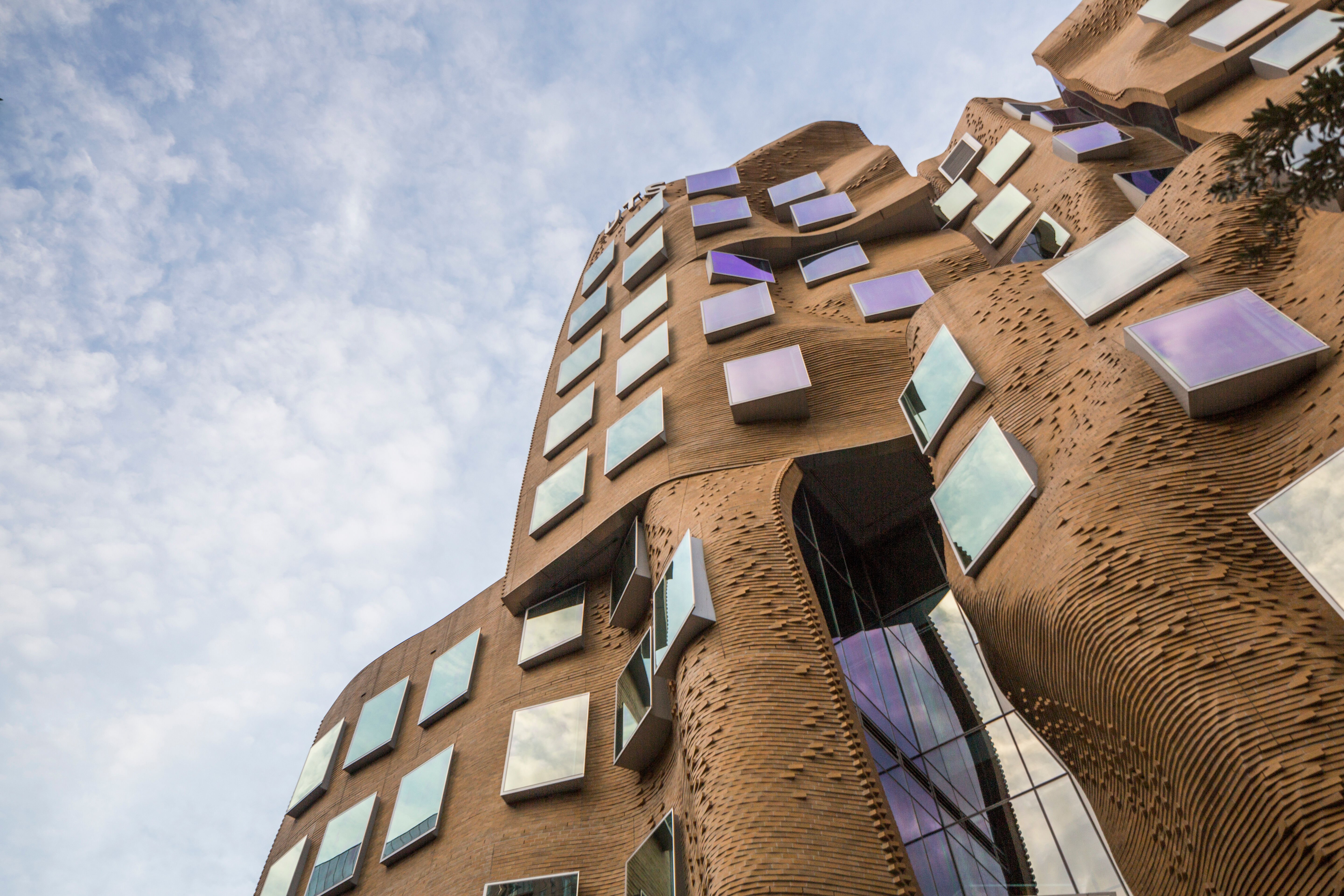
robots.txt (opens in a new tab)
3 rulesAll bots 1 allowed · 2 disallowed
- Allow
/ - Disallow
/episerver/* - Disallow
/utils/*
No matching rules.
User reviews (0)