Website profiles · Technology insights · Alternatives

alison.com

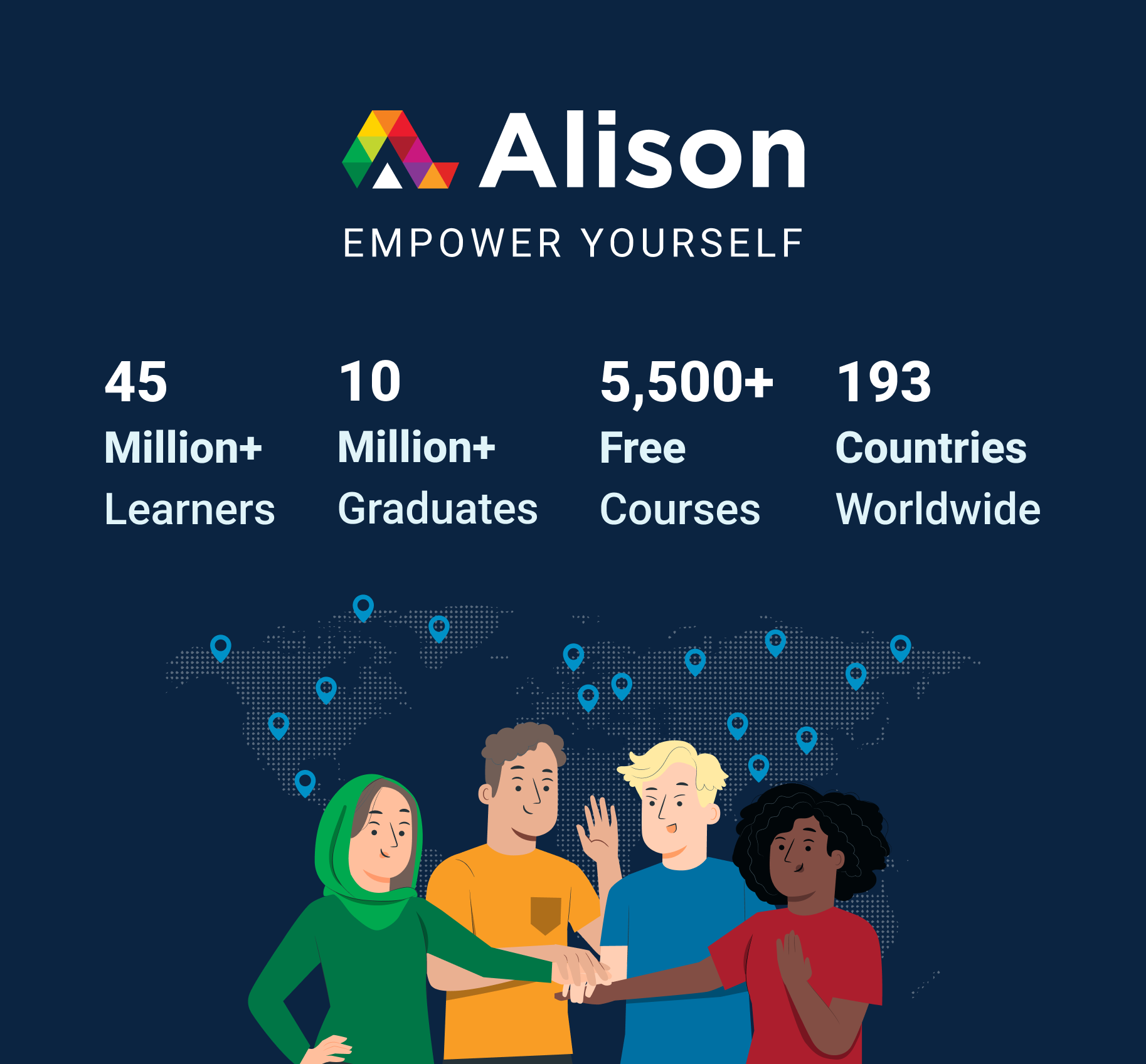
Free online courses with certificates. Join 15 million graduates and empower your career. Study, learn, certify, upskill with free online learning and training

No paid content found
Visit website
Profile views 10 Outbound visits 0 Normal
Alison Full homepage screenshot

At a glance

Category
Education & Learning
Language
English
Paid-content signal
No paid content foundObserved
Registered
1996
Hosting
CloudflareInferred
HTTPS certificate trusted
PassedObserved
Last updated

Website review

This review may include AI-generated content and is not individually verified. Domain, certificate and other facts come from the observed data on this page.

What is Alison?

Alison is a free online learning platform offering thousands of self-paced courses and certificate or diploma programs. It is best understood as a broad, low-cost way to build job skills or sample a subject, rather than a replacement for a university degree. The platform says it has more than 6,000 courses and 15 million graduates.

What you can study

Course categories on the site include Information Technology, Health, Language, Business, Management, Personal Development, Sales & Marketing, Engineering & Construction, and Teaching & Academics. Alison also lists career paths (for example, Finance, IT, and Marketing) and short English and psychometric tests covering proficiency, aptitude, personality, and mental wellbeing.

How it works

  • Courses are self-paced and delivered online, with an app for learning on the move and offline download.
  • On completion, you can earn a certificate or diploma. Alison also offers a Premium tier that removes ads and a way to purchase certificates as gifts.
  • There is a separate Alison for Business offering for teams.

The trade-off to understand

"Free" applies to taking the courses. Certificates and premium features involve payment, so check the current cost on the specific course page before you start if a certificate matters to you. Alison is not accredited like a formal academic institution in most cases, so treat its credentials as evidence of self-directed learning and skill-building rather than a formal qualification.

A practical next step

If you want to test the fit, pick one short course in a category relevant to your work, complete it, and see whether the format and certificate suit your goals before committing to a longer diploma. For a more formal route, compare with established providers such as Coursera or edX, which partner with universities.

How do I earn a free certificate or diploma on Alison?

You earn a certificate or diploma on Alison by completing a course or diploma program and then passing its assessment. The learning itself is free; the certificate is where the paid option usually comes in.

How the process typically works

  1. Create a free account on Alison.
  2. Choose a course or a diploma in a category such as Business, IT, Health, Teaching & Academics, or Personal Development.
  3. Work through the modules at your own pace, on the website or via the Alison app for offline study.
  4. Pass the end-of-course assessment. Courses are generally assessed module by module, and you need to meet the pass mark to finish.
  5. Decide whether you want the certificate. You can download a digital certificate or order a printed one, and this is normally where a fee applies. Alison also mentions a Premium option that removes ads.

Certificate vs. diploma

Certificate Diploma
Length Usually a single course, often a few hours A longer, multi-module program
Depth One focused topic or skill Broader subject coverage, closer to a short vocational program
Best for A quick skill, a CV line, trying a subject Building a fuller grounding for a career change or promotion

A practical example

Suppose you want to move into an admin or HR role. You could start with a short Business or Management certificate to test your interest, then commit to a diploma in the same area once you know you'll finish it. The certificate gives you something to show quickly; the diploma gives you more substance to discuss in interviews.

Before you start

  • Check the assessment format and pass mark on the course page, since these vary.
  • Confirm whether the free version includes the certificate or only the learning, and what the paid certificate costs.
  • If your employer needs proof for reimbursement or a training record, ask which certificate format they accept.

Next step

Browse the free course categories, pick one short course that matches a skill you already need at work, and finish it before enrolling in anything longer. Completing one small course tells you whether Alison's self-paced format suits you.

What is Alison Premium and what extra features does it include?

Alison Premium is the paid upgrade tier on Alison. The site lists it under "More Alison Products" alongside free options, and its stated purpose is to remove advertising from the learning experience. That is the core extra: an ad-free version of the platform rather than a separate catalogue of courses.

What that means in practice depends on how you study. Alison's free catalogue spans thousands of courses across IT, health, business, management, personal development, teaching and engineering, and many learners work through them on the app or in short sessions. If you are doing that regularly, removing ads mainly buys you fewer interruptions and less visual clutter — useful for long video lessons or when you are revising on a phone.

Two things worth separating, because they are often confused:

  • Premium is about the study experience (ads removed).
  • Certificates and diplomas are a separate matter. Alison's model is free learning with the option to purchase a certificate or diploma when you finish; the site also offers gift cards for buying a certificate for someone else. Premium does not appear in the page evidence as a bundle that includes certificates.

A reasonable decision test:

Your situation Sensible choice
Trying one course to see if the format suits you Free tier first
Studying several hours a week, ads distracting Consider Premium
You mainly need a credential for a CV or employer Budget for the certificate/diploma, not Premium
Enrolling a team Look at Alison for Business, which is described as free team upskilling

Next step: open a course you actually intend to finish, study a full lesson on the free tier, and note how often ads interrupt you. If the answer is "constantly," Premium is worth pricing out; if you barely notice them, put the money toward the certificate instead.

Can employers or teams use Alison to train their staff, and how does that work?

Yes. Alison has a dedicated business offering, Alison for Business, which is aimed at upskilling and empowering a team. The homepage presents team training as a first-class use case, alongside individual learning, so an employer does not have to treat Alison as a purely personal-learning site.

How it generally works for a team

  • A manager or L&D lead signs up the organisation rather than each employee creating an isolated account.
  • Staff then work through courses drawn from Alison's catalogue — the page lists thousands of free courses across categories such as IT, health, business, management, personal development, sales and marketing, engineering and construction, and teaching and academics.
  • Because the catalogue is broad, the same platform can serve very different teams: a retail manager building customer-service skills, a small clinic refreshing health-and-safety knowledge, or an office team learning spreadsheets and project basics.
  • Alison also offers a career-planning tool and a resumé builder, which are more useful to individuals than to a team dashboard but can support staff development conversations.
  • Certificates and diplomas are the visible completion markers, which makes them convenient for internal training records.

Practical trade-offs to weigh

Consideration What it means for an employer
Cost model The catalogue is free to study; Alison separately signals premium and purchase options, so assume some features or certificate formats may carry a cost.
Content depth Course lengths vary widely, so map specific courses to specific skill gaps rather than assigning the catalogue wholesale.
Structure Self-paced, app-friendly learning suits shift workers and dispersed teams better than fixed classroom schedules.
Recognition Alison certificates demonstrate completion, but check whether they satisfy any industry-specific compliance requirement your sector demands.

A concrete scenario

Suppose a 40-person logistics company wants to improve supervisors' communication and spreadsheet skills without a large training budget. The L&D lead could set up Alison for Business, shortlist a handful of management and IT courses, ask each supervisor to complete two in a quarter, and collect certificates as evidence. The main risk is drift: without a shortlist and a deadline, free self-paced courses are easy to postpone.

Next step

Before rolling it out, pick one team, choose two or three named courses that match a real gap, and run a four-week pilot. If completion and feedback are good, expand; if not, you have lost little.

How can I study Alison courses offline through the mobile app?

Alison's mobile app supports offline study: the site's own page lists "Download Courses – Learn Offline on the Alison App" as one of its products, and it encourages app use for learning on the move. So the practical route is to install the Alison app, sign in, and use its download option on individual courses.

A realistic workflow

  1. Create or sign in to your Alison account on the website, then install the app and log in with the same details so your enrolments and progress stay in sync.
  2. Open the course you want, enrol if you haven't already, and look for a download or offline icon on the course page.
  3. Download while you're on Wi-Fi, then test it in airplane mode before you travel, so you know the lessons really play without a connection.
  4. Complete the lessons offline; progress normally syncs back once you're online again. Check your dashboard after reconnecting to confirm it did.

What to plan around

Offline access is best for video-and-text lessons you work through over days, such as a long business or IT course during a commute. It's less useful for anything needing live interaction, and assessments may still require a connection — verify that on the specific course before relying on it.

Two practical cautions: downloads consume device storage, so clear finished courses, and some courses may not offer downloads at all. If offline study is essential, confirm the download option exists on your chosen course before committing time to it.

For a broader look at how Alison structures its free courses, certificates and diplomas, see Alison.

Are Alison certificates and diplomas recognized by employers or useful for my career?

Alison's certificates and diplomas are not accredited academic credentials, so their value depends on how you use them. They function best as evidence of self-directed learning and specific skill practice, not as replacements for a degree or a licensed professional qualification. In many hiring processes, a short course certificate will not satisfy a formal education requirement, but it can support your application when the role values demonstrated initiative or a particular tool or topic.

Where they help most

  • Career changers and entry-level candidates: A certificate in a concrete area such as IT support, bookkeeping basics, project management or customer service gives you something to discuss in an interview and shows you have started building relevant knowledge.
  • Existing professionals filling gaps: If your employer uses a particular framework or you need a refresher, a short course can document that you covered the material. Pair it with a work example to make it credible.
  • Freelancers and small business owners: A certificate can reassure clients in areas like digital marketing, social media or workplace safety, especially when you have limited formal credentials.
  • Team training: Alison for Business is aimed at organisations that want to assign courses across staff. In that setting, completion records matter more than external recognition, because the employer itself is the audience.

Where they carry little weight

  • Regulated professions such as nursing, law, accounting, engineering and teaching usually require qualifications from recognised accrediting bodies. A free online certificate will not meet those licensing requirements.
  • Roles that screen strictly on degrees or specific certifications will not treat an Alison diploma as equivalent.
  • Some employers view unaccredited online certificates neutrally or sceptically unless you can explain what you actually learned and produced.

How to judge whether a specific course is worth your time

Question Why it matters
Does the job posting name a specific skill I can practise here? Skills matter more than the certificate itself
Will I produce something I can show, such as a project, spreadsheet or portfolio piece? Evidence beats a PDF certificate
Is the subject regulated or licensed? If yes, look for an accredited provider instead
Can I describe the learning in one interview sentence? If you cannot, the certificate adds little

A practical next step: pick one course tied to a real task you want to do, finish it, and immediately apply it to a small project you can describe in an interview. If you want a broader comparison of free course platforms, look at Coursera for university-partnered courses, edX for similar academic partnerships, and The Open University for more structured study pathways. Treat Alison as one useful layer in a larger plan rather than the credential that opens doors on its own.

Related questions

More questions →
What Are Alison Courses and How Do They Work?

Alison is a free online learning platform offering over 6,000 courses across categories like IT, health, business, and language. You can study at your own pace, on desktop or through the Alison app, and earn a certificate or diploma after completing assessments. The courses are free to take; Alison also offers paid options such as Premium and certificate purchases. This guide explains how the courses are structured, how to pick one, and what to expect when you finish.

Types of Alison Courses

Alison's catalog is organized around a few main formats:

  • Certificate courses – shorter courses that end with a certificate on completion.
  • Diplomas – longer, multi-module programs that go deeper into a subject and also lead to a certificate or diploma credential.
  • Learning paths and career tracks – grouped courses aimed at a role or skill area, such as the categories listed under "Learn About Careers."
  • English & psychometric tests – standalone assessments including an English Proficiency Test, Aptitude Test, Workplace Personality Assessment, and Mental Health Assessment.

Course categories on the site include Information Technology (1,317 courses), Health (1,158), Language (319), Business (1,820), Management (1,130), Personal Development (1,374), Sales & Marketing (456), Engineering & Construction (863), and Teaching & Academics (1,694). Career areas range from Health Science and Finance to IT, Education and Training, and Marketing.

How to Choose a Course

Match the course to your goal rather than browsing randomly:

  1. Start from a goal – If you want a specific job skill, open the "Learn About Careers" section and pick the career area closest to your target (for example, Finance or Information Technology).
  2. Or start from a subject – If you're exploring, browse "Explore Course Categories" and open the category that interests you.
  3. Check the format – Decide whether a short certificate course or a longer diploma fits your time and depth needs.
  4. Use search and popular searches – The site surfaces popular searches like Information Systems, Human Resources, and Business Management, which can point you to in-demand topics.

A practical rule: if you need a quick, resume-friendly credential, a certificate course is usually enough. If you want broader grounding in a field, a diploma or a learning path is a better fit.

How Free Access and Paid Options Work

Alison describes its courses as free online courses with certificates, and the site states that you can "Train Your Entire Team. Start for Free." At the same time, the site references paid elements:

  • Alison Premium – listed under "More Alison Products" as "Get Alison Premium," which removes ads.
  • Certificate purchase – "Gift Cards" are described as a way to "Purchase a certificate for others," indicating certificates can involve payment.
  • Alison for Business – a separate product for upskilling teams.

So the accurate picture is: learning access is free, while certain conveniences and certificate-related options may be paid. Check the specific course page for what's included before you commit, since pricing details aren't listed on the homepage.

Completing a Course and Earning a Certificate

The general flow is consistent across courses:

  1. Sign up or log in – Create an account so your progress and certificates are saved.
  2. Work through the lessons – Courses are self-paced, so you set your own schedule.
  3. Take the assessments – Each course ends with an assessment; passing it is what unlocks the certificate or diploma.
  4. Study on the go – The Alison App is promoted for learning on the move, so you can continue lessons on mobile.
  5. Receive your credential – After passing, you earn a certificate or diploma you can use for career or resume purposes.

If you want to learn offline, the site offers a "Download Courses" option through the Alison App.

Using Your Certificate

Alison positions its credentials around career advancement and in-demand skills. After finishing:

  • Add the certificate or diploma to your resume or LinkedIn profile.
  • Use the Resumé Builder tool to create a professional resume.
  • Read Alison Graduate Profiles for examples of how others used their credentials.
  • If you're job-hunting, the Career Ready Plan helps you map out career goals.

Common Questions

Is Alison really free? The courses are free to take. Premium (ad removal) and certificate purchases are paid options.

How long does a course take? It varies by course type — certificate courses are shorter, diplomas are longer. Alison is self-paced, so you control the timeline.

Can I learn on my phone? Yes, through the Alison App, which also supports downloading courses for offline study.

Do employers recognize Alison certificates? Alison reports 15 million graduates and partners with "world leading experts," but recognition depends on the employer and field. Treat the certificate as one part of your skill story, alongside a portfolio or further study.

How Do Online Master's Courses in Europe Work?

Online master's courses in Europe are generally structured the same way as on-campus degrees: you complete a set number of credits (usually 60–120 ECTS), pass assessments, and receive the same degree title as campus students at that institution. What changes is the delivery mode. Programs range from fully online and asynchronous to hybrid formats that require short residencies, and recognition depends far more on the institution's accreditation than on whether you studied from home or on campus.

The main formats you'll encounter

Fully online, asynchronous

All coursework, lectures, and materials are delivered through a learning platform. You study on your own schedule within weekly or module deadlines. This is the most flexible option and the most common for working professionals.

Fully online, synchronous

You attend live seminars and lectures at fixed times, often via video conferencing. This mimics a campus timetable and works well for discussion-heavy subjects, but it requires you to be available in the institution's time zone.

Hybrid or blended

Most study is online, but you attend one or more short on-campus periods — typically a kick-off week, a lab-intensive block, or a final thesis defense. Some programs in fields like engineering, health, or business use this to cover practical components.

Online with optional campus tracks

A smaller number of programs let you switch between online and on-campus modules, or complete the degree online but attend electives in person.

Credits, ECTS, and what the degree is worth

European master's programs use the ECTS system:

Program type Typical credits Typical duration (full-time)
Taught master's (MA, MSc, LLM) 60–120 ECTS 1–2 years
MBA 60–90 ECTS 1–2 years
Research master's (MPhil, MRes) 120 ECTS 2 years

One ECTS credit represents roughly 25–30 hours of total student workload, including self-study. A 90-ECTS online master's therefore carries the same academic weight as a 90-ECTS on-campus master's at the same institution.

The key question is not "online or not" but who accredits the program. In most European countries, the national quality assurance agency or the state recognizes degrees from accredited institutions regardless of delivery mode. If you need the degree for a regulated profession, a visa, or a public-sector job, verify recognition with the relevant authority in your own country before enrolling — this is a general rule, not legal advice for your situation.

Admission requirements for international applicants

Requirements vary by country and institution, but online master's programs commonly ask for:

  • A completed bachelor's degree (or equivalent) in a relevant field.
  • A minimum grade or GPA, sometimes expressed as a class of degree.
  • English proficiency — IELTS, TOEFL, or an equivalent, unless your previous degree was taught in English. Some programs accept a waiver or an internal test.
  • A motivation letter or statement of purpose.
  • A CV, especially for MBA and executive programs.
  • Letters of recommendation (often 1–2).
  • Work experience for MBA and some professional master's degrees.
  • Specific prerequisites such as statistics, programming, or a portfolio for design and technical fields.

Typical application steps

  1. Shortlist 3–5 programs and check each one's accreditation and recognition in your country.
  2. Confirm the language of instruction and whether your proficiency test meets the threshold.
  3. Prepare documents early — transcripts, translations, and credential evaluations can take weeks.
  4. Check application deadlines; many European programs have rolling admissions, but some have fixed intakes.
  5. Submit the application and any application fee.
  6. If admitted, complete enrollment, pay any deposit, and set up your student account and platform access.

How exams, thesis work, and support are handled remotely

  • Assessment: written assignments, online proctored or open-book exams, group projects, presentations, and participation. Some programs use timed take-home exams instead of invigilated ones.
  • Thesis or capstone: usually supervised remotely via video calls and email, with milestones and a final written submission. Some institutions require an oral defense by video; a few require it on campus.
  • Support: academic advisors, library access (often digital), technical helpdesk, and career services. Quality varies widely, so ask current students or check program pages for what is actually provided.
  • Interaction: discussion forums, cohort groups, and live sessions. Asynchronous programs can feel isolating if you don't build in regular contact.

Practical considerations before you commit

  • Time zones: synchronous programs may schedule classes in the institution's local time. Check whether live sessions fall at workable hours for you.
  • Language of instruction: many European master's programs are taught in English, but not all. Confirm the language for lectures, exams, and thesis supervision.
  • Tuition structure: online programs are often priced per credit or per year, and may differ from on-campus rates. Public universities in some countries charge modest fees; private and executive programs cost more. Ask for a full breakdown of tuition, platform fees, and any residency costs.
  • Recognition and mobility: if you plan to work in a regulated profession or apply for a visa, confirm in advance that the specific degree is accepted where you intend to use it.
  • Time commitment: expect 15–20 hours per week for a full-time online master's, or roughly half that for part-time study.

Online vs. on-campus: a quick comparison

Factor Online On-campus
Flexibility High; study around work Fixed timetable
Networking Digital, sometimes weaker In-person, stronger
Cost Often lower tuition, no relocation Tuition plus living costs
Practical/lab work Limited or via short residencies Full access
Recognition Depends on accreditation, not mode Depends on accreditation
Campus experience Minimal Full

A simple decision checklist

  1. Is the program accredited and recognized in the country where you plan to use the degree?
  2. Does the format (async, sync, hybrid) fit your schedule and time zone?
  3. Are the language requirements realistic for you?
  4. Can you meet the prerequisites and admission documents?
  5. Does the total cost — tuition plus any residency travel — fit your budget?
  6. Does the program offer the support you'll need to finish a thesis remotely?

If you can answer yes to all six, an online master's from a European institution is a credible route to the same degree title as campus study. If any answer is uncertain, resolve that point before you apply rather than after you enroll.

Website Overview

An established domain and managed infrastructure suggest continuity of operations and may support dependable delivery, although neither guarantees service quality. Page metadata, canonical configuration and social previews work together to provide more consistent search and sharing presentation.

Domain and Registration

Registered in 1996, this domain has about 30 years of history. That suggests continuity, although ownership and purpose may have changed. Transfer-protection status is present, helping reduce the risk of unauthorized domain transfers. The registrar is GoDaddy.com, LLC, a widely used domain service provider. The domain uses the common .com extension, which is not an independent safety signal.

DNS and Email

Nameservers are provided by Cloudflare, indicating managed DNS hosting. MX records point to the Google Workspace email service. No CNAME was found; the observed records resolve directly to addresses. SPF and DMARC are configured. DKIM status is unknown. TXT records include verification markers for Google. Such markers may also remain after a service stops being used.

TLS and Certificates

The certificate uses an RSA 2048-bit public key, offering broad client compatibility. The server supplied a complete certificate chain. No organization name is present in the certificate; the available fields are consistent with domain validation. The certificate is valid for about 397 days in total, with 194 days remaining. The SAN includes a wildcard covering multiple hostnames at the same subdomain level. Shared private keys can increase the impact of a compromise.

HTTP and Browser Security

The response lacks these common security headers: Referrer-Policy, Permissions-Policy. CORS permits any origin to read this response. This is common for public resources; sensitive responses need narrower handling. No X-Powered-By header was found, reducing one common source of backend fingerprinting information. The cf-ray response header indicates a CDN or caching proxy in the delivery path. No obvious internal addresses or debug information were found in the headers.

Technology Stack Analysis

The public page identifies Google Tag Manager, Intercom, Cloudflare without precise versions, leaving fewer clues for version-specific scanning.

Search and Social Sharing

Twitter Card metadata is configured. The page declares 2 language or regional alternatives using hreflang. The title has 46 characters, within a common display range. A meta description is present, with 159 characters. The observed directives allow indexing and link following.

Hosting and Email

DNSCloudflare
HostingCloudflare
EmailGoogle Workspace
Approximate IP geolocation (inferred; a CDN or proxy may differ from the origin server) United States flagUnited States Inferred 2606:4700::6812:101c

Registration details

RDAP / WHOIS

RegistrarGoDaddy.com, LLC
Registered1996-04-18
Expires2027-04-19
Domain statusclient delete prohibited、client renew prohibited、client transfer prohibited、client update prohibited
Nameserverscortney.ns.cloudflare.com、karl.ns.cloudflare.com
DNSSECunsigned

DNS records

DNS

TypeNameValueTTLPriority
Aalison.com104.18.16.28273—
Aalison.com104.18.17.28273—
AAAAalison.com2606:4700::6812:101c147—
AAAAalison.com2606:4700::6812:111c147—
MXalison.comaspmx.l.google.com3001
MXalison.comalt1.aspmx.l.google.com3005
MXalison.comalt2.aspmx.l.google.com3005
MXalison.comalt3.aspmx.l.google.com30010
MXalison.comalt4.aspmx.l.google.com30010
NSalison.comcortney.ns.cloudflare.com86400—
NSalison.comkarl.ns.cloudflare.com86400—
TXTalison.comgoogle-site-verification=7CRHGaLUTgQmjypBIuIoXZBPNoT7bexijFNu4nACQps300—
TXTalison.comgoogle-site-verification=A7Huw5jviMv61FexCkTIaw6gQXVACYaWBa0BLC1cUl0300—
TXTalison.comgoogle-site-verification=FscGg9Go57I40Utb4x9cSoJ7Vwx3KO1VE2CbVD2M8l0300—
TXTalison.comgoogle-site-verification=IQOE8Nb89vheBE0ZUvRuvlV4AbBQI6N3zDWs5W-rjcQ300—
TXTalison.comgoogle-site-verification=N_n52U5wUjsAXELhKwMLVN1EtLs351OwfRx8ftdYGmQ300—
TXTalison.comgoogle-site-verification=QurDq8xAKPrjqKDLcryTiQbA9k4Enu_kgXPm7a8HF-k300—
TXTalison.comgoogle-site-verification=WCqYby8KgNjS7nB-tsJ8TyxUQq89NiyyhsuSbDWEbJk300—
TXTalison.comgoogle-site-verification=evDuEPbEnxCSvUQgEFn-EwVbbiLj970oyZM6Wo7JPm4300—
TXTalison.comv=spf1 include:_spf.google.com include:one.zoho.com ip4:3.208.157.156/32 ip4:52.44.16.140/32 ip4:50.19.196.167/32 ip4:3.216.97.65/32 ip4:52.4.199.233/32 ip4:34.201.207.162/32 ip4:34.198.87.239/32 ip4:52.86.108.113/32 ip4:34.205.210.11/32 -all300—
TXTalison.comyahoo-verification-key=m+VtC0V62u7UCn4MziCAFQxhCVuC8fQzv+qRrAIgi7U=300—
DMARCalison.com.hosted.dmarc-report.comv=DMARC1;p=reject;rua=mailto:[email protected];ruf=mailto:[email protected];fo=1;pct=100300—

TLS and certificates

TLS / SSL

AssessmentNormal configuration
Supported protocolsTLSv1.2、TLSv1.3
Negotiated protocolTLSv1.3
Certificate subject*.alison.com
IssuerGoDaddy.com, Inc.
Valid until2027-04-05T10:35 · Remaining when checked: 194 days
Verification detailsCertificate trust: Passed · Hostname match: Passed

HTTP response headers

HTTP

HeaderValue
content-typetext/html; charset=utf-8
cache-controlno-cache, private
servercloudflare
strict-transport-securitymax-age=31536000; preload
content-security-policyframe-ancestors 'self';
x-frame-optionsSAMEORIGIN
x-content-type-optionsnosniff
access-control-allow-origin*
set-cookieRedacted

Identified technologies

Google Tag ManagerIntercomCloudflare

Pages, Search and Sharing

Meta descriptionFree online courses with certificates. Join 15 million graduates and empower your career. Study, learn, certify, upskill with free online learning and training
Canonical URLhttps://alison.com
LanguageEnglish (default)
Twitter Cardsummary
ccbot 0 allowed · 29 disallowed
  • Disallow/topic/
  • Disallow/user/
  • Disallow/api/
  • Disallow/register/
  • Disallow/shop/
  • Disallow/es/tema/
  • Disallow/fr/sujet/
  • Disallow/it/argomento/
  • Disallow/pt-BR/tópico/
  • Disallow/landing/geosol
  • Disallow/es/cursos/*query=*
  • Disallow/es/cursos?query=*
  • Disallow/pt-BR/cursos/*query=*
  • Disallow/pt-BR/cursos?query=*
  • Disallow/fr/les-cours/*query=*
  • Disallow/fr/les-cours?query=*
  • Disallow/it/corsi/*query=*
  • Disallow/it/corsi?query=*
  • Disallow*/country-id-to-code/*
  • Disallow/blog/feed*
  • Disallow*/images/publishers/*
  • Disallow*/busca/*
  • Disallow*/matière/*
  • Disallow*/occupations/*
  • Disallow/*-old$
  • Disallow/certification/*
  • Disallow/certificación/*
  • Disallow/certificazione/*
  • Disallow*/resources
gptbot 0 allowed · 29 disallowed
  • Disallow/topic/
  • Disallow/user/
  • Disallow/api/
  • Disallow/register/
  • Disallow/shop/
  • Disallow/es/tema/
  • Disallow/fr/sujet/
  • Disallow/it/argomento/
  • Disallow/pt-BR/tópico/
  • Disallow/landing/geosol
  • Disallow/es/cursos/*query=*
  • Disallow/es/cursos?query=*
  • Disallow/pt-BR/cursos/*query=*
  • Disallow/pt-BR/cursos?query=*
  • Disallow/fr/les-cours/*query=*
  • Disallow/fr/les-cours?query=*
  • Disallow/it/corsi/*query=*
  • Disallow/it/corsi?query=*
  • Disallow*/country-id-to-code/*
  • Disallow/blog/feed*
  • Disallow*/images/publishers/*
  • Disallow*/busca/*
  • Disallow*/matière/*
  • Disallow*/occupations/*
  • Disallow/*-old$
  • Disallow/certification/*
  • Disallow/certificación/*
  • Disallow/certificazione/*
  • Disallow*/resources
claudebot 0 allowed · 29 disallowed
  • Disallow/topic/
  • Disallow/user/
  • Disallow/api/
  • Disallow/register/
  • Disallow/shop/
  • Disallow/es/tema/
  • Disallow/fr/sujet/
  • Disallow/it/argomento/
  • Disallow/pt-BR/tópico/
  • Disallow/landing/geosol
  • Disallow/es/cursos/*query=*
  • Disallow/es/cursos?query=*
  • Disallow/pt-BR/cursos/*query=*
  • Disallow/pt-BR/cursos?query=*
  • Disallow/fr/les-cours/*query=*
  • Disallow/fr/les-cours?query=*
  • Disallow/it/corsi/*query=*
  • Disallow/it/corsi?query=*
  • Disallow*/country-id-to-code/*
  • Disallow/blog/feed*
  • Disallow*/images/publishers/*
  • Disallow*/busca/*
  • Disallow*/matière/*
  • Disallow*/occupations/*
  • Disallow/*-old$
  • Disallow/certification/*
  • Disallow/certificación/*
  • Disallow/certificazione/*
  • Disallow*/resources
mistralai-user 0 allowed · 29 disallowed
  • Disallow/topic/
  • Disallow/user/
  • Disallow/api/
  • Disallow/register/
  • Disallow/shop/
  • Disallow/es/tema/
  • Disallow/fr/sujet/
  • Disallow/it/argomento/
  • Disallow/pt-BR/tópico/
  • Disallow/landing/geosol
  • Disallow/es/cursos/*query=*
  • Disallow/es/cursos?query=*
  • Disallow/pt-BR/cursos/*query=*
  • Disallow/pt-BR/cursos?query=*
  • Disallow/fr/les-cours/*query=*
  • Disallow/fr/les-cours?query=*
  • Disallow/it/corsi/*query=*
  • Disallow/it/corsi?query=*
  • Disallow*/country-id-to-code/*
  • Disallow/blog/feed*
  • Disallow*/images/publishers/*
  • Disallow*/busca/*
  • Disallow*/matière/*
  • Disallow*/occupations/*
  • Disallow/*-old$
  • Disallow/certification/*
  • Disallow/certificación/*
  • Disallow/certificazione/*
  • Disallow*/resources
google-extended 0 allowed · 29 disallowed
  • Disallow/topic/
  • Disallow/user/
  • Disallow/api/
  • Disallow/register/
  • Disallow/shop/
  • Disallow/es/tema/
  • Disallow/fr/sujet/
  • Disallow/it/argomento/
  • Disallow/pt-BR/tópico/
  • Disallow/landing/geosol
  • Disallow/es/cursos/*query=*
  • Disallow/es/cursos?query=*
  • Disallow/pt-BR/cursos/*query=*
  • Disallow/pt-BR/cursos?query=*
  • Disallow/fr/les-cours/*query=*
  • Disallow/fr/les-cours?query=*
  • Disallow/it/corsi/*query=*
  • Disallow/it/corsi?query=*
  • Disallow*/country-id-to-code/*
  • Disallow/blog/feed*
  • Disallow*/images/publishers/*
  • Disallow*/busca/*
  • Disallow*/matière/*
  • Disallow*/occupations/*
  • Disallow/*-old$
  • Disallow/certification/*
  • Disallow/certificación/*
  • Disallow/certificazione/*
  • Disallow*/resources
perplexitybot 0 allowed · 29 disallowed
  • Disallow/topic/
  • Disallow/user/
  • Disallow/api/
  • Disallow/register/
  • Disallow/shop/
  • Disallow/es/tema/
  • Disallow/fr/sujet/
  • Disallow/it/argomento/
  • Disallow/pt-BR/tópico/
  • Disallow/landing/geosol
  • Disallow/es/cursos/*query=*
  • Disallow/es/cursos?query=*
  • Disallow/pt-BR/cursos/*query=*
  • Disallow/pt-BR/cursos?query=*
  • Disallow/fr/les-cours/*query=*
  • Disallow/fr/les-cours?query=*
  • Disallow/it/corsi/*query=*
  • Disallow/it/corsi?query=*
  • Disallow*/country-id-to-code/*
  • Disallow/blog/feed*
  • Disallow*/images/publishers/*
  • Disallow*/busca/*
  • Disallow*/matière/*
  • Disallow*/occupations/*
  • Disallow/*-old$
  • Disallow/certification/*
  • Disallow/certificación/*
  • Disallow/certificazione/*
  • Disallow*/resources
All bots 0 allowed · 29 disallowed
  • Disallow/es/cursos/*query=*
  • Disallow/es/cursos?query=*
  • Disallow/pt-BR/cursos/*query=*
  • Disallow/pt-BR/cursos?query=*
  • Disallow/fr/les-cours/*query=*
  • Disallow/fr/les-cours?query=*
  • Disallow/it/corsi/*query=*
  • Disallow/it/corsi?query=*
  • Disallow/topic/*
  • Disallow/es/tema/*
  • Disallow/fr/sujet/*
  • Disallow/it/argomento/*
  • Disallow/pt-BR/tópico/*
  • Disallow*/country-id-to-code/*
  • Disallow/blog/feed*
  • Disallow/register/
  • Disallow*/api/*
  • Disallow*/images/publishers/*
  • Disallow*/busca/*
  • Disallow*/matière/*
  • Disallow*/occupations/*
  • Disallow/*-old$
  • Disallow/certification/*
  • Disallow/certificación/*
  • Disallow/certificazione/*
  • Disallow/user/*
  • Disallow*/resources
  • Disallow/shop/*
  • Disallow/landing/geosol

User reviews (0)

  • No reviews yet.