

 Visit website
 Updated: 2026-09-27 19:26
 Language: English (default)
 Access: Normal
 Profile views 2
  Outbound visits 1
 Website Review
What is Beyond All Reason?
Beyond All Reason (often shortened to BAR) is a free, epic-scale real-time strategy game for Windows and Linux. It is built around massive battles: the official description promises engagements with thousands of units across land, sea and air, with two main factions and around 400 unique units. If you have played classic large-scale RTS games and want that style with modern, fully simulated combat, this is the pitch.
H3 What makes it distinctive
- Scale and simulation: Every unit, projectile and explosion is simulated in real time, including projectile ballistics, explosion physics and terrain deformation.
- Terrain matters: Mountains block radar, and nuclear warfare can physically alter the battlefield, so maps play differently depending on their shape.
- Unit variety: Over 10 unit classes are mentioned, plus all-terrain Experimental units. The unit roster is organised into Armada, Cortex and Legion, with further categories such as bots, vehicles, aircraft, ships, hovercraft, factories, defences and buildings.
- Modes: Skirmishes, scenarios, co-op and multiplayer matches are all listed. There is also a ranked ladder, replays and a leaderboard.
H3 Who it suits It suits players who enjoy economy management, large-scale production and tactical adaptation more than small-scale micro. The description emphasises balancing exponentially growing resource income against producing war machines, and choosing between early precise strikes or building a thousand bombers. That is a game about strategic commitment and army composition.
H3 Practical next step If you are deciding whether to try it, start with the official site's Guides and Commands sections, then watch the trailer and browse gameplay screenshots to check whether the pace and visual scale match your taste. The game is in alpha, so expect ongoing balance changes and development rather than a finished, static release. You can explore it at Beyond All Reason.
Is Beyond All Reason free to play and what platforms does it support?
Yes — Beyond All Reason is free to play. The site presents it as a full real-time strategy game you can download and play at no cost, with no purchase step described for getting into matches.
It supports Windows and Linux. There is no indication of macOS, console, or mobile versions on the page, so if you are on a Mac or a phone, this is not currently an option for you.
What "free" gets you
The free download is the whole game as described on the site: skirmishes, scenarios, co-op, and multiplayer, plus the full unit roster — two main factions with around 400 unique units total, along with additional forces like Legion, Alien Raptors, and Scavengers. There is no paid tier, subscription, or expansion mentioned as gating content.
Practical considerations before you commit
- Platform fit: Windows or Linux only. Linux players are explicitly supported rather than left to workarounds.
- Hardware expectations: The game simulates every unit, projectile, and explosion in real time, sometimes across thousands of units, and includes terrain deformation. That scale means performance depends heavily on your CPU, so a modest laptop may struggle in large battles even though the game itself costs nothing.
- Where to get it: Download from the official site at Beyond All Reason rather than a third-party mirror.
- Learning curve: The unit classes, counters, and economy are deep. New players typically benefit from the guides and command references on the site before jumping into multiplayer.
Next step
If you are on Windows or Linux, download it, play a skirmish against bots first to get a feel for the economy and unit roles, then try co-op or multiplayer. If you are on macOS, check whether the project's roadmap mentions a Mac build before planning around it.
How does Beyond All Reason differ from other real-time strategy games like Total Annihilation?
Beyond All Reason sits in the "large-scale, fully simulated" branch of real-time strategy rather than the base-building-and-micro tradition. Its own framing is that every unit, projectile and explosion is simulated in real time, with ballistic arcs, explosion physics and terrain deformation, and battles can involve thousands of units across land, sea and air.
The clearest contrast with Total Annihilation is lineage rather than opposition. BAR reads as a spiritual successor to that style of game: mass economies, streaming unit production, and combat decided by positioning and army composition more than by clicking speed. Where it diverges is in what the simulation is asked to carry. Terrain shape determines which strategies and units work, radar cannot see through mountains, and nuclear weapons physically alter the map. Total Annihilation had terrain and line-of-sight, but not this degree of persistent environmental change.
Where it differs in practice
- Scale of simulation, not just unit count. Projectiles are tracked individually, so misses land somewhere and can still matter. That rewards artillery, screening units and map reading over pure stats.
- Terrain as a strategic actor. A ridge is a radar wall, not just a movement obstacle. Players who scout elevation and chokepoints gain information advantages that a flat-map RTS cannot offer.
- Two core factions plus a third. The site lists Armada and Cortex as the main factions, with Legion as an additional set, alongside neutral threats like Alien Raptors and Scavengers. Total Annihilation's Arm and Core map roughly onto the first two, so veterans will recognise the rhythm.
- Unit roles over unit spam. The design claim is that every unit has a role, with over 10 unit classes including all-terrain Experimental units. In practice this means mixing bots, vehicles, aircraft, ships, hovercraft, factories and defences rather than finding one dominant unit.
- Modes beyond ranked 1v1. Skirmishes, scenarios, co-op and multiplayer are all offered, which suits players who want the scale without the ladder pressure.
A concrete comparison
| Aspect | Beyond All Reason | Total Annihilation |
|---|---|---|
| Simulation focus | Individually simulated projectiles, explosion physics, terrain deformation | Projectile combat with fixed terrain |
| Terrain effect | Blocks radar, shapes viable strategies, changes under nuclear fire | Mostly movement and line-of-sight |
| Faction structure | Armada, Cortex, plus Legion and neutral AI factions | Arm and Core |
| Typical match feel | Large armies, economy growth, positional play | Similar, with less environmental interaction |
| Access | Free to play, Windows and Linux | Commercial release from 1997 |
Who should try it
If you played Total Annihilation or its successors and want that economic, big-army feeling with more environmental consequence, BAR is the direct answer. If you prefer small squad tactics, hero units or short matches, the scale here works against you: matches reward patience in building income and production before the fighting peaks.
A useful next step is to open the Commands and Units sections on Beyond All Reason and pick one faction's counter chart before your first multiplayer match. Knowing which unit answers which class matters more here than raw build speed, because the terrain and simulation will punish a composition that only looks good on paper.
What are the two factions and unit types available in Beyond All Reason?
Beyond All Reason is built around two main playable factions, Armada and Cortex, with a third playable option, Legion, listed alongside them in the game's unit overview. The site also groups units by type: Bots, Vehicles, Aircraft, Ships, Hovercraft, Factories, Defenses, and Buildings. Beyond those, there are neutral or special categories such as Alien Raptors and Scavengers.
H3 What each faction and unit type means in practice
- Armada vs. Cortex: These are the two core factions. Each has its own versions of the same broad unit categories, so choosing a faction changes your roster and available counters rather than limiting you to a single playstyle.
- Legion: Presented as an additional faction option. If you want a different unit lineup after learning the core two, this is the next place to look.
- Bots: Generally the more agile, cheaper-looking option for early map control and raiding.
- Vehicles: Typically heavier ground units for sustained pushes and holding territory.
- Aircraft: For scouting, air superiority, and bombing. The site describes the option of building "a thousand bombers" as a legitimate strategy.
- Ships and Hovercraft: Water and amphibious units. Hovercraft let you cross between land and water without switching production entirely.
- Factories, Defenses, Buildings: Your economy and production backbone. The site frames victory as a balance between growing resource income and producing war machines.
- Alien Raptors and Scavengers: Special hostile or neutral categories rather than standard player factions.
H3 How to choose Start with Armada or Cortex if you are new, because guides and counters are built around those two. Pick Legion if you already know the core units and want a different roster. For unit types, let the map decide: mountains block radar and terrain can be deformed by nuclear warfare, so ground pushes, air raids, and naval or hover routes all have distinct roles.
A useful next step is to open the Units and Compare Units sections on Beyond All Reason and read the Armada and Cortex overviews side by side. If you prefer video, the site's Gameplay and Watch Trailer links show how the scale actually plays out before you commit to a faction.
How can I learn to play Beyond All Reason and what guides are available?
Beyond All Reason is a free, large-scale real-time strategy game where you command armies of thousands of simulated units across land, sea, and air. The site points new players toward a "Learn how to Play" path, a Commands overview, and a Guides section, alongside unit reference pages for each faction.
Where to start
- Play for Free / Learn how to Play: The homepage's primary call to action. Treat this as your first stop before diving into matches.
- Commands Overview: A reference for the game's control scheme and economy management — useful because BAR's resource growth and production balancing are central to play.
- Guides: A dedicated section for written walkthroughs and strategy explanations.
- FAQ: Answers common setup and gameplay questions.
- Units / Compare Units: Faction-by-faction breakdowns (Armada, Cortex, Legion, plus Alien Raptors and Scavengers) with counters and unit classes, so you can look up what a specific unit does and what beats it.
A practical learning path
- Read the Commands overview so you understand resource income, build queues, and camera/selection controls.
- Pick one faction and skim its unit overview rather than memorizing all 400 units.
- Play a skirmish or scenario against bots to practice economy growth without multiplayer pressure.
- Watch replays from the Replays section — seeing how experienced players expand and tech up is often faster than reading.
- Move to co-op or multiplayer once you can sustain production and respond to attacks.
Using the reference material well
The site emphasizes that terrain shapes strategy: radar cannot penetrate mountains, and nuclear warfare can deform terrain. That makes map knowledge as important as unit knowledge. When you look up a unit, check its counters page too — the game is designed so every unit has a role, and mixing classes is how you build effective compositions.
Other resources
The BAR community maintains extensive external documentation and video tutorials. For general RTS fundamentals that transfer to BAR — hotkey discipline, scouting, map control — broader guides are useful, but always check faction and balance details against the official unit pages, since they change between versions.
A good next step: open the Guides section and the Commands overview together, then play one skirmish against bots while keeping the unit comparison pages open in another tab.
What is the current development status and roadmap for Beyond All Reason?
Beyond All Reason is in an open alpha, and the site labels it as such while presenting the game as fully playable now. The current build supports skirmishes, scenarios, co-op and multiplayer, with two main factions plus additional unit sets, and it runs on Windows and Linux. Development is active rather than frozen: the site maintains a devlog, balance changes, a roadmap and a Steam roadmap, and it lists team and jobs pages, which together signal ongoing work toward a broader release.
H3 What the roadmap signals
- Alpha status: the game is playable, but expect balance shifts, new content and occasional rough edges.
- Steam roadmap: a separate track for a future Steam release, useful if you prefer store-managed updates.
- Devlog and balance changes: the primary places to see what is actually being worked on.
- Team and jobs: hiring activity is a practical indicator of how much development capacity exists.
H3 Practical next step If you want to judge current progress yourself, read the latest devlog and balance changes before playing, then check the roadmap for what is explicitly planned versus already shipped. For community discussion and news beyond the official site, Beyond All Reason is the authoritative starting point; general RTS communities can add context but may lag official updates.
H3 Decision criterion Choose this if you are comfortable with an evolving alpha and want large-scale, simulation-heavy RTS battles now. Wait if you need a finished, stable release with a complete single-player campaign and fixed balance.
 Hosting and Email
 Hosting
 Cloudflare
 Location
 United States
 Pages, Search and Sharing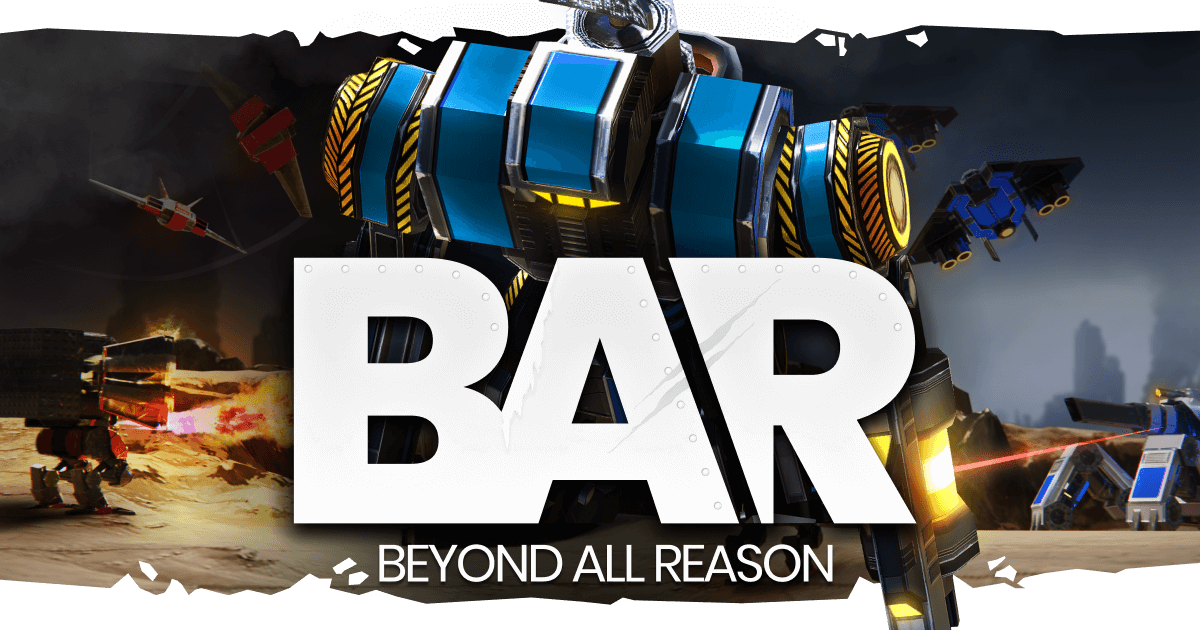



 All bots

 Registration details

 Identified technologies
User reviews (0)