Website profiles · Technology insights · Alternatives

borderscollege.ac.uk No paid content found

Categories: Education & Learning

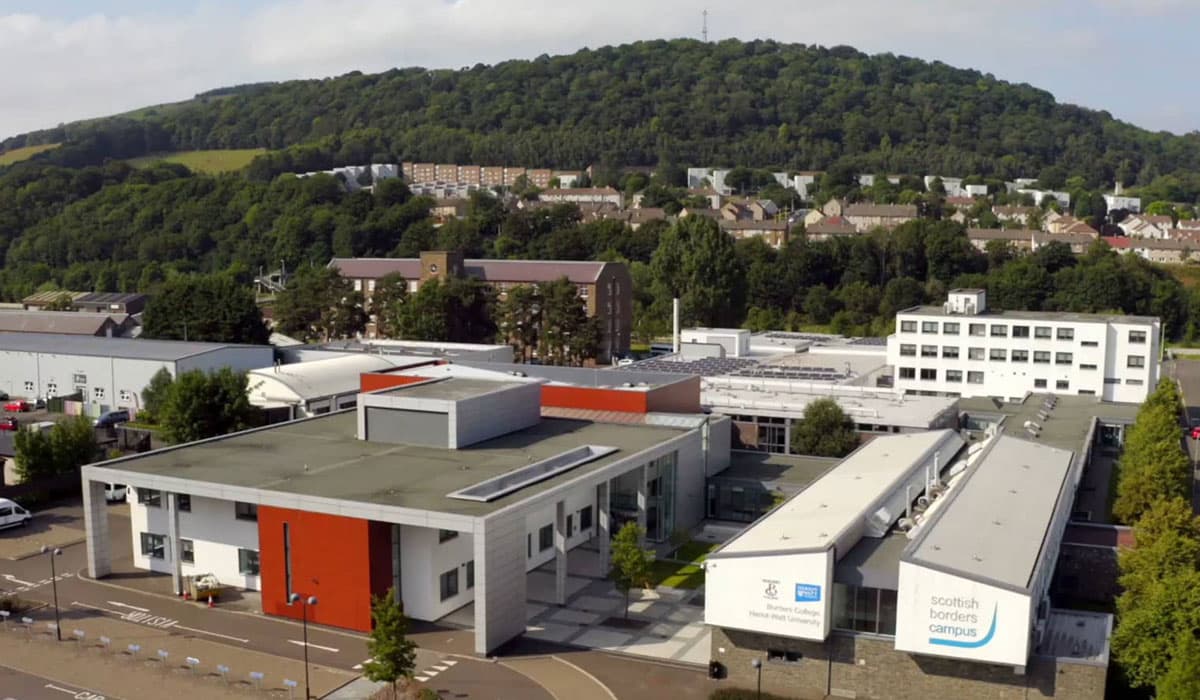
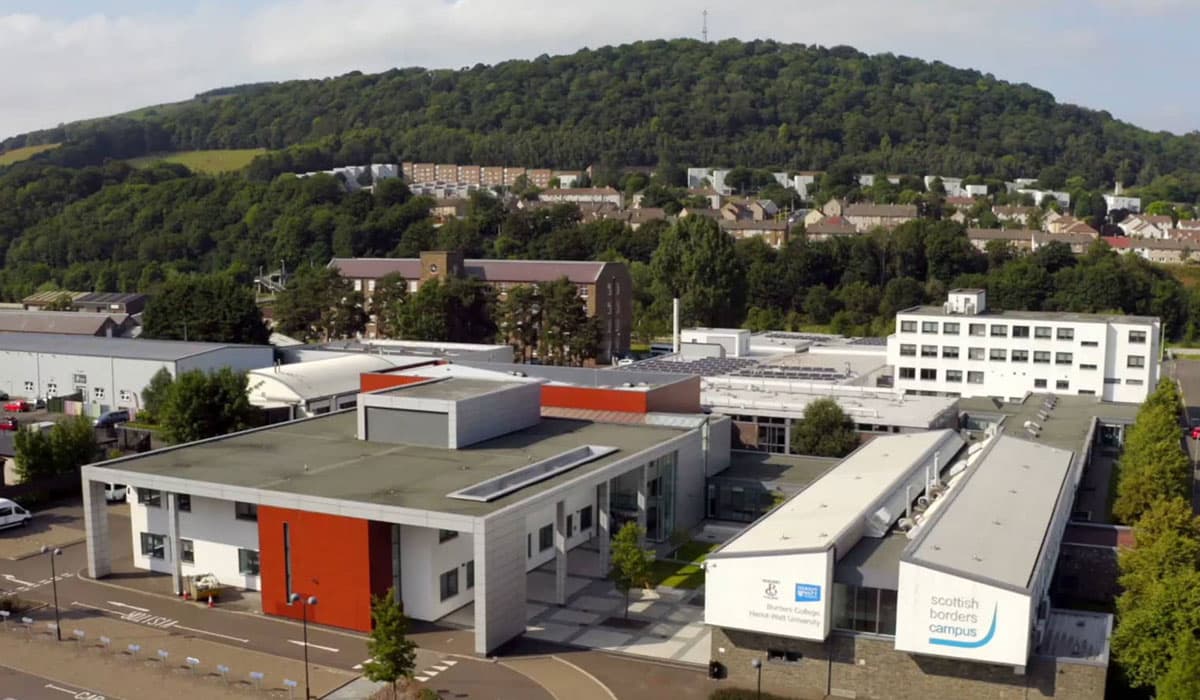
Borders College offers a huge range of education and training courses across its campuses in the Scottish Borders and beyond.

Visit website

Updated: 2026-09-21 20:11 Language: English (default) Access: Normal

Profile views 0 Outbound visits 0
Borders College Full homepage screenshot
Editorial Review

Website Review

What is Borders College?

Borders College is a further and higher education institution serving the Scottish Borders and surrounding areas. It provides a broad range of education and training courses, delivered across multiple campuses, with Galashiels as its main base.

Who it serves

  • School leavers looking for vocational or technical pathways.
  • Adults returning to education, changing careers or upskilling.
  • Employers and employees seeking workplace training and development.
  • Learners interested in areas such as green skills and other emerging industries.

What it offers

The college's course portfolio typically spans vocational qualifications, apprenticeships, access programmes and higher education-level study, alongside shorter training courses. Delivery is spread across several sites, which may suit learners who prefer to study closer to home rather than travel to a larger city.

Practical considerations

As a regional college, it is well suited to people who want local study options and a route into employment or further study without relocating. The trade-off is that course choice at any one campus may be narrower than at a large urban institution, and some subjects may only be available at specific locations. Some training may be offered free or funded, though eligibility rules apply. Prospective students should check the current course list and entry requirements directly.

What courses and training programs does Borders College offer?

Borders College provides further and higher education, vocational training and short courses across the Scottish Borders. Its curriculum is organised around subject areas rather than a single course list, so prospective students typically browse by faculty, campus or level of study.

Main subject areas include:

  • Business, administration and computing
  • Care, health and early years
  • Engineering, construction and motor vehicle
  • Hairdressing, beauty and hospitality
  • Rural skills, animal care and land-based studies
  • Access, foundation and return-to-learning programmes
  • Green skills and sustainability-related training

Levels and formats range from introductory and access courses to NC, HNC and HND qualifications, plus apprenticeships, professional development and employer-focused training. Some provision is delivered at campuses such as Galashiels, with other learning centres and outreach across the region; online or flexible delivery may be available for particular programmes.

Who it suits: school leavers, adults changing career, people returning to study, and employers seeking staff training. Tuition is often funded for eligible Scottish students, and some short courses may be free, but individual course fees and entry requirements vary, so check each course page.

For the definitive, current list, use the college's own course search at Borders College.

Where are Borders College campuses located?

Borders College is a further and higher education provider based in the Scottish Borders, with its main campus in Galashiels. The college describes itself as offering education and training across campuses in the Scottish Borders and beyond, so provision is not concentrated in a single town.

Typical locations associated with the college include:

  • Galashiels – the principal campus and administrative base, serving the central Borders.
  • Other Scottish Borders sites – additional campuses and learning centres support students who cannot easily travel to Galashiels.
  • Community and outreach venues – some courses and training may be delivered in partner locations or workplaces across the region.

The college's spread reflects the rural geography of the Borders, where travel between towns can be time-consuming. Prospective students are usually best served by checking the specific campus listed for each course, since not every subject is taught at every site.

For exact addresses, directions and campus facilities, the official website is the most reliable source: Borders College. It is suited to school leavers, adult learners, apprentices and employers seeking training, with course pages indicating where each programme is delivered.

Are there free training opportunities or funded courses at Borders College?

Borders College indicates that free training and funded course options are part of its provision, with "free training" and "green skills" appearing among its own keywords. The college serves the Scottish Borders from campuses including Galashiels, offering education and training across a wide range of subjects.

Who typically benefits

  • Adults returning to study or changing careers, who may find funded places reduce the cost barrier.
  • School leavers and young people exploring vocational routes.
  • Employees and employers in the region seeking short training, including green-skills areas.

What to check

Funding in Scotland often depends on eligibility criteria such as age, residency, prior qualifications or employment status, and specific programmes can change between academic years. A course described as free or funded may cover tuition only, with materials, travel or accommodation still falling to the student.

The practical step is to browse current course listings on the college's own site and confirm funding status for the particular course, then ask student services or admissions directly about eligibility. Part-time, evening and employer-linked training may have different funding rules from full-time study, so the same college can offer a mix of paid and fully funded options.

What green skills or sustainability-related courses does Borders College provide?

Borders College highlights green skills as part of its course portfolio, aimed at supporting the transition to a low-carbon economy in the Scottish Borders. These courses typically sit within vocational areas such as construction, engineering, agriculture, land-based studies and energy, where sustainability knowledge is increasingly part of standard training.

Prospective students may find modules or pathways covering topics like renewable energy technologies, energy efficiency in buildings, sustainable construction methods, environmental awareness, and land or countryside management. Some provision is likely to be short, employer-focused training rather than full-time academic programmes, which can suit people already working in trades or land-based roles who need to update their skills.

The main audiences are school leavers exploring green careers, apprentices and adult learners retraining, and local employers seeking to meet environmental targets or legislation. A practical trade-off is that green skills training is often embedded within broader qualifications, so learners wanting a clearly labelled "sustainability" course may need to check individual programme content rather than rely on titles alone.

Because course availability changes with funding and employer demand, the most reliable approach is to browse the college's current course listings or contact its admissions team directly for the latest green skills options across its campuses, including Galashiels.

How can I apply or enroll at Borders College?

Borders College serves the Scottish Borders through campuses including Galashiels, offering further and higher education, vocational training and short courses. If you want to apply or enrol, the practical route depends on the type of course and your circumstances.

Typical application paths

  • Full-time courses: Applications are usually made online through the college's own application system, often with a personal statement and details of prior qualifications.
  • Part-time, evening or short courses: These may have a simpler booking process, sometimes handled directly by the relevant department or via an online form.
  • Apprenticeships and work-based training: Applications may go through the college or an employer, depending on the programme.
  • Free training and green skills courses: Funded or free provision may have specific eligibility rules, so it is worth checking the entry requirements before applying.

What to prepare

You will typically need proof of identity, previous qualifications or experience, and sometimes a reference. Some courses include an interview, audition or skills assessment. Applicants who are unsure about the right level may be able to speak to an adviser first.

For exact steps, deadlines and any funding questions, use the official application pages at Borders College.

Related questions

More questions →
How Do Online Master's Courses in Europe Work?

Online master's courses in Europe are generally structured the same way as on-campus degrees: you complete a set number of credits (usually 60–120 ECTS), pass assessments, and receive the same degree title as campus students at that institution. What changes is the delivery mode. Programs range from fully online and asynchronous to hybrid formats that require short residencies, and recognition depends far more on the institution's accreditation than on whether you studied from home or on campus.

The main formats you'll encounter

Fully online, asynchronous

All coursework, lectures, and materials are delivered through a learning platform. You study on your own schedule within weekly or module deadlines. This is the most flexible option and the most common for working professionals.

Fully online, synchronous

You attend live seminars and lectures at fixed times, often via video conferencing. This mimics a campus timetable and works well for discussion-heavy subjects, but it requires you to be available in the institution's time zone.

Hybrid or blended

Most study is online, but you attend one or more short on-campus periods — typically a kick-off week, a lab-intensive block, or a final thesis defense. Some programs in fields like engineering, health, or business use this to cover practical components.

Online with optional campus tracks

A smaller number of programs let you switch between online and on-campus modules, or complete the degree online but attend electives in person.

Credits, ECTS, and what the degree is worth

European master's programs use the ECTS system:

Program type Typical credits Typical duration (full-time)
Taught master's (MA, MSc, LLM) 60–120 ECTS 1–2 years
MBA 60–90 ECTS 1–2 years
Research master's (MPhil, MRes) 120 ECTS 2 years

One ECTS credit represents roughly 25–30 hours of total student workload, including self-study. A 90-ECTS online master's therefore carries the same academic weight as a 90-ECTS on-campus master's at the same institution.

The key question is not "online or not" but who accredits the program. In most European countries, the national quality assurance agency or the state recognizes degrees from accredited institutions regardless of delivery mode. If you need the degree for a regulated profession, a visa, or a public-sector job, verify recognition with the relevant authority in your own country before enrolling — this is a general rule, not legal advice for your situation.

Admission requirements for international applicants

Requirements vary by country and institution, but online master's programs commonly ask for:

  • A completed bachelor's degree (or equivalent) in a relevant field.
  • A minimum grade or GPA, sometimes expressed as a class of degree.
  • English proficiency — IELTS, TOEFL, or an equivalent, unless your previous degree was taught in English. Some programs accept a waiver or an internal test.
  • A motivation letter or statement of purpose.
  • A CV, especially for MBA and executive programs.
  • Letters of recommendation (often 1–2).
  • Work experience for MBA and some professional master's degrees.
  • Specific prerequisites such as statistics, programming, or a portfolio for design and technical fields.

Typical application steps

  1. Shortlist 3–5 programs and check each one's accreditation and recognition in your country.
  2. Confirm the language of instruction and whether your proficiency test meets the threshold.
  3. Prepare documents early — transcripts, translations, and credential evaluations can take weeks.
  4. Check application deadlines; many European programs have rolling admissions, but some have fixed intakes.
  5. Submit the application and any application fee.
  6. If admitted, complete enrollment, pay any deposit, and set up your student account and platform access.

How exams, thesis work, and support are handled remotely

  • Assessment: written assignments, online proctored or open-book exams, group projects, presentations, and participation. Some programs use timed take-home exams instead of invigilated ones.
  • Thesis or capstone: usually supervised remotely via video calls and email, with milestones and a final written submission. Some institutions require an oral defense by video; a few require it on campus.
  • Support: academic advisors, library access (often digital), technical helpdesk, and career services. Quality varies widely, so ask current students or check program pages for what is actually provided.
  • Interaction: discussion forums, cohort groups, and live sessions. Asynchronous programs can feel isolating if you don't build in regular contact.

Practical considerations before you commit

  • Time zones: synchronous programs may schedule classes in the institution's local time. Check whether live sessions fall at workable hours for you.
  • Language of instruction: many European master's programs are taught in English, but not all. Confirm the language for lectures, exams, and thesis supervision.
  • Tuition structure: online programs are often priced per credit or per year, and may differ from on-campus rates. Public universities in some countries charge modest fees; private and executive programs cost more. Ask for a full breakdown of tuition, platform fees, and any residency costs.
  • Recognition and mobility: if you plan to work in a regulated profession or apply for a visa, confirm in advance that the specific degree is accepted where you intend to use it.
  • Time commitment: expect 15–20 hours per week for a full-time online master's, or roughly half that for part-time study.

Online vs. on-campus: a quick comparison

Factor Online On-campus
Flexibility High; study around work Fixed timetable
Networking Digital, sometimes weaker In-person, stronger
Cost Often lower tuition, no relocation Tuition plus living costs
Practical/lab work Limited or via short residencies Full access
Recognition Depends on accreditation, not mode Depends on accreditation
Campus experience Minimal Full

A simple decision checklist

  1. Is the program accredited and recognized in the country where you plan to use the degree?
  2. Does the format (async, sync, hybrid) fit your schedule and time zone?
  3. Are the language requirements realistic for you?
  4. Can you meet the prerequisites and admission documents?
  5. Does the total cost — tuition plus any residency travel — fit your budget?
  6. Does the program offer the support you'll need to finish a thesis remotely?

If you can answer yes to all six, an online master's from a European institution is a credible route to the same degree title as campus study. If any answer is uncertain, resolve that point before you apply rather than after you enroll.

What Does It Mean to Be an IB Student? Roles and Expectations Across the Four Programmes

Being an IB student means more than attending a school that offers an International Baccalaureate programme. It means learning through a specific framework that asks you to think critically, communicate clearly, and take responsibility for your own progress. The IB's four programmes — the Primary Years Programme (PYP), Middle Years Programme (MYP), Diploma Programme (DP), and Career-related Programme (CP) — share a common philosophy but place different demands on students at each stage.

This article explains what the IB expects from students, how responsibilities change across the four programmes, and how families can prepare for the transition.

The foundation: the IB learner profile

Across all four programmes, the IB describes ten attributes it hopes students develop. These are usually called the learner profile. Students are encouraged to be:

  • Inquirers — curious and skilled at asking good questions
  • Knowledgeable — exploring ideas across a range of subjects
  • Thinkers — using critical and creative thinking
  • Communicators — expressing ideas confidently in more than one language
  • Principled — acting with integrity and fairness
  • Open-minded — appreciating other perspectives and cultures
  • Caring — showing empathy and respect
  • Risk-takers — approaching uncertainty with courage
  • Balanced — attending to intellectual, physical, and emotional well-being
  • Reflective — assessing their own learning and experience

These attributes are not a checklist to complete. They describe habits and dispositions that teachers look for and that students are expected to demonstrate over time. In practice, they shape how lessons are taught, how projects are assessed, and how students are asked to behave toward one another.

How student responsibilities differ across the four programmes

Each programme has its own structure, age range, and expectations. The table below summarises the main differences.

Programme Typical age range Core expectation of the student Main assessment emphasis
PYP 3–12 Active participation, curiosity, and reflection on learning Teacher observation, portfolios, student-led conferences
MYP 11–16 Connecting subjects to real-world contexts; developing research and self-management skills Criterion-based assessment, personal project, interdisciplinary units
DP 16–19 Independent academic work across six subject groups plus core requirements External exams, coursework, extended essay, theory of knowledge
CP 16–19 Combining academic study with career-related learning and a reflective project Career-related study, DP courses, personal and professional skills

PYP: building the habits of inquiry

In the PYP, the student's main job is to engage. Children are expected to ask questions, work with others, and reflect on what they have learned. The emphasis is on developing curiosity and basic research skills rather than on formal examinations. Students often take part in units of inquiry that connect subjects, and they may lead conferences where they explain their learning to parents.

MYP: making connections and managing yourself

The MYP asks students to go further. They study eight subject groups and are expected to connect what they learn to the world around them. A key responsibility is the personal project, an independent piece of work that students plan, research, and complete over an extended period. This is often the first time students must manage a long-term deadline largely on their own. Service learning also becomes more structured, and students are encouraged to reflect on their role in the community.

DP: depth, independence, and the core

The DP is the most academically demanding of the four programmes. Students typically study six subjects, three at higher level and three at standard level, and complete three core requirements:

  • Theory of knowledge (TOK) — a course that asks how we know what we claim to know
  • The extended essay — an independent research paper of up to 4,000 words
  • Creativity, activity, service (CAS) — a programme of ongoing experiences outside academic study

DP students are expected to manage a heavy workload, meet external examination deadlines, and produce original academic work. Independent study is not optional; it is central to the programme.

CP: academic study with a career focus

The CP is designed for students who want to combine academic courses with career-related learning. Students take at least two DP courses alongside a career-related study programme, and complete a reflective project. They also develop personal and professional skills. The CP suits students who learn best when their studies connect directly to a practical field, while still requiring the critical thinking and communication skills common to all IB programmes.

How assessment and independence change as students progress

One of the clearest patterns across the IB is the shift from teacher-led assessment toward student-led responsibility.

In the PYP, teachers observe and document learning, and students are guided through reflection. In the MYP, students are assessed against published criteria and must increasingly manage their own projects. By the DP and CP, students are preparing for external examinations and independent research, and they are expected to organise their time, seek help when needed, and meet deadlines without constant reminders.

This progression is deliberate. The IB wants students to leave as self-directed learners who can think for themselves.

Common misconceptions about being an IB student

Several myths circulate about the IB. Here are a few clarifications.

  • "IB students must be geniuses." The programmes are demanding, but they are designed for a broad range of students. Effort, curiosity, and organisation matter as much as raw ability.
  • "The IB is only about exams." Assessment includes projects, portfolios, oral work, and service. The DP has external exams, but the core requirements are equally important.
  • "Students must be fluent in a second language before starting." Language learning is part of the IB, and support is usually available. Requirements vary by programme and school.
  • "IB students have no free time." The workload is real, but the learner profile includes balance. Schools generally encourage students to manage their time and well-being.
  • "All IB schools are the same." Schools implement the programmes in different ways, and the range of subjects and support offered can vary.

Preparing for the transition into an IB programme

If you are a student or a parent preparing to enter an IB programme, the following steps can help.

  1. Read the programme guide for your specific programme. The IB publishes curriculum and assessment information for PYP, MYP, DP, and CP. Understanding the structure reduces surprises.
  2. Talk to current students and teachers. Ask about workload, deadlines, and what support is available.
  3. Build organisational habits early. A simple planner, weekly review, and clear study space make a difference, especially in the MYP and DP.
  4. Practise reflection. The IB asks students to think about their own learning. Keeping a short journal or notes on what worked and what did not is useful preparation.
  5. Ask about language and subject choices. Requirements differ by programme and school, so confirm the details with the school directly.
  6. Plan for the core requirements. In the DP, the extended essay, TOK, and CAS take time. Starting early and setting interim deadlines helps.
  7. Use school support. Coordinators, counsellors, and teachers are there to help. Asking for guidance is part of being a successful IB student.

A practical summary

Being an IB student means developing the learner profile attributes while meeting the specific demands of your programme. In the PYP, that means curiosity and participation. In the MYP, it means making connections and managing independent work. In the DP, it means academic depth and completing the core. In the CP, it means combining academic study with career-related learning and reflection.

Across all four, the common thread is responsibility: for your learning, your time, and your contribution to the community around you. Understanding that early makes the transition smoother and the experience more rewarding.

Website Overview

Several search or sharing settings need attention. Together they may make snippets, preview images or preferred URLs less consistent across platforms.

Domain and Registration

Unknown

DNS and Email

Nameservers are provided by electric.net, indicating managed DNS hosting. MX records point to the electric.net email service. No CNAME was found; the observed records resolve directly to addresses. SPF and DMARC are configured. DKIM status is unknown. TXT records include verification markers for Google, Apple, Atlassian, Microsoft. Such markers may also remain after a service stops being used.

TLS and Certificates

The certificate uses an RSA 2048-bit public key, offering broad client compatibility. The server supplied a complete certificate chain. No organization name is present in the certificate; the available fields are consistent with domain validation. The certificate was issued by Let's Encrypt, commonly associated with automated certificate services. The certificate's total validity is about 89 days, consistent with a short renewal cycle.

HTTP and Browser Security

The response lacks these common security headers: Permissions-Policy. No X-Powered-By header was found, reducing one common source of backend fingerprinting information. No obvious internal addresses or debug information were found in the headers. The Server header identifies Apache without an exact version. No explicit CDN or WAF marker was found in the response headers.

Technology Stack Analysis

The public page identifies Drupal 11 (https://www.drupal.org), Drupal, jQuery, Apache without precise versions, leaving fewer clues for version-specific scanning.

Search and Social Sharing

The title has 92 characters and may be truncated in search results. The Generator tag identifies Drupal 11 (https://www.drupal.org), making the publishing system easier to fingerprint. Open Graph is partially configured; og:type is missing. A meta description is present, with 125 characters. The observed directives allow indexing and link following.

Hosting and Email

DNSelectric.net
HostingAmazon.com, Inc.
Emailelectric.net
Location United Kingdom flagCity of London, United Kingdom 18.133.200.227

User reviews (0)

  • No reviews yet.

Pages, Search and Sharing

Meta descriptionBorders College offers a huge range of education and training courses across its campuses in the Scottish Borders and beyond.
Canonical URLhttps://www.borderscollege.ac.uk/
LanguageEnglish (default)
Twitter CardNot detected
All bots 18 allowed · 33 disallowed
  • Allow/core/*.css$
  • Allow/core/*.css?
  • Allow/core/*.js$
  • Allow/core/*.js?
  • Allow/core/*.gif
  • Allow/core/*.jpg
  • Allow/core/*.jpeg
  • Allow/core/*.png
  • Allow/core/*.svg
  • Allow/profiles/*.css$
  • Allow/profiles/*.css?
  • Allow/profiles/*.js$
  • Allow/profiles/*.js?
  • Allow/profiles/*.gif
  • Allow/profiles/*.jpg
  • Allow/profiles/*.jpeg
  • Allow/profiles/*.png
  • Allow/profiles/*.svg
  • Disallow/core/
  • Disallow/profiles/
  • Disallow/README.md
  • Disallow/composer/Metapackage/README.txt
  • Disallow/composer/Plugin/ProjectMessage/README.md
  • Disallow/composer/Plugin/Scaffold/README.md
  • Disallow/composer/Plugin/VendorHardening/README.txt
  • Disallow/composer/Template/README.txt
  • Disallow/modules/README.txt
  • Disallow/sites/README.txt
  • Disallow/themes/README.txt
  • Disallow/admin/
  • Disallow/comment/reply/
  • Disallow/filter/tips
  • Disallow/node/add/
  • Disallow/search/
  • Disallow/user/register
  • Disallow/user/password
  • Disallow/user/login
  • Disallow/user/logout
  • Disallow/media/oembed
  • Disallow/*/media/oembed
  • Disallow/index.php/admin/
  • Disallow/index.php/comment/reply/
  • Disallow/index.php/filter/tips
  • Disallow/index.php/node/add/
  • Disallow/index.php/search/
  • Disallow/index.php/user/password
  • Disallow/index.php/user/register
  • Disallow/index.php/user/login
  • Disallow/index.php/user/logout
  • Disallow/index.php/media/oembed
  • Disallow/index.php/*/media/oembed

Registration details RDAP / WHOIS

Unknown

DNS records

TypeNameValueTTLPriority
Awww.borderscollege.ac.uk18.133.200.2273600
MXborderscollege.ac.ukmx.electric.net36005
MXborderscollege.ac.ukuk.mx1.mailanyone.net360010
MXborderscollege.ac.ukuk.mx2.mx25.net360020
MXborderscollege.ac.ukuk.mx3.mailanyone.net360030
MXborderscollege.ac.ukuk.mx4.mx25.net360040
NSborderscollege.ac.ukns1.electric.net86400
NSborderscollege.ac.ukns2.electric.net86400
NSborderscollege.ac.ukns3.electric.net86400
NSborderscollege.ac.ukns4.electric.net86400
TXTborderscollege.ac.uk3498A935-711B-465B-AAC9-3FA38F4B54623600
TXTborderscollege.ac.ukJkSZ8GH+lMG0RBYmYnE/722ekDJES3BpyWp9PpmUweg3Qm9qOq9yppP/EUQmd+p9ZkUp5w6X+P/SPctUuqdFMA==3600
TXTborderscollege.ac.ukMS=ms718354853600
TXTborderscollege.ac.ukQuoVadis=c6eb9435-1b34-4349-950e-ffb0ab5ae71e3600
TXTborderscollege.ac.uk_ift52muir2l3fvhpezbro01g8ngonyn3600
TXTborderscollege.ac.ukadobe-idp-site-verification=d0aa2a032f3829e6759cc3d9b6b3e396d3803905e7774a429e1047143ffd37723600
TXTborderscollege.ac.ukapple-domain-verification=mpQbsIeafkVnHJor3600
TXTborderscollege.ac.ukatlassian-domain-verification=XY1URZyvaFoh0JFQQBztQLwYooZpatp7ovQ6OjnHk3bVMF2eaK/aS6JadGmR3yII86400
TXTborderscollege.ac.ukautodesk-domain-verification=cuvGqYObqCVABnvLj6xw86400
TXTborderscollege.ac.ukdocusign=4e61554c-5dfe-44e7-ba28-cba2b43896f63600
TXTborderscollege.ac.ukgoogle-site-verification=agU0mOheZDMzmD7Z7774t_rUOqiecqymLCmr2nr8YXo3600
TXTborderscollege.ac.ukhpe-greenlake-domain-verification=34474543436e4c3479463048754e774d734c38624f4962314e435543315a52613600
TXTborderscollege.ac.ukjamf-site-verification=vYUeLz6uwoQw4tCKBk3Adg3600
TXTborderscollege.ac.ukv=spf1 ip4:195.195.234.190 ip4:18.133.200.227 include:spf.mailanyone.net include:spf.epasecure.com include:spf.protection.outlook.com include:spf.mailjet.com ~all3600
TXTborderscollege.ac.ukzGbSaMBLD2ISe8OCmuC2h0+0CG/gLtK9Ooh86guN0b0KB4tUpFNayhlfodqqXkgRfOzDnl9ZbhP5CDcjpoH99g==3600
DMARC_dmarc.borderscollege.ac.ukv=DMARC1; p=quarantine; aspf=r; pct=100; rua=mailto:[email protected], mailto:[email protected]3600

TLS and certificates

AssessmentNormal configuration
Supported protocolsTLSv1.2、TLSv1.3
Negotiated protocolTLSv1.3
Certificate subjectborderscollege.ac.uk
IssuerLet's Encrypt
Valid until2026-12-20T02:02 · Remaining when checked: 89 days
Verification detailsCertificate trust: Passed · Hostname match: Passed

HTTP response headers

HeaderValue
content-typetext/html; charset=UTF-8
content-languageen
cache-controlmust-revalidate, no-cache, private
serverApache
strict-transport-securitymax-age=31536000
content-security-policyframe-ancestors 'self'
x-frame-optionsSAMEORIGIN
x-content-type-optionsnosniff
referrer-policystrict-origin-when-cross-origin

Identified technologies

Drupal 11 (https://www.drupal.org)DrupaljQueryApache