
 简体中文
简体中文 English
Website review
This review may include AI-generated content and is not individually verified. Domain, certificate and other facts come from the observed data on this page.
What is Bradbury & Bradbury?
Bradbury & Bradbury is a wallpaper and surface-design company specializing in historically informed patterns, particularly from the Victorian, Arts & Crafts, Art Deco and vintage 1920s–1960s eras. Its catalog is organized around those style periods rather than around generic modern wallpaper categories, and it also sells related goods such as art posters, textiles, lace curtains and rugs.
What the site actually covers
- Victorian wallpaper: collections such as Knightsbridge, Morris Tradition, Persian, St. James and Children’s Victorian, plus wall fills, ceiling elements, friezes and sample kits.
- Arts & Crafts: wall fills and friezes in palettes such as Natural and Forest Green.
- Art Deco and early-to-mid 20th century: Art Deco damasks, 1920s–1960s vintage wallpapers, and vintage wall fills.
- Beyond wallpaper: art posters, Art Deco fabric, lace curtains and a rug collection, with some vintage designs also available on fabric.
- Practical buying aids: sample kits and an email list, which matter when color and scale are hard to judge on screen.
Who it suits
This is most useful for people restoring or decorating period homes, designing historically themed interiors, or looking for a wallpaper pattern with a documented stylistic lineage rather than a generic reproduction. It is less suited to someone who wants a quick, low-cost modern wallpaper in a single neutral color; the emphasis here is on pattern, period accuracy and coordinated collections.
How to decide
Start with the room’s architectural era, not with a single favorite pattern. If the house is Victorian, browse the Victorian collections and consider a wall fill plus a frieze or ceiling element as a coordinated set. If the goal is a 1920s or 1930s look, the vintage and Art Deco sections will be more directly relevant. Order or review a sample kit before committing, because wallpaper scale and color shift considerably between a screen image and a full wall.
For a concrete example: someone restoring a 1910s Craftsman dining room might pair an Arts & Crafts wall fill in Forest Green with a compatible frieze, then use a sample kit to check how the pattern reads under the room’s actual lighting. A useful next step is to compare the Victorian, Arts & Crafts and Vintage sections side by side and note which era the room itself belongs to. Bradbury & Bradbury
Which wallpaper collection matches a Victorian or Arts & Crafts restoration project?
For a Victorian restoration, start with the Victorian Collections at Bradbury & Bradbury; for an Arts & Crafts interior, its Arts & Crafts ranges are the closer stylistic match. Both are period-specific design families rather than a single all-purpose line, so the choice depends on your building's era and the room's role.
How the two directions differ
| Project type | Better starting point | Why |
|---|---|---|
| Victorian parlor, hallway or bedroom | Victorian Collections | Includes named period designs plus coordinated wall fills, friezes and ceiling elements for a layered scheme |
| Arts & Crafts bungalow or Craftsman interior | Arts & Crafts | Purpose-built patterns in natural and forest green colorways, with friezes and wall fills |
| Mixed or uncertain period | Sample kits | Lets you compare scale and color against your trim, woodwork and light before committing |
A practical way to choose
Restoration work usually fails on coordination, not on a single pattern. Victorian rooms often combine a dominant wall pattern, a dado or fill below, a frieze above and a ceiling treatment; the Victorian section is organized around exactly those components. Arts & Crafts rooms tend to favor flatter, more stylized motifs and earthier palettes, which is why the dedicated Arts & Crafts colorways matter more than the individual motif.
If your house dates from the 1920s to the 1960s rather than the 19th century, neither label fits: the Vintage Wallpapers, organized by decade, would be the honest match.
Next step: order a sample kit for the era you are restoring and test the pattern at eye level in the actual room light, against your existing fireplace tile, trim or flooring. If you are working to a heritage specification or a designer's schedule, ask about the trade program before finalizing quantities.
How do I order samples to check colors and patterns before buying?
Order sample kits or individual sample swatches from the relevant collection page, then judge the paper in your own room lighting before committing to full rolls.
Bradbury & Bradbury organizes wallpaper by period and style, and sample kits are listed alongside the collections rather than in a separate shop section. The navigation shows sample kits under Victorian Wallpaper, and the same collection menus repeat for Arts & Crafts, Art Deco Damasks, Japanese, Dollhouse, and vintage decades. Start from the collection that matches your project:
- Victorian: sample kits plus wall fills, friezes, and ceiling elements
- Arts & Crafts: wall fills and friezes in Natural and Forest Green colorways
- Art Deco Damasks
- Vintage: 1920s through 1960s, plus children's vintage
- Textiles, including Art Deco fabric, lace curtains, and rugs, if you are coordinating
Practical next step
Open the collection page for the pattern you are considering, such as Knightsbridge, and look for the sample option there. If you are weighing several patterns, a sample kit is usually the faster route than ordering swatches one at a time; if you have already narrowed to one or two, individual samples keep the cost and clutter down.
How to judge a sample
- Tape the sample to the wall, not to a table or a white sheet of paper.
- Check it in morning, afternoon, and evening light, and again with your room lamps on.
- Look at it from across the room as well as up close, since large repeats read differently at distance.
- Compare the sample against your trim color, woodwork, and any fabric or rug it will sit near.
- Note the repeat and scale before ordering, so you can estimate how the pattern will fall around doors, windows, and corners.
Trade-off to expect
Samples cost money and add a step, but they are the cheapest way to avoid a full-roll mistake on a patterned paper with a large repeat. For a small powder room or a single accent wall, one or two samples may be enough. For a whole-house Victorian or Arts & Crafts scheme with friezes and fills, a kit gives you the full palette in one pass.
For general guidance on period-appropriate pairings, the V&A and the National Trust collections are useful for comparing original schemes.
Can I install Bradbury & Bradbury wallpaper myself, or do I need a professional?
You can install Bradbury & Bradbury wallpaper yourself. The company describes its wallpaper as "easy to install," and most of its patterns are designed for standard paste-the-wall or paste-the-paper hanging, which is within reach of a careful DIYer. That said, "possible" and "advisable" are different things, and the right call depends on the pattern and the room.
When DIY makes sense
- Simple repeating patterns with straight matches, such as many of the Victorian and Arts & Crafts wall fills, are the most forgiving for a first-timer.
- Small areas like a powder room, alcove, or single accent wall let you learn on a low-stakes surface.
- Standard flat walls in good condition need less prep and hide fewer mistakes than textured or damaged plaster.
When to hire a professional
- Large-scale or scenic designs with complex drop matching or mural-like layouts demand precise alignment.
- High ceilings, stairwells, and two-story foyers are a safety and logistics problem before they are a wallpapering problem.
- Historic or fragile plaster often needs repair and a sizing coat first; a pro will recognize this early.
- Period-accurate rooms where seams and pattern alignment will be scrutinized benefit from experienced hands.
A practical decision test
Ask yourself three questions: Does the pattern have a large repeat or a drop match? Is the wall taller than a single comfortable reach? Is the surface sound and smooth? Two or more "yes" answers point toward hiring help.
A useful next step
Order a sample kit or a single roll and try hanging one strip on a scrap of drywall first. If the pattern match and smoothing feel manageable, you have your answer. If not, you have lost very little. You can browse the collections and sample options at Bradbury & Bradbury. For period-appropriate installation guidance, the National Park Service preservation briefs on wallcoverings are a solid free reference, and a local paperhanger can usually quote a small room quickly.
What eco-friendly materials and printing methods does Bradbury & Bradbury use?
Bradbury & Bradbury describes its wallpaper as eco-friendly and easy to install, and its catalog is organized around historic styles—Victorian, Arts & Crafts, Art Deco, and vintage designs from the 1920s through the 1960s. The specific base materials, inks, and printing processes aren't detailed in the supplied website information, so if those details matter for your project, confirm them directly before ordering.
What the site does tell you
- The company positions its wallpaper as eco-friendly and straightforward to hang.
- Collections are grouped by period and style, with dedicated sections for Victorian wall fills, friezes, and ceiling elements, Arts & Crafts, Art Deco damasks, and vintage wallpapers by decade.
- Sample kits are offered, which is the practical way to judge color, scale, and surface finish before committing to a full room.
- Beyond wallpaper, the range extends to Art Deco fabric, lace curtains, hand-knotted Tibetan wool rugs, and vintage fabric, so a period room can be coordinated from one source.
A realistic scenario
Say you're restoring a 1910s Craftsman dining room and want a frieze above a wall fill. You'd pick designs from the Arts & Crafts section, order a sample kit to check how the colors read in your actual light, then confirm with the company which substrate and installation method suit your walls. If you're sensitive to solvents or working in a nursery, ask specifically about the paste recommended and whether the paper is pre-pasted or unpasted—those answers affect both indoor air quality and how easy the install really is.
How to decide
- Choose Bradbury & Bradbury when period accuracy and pattern range matter more than speed or lowest cost.
- Choose a mainstream big-box wallpaper when you need a single neutral pattern quickly and don't care about historical fidelity.
- For a like-for-like comparison on period-appropriate options, look at Trustworth Studios and Morris & Co.
Next step: request a sample kit and ask the company directly about base material, ink type, and recommended adhesive for the specific pattern you're considering.
How can interior designers or trade professionals apply for the Bradbury & Bradbury trade program?
Apply through the Trade Program application on Bradbury & Bradbury; the site shows a confirmation message, "Thank you for your Trade Program application!", which indicates the application is submitted online. Create or sign in to your account first, since the site's header includes "My Account" alongside "My Favorites," then complete the trade application form.
What to prepare
- Business details: company name, contact information and, if requested, a resale or tax certificate.
- Project context: the collections you expect to specify, such as Victorian, Arts & Crafts, Art Deco or vintage 1920s–1960s designs.
- Account setup: an email address you monitor, because the site also invites visitors to join its email list for updates.
Practical next step After submitting, use your account to save patterns to "My Favorites" while you wait for a response. This is useful for designers comparing options across a client's rooms, since the catalog is organized by period and by element type (wall fills, friezes, ceiling elements, sample kits). If you need to confirm physical color and scale before specifying, ask about sample kits as part of your trade enquiry.
Decision criterion Apply if you regularly specify period-appropriate wallcoverings for residential or hospitality projects and want account-based ordering and saved selections. If you only need a single roll for a one-off room, ordering as a regular customer is simpler; the trade route pays off when you are coordinating multiple patterns, rooms or repeat projects.
 Google LLC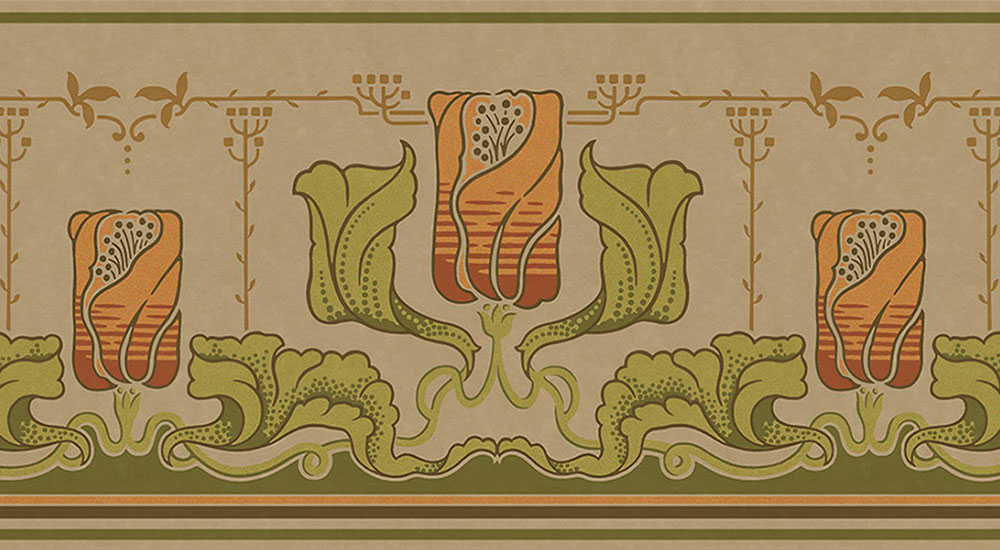
User reviews (0)