Website profiles · Technology insights · Alternatives

clevagent.io

Run and guide your AI agents in one workspace. ClevAgent quietly handles efficiency and safety in the background.

Paid content
Visit website
Profile views 4 Outbound visits 1 Normal
ClevAgent Full homepage screenshot

At a glance

Category
Artificial Intelligence
Language
English
Paid-content signal
Paid contentObserved
Registered
2026
Hosting
CloudflareInferred
HTTPS certificate trusted
PassedObserved
Last updated

Website review

This review may include AI-generated content and is not individually verified. Domain, certificate and other facts come from the observed data on this page.

What is ClevAgent?

ClevAgent is a workspace for running and supervising AI agents, built around the idea that agents should be able to act without being able to cause irreversible damage. Its stated focus is twofold: keeping agent work efficient, and keeping execution safe. The page frames this as "smarter agents, safer execution," with the agent doing the work while you retain the ability to step in.

What it actually does

The clearest signal on the page is a control model rather than a feature list: let your agent act, keep the power to revoke. In practice, that means an agent gets a place to work and a degree of autonomy, while you keep a lever to stop or undo what it has done. A second theme is continuity: guidance you give in one session is meant to improve the next one, so corrections accumulate instead of being repeated.

The page also opens with a cautionary example — an AI agent deleting a production database, with a recovery time measured in hours against seconds to delete. That is the scenario ClevAgent positions itself against: agents with real access to real systems, where a wrong action is expensive.

Who it is for

  • Teams giving agents access to live systems — production databases, deployment tooling, internal APIs — where an unreviewed action has real consequences.
  • People running long or repeated agent sessions where re-explaining context and corrections each time is the main cost.
  • Operators who want oversight without micromanagement — approving direction and retaining a stop mechanism, rather than watching every step.

How to judge whether it fits

The trade-off with any supervisory layer is between autonomy and friction. If your agent tasks are read-only, low-stakes, or easily reversed, a safety wrapper adds little. If your agent can write, delete, deploy, or spend, the value is in the revoke path and in whether guidance persists across sessions.

A practical next step: take one recurring agent task that touches something you would not want silently changed, and check two things before committing — how granular the revoke or rollback control is, and whether session-to-session guidance is stored per agent or per workspace. Those two answers usually decide the fit faster than a feature tour. Pricing details are listed on the site at ClevAgent.

How does ClevAgent prevent an AI agent from deleting or damaging my production data?

ClevAgent is positioned as a safety and oversight layer for AI agents: it lets agents act inside a workspace while keeping a human able to intervene and revoke. The page's own framing is the clearest answer to your question — "Let your agent act. Keep the power to revoke" — and its headline example is an agent that deleted a production database, with the contrast "9 seconds to delete. 60 hours to recover." That is the risk it is built around, not a general productivity pitch.

What that means in practice

  • A contained workspace. The "give your agent a place to work" idea suggests agent activity is bounded to an environment you control, rather than running loose against live systems.
  • Revocability. If the agent's access can be pulled mid-task, the worst case shifts from "the data is gone" to "the session stopped."
  • Guidance that carries forward. The page notes guidance "helps make the next session better," implying corrections you make are retained rather than re-explained every run.
  • Background safety handling. ClevAgent describes itself as quietly managing efficiency and safety, so oversight is meant to be passive rather than a constant watch.

The trade-off to weigh

A safety layer only helps if the agent's dangerous capability passes through it. If your agent holds direct credentials to a production database or cloud account, no wrapper can revoke what it never mediated. So the decisive question is not "does ClevAgent have a revoke button" but "can my agent reach production without going through ClevAgent?"

Practical next step

Map your agent's blast radius first: list every credential, API key and database it can reach today. Then check whether ClevAgent can sit in front of those paths — and test it the only way that counts, by giving an agent a deliberately destructive instruction in a staging copy and confirming you can stop it and that nothing outside the workspace was touched. Pair that with conventional safeguards: scoped, short-lived credentials, backups you have actually restored from, and no production write access for agents by default.

Can I revoke or undo actions my AI agent takes in ClevAgent?

Yes, revoking is a core part of ClevAgent's pitch. The page frames the workspace around the promise "Let your agent act. Keep the power to revoke," so the intended model is that your agent can operate in a contained place while you retain the ability to pull back its actions rather than watching them run to completion.

What that looks like in practice

  • Revocation over prevention. Rather than blocking the agent up front, ClevAgent positions itself as letting the agent act and then stepping in. That suits workflows where you want the agent to make progress but want a stop or rollback option if it heads somewhere you don't want.
  • A dedicated workspace. "Give your agent a place to work" suggests the agent operates inside a defined environment, which is what makes revoking meaningful — there's a bounded scope for what it touches.
  • Guidance as a follow-on. The page notes that guidance "helps make the next session better," so corrections can feed into later runs, not just stop the current one.

The concrete scenario

Picture an agent editing files or calling internal tools. You'd rather it draft changes and let you approve or revoke them than have it commit directly. ClevAgent's framing targets exactly that: a supervised session where the agent acts and you hold the revoke switch.

What to verify before relying on it

The page's own evidence points at the stakes — it cites an AI agent deleting a production database, with "9 seconds to delete, 60 hours to recover." That gap is the argument for revocation, but it's also the thing to test. Ask specifically:

  • Does revoke undo the effect (restore data, reverse a write) or only halt the agent mid-task?
  • What's the window — can you revoke after a session ends, or only while it's live?
  • Which actions are revocable versus irreversible once taken?

Check ClevAgent's own docs and pricing page for the scope of revocation, since "revoke" can mean anything from pausing a run to a full rollback. If your agent touches production systems, treat rollback capability, not the pause button, as the deciding feature.

How do I set up and run an AI agent inside the ClevAgent workspace?

ClevAgent is a workspace for running AI agents with a safety layer wrapped around them: you let an agent act, but you keep the ability to revoke or intervene. Setup is less about installing a framework and more about defining what the agent may touch, then supervising it from one place.

What setup involves, in practice

Based on the site's own framing — "Give your agent a place to work," "Let your agent act. Keep the power to revoke," and "Our guidance helps make the next session better" — the flow looks like this:

  1. Create the workspace and connect the agent. Treat ClevAgent as the environment the agent operates in rather than a model you install. You bring the agent; the workspace provides the boundaries.
  2. Define scope before the first run. Decide which systems, files, or actions the agent can reach. The page's cautionary example — an agent deleting a production database, "9 seconds to delete, 60 hours to recover" — is the scenario this step exists to prevent.
  3. Set the human-in-the-loop points. Identify which actions run freely and which require your approval or a revoke window.
  4. Run a supervised session. Watch the first sessions closely, confirm the agent stays inside its scope, and only then loosen constraints.
  5. Use session guidance to improve the next run. The site describes guidance that makes the following session better, so treat each run as a feedback loop rather than a one-off.

A concrete first session

If you are pointing an agent at a codebase or an internal tool, start with read-only access and a single narrow task — summarising a repository, drafting a change proposal, or querying a staging database. Confirm the agent's actions match your expectations, then grant write access to a sandbox before anything production-facing. The point of the first run is calibration, not output volume.

Trade-offs to weigh

Approach Strength Cost
Broad access from the start Fast, fewer interruptions One bad action can be expensive and slow to undo
Scoped access with approval gates Contained damage, clear audit trail More human attention per session, slower throughput

For a solo developer or a small team experimenting with agentic workflows, the scoped approach usually wins because recovery time dominates. For repetitive, low-risk tasks in a non-production environment, broader autonomy is reasonable.

Decision criterion

Ask one question before each session: if this agent does the worst plausible thing within its current scope, how long would recovery take? If the answer is measured in hours, add an approval gate. If it is measured in seconds, let it run.

For background on agent safety patterns and workspace tooling, see Anthropic and Model Context Protocol.

Does ClevAgent improve my agent's performance across sessions, and how?

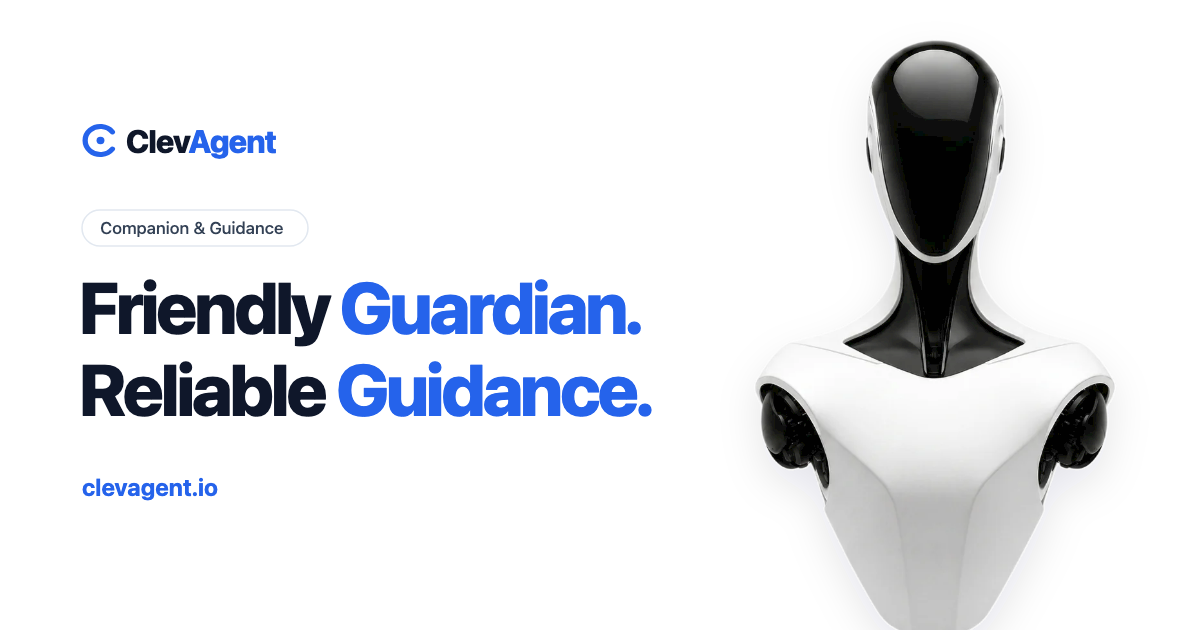
Yes, with a caveat about what "performance" means. ClevAgent is built less around making a single agent run faster and more around making repeated sessions safer and more consistent. Its page frames this as "Friendly Guardian. Reliable Guidance," and the mechanism it describes is guidance that carries forward: "Our guidance helps make the next session better."

How cross-session improvement is meant to work

  • Guidance persists between sessions. Rather than re-establishing your intent each time, the workspace is positioned as a place where your direction accumulates, so the agent's starting point for session two is not the same as session one.
  • Action is paired with revocation. The site's phrasing, "Let your agent act. Keep the power to revoke," points to a model where the agent can operate but you retain the ability to pull back permissions or undo its reach.
  • Safety work runs in the background. ClevAgent describes itself as quietly handling "efficiency and safety" rather than surfacing them as a separate chore.
  • One workspace for running and guiding. The pitch is consolidation: you observe and steer agents in the same place rather than across scattered tools.

Where the real value shows up

The improvement is most visible in tasks with consequences, not in raw speed. The page leads with a cautionary example: an AI agent deleted PocketOS's production database, described as "9 seconds to delete. 60 hours to recover." If your work touches production systems, credentials, or anything expensive to rebuild, a workspace whose selling point is revocable action is addressing a genuine gap. If your agent only drafts text or answers questions, the cross-session guidance is still useful for consistency, but the safety layer matters much less.

A practical way to judge it

Pick one recurring task you run weekly and ask two questions. First, does the agent start each session cold, or does it retain your corrections? Second, if it took a wrong action, how long would recovery take? If the answer to the second is hours or more, the revoke-first design is worth testing directly. If it is seconds, weigh the guidance feature on its own merits.

For context on how other agent platforms frame similar trade-offs, you can compare official documentation from Anthropic or OpenAI on agent safety patterns.

A concrete scenario

A developer gives an agent access to a staging environment to run migrations. In session one, the agent picks a naming convention the developer dislikes; the developer corrects it. In session two, if that correction persists, the agent applies it without being told again. That continuity, plus the ability to halt or reverse a bad migration, is the specific improvement ClevAgent claims. Whether it delivers depends on how thoroughly its guidance captures your corrections, which is the thing to verify in a trial rather than assume.

How much does ClevAgent cost and what pricing plans are available?

ClevAgent's own site lists a Pricing page, but the supplied page information does not include any plan names, tiers or amounts. So the honest answer is that the cost is not stated here; you will need to check ClevAgent directly for current numbers.

What you can infer about how it is sold

The product is described as a workspace for running and guiding AI agents, with safety and efficiency handled in the background. That framing suggests pricing is likely tied to usage or seats rather than a one-off purchase, but that is an expectation based on the category, not a confirmed detail from this page.

A practical way to decide

Before comparing prices, work out what you would actually meter:

  • Number of agents or sessions you run per month.
  • Number of people who need to review, approve or revoke agent actions.
  • Environment sensitivity — a staging-only setup needs less oversight than anything touching production data.
  • Recovery needs — the page highlights a case of an agent deleting a production database, with a stark gap between a nine-second deletion and sixty hours of recovery. If your agents can reach live systems, the value of guardrails is measured against downtime cost, not against a subscription fee.

Next step

Open the pricing page on ClevAgent and check three things: whether there is a free or trial tier, whether billing is per seat or per usage unit, and whether safety features such as revocation are included at every level or reserved for higher plans. If the page requires a demo request, ask for a quote based on your expected monthly agent sessions and the number of reviewers — that is the comparison that will actually tell you whether it is cheaper than the incident it is meant to prevent.

Related questions

More questions →
What kind of workspace does ClevAgent provide for AI agents?

ClevAgent provides a single workspace where you run and guide your AI agents, with efficiency and safety handled in the background. It is aimed at people who want their agents to act on real tasks while keeping the ability to revoke that action — the site's own framing is "Let your agent act. Keep the power to revoke." If you only need a chat interface and never let an agent touch anything, this workspace model is more than you need.

What the workspace is for

The workspace is a place to execute agent work, not just talk to a model. The site describes it as somewhere you "run and guide your AI agents," and its heading "Give your agent a place to work" points to the same idea: the agent needs an environment where it can take action.

Two things happen in that environment:

  • Running — the agent performs tasks.
  • Guiding — you steer it as it works, rather than handing off a prompt and waiting.

Safety and efficiency are described as background functions, meaning they are not separate tools you operate; they are part of how the workspace runs.

How safety is framed

The core safety idea on the page is revocability: the agent can act, and you keep the power to take that action back. This is a permission-and-control model rather than a "review everything before it happens" model.

The page illustrates the stakes with a cited incident: an AI agent deleted PocketOS's production database — "9 seconds to delete. 60 hours to recover." (PocketOS, May 2026). That example is the reason the revoke framing exists: fast agent actions can be costly to undo, so the workspace is designed around being able to reverse them.

How guidance carries into later sessions

ClevAgent states that its guidance "helps make the next session better." In practice this means the workspace is not session-isolated: what you do to guide an agent in one session is intended to improve how the next session goes. If you expect each run to start from zero, that is a different model from what is described here.

What to check before adopting it

The site's public pages do not state pricing details, plan limits, or which agent frameworks and models are supported. Before committing, confirm:

  • Whether your agent stack can run inside this workspace.
  • What "revoke" covers in your setup — a single action, a session, or broader access.
  • Whether the cross-session guidance matches how your team wants agent behavior to accumulate.

The pricing page exists at clevagent.io/pricing, so cost and plan structure are the first thing to read there rather than assume.

How does ClevAgent help keep AI agent execution safe?

ClevAgent is a workspace for running and guiding AI agents where safety is handled in the background rather than through constant manual supervision. Based on the site's own framing — "Let your agent act. Keep the power to revoke." — its core promise is that an agent can keep working while you retain the ability to undo or revoke what it did. That matters most for irreversible actions, which the site illustrates with a cited incident: an AI agent deleted PocketOS's production database, described as "9 seconds to delete. 60 hours to recover."

The problem ClevAgent is aimed at

Most agent-safety failures aren't subtle. They're fast, destructive, and hard to reverse:

  • A single command can drop a production database in seconds.
  • Recovery can take days, if it's possible at all.
  • By the time a human notices, the action has already executed.

The site's example (PocketOS, dated May 2026 in the source) is used to make exactly this point: the cost isn't the deletion, it's the recovery window. ClevAgent positions itself against that gap.

What "keep the power to revoke" means in practice

The site describes two halves of the same idea:

  1. Let your agent act. The agent isn't blocked from doing its work. ClevAgent is described as running quietly in the background, so it doesn't turn every step into an approval prompt.
  2. Keep the power to revoke. You retain the ability to undo or pull back an action rather than only being able to stop the agent going forward.

This is a meaningfully different posture from a hard sandbox that prevents actions outright. It's closer to a reversible-execution model: the agent proceeds, but the workspace holds the lever to reverse course.

How the safety layer is described

According to the site, ClevAgent:

  • Runs and guides agents in one workspace — execution and oversight live in the same place rather than in separate tools.
  • Handles efficiency and safety in the background — the safety mechanism is not a foreground task you manage step by step.
  • Improves the next session through guidance — the site states "Our guidance helps make the next session better," suggesting that what happens in one run informs later ones.
  • Gives the agent a place to work — a defined environment rather than an open-ended one.

The site's own heading summarizes the tone: "Friendly Guardian. Reliable Guidance."

What to check before relying on it

The source material describes the intent and posture but not the mechanism. If reversibility is the reason you're evaluating ClevAgent, these are the questions the page doesn't answer and you'd need to confirm directly:

Question Why it matters
What kinds of actions can actually be revoked? "Revoke" may cover some operations (file changes, tool calls) and not others (external API side effects, sent emails).
How far back does revocation reach? A revoke window measured in seconds is very different from one measured in hours.
What happens to actions already committed outside the workspace? Irreversible external effects are the hardest case and the one the PocketOS example highlights.
Is there a pricing or plan tier that gates the safety features? The site links to a Pricing page, but the source doesn't state what's included at each level.

Who this fits

ClevAgent is worth a closer look if you're running agents that touch systems where a wrong action is expensive to undo — production data, infrastructure, anything with a long recovery tail. The design goal is to let the agent stay productive while keeping a reversal path open.

It's a weaker fit if your main need is strict pre-execution blocking (deny-by-default sandboxing) rather than post-action revocation, or if your agents only touch easily restored, low-stakes resources where the recovery cost is already near zero.

To judge it properly, start from the two things the site actually commits to — background safety handling and retained revoke power — and verify the specifics of both against your own worst-case action.

What is ClevAgent?

ClevAgent is a workspace for running and guiding AI agents, positioned around the idea of "smarter agents, safer execution." It is aimed at people who want their agents to actually take action — not just chat — while keeping the ability to step in and revoke what those agents do. If you are experimenting with agents that touch real systems, or you have already been burned by one acting too freely, this is the problem space ClevAgent addresses.

The problem it targets

The site leads with a concrete cautionary example: an AI agent deleted PocketOS's production database — "9 seconds to delete. 60 hours to recover." That framing tells you who ClevAgent is for. The risk it highlights is not that agents are weak, but that they are powerful enough to cause fast, expensive damage when they run without oversight.

So the core promise is a split: let the agent act, but keep the power to revoke.

What it actually provides

Based on the site's own descriptions, ClevAgent works as a single place to run and guide agents, with two themes running through it:

  • A workspace for agents — "Give your agent a place to work," rather than scattering agent runs across ad-hoc scripts and terminals.
  • Background efficiency and safety — the site says ClevAgent "quietly handles efficiency and safety in the background," meaning these are meant to be defaults you don't have to assemble yourself.
  • Revocable action — "Let your agent act. Keep the power to revoke." The design intent is that agent actions remain something you can pull back, not fire-and-forget.
  • Guidance that compounds — "Our guidance helps make the next session better," suggesting that steering an agent in one session informs how it behaves later.

The recurring "Friendly Guardian. Reliable Guidance." heading reinforces that the product frames itself as a supervising layer, not just an execution environment.

Who it fits

Your situation Likely fit
You run agents that can modify files, data, or systems Relevant — the revoke-and-guide model targets exactly this
You want agents to act, but not unsupervised Relevant — oversight is the core pitch
You only use chat-style assistants with no side effects Less relevant — there is little to revoke
You want a fully autonomous, hands-off pipeline Check carefully — the product leans toward keeping you in the loop

What to verify before committing

The site describes intent and positioning, but the specifics that decide whether it works for you are not all spelled out in the material available. Before adopting it, confirm:

  • How revocation actually works — is it a rollback, a permission gate, or a kill switch? "Keep the power to revoke" is the promise; the mechanism is what matters.
  • What "efficiency" means in practice — whether it is cost control, speed, or resource management.
  • How guidance persists — what carries from one session to the next, and whether you can inspect or reset it.
  • Pricing and access — the site has a pricing page at clevagent.io/pricing; check it directly, since the available material does not state cost or whether a login is required.

Bottom line

ClevAgent is a workspace built around a specific bet: agents are more useful when they can act, and safer when that action stays revocable. If your work involves agents with real consequences, the framing is worth a look — start with the pricing page and a small, low-stakes task to see how the guidance and revoke model behaves before trusting it with anything you would hate to lose.

How does ClevAgent improve future AI agent sessions?

ClevAgent improves future sessions by turning what happens in one run into guidance that shapes the next one. The site describes a workspace where you "run and guide your AI agents," and states plainly: "Our guidance helps make the next session better." So the improvement is not a one-time configuration you finish and forget — it is a loop in which steering an agent today changes how it behaves tomorrow. This matters most if you run agents repeatedly on similar work and want each run to need less correction than the last.

The core mechanism: guidance as a feedback loop

The phrase "run and guide" describes two distinct activities. Running is execution — the agent does work in the workspace. Guiding is the human input layered on top: deciding what the agent should do, correcting it when it drifts, and setting boundaries on what it is allowed to touch.

ClevAgent's claim is that the guiding half feeds forward. Rather than treating your corrections as disposable, the workspace carries that guidance into subsequent sessions. The practical effect is that recurring tasks should require less re-explaining over time, because the direction you gave previously is still in play.

What "better" means here

The site frames this alongside safety, under the tagline "Smarter agents. Safer execution." and the heading "Friendly Guardian. Reliable Guidance." That pairing suggests improvement is measured on two axes at once:

  • Efficiency — the agent needs less hand-holding to reach the intended outcome.
  • Safety — the agent stays within the boundaries you set, rather than acting beyond them.

An agent that gets faster but also more reckless is not an improvement in this framing. The guidance is meant to tighten both.

The control model: act, but stay revocable

The heading "Let your agent act. Keep the power to revoke." describes the operating stance. The agent is given room to work — "Give your agent a place to work" — while you retain the ability to pull back what it can do.

This is the structural reason guidance can accumulate safely. If every session started from zero permissions, you could not let an agent run unattended; you would have to watch it constantly. If permissions only ever grew, guidance would become a liability. Keeping revocation available means the guidance you add over time stays reversible, so a bad instruction from one session does not become permanent.

Why the site leads with a failure story

The page evidence includes a pointed example: "9 seconds to delete. 60 hours to recover. An AI agent deleted PocketOS's production database." The asymmetry is the whole point — destruction is fast and cheap, recovery is slow and expensive.

That story explains the design priority. If an agent can cause irreversible damage in seconds, then "improving future sessions" cannot mean simply giving the agent more latitude. It has to mean giving it better direction and keeping a way to stop it. The guidance loop and the revoke control are two halves of the same answer.

What this looks like in practice

For a recurring task — say, an agent that triages incoming issues or drafts routine reports — the loop plays out roughly like this:

  1. First session: you direct the agent, correct its mistakes, and set what it may and may not do.
  2. Guidance is retained: the direction from that session carries forward rather than being discarded.
  3. Next session: the agent starts closer to your intent, so you spend less time re-steering.
  4. You keep the revoke option: if the accumulated guidance pushes the agent somewhere you did not intend, you can pull it back.

The value compounds only if the task repeats. For a genuine one-off, there is little "next session" to improve — the benefit is mostly the safety control.

Where the public description stops

The site explains that guidance improves later sessions and why safety matters, but it does not spell out the internal mechanics — how guidance is stored, how long it persists, or how you would inspect and edit it. Those are the questions to resolve before relying on the loop for anything consequential:

  • Can you see the guidance the agent is carrying, and edit or delete specific pieces of it?
  • Does guidance apply per agent, per workspace, or per task type?
  • What exactly does revocation cover — pausing the agent, undoing an action, or removing a permission?

Until those are answered, treat the improvement as directional rather than guaranteed, and keep the revoke control as your real backstop.

Where to Find ClevAgent Pricing Information

ClevAgent's pricing information is available on its dedicated pricing page at clevagent.io/pricing. The site's navigation includes a "Pricing" link, which is the intended entry point for cost and plan details. The available source material does not list specific prices, tiers, or billing terms, so the pricing page itself is the only confirmed place to get those figures.

What the pricing page is for

Use the pricing page when you need to answer questions such as:

  • What plans or tiers exist, and what each one includes
  • Whether there is a free tier, trial, or paid-only access
  • How usage is measured (for example, per seat, per agent, or per session)
  • What payment methods are accepted

The source data confirms the link exists but does not confirm any of the above specifics. Treat the page as the authoritative source and verify current terms there rather than relying on secondhand summaries.

How to reach it

  1. Open clevagent.io.
  2. Find the Pricing link in the site navigation.
  3. Follow it to clevagent.io/pricing.
  4. Read the plan descriptions and any listed limits or conditions.

Expected result: you land on a page that describes ClevAgent's plans and their costs. If the navigation link is not visible, try the direct URL above.

What to check before deciding

Because the source does not state prices, confirm these points on the page itself:

Question Why it matters
Is there a free tier or trial? Determines whether you can test before paying
What does each plan include? Plan limits often decide fit more than headline price
Is billing per user, per agent, or usage-based? Affects cost as your usage grows
Are there overage or cancellation terms? Avoids surprises after sign-up

Do not assume the product is free or requires no login — the source does not say either way. Confirm access requirements on the pricing or sign-up page.

Context on what you would be paying for

ClevAgent is described as a workspace for running and guiding AI agents, with the site emphasizing safety and oversight — for example, letting an agent act while keeping the ability to revoke, and using guidance to improve later sessions. One cited example on the site describes an AI agent deleting a production database, with 9 seconds to delete and 60 hours to recover. If cost is a deciding factor for you, weigh the pricing page details against how much oversight and recoverability matter for your own agent workflows.

Website Overview

Page metadata, canonical configuration and social previews work together to provide more consistent search and sharing presentation.

Domain and Registration

The domain was registered less than a year ago and has limited historical evidence to assess. Transfer-protection status is present, helping reduce the risk of unauthorized domain transfers. The registrar is NameCheap, Inc., a widely used domain service provider. The domain uses the common .io extension, which is not an independent safety signal.

DNS and Email

Nameservers are provided by Cloudflare, indicating managed DNS hosting. MX records point to the Cloudflare Email Routing email service. No CNAME was found; the observed records resolve directly to addresses. SPF and DMARC are configured. DKIM status is unknown. TXT records include verification markers for Google. Such markers may also remain after a service stops being used.

TLS and Certificates

The public key uses EC with 256 bits. The server supplied a complete certificate chain. No organization name is present in the certificate; the available fields are consistent with domain validation. The certificate was issued by Let's Encrypt, commonly associated with automated certificate services. The certificate's total validity is about 89 days, consistent with a short renewal cycle.

HTTP and Browser Security

No X-Powered-By header was found, reducing one common source of backend fingerprinting information. All six checked browser-security headers are present. Their effectiveness still depends on the policy values and application behavior. The cf-ray response header indicates a CDN or caching proxy in the delivery path. No obvious internal addresses or debug information were found in the headers. The Server header identifies cloudflare without an exact version.

Technology Stack Analysis

The public page identifies Next.js, Cloudflare without precise versions, leaving fewer clues for version-specific scanning.

Search and Social Sharing

Twitter Card metadata is configured. JSON-LD includes Organization data, helping describe the organization as an entity. The title has 44 characters, within a common display range. A meta description is present, with 113 characters. The observed directives allow indexing and link following.

Hosting and Email

DNSCloudflare
HostingCloudflare
EmailCloudflare Email Routing
Approximate IP geolocation (inferred; a CDN or proxy may differ from the origin server) Location unknown Inferred 104.21.63.43

Registration details

RDAP / WHOIS

RegistrarNameCheap, Inc.
Registered2026-03-21
Expires2027-03-21
Domain statusclientTransferProhibited https://icann.org/epp#clientTransferProhibited
Nameserversdolly.ns.cloudflare.com、hugh.ns.cloudflare.com
DNSSECunsigned

DNS records

DNS

TypeNameValueTTLPriority
Aclevagent.io104.21.63.43300—
Aclevagent.io172.67.143.18300—
AAAAclevagent.io2606:4700:3031::ac43:8f12300—
AAAAclevagent.io2606:4700:3033::6815:3f2b300—
MXclevagent.ioroute1.mx.cloudflare.net30013
MXclevagent.ioroute2.mx.cloudflare.net30030
MXclevagent.ioroute3.mx.cloudflare.net30077
NSclevagent.iodolly.ns.cloudflare.com86400—
NSclevagent.iohugh.ns.cloudflare.com86400—
TXTclevagent.iogoogle-site-verification=uCZV1r-SiPF6-RDK0oox-sgvAbRrKYk0iyJvejYK0Qw300—
TXTclevagent.iov=spf1 include:_spf.mx.cloudflare.net ~all300—
DMARC_dmarc.clevagent.iov=DMARC1; p=none; rua=mailto:[email protected]300—

TLS and certificates

TLS / SSL

AssessmentNormal configuration
Supported protocolsTLSv1.2、TLSv1.3
Negotiated protocolTLSv1.3
Certificate subjectclevagent.io
IssuerLet's Encrypt
Valid until2026-12-20T00:34 · Remaining when checked: 72 days
Verification detailsCertificate trust: Passed · Hostname match: Passed

HTTP response headers

HTTP

HeaderValue
content-typetext/html; charset=utf-8
cache-controlprivate, no-store, no-cache, max-age=0, must-revalidate
servercloudflare
strict-transport-securitymax-age=63072000; includeSubDomains
content-security-policydefault-src 'self'; base-uri 'self'; frame-ancestors 'none'; object-src 'none'; form-action 'self'; script-src 'self' 'unsafe-inline' https://static.cloudflareinsights.com; style-src 'self' 'unsafe-inline'; img-src 'self' data: blob: https:; font-src 'self' data:; connect-src 'self' https://*.ingest.sentry.io https://*.sentry.io https://cloudflareinsights.com; frame-src 'self'; worker-src 'self' blob:; media-src 'self'; manifest-src 'self'
x-frame-optionsDENY
x-content-type-optionsnosniff
referrer-policystrict-origin-when-cross-origin
permissions-policycamera=(), microphone=(), geolocation=()

Identified technologies

Next.jsCloudflare

Pages, Search and Sharing

Meta descriptionRun and guide your AI agents in one workspace. ClevAgent quietly handles efficiency and safety in the background.
Canonical URLhttps://clevagent.io
LanguageEnglish (default)
Twitter Cardsummary_large_image
All bots 1 allowed · 2 disallowed
  • Allow/
  • Disallow/account
  • Disallow/api/

User reviews (0)

  • No reviews yet.