
 简体中文
 English

Website review
This review may include AI-generated content and is not individually verified. Domain, certificate and other facts come from the observed data on this page.
What is Dasko Bar Code Labels?
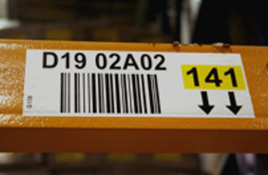
Dasko Bar Code Labels is a warehouse labeling specialist that supplies printed barcode labels, tags, signs and floor markings, along with related services such as label design, site surveys, inventory labeling setup and installation. Its focus is the physical identification layer of a warehouse—rack and bin labels, pallet and tote IDs, aisle and safety signs, floor location labels and floor striping—rather than general office printing.
Who it suits
The fit is strongest for warehouse, distribution and operations managers who are standardizing identification across a facility, or whose current labels fail in real conditions. The page emphasizes practical problems: floor labels in industrial environments, specialty materials for rack beam refacing, removable labels and outdoor use. It also stresses that barcodes are the key to data already held in a WMS, so the labels need to scan reliably rather than merely look neat.
What the service scope suggests
- Product breadth: rack, multilevel, bin-shelf, pallet, tote, equipment, long-range/reflective and 2D barcode labels, plus hanging, aisle, dock, portable and safety signs.
- Services beyond printing: label design, site surveys, system programming, 5S warehouse solutions and professional installation—useful when a lean team cannot apply labels on a tight schedule.
- Low-risk start: free samples for testing and material recommendations, which matter when adhesives must survive cold, dust, moisture or forklift traffic.
Trade-offs to weigh
A specialist like this makes sense when label durability and correct placement drive scanning accuracy. If you only need a small batch of simple internal stickers, a local print shop may be simpler. Conversely, a multi-site rollout with floor marking and sign installation is where an end-to-end supplier earns its keep. Compare vendors on sample performance in your actual environment, turnaround on custom jobs and whether installation is included. For background on barcode standards, GS1 is a useful reference; for warehouse floor marking guidance, OSHA covers the regulatory side.
Next step: request samples of the two or three label types used most in your facility, apply them in their real locations for a few weeks, then judge scan reliability before committing to a full order.
How do I choose the right label material for my warehouse environment?
Start with the environment and the label's lifespan, not the price: identify what the label must survive (freezer, humidity, sunlight, abrasion, forklift traffic, chemicals) and how long it must stay legible. Dasko's page frames this as a materials-matching problem, offering removable/repositionable labels, outdoor solutions and materials for refacing rack beams, plus free samples for testing in your own facility.
A practical selection sequence
- Define the surface. Painted rack beams, concrete floors, plastic totes and cardboard cartons each hold adhesive differently. Floor labels are the hardest case in an industrial setting, which is why Dasko treats floor location labels as a separate category.
- Define the scan distance. Long-range and reflective labels suit rack faces read from a forklift; standard paper or synthetic labels suit bin and shelf fronts.
- Test before you commit. Request samples and apply them where they will actually live for a few weeks. A label that peels on a cold dock or scuffs under pallet traffic will fail regardless of print quality.
- Match the data format. If you use 2D barcodes or a WMS-driven inventory system, confirm the material's print contrast still scans after wear.
- Plan installation. Dasko offers installation and application services, which matters if your team is lean or the rollout is on a tight schedule.
Quick comparison of common options
| Environment | Material direction | Trade-off |
|---|---|---|
| Rack beams, shelving | Durable synthetic or beam-refacing material | Higher cost, far fewer replacements |
| Floors and pallet lanes | Floor-rated labels, or paint/tape striping | Labels are cleaner; striping may last longer under heavy traffic |
| Temporary or seasonal locations | Removable/repositionable | Can shift if not applied to a clean surface |
| Outdoor or dock areas | Outdoor-rated materials | Limited print options compared with indoor stock |
| Freezers and washdown zones | Cold and moisture-resistant stock | Requires sample testing; adhesive performance varies |
A reasonable next step is to list your five most label-intensive locations, note the surface and condition for each, and ask for samples of two candidate materials per location. Compare them after a month of real use—that evidence beats any specification sheet. Related guidance on floor marking standards is available from OSHA.
Can Dasko help design and install warehouse floor striping and signs?
Yes. Dasko presents itself as a warehouse labeling and signage specialist that handles both the design side and the physical installation, and floor striping and signs are named services on its site.
What the service covers
- Floor striping: marking pallet lanes and meeting OSHA floor-marking guidelines, using paint, tape, shapes and printed signs.
- Signs: hanging warehouse signs, barcode signs, aisle signs, dock signs, portable signs and safety signs.
- Floor location labels: labeling floors in industrial environments, where durability is the main challenge.
- Installation: a professional team to install or apply labels and signs, positioned for sites with tight schedules or lean workforces.
- Upstream support: label design, site surveys, inventory labeling system programming and 5S solutions, which matter because striping and signage usually follow a layout decision.
How to decide if it fits
If your project is "we know the floor plan, we need lanes painted and aisle signs hung by a deadline," Dasko's combination of striping, signs and installation is a direct match. If your layout is still unsettled, start with the site survey and design services so striping isn't redone after racking moves. For a multi-site rollout, ask how installation crews are scheduled across locations.
A practical next step is to request free samples for material testing and a quote covering striping plus signs as one scope, so installation timing and responsibility stay with a single vendor. The site lists a phone number, (866) 286-6500, for that conversation.
What label options work for outdoor or high-wear rack and beam applications?
For outdoor exposure and high-wear rack or beam use, the practical answer is to specify a durable specialty material plus the right adhesive and a protective overlaminate, not a standard paper label. Dasko Bar Code Labels lists specialty materials aimed at exactly these cases: products to reface rack beams, removable/repositionable labels, and outdoor solutions.
Matching the material to the job
| Application | What to look for | Main trade-off |
|---|---|---|
| Rack beam refacing | A specialty refacing product that bonds to the beam face and resists forklift scuffs | Needs careful surface prep and correct adhesive; harder to remove cleanly later |
| Outdoor or sun/weather exposure | UV- and moisture-resistant face stock with a protective laminate | Higher cost per label; still check the temperature range against your climate |
| Temporary or changing locations | Removable/repositionable adhesive | Can lift or shift under abrasion, so not ideal for heavy traffic zones |
| Long-range scanning outdoors | Reflective or long-range scannable stock | Reflectivity can affect scanner settings; test before a full rollout |
A practical next step
Ask for free samples of the candidate materials and run a short field test: apply them to the actual beam or outdoor surface, then expose them to your real conditions for a few weeks—forklift contact, washdown, sun, or cold. Scan them with your own readers at the end to confirm readability, since a label that stays put but won't scan has solved only half the problem.
For a concrete scenario: a distribution center labeling rack beams in a busy aisle should favor a refacing material with strong abrasion resistance and plan for occasional replacement, while a yard or dock area labeling outdoor locations should prioritize UV and moisture resistance with a laminate. If installation is the bottleneck, Dasko also offers label installation services, which can matter when a lean team can't spare staff for a large re-labeling project.
How do I request free samples to test labels before ordering?
Request free samples by contacting Dasko directly and describing the label types and environment you need to test. The site lists free samples as one of its services and gives the phone number (866) 286-6500; it also has a “Request a Quote” path for project pricing. Use the sample request to confirm material behavior in your actual warehouse conditions before committing to a full order.
What to include in your request
- Label type: rack, bin/shelf, pallet ID, tote, floor location, long-range/reflective, or 2D barcode labels.
- Surface: rack beam, concrete floor, plastic tote, or outdoor asset. Dasko mentions specialty materials for refacing rack beams, removable/repositionable labels and outdoor use.
- Environment: freezer, humidity, abrasion from forklifts, or frequent cleaning.
- Printer and barcode format: thermal-transfer versus direct-thermal, and whether you use 1D or 2D codes.
- Quantity and timeline: a handful for a trial, plus your target rollout date.
How to run a useful trial
Apply each sample to the same surface and location as production, then check scan reliability, adhesion and legibility after a week of normal traffic. If floor labels are the concern, compare them with Dasko’s floor striping and floor location options; for rack labeling, ask whether installation services are available if your team is short-staffed.
A practical next step is to call with your WMS label list and a photo of the surfaces you plan to label, so the sample set matches the job rather than a generic assortment. For broader warehouse labeling context, GS1 US publishes barcode standards guidance.
Do Dasko labels integrate with my WMS and barcode system programming?
Yes. Dasko positions its labels as the physical key that unlocks a WMS: the barcode printed on each label points to a record in your database, and the company offers barcode expertise, label design, data prep and "Inventory Labeling System Programming" as services. In practice that means they can help make the printed label match the data your WMS expects, rather than just supplying blank stock.
What that covers in a real rollout
- Data prep and design: label layouts built around your existing item, location and pallet records.
- Barcode symbology: 2D barcodes and long-range/reflective labels are listed, useful where scanners read at distance or in poor light.
- Label types tied to WMS logic: rack, multilevel, bin-shelf, pallet ID, tote and rack-capacity labels, which map to how most warehouse systems structure locations.
- On-site help: site surveys, installation teams and free samples for testing before a full run.
What to confirm before ordering
Integration here means matching labels to your system, not a software plug-in. Ask three questions: which symbologies and label sizes your WMS and scanners already accept; who owns the data formatting (your IT team or Dasko's programming service); and whether sample labels will be scan-tested against your live system. A warehouse manager migrating to a new WMS should test samples on the actual floor—cold storage, outdoor yards and dusty racking all affect adhesion and scan rate.
Practical next step
Send Dasko a sample of your current label plus your WMS location format, and request free samples printed to that spec. Compare scan reliability on your own scanners before committing to a full rack-labeling project. For general background on barcode standards, GS1 publishes symbology guidance that helps you frame the questions for your WMS vendor.
 Cloudflare
 Microsoft 365
User reviews (0)